Selecting a welding automation supplier means betting your production quality on their claims of compliance. The difference between a genuine ISO 9001-certified manufacturer and one displaying a copied certificate shows up in welding positioner repeatability, roll rotator torque synchronization, and the structural integrity of every welded component your team produces. After more than twenty years designing column booms, H-beam welding lines, and heavy positioners for global fabricators, I have learned that verification is not a formality — it is where the real supplier screening happens. Most articles on supplier certification verification will tell you to ask for a certificate. Few explain how to actually connect that certificate number to the manufacturer’s operation, verify CE marking validity for specific machine categories, or spot the subtle discrepancies that separate a quality management system that exists on paper from one that is embedded in the factory floor. This article gives you the verification checklist used by experienced equipment buyers, covering ISO, CE, and quality standards from the perspective of someone who has prepared certification documentation for European, Southeast Asian, and Middle Eastern markets, and who knows what a real audit trail looks like.
Why Certification Verification Determines a Welding Project’s Success
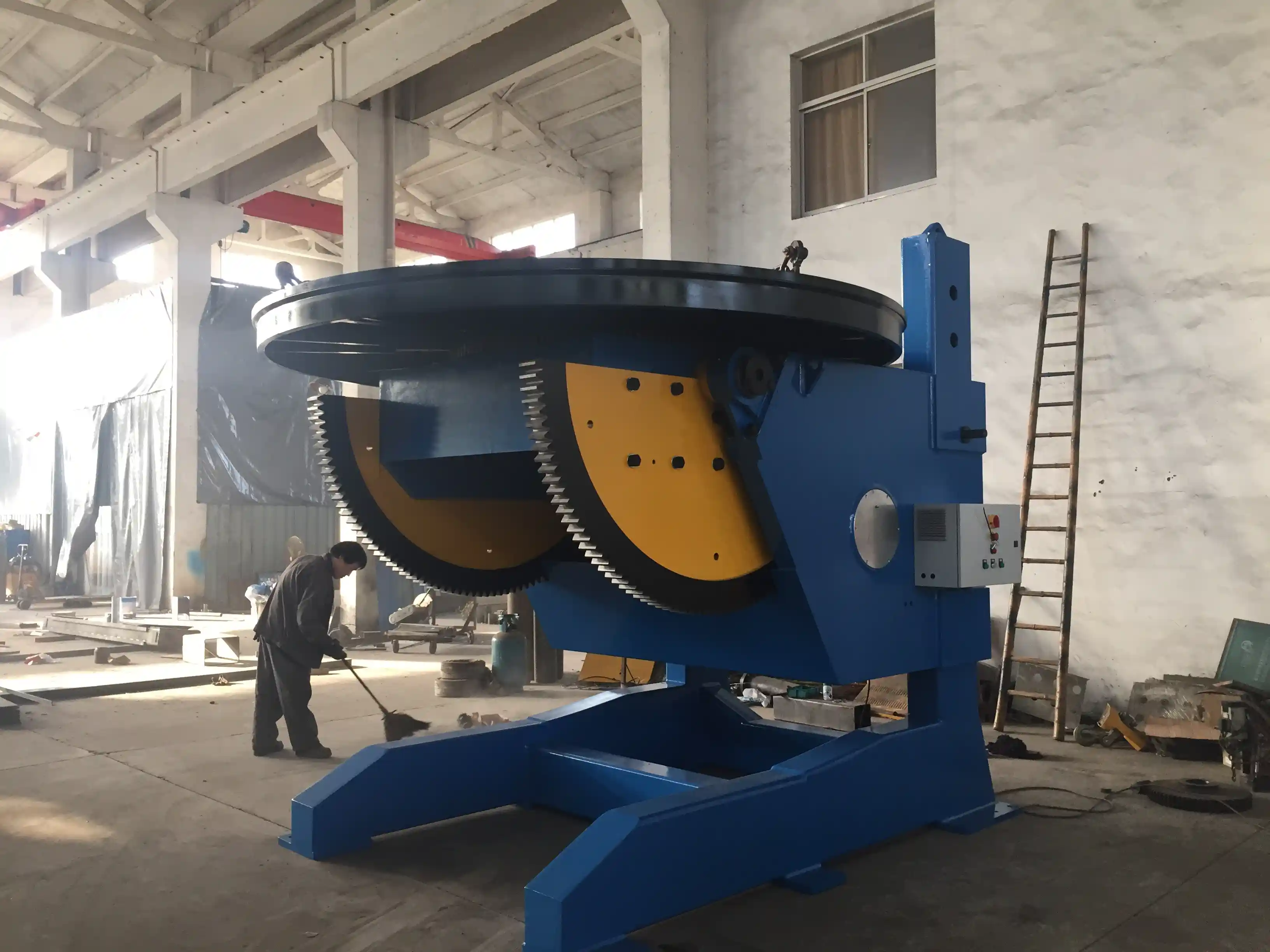
A manipulador de soldadura operating with ±0.1 mm/m positioning accuracy depends on a manufacturing process that is itself controlled, measured, and auditable. When a supplier claims compliance with ISO 9001:2015 or CE marking for a column boom, that claim should mean the design review, material traceability, and final load testing all follow defined procedures. In practice, procurement managers regularly encounter certificates issued by unaccredited bodies, CE Declarations of Conformity with no supporting technical file, and quality manuals that describe processes the shop floor has never seen.
The consequence is not just paperwork. A 20-ton adjustable height welding rotator that arrives with mismatched roller hardness suffers premature wear. A 3-axis positioner built without proper reducer alignment records repeatability drift within the first six months. These are real failure modes that surface when the gap between claimed certification and actual manufacturing discipline is large enough.
Verification before payment is the only leverage a buyer has. Once the equipment ships and the letter of credit is released, enforcement becomes far more difficult. A systematic check of the certificate issuing body, the scope of registration, and the technical file for CE-marked machinery gives you a reliable picture of the supplier’s true quality baseline.
Understanding ISO and CE Requirements for Welding Machinery
ISO 9001 certification covers the quality management system, not the product itself. This is one of the most misunderstood distinctions in equipment procurement. A supplier holding ISO 9001:2015 has demonstrated that it operates a system for process control, corrective action, and continuous improvement — but that system’s scope matters. For a company like WUXI ABK, ISO certification applies to the design, manufacturing, and after-sales service of welding automation equipment. Other suppliers may list a narrower scope, such as only assembly, or only distribution. If the certification scope does not include the manufacturing activity you are buying from, the certificate is not relevant.
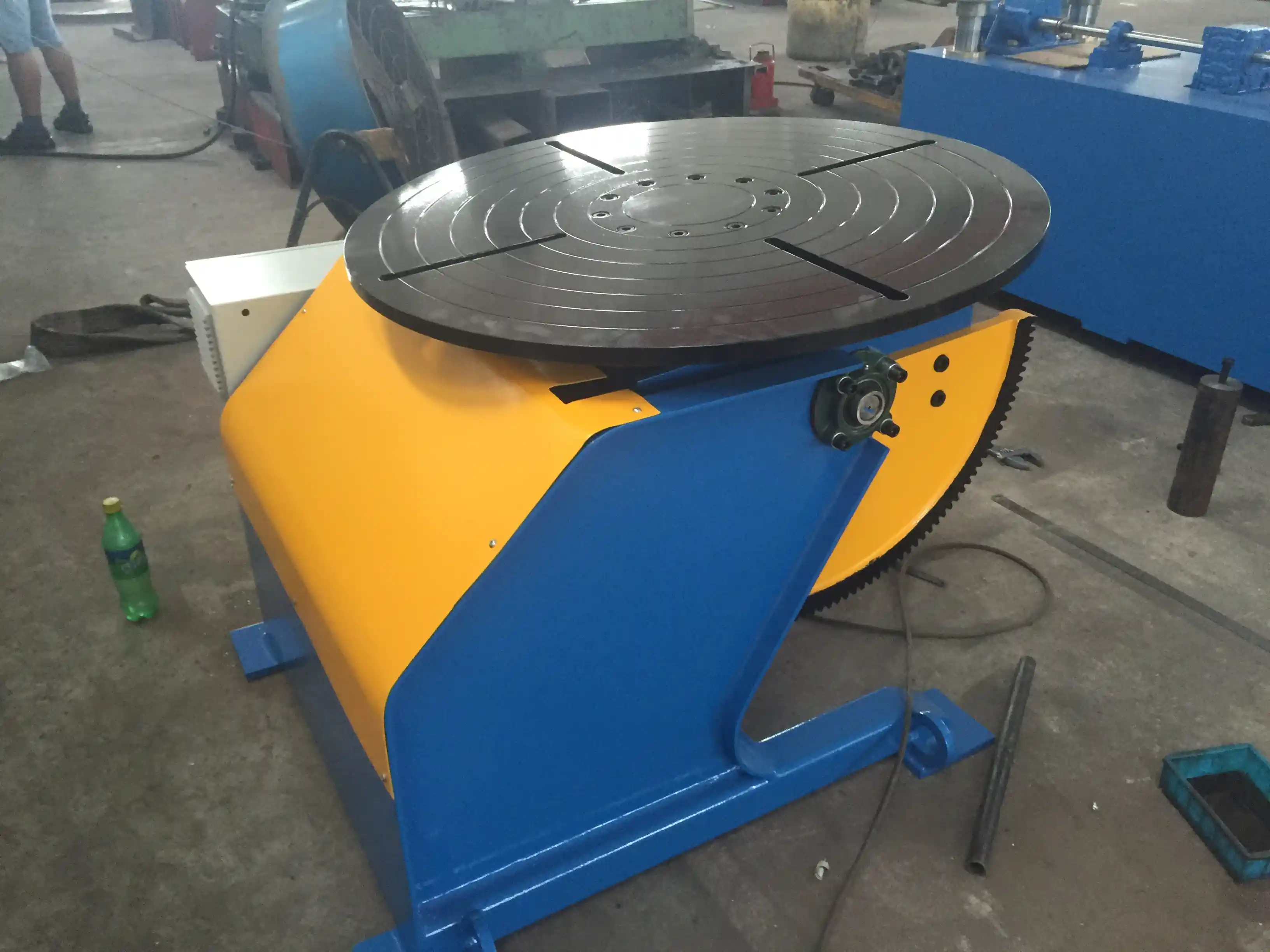
CE marking for welding equipment covers the Machinery Directive 2006/42/EC and, for certain automated systems with integrated control, the Electromagnetic Compatibility Directive 2014/30/EU and the Low Voltage Directive 2014/35/EU. A valid CE declaration requires a technical file that includes a risk assessment, design calculations, component specifications, and test records. For a standard HGZ-10 welding rotator or an LH3040 welding manipulator, the manufacturer must demonstrate compliance with harmonized EN ISO 12100 and applicable welding-specific standards like EN ISO 14731 for welding coordination.
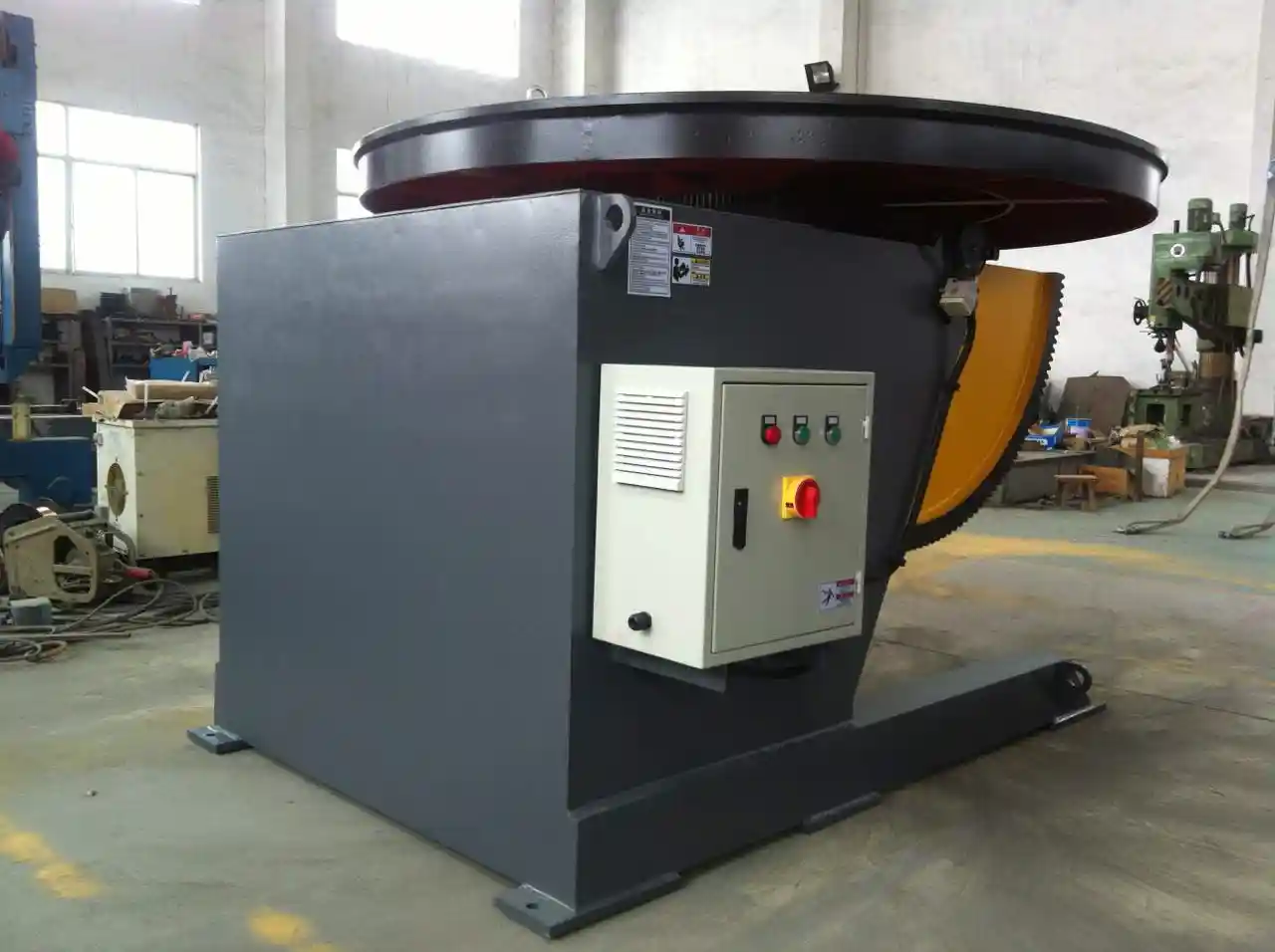
Key parameters that require documented verification under CE marking include: load capacity testing at maximum rated capacity, rotation and tilt speed verification across the full stepless range, emergency stop response time, and IP protection rating conformance (IP54 is common for welding positioners). A supplier who cannot produce a technical file for the specific model you are purchasing is not CE-compliant, regardless of what the certificate says.
How to Verify Supplier Certification Credentials Step by Step
The verification process starts with the certificate itself and moves backward to the certifying body’s database. Every legitimate certification carries a registration number. For ISO 9001, this number is linked to an accredited certification body (CB) that is itself accredited by a national accreditation body (like UKAS in the United Kingdom, DAkkS in Germany, or ANAB in the United States), which in turn is recognized under the IAF Multilateral Recognition Arrangement.
Step one: identify the certifying body’s name and accreditation mark on the certificate. A common red flag is a CB with no IAF signatory accreditation. Ask the supplier for the name of the accreditation body, then cross-check it on the IAF website (iaf.nu). If the accreditation is not traceable through IAF, the certificate has no international standing.
Step two: use the certifying body’s online registry to look up the registration number. Every accredited CB maintains a publicly searchable database. Enter the number and verify that the scope of registration matches what the supplier claims — specifically, that the scope covers the design and manufacture of welding equipment, not just trading.
Step three: for CE marking, request the EU Declaration of Conformity for the exact machine model and verify the harmonized standards listed. A genuine declaration will specify the Machinery Directive (2006/42/EC) and list EN ISO 12100 as a minimum. If the declaration only mentions general quality standards or references directives that do not apply to welding machinery, it is a red flag.
Step four: verify auxiliary certificates like welder qualification records (EN ISO 9606-1), welding procedure specifications (EN ISO 15614), and NDT personnel certification (EN ISO 9712) if the supplier claims these. Real certificates include issue dates, expiry dates, and certifying body contact details. I have seen instances where a supplier provided a welder qualification certificate with the certifying inspector’s name misspelled — a detail a buyer would miss if not checking character by character.
If your program involves multiple machine categories — say, a welding manipulator plus a heavy-duty rotator plus a positioner — each requires its own CE documentation. One umbrella certificate does not cover all equipment. Reach out at jay@weldc.com if you need guidance on which standards apply to your specific machine list.
Red Flags in Certification Documentation and How to Spot Them
Several patterns repeat across non-compliant supplier documentation, and they are consistent enough that an experienced buyer can spot them within minutes of opening a PDF. The first is the generic scope of registration. A certificate that lists the scope as “manufacturing of machinery” without specifying the type of machinery — welding equipment, CNC cutting systems, or similar — is too broad. A legitimate scope will reference the product category with enough detail that an auditor could plan a meaningful assessment.
The second is an issuing body that is not accredited. Many suppliers present certificates from “certification bodies” that are actually consulting companies or have no IAF signatory status. You confirm this by checking the body’s accreditation status on the IAF member list, not by accepting the supplier’s assertion.
The third is missing supporting documentation for CE marking. A Declaration of Conformity without a referenced technical file is a legal non-compliance, not just a paperwork gap. The technical file must be available for inspection by competent authorities for ten years after the last unit is placed on the market. I have had clients ask for a technical file preview before finalizing a purchase, and in several cases, the supplier could not produce even a risk assessment for the welding positioner in question. That equipment did not leave the factory.
| Red Flag Indicator | What to Check | Genuine Certification Shows |
|---|---|---|
| Certificate issued by unaccredited body | Verify CB accreditation on IAF member list | CB listed under a recognized national accreditation body |
| Scope of registration too broad or mismatched | Scope must mention design/manufacture of specific welding equipment | Scope specifies category such as “welding automation machinery” |
| CE Declaration lacks harmonized standard references | Look for EN ISO 12100 or equivalent for machinery safety | Declaration lists applicable directives and harmonized standards |
| Certificate number not searchable online | Enter the number on the CB’s public registry | Record found with matching company name and scope |
Another subtle warning sign: the supplier’s quality manual describes processes that do not match the equipment you see. For example, if the manual details incoming material inspection procedures but the supplier cannot show you material certificates for the steel plate used in their HGZ-30 rotator frame, the documented system is not operational.
Questions to Ask a Welding Equipment Supplier Before Approving Certification
The supplier’s response to direct questions often reveals more than the documents themselves. After you have the certificates, schedule a video call and ask these five questions, watching for discomfort, evasion, or inconsistency.
First, ask: can you walk me through the last surveillance audit you received? A supplier whose ISO certification is current will have undergone a surveillance audit within the past twelve months. They should be able to describe the auditor’s findings, any non-conformances raised, and the corrective actions taken. If they cannot recall the audit or say it happened without any issues, that is unusual — surveillance audits almost always produce at least one minor finding.
Second, ask: who in your organization is certified under ISO 14731 for welding coordination? For CE-marked welding equipment, a responsible welding coordinator must be designated and qualified. If the supplier has no named welding coordinator with relevant certification, their structural welding quality is ungoverned.
Third, request a copy of a completed inspection report for a machine similar to yours, with test data. A genuine manufacturer will have a library of final inspection reports showing parameters like runout measurement, rotation speed verification, and load test results. A supplier who cannot produce a single inspection report with real test numbers is likely not performing the tests they claim.
Fourth, ask about the specific harmonized standards listed in the CE Declaration of Conformity. A legitimate manufacturer will be able to tell you why EN ISO 12100 applies to their welding manipulator and which clause addresses the boom’s anti-fall safety pin. If the answer is vague, the declaration was likely prepared by a third-party consultant with no meaningful engineering review.
Fifth, ask if they can provide factory acceptance test (FAT) procedures for your machine type and whether you can attend the test remotely or in person. Suppliers confident in their certification and testing infrastructure will accommodate this without hesitation.
Verification is not about distrust; it is about ensuring that the quality management system you are paying for actually governs the production of your equipment. We have supported many global customers through factory verification visits, and the most successful ones come with a checklist, a camera, and a clear expectation of what genuine certification looks like. If your machine requirements involve load capacities above 20 tons or multi-axis synchronized motion, confirming the supplier’s testing capability before production begins is a low-cost way to avoid costly rework later.
Certification Questions Equipment Buyers Often Ask
Does ISO 9001 mean the welding positioner will meet accuracy specs?
No. ISO 9001 certifies the quality management system, not the product performance. A manufacturer can hold ISO 9001 and still produce a positioner with ±1° rotation accuracy if the design specification is low. The machine’s accuracy is determined by the design, component selection, and in-process inspection procedures. This is why you need to verify the inspection report data, not just the certificate. In programs we have supported, the clients who asked for pre-shipment inspection reports with actual measurement data consistently received equipment that matched the datasheet — because the manufacturer knew the numbers were being checked.
How can I confirm a CE marking is genuine for a welding rotator?
Request the EU Declaration of Conformity and verify that it references the Machinery Directive 2006/42/EC and lists applicable harmonized standards. Then ask for the technical file index or a summary of the risk assessment. Genuine CE documentation will always come with a technical file, even if the supplier does not share every page. If they tell you the declaration alone is sufficient, they are incorrect under EU law. A real declaration also includes the name and address of the authorized representative within the EU; if the supplier has no EU representative, the declaration is invalid for equipment placed on the EU market.
What is the most common certification shortcut Chinese suppliers take?
The most common shortcut I observe is obtaining a certificate from an unaccredited certification body that charges a low fee and issues a certificate after a superficial desk review without an on-site audit. The certificate looks formal but holds no IAF recognition. Buyers unfamiliar with the IAF framework accept it at face value. The fix is simple: always verify the certifying body’s accreditation status through the IAF member database, not through a link provided by the supplier. Another common issue is CE marking without a technical file — essentially a self-declaration with no engineering substance behind it.
Can I rely on a supplier’s certification if they export to multiple countries?
Not automatically. A supplier can legitimately export to one country under specific certifications and export to another country with different or even no relevant certifications. The fact that they ship to Germany does not guarantee that the machine you are buying for Indonesia has been through the same conformity assessment, unless the specific machine model is covered. Check the certification scope for your exact model and the destination country’s requirements.
Should I visit the factory to verify certification claims personally?
If the investment is significant, yes. During a factory visit, you can observe whether the quality system described in the manual is actually used. Look for evidence: calibration stickers on measuring equipment with current dates, welder qualification certificates posted in the workshop, incoming material inspection records with actual rejections logged. A system that exists only in a folder has no calibration stickers, no rejection records, and no weld parameter sheets on the machine stations. I have accompanied enough plant visits to know that these physical signs are more reliable than any certificate. Share your requirements and we can help you prepare a verification visit checklist so you arrive focused on the right evidence.
Si te interesa, echa un vistazo a estos artículos relacionados:
Dominar la fabricación pesada: Cómo los soportes de rodillos trepantes se convierten en la piedra angular de la soldadura eficiente
Mejora de la calidad y la eficiencia en la fabricación de productos eólicos: El papel clave de los posicionadores en la soldadura de la circunferencia de la sección de la torre
Pipe Welding Misalignment Issues: How Intelligent Welding Pipe Rotators Boost Oil Pipeline Pass Rates
 English
  Español
  Français
  Deutsch
  Português
  Русский