
Bridge H-Beam Welding: Why Automation Changes the Equation
Bridge H-beams are not ordinary structural members. They carry cyclic traffic loads, thermal movement, and long-span bending, so web-to-flange alignment, weld throat geometry, and residual stress distribution all become engineering variables rather than shop-floor conveniences. In manual or semiautomatic production, the same joint can be welded differently from one shift to the next because travel speed, electrode angle, flux coverage, and interpass temperature vary with operator technique. For bridge fabrication, that variability flows directly into fit-up, distortion, and repair.
Automated H-beam welding reduces that variation by controlling the weld path, the process parameters, and the workpiece position. Under a bridge code such as AWS D1.5, the fabricator still qualifies the procedure and the welder or welding operator; the automation does not remove code responsibility [1]. What changes is the ability to reproduce a qualified condition across hundreds of meters of weld. For fabricators managing multi-code work, ISO 3834-2 provides a welding quality framework [2], and EN 1090-2 sets structural execution requirements in Europe [3].
This article outlines the main line configuration, the dimensional-control logic, the code requirements, and the ROI variables for bridge-oriented H-beam production.
Core H-Beam Automation Line: Assembly, Welding, and Positioning
A bridge-ready H-beam line is less a single machine and more a sequence of controlled stations. The most common configuration includes plate preparation, web-to-flange assembly, longitudinal welding, straightening, and final inspection. The starting point is usually CNC cutting of web and flange plates, often with a Cortadora de llama CNC or plasma/laser option depending on thickness and edge-quality requirements. The cut edge should be square and stable because it becomes a reference in the assembly station.
At the assembly stage, the Montaje de la viga H machine aligns the web to the flange centerline and clamps the workpiece before tack welding. For bridge girders, this is where pre-camber and web centering are set. If the web is offset or the flange is not held square, the later welding passes can lock that error into the beam, making straightening and inspection more expensive. Modern assembly stations use hydraulic positioning, roller supports, and centralized controls to reduce setup time between section sizes.
The main welding station normally uses a Manipulador de soldadura with a column-and-boom structure carrying one or more submerged-arc welding heads. Precision matters here. A manipulator with high-strength box-beam construction, linear guideways, cycloidal reducers, and stepless speed control maintains a stable travel path and positions the SAW head within a tight tolerance over the flange-web joint. In practice, a system with positioning accuracy around ±0.1 mm/m helps keep the wire centered in the joint even on long crane girders or box-girder subcomponents. Optional seam tracking, flux recovery, and automated parameter control become valuable when a line runs mixed beam sizes or high daily throughput.
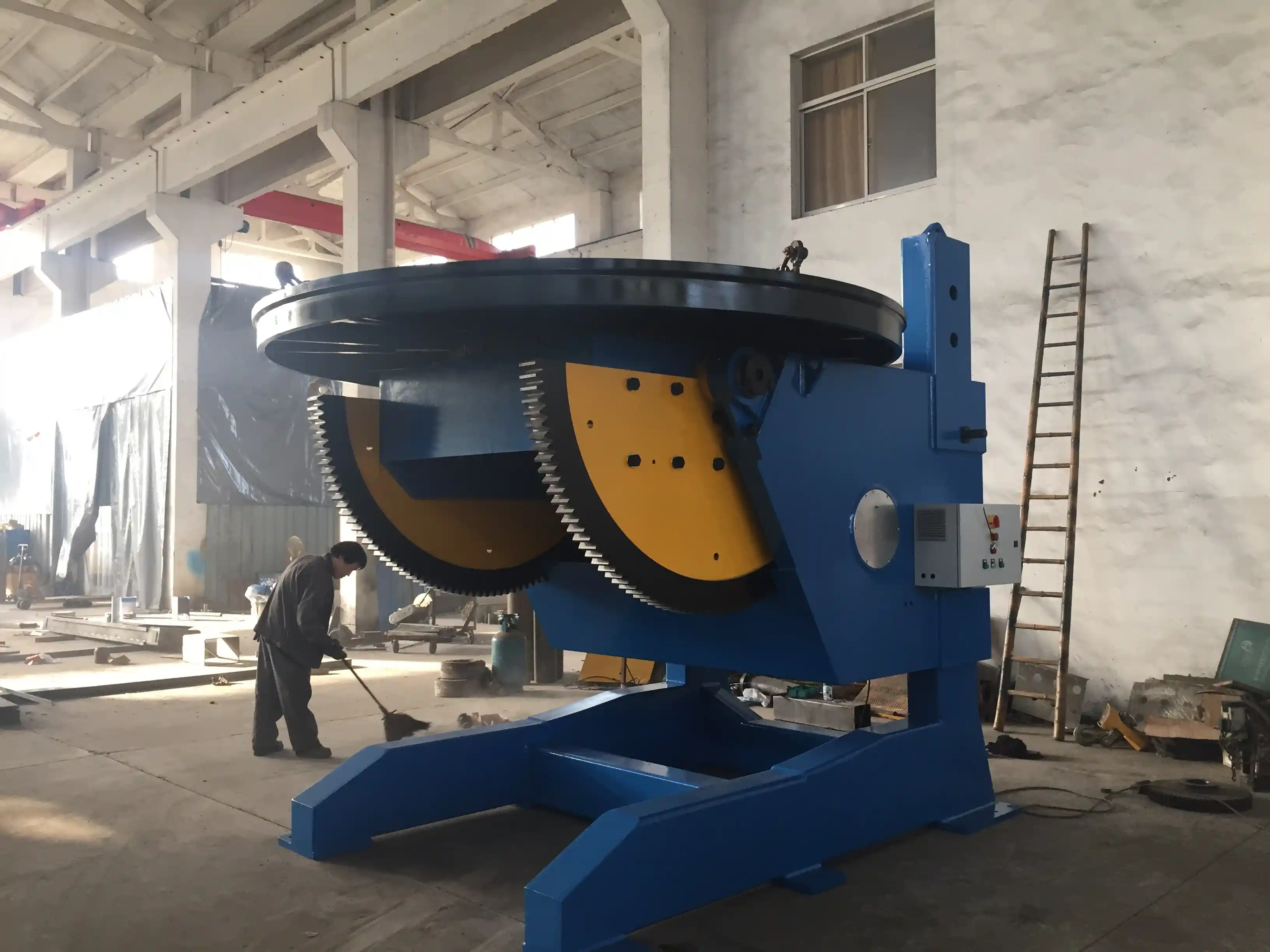
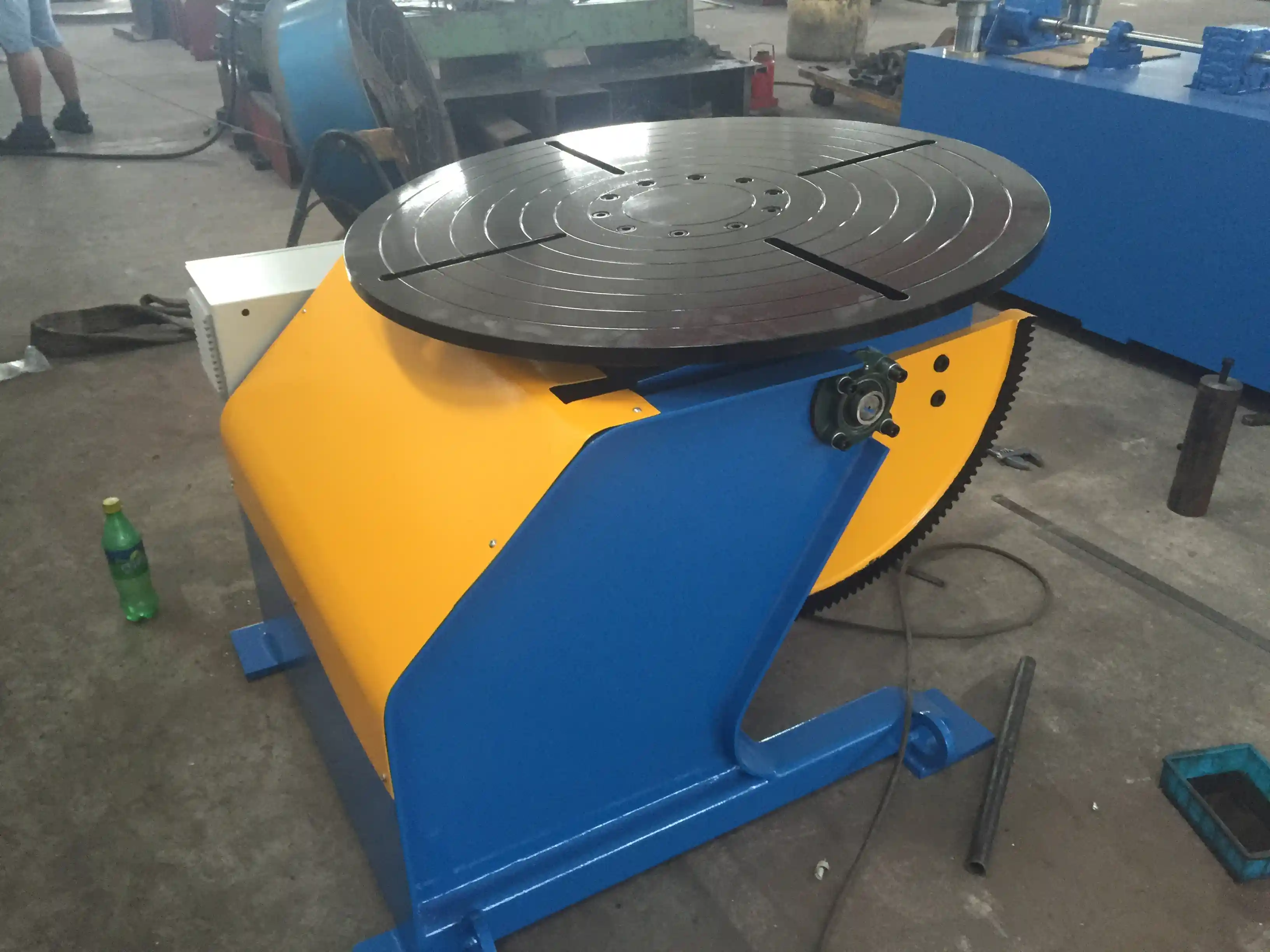
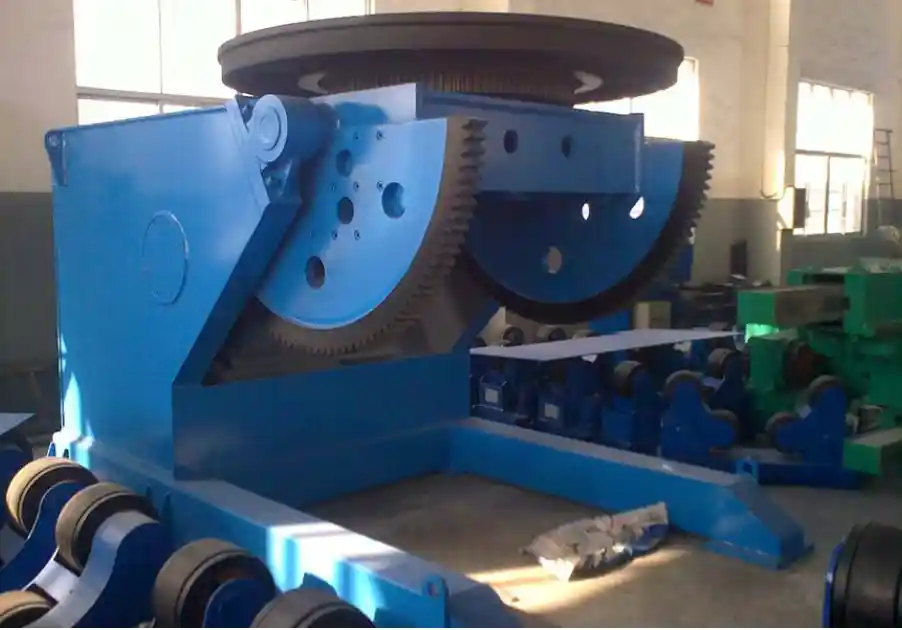
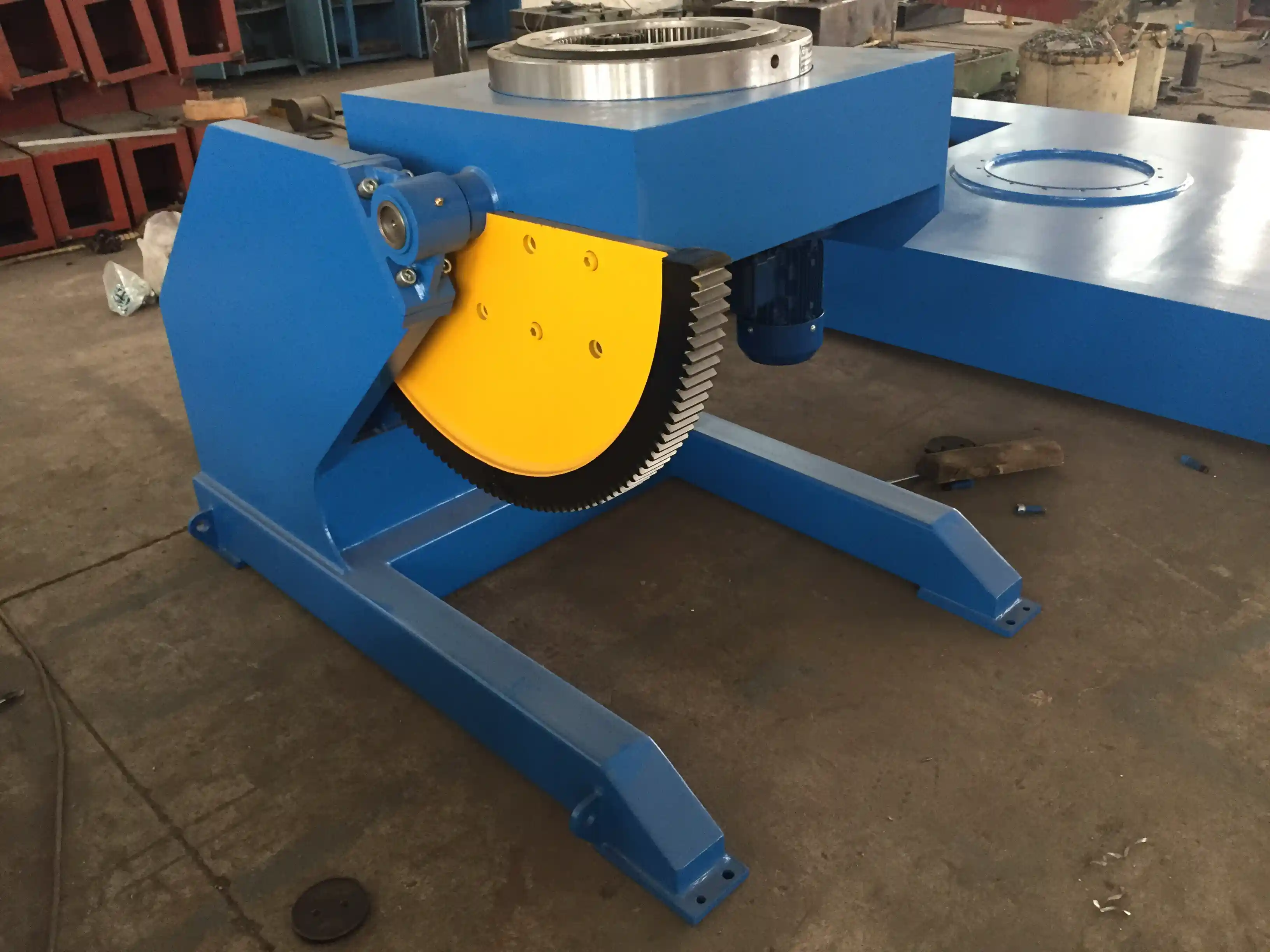
The supporting positioning equipment is equally important. For long or heavy bridge members, Posicionador de soldadura ajustable units, roller stands, or fit-up rotators hold the beam in the correct orientation and reduce manual turning. This minimizes weld starts and stops. It also keeps the flange and web in a stable plane so the sub-arc pass has a consistent contact-tip-to-work distance.
| Line station | Main function | Bridge-relevant control point |
|---|---|---|
| CNC plate cutting | Prepare web and flange plates | Edge squareness, plate size, heat-affected edge quality |
| H-beam assembly | Align web to flange and tack weld | Web centering, pre-camber, gap control, flange tilt |
| Submerged arc welding | Weld flange-to-web T-joints | Heat input, travel speed, flux coverage, interpass temperature |
| Straightening | Correct flange sweep and web waviness | Roller pressure, support spacing, yield-strength awareness |
| Inspection and traceability | Verify dimensions and weld quality | Camber, sweep, out-of-flatness, NDT records |
For bridge girder fabrication, stable positioning on roller stands and fit-up equipment keeps the web and flange aligned during consecutive sub-arc passes. <El pilar central de la fabricación pesada: El extraordinario rendimiento de los soportes de rodillos en procesos clave> covers how beam support and rotation influence weld consistency in heavy structural work.
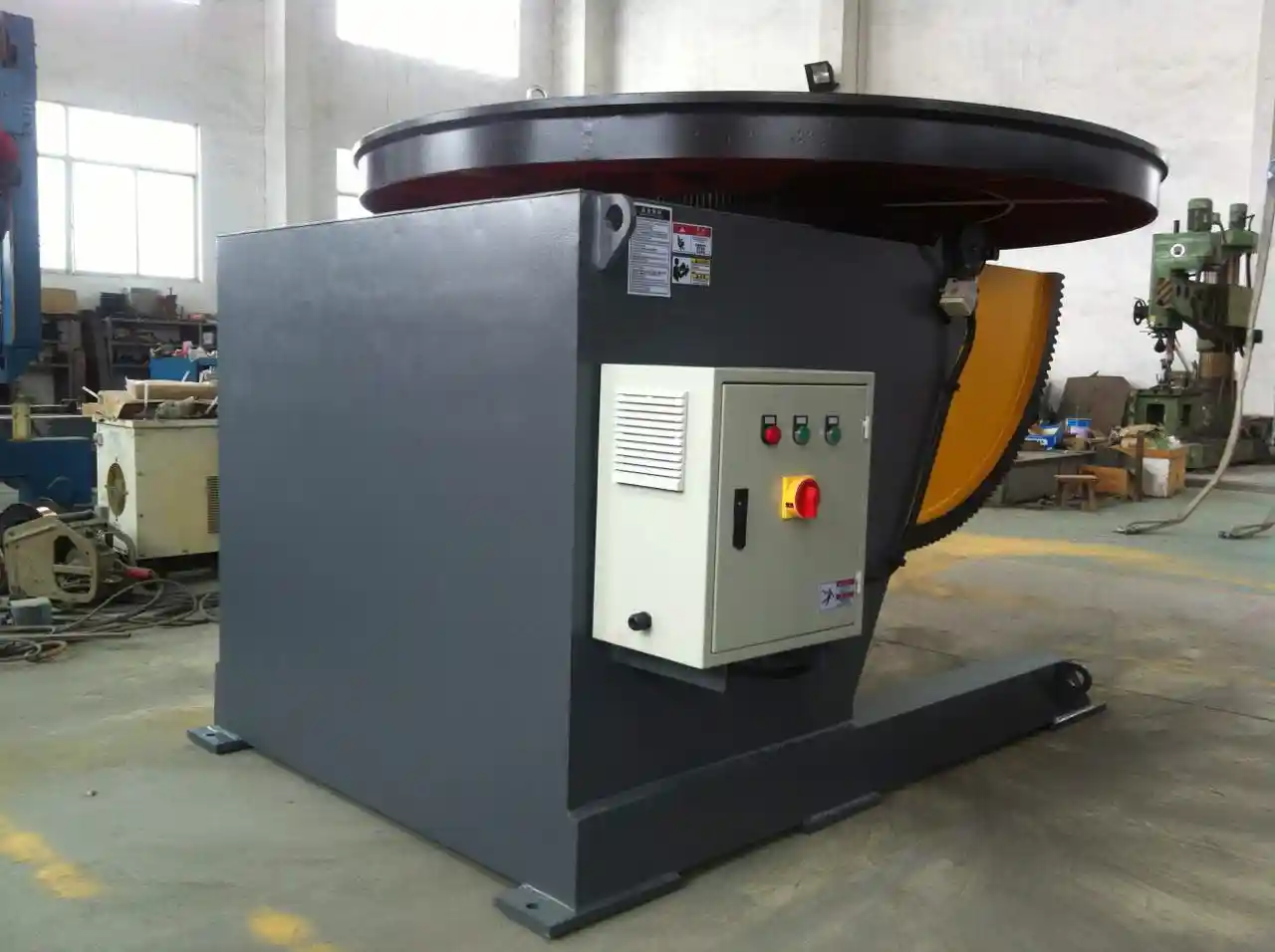
Line layout decisions depend on maximum web height, flange width, plate thickness, material grades, and whether the shop is producing straight girders, cambered girders, or welded plate girders with full-penetration web splices. If you are comparing a fixed automation line with a flexible cell, email jay@weldmc.com or call +86-13815101750 with your targeted section range, welding code, and output per shift. A practical layout should be based on those inputs, not on a generic equipment list.
Dimensional Control for Bridge Girders: Camber, Straightness, and Distortion
Dimensional control is often the real business case for automation. Bridge H-beams require controlled camber, limited sweep, and acceptable flange out-of-flatness. The welding sequence and heat input control those results. A well-programmed automated line applies similar heat input along the beam; manual welding often produces local hot spots that pull the beam out of tolerance.
Pre-camber is best handled at assembly. If the web is intentionally set with a small vertical offset before welding, the final welded member can compensate for the expected thermal contraction. The assembly machine must hold that offset without allowing the web to drift during tacking. After welding, a straightening station corrects residual sweep using controlled roller pressure, but straightening is a correction step, not a replacement for good fit-up.
Effective distortion control also depends on support. Long bridge members should be supported at consistent intervals so that the member does not sag under its own weight during welding. For very long or deep girders, the support system should allow rotation for the opposite-flange weld without inducing twist. This is why the selection of roller stands, fixed-height supports, and adjustable positioners should be treated as part of the welding process rather than as simple handling equipment [3].
Beam twisting and flange waviness respond directly to how the member is supported and rotated during welding and straightening. <Dominar la fabricación pesada: Cómo los soportes de rodillos trepantes se convierten en la piedra angular de la soldadura eficiente> covers how controlled support systems help manage distortion in heavy welded structures.
Code Compliance and Quality Verification for Bridge H-Beams
Bridge H-beam fabrication is usually governed by the project specification and the applicable bridge welding code. In North America, that is commonly AWS D1.5M/D1.5, the Bridge Welding Code [1]. The code requires written welding procedures, procedure qualification records, qualified welding operators, and inspection that matches the joint category. In European projects, EN 1090-2 sets execution classes and technical requirements for steel structures [3]. A fabricator working in different markets may also apply ISO 3834-2 as the quality-management framework for welding [2].
Automation supports code compliance by making the welding sequence more traceable. Travel speed, voltage, current, and sometimes preheat or interpass temperature can be logged. That data becomes part of the quality record. It does not replace NDT, but it gives the inspector a clearer picture of whether the production pass stayed within the qualified envelope.
Inspection priorities for bridge H-beams include web-to-flange alignment, weld size and profile, lack of fusion, undercut, cracking, and dimensional acceptance. Depending on the joint and specification, testing may include visual inspection, magnetic particle testing, and ultrasonic testing. For automation projects, the best approach is to define acceptance criteria before line installation so that the machine parameters are aligned with the required weld quality, not merely with a target cycle time [1][2].
Production Efficiency and ROI Planning
The production case for H-beam automation comes from three directions: lower weld-repair rates, higher arc-on time, and reduced reliance on scarce manual welding capacity. The first effect is often the fastest payback because bridge fabrication rework is expensive; a rejected or repaired flange-web joint consumes cutting, fit-up, welding, and inspection time again.
ROI should be modeled per project and per product mix rather than applied as a fixed industry percentage. A practical model compares cost per ton under the current process with cost per ton under the automated process, then multiplies the difference by annual throughput. The numerator should include direct labor, consumables, rework, equipment depreciation, and floor space. The denominator should include only qualified, inspection-ready output.
Bridge fabricators should also weigh flexibility. A line configured only for one beam size may be highly productive on a long run but difficult to justify for variable bridge packages. Modern lines often combine size-adjustable assembly, stepless travel control, and programmed welding parameters so that the same equipment can handle multiple section ranges. The process changeover should be fast enough to keep short-run work profitable.
Long joint tracking on a bridge girder is similar to the continuous seam work seen in tower and large-vessel fabrication. <Manipuladores de soldadura para la fabricación de torres eólicas: Revolucionando la eficiencia de la producción> covers how column-and-boom manipulator systems maintain travel stability on extended weld seams.
System Evaluation and Next Step
A bridge H-beam automation project should begin with a clear production envelope: maximum and minimum web height, flange width and thickness, steel grades, required preheat, welding processes, code class, and annual tonnage. That data determines whether the shop needs a dedicated high-volume line, a flexible medium-duty cell, or an upgrade to specific stations such as assembly, welding, and straightening.
The most important rule is to avoid specifying equipment before defining the weld procedures and dimensional tolerances. The automation should be sized around the code requirements and the most demanding bridge members the shop expects to fabricate. That includes material handling access, NDT station layout, and crane coverage, not only the welding equipment itself.
For a bridge-ready H-beam system evaluation, contact Wuxi ABK Machinery Co., Ltd. at jay@weldmc.com or call +86-13815101750. Provide your maximum section dimensions, material grades, target welding standard, and annual output; the engineering team can recommend a line configuration, welding head arrangement, and layout that matches the required inspection class.
Preguntas frecuentes
Which welding process is most common for bridge H-beam flange-to-web joints?
Submerged arc welding is the most common process for automated flange-to-web joints in bridge H-beam production because it provides deep penetration and high deposition in the flat position under flux. Flux-cored or gas-shielded processes may be used for stiffeners, repair, or site connections, depending on the qualified procedure.
How does an automated line control web-to-flange alignment and pre-camber?
The assembly machine uses clamps and positioning devices to center the web on the flange and hold the intended pre-camber before tack welding. Proper support and controlled clamping prevent the web from drifting. The assembly accuracy determines how much correction is needed after welding.
What bridge welding code typically governs H-beam fabrication?
In North America, bridge steel often follows AWS D1.5M/D1.5, while European projects may follow EN 1090-2 with supporting ISO 3834 quality requirements. The project specification usually states the governing code, inspection class, and qualification requirements before production starts.
Does automation eliminate welder qualification and NDT?
No. Automation changes process control, but the fabricator must still qualify procedures and operators under the applicable code. NDT requirements remain based on joint type, stress category, and project specification. Automated data logging supports inspection but does not replace visual, magnetic particle, or ultrasonic testing where required.
Can one H-beam line handle multiple bridge beam sizes?
Yes, if the line is designed with adjustable assembly stations, programmable welding parameters, and size-flexible supports. Highly dedicated lines may be faster for a narrow size range, while flexible lines are better for variable bridge packages and short-run work.
What information should a fabricator prepare before configuring a bridge H-beam line?
Prepare the maximum and minimum section dimensions, flange and web thicknesses, steel grades, preheat requirements, target welding code, annual tonnage, existing crane capacity, and available floor space. These inputs determine station layout, welding head configuration, and handling equipment rather than selecting from a standard list alone.
References
[1] American Association of State Highway and Transportation Officials / American Welding Society, AASHTO/AWS D1.5M/D1.5: Bridge Welding Code, 2020.
[2] International Organization for Standardization, ISO 3834-2:2021 Quality requirements for fusion welding of metallic materials — Part 2: Comprehensive quality requirements.
[3] European Committee for Standardization, EN 1090-2:2018 Execution of steel structures and aluminium structures — Part 2: Technical requirements for steel structures.
Si te interesa, echa un vistazo a estos artículos relacionados:
Rotador de soldadura: automatización de precisión para la fabricación industrial: guía de preguntas frecuentes elaborada por expertos
¿Espacio de taller demasiado pequeño? Cómo las columnas ahorran espacio 50% a la vez que aumentan la seguridad y la eficiencia
 English
 Español
 Français
 Deutsch
 Português
 Русский