Wind tower welding line price starts with two numbers buyers rarely compare on the same basis: the machine quotation and the cost of holding tolerance through shift changes, tower section changes, and weld rework. I have spent more than twenty years working on these lines, and the largest cost gaps are usually not in the welding heads or the boom travel. They sit in positioner capacity, foundation load, roll alignment, and after-sales response. A line configured around those factors can produce a 4.5 meter base section predictably instead of fighting weld path drift and mechanical creep.
What Sets the Base Price of a Wind Tower Welding Line?
Most buyers start by comparing column and boom travel and welding amperage. Those numbers matter, but they do not explain why one line is 30 percent more than another with the same brochure values. The base price is set by four groups: the manipulator structure, the turning and positioning equipment, the welding system, and the line-level controls.
A manipulator with 8000 mm horizontal travel and 8000 mm vertical travel does not simply cost proportionally more than a 3000 mm boom. Longer travel requires a heavier column, a wider rail base, and a foundation that can hold the deflection limit under welding load. From our LH series, the LH8080 lists horizontal travel 8000 mm, vertical travel 8000 mm, and rail distance 2700 mm. The LH3040 lists 3000 mm horizontal travel, 4000 mm vertical travel, and rail distance 1500 mm. The difference shows up in steel mass, drive sizing, and installation cost, not only in the travel figure.
| Equipment group | Main price driver | Buyer mistake to avoid |
|---|---|---|
| Column and boom | Horizontal travel, vertical travel, rail gauge | Buying travel range for the largest section, not the most frequent section |
| Turning rolls and rotators | Load capacity, diameter range, anti-creep control | Underspecifying dynamic load for eccentric tower sections |
| Fit-up systems | Hydraulic alignment and laser guidance | Treating fit-up as optional when wall mismatch drives rework |
| Power source and SAW controls | Amperage, multi-wire capability, synchro control | Ignoring spare board and sensor lead time |
| Foundation and rail | Section weight, straightness requirement | Installing on a floor without checking differential settlement |
The foundation line is where a clean workshop quote can hide the real cost. A heavy rail bed on an unprepared floor loses alignment within months. The machine itself may be straight, but the weld path will not stay true if the base settles unevenly.
Which Configuration Choices Move the Quote the Most?
Configuration drives price more than machine count. Tower diameter, section length, and wall thickness define the equipment envelope. A base section 4.5 m in diameter and 20 m long cannot be handled by a positioner specced for a small tower shell. Shell weight, flange weight, and center of gravity distance are what matter.
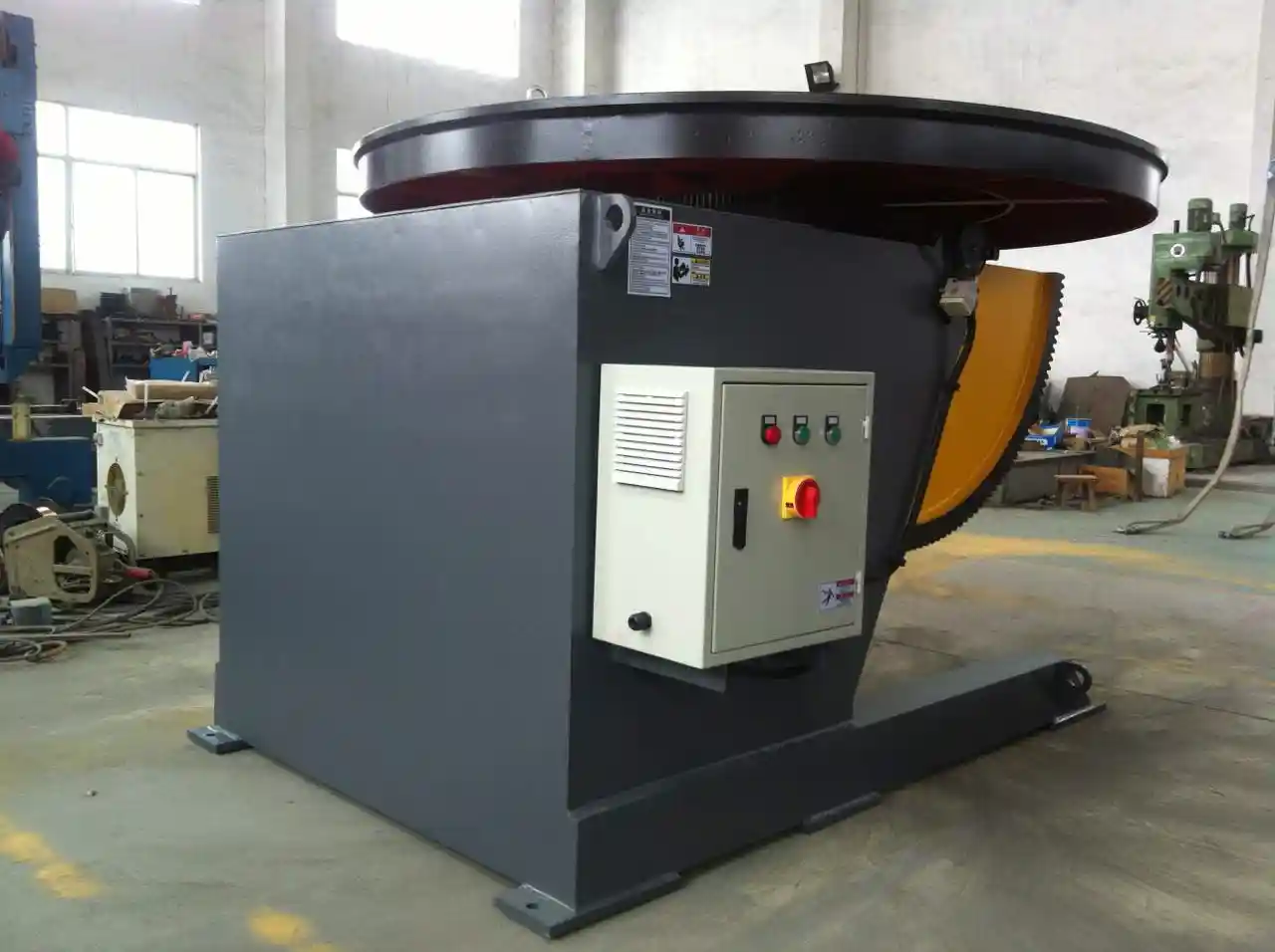
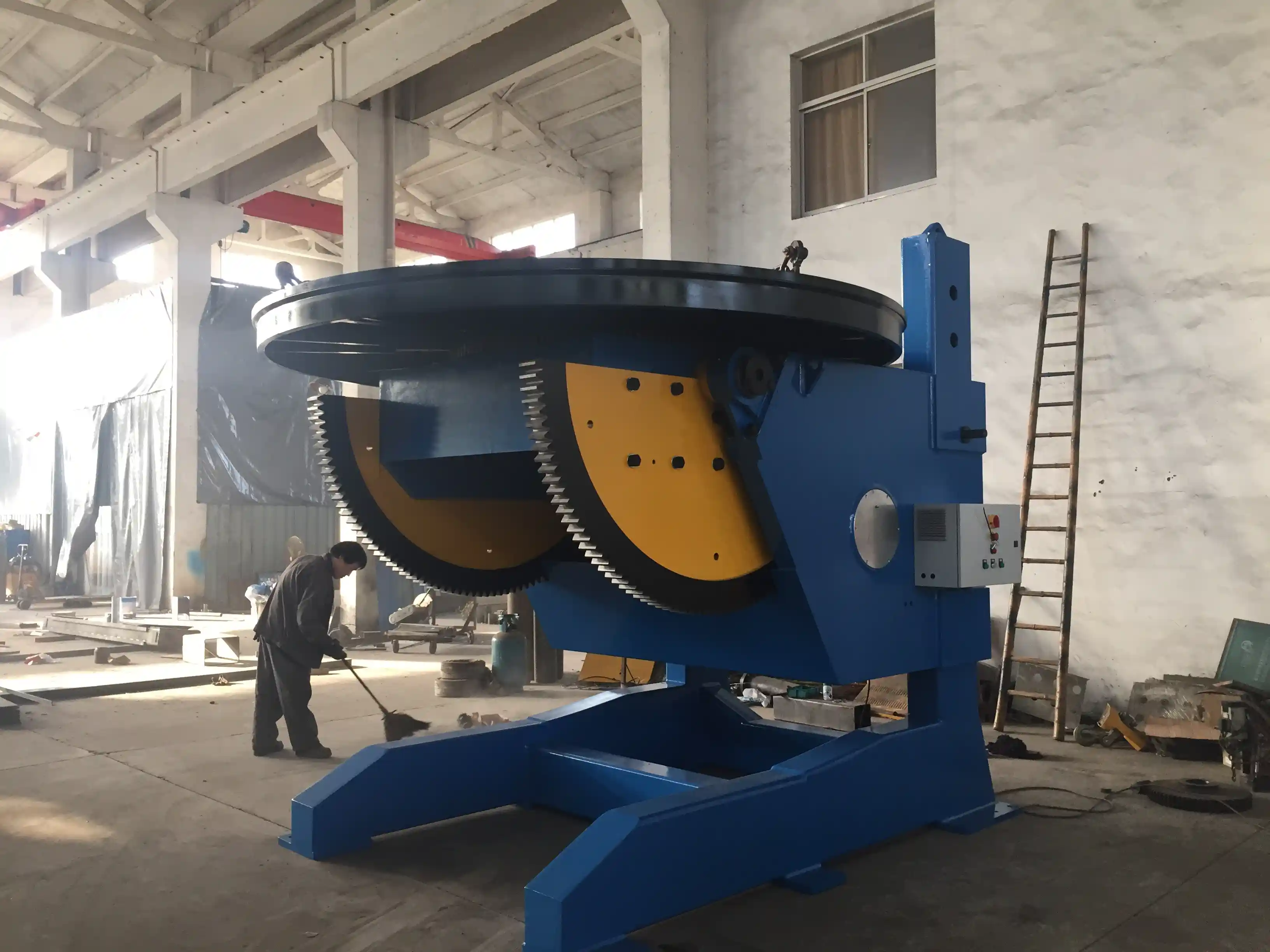
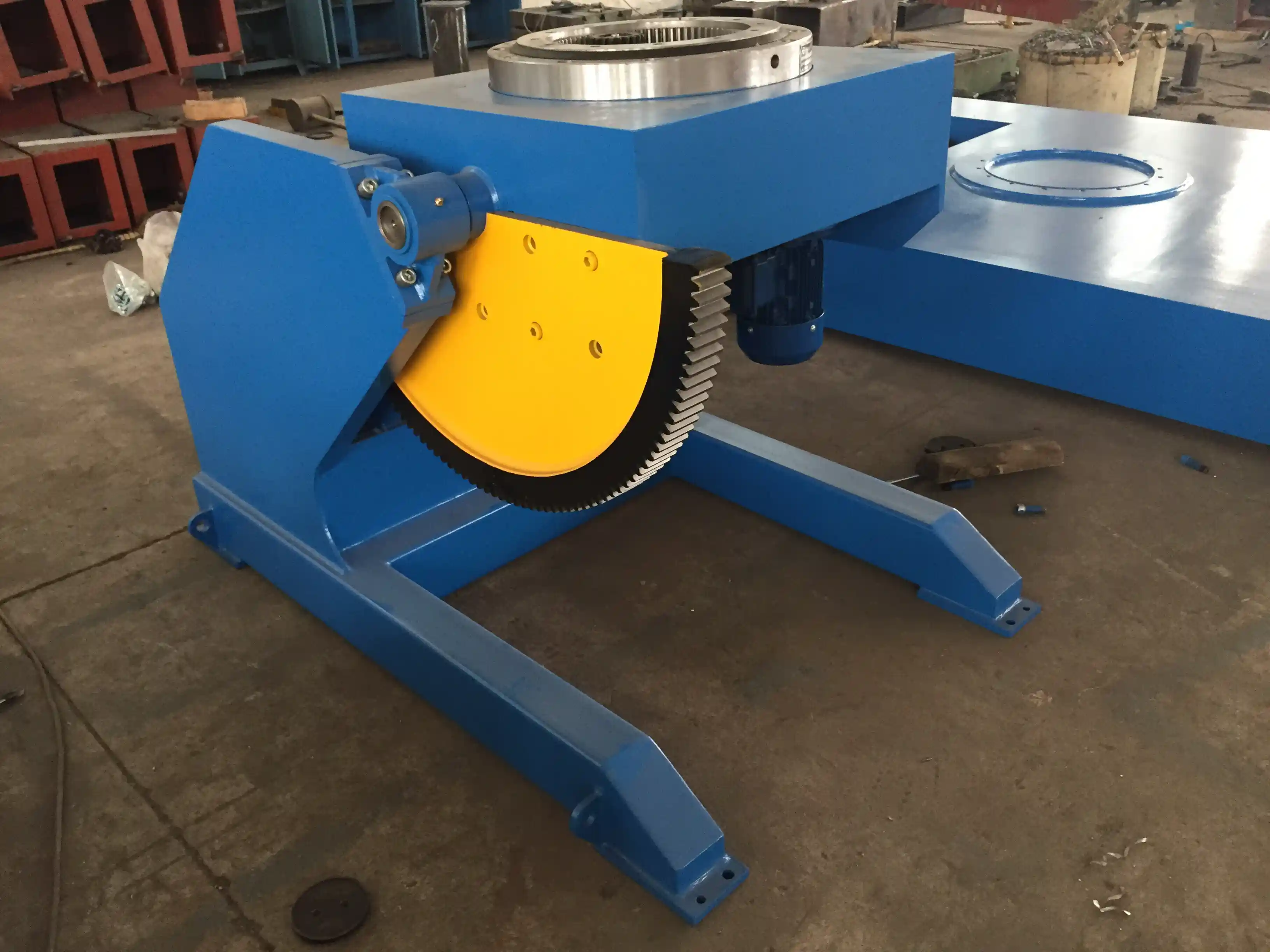
In a 30 ton adjustable height positioner, the load capacity is 30000 kg, table diameter is 600 mm, L support length is 800 mm, and height range is 1000 to 2000 mm. That is a specific envelope. If the tower section is heavier or the flange is more offset, the next step is not only a stronger gearbox. It is a larger table, a longer L support, and a different lifting structure. Those changes add cost faster than welding power alone.
Automation level moves the quote in the same way. Seam tracking, laser vision, and synchronized multi-torch control are not add-ons that can be ignored. On a long longitudinal weld, a small tracking delay turns into a wider heat affected zone and more rework. On a heavy circumferential seam, rotator speed matching decides whether the torch stays on the joint or drifts across it. Buyers who compare only head count on the line miss these functions.
Why Do Process Equipment and Fixtures Add Up So Quickly?
The quote that stops at the manipulator and rotator leaves out the equipment that decides whether the torch stays on the joint. Fit-up rotators, idler roll stands, flux recovery, fume extraction, preheat, and NDT access all consume budget. On tower shells, longitudinal seams and circumferential seams need different fixturing. The price gap between a basic line and a production line usually appears in the rotator controls: anti-creep, synchronized rotation, and speed matching between driving and driven frames.
Rotator control is where tower shell welding becomes stable or becomes rework. <Problemas de soldadura en torres eólicas de nuevo: Cómo los rotadores inteligentes de líneas de crecimiento aumentan la productividad por 50%> covers the link between anti-creep compensation and weld speed on large diameter sections, and why a small software difference can change output more than an extra welding head.
If your program includes transition pieces or multi-diameter sections, confirm the fit-up rotator capacity before finalizing the equipment list. Email jay@weldc.com with the section range and we will check roller spacing and load distribution against your heaviest shell.
How Do Delivery, Installation, and After-Sales Affect Total Cost?
Freight is one price line, but installation is where quotes separate. The same line can be crated for container shipping or shipped as oversized open components. A manipulator with 8000 mm travel and a heavy rail bed needs a foundation that controls differential settlement. If the buyer does not prepare the floor, commissioning extends and alignment degrades.
After-sales also shows up in real cash. The key items are spare parts lead time, remote diagnostics, operator training, and the supplier’s willingness to send an engineer for start-up. We treat commissioning as part of the line price, not as a paid option for later. A line that cannot hold straightness during the first three months costs more in delayed sections than the original price difference.
Hydraulic lifting systems affect more than fit-up speed. <Desafíos de la soldadura de torres eólicas: Cómo los sistemas avanzados de elevación hidráulica aumentan la producción por 40%> covers why controlled lifting cuts overhead handling time and how that saving hides inside the line’s total cost, not the machine line item.
What Buyers Should Confirm Before Committing to a Wind Tower Welding Line Quote?
The most expensive mistake is to sign a line quote before the process envelope is written down. If tower section weights and diameters are not fixed, every positioner and rotator capacity becomes a guess. Our position is to fix the product range first, then confirm the equipment envelope, then compare line prices. A real quotation should include a layout, a foundation load chart, a duty cycle estimate, and a spare kit list.
At WUXI ABK Machinery Co., Ltd., we build wind tower lines with the manipulator, rotator, fit-up, and positioner package configured to the sections you actually weld. Send your tower section diameter, shell length, wall thickness range, and annual section count to jay@weldc.com. If you are comparing two suppliers, also send both quotations. We will check the equipment envelope against your section list and confirm which items are missing before you commit. Call +86-13815101750.
What Do Procurement Teams Ask About Wind Tower Welding Line Pricing?
How is wind tower welding line price different for a 5 MW tower line compared with a 2 MW line?
The step change comes from section diameter and weight, not only from output rate. A 5 MW base section is often 4.5 to 6 m in diameter and heavier, so the rotators, positioners, and manipulator rail loads rise with the square of diameter plus the eccentric load. The quote adds larger turning rolls, a stronger column structure, and sometimes a head and tail station instead of a simple rotator set. At the same annual output, the 5 MW line costs more in foundation and material handling before welding equipment is even counted.
Why do two suppliers quote such different prices for the same wind tower welding line capacity?
A common assumption is that the higher quote is mostly margin. In many cases, the lower quote leaves out anti-creep control, spare boards, commissioning, or operator training. One bid may use a rotator with a manual clutch while another includes synchronized drive and seam tracking. The difference is not cosmetic. Without synchronization, large shell cans drift and the weld path moves. Ask each supplier to list the same items: foundation loads, drive configuration, spare list, and start-up scope. Then compare.
Should we buy a turnkey line or combine separate equipment from different suppliers?
It depends on whether your team has integration experience. If your plant has an automation engineer who can align different control systems, mixing a proven manipulator with local rotators can reduce initial cost. If the team is commissioning a first tower line, a turnkey scope is usually less risky because the supplier owns the interface problem. The condition that matters is not price. It is who gets called when the seam tracker disagrees with the rotator. We prefer to supply the complete line, but we also sell sub-systems with function splits made clear.
How much should we budget for commissioning and operator training?
From the wind tower lines we have built, the real cost is less about the line item and more about lost production if commissioning is too short. Budget at least one full shift for alignment checks, dry runs, and weld parameter setup before production starts. Operator training should cover manipulator travel limits, rotator speed matching, and emergency stop logic. If training is skipped, the first long-shell weld will expose it. Share your start-up date and section schedule, and we can confirm the commissioning window and training scope.
Si te interesa, echa un vistazo a estos artículos relacionados:
Baja eficiencia en la soldadura de conjuntos de tuberías: cómo los soportes de rodillos inteligentes aumentan la productividad en un 501 %
Principales puntos débiles y soluciones de alta precisión de los posicionadores de soldadura en los sectores de la energía eólica y la construcción naval: Análisis técnico exhaustivo
Valor de aplicación excepcional: Cómo los posicionadores de soldadura de altura fija impulsan los avances en la fabricación en alta mar y la construcción naval
Dominar la fabricación pesada: Cómo los soportes de rodillos trepantes se convierten en la piedra angular de la soldadura eficiente
 English
  Español
  Français
  Deutsch
  Português
  Русский