Getting the most out of a welding positioner comes down to consistent care. Lubrication and regular service aren’t glamorous topics, but they’re what separate equipment that runs reliably for years from machines that nickel-and-dime you with repairs and unplanned downtime. Having worked with positioners across a wide range of applications, the pattern is clear: facilities that treat maintenance as routine rather than reactive see fewer breakdowns, better weld quality, and lower total cost of ownership. This holds true whether you’re running a compact 200kg turntable or a 30-ton industrial unit.
Why Lubrication Matters More Than Most Operators Realize
Lubrication isn’t just about keeping things moving smoothly. It’s the primary defense against the friction and heat that gradually destroy precision components. Skip it or use the wrong product, and you’re looking at accelerated wear on gearboxes, bearings, and drive systems. The damage often goes unnoticed until positioning accuracy starts to drift or something fails outright.
Consider what’s actually happening inside a welding positioner during operation. A servo-driven 3-ton unit maintaining ±0.05 mm positioning accuracy relies on tight tolerances throughout its mechanical systems. The lubricant film between moving surfaces is what preserves those tolerances over thousands of operating hours. When that film breaks down or gets contaminated, metal contacts metal. Wear accelerates. Backlash increases. Suddenly your repeatability numbers aren’t what they used to be.
The same principle applies to heavy-duty models with high-precision reducers and linear guides. These components are engineered to handle dynamic loads while maintaining stability, but only if the lubrication is doing its job. Regular oil changes and proper grease selection aren’t optional maintenance items. They’re fundamental to keeping the equipment performing as designed.
Matching Lubricants to Components
Different parts of a welding positioner have different lubrication requirements based on their operating conditions. The gearbox sees sustained loads and needs industrial EP gear oil that can handle pressure without breaking down. Rotary table bearings operate under different conditions and typically require high-temperature grease that won’t thin out during extended operation.
Slewing bearings present their own challenges. These components carry significant loads while enabling rotation, and they need lubricants formulated for that specific combination of forces. A high-strength alloy steel slewing bearing maintaining ±0.05° rotation accuracy won’t hold that precision long if you’re using generic grease.
| Componente | Lubricant Type | Application Frequency |
|---|---|---|
| Gearbox | Industrial EP Gear Oil | Trimestral |
| Rotary Table Bearings | High-Temperature Grease | Mensualmente |
| Slewing Bearings | Lithium Complex Grease | Bi-annually |
| Drive Chains | Chain Lubricant | Semanal |
| Linear Guides | Synthetic Grease | Mensualmente |
For operations with frequent workpiece changes, automatic lubrication systems pay for themselves quickly. They maintain consistent lubricant delivery without relying on operators to remember manual application, which becomes increasingly valuable as production demands intensify.
Service Points That Deserve Regular Attention
Lubrication handles one category of wear, but welding positioners have multiple systems that need periodic inspection. Electrical connections, bearings, structural components, and safety interlocks all require attention. Catching problems early at these service points prevents the cascade of failures that turns a minor issue into a major repair.
Bearings are the obvious starting point. They support rotating loads and absorb vibration, making them susceptible to gradual degradation. Listen for changes in sound during operation. Feel for unusual vibration. These subtle indicators often precede visible wear.
Electrical systems in welding environments face harsh conditions. Spatter, dust, and temperature fluctuations stress connections and insulation. Units with IP54 ratings offer protection, but that protection has limits. Regular inspection of wiring, connectors, and control components catches deterioration before it causes intermittent faults or complete failures.
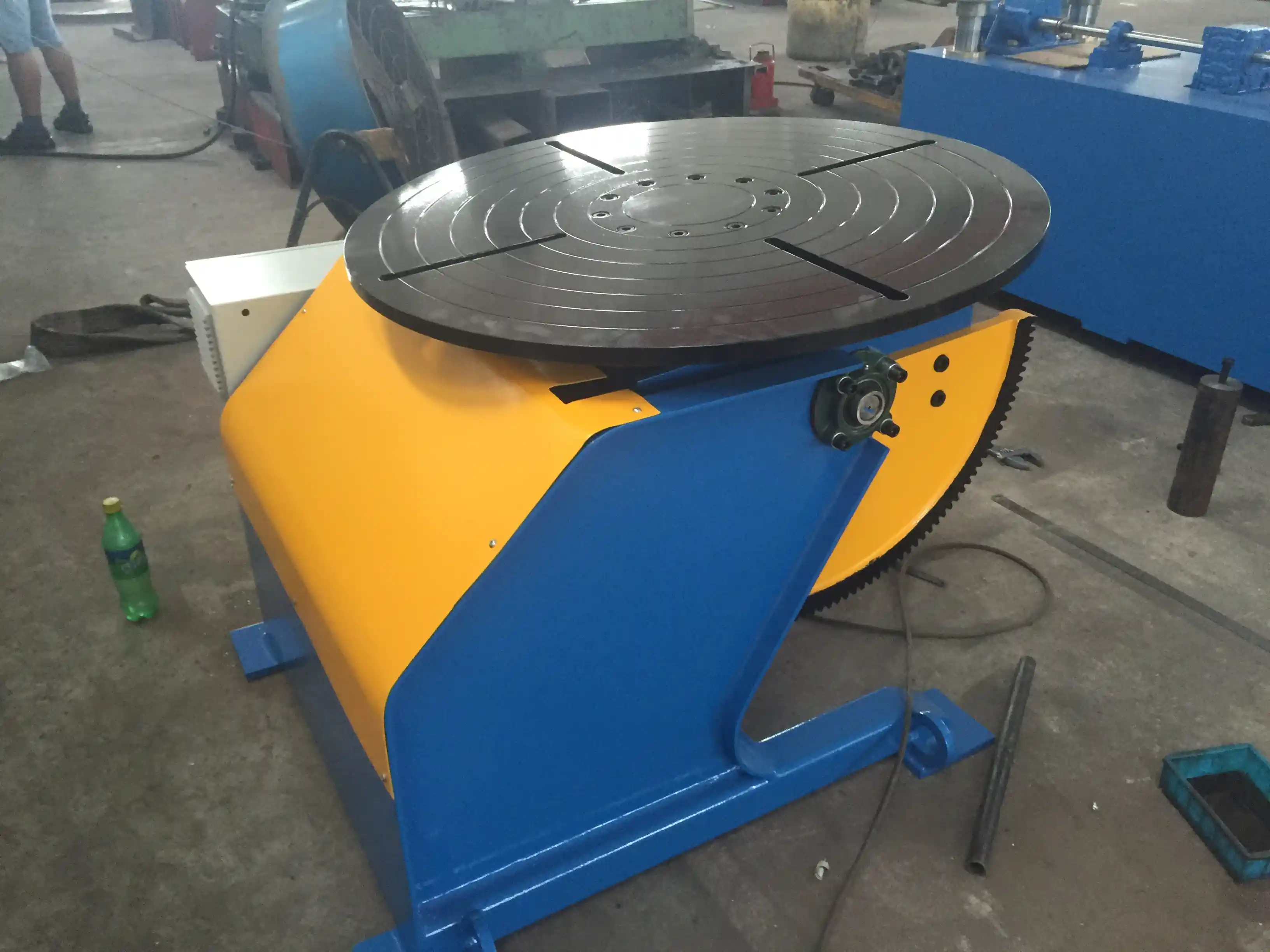
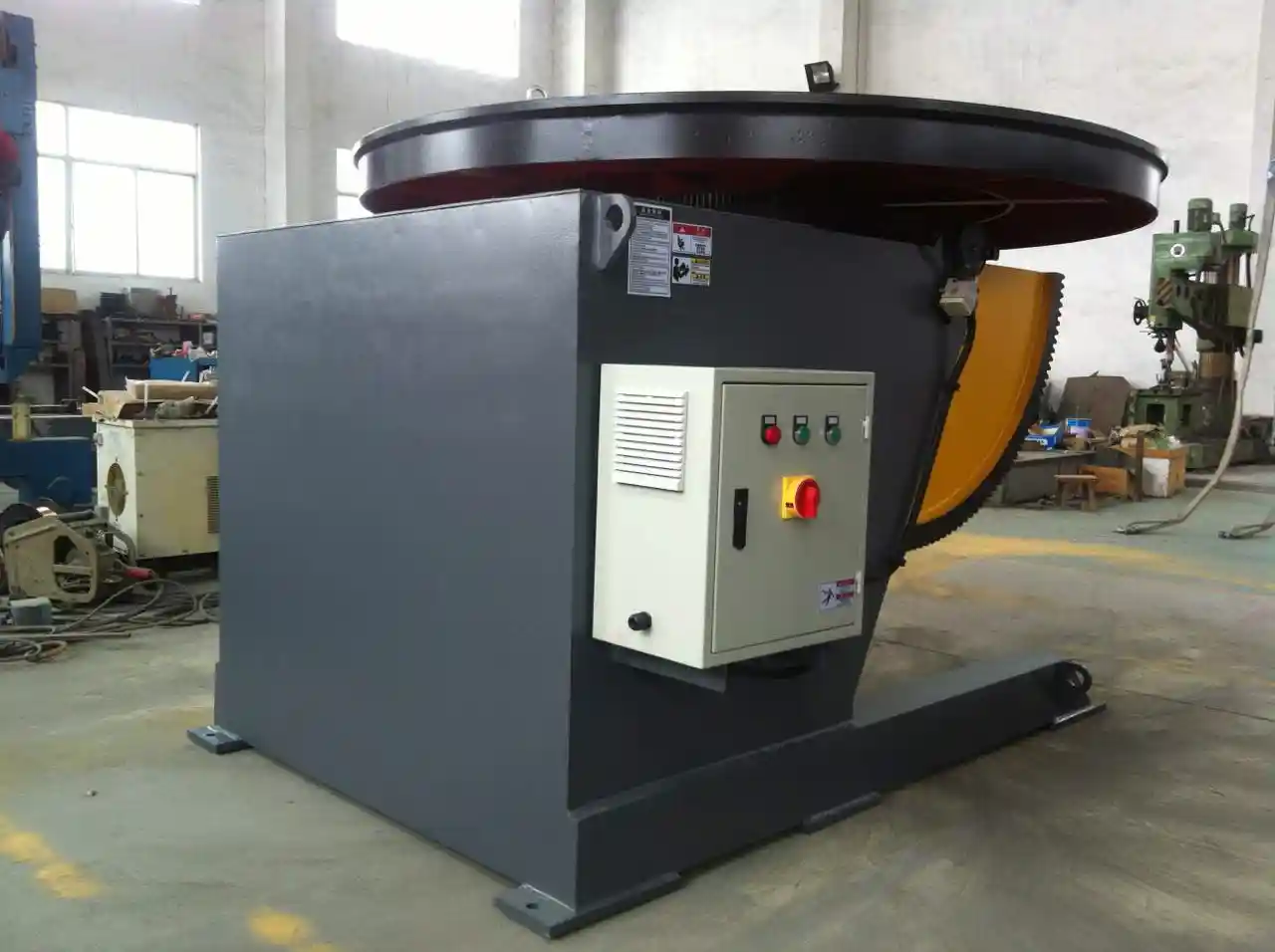
Structural integrity matters more than many operators realize. The welded steel bases and frames on heavy-duty positioners handle substantial loads and moments. Look for cracks at weld joints, loosening fasteners, and any signs of deformation. A 5-ton positioner with a box-type base is built for stability, but that stability depends on the structure remaining sound.
What Determines Lubrication Frequency
Usage intensity drives lubrication schedules more than calendar time. A positioner running two shifts daily needs attention more frequently than one used intermittently. Environmental conditions matter too. Dusty or humid environments contaminate lubricants faster, shortening effective service life.
Manufacturer specifications provide baseline intervals, but they assume typical operating conditions. Adjust based on your actual situation. Quarterly gearbox service makes sense for moderate use. High-production environments might need monthly attention. The goal is maintaining adequate lubricant film before degradation compromises protection.
Identifying Critical Service Points
The most important service points on a welding positioner include the gearbox, rotary table bearings, slewing bearings, drive motors, electrical connections, and safety interlocks. Hydraulic and pneumatic systems, where present, add leak inspection and pressure verification to the list.
These areas matter because they’re where wear concentrates and where failures have the biggest operational impact. A worn bearing might cause positioning drift. A degraded electrical connection might cause intermittent control issues. A failed safety interlock creates hazards. Routine inspection catches these problems while they’re still manageable.
Moving Beyond Reactive Maintenance
The traditional approach to equipment maintenance is straightforward: run it until something breaks, then fix it. This works, technically, but it’s expensive. Unplanned downtime disrupts production schedules. Emergency repairs cost more than planned service. And the secondary damage from running failing components often exceeds the original problem.
Predictive maintenance changes this equation. By monitoring component health through vibration analysis, temperature tracking, and operational data, you can anticipate failures before they happen. A 3-axis positioner generating unusual vibration patterns is telling you something. Catching that signal early means scheduling repairs during planned downtime rather than scrambling after a breakdown.
Calibration is another area where proactive attention pays dividends. Positioners maintaining ±0.05 mm positioning accuracy don’t hold that specification indefinitely without verification. Periodic calibration confirms the equipment still meets its performance benchmarks and identifies when adjustments are needed. This matters especially in robotic welding applications where positioning errors translate directly into weld quality problems.
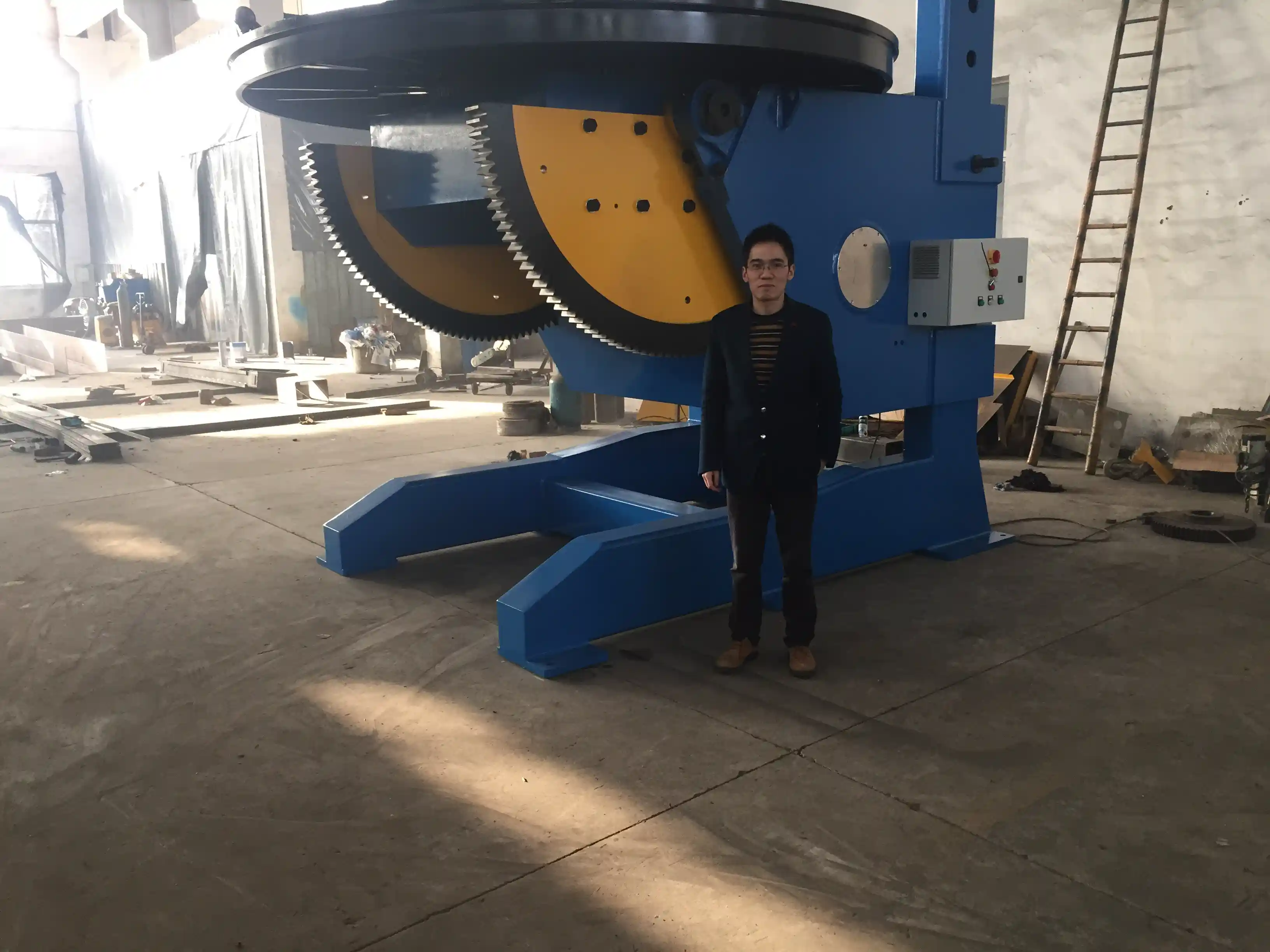
Operator training deserves mention here too. Well-trained operators notice problems earlier, handle equipment more carefully, and perform routine maintenance more consistently. The investment in training reduces both equipment damage and maintenance costs over time.
For further insights into maintaining precision, check 《Cómo mejorar la calidad de la soldadura de tuberías mediante un posicionador de soldadura de alta precisión》.
Environmental Factors and Equipment Longevity
The operating environment affects welding positioner lifespan more than many facilities acknowledge. Welding generates spatter, fumes, and heat. These byproducts accumulate on and around equipment, degrading seals, contaminating lubricants, and stressing electrical components.
Regular cleaning removes accumulated debris before it causes problems. Pay particular attention to areas around seals and vents where contamination enters the equipment. IP54 protection helps, but it’s designed to resist incidental exposure, not continuous accumulation.
Storage conditions matter during periods of inactivity. Moisture promotes corrosion on precision surfaces. Temperature swings stress seals and electrical insulation. Climate-controlled storage protects equipment during extended shutdowns.
Operating within specified load capacities seems obvious, but it’s frequently violated in practice. Overloading stresses mechanical components, accelerates wear, and can cause immediate damage. The rated capacity exists for reasons. Respecting it extends equipment life significantly.
An end-of-shift maintenance checklist creates accountability for daily care. Cleaning, visual inspection, and lubrication verification take minutes but catch problems early. This simple practice contributes substantially to long-term equipment reliability.
Common Questions About Welding Positioner Maintenance
What lubricant works best for welding positioner gears
High-pressure industrial gear oils or EP greases with appropriate viscosity handle most gearbox applications. The specific choice depends on operating temperature, load conditions, and environmental factors. Manufacturer specifications provide the definitive answer for your particular equipment. Using the wrong viscosity or formulation compromises protection even if you’re maintaining proper service intervals.
How do I maximize my welding positioner’s service life
Consistent preventative maintenance forms the foundation. Follow lubrication schedules, inspect critical service points, verify electrical connections, and conduct safety checks regularly. Operating within rated capacities prevents mechanical stress. Adequate operator training reduces handling damage. Genuine spare parts maintain original performance specifications. None of these practices are complicated individually, but maintaining all of them consistently makes the difference.
What symptoms indicate a welding positioner needs service
Unusual noises during operation often signal bearing wear or lubrication problems. Grinding or squealing sounds warrant immediate investigation. Excessive vibration suggests mechanical issues developing. Erratic speed control points to electrical or drive system problems. Visible leaks indicate seal failures. Overheating motors may reflect lubrication issues or electrical problems. Difficulty maintaining precise positioning suggests wear in bearings or drive components. Any of these symptoms merit prompt attention before they escalate.
Work With WUXI ABK MACHINERY CO., LTD.
WUXI ABK MACHINERY CO., LTD. builds welding positioners designed for demanding industrial applications. Our engineering focuses on reliability and precision across the full product range. Contact us for consultation on equipment selection, maintenance programs, or custom solutions for your specific welding requirements. Email: jay@weldc.com, Phone: +86-13815101750.
 English
  Español
  Français
  Deutsch
  Português
  Русский