
Automated Panel Line Integration in Ship Section Fabrication
Shipyards that still run disconnected fabrication stages know the frustration: a cutting station finishes a batch, but the welding bay isn’t ready. Plates stack up, schedules slip, and rework eats into margins. Automated panel line integration changes that equation by linking each process into a single, coordinated flow. The result is faster throughput, tighter tolerances, and fewer surprises during final assembly.
What Panel Line Integration Actually Means for Shipbuilding
Panel line integration connects the separate steps of ship section fabrication into one continuous, automated sequence. In older setups, cutting, fitting, and welding operated as isolated islands. Material moved between stations on forklifts or cranes, with handoffs that introduced delays and dimensional drift. The modern approach ties these stages together through shared controls, automated conveyors, and real-time data exchange.
!Electric Welding Roller Machine
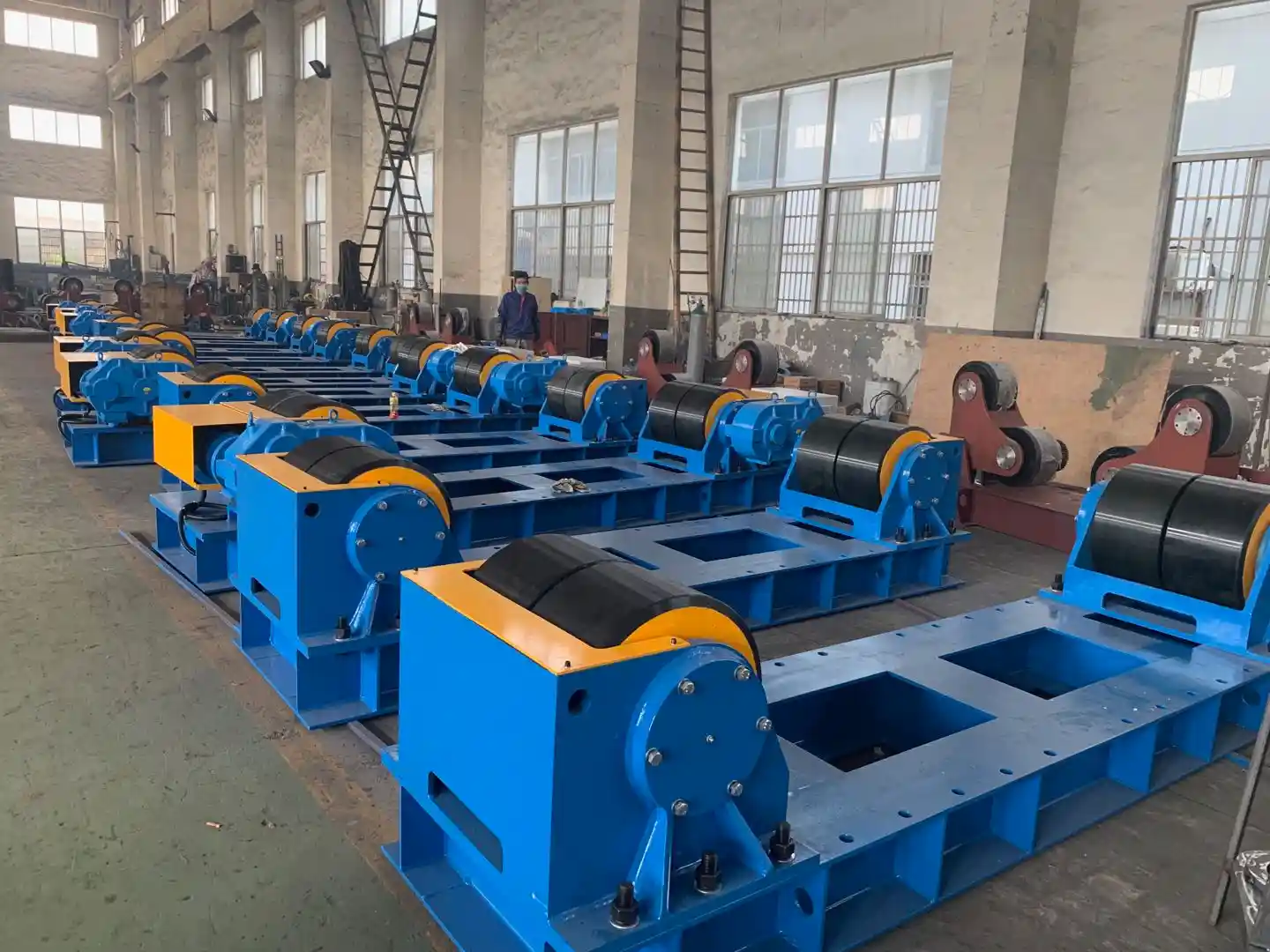 The shift started with standalone CNC plasma cutters and mechanized welding gantries. Those machines improved individual steps but didn’t solve the coordination problem. True integration came when shipyards began treating the entire fabrication floor as a single system. Software now schedules each station, tracks work-in-progress, and flags bottlenecks before they stall production. Modular construction principles fit naturally here. When panels can be built in parallel and joined later, the overall build time compresses.
This integrated approach also reduces the number of times human hands touch a workpiece. Fewer manual interventions mean fewer opportunities for error and fewer safety incidents. The payoff shows up in shorter lead times and more predictable delivery dates.
Productivity and Precision Gains from Integrated Panel Lines
Automated panel line integration improves shipyard productivity by removing the gaps between processes. Robotic welding cells run at consistent speeds, unaffected by fatigue or shift changes. Sensors watch the arc and adjust parameters on the fly, keeping distortion under control without operator intervention. That kind of feedback loop is difficult to replicate manually.
Lean manufacturing principles align well with integrated panel lines. When material flows continuously, inventory sitting on the floor shrinks. Bottlenecks become visible almost immediately, making them easier to fix. The fabrication workflow becomes predictable enough to schedule with confidence.
Dimensional accuracy matters more in shipbuilding than in most industries. A panel that’s a few millimeters off can cascade into fit-up problems during block assembly. Robotic positioners, like the 3 Axis Positioner, hold components to ±0.05 mm positioning accuracy with 0.02 mm repeatability. That level of control means parts arrive at the next station ready to join without grinding or shimming.
Benefits of Integrated Panel Lines for Large Vessel Construction
Large vessels amplify the advantages of integrated panel lines. A single hull section might weigh hundreds of tons and require thousands of meters of weld. Automating that work cuts the calendar time from months to weeks. Labor costs drop because fewer welders are needed for repetitive seams, freeing skilled workers for complex joints and inspections.
Structural integrity improves when welds are consistent. Automated systems don’t get tired or distracted, so the last weld of a shift matches the first. Modular construction allows different sections to progress simultaneously, compressing the overall schedule even further.
Technologies That Make Modern Panel Line Integration Work
Several technologies combine to enable automated panel line integration in ship section fabrication. Automated welding systems sit at the core. Robotic arms and welding manipulators execute long seams with steady travel speed and arc characteristics. The LH series welding manipulators maintain ±0.1 mm/m positioning accuracy during longitudinal and circumferential seam welding, which keeps weld quality uniform across large structures.
CNC cutting machines prepare the raw plates. Plasma and laser cutters follow digital nesting patterns, minimizing scrap and producing edges that fit together without excessive grinding. Material handling systems move plates and sub-assemblies between stations automatically, reducing crane time and the risk of damage during transport.
!column and boom manipulator
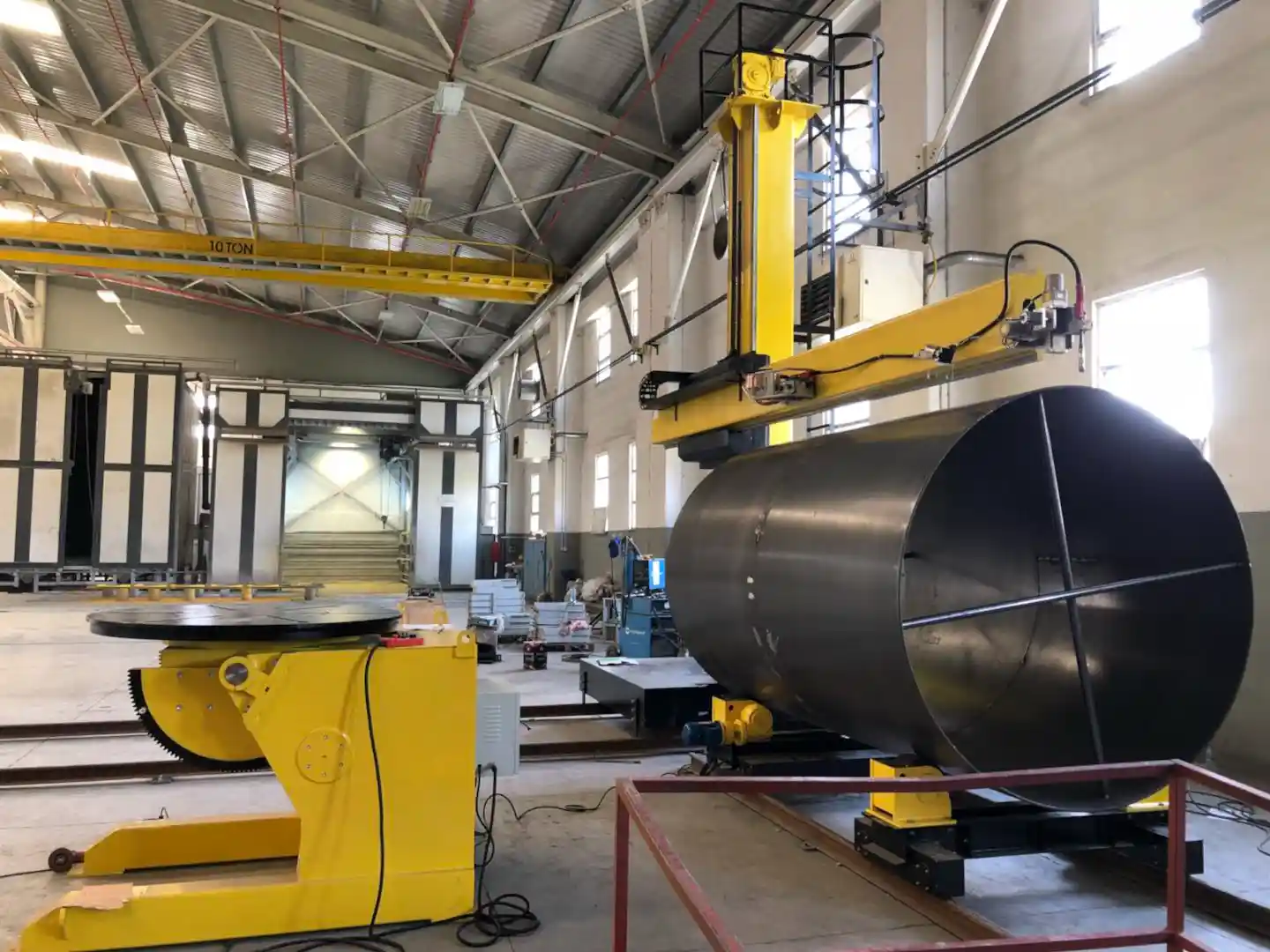 Digital twin technology is gaining traction. A virtual model of the production line lets engineers simulate changes before committing to them. Real-time data feeds back into the model, so the simulation stays accurate. This capability supports custom panel line solutions tailored to a shipyard’s specific layout and product mix.
| Característica | WUXI ABK Welding Manipulator (LH Series) | WUXI ABK 3-Axis Positioner (1-5 Ton) |
|---|---|---|
| Precisión de posicionamiento | ±0,1 mm/m | ±0.05 mm |
| Repetibilidad | N/A | 0.02 mm |
| Aplicaciones | Boiler, Pressure Vessel, Wind Tower | Automotive, Aerospace, Shipbuilding |
| Sistema de control | Stepless Speed Control | PLC + Touchscreen |
| Key Components | Linear Guideways, Cycloidal Reducers | Servo Motor, THK Linear Guides |
Why Precision Matters So Much in Panel Block Assembly
Assembly tolerance in ship section fabrication is unforgiving. Errors accumulate. A 2 mm gap at one joint becomes a 10 mm mismatch three sections later. Automated systems reduce that risk by holding tight tolerances at every step. The 3 Axis Welding Positioner delivers ±0.05 mm positioning accuracy and 0.02 mm repeatability, which keeps cumulative error within acceptable limits.
Manual assembly introduces variability. Even skilled fitters make judgment calls that differ from one panel to the next. Automated systems follow the same program every time, producing consistent results. That consistency supports quality control in shipbuilding and helps shipyards meet classification society requirements without excessive inspection rework.
Precision at the panel stage pays dividends during block erection. When panels fit together cleanly, the time spent on alignment and correction drops. The ship reaches the water faster, and the yard moves on to the next contract.
How Automated Welding Improves Ship Section Quality
Automated welding processes control the variables that determine weld quality. Travel speed, arc voltage, wire feed rate, and shielding gas flow all stay within programmed limits. Sensors detect deviations and correct them before defects form. The result is consistent weld bead geometry and full penetration across the joint.
Human welders, no matter how skilled, experience fatigue. Their performance varies with temperature, lighting, and access angles. Automated systems don’t share those limitations. They produce the same weld at the end of a 12-hour run as they did at the start. Defects like porosity, undercut, and incomplete fusion become rare rather than routine.
Challenges Shipyards Face When Adopting Panel Line Integration
Bringing automated panel line integration into an existing shipyard isn’t simple. The upfront investment is significant. Advanced welding manipulators, CNC cutting machines, and material handling systems carry substantial price tags. Infrastructure often needs upgrades to support heavier equipment, higher power loads, and new data networks.
!Industrial Positioner Unit
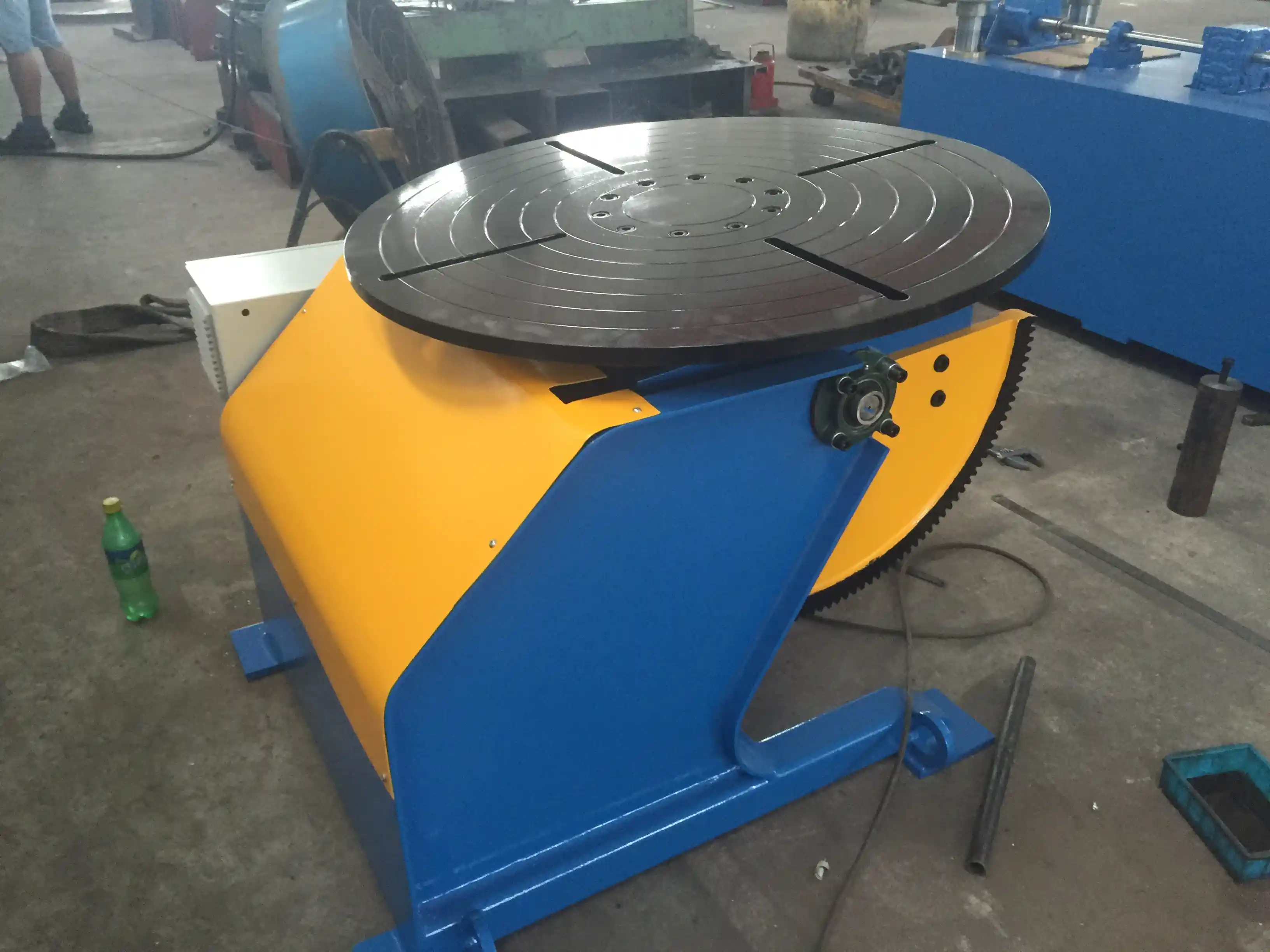 Workforce training takes time. Operators accustomed to manual methods need to learn new interfaces and troubleshooting procedures. Resistance to change is common, especially when experienced workers feel their skills are being devalued. Effective training programs and clear communication about job roles help ease the transition.
Integrating new equipment with legacy systems adds complexity. Older cranes, conveyors, and software may not communicate with modern controllers. Custom panel line solutions from manufacturers like WUXI ABK MACHINERY address this by designing interfaces that bridge old and new. Phased implementation spreads the investment and allows the yard to learn as it goes.
Specific Obstacles to Implementing New Panel Line Technologies
Infrastructure upgrades often extend beyond the fabrication floor. Power distribution may need reinforcement. Foundations may require strengthening to handle heavier machinery. Layout changes can disrupt ongoing production if not planned carefully.
The initial capital outlay can strain budgets, especially for smaller yards. Financing options and phased rollouts help manage cash flow. Workforce concerns deserve attention too. Workers who see automation as a threat may resist adoption. Involving them in the planning process and emphasizing new skill development can shift that perception.
Common Questions About Ship Section Fabrication
What kind of return can a shipyard expect from an automated panel line?
Return on investment varies with the scale of the yard and the technologies deployed. Most shipyards see payback through reduced labor costs, faster cycle times, and lower defect rates. Material savings from tighter nesting and less rework add to the return. The competitive advantage of shorter delivery times often matters as much as direct cost savings.
How does WUXI ABK MACHINERY support panel line integration projects?
WUXI ABK MACHINERY CO., LTD works with shipyards from initial design through installation and ongoing support. The company manufactures welding manipulators, positioners, and CNC cutting equipment tailored to ship section fabrication. Engineering teams help integrate new equipment with existing infrastructure, and technical support remains available after commissioning.
What safety measures apply to automated ship section fabrication?
Safety protocols cover robotic work cells, material handling zones, and welding operations. Guarding, light curtains, and emergency stop systems protect personnel. Training ensures operators understand both normal procedures and emergency responses. Equipment from WUXI ABK MACHINERY includes built-in safety features that meet international standards.
Partner with WUXI ABK MACHINERY for Your Panel Line Needs
WUXI ABK MACHINERY CO., LTD has built welding equipment and CNC cutting machines since 1999. The company’s experience with wind tower welding lines, H beam welding lines, and specialized manipulators translates directly to ship section fabrication. If your shipyard is ready to explore automated panel line integration, reach out to discuss your requirements. Contact jay@weldc.com or call +86-13815101750 for a consultation.
 English
  Español
  Français
  Deutsch
  Português
  Русский