
Membrane panels sit at the heart of many industrial heat exchange systems, and getting them to run hard and last long comes down to careful design choices. We know that precise control of tube spacing and bar sizing drives thermal efficiency, structural integrity, and manufacturing cost. What follows lays out the core principles and advanced methods used to optimize these two design levers.
Understanding Membrane Panels in Industrial Applications
Membrane panels serve as heat exchange surfaces across a range of industrial settings. They use an array of tubes joined by metal bars or fins to form a gas-tight wall. This configuration maximizes heat transfer while providing structural support and containing combustion gases or process fluids.
1. The Role of Membrane Panels in Heat Exchangers and Boilers
Membrane panels underpin the efficiency and safety of modern boilers and heat exchangers. In boilers, they form furnace walls that absorb radiant heat from combustion gases to generate steam. Their primary role is to transfer heat from hot gases to the working fluid inside the tubes. This supports power generation, chemical processing, and many industrial heating duties. The panels also stabilize the furnace enclosure, preventing gas leakage and maintaining internal pressure. Their construction must handle extreme temperatures, large pressure differentials, and corrosive environments over long service periods.
2. Key Components and Their Functions
A membrane panel is built from several key components, each with a distinct role.
1. Tubes: Commonly circular or elliptical, they carry the working fluid (e.g., water, steam, process fluid) and absorb heat from the hot gas stream.
2. Bars (or Fins): Solid metal strips welded between adjacent tubes. They create a gas-tight seal that prevents gas bypass and steers flow, add structural rigidity, and can boost heat transfer by conduction.
3. Welds: Tube-to-bar connections that ensure gas-tightness while transferring mechanical loads and thermal stresses between parts.
4. Headers and Manifolds: Larger pipes that connect tube ends to distribute and collect the working fluid.
How these parts interact determines overall performance. Sound design delivers efficient heat transfer, structural stability, and manufacturability.
Principles of Tube Spacing in Membrane Panel Design
Tube spacing, or tube pitch, is a key parameter that shapes thermal performance, structural integrity, and the practicality of fabrication. It defines the distance between the centers of adjacent tubes.
1. Factors Influencing Optimal Tube Pitch
Optimizing tube pitch means balancing competing needs.
1. Heat Transfer Requirements: A smaller pitch increases heat transfer surface area per unit panel width, improving heat absorption. If spacing is too tight, gas flow can be choked, which cuts convective heat transfer.
2. Gas Flow Dynamics: Spacing sets gas velocity and turbulence over the tubes. Good spacing promotes gas-side heat transfer without driving up pressure drop.
3. Structural Stability: Wider spacing can reduce weld count and cost, yet may weaken panel rigidity against pressure and thermal stresses.
4. Manufacturing Constraints: The pitch must support practical, reliable welding between tubes and bars.
5. Cost-Effectiveness: Material consumption for tubes and bars and welding labor scale with tube spacing.
2. Thermal Performance and Heat Transfer Considerations
Tube spacing influences radiant and convective heat transfer.
1. Radiant Heat Transfer: In furnace service, radiation dominates. Closer spacing increases effective radiant absorption area.
2. Convective Heat Transfer: Gas flowing around the tubes drives convection. Appropriate spacing maintains favorable gas velocity and turbulence, maximizing the convective coefficient. Spacing that is too narrow creates stagnant zones, while spacing that is too wide reduces gas–surface interaction. Engineers rely on empirical correlations and computational fluid dynamics (CFD) to model performance across candidate pitches.
3. Structural Integrity and Stress Distribution
With high temperatures and pressures, structural integrity is non-negotiable, and tube spacing plays a central role in stress distribution.
1. Mechanical Stress: Internal tube pressure and external gas forces impose mechanical loads. Spacing influences how these loads spread across the panel.
2. Thermal Stress: Differential expansion between tubes and bars and temperature gradients across the panel drive thermal stresses. Proper spacing smooths stress concentrations to reduce fatigue and cracking. Finite Element Analysis (FEA) is used to assess stress fields and flag potential failure zones.
4. Manufacturing Feasibility and Welding Access
Fabrication realities guide pitch selection.
1. Welding Access: Adequate space between tubes is required for effective welding. Automated processes, especially those using specialized equipment like Membrane Welding Machine, need clearance for torches and inspection tools.
2. Distortion Control: Welding heat can distort components. Tube pitch influences the magnitude of distortion and how easily it can be managed.
3. Repair and Maintenance: Sufficient spacing simplifies inspection, maintenance, and repair, which lowers downtime and cost.
Critical Aspects of Bar Sizing for Membrane Panels
Bar sizing, meaning the thickness and width of metal strips between tubes, is as influential as tube spacing in overall performance and service life.
1. Material Selection and Mechanical Properties of Bars
Bar materials face the same harsh service as tubes, so selection matters.
1. Material Compatibility: The bar material must be metallurgically compatible with the tube material to deliver strong, durable welds. Common choices include carbon steel, alloy steels, and stainless steels, selected according to temperature, pressure, and corrosive exposure.
2. Mechanical Strength: Bars stiffen the panel. Their material needs sufficient tensile strength, yield strength, and creep resistance at elevated temperature.
3. Thermal Expansion: Matching coefficients of thermal expansion between bar and tube reduces differential expansion, limiting thermal stress and fatigue.
4. Corrosion Resistance: In aggressive gas or fluid environments, bars must resist corrosion and erosion.
2. Stress Analysis and Load Bearing Capacity
Bars carry multiple loads, so stress analysis must be accurate.
1. Pressure Loads: Bars help spread pressure loads from the tubes and the overall panel assembly.
2. Thermal Loads: Thermal gradients across the panel and between tubes and bars introduce thermal stresses. Cross-sectional area and geometry determine how well a bar absorbs and redistributes these stresses without yielding or cracking.
3. Vibration and Fatigue: Dynamic conditions can excite vibration. Correct sizing avoids resonant issues and mitigates fatigue over the operating life. FEA is indispensable for capturing these complex states.
3. Impact of Bar Dimensions on Panel Rigidity and Flexibility
Bar dimensions steer the panel’s mechanical response.
1. Rigidity: Thicker, wider bars raise stiffness, improving resistance to bending and buckling. This matters for holding shape under load.
2. Flexibility: Some flexibility is still needed to accommodate thermal movement without creating high internal stresses. Dimensions must balance stiffness and compliance.
3. Weight: Larger bars add mass, which affects support structure design and cost.
4. Welding Compatibility and Distortion Control
Bar sizing also influences welding behavior and distortion management.
1. Weldability: Bar material and size must suit the selected welding process. Thicker bars demand more heat, which can heighten distortion risk.
2. Heat Affected Zone (HAZ): Bar size affects heat dissipation during welding, which changes HAZ width and the resulting weld microstructure and properties.
3. Distortion Management: Well-chosen bar size helps control welding distortion that could harm flatness and alignment. Fixturing strategy and weld sequencing also matter.
Advanced Design Considerations and Optimization Techniques
Modern membrane panel design uses advanced analysis and materials to raise performance and reliability.
1. Finite Element Analysis (FEA) in Membrane Panel Design
FEA predicts response to real-world forces, heat, vibration, and more.
1. Stress and Strain Analysis: FEA models complex stress and strain distributions under internal pressure, external loads, and thermal gradients.
2. Thermal Performance Prediction: It maps temperature distribution, identifies hot spots, and supports heat transfer optimization.
3. Fatigue Life Prediction: By simulating cyclic mechanical and thermal loading, FEA estimates fatigue life of critical features to avoid early failures.
4. Optimization of Geometry: Engineers refine tube spacing, bar sizing, and materials with FEA to hit performance and integrity targets.
2. Computational Fluid Dynamics (CFD) for Thermal Optimization
CFD solves and analyzes fluid flow problems numerically.
1. Gas Flow Simulation: It models hot-gas flow over panel surfaces, giving velocity profiles, turbulence, and heat transfer coefficients.
2. Temperature Distribution: It predicts gas-side temperature fields for assessing local heat flux and overheating risk.
3. Pressure Drop Analysis: CFD guides tube spacing and layout to trim pressure drop and keep the system efficient.
4. Enhanced Heat Transfer: Flow visualization reveals improvement areas, such as fin geometry adjustments or turbulence promoters to raise heat transfer.
3. Material Innovations and Advanced Alloys
Material progress directly boosts panel performance.
1. High-Temperature Alloys: New alloys deliver higher strength, creep resistance, and oxidation resistance at temperature, extending limits and life.
2. Corrosion-Resistant Materials: Advanced grades better resist corrosive flue gases, cutting degradation and maintenance.
3. Lightweight Materials: Lighter, strong options can reduce panel weight, affecting supports and transport cost.
4. Functionally Graded Materials: Property gradients tailored by zone meet local thermal and mechanical demands and improve overall performance.
4. The Role of Precision Welding Equipment in Fabrication (WUXI ABK’s Contribution)
Accurate fabrication depends on advanced welding equipment. WUXI ABK supplies welding solutions that deliver the quality and throughput these components demand.
Nuestra Manipulador de soldadura systems provide precise control of torch positioning and motion for consistent weld quality and reduced human error, which is vital for tube-to-bar joints. We also offer specialized Membrane Welding Machine built for accurate, efficient tube and membrane bar joining. These machines combine advanced control systems with robust mechanics to produce repeatable, high-quality welds. For example, our Welding Manipulator models like LH8080 and LH4580 provide exceptional horizontal and vertical travel with precise rotation, making them ideal for large-scale boiler fabrication.
| Modelo | Recorrido horizontal | Desplazamiento vertical | Rotación | Precisión de posicionamiento | Aplicaciones |
|---|---|---|---|---|---|
| The design of membrane panels in industrial applications, such as heat exchangers and boilers, demands a meticulous approach to ensure optimal performance and structural integrity. Two critical parameters that engineers must carefully consider are tube spacing and bar sizing. These elements directly influence heat transfer efficiency, structural stability, and manufacturability. Understanding their intricate relationship with thermal and mechanical loads is crucial for designing reliable and cost-effective membrane panels. |
Understanding Membrane Panels in Industrial Applications
Membrane panels are integral structures in various industrial applications, primarily serving as heat exchange surfaces. They consist of an array of tubes joined by metal bars or fins, forming a gas-tight wall. This design maximizes heat transfer efficiency while providing structural support and containing combustion gases or process fluids.
1. The Role of Membrane Panels in Heat Exchangers and Boilers
Membrane panels are fundamental to the operational efficiency and safety of modern boilers and heat exchangers. In boilers, they form the furnace walls, absorbing radiant heat from combustion gases to generate steam. Their primary function is to facilitate efficient heat transfer from hot gases to the working fluid inside the tubes. This heat exchange process is crucial for power generation, chemical processing, and various industrial heating applications. The panels also provide structural integrity to the furnace enclosure, preventing gas leakage and maintaining internal pressure. Their robust construction must withstand extreme temperatures, significant pressure differentials, and corrosive environments over extended operating periods.
2. Key Components and Their Functions
A membrane panel comprises several essential components, each with a specific function.
1. Tubes: These are typically circular or elliptical and carry the working fluid (e.g., water, steam, process fluid). They absorb heat from the hot gas stream.
2. Bars (or Fins): These solid metal strips are welded between adjacent tubes. They create a gas-tight seal, preventing gas bypass and directing flow. Bars also contribute to the overall structural rigidity of the panel and can enhance heat transfer through conduction.
3. Welds: The connections between tubes and bars are critical. They ensure the gas-tight integrity and transfer mechanical loads and thermal stresses between components.
4. Headers and Manifolds: These larger pipes connect the individual tubes at their ends, distributing and collecting the working fluid.
The interplay of these components defines the panel’s performance. Proper design ensures efficient heat transfer, structural stability, and manufacturability.
Principles of Tube Spacing in Membrane Panel Design
Tube spacing, or tube pitch, is a critical design parameter that significantly influences a membrane panel’s thermal performance, structural integrity, and manufacturing feasibility. This parameter dictates the distance between the centers of adjacent tubes.
1. Factors Influencing Optimal Tube Pitch
Optimizing tube pitch involves balancing several competing factors.
1. Heat Transfer Requirements: A smaller tube pitch generally increases the heat transfer surface area per unit of panel width, enhancing heat absorption. However, excessively close spacing can impede gas flow and reduce convective heat transfer.
2. Gas Flow Dynamics: The spacing affects the velocity and turbulence of gas flow over the tubes. Optimal spacing promotes efficient gas-side heat transfer without excessive pressure drop.
3. Structural Stability: Wider spacing can reduce the number of welds, potentially lowering manufacturing costs, but it might compromise the panel’s rigidity against pressure and thermal stresses.
4. Manufacturing Constraints: The chosen pitch must allow for practical and reliable welding processes between tubes and bars.
5. Cost-Effectiveness: Material costs for tubes and bars, along with welding labor, are directly impacted by tube spacing.
2. Thermal Performance and Heat Transfer Considerations
Tube spacing directly impacts both radiant and convective heat transfer mechanisms.
1. Radiant Heat Transfer: In furnace environments, radiant heat transfer dominates. Closer tube spacing increases the effective radiant heat absorption surface.
2. Convective Heat Transfer: The flow of hot gases around the tubes facilitates convective heat transfer. Appropriate spacing ensures optimal gas velocity and turbulence, maximizing the convective heat transfer coefficient. Too narrow a spacing can create stagnant zones, reducing efficiency. Conversely, too wide a spacing reduces the interaction between gas and tube surfaces. Engineers often use empirical correlations and computational fluid dynamics (CFD) to model and predict heat transfer performance for various tube pitches.
3. Structural Integrity and Stress Distribution
The structural integrity of membrane panels is paramount due to high operating temperatures and pressures. Tube spacing plays a vital role in distributing mechanical and thermal stresses.
1. Mechanical Stress: The internal pressure within the tubes and external forces from gas flow exert mechanical stresses. The spacing influences how these loads are distributed across the panel.
2. Thermal Stress: Differential thermal expansion between tubes and bars, or across the panel due to temperature gradients, induces significant thermal stresses. Proper spacing can mitigate stress concentrations, preventing fatigue and cracking. Finite Element Analysis (FEA) is often employed to analyze stress distribution and identify potential failure points.
4. Manufacturing Feasibility and Welding Access
Manufacturing considerations heavily influence the selection of tube spacing.
1. Welding Access: Sufficient space between tubes is essential for effective welding. Automated welding processes, particularly those involving specialized equipment like Membrane Welding Machine, require adequate clearance for welding torches and inspection tools.
2. Distortion Control: The welding process introduces heat, causing thermal distortion. The tube pitch can affect the degree of distortion and the ease of implementing distortion control measures.
3. Repair and Maintenance: Adequate spacing simplifies future inspection, maintenance, and repair activities, reducing downtime and costs.
Si está interesado, consulte A New Era In Tank Manufacturing The Art Of Precision Collaboration Between Turning Rolls And Manipulators.
Critical Aspects of Bar Sizing for Membrane Panels
Bar sizing, referring to the dimensions (thickness and width) of the metal strips welded between tubes, is as crucial as tube spacing for the performance and longevity of membrane panels.
1. Material Selection and Mechanical Properties of Bars
The choice of material for the bars is critical, as it must withstand the same harsh operating conditions as the tubes.
1. Material Compatibility: Bar material must be metallurgically compatible with the tube material to ensure strong, durable welds. Common materials include carbon steel, alloy steels, and stainless steels, selected based on temperature, pressure, and corrosive environment.
2. Mechanical Strength: Bars provide structural rigidity. Their material must possess sufficient tensile strength, yield strength, and creep resistance at elevated temperatures.
3. Thermal Expansion: Matching the coefficient of thermal expansion between the bar and tube materials minimizes differential expansion, which can lead to thermal stresses and fatigue failures.
4. Corrosion Resistance: In aggressive environments, bars need to resist corrosion and erosion from flue gases or process fluids.
2. Stress Analysis and Load Bearing Capacity
Bars are subjected to various loads, making accurate stress analysis essential.
1. Pressure Loads: The bars help distribute pressure loads from the tubes and the overall panel structure.
2. Thermal Loads: Thermal gradients across the panel and between the tubes and bars induce thermal stresses. The bar’s cross-sectional area and geometry influence its ability to absorb and distribute these stresses without yielding or fracturing.
3. Vibration and Fatigue: In dynamic environments, panels can experience vibration. Correct bar sizing helps prevent resonant frequencies and fatigue failures over the panel’s operational life. Advanced simulation tools, such as FEA, are indispensable for analyzing these complex stress states.
3. Impact of Bar Dimensions on Panel Rigidity and Flexibility
The dimensions of the bars directly influence the panel’s overall mechanical behavior.
1. Rigidity: Thicker and wider bars increase the panel’s stiffness, enhancing its resistance to bending and buckling. This is crucial for maintaining the panel’s shape under operational loads.
2. Flexibility: While rigidity is important, some degree of flexibility is necessary to accommodate thermal expansion and contraction without generating excessive internal stresses. The bar dimensions must strike a balance between these two properties.
3. Weight: Larger bars increase the panel’s total weight, which can impact support structure design and overall cost.
4. Welding Compatibility and Distortion Control
Bar sizing also affects the welding process and the control of distortion.
1. Weldability: The bar material and dimensions must be suitable for the chosen welding method. Thicker bars may require more heat input, increasing the risk of distortion.
2. Heat Affected Zone (HAZ): The size of the bar influences the heat dissipation during welding, affecting the HAZ and the resulting microstructure and mechanical properties of the weld joint.
3. Distortion Management: Optimal bar sizing helps manage welding-induced distortion, which can affect panel flatness and alignment. Proper fixturing and welding sequences are also crucial for mitigating distortion.

Advanced Design Considerations and Optimization Techniques
Modern membrane panel design leverages advanced analytical tools and material science to achieve superior performance and reliability.
1. Finite Element Analysis (FEA) in Membrane Panel Design
FEA is a powerful numerical method used to predict how a product reacts to real-world forces, heat, vibration, and other physical effects.
1. Stress and Strain Analysis: FEA allows engineers to accurately model the complex stress and strain distributions within membrane panels under various operating conditions, including internal pressure, external loads, and thermal gradients.
2. Thermal Performance Prediction: It helps in understanding temperature distribution across the panel, identifying hot spots, and optimizing heat transfer.
3. Fatigue Life Prediction: By simulating cyclic loading and thermal cycles, FEA can predict the fatigue life of critical components, helping to prevent premature failure.
4. Optimization of Geometry: Engineers can iteratively refine tube spacing, bar sizing, and material selection using FEA to achieve optimal performance and structural integrity.
2. Computational Fluid Dynamics (CFD) for Thermal Optimization
CFD is a specialized branch of fluid mechanics that uses numerical methods and algorithms to solve and analyze problems that involve fluid flows.
1. Gas Flow Simulation: CFD simulates the flow of hot gases over the membrane panel surfaces, providing detailed insights into velocity profiles, turbulence, and heat transfer coefficients.
2. Temperature Distribution: It accurately predicts the gas-side temperature distribution, which is crucial for assessing local heat flux and potential overheating.
3. Pressure Drop Analysis: CFD helps optimize tube spacing and configuration to minimize pressure drop across the panel, ensuring efficient operation of the overall system.
4. Enhanced Heat Transfer: By visualizing flow patterns, designers can identify areas for improvement, such as optimizing fin geometry or introducing turbulence promoters to enhance heat transfer.
3. Material Innovations and Advanced Alloys
The continuous development of materials plays a significant role in enhancing membrane panel performance.
1. High-Temperature Alloys: New alloys offer improved strength, creep resistance, and oxidation resistance at elevated temperatures, extending the operational limits and lifespan of panels.
2. Corrosion-Resistant Materials: Advanced materials provide superior resistance to corrosive agents present in flue gases, reducing degradation and maintenance needs.
3. Lightweight Materials: Research into lighter yet strong materials can reduce the overall weight of panels, impacting support structure requirements and transportation costs.
4. Functionally Graded Materials: These materials, with varying properties across their structure, can be tailored to meet specific thermal and mechanical demands, optimizing performance in different zones of the panel.
4. The Role of Precision Welding Equipment in Fabrication (WUXI ABK’s Contribution)
The precise fabrication of membrane panels relies heavily on advanced welding equipment. WUXI ABK provides cutting-edge welding solutions that ensure the quality and efficiency required for these critical components.
Nuestra Manipulador de soldadura systems, for instance, offer precise control over welding torch positioning and movement. These manipulators ensure consistent weld quality and reduce human error, which is vital for the integrity of tube-to-bar welds. We also offer specialized Membrane Welding Machine designed specifically for the accurate and efficient joining of tubes and membrane bars. These machines utilize advanced control systems and robust mechanical designs to achieve high-quality, repeatable welds. For example, our Welding Manipulator models like LH8080 and LH4580 provide exceptional horizontal and vertical travel with precise rotation, making them ideal for large-scale boiler fabrication.
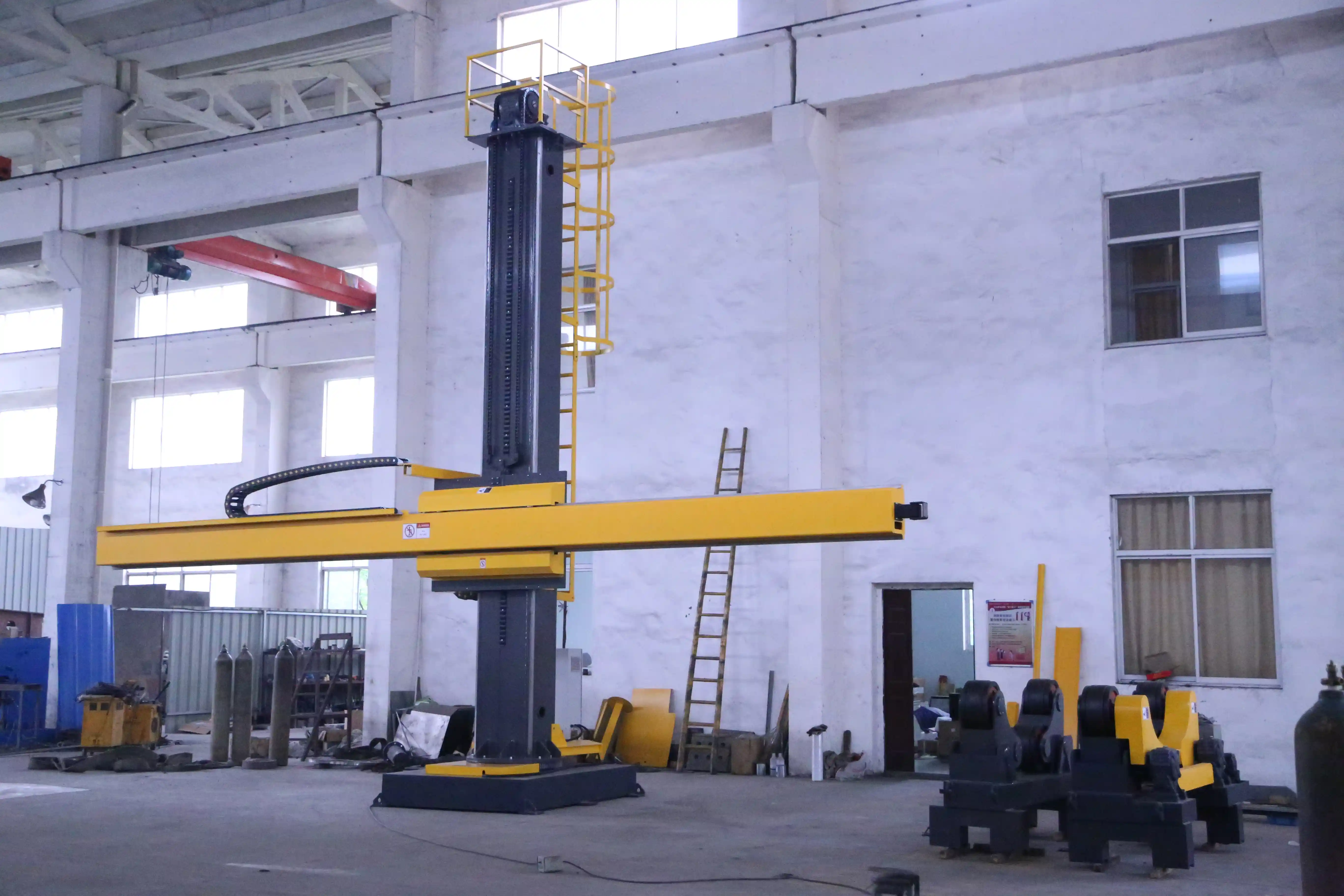
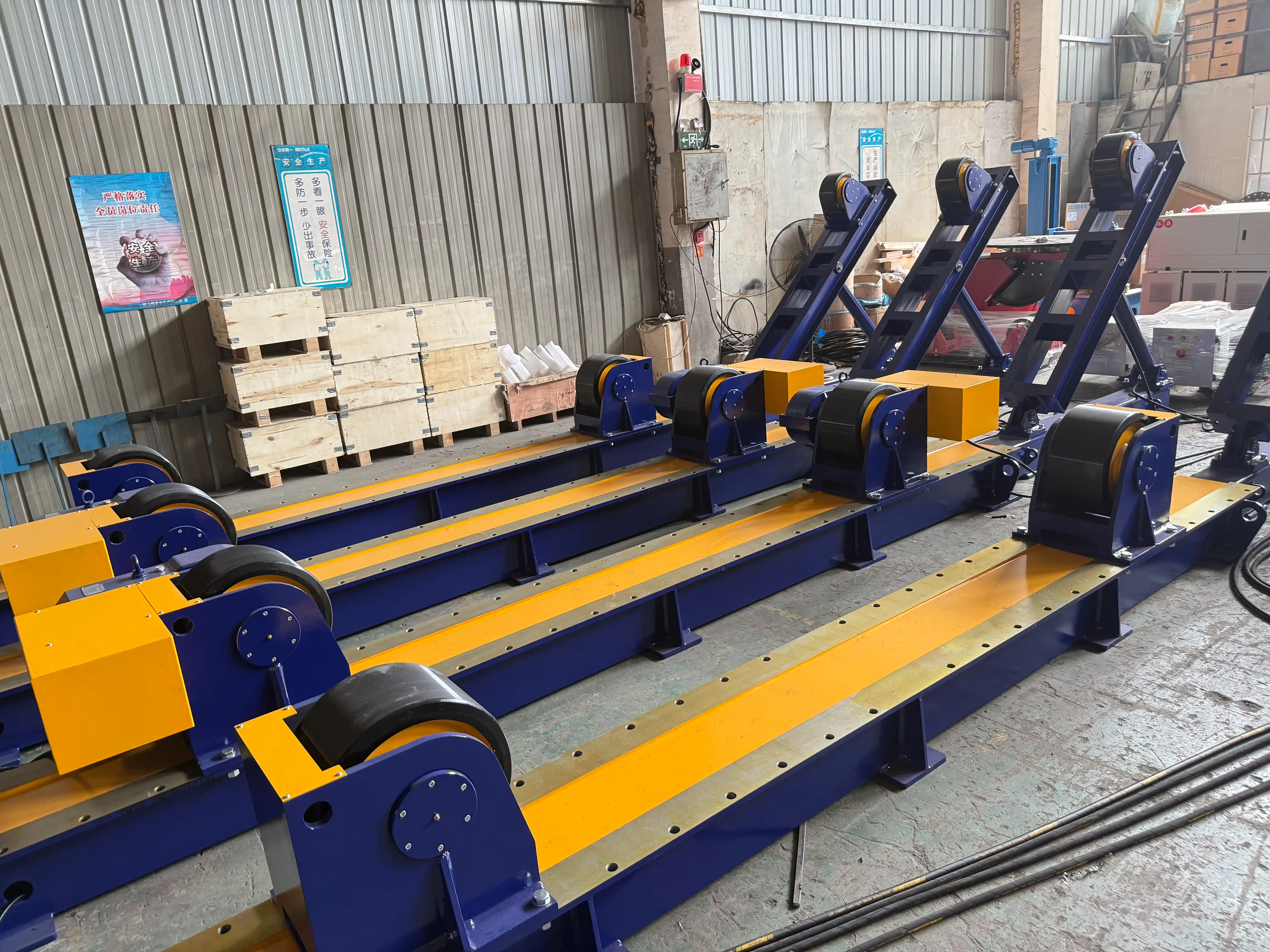
Nuestra Welding Positioner Suppliers y Welding Rotator Manufacturers are also crucial for handling large and complex membrane panel sections during welding. These systems provide optimal positioning and rotation, facilitating ergonomic and high-quality welding. For instance, our Adjustable Welding Positioner equipment up to 30 tons and Adjustable Rotator Manufacturers up to 300 tons can handle the substantial weight and dimensions of membrane panels, ensuring stable and precise fabrication. This capability is particularly beneficial for boiler fabrication and pressure vessel welding.
Si está interesado, consulte Nuevos estándares en la fabricación de recipientes a presión La revolución colaborativa de los posicionadores y manipuladores de soldadura.
Challenges and Best Practices in Membrane Panel Fabrication
Fabricating membrane panels presents unique challenges that require adherence to best practices for quality and longevity.
1. Common Design Flaws and Their Consequences
Several design flaws can compromise the performance and lifespan of membrane panels.
1. Inadequate Tube Spacing: This can lead to inefficient heat transfer, excessive thermal stress, or insufficient access for welding and inspection.
2. Improper Bar Sizing: Bars that are too thin may lack structural integrity, while overly thick bars can increase weight and welding distortion.
3. Material Mismatch: Incompatible materials for tubes and bars can result in poor weld quality, differential thermal expansion, and premature failure.
4. Stress Concentrations: Poor design can create areas of high stress, leading to fatigue cracks, especially at weld joints.
5. Inefficient Gas Flow: Suboptimal spacing or geometry can create dead zones or excessive turbulence, reducing heat transfer efficiency and increasing erosion.
2. Quality Control and Inspection Protocols
Rigorous quality control and inspection protocols are required throughout the fabrication process.
1. Material Verification: All incoming materials must be checked against specifications for chemical composition and mechanical properties.
2. Dimensional Inspection: Precise measurements of tube and bar dimensions, as well as tube pitch, ensure adherence to design tolerances.
3. Weld Inspection: Non-destructive testing methods such as ultrasonic testing, radiographic testing, and dye penetrant inspection are used to verify weld quality and detect defects.
4. Pressure Testing: Completed panels undergo hydrostatic or pneumatic pressure tests to confirm leak-tightness and structural integrity.
5. Visual Inspection: Regular visual checks throughout fabrication identify surface defects, distortion, and proper alignment.
3. Ensuring Durability and Longevity of Membrane Panels
Long life depends on decisions made from design through operation.
1. Optimized Design: Using FEA and CFD helps create designs that lower stress, raise heat transfer, and resist fatigue.
2. High-Quality Materials: Select materials with suitable high-temperature strength, corrosion resistance, and thermal expansion behavior.
3. Precision Fabrication: Advanced welding equipment and skilled execution produce high-quality welds with minimal distortion.
4. Effective Quality Control: Thorough inspection protocols ensure panels meet demanding quality standards.
5. Proper Operation and Maintenance: Follow operating guidelines and schedule regular maintenance, inspections, and timely repairs to extend service life.
Si está interesado, consulte Boilers And Pressure Vessels How Welding Rotators Enhance Manufacturing Efficiency.
Enhance Your Fabrication with WUXI ABK’s Advanced Welding Solutions
Achieving optimal membrane panel design and fabrication requires precision engineering and state-of-the-art equipment. At WUXI ABK MACHINERY CO., LTD, we specialize in providing advanced welding and CNC cutting solutions that meet the rigorous demands of industrial applications. Our expertise in manufacturing welding manipulators, positioners, and rotators ensures that your membrane panels are produced with the highest levels of accuracy, efficiency, and durability. Contact us today to discuss how our tailored solutions can enhance your production capabilities.
Móvil: +86-13815101750
Correo electrónico: jay@weldc.com
Preguntas frecuentes
1. What are the primary functions of membrane panels in industrial settings?
Membrane panels serve as heat exchange surfaces in equipment such as boilers and heat exchangers. They absorb heat from hot gases and transfer it to a working fluid while forming gas-tight walls that add structural integrity and contain combustion gases or process fluids. This combination supports thermal efficiency and safe operation in high-temperature, high-pressure environments.
2. How does tube spacing affect the efficiency of a membrane panel?
Tube spacing affects both radiant and convective heat transfer. Closer spacing can increase radiant absorption, but spacing that is too tight restricts gas flow, which reduces convective heat transfer and raises pressure drop. The best spacing balances these effects to maximize overall heat transfer and limit energy use.
3. What materials are typically used for the bars in membrane panel construction?
Bars in membrane panels are commonly made from carbon steel, alloy steels, or stainless steels. The choice depends on operating temperature, pressure, and the corrosiveness of the environment. The material must be compatible with the tubes for welding and provide appropriate mechanical strength and thermal expansion characteristics.
4. Can WUXI ABK’s welding equipment be used for fabricating membrane panels?
Yes. WUXI ABK’s welding equipment is well suited to membrane panel fabrication. Our Welding Manipulator Manufacturers provide precise control for tube-to-bar welding to achieve consistent, high-quality welds. Our Welding Positioner Suppliers y Welding Rotator Manufacturers supply stable positioning and rotation for handling large, complex panels during welding.
5. What are the key considerations for preventing thermal stress in membrane panel design?
To limit thermal stress, match tube and bar thermal expansion coefficients, optimize tube spacing and bar sizing using FEA to even out stress, and incorporate expansion features where needed to accommodate differential movement. Proper welding procedures also help reduce residual stresses.
 English
  Español
  Français
  Deutsch
  Português
  Русский