When a fabrication shop in Vietnam or a pressure vessel manufacturer in Thailand sets out to ship products to Japan, they discover something that documentation checklists rarely capture: JIS compliance is not a paper exercise. Japanese Industrial Standards define how equipment must perform under real production loads, and for welding positioners, rotators, and manipulators, the gap between a standard CE marking and genuine JIS conformity lives in the details of electrical design, mechanical precision, and factory-level quality control. I have spent over twenty years commissioning welding automation systems for export markets, and the equipment that clears Japanese incoming inspection without a single punch-list item is the equipment where compliance engineering happened inside the machine, not inside a file folder.
How JIS Applies to Welding and Positioning Equipment
JIS standards for industrial machinery pull from a broader regulatory framework that includes the Electrical Appliance and Material Safety Law and the Industrial Safety and Health Act, but for welding automation the practical touchpoints are electrical safety, structural integrity, and control reliability. A standard welding positioner sold into Europe under CE may meet the Low Voltage Directive, yet a Japanese buyer will typically expect JIS C 6802 compliance on the laser safety class of any integrated sensor system and JIS B 9702 compliance on safety distances for rotating tables. The difference is not academic. I have seen a perfectly functional 5-ton L-type positioner sit in a Japanese importer’s warehouse for three months while the electrical schematic was re-documented because the control cabinet’s protective earth routing did not match the JIS wiring color convention that the receiving inspector expected.
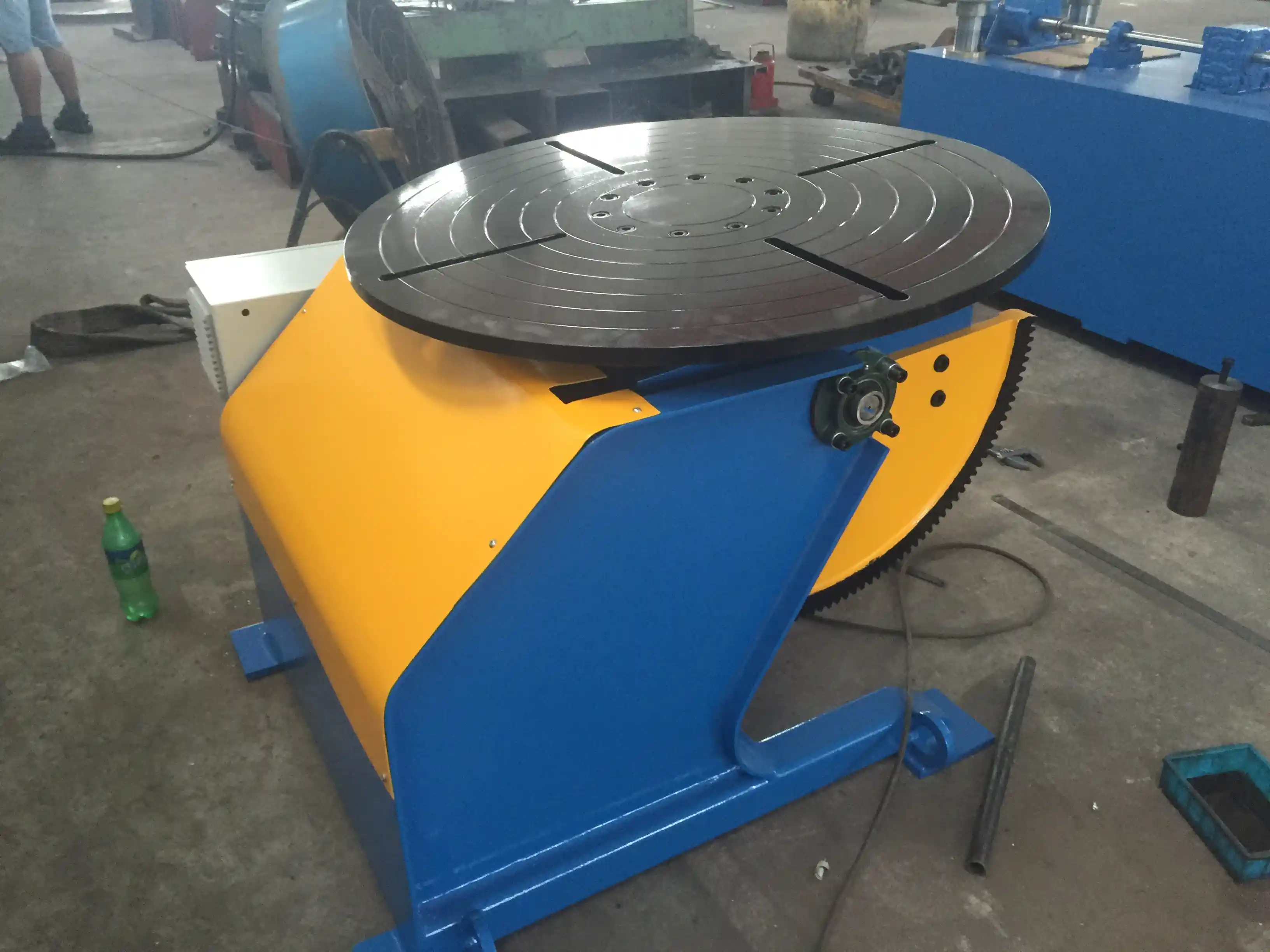
From a mechanical standpoint, JIS tends to specify dimensional and runout tolerances that are tighter than what many generic positioner builders aim for. Our own 3‑ton and 5‑ton triple‑axis positioners, for example, hold ±0.05 mm positioning accuracy and 0.02 mm repeatability using THK linear guides and SEW reducers, and that performance envelope aligns well with JIS B 6193 machine tool testing standards for rotary axes. When a Japanese auto-parts supplier evaluates a positioner for a robotic welding cell, they measure table flatness and rotation runout against JIS tolerances, not against the builder’s claimed spec. If the equipment drifts on day two, the relationship drifts with it.
Key Equipment Categories That Require JIS Verification
| Equipment Type | Primary JIS Reference | Critical Verification Point |
|---|---|---|
| Welding positioner (3‑axis) | JIS B 6193, JIS B 9702 | Table runout under dynamic load |
| Welding rotator (adjustable height) | JIS B 8805, JIS C 6802 | Roller concentricity and speed regulation |
| Manipulador de soldadura (column and boom) | JIS B 6331, JIS C 4508 | Boom straightness and cross-slide accuracy |
| Head & tail positioner | JIS B 6193, JIS B 9702 | Tailstock center alignment over full stroke |
If your program involves multiple product families, it is worth confirming which JIS reference applies to each machine type before finalizing your BOM — reach out at jay@weldc.com and we can cross-check your equipment list against the relevant JIS categories.
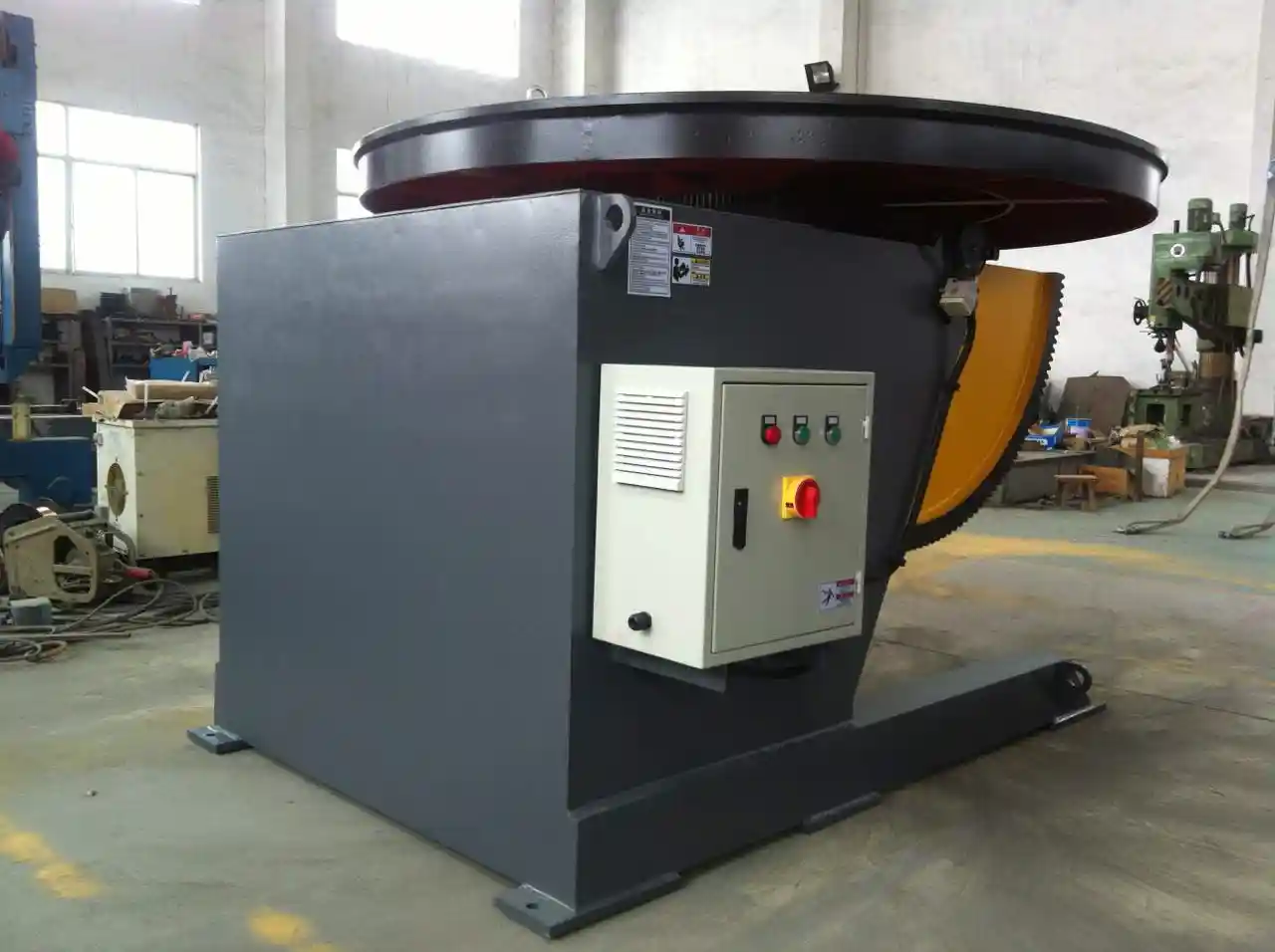
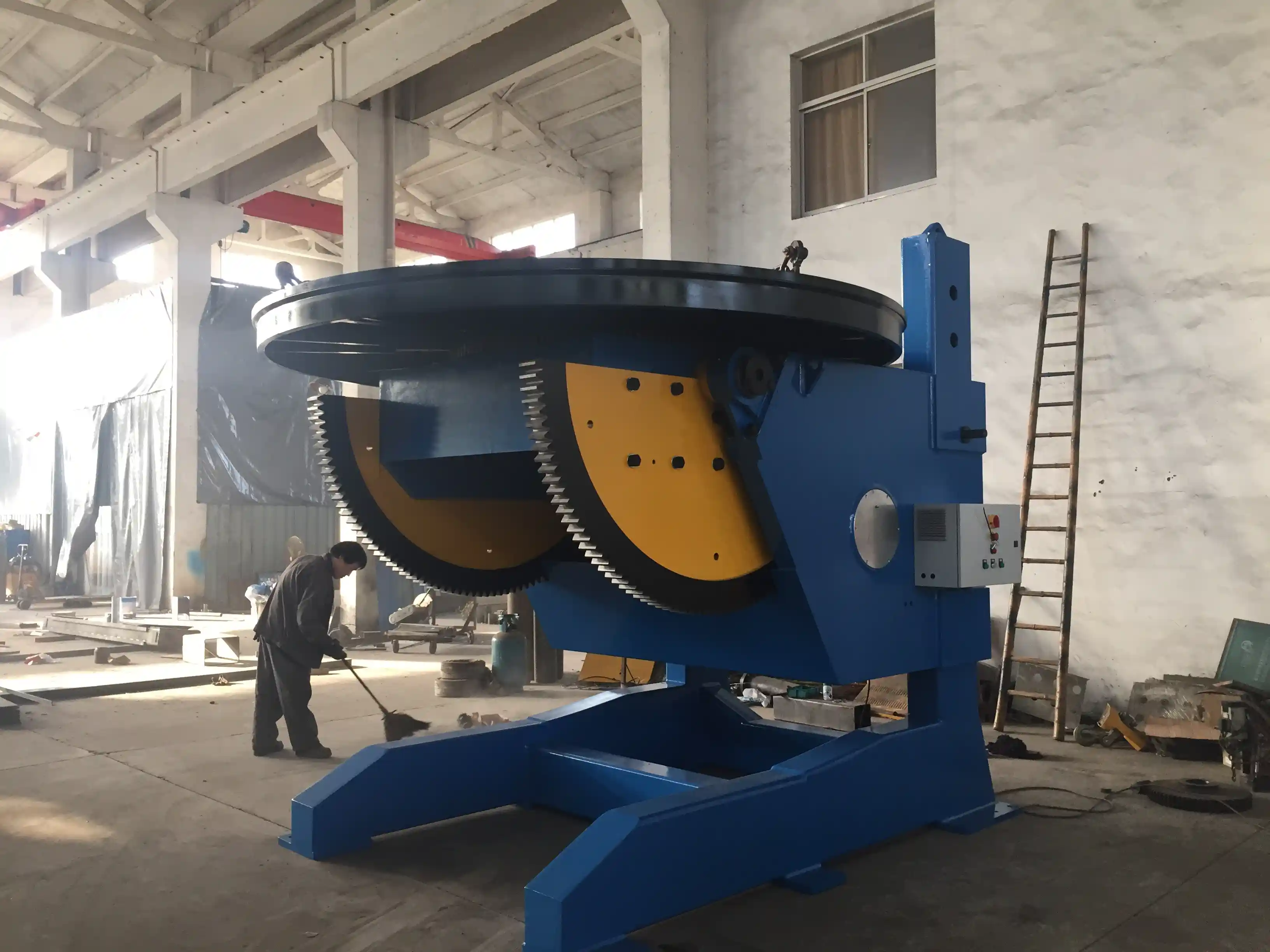
The equipment classes where JIS verification surfaces most often in my project work are the same ones that carry the welding arc: positioners, rotators, manipulators, and head‑tail stocks. A 30‑ton adjustable‑height positioner that will anchor a wind‑tower section welding station must prove that its hydraulic lifting system maintains height repeatability under a full moment load. Japanese structural steel fabricators frequently request that the positioner’s slewing bearing runout stay within 0.1 mm total indicator reading over a 360‑degree rotation, and they send their own test reports to confirm it. That is the real point: JIS compliance is not about affixing a mark. It is about surviving a buyer’s own verification test without a phone call.
Smaller equipment is not exempt. A 1‑ton fixed‑height positioner used in a Japanese automotive parts cell may still be subject to JIS B 9702 safety‑distance requirements, and the control system’s emergency‑stop architecture must separate the safety circuit from the PLC logic in a way that satisfies Japanese safety assessors. Our HBJ‑10 and HBJ‑20 positioners use a Siemens PLC with a dedicated safety relay chain that enables a clean separation, and that design choice came directly from lessons we learned supporting Japanese customers.
Electrical and Control System Compliance Under JIS
One area where generic equipment regularly stumbles is the electrical cabinet. Japan operates on a 200 V three‑phase supply in many industrial zones, while much of the machinery built for China or Southeast Asia runs at 380 V. A voltage mismatch is easy to spot, but the subtler JIS requirements are in wiring color codes, terminal block labeling, and the protective conductor sizing called out in JIS C 4508. I have opened cabinets where the builder used blue‑jacketed wires for DC control circuits, which is standard in Europe, only to have a Japanese acceptance engineer flag it because JIS expects a specific color differentiation between AC control and DC control conductors.
Control panels also face a JIS B 3502‑based evaluation of software safety functions. A welding manipulator that uses a standard PLC without a locked safety function block may fail a JIS‑based assessment because the emergency‑stop override logic cannot be independently verified. We now build our manipulator control systems with the safety logic physically separated from the motion controller regardless of destination market, because retrofitting a JIS‑ready safety architecture after the machine is built is three times more expensive than engineering it in from the start.
Factory Acceptance Testing That Satisfies Japanese Buyers
A JIS‑compliant datasheet does not survive a Japanese factory acceptance test if the live measurements do not match the printed values. Buyers from Japan typically bring their own dial indicators, laser alignment tools, and load cells to a pre‑shipment inspection, and they run the equipment through a test protocol that mirrors JIS acceptance conditions. For a 20‑ton welding rotator, that means loading the rollers to 110 percent of rated capacity and measuring surface speed variation under load; JIS B 8805 references a speed fluctuation band that most builders do not test unless the customer demands it.
What has worked well in our own factory acceptance tests for Japanese customers is to prepare a test report structured exactly as JIS would structure it: raw data, measurement method, instrument calibration date, and pass‑fail criteria for each parameter. A 3‑axis 5‑ton positioner that we shipped to a Japanese excavator-component manufacturer passed its JIS‑based acceptance test in four hours because the customer’s inspector could match every line item in our report to a measurement he took himself. The alternative, which I have seen too often, is a builder handing over an eight‑page color brochure and hoping for the best — that approach fails before the first dial indicator is mounted.
Realistic Lead Times and Cost Considerations for JIS‑Ready Equipment
Meeting JIS compliance affects both delivery timelines and upfront cost, but the numbers are more predictable than many buyers assume. A standard welding positioner that normally ships in 60 days will typically require an additional 15 to 20 days when JIS‑specific documentation, safety architecture, and testing are engineered into the build. The price premium over a non‑JIS equivalent generally lands between 8 and 15 percent for small to medium positioners and tapers to around 5 percent for heavy‑duty equipment above 30 tons, because the large machines already incorporate precision components and safety systems that overlap with JIS requirements.
The cost that catches shops off guard is the re‑engineering of an off‑the‑shelf machine after the fact. I have been called in to help a fabricator who bought a CE‑marked positioner and then discovered that the Japanese end user required JIS B 9702 safety‑distance proofing, which meant retrofitting light curtains, re‑wiring the safety relay chain, and commissioning a new risk assessment. The retrofit cost exceeded 40 percent of the original machine price. When a customer asks me whether to buy a pre‑engineered JIS‑ready positioner or attempt a post‑purchase retrofit, the math usually favors the factory‑built option by a factor of at least three.
Common Questions About JIS‑Compliant Welding Equipment
Does CE certification mean the equipment will meet JIS requirements?
No. CE and JIS are separate conformity frameworks with different technical references and different enforcement mechanisms. A CE‑marked positioner may meet the essential health and safety requirements of the Machinery Directive, but JIS can impose tighter electrical wiring rules, different safety distance formulas, and a distinct expectation for measurement traceability. In practice, the two standards overlap in broad safety intent but diverge on the specifics that a Japanese inspector will check. If your customer contract references JIS, plan for a dedicated compliance review even if the equipment already carries a CE declaration.
In programs we have supported, how do Japanese buyers typically verify JIS compliance?
Japanese buyers lean heavily on their own incoming inspection rather than relying on a supplier’s certificate. For a 40‑ton adjustable‑height welding rotator we recently supplied to an Osaka‑area pressure vessel builder, the customer’s quality team spent two full days measuring roller concentricity, speed regulation, and frame deflection under test loads, referencing their own copies of JIS B 8805 and JIS B 6193. What this means for equipment selection is that your machine must be built to tolerances that can be verified independently. If the builder cannot supply a test report that an inspector can replicate, the certificate means very little.
At what equipment size does JIS compliance become a hard requirement?
There is no bright‑line weight or diameter threshold. A 1‑ton fixed‑height positioner used in a Japanese automotive production line can face the same JIS B 9702 safety evaluation as a 100‑ton heavy‑duty rotator used in a shipyard. The deciding factor is the end user’s liability environment and their internal safety standard, which often defaults to JIS in Japan regardless of machine size. I advise any shop selling into Japan to assume JIS applies from the smallest positioner all the way up.
How does JIS affect spare parts and maintenance planning in Japan?
Japanese maintenance teams expect spare parts documentation to reference JIS material designations. A roller shaft that carries a generic material code may be rejected at the receiving dock because the JIS‑aligned equivalent demands a specific alloy traceability report. Beyond the paper trail, Japan’s occupational safety regulations require periodic inspection of positioning and lifting equipment, and the inspection checklist maps directly to JIS acceptance criteria. Equipment that was built to JIS‑referenced tolerances from the start passes those inspections without triggering an expensive engineering review. If your equipment will be operated by a Japanese maintenance team, confirm the exact JIS designation for critical wear parts before placing the order. Share your requirements and we will confirm the compliance documentation availability for the components that matter most.
Si te interesa, echa un vistazo a estos artículos relacionados:
Equipos rotativos de soldadura profesional ABK de Wuxi: solución de soldadura de precisión para la fabricación de recipientes a presión
El pilar central de la fabricación pesada: El extraordinario rendimiento de los soportes de rodillos en procesos clave
Tired of Complex Welding Challenges? How a 3-Axis Positioner Can Boost Productivity by 70%
Dominar la fabricación pesada: Cómo los soportes de rodillos trepantes se convierten en la piedra angular de la soldadura eficiente
Desalineación excesiva en la soldadura de tuberías: solución de posicionamiento de precisión con mesa giratoria de soldadura de Wuxi ABK
 English
  Español
  Français
  Deutsch
  Português
  Русский