
A CNC cutting machine is only as productive as the match between its process, its working envelope, and the parts you actually cut. Most selection errors happen before quotations arrive, when buyers compare headline speeds, table sizes, and maximum thickness instead of first fixing the thickness mix and the cut quality they will accept. The five factors below are ordered by how they constrain each other: process, envelope, accuracy and quality, software, then cost per cut part. Settle them in that order and the quotation becomes a checklist you can verify rather than a comparison of brochures.
How the five CNC cutting machine selection factors constrain each other
These five factors do not score independently. A machine that leads on accuracy is excluded by the thickest plate you cut, and a software package is irrelevant if the working envelope forces you to shear sheets before loading. Treat the sequence as a filter. Each factor removes machines, and what survives is short enough to test properly.
The order matters because each factor fixes part of the next. The process sets kerf width, heat input, and the consumable set, so the rest of the machine is built around it. The envelope sets how parts nest and how sheets and finished parts are handled. Accuracy and quality set what must be verified at acceptance. Software decides how much of each sheet becomes parts rather than scrap. Cost per cut part depends on all of them, which is why it is the last question and not the first.
Before you contact a supplier, write a one-page cut duty statement: a thickness histogram from the last twelve months, the material list, the largest and smallest parts, the tightest tolerance any part family needs, annual metres of cut or tonnage, and the downstream operation that receives the parts. Every answer below comes from that page.
- Cutting process matched to the thickness mix. Test: does one process cover most of the histogram without special consumables?
- Working envelope and handling. Test: do the ten largest parts load, nest, and unload without re-handling?
- Accuracy and cut quality. Test: is the accepted class stated per thickness and measurable on a witness cut?
- Software chain. Test: does your own nesting job run through the machine’s post-processor without manual editing?
- Consumables, uptime, and cost per part. Test: can you price one month of your own cut programme before you order?
Match the cutting process to your thickness mix
Process choice comes first because it decides kerf width, heat input, and consumable type, and those three decide what the rest of the specification can achieve. Flame cutting uses an oxygen reaction in carbon steel and remains the low-cost route for heavy plate, at the price of a wider kerf and a larger heat-affected zone. Plasma melts the metal with a constricted arc, cuts quickly across the middle thickness band, and carries consumable wear that rises with every pierce. Fiber laser produces a narrow kerf and low heat input, and its cost per millimetre climbs steeply as thickness increases. Waterjet removes material with no heat-affected zone and handles material mixes a thermal process cannot, but it is slower and consumes abrasive.
The useful question is not which process is best but where the bulk of your work sits. A shop whose plate is mostly thick carbon steel pays twice for a laser it cannot load efficiently. A shop cutting thin stainless and aluminium assemblies loses the advantage of a laser if it buys plasma to cover an occasional thick part. Read the histogram: a process that covers the middle band and leaves a few outliers is usually cheaper than one machine specified for the extreme.
When the outliers are a small share of the work, decide in advance whether they will be subcontracted, cut on a second process, or accepted with slower parameters and heavier edge dressing. Write that decision into the duty statement. It is the difference between a realistic envelope and a machine that is overloaded twice a month. Heavy section work, such as wind tower shells and thick structural members, usually leaves the cutting station and goes straight to fit-up, so the edge class you accept has to match what the welding station can absorb.
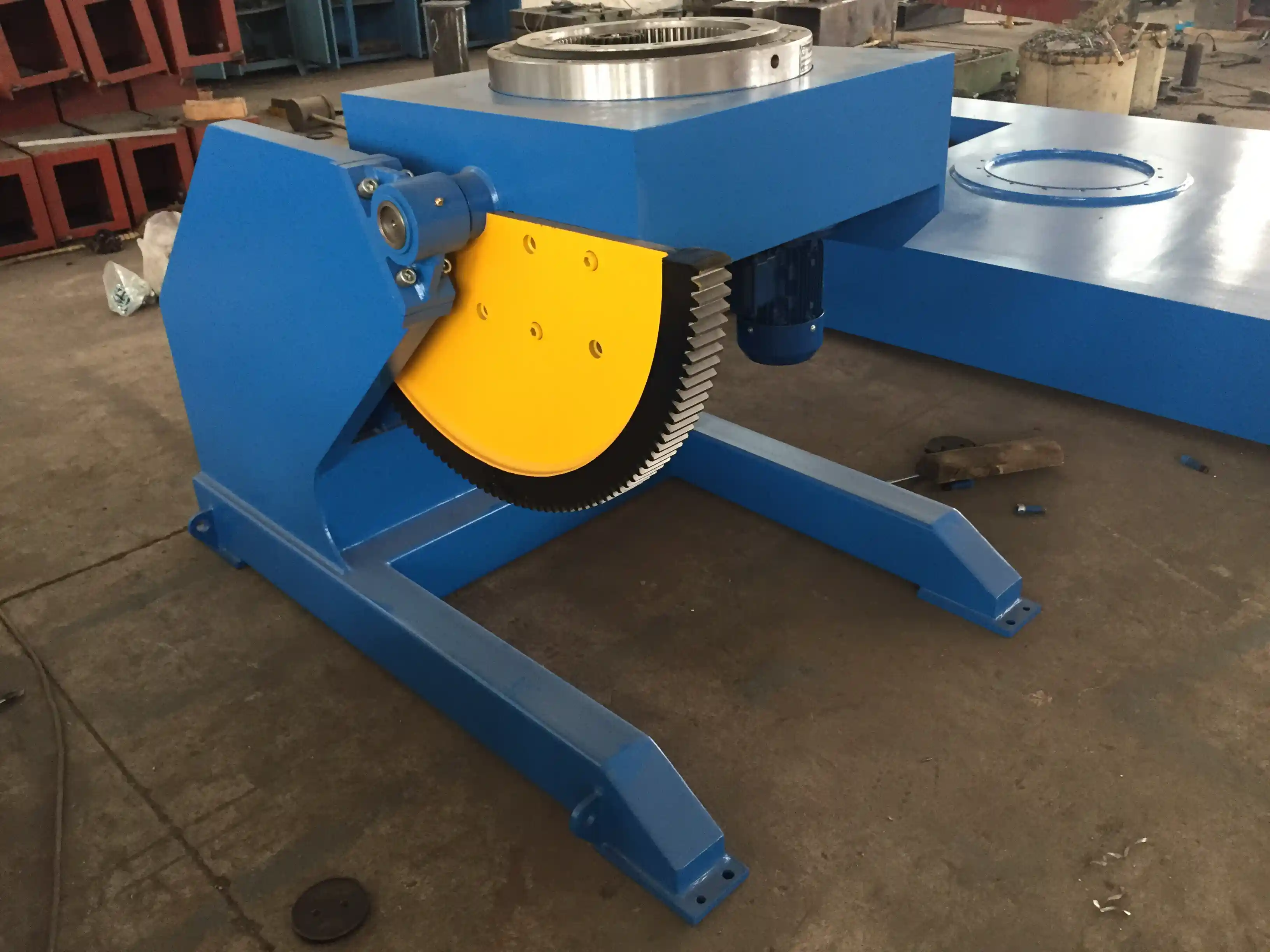
| Process | Where it fits | Main strength | Operating burden |
|---|---|---|---|
| Flame | Thick carbon steel | Lowest cost per metre on heavy plate | Wide kerf and a large heat-affected zone |
| Plasma | Middle thickness band, carbon and stainless | Speed across a mixed thickness mix | Consumable wear that rises with piercing |
| Fiber laser | Thin to medium sheet, precise features | Narrow kerf and low heat input | Cost per millimetre climbs steeply with thickness |
| Waterjet | Thick, heat-sensitive, and mixed materials | No heat-affected zone | Slow cutting and abrasive consumption |
Size the working envelope around the parts you actually move
The envelope covers more than table size. It includes rail length or gantry span, the loading side, the unloading side, extraction ducting, and the clearance a crane needs to place a sheet. A table that fits the largest sheet but leaves no room for the loading crane turns every job into a manual lift, and a machine that must be hand-fed loses the accuracy advantage you paid for.
Nesting yield is where envelope size pays back. A longer table lets parts be arranged along the cut direction and reduces remnants. A short table forces sheets to be cut in sections and leaves offcuts too small to reuse. The counterweight is real: a larger table increases travel between features, adds floor area and foundation cost, and can slow positioning on small parts. Size the envelope to the part families that repeat, not to the single largest plate you might cut one day.
Draw the ten largest and ten most frequent parts at scale on the proposed table outline. Count remnant area on each layout, time the load and unload, and confirm crane capacity, aisle width, and maintenance access with the machine in its service position.
Floor area is usually fixed before the machine is chosen, and a layout that saves space at one station rarely transfers to another without re-planning the aisle. <¿Espacio de taller demasiado pequeño? Cómo las columnas ahorran espacio 50% a la vez que aumentan la seguridad y la eficiencia> covers how column-and-boom equipment layouts recover floor space in fabrication shops.
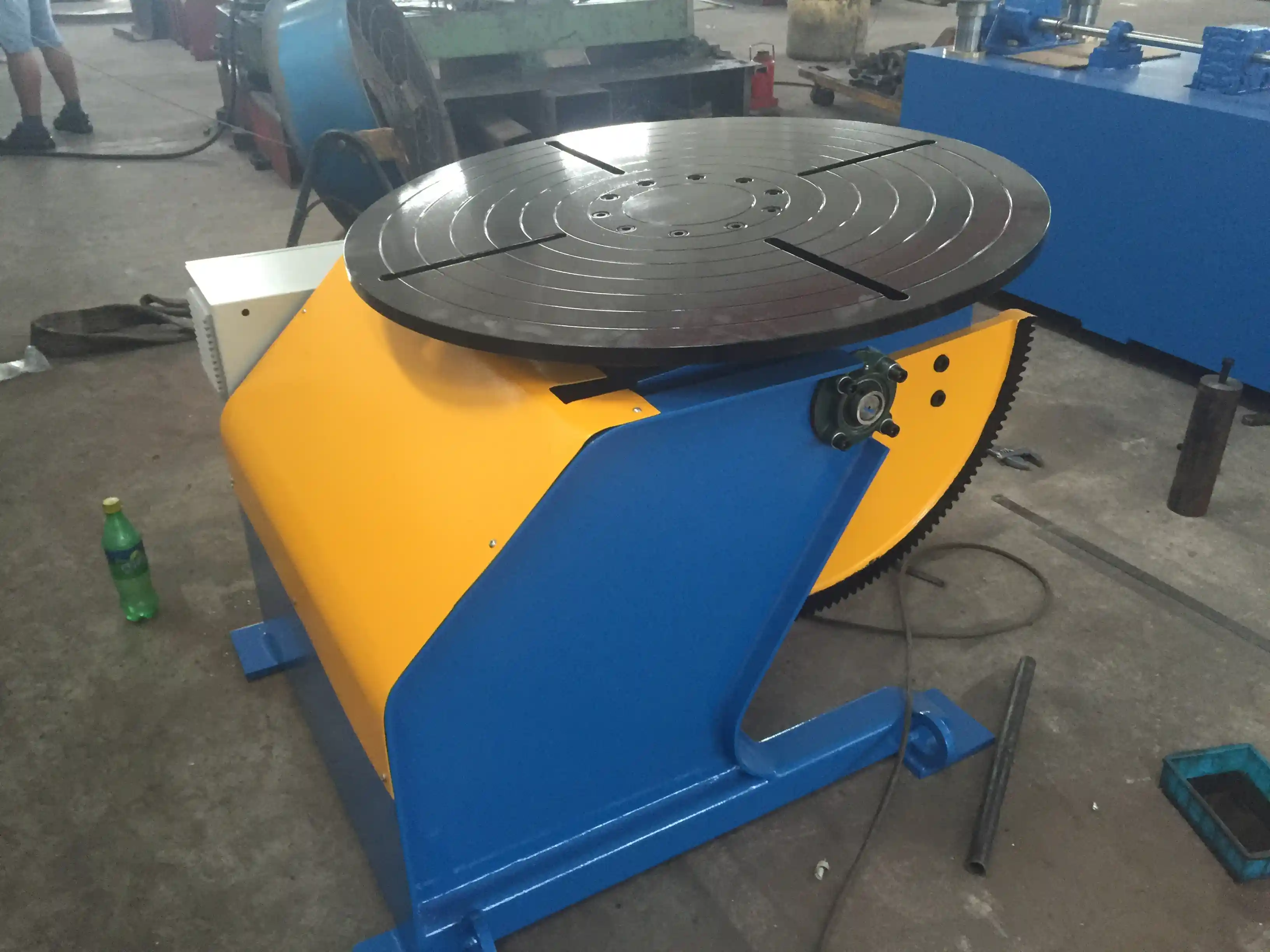
Specify accuracy and cut quality in terms you can measure
Two numbers are confused in most quotations. Positioning accuracy describes how close an axis arrives at the commanded position. Repeatability describes the spread when it returns to the same position. A machine can repeat well and still sit consistently offset, which is why kerf compensation, not accuracy alone, decides whether the finished part measures correctly.
Cut quality is a separate specification. ISO 9013 assigns thermally cut edges to quality classes numbered 1 to 5 and sets tolerances for perpendicularity and drag [1]. Write the class per thickness and per edge type rather than a general statement about clean cuts, because the class you can accept at 6 mm is not the class the same machine holds at 25 mm.
Part accuracy also depends on conditions the machine does not control: thermal growth across a shift, stress released from the plate as material is removed, and the condition of the nozzle or optical path. A single test cut in a cold machine therefore proves less than a cut repeated at the end of a shift.
Ask how the positioning figure was obtained. ISO 230-2 defines how the accuracy and repeatability of numerically controlled axes are determined [2], so a supplier can state the standard and the test conditions instead of a bare number. A figure without its method cannot be compared with a competitor’s figure.
For laser machines, add the source classification to the technical annex. IEC 60825-1 classifies laser products and sets the basis for enclosure and interlock requirements [3]. The class of the source is not the same as the safety of the installed machine, because guarding, interlocks, and extraction decide operator exposure.
| Record | Method context | Responsible use | Do not infer |
|---|---|---|---|
| ISO 9013 quality classes | Cut edges classified by geometrical tolerance and measured on the cut face | Agree an acceptance class per thickness in the purchase order | That a machine quoting the class will hold it across your whole thickness range |
| ISO 230-2 positioning test | Accuracy and repeatability of numerically controlled axes, measured under stated conditions | Gives a comparable basis for the accuracy claim | That a single-axis figure predicts the accuracy of a nested part after thermal growth |
| IEC 60825-1 laser classification | Classification of the laser product against defined hazard criteria | Sets the starting point for enclosure, interlocks, and access control | That a classified source makes the installed machine safe without guarding and extraction |
Each record supports the claim in its own column and nothing wider. A quotation carrying all three is easier to verify than one carrying a photograph of a cut edge.
Vague requirements are the usual cause of a machine that arrives almost right. Here is one line rewritten into a testable request.
Reject this RFQ line: “High-accuracy CNC plasma cutter, 25 mm steel, good cut quality.”
Replace it with: “Plasma cutting, 6 mm to 20 mm carbon steel covering most of our annual metres, working area 2.0 m by 6.0 m, ISO 9013 class 3 accepted on 12 mm witness cuts, positioning accuracy stated with the ISO 230-2 test method, and consumables priced per metre at our pierce count.”
Check the software chain before the mechanical specification
The machine only cuts programs. Nesting software decides how much of each sheet becomes parts, kerf compensation decides whether those parts fit, and the post-processor decides whether your existing CAM output runs at all. A machine with excellent mechanics behind a slow programming workflow loses more in material and programming hours than it gains in tolerance.
Two nests of the same job can differ noticeably in yield because of rotation rules, common-line cutting, lead-in placement, and remnant handling. Common-line cutting shares one cut between adjacent parts and saves both cut length and consumable life, but it needs a nesting engine that supports it and a controller that tolerates the resulting cut sequence.
High-mix, low-volume work gains most from automated nesting, a part library, and remnant tracking, because programming time per job dominates the cost. Repetitive high-volume work gains more from stored programs, consistent fixtures, and fast program recall. If you already run a CAM package, confirm the post-processor exists and ask who maintains it after a software update.
Bring five representative jobs to the demonstration and nest them yourself. Compare material utilization, programming time, and pierce count against your current practice, and check that the output runs without manual editing before you accept any claim about nesting efficiency.
Price the consumables and uptime, not just the machine
Consumable cost per metre of cut varies more between duty conditions than between brands. Plasma consumes electrodes and nozzles, laser consumes protective lenses and nozzle tips, waterjet consumes abrasive, orifices, and mixing tubes, and flame consumes tips and gas. In each process, life depends on how many pierces you make, how high you push the cut quality class, and how well the air, gas, or water is conditioned.
Consumable life figures are often measured on a demonstration programme of long cuts and few pierces. Your programme may include hundreds of short pierces per sheet, and each pierce costs both consumable life and time. That gap is a common reason an operating budget built from a demonstration proves too low in production.
Total cost per part also includes power, gas or abrasive, spares lead time, service response, software licence renewal, and the cost of an hour of downtime. A cheaper machine with a long spares lead time can cost more over a year than a higher-priced machine with local stock.
| RFQ field | What to request | Why it matters |
|---|---|---|
| Consumable price list | Unit prices for nozzles, electrodes, lenses, or abrasive at your duty | Converts machine price into cost per cut part |
| Expected life at your duty | Life stated against your metre and pierce count, not a demonstration programme | Prevents an operating budget built on long demonstration cuts |
| Spares lead time | Lead time for the three parts most likely to fail | A long lead time turns a small failure into a stopped station |
| Preventive maintenance | Schedule, tasks, and who performs them | Separates planned service from unplanned downtime |
| Service response | Response time and where the service engineer is based | Decides how long the machine stays down |
| Software terms | Licence type, updates, and post-processor support | Prevents a CAM break after a software update |
Give the supplier your own cut programme: total metres, total pierces, and thickness mix. Ask for the consumable price list with expected life at that duty, the maintenance schedule, and the lead time for the three parts most likely to fail. Compare cost per cut part, not machine price.
Run a witness cut before you accept the CNC cutting machine
Acceptance is where a selection becomes a machine. Build a witness-cut matrix before delivery: the thinnest and thickest production thicknesses, the most common thickness, the smallest hole and narrowest feature you cut, and one part with a tight downstream fit. Each cut is measured against the class written into the order, using the method written beside it.
A witness cut proves the combination of machine, parameters, consumables, and operator on that day. It does not prove that the same class will hold after eight hours of continuous cutting, which is why the matrix should be repeated at the end of a shift and the parts kept as reference standards. Those reference parts settle more arguments than a certificate alone.
The tolerance budget is what connects cutting to welding. A joint can absorb a fixed total deviation before fit-up, weld volume, or distortion becomes a problem, and the cut edge consumes part of that budget. If the cut edge sits at the limit of its class and the fit-up fixture adds its own error, the welder pays in a wider gap, more filler, and more shrinkage. Allocating the budget across cutting, fit-up, and welding costs less than tightening every one of them.
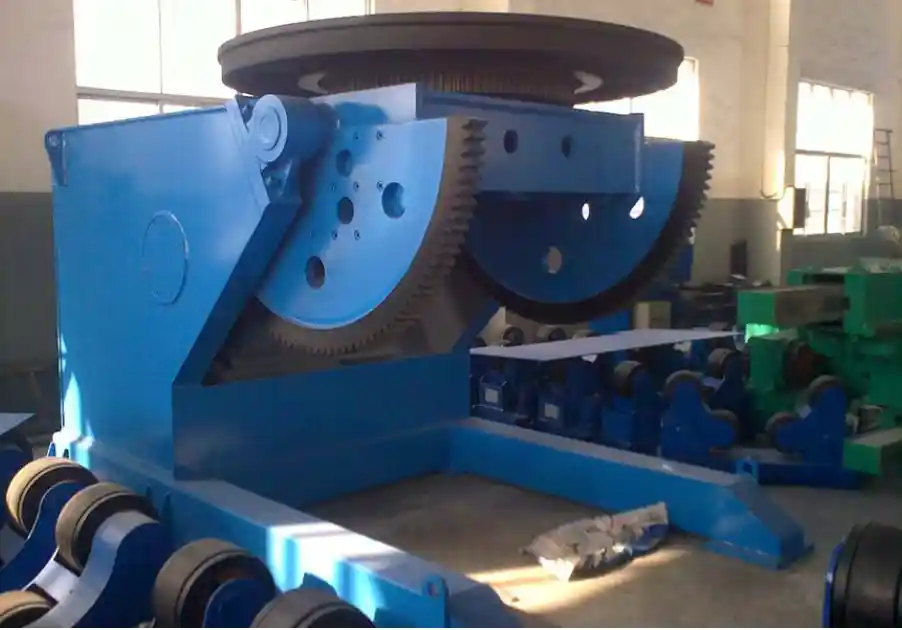
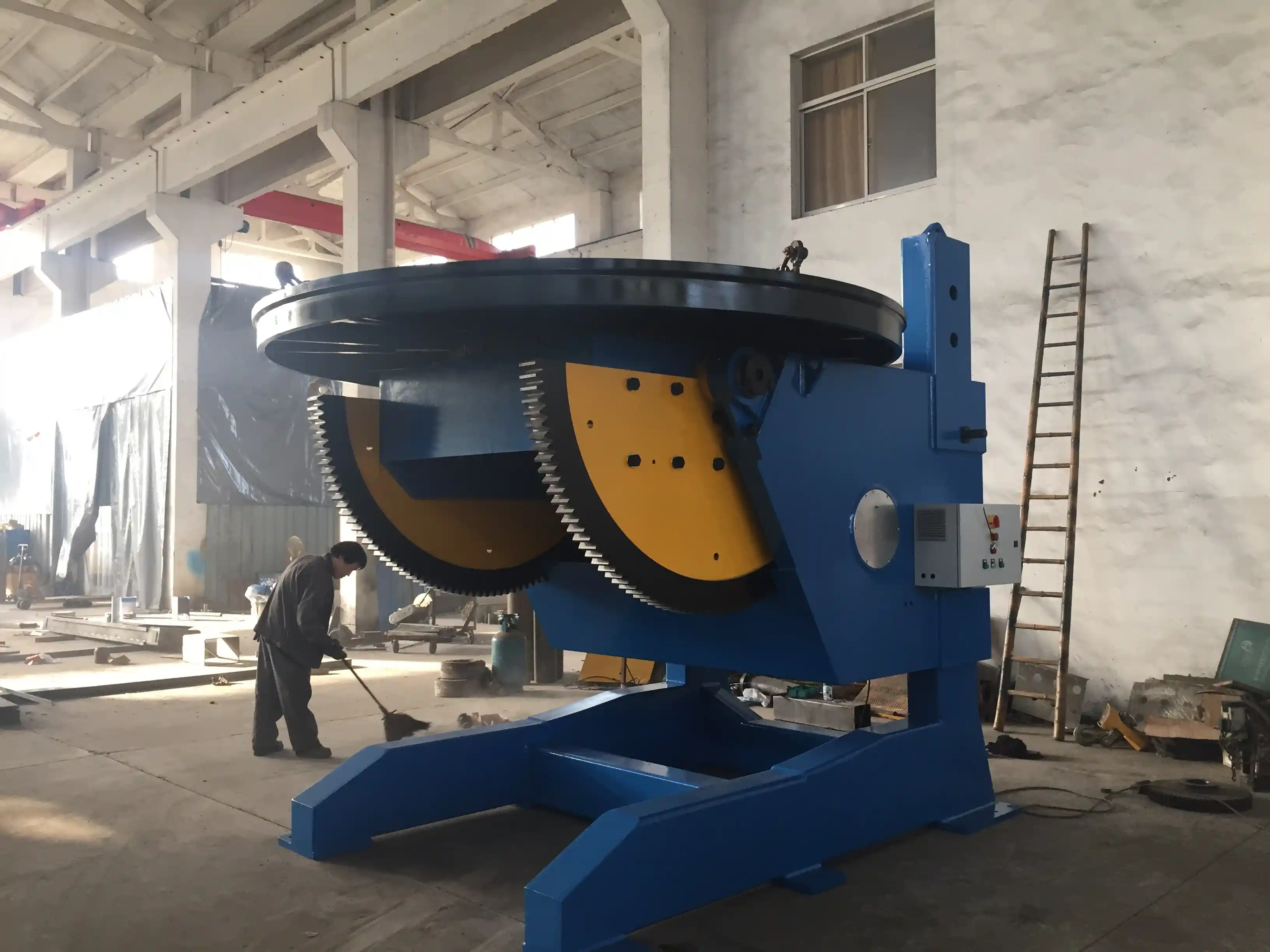
This is also where the machine stops being a stand-alone purchase. Cut parts move to fit-up and welding, and in heavy fabrication the positioner or rotator capacity decides whether the edge quality you paid for survives to the finished joint. Wuxi ABK builds both sides of that handoff, CNC cutting machines and the welding positioners and rotators that hold the parts afterwards, so the accepted edge class and the positioning capacity can be specified in one brief instead of two.
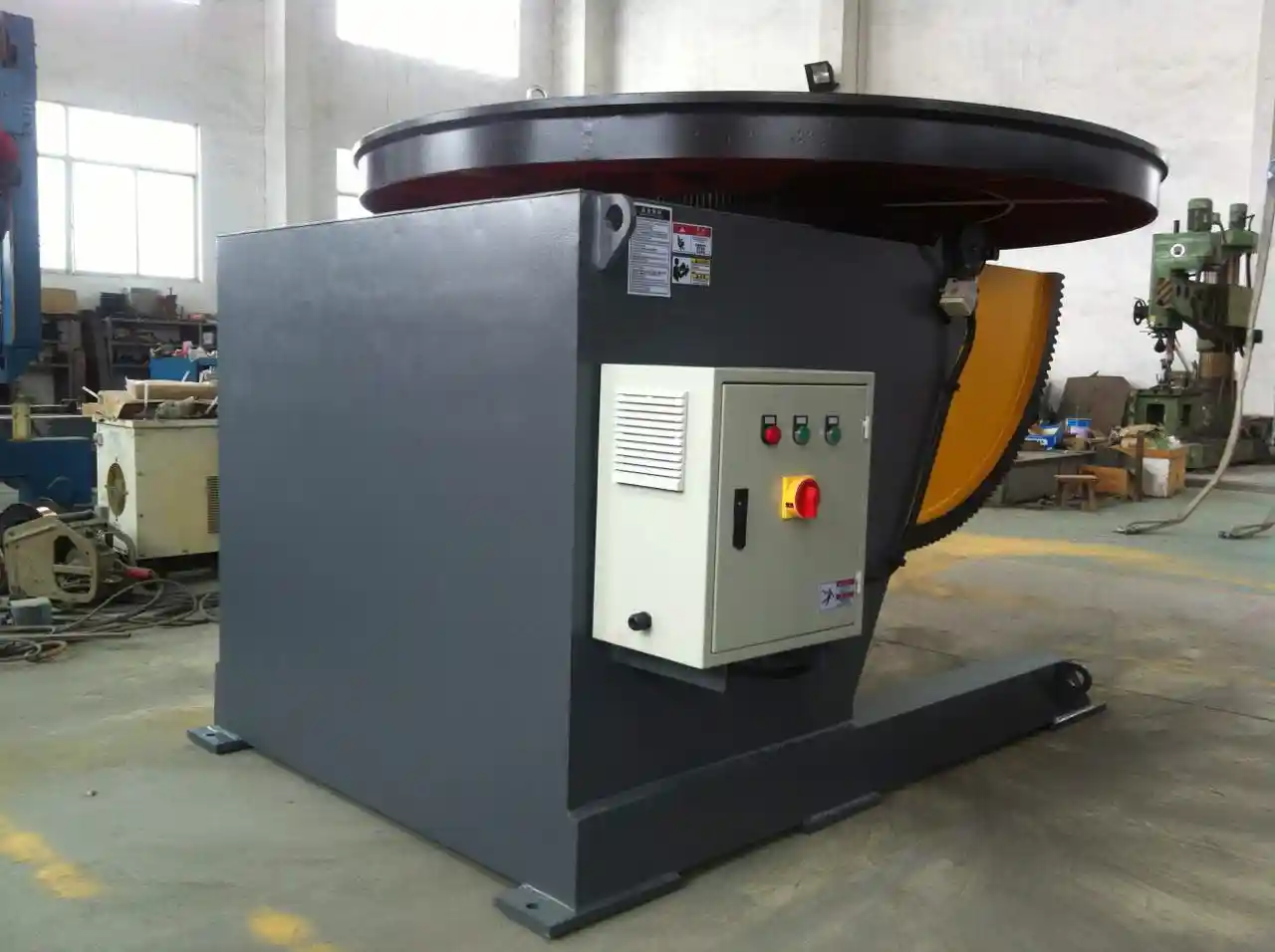
Cut parts that go straight into a weld joint depend on the equipment that holds them while the seam is made. <Soldaduras perfectas en tubos de gran diámetro con equipos de laminación profesionales> covers rolling equipment used for large-diameter pipe welding.
Write the acceptance into the purchase order: the class per thickness, the measurement method, the repeat test at the end of a shift, and the remedy if a cut falls outside class. Keep the witness parts.
Send your cut duty statement for a matched equipment proposal
A quotation can only be as specific as the information behind it. Send the thickness histogram or working thickness range, the material list, the largest and smallest part envelope, the required cut quality class per thickness, annual metres of cut and pierce count, floor space and crane capacity, the downstream fit-up and welding operation, and the acceptance test you expect. A proposal built from those fields can be compared line by line against another supplier. A proposal built from a maximum thickness alone cannot.
Wuxi ABK Machinery Co., Ltd, email jay@weldc.com, phone +86-13815101750 or +86-510-83555592.
PREGUNTAS FRECUENTES
Is a fiber laser always the better choice over plasma?
No, and the decision is rarely close once the thickness mix is known. Laser cutting gives a narrow kerf and low heat input on thin and medium sheet, and its cost per millimetre rises as thickness increases. Plasma is generally the lower-cost route across a middle thickness band, with consumable wear that grows with the number of pierces. If most of your work is thin sheet with tight features, laser earns its capital cost. If it is 12 mm to 20 mm plate cut into structural parts, plasma usually wins on cost per cut part.
What cut quality class should go into the purchase order?
The one your downstream operation can accept, stated per thickness. ISO 9013 defines classes from 1 to 5 with tolerances for perpendicularity and drag, and a machine that holds a tight class at 6 mm may not hold it at 25 mm. Start from the joint: parts that go into a fixture with a generous gap need a looser class than parts that go straight to a weld with no dressing. Then measure witness cuts against the stated class rather than judging the edge by eye.
How much floor space does a CNC cutting machine need?
More than the table outline. Add the loading side, the unloading side, crane access, extraction ducting, the control cabinet, and the space needed to open guards for maintenance. Draw the ten largest and ten most frequent parts on a scaled layout, then add the service positions and check the aisle. Two machines with the same table size can need different floor area because of rail length, gantry span, and how the extraction is routed.
Can one machine cut both thin sheet and thick plate?
It can, usually with a compromise. A process tuned for thin sheet runs slower at the top of a thick range, and consumable cost at the extremes is the part of the budget that surprises buyers. Decide what share of your work sits at the extremes and whether that share will be subcontracted or run on a second process. For most shops, one machine covering the middle band plus a written plan for the outliers is cheaper than one machine specified for the extreme.
References
[1] ISO 9013:2017, “Thermal cutting. Classification of thermal cuts. Geometrical product specification and quality tolerances,” ISO, 2017.
[2] ISO 230-2:2014, “Test code for machine tools. Part 2: Determination of accuracy and repeatability of positioning of numerically controlled axes,” ISO, 2014.
[3] IEC 60825-1:2014, “Safety of laser products. Part 1: Equipment classification and requirements,” IEC, 2014.
Si te interesa, echa un vistazo a estos artículos relacionados:
Desalineación excesiva en la soldadura de tuberías: solución de posicionamiento de precisión con mesa giratoria de soldadura de Wuxi ABK
Mejora de la calidad y la eficiencia en la fabricación de productos eólicos: El papel clave de los posicionadores en la soldadura de la circunferencia de la sección de la torre
Aplicaciones innovadoras de los rotadores de soldadura CNC de 10 toneladas en la fabricación de recipientes a presión
Rotador de soldadura: automatización de precisión para la fabricación industrial: guía de preguntas frecuentes elaborada por expertos
Equipos rotativos de soldadura profesional ABK de Wuxi: solución de soldadura de precisión para la fabricación de recipientes a presión
 English
 Español
 Français
 Deutsch
 Português
 Русский