Wind tower welding line capacity per shift is not a machine catalog number. It comes from the interaction of fit-up time, weld deposition rate, rotator handling speed, and how much of each shift the arc actually stays on. A buyer who asks for maximum output before checking these interactions receives a number that will not last one production week. We calculate capacity backward from tower section geometry and the non-welding time, then align the manipulador de soldadura and rotator payload with the girth and longitudinal seam plan. This article shows which parameters move output per shift and which parameters only move cost.
Wind Tower Welding Line Capacity Starts With Fit-Up and Rotator Throughput
In tower manufacturing, longitudinal and girth seams are welded on cylindrical sections that weigh from 20 tons to more than 100 tons once flanges and bracing are attached. A welding line’s listed travel speed is not the limiting parameter. The limiting parameter is how fast a section can be aligned, rotated, and held round enough for submerged arc welding. We frequently see lines specified by manipulator travel speed while the rotator and fit-up station are added later with less capacity than the section range requires. The result is a line that can weld quickly only after operators spend much of the shift moving and blocking a shell.
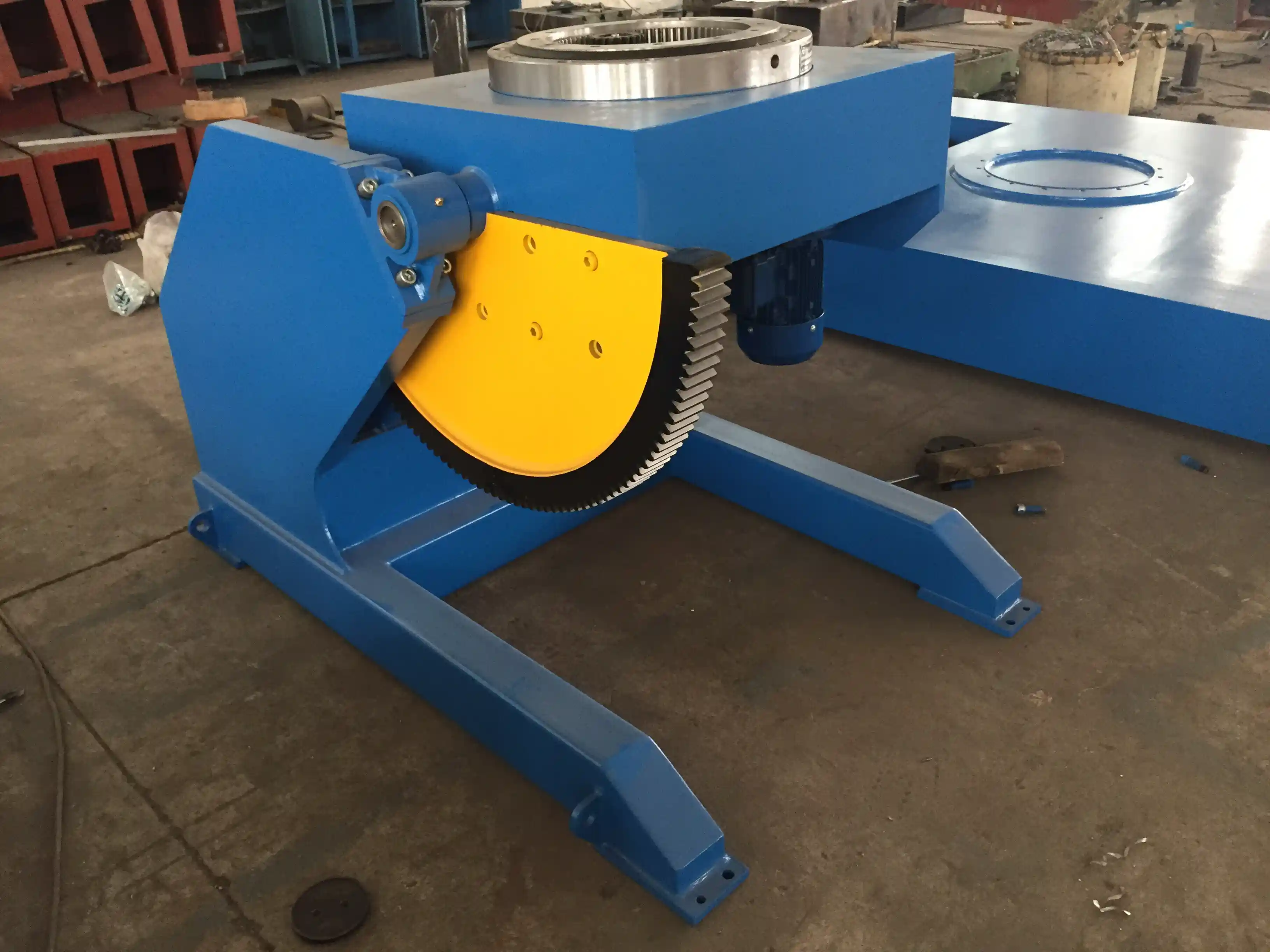
We size rotator sets by the heaviest tower section plus the weight of tack-welded flanges and temporary bracing. For a 4.5 m diameter section with 35 mm wall, a rotator pair rated for 60 tons may appear sufficient, but frame bending stiffness and drive torque margin matter more than nameplate load. If the rotator slips or creeps, the operator slows rotation below the welding procedure range and the deposition rate falls. For capacity per shift, the rotator surface speed at the section diameter is the number to calculate, not the motor nameplate speed.
Fit-up delay is where most wind tower shift capacity disappears before a weld is ever made. <Problemas de soldadura en torres eólicas de nuevo: Cómo los rotadores inteligentes de líneas de crecimiento aumentan la productividad por 50%> covers why growing line rotators hold section alignment through diameter changes and keep fit-up from becoming the hidden bottleneck in planned shift output.
Fit-up is the other half of the bottleneck. A tower section arriving at the main station with 6 mm mismatch or an uneven root opening will not be corrected by a faster SAW head. The operator will adjust tack welds, reposition the shell, and recheck roundness before the first pass. In line audits, two or three of these events in a shift remove a complete girth weld from the schedule. Real output is therefore the number of sections brought into weldable condition, not the number of meters the arc can travel.
Calculating Production Output per Shift Requires Non-Welding Time
The usual capacity formula multiplies travel speed by seam length and divides by eight shift hours. That overstates output. A shift also burns time on rigging, preheat, interpass checks, slag removal, flux recovery, layer changes, and pass repositioning. For wind tower plate thickness from 25 mm to 60 mm, preheat before the first arc can take longer than the root pass itself, and interpass control pauses each layer. Rotating a heavy shell back to the start for the next pass is not instant either.
Why Arc-On Time Is the Wrong Base for Capacity
Arc-on time misses crane movement, section rotation, and weld pass transitions. We use a station time sheet: fit-up, preheat, longitudinal SAW, girth SAW, grinding, inspection, and repair allowance. The arc itself is commonly less than half of total station time. When the line is specified only by welding machine speed, the remaining variables appear after installation as schedule slippage rather than as line capacity.
How to Build a Shift Calculation From the Weld Map
Start from the tower drawings. Count longitudinal and girth welds per section, plate thickness, and total deposited weld metal. Work backward from the approved WPS travel speed, then add measured handling time from a similar line if available. A section with four girth joints, 5 m diameter, and 45 mm wall may need two passes per longitudinal seam and three passes per girth joint. The shift output is how many complete joints pass NDT and release the section. That difference determines whether the line delivers two sections per shift or falls to one section in ten hours.
Equipment Configuration Choices Affect Capacity More Than Weld Speed
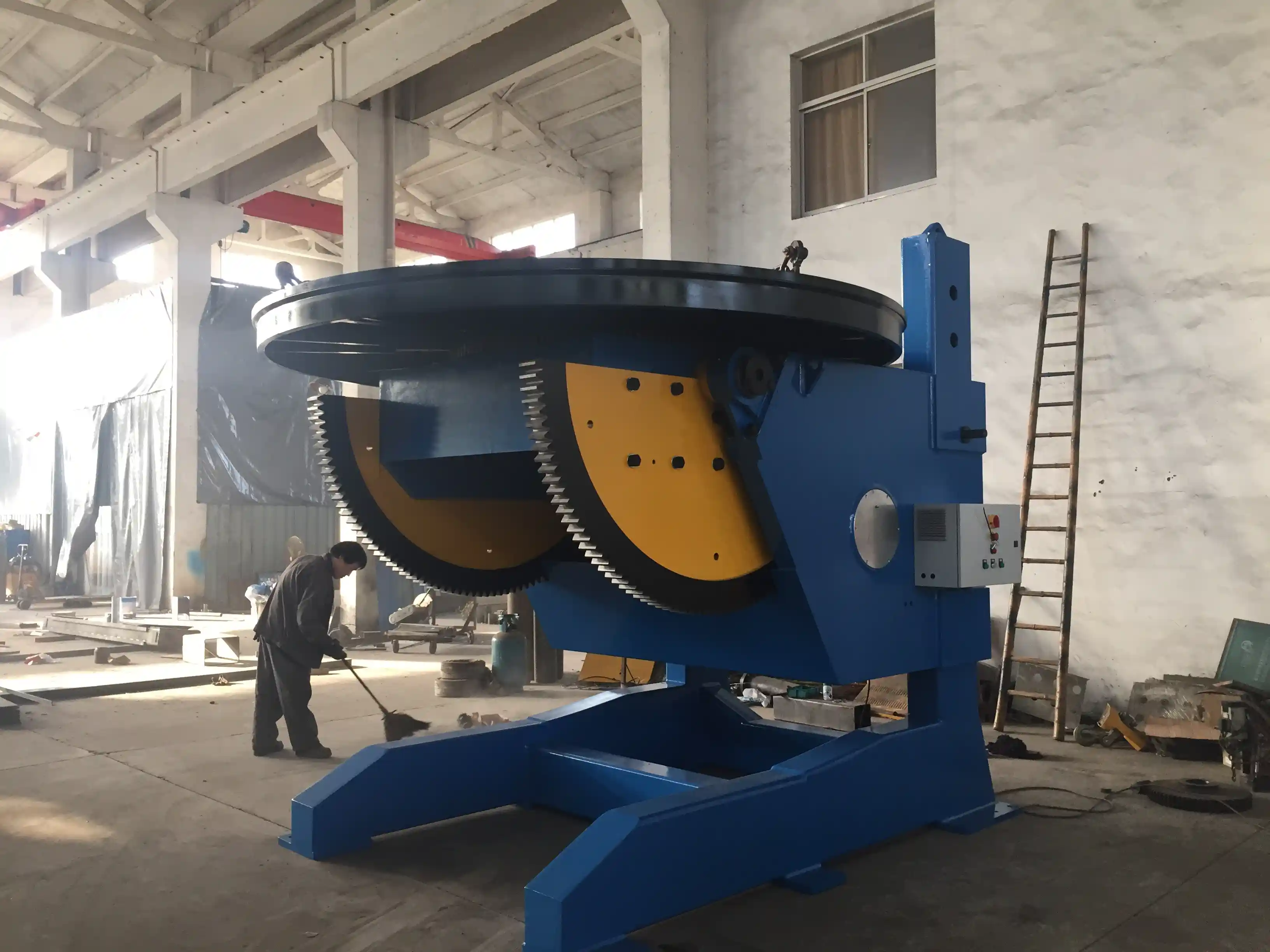
Buyers often compare amperage, wire feed speed, and oscillation width. Those values matter, but manipulator reach, rotator capacity, and station layout determine whether those parameters can run without interruption. A manipulator with 4 m horizontal travel cannot cover a long tower section without repositioning the column. Each repositioning adds setup, re-alignment, and possible overlap defects. A manipulator with 6 to 8 m horizontal travel and sufficient vertical reach stays on the section longer, which lifts productive arc time more than a nominal speed increase.
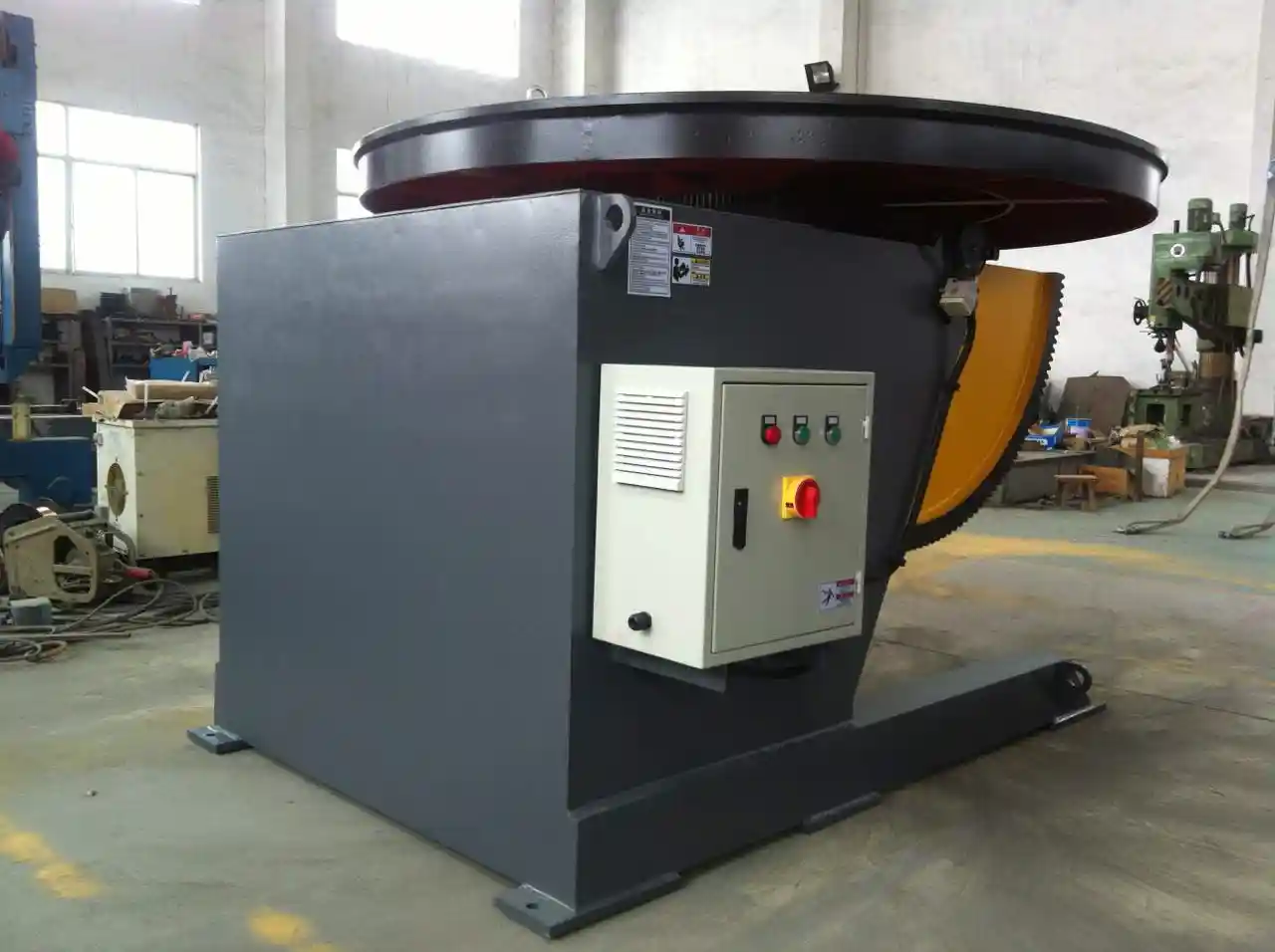
Rotator range is the next constraint. For tower sections between 3.5 m and 6.5 m diameter, the roller frame must adjust to the lower diameter and still carry the upper diameter. A fixed-height roller frame may fit one section size but lose contact or create excessive edge pressure on another. We prefer adjustable-height rotators with self-aligning rollers when the schedule includes several diameter classes. The same requirement applies to the fit-up station. If fit-up is undersized, the main welding station waits for sections instead of welding them.
Girth welding accuracy depends on positioner consistency as much as welding parameters. <Mejora de la calidad y la eficiencia en la fabricación de productos eólicos: El papel clave de los posicionadores en la soldadura de la circunferencia de la sección de la torre> covers alignment checks that keep tower section girth welds from becoming repair work, which is where planned shift capacity leaks out unnoticed.
Repair time tends to be the most undercounted part of a capacity plan. A single girth weld with lack of fusion found by visual inspection or UT can require back gouging, rewelding, and re-inspection. That event may take longer than welding the joint the first time. Capacity per shift should therefore include a repair allowance tied to the first-pass defect rate. A line with an offline repair station keeps the main welding station moving, while a line without one turns one bad joint into a stopped line.
Matching Capacity to Tower Section Diameters and Weight Prevents Inflexibility
A wind tower line that works only for the lightest sections may suit a prototype shop, but it will not hold a mixed production schedule. The line should be specified by section diameter range, wall thickness, and maximum weight, not by one representative tower. We use the largest diameter to set roller spacing and manipulator reach, and the heaviest section to set rotator payload and drive torque. If the range is too wide for one rotator set, the project may need two roller sets or adjustable-height rotators.
| Capacity factor | What goes wrong when it is undersized | What to check |
|---|---|---|
| Section fit-up | Tack weld adjustments and root opening corrections consume shift time | Fit-up station range for smallest to largest diameter |
| Girth welding | Rotator creep slows SAW travel below the WPS range | Rotator payload and surface speed at the largest section diameter |
| Longitudinal welding | Pass changes and slag removal extend non-arc time | Manipulator reach, boom lift, and flux recovery layout |
| Preheat and interpass | Temperature loss during positioning delays each pass | Heating capacity and temperature feedback at the line |
| NDT and repair | Repair welds occupy the main line and stop new sections | Offline repair station or separate UT hold area |
Some buyers try to save floor space by combining fit-up and welding in one station. That coupling creates a queue. A separate fit-up station feeds the welding station and decouples setup from welding. The welding station then runs closer to its true capacity, and the fit-up station absorbs the variation that would otherwise stop the main line. This does not require a larger building; it often just requires a different arrangement of the same equipment.
If your tower schedule mixes 3.5 m and 6.5 m sections, confirm the rotator’s minimum and maximum diameter range before you freeze the line layout. Send the section list and weld map to jay@weldmc.com and we will check the fit-up and roller range for the lightest and heaviest sections.
Buyers Should Confirm These Capacity Specifications Before Purchase
Before finalizing a line, confirm what the stated output per shift includes. If the number only assumes arc-on time, it will not survive contact with tower sections that need fit-up correction, preheat, pass changes, and repair. Ask for the station time sheet behind the capacity figure. Then check the rotator, manipulator, and fit-up equipment against the heaviest and lightest sections in your tower program, not the average section.
We at Wuxi ABK configure wind tower welding lines from section drawings, weld maps, and target sections per shift backward, so the fit-up station, rotator set, and manipulator reach align before installation. Send your tower section diameter range, wall thickness, weld map, and shift target to jay@weldmc.com or call +86-13815101750. We will return a bottleneck calculation and the equipment list matched to the line’s actual output.
Questions Buyers Ask Before Sizing a Wind Tower Welding Line
What Is a Realistic Output per Shift for a Wind Tower Welding Line?
A realistic shift target cannot be fixed until the section diameter, wall thickness, and weld map are known. For a mid-range tower section around 4.5 m diameter, a well-configured line may finish one to two sections per shift when fit-up, NDT, and repair allowance are included. That falls quickly if repair work uses the main station or if rotator creep slows the SAW pass. Capacity claims that assume eight hours of continuous arc time overstate output. The usable number comes from station time sheets, not from maximum weld travel speed.
Is Welding Speed or Fit-Up Time the Bigger Capacity Lever?
Many buyers assume a faster SAW head will lift output in proportion, but fit-up delay usually constrains the line first. If a section sits with mismatch or uneven root opening, the alignment time removes more arc time than a modest travel speed increase can recover. On tower sections with multiple girth seams, the bigger lever is usually fit-up and rotator throughput, then manipulator reach, then WPS travel speed. Fix the station sequence before paying for speed.
Do We Need a Separate Repair Station for a Two Section per Shift Target?
It depends on the first-pass defect rate and the NDT method. If ultrasonic testing releases each joint and the repair rate stays low, a separate station may be unnecessary for a one-section target. For two sections per shift or more, one girth weld repair can block the main station long enough to lose the second section. An offline repair position with its own rotator and flux recovery is worth the floor space when the schedule has little buffer.
What Should We Ask Suppliers About Capacity Calculations?
A better question is what time allowances are included in the output number. Ask for the station-by-station calculation: fit-up, preheat, longitudinal welding, girth welding, grinding, inspection, and repair allowance. Then ask which tower section geometry was used. A number based on the lightest section will not hold for the heaviest section. Also confirm the rotator and manipulator range covers the full diameter and weight schedule. Send your section list and target output to jay@weldmc.com, and we will check the capacity calculation against the heaviest section in your schedule.
Si te interesa, echa un vistazo a estos artículos relacionados:
Problemas de descuelgue en el recubrimiento de tuberías de buques: cómo los soportes inteligentes para rodillos de pintura aumentan la tasa de aprobación hasta el 98%
Equipos rotativos de soldadura profesional ABK de Wuxi: solución de soldadura de precisión para la fabricación de recipientes a presión
Revolution in Ship Welding: How Welding Positioners Improve Quality and Efficiency
 English
  Español
  Français
  Deutsch
  Português
  Русский