Tank fabrication has shifted. The pressure to deliver faster, hit tighter tolerances, and keep costs under control is no longer a future concern—it’s the daily reality on shop floors. I’ve watched fabricators wrestle with this for years, and the ones pulling ahead aren’t just working harder. They’re investing smarter in welding equipment that actually moves the needle on throughput and quality.
Why Advanced Tank Welding Equipment Changes the Game
Investing in advanced tank welding equipment reshapes what a fabrication shop can accomplish. Automated systems don’t just speed things up—they fundamentally alter production economics. An automatic tank welding machine completes welds faster and with more consistency than manual methods ever could, which compresses project timelines in ways that directly affect bidding capacity and cash flow.
The skilled labor shortage isn’t going away. Automation handles the repetitive work, freeing experienced welders to tackle complex joints and high-value operations where their expertise actually matters. This isn’t about replacing people—it’s about deploying them where they make the biggest difference.
Weld quality improvement follows naturally from precision equipment. A Welding Manipulator with ±0.1 mm/m positioning accuracy produces uniform weld beads that minimize defects and rework. For pressure vessel welding and storage tank construction, where structural integrity determines whether a project passes inspection or gets sent back, this consistency is non-negotiable.
Cost reductions compound over time. Automated processes cut labor hours per unit and reduce consumable waste through optimized welding parameters. Safety improves too—remote-controlled welding manipulators and positioners keep operators away from arc flash and fumes. Companies adopting tank welding automation consistently report higher throughput and lower operational expenses. These combined advantages create a competitive market edge that lets fabricators pursue larger, more complex projects with confidence.
Matching Equipment to Your Actual Production Needs
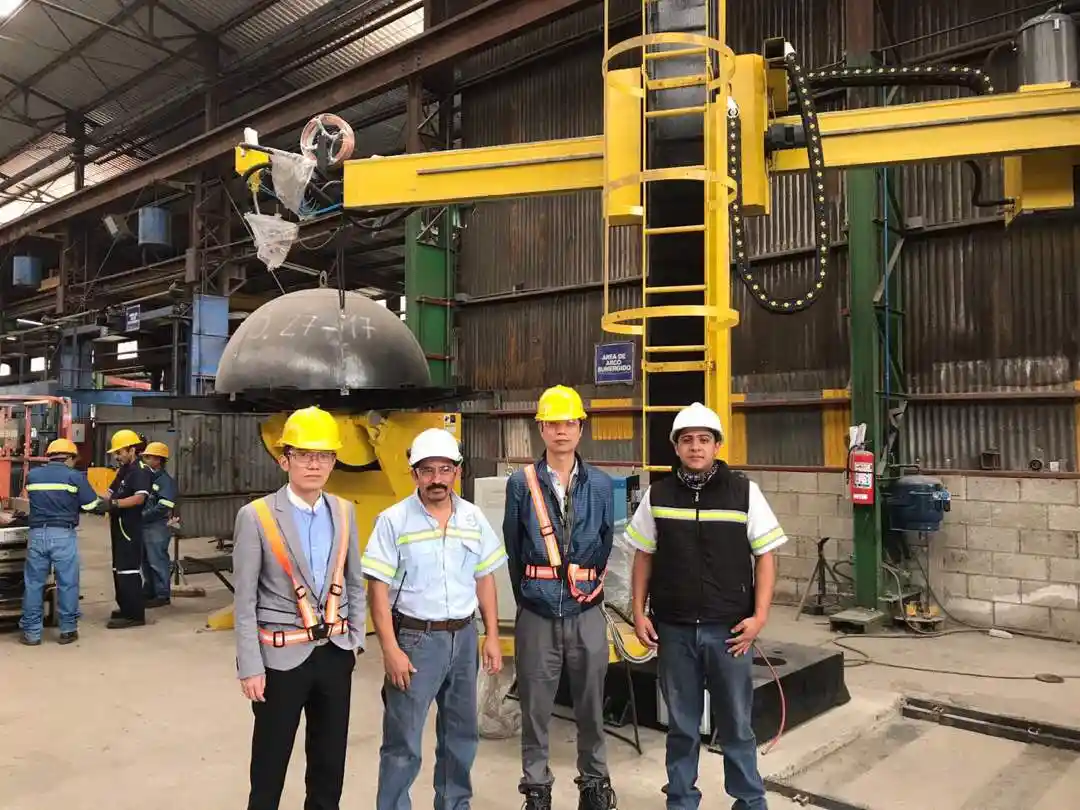
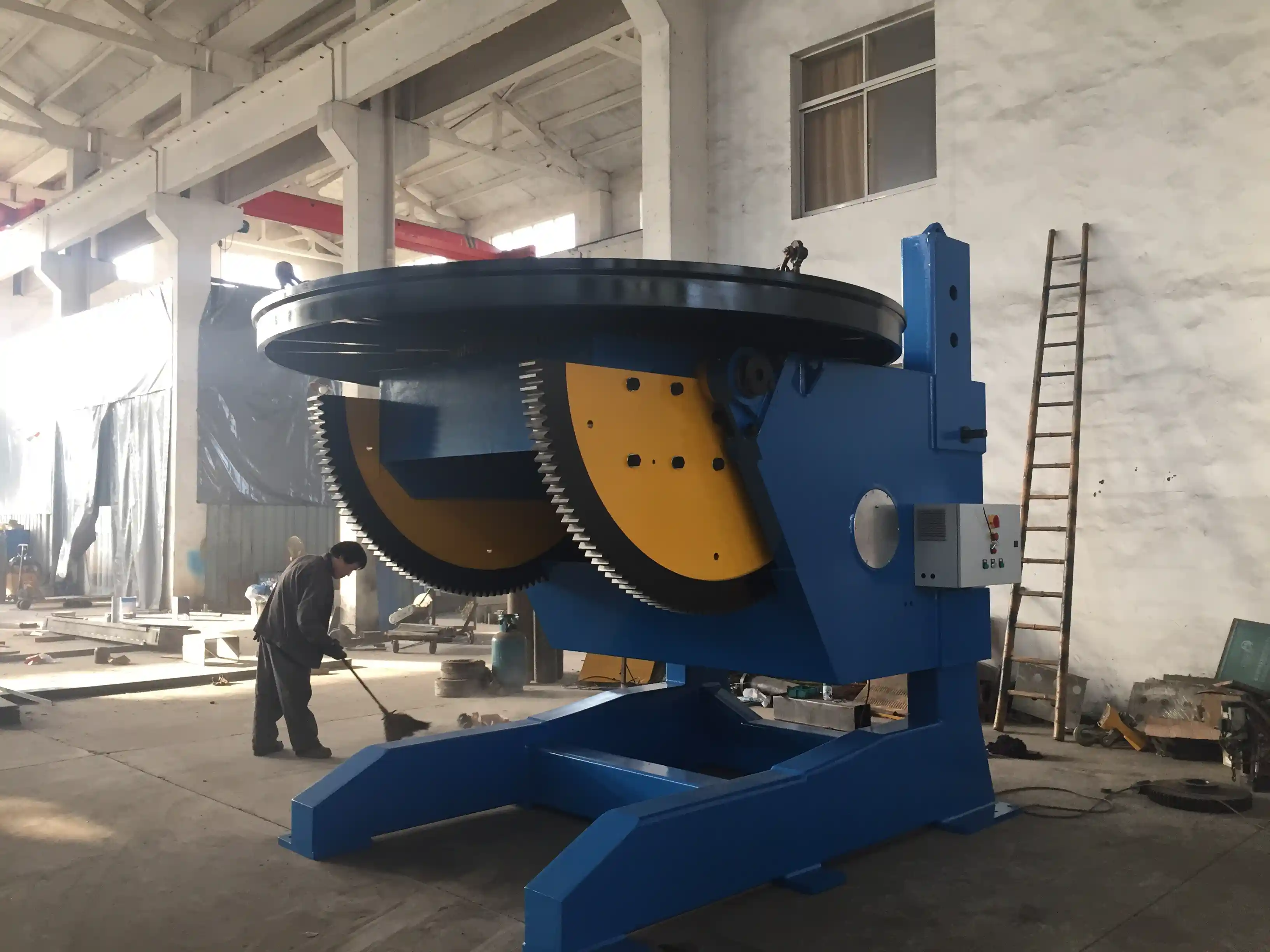
Selecting the right tank welding system starts with honest assessment of what you’re actually building. Pressure vessels, storage tanks, and wind tower sections each demand different equipment configurations. A longitudinal seam welder handles straight seams efficiently, while a girth welding machine excels at circumferential welds. Complex geometries or robotic integration require precision welding positioners and welding manipulators working in coordination.
The Triple Axis Positioner (5 Tons) delivers ±0.05 mm positioning accuracy and 0.02 mm repeatability, which makes it suitable for robotic MIG, TIG, and SAW welding applications where tolerances are tight.
Material compatibility drives process selection. Carbon steel and stainless steel behave differently under heat, requiring distinct welding processes and heat input controls. Custom welding solutions match specific material types and thicknesses to appropriate equipment configurations. Seam tracking technology maintains consistent weld placement on long seams or irregular surfaces where manual tracking would introduce variation.
The choice between Submerged Arc Welding (SAW), Gas Metal Arc Welding (GMAW), or Flux-Cored Arc Welding (FCAW) depends on joint design, material thickness, and required deposition rates. Welding power sources need to deliver stable current without fluctuation. For heavy cylindrical components, Standard Rotator Suppliers provide systems like the HGZ-50 Conventional Standard Welding Rotator (50 Tons), featuring ZG45 alloy rollers and Siemens PLC control for precise rotation of workpieces up to 4500mm in diameter.
How do I choose the right welding process for different tank materials?
The correct welding process depends on material type, thickness, joint design, and desired weld properties. For thick carbon steel, SAW offers high deposition rates and deep penetration—ideal for structural tanks where speed and strength matter. GMAW and FCAW provide versatility across various thicknesses and joint designs with good speed and ease of use.
Stainless steel requires more care. GMAW or Gas Tungsten Arc Welding (GTAW) minimize heat input, preventing distortion and maintaining corrosion resistance. Controlling heat input prevents metallurgical changes that compromise material properties. Appropriate filler metals selection and welding consumables directly affect weld integrity.
| Proceso de soldadura | Tipo de material | Thickness Range | Beneficio clave |
|---|---|---|---|
| SAW | Carbon Steel, Alloy Steel | >6mm | High Deposition, Deep Penetration |
| GMAW | Carbon Steel, Stainless Steel | 1mm – 10mm | Versatility, Speed |
| FCAW | Carbon Steel, Low Alloy Steel | >3mm | High Deposition, All-Position |
| GTAW | Stainless Steel, Aluminum | <6mm | High Quality, Low Distortion |
Making the Financial Case for Welding Automation
Calculating ROI for welding equipment investment requires looking at the full picture, not just the purchase price. Start with initial investment analysis: equipment cost, installation, and training. Then project operational costs reduction from automated processes—reduced labor hours, decreased material waste, and lower energy consumption.
Productivity metrics translate directly into revenue. Increased throughput and faster project completion times mean more work completed per quarter. The payback period for automation often surprises fabricators because the cost savings in fabrication and efficiency gains accumulate faster than expected.
A detailed budget planning welding exercise should forecast long-term profitability metrics. Financing options for equipment can improve cash flow during the transition. Automated systems minimize rework through consistent weld quality, which reduces inspection costs and project delays. This holistic approach clarifies the financial benefits before committing capital.
What is the typical ROI for automated tank welding equipment?
Typical ROI for automated tank welding equipment ranges from 12 to 36 months, depending on operation scale, current labor costs, and the specific automation chosen. Increased throughput ROI and reduced rework costs accelerate the investment justification significantly.
Automated systems generate long-term savings automation through consistent quality and reduced consumables. This efficiency gains ROI makes automated equipment a sound financial decision for most fabricators operating at scale.
| ROI Factor | Impact on Payback Period |
|---|---|
| Increased Production Speed | Shorter |
| Reduced Labor Costs | Shorter |
| Improved Weld Quality | Shorter (less rework) |
| Equipment Cost | Longer |
| Training & Integration | Longer (initial) |
Getting New Equipment Running at Full Capacity
Successful implementation of new welding equipment follows a structured sequence. Proper welding equipment installation must adhere to manufacturer specifications and safety standards—cutting corners here creates problems that surface months later during production.
Comprehensive operator training programs determine whether equipment reaches its potential or sits underutilized. The LH8080 Welding Manipulator features linear guideways and stepless speed control, and operators need to understand its precise movements to achieve optimal performance.
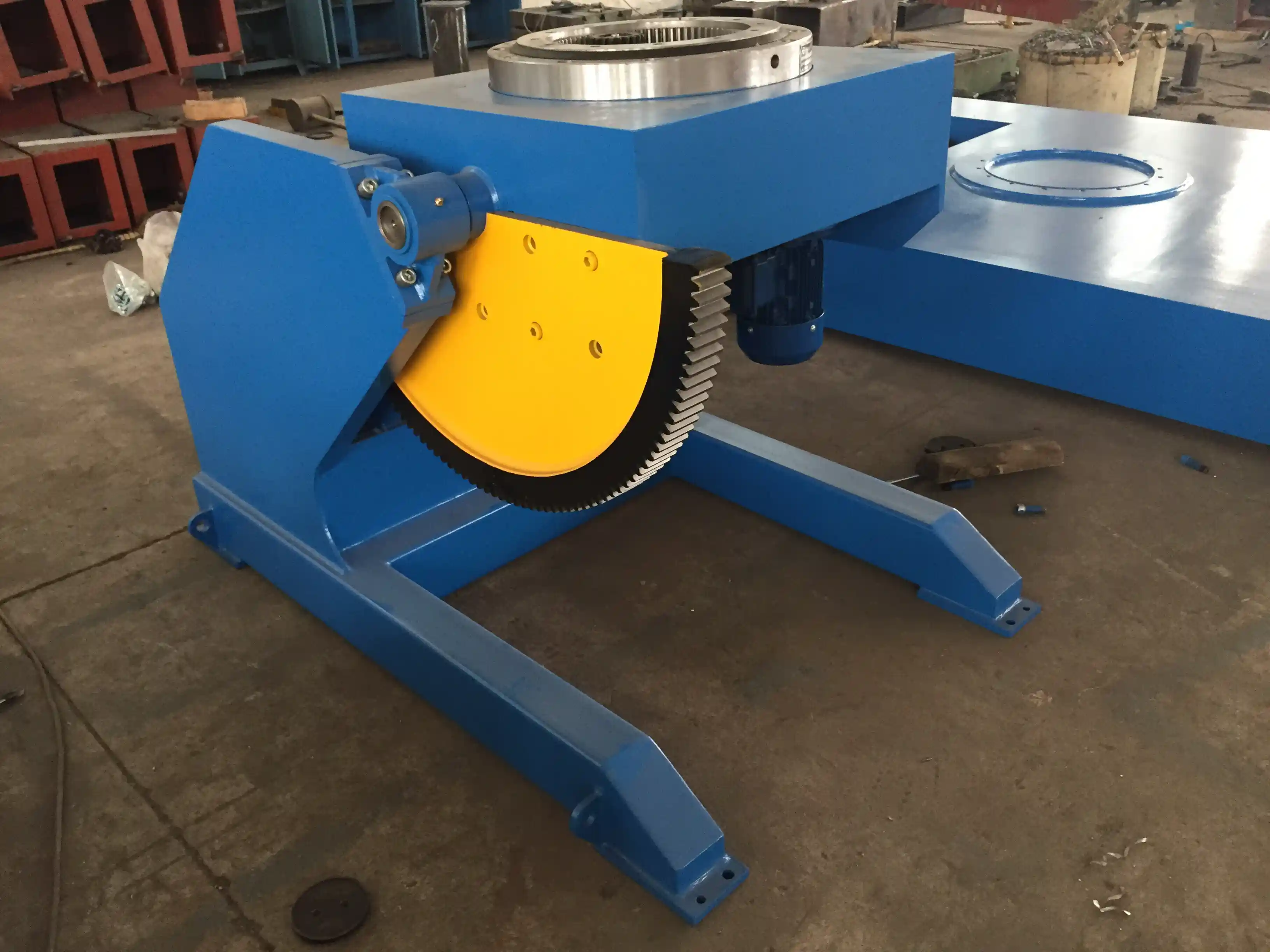
Regular maintenance schedules welding prevent unscheduled downtime that disrupts production planning. The 5-Ton Fixed Height Welding Positioner (HBJ-50) requires daily cleaning of welding slag and annual recalibration to maintain its ±0.5° rotation accuracy. Following this schedule extends service life by 30% or more.
Quality control in fabrication integrates into the automated workflow through real-time monitoring and data analytics for welding. Immediate adjustments become possible, enabling continuous process improvement. Strict safety protocols welding protect personnel without exception. Production optimization strategies leverage software integration welding for seamless data exchange and workflow management. Robust after-sales support welding equipment ensures longevity and peak performance through spare parts management and equipment calibration services.
What maintenance is required for tank welding manipulators and positioners?
Maintaining welding manipulators and positioners protects your investment and preserves precision. Daily tasks include removing welding slag, checking lubrication levels, and inspecting electrical connections. Monthly or quarterly, torque bolts, check drive mechanisms, and test safety systems.
Annual maintenance involves replacing worn bearings or seals, re-lubricating moving parts, and recalibrating positioning accuracy. Welding Manipulator models benefit from regular checks of cycloidal reducers and linear guideways. 3 Axis Welding Positioner models with servo-driven systems require consistent calibration to maintain ±0.05 mm positioning accuracy. Preventative maintenance welding reduces unplanned downtime and extends equipment lifespan significantly.
| Maintenance Interval | Tarea | Key Components Involved |
|---|---|---|
| Diario | Clean welding slag, check lubrication | Worktable, gears, electrical connections |
| Monthly/Quarterly | Torque bolts, inspect drive mechanisms | Reducers, slewing bearings, fasteners |
| Annually | Replace worn parts, re-lubricate, recalibrate | Bearings, seals, control systems |
Where Tank Fabrication Technology Is Heading
Tank fabrication will continue evolving as new technologies mature. Robotic welding advancements are producing more flexible and adaptive systems capable of handling diverse tank designs and materials without extensive reprogramming.
AI in welding is emerging as a practical tool for predictive maintenance, real-time quality control, and autonomous process optimization. These capabilities will reduce human intervention while improving consistency. Smart factories welding will integrate all aspects of fabrication—from design to delivery—through interconnected systems and data sharing.
Industry 4.0 welding solutions bring greater connectivity and intelligence to shop floors. Remote monitoring welding allows fabricators to supervise operations and troubleshoot issues from anywhere, improving responsiveness and reducing travel costs. Additive manufacturing welding holds promise for specialized components or repair applications, though large-scale tank production remains primarily conventional.
Sustainable welding practices focusing on energy efficiency and reduced waste are gaining traction as environmental considerations influence purchasing decisions. These trends should inform investment strategies for fabricators planning equipment purchases over the next five to ten years.
Asociarse con WUXI ABK MACHINERY para obtener soluciones avanzadas de soldadura
Ready to optimize your tank fabrication processes and achieve significant ROI? WUXI ABK MACHINERY CO., LTD, with over two decades of expertise in welding equipment and CNC cutting machines, offers advanced solutions tailored to your specific needs. From wind tower welding lines to precision welding manipulators and welding positioners, our professional team is dedicated to delivering quality and efficiency. Contact us today for a consultation or to explore our comprehensive range of Tank Welding Solutions. Let us help you build a more productive and profitable future.
Correo electrónico: jay@weldc.com
Móvil: +86-13815101750
What are the primary benefits of automating tank welding for fabricators?
Automated tank welding delivers increased production speed and consistent weld quality that manual methods cannot match. These systems reduce reliance on manual labor, lowering labor costs and addressing the skilled labor shortage that affects most fabrication operations. Automation enhances safety in fabrication by minimizing human exposure to hazardous welding environments. The precision of automated equipment drastically reduces rework, improving overall operational efficiency and profitability.
How does WUXI ABK MACHINERY ensure the quality and reliability of its welding equipment?
WUXI ABK MACHINERY maintains quality and reliability through stringent manufacturing standards and rigorous product testing. High-grade components—including Siemens PLC controls and SEW reducers—go into every piece of equipment. Comprehensive after-sales service provides ongoing support and maintenance guidance. This commitment to excellence ensures welding equipment reliability and long operational lifespan for clients across diverse applications.
Can WUXI ABK MACHINERY provide custom welding solutions for unique tank designs?
WUXI ABK MACHINERY specializes in custom tank welding solutions for fabricators facing unique challenges. Unusual tank designs often require bespoke welding equipment and specialized fabrication approaches. An experienced engineering consultation team works directly with clients to develop project-specific welding solutions that ensure optimal performance and efficiency for even the most demanding applications.
Si te interesa, echa un vistazo a estos artículos relacionados:
Rotadores y rodillos giratorios: Equipos esenciales para la fabricación moderna de tuberías
Soldaduras perfectas en tubos de gran diámetro con equipos de laminación profesionales
 English
  Español
  Français
  Deutsch
  Português
  Русский