
5G is changing how factories operate, and the shift feels less like an upgrade and more like a fundamental rewiring of what’s possible. I’ve watched manufacturers struggle for years with the lag between sensing a problem and actually doing something about it. That gap—sometimes just milliseconds, sometimes seconds—costs money, quality, and occasionally safety. 5G industrial applications are closing that gap in ways that Wi-Fi and wired systems simply couldn’t. The combination of low latency, high bandwidth, and the ability to connect massive numbers of devices creates opportunities for real-time control and monitoring that were theoretical just a few years ago.
What Makes 5G Different for Industrial IoT
The technical foundation of 5G matters because it directly determines what you can actually build with it. Three capabilities stand out for manufacturing environments.
Enhanced Mobile Broadband (eMBB) delivers the raw data throughput needed when you’re pulling information from hundreds or thousands of sensors simultaneously. Complex data transfers that would choke older networks flow smoothly.
Ultra-Reliable Low Latency Communication (URLLC) is where 5G industrial IoT solutions really separate themselves. We’re talking about delays measured in single-digit milliseconds—sometimes approaching 1ms. For automated systems that need immediate feedback, this changes what’s feasible.
Massive Machine-Type Communications (mMTC) handles the scale problem. Connecting a million devices per square kilometer sounds excessive until you start counting every sensor, actuator, and monitoring point in a modern facility.
Private 5G networks add another dimension. Rather than sharing bandwidth with consumer traffic, manufacturers can deploy dedicated infrastructure tailored to their specific requirements. Pair that with edge computing, and you’re processing critical data locally rather than routing everything through distant servers.
Real-Time Equipment Control Through 5G Connectivity
Precision in manufacturing often comes down to timing. When a control signal arrives even slightly late, the result shows up in the finished product—or worse, in a safety incident.
5G’s low latency communication makes remote equipment operation practical in ways it wasn’t before. Robotic welding cells are a good example. The control signals governing arc timing, torch positioning, and material feed need to arrive instantaneously. Any delay compounds through the weld, affecting both quality and structural integrity.
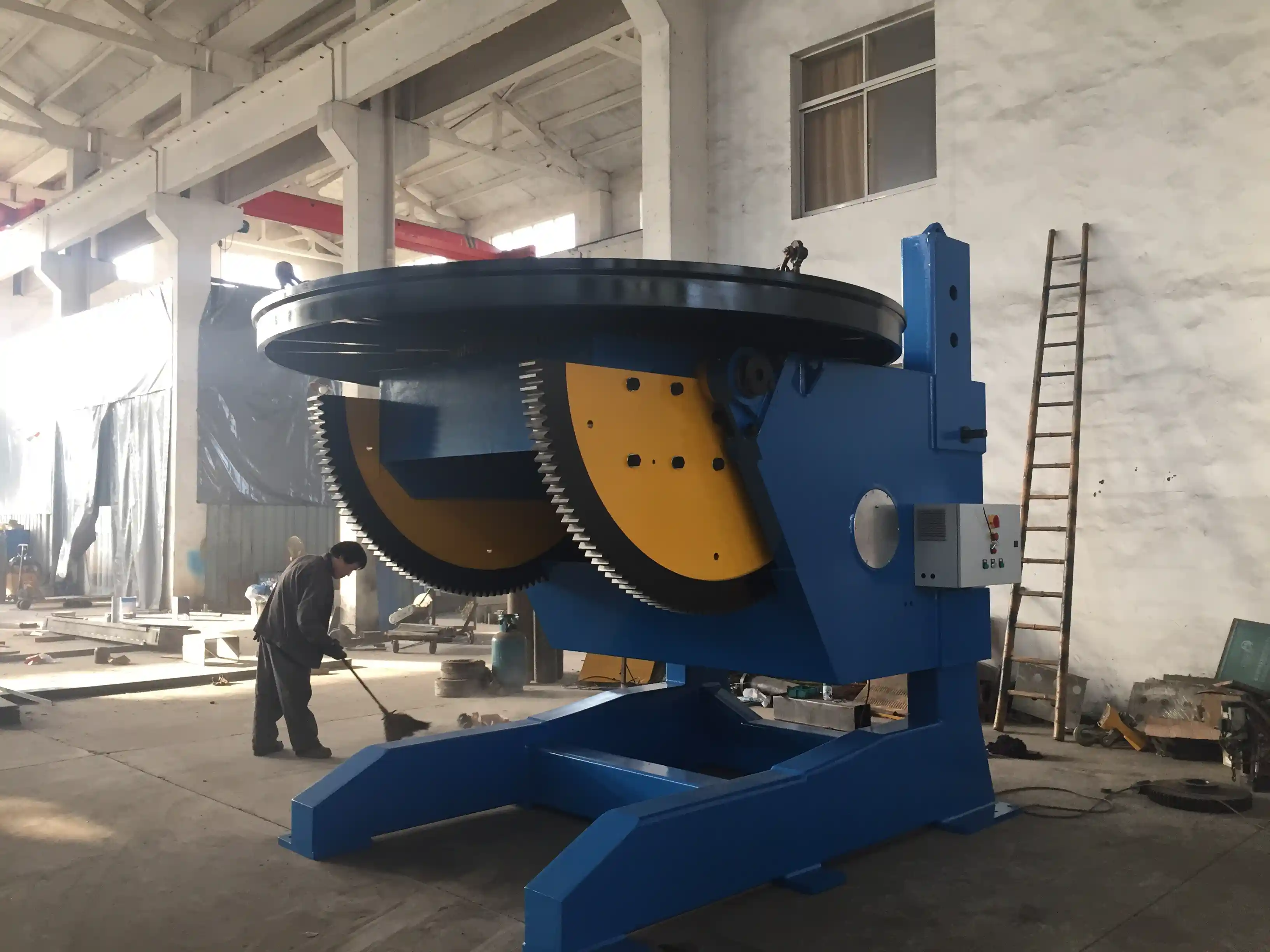
Our 3 Axis Positioner achieves ±0.05 mm positioning accuracy, but that precision only matters if the communication link can keep pace. 5G connectivity ensures control signals reach the positioner without meaningful delay, maintaining synchronization with robotic systems from ABB, KUKA, or similar manufacturers. The same principle applies to automated guided vehicles navigating factory floors—immediate responsiveness prevents collisions and keeps material flowing.
The Triple Axis Positioner handles heavy-duty robotic welding applications with the same ±0.05 mm accuracy and 0.02 mm repeatability. In pressure vessel welding and structural steel assembly, where tolerances are tight and rework is expensive, 5G ensures that remote operation doesn’t sacrifice precision. The signal gets there fast enough that the operator might as well be standing next to the machine.
Predictive Maintenance Powered by 5G Data Streams
Knowing that equipment will fail before it actually fails changes maintenance from reactive firefighting to planned intervention. The challenge has always been getting enough data, fast enough, to make accurate predictions.
5G supports the high-volume sensor data transmission that predictive maintenance systems require. Continuous monitoring feeds real-time quality control and asset performance management without the bottlenecks that plagued earlier wireless approaches.
Digital twin technology benefits directly from this connectivity. Creating a virtual replica of physical equipment requires constant data flow—temperatures, vibrations, power consumption, positioning accuracy. With 5G, that data arrives in real time, enabling predictive analytics and fault detection before problems become failures.
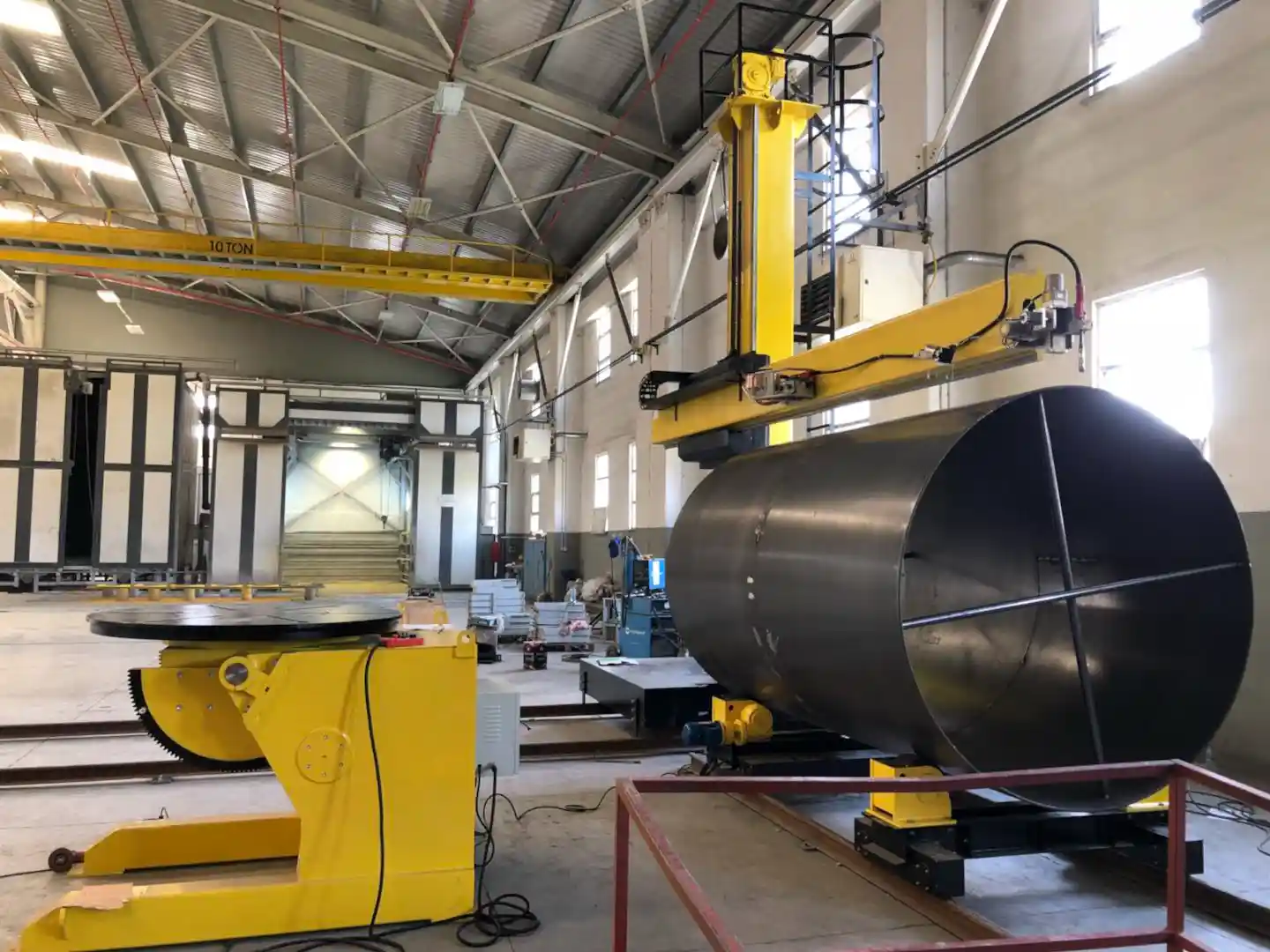
Our Heavy Duty Pipe Rotator, rated for 100-ton loads, can integrate 5G-enabled sensors monitoring rotation speed, motor performance, and workpiece alignment continuously. That data stream supports the analytics needed for production optimization and proactive maintenance scheduling.
| Característica | 5G | Wi-Fi 6 |
|---|---|---|
| Latency | Ultra-low (<10ms, often 1ms) | Low (10-20ms) |
| Bandwidth | Very High (up to 10 Gbps) | High (up to 9.6 Gbps) |
| Device Density | Extremely High (1M devices/km²) | High (thousands of devices/AP) |
| Mobility | Excellent (up to 500 km/h) | Limited (stationary or slow-moving) |
| Reliability | Ultra-reliable (99.999%) | Bien |
| Network Slicing | Sí | No |
| Security Features | Enhanced, built-in | Standard, add-on solutions |
Network Security for Industrial 5G Deployments
Connecting more devices creates more potential entry points for threats. This reality shapes how 5G security features were designed.
Built-in authentication and encryption protocols provide baseline protection that earlier wireless standards lacked. Network slicing allows manufacturers to create dedicated, isolated virtual networks for different operational needs. Critical control systems can run on a slice completely separated from less sensitive monitoring traffic.
This segmentation protects operational technology from interference—both accidental and malicious. When combined with established industrial cybersecurity practices, 5G creates secure communication channels that support the trust and reliability manufacturing operations require.
Practical Challenges in 5G Implementation
Deploying 5G in industrial environments isn’t plug-and-play. Several factors require careful consideration.
Legacy system integration presents the most common hurdle. Existing equipment wasn’t designed with 5G in mind, and making everything work together takes planning and sometimes creative engineering.
Infrastructure costs and spectrum availability vary significantly by region and application. Private 5G networks require upfront investment, though the return on investment for 5G enterprise solutions often justifies the expense through efficiency gains and productivity improvements.
Phased rollouts tend to work better than attempting everything at once. Starting with specific use cases, proving value, and expanding from there reduces risk while building internal expertise.
Optimizing operations with 5G-ready solutions can significantly enhance operational efficiency. For insights into improving welding quality and efficiency through advanced positioning, read 《How to Improve the Quality of Pipe Welding Through a High-Precision Welding Welding Positioner》.
The Manufacturing Future 5G Enables
5G technology is becoming foundational to Industry 4.0 implementation. The combination of real-time data, ultra-low latency, and massive connectivity supports operational improvements that compound over time.
Manufacturers gain precision, efficiency, and safety simultaneously. Production environments become more agile, responding to changes faster and with less disruption. The path forward for manufacturing runs directly through robust 5G connectivity.
Frequently Asked Questions About 5G in Industrial Control
How does 5G’s low latency benefit real-time industrial control?
5G achieves latency as low as 1ms, which enables immediate feedback loops for time-critical operations. Machinery synchronization becomes more precise, remote robotics control responds without perceptible delay, and systems can react to anomalies before they escalate. For applications like robotic welding or AGV navigation, this responsiveness directly affects both safety and output quality.
What are the security implications of deploying 5G in manufacturing environments?
5G brings stronger security through network slicing, advanced encryption, and improved authentication compared to previous wireless generations. The challenge lies in integrating these capabilities with existing operational technology and maintaining end-to-end data integrity across all connected devices. A comprehensive cybersecurity strategy remains necessary—5G provides better tools, but doesn’t eliminate the need for careful planning.
Can 5G replace traditional wired connections for critical industrial equipment?
For many applications, yes. Private 5G networks can match or exceed Ethernet performance in reliability, bandwidth, and latency while adding flexibility and reducing cabling costs. The decision depends on specific requirements—some ultra-critical systems may still warrant wired backup—but 5G has reached the point where it’s a legitimate primary connection option for industrial control systems.
Partner with WUXI ABK for Advanced Industrial Solutions
As a leader in welding equipment and CNC cutting machines since 1999, WUXI ABK MACHINERY CO., LTD understands the critical role of advanced technology in modern manufacturing. Explore how our expertise can help integrate 5G-ready solutions to optimize your industrial control and monitoring. Contact us today for a consultation on enhancing your operational efficiency and precision at jay@weldc.com or +86-510-83555592.
 English
  Español
  Français
  Deutsch
  Português
  Русский