
Industrial fabrication has always demanded a balance between speed and precision, and for years, that balance rested almost entirely on the skill of individual operators. What’s changing now is the role of collaborative robots in reshaping how welding and cutting actually get done on the shop floor. These systems don’t replace human judgment—they extend it, handling the repetitive physical execution while operators focus on setup, quality checks, and problem-solving. The shift isn’t dramatic overnight, but the cumulative effect on consistency, throughput, and workplace safety is hard to ignore once you’ve seen it in action.
Why Collaborative Robots Are Gaining Ground in Fabrication
The manufacturing industry is moving toward a different model of automation, one where collaborative robots work alongside people rather than behind safety cages. Unlike conventional industrial robots that require dedicated cells and extensive guarding, cobots are designed for shared workspaces. This changes the economics and logistics of automation considerably. Smaller shops that couldn’t justify the floor space or capital for traditional robotic welding cells can now deploy collaborative robots in existing layouts with minimal disruption.
This shift aligns with broader industrial automation trends, particularly in welding automation advancements and CNC cutting applications. The appeal isn’t just cost—it’s flexibility. A cobot can be reprogrammed and redeployed to different tasks as production needs change, something that’s far more cumbersome with fixed automation.
WUXI ABK Machinery has been manufacturing welding equipment and CNC cutting machines since 1999, and the growing demand for human-robot collaboration solutions has shaped how we approach product development. Our equipment is designed to integrate with these newer automation approaches, supporting the kind of operational efficiency and precision that modern fabrication requires.
How Collaborative Robots Improve Welding and Cutting Results
The practical advantages of collaborative robots in welding and cutting come down to consistency and endurance. A cobot maintains the same travel speed, torch angle, and arc parameters on the thousandth weld as it did on the first. Human welders, no matter how skilled, experience fatigue. Their consistency naturally varies over an eight-hour shift. Cobots don’t have that limitation.
In cutting operations, robotic cutting systems achieve the kind of repeatability that’s essential for complex geometries and tight tolerances. When you’re producing hundreds of identical parts, even small variations in cut quality compound into significant rework or scrap costs.
| Característica | Cobot Welding/Cutting | Traditional Welding/Cutting |
|---|---|---|
| Quality | High, consistent, fewer defects | Variable, dependiente del operador |
| Velocidad | Optimized, continuous | Limited by manual operation |
| Seguridad | Enhanced, reduced exposure | Higher operator risk |
| Coherencia | Excellent, repeatable | Moderate, skill-dependent |
| Waste | Minimized | Más alto |
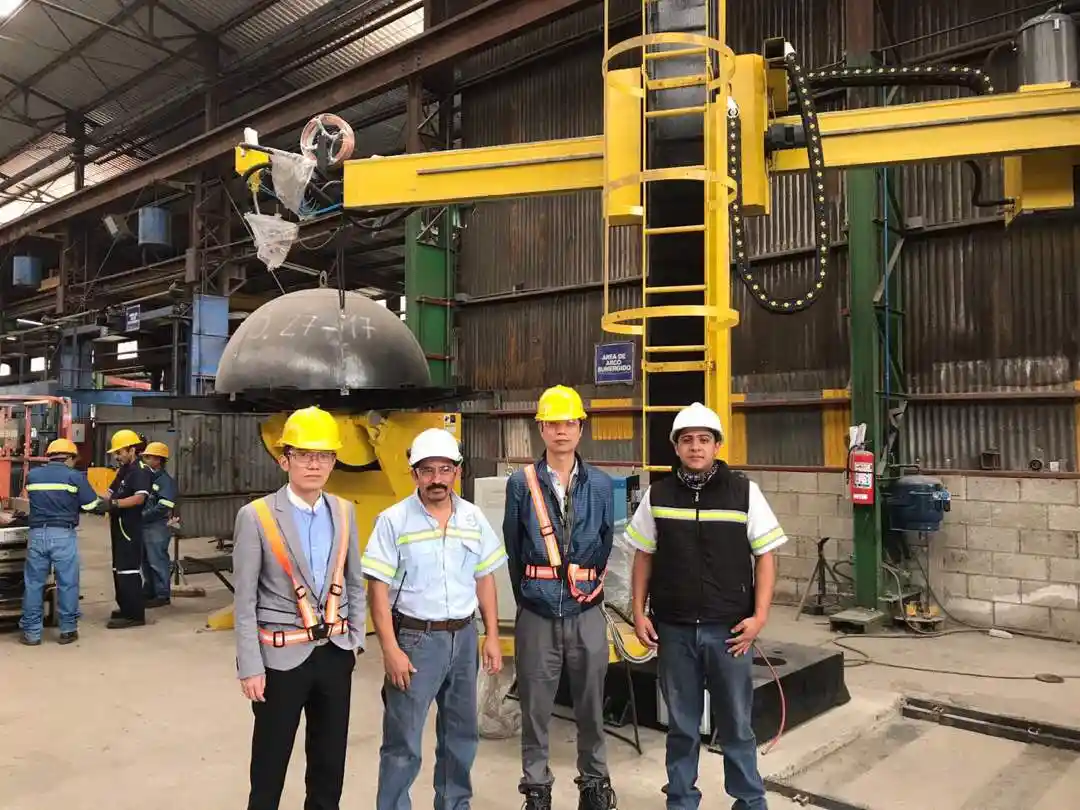
What Benefits Do Collaborative Robots Bring to Welding Operations
Collaborative robots deliver measurable improvements in welding consistency by maintaining precise parameters throughout every weld cycle. The result is higher weld quality with fewer defects, which directly reduces rework time and material waste. There’s also a safety dimension worth noting—cobots can take over tasks that expose operators to fumes, heat, and arc flash, improving operator safety welding conditions without sacrificing productivity.
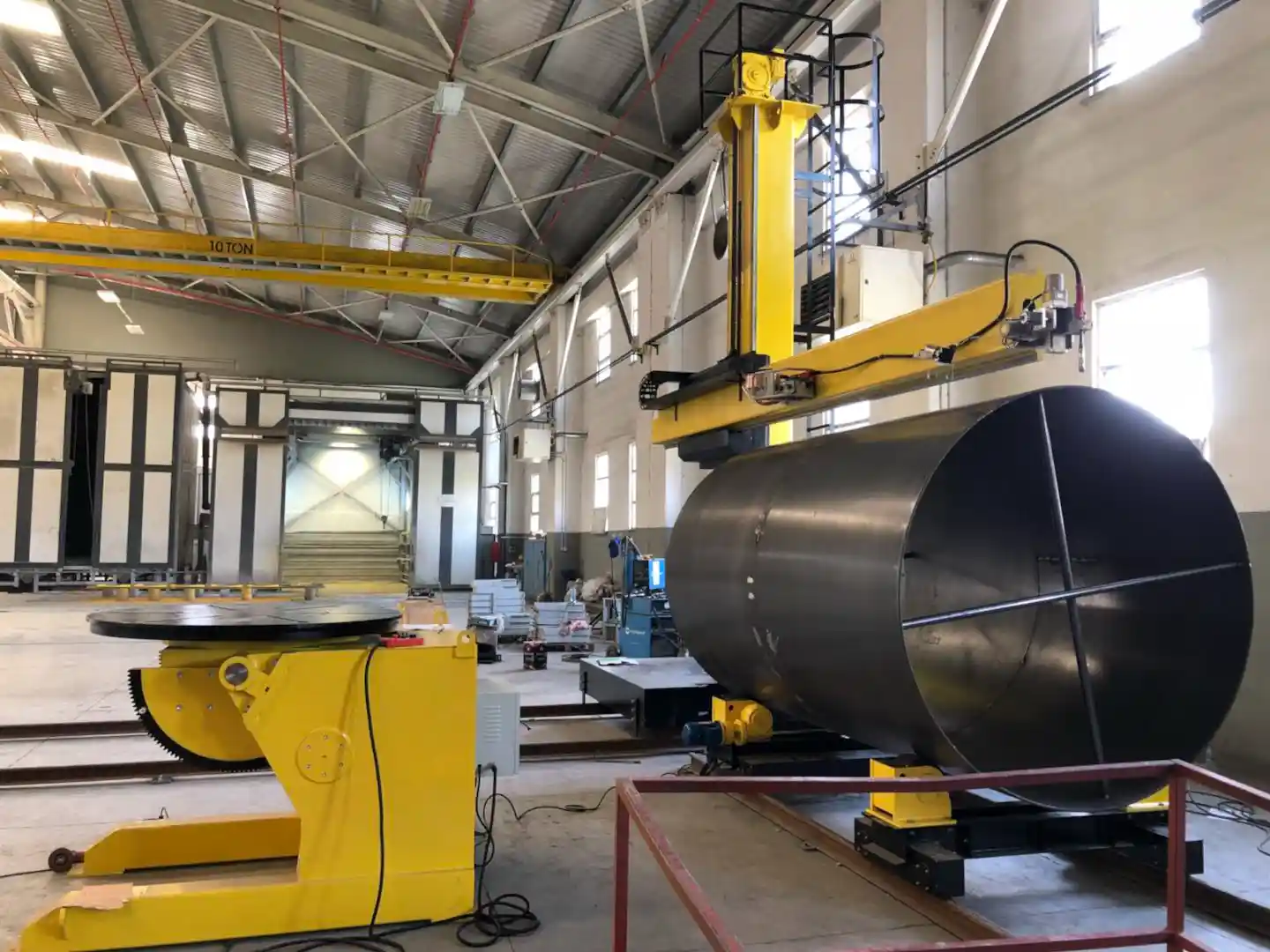
WUXI ABK’s welding equipment, including our Welding Manipulator and 3 Axis Welding Positioner, integrates with collaborative robots to achieve these benefits. The combination of precise positioning equipment and cobot execution creates a system where quality becomes more predictable and less dependent on individual operator skill.
How Cobots Achieve Superior Cutting Precision
Cutting precision with collaborative robots comes from their ability to execute complex programmed paths with consistent motion control. Advanced path planning handles intricate geometries that would be difficult to replicate manually, and integration with vision systems automation provides real-time feedback for dynamic adjustments.
This combination produces robotic cutting accuracy that meets tight tolerances with superior edge finishes. WUXI ABK’s CNC cutting machines, including our Cortadora de llama CNC y Cortadora de plasma CNC, benefit significantly from cobot integration. The pairing extends the precision capabilities of the cutting equipment itself.
Getting Collaborative Robots Into Your Existing Setup
Successful implementation of collaborative robots requires honest assessment of your current infrastructure and workflows. The good news is that cobots are designed for integration rather than replacement—they can often be deployed into existing manufacturing systems without extensive retooling.
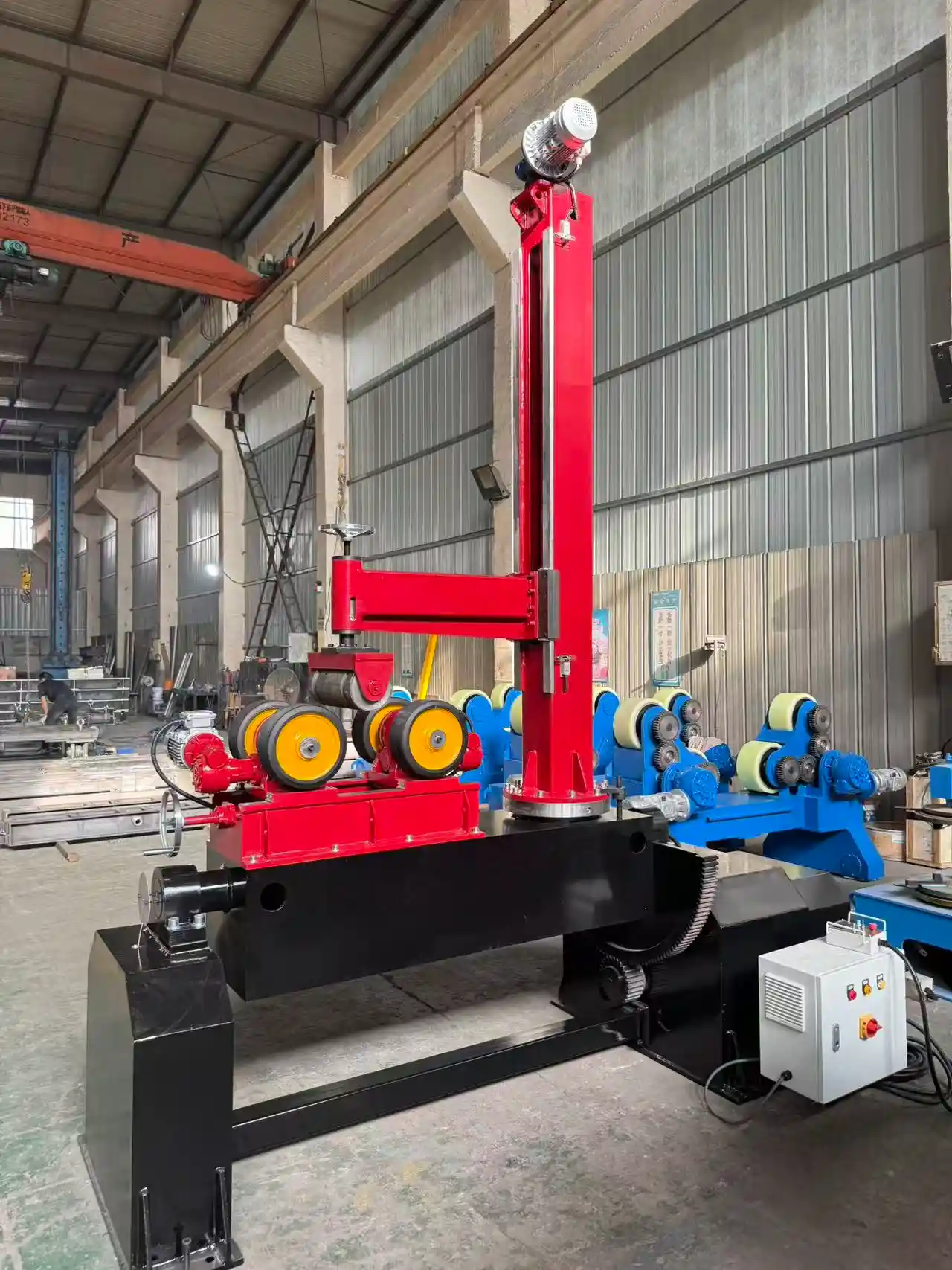
WUXI ABK’s 3 Axis Positioner and Triple Axis Positioner are built for compatibility with leading robotic systems from ABB, KUKA, and FANUC. This compatibility matters because it means you’re not locked into a single automation vendor. The positioners handle workpiece manipulation while the cobot handles the welding or cutting execution.
Operator training for cobots deserves serious attention. Personnel need to understand programming, operation, and safe interaction protocols. Adherence to safety standards robotic cells, including ISO 10218-1 and ISO/TS 15066, provides the framework for managing human-robot collaboration safety effectively.
What Safety Measures Matter Most for Cobot Welding
Safety in collaborative robot welding starts with thorough risk assessments that identify potential hazards specific to your application. From there, appropriate safety functions need to be implemented—speed and separation monitoring, power and force limiting, and hand guiding capabilities all play roles depending on the specific setup.
Regular maintenance and calibration of welding equipment integration maintain safe operating conditions over time. These aren’t one-time considerations but ongoing requirements for protecting personnel in flexible manufacturing systems.
Can Cobots Work With Equipment You Already Have
In most cases, yes. Collaborative robots are designed for deployment without extensive facility modifications. Their compact footprint and flexible programming allow them to fit into existing welding and cutting setups.
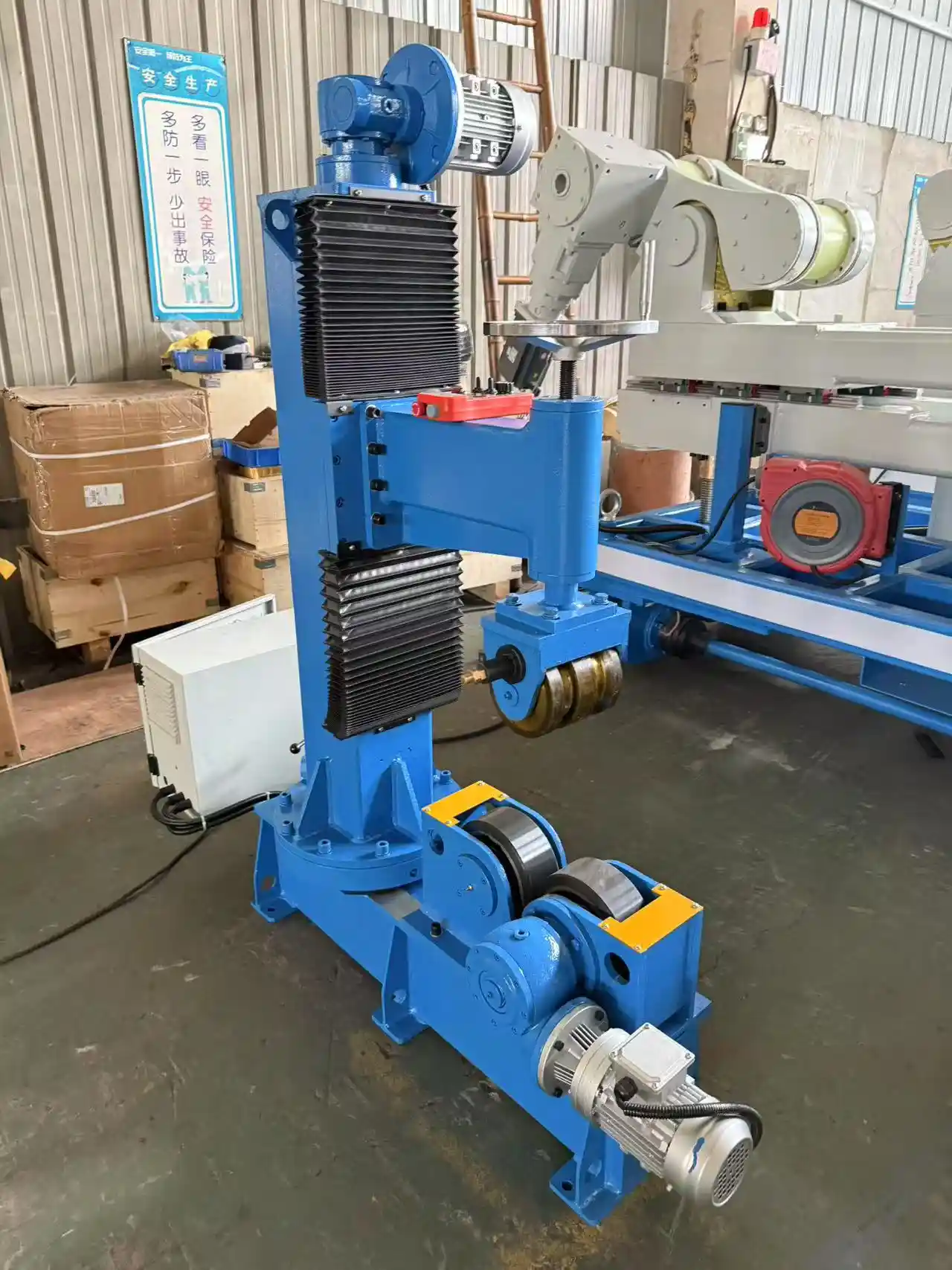
WUXI ABK provides solutions like our Soluciones de mesas giratorias de soldadura y Rotadores ajustables Fabricantes with PLC compatibility that enables straightforward interfacing with cobots. This adaptability minimizes production disruption during implementation and accelerates the timeline to positive return on investment.
The Broader Business Case for Cobot Adoption
Beyond the immediate operational improvements, collaborative robots address some structural challenges facing fabrication shops. The return on investment robotic welding delivers comes through increased output and reduced operational costs, but there’s also the skilled labor shortage to consider. Finding experienced welders has become increasingly difficult, and cobots provide a way to maintain production capacity while existing personnel focus on higher-value tasks.
This positions companies for Industry 4.0 manufacturing approaches, supporting fabrication shop automation and metal processing efficiency at a level that would be difficult to achieve through hiring alone. WUXI ABK’s ongoing focus on industrial automation trends ensures our equipment supports these strategic objectives.
How Does Cobot Adoption Change What Operators Need to Know
The skill requirements shift rather than disappear. Operators move from manual execution toward supervision, programming, and quality control. They learn to program cobots, monitor performance, and troubleshoot issues when they arise.
This transition tends to elevate the role of the operator rather than diminish it. The technical expertise required increases, and the workforce becomes more adaptable as a result. It’s a different kind of work, but not necessarily less skilled.
Working With WUXI ABK on Your Automation Goals
WUXI ABK Machinery brings over two decades of experience to welding and cutting equipment manufacturing. Our product range—including welding manipulators, positioners, and CNC cutting machines—is designed to integrate with modern automation approaches, including collaborative robots.
If you’re evaluating how to improve productivity and operational efficiency in your fabrication operations, we’re ready to discuss specific solutions that match your requirements.
Contact us at jay@weldc.com or call +86-13815101750.
Preguntas frecuentes
What types of welding processes work best with collaborative robots?
Collaborative robots handle MIG, TIG, and plasma welding processes effectively. MIG welding tends to be the most common application because of its speed and the relatively forgiving nature of the process. TIG welding with cobots requires more precise programming but delivers excellent results for applications demanding high weld quality. The choice depends on your specific materials, joint configurations, and quality requirements.
How long does it typically take to train operators on collaborative robot systems?
Most operators can achieve basic proficiency with collaborative robot programming and operation within one to two weeks of focused training. Developing deeper troubleshooting skills and the ability to optimize programs for new applications takes longer—typically several months of hands-on experience. The learning curve is generally shorter than traditional industrial robot programming because cobots are designed with more intuitive interfaces.
What maintenance requirements should fabrication shops expect with cobot welding cells?
Cobot welding cells require regular calibration checks, cleaning of sensors and vision systems, and inspection of cables and connectors. The welding equipment itself—torches, wire feeders, and consumables—follows standard maintenance schedules. Most shops find that cobot-specific maintenance adds modest time to existing equipment maintenance routines rather than creating entirely new requirements.
 English
  Español
  Français
  Deutsch
  Português
  Русский