Offshore structure fabrication has a way of humbling even experienced welders. The marine environment doesn’t forgive shortcuts, and the structures themselves—oil platforms, wind turbine foundations, subsea pipelines—carry consequences that extend far beyond the fabrication yard. Every weld on these projects faces a lifetime of saltwater exposure, temperature swings, and loads that shift with every wave cycle. The welding systems that survive this environment share certain characteristics: they’re built heavier than seems necessary, they maintain precision when conditions deteriorate, and they’re designed by people who understand what corrosion does to steel over twenty years of service.
What Makes Marine Environments So Demanding on Welded Structures
Saltwater is relentless. It finds every microscopic crack, every area of incomplete fusion, every zone where heat input wandered outside specification. Combine this with temperature cycling that can span 40°C in a single day, plus dynamic loads from waves and wind, and you begin to understand why offshore welding specifications read like they were written by pessimists. The pessimism is earned.
Material selection reflects these realities. High-strength low-alloy steels like S355, S420, and S690 dominate offshore structure fabrication because they deliver strength without excessive weight—critical when you’re building jacket structures that must support topside modules while resisting fatigue from millions of load cycles. These materials aren’t forgiving. Weld them with too much heat input and you compromise the heat-affected zone. Use the wrong consumables and hydrogen cracking becomes a matter of when, not if. The welding procedure specification exists because someone learned these lessons the expensive way.
Heavy-duty welding systems designed for offshore work address these constraints directly. Equipment stability matters more than most fabricators initially expect. When you’re welding thick sections on large components, any vibration or drift in the manipulator shows up in the weld profile. Our welding manipulators use high-strength box-beam construction specifically because jacket leg welds don’t tolerate the kind of deflection that lighter equipment allows.
| Tipo de material | Key Welding Considerations | Typical Offshore Application |
|---|---|---|
| HSLA Steels | Preheat, controlled heat input, low hydrogen consumables | Jacket structures, platforms |
| Duplex Stainless Steel | Controlled interpass temperature, specific filler metals | Subsea pipelines, process piping |
| Nickel Alloys | Strict cleanliness, specialized shielding gases | High-temperature components |
| Carbon Manganese | Good toughness, controlled cooling rates | General structural components |
Selecting Welding Processes That Actually Work Offshore
Process selection for offshore heavy-duty fabrication involves trade-offs that look different on paper than they do in practice. The theoretical advantages of any welding process matter less than how it performs when the wind picks up, when access is awkward, or when you need consistent results across a hundred identical joints.
Submerged arc welding handles thick sections better than anything else available. The deposition rates justify the setup time on large diameter pipes and heavy plate work. The flux blanket shields the arc completely, which means environmental conditions affect the weld less than with exposed-arc processes. The limitation is positioning—SAW works in flat and horizontal orientations, so the workpiece must come to the process rather than the other way around.
Flux-cored arc welding fills the gaps that SAW can’t reach. All-position capability matters when you’re welding jacket legs or structural connections where repositioning isn’t practical. The productivity approaches SAW levels in many applications, though the smoke and fume generation requires attention to ventilation.
Gas metal arc welding suits automated applications where consistent wire feed and arc stability translate directly into weld quality. The process is less tolerant of wind, which limits outdoor applications, but inside a fabrication facility with proper shielding gas coverage, GMAW delivers the consistency that automated systems require.
Shielded metal arc welding remains relevant despite lower deposition rates. Field repairs happen. Difficult access areas exist. Sometimes the right tool is the one that works in the space available, and SMAW electrodes go places that wire-fed processes cannot.
| Proceso de soldadura | Ventajas | Limitations | Typical Application Areas |
|---|---|---|---|
| SAW | High deposition, deep penetration | Limited to flat/horizontal, requires flux | Large diameter pipes, thick plate fabrication |
| FCAW | High productivity, all-position capable | Smoke/fumes, requires flux-cored wire | Structural steel, jacket legs |
| GMAW | High efficiency, good for automation | Less tolerant to wind, requires shielding gas | Automated welding lines, thinner sections |
| SMAW | Versatile, good for field repairs, all-position | Lower deposition, requires frequent rod changes | Repair work, difficult access areas |
Welder qualification and welding procedure specification adherence determine outcomes more than process selection alone. The best process poorly executed produces worse results than a less optimal process executed correctly.
For further insights into optimizing pipe welding quality, we recommend reading 《Cómo mejorar la calidad de la soldadura de tuberías mediante un posicionador de soldadura de alta precisión》.
How Automation Changes the Economics of Offshore Fabrication
Automated welding systems shift the cost structure of offshore structure fabrication in ways that compound over project duration. The initial investment in welding manipulators, welding positioners, and integrated systems pays back through mechanisms that aren’t always obvious at purchase time.
Consistency is the primary driver. A skilled welder produces excellent work, but human performance varies across shifts, across days, across the duration of a long project. Automated systems don’t get tired. They don’t have bad days. The fiftieth weld of the shift matches the first weld, and the weld on Friday afternoon matches Monday morning. This consistency reduces inspection findings, cuts rework, and shortens the quality control cycle.
Deposition rates increase because automated systems can sustain parameters that would fatigue a human operator. Duty cycle improves. Arc-on time as a percentage of shift time climbs substantially when the system doesn’t need breaks and doesn’t slow down as the day progresses.
Safety improvements matter in offshore fabrication where the work environment presents hazards beyond the welding arc itself. Reducing human presence in confined spaces, near heavy components, and in positions that require awkward postures prevents injuries that statistics don’t fully capture.
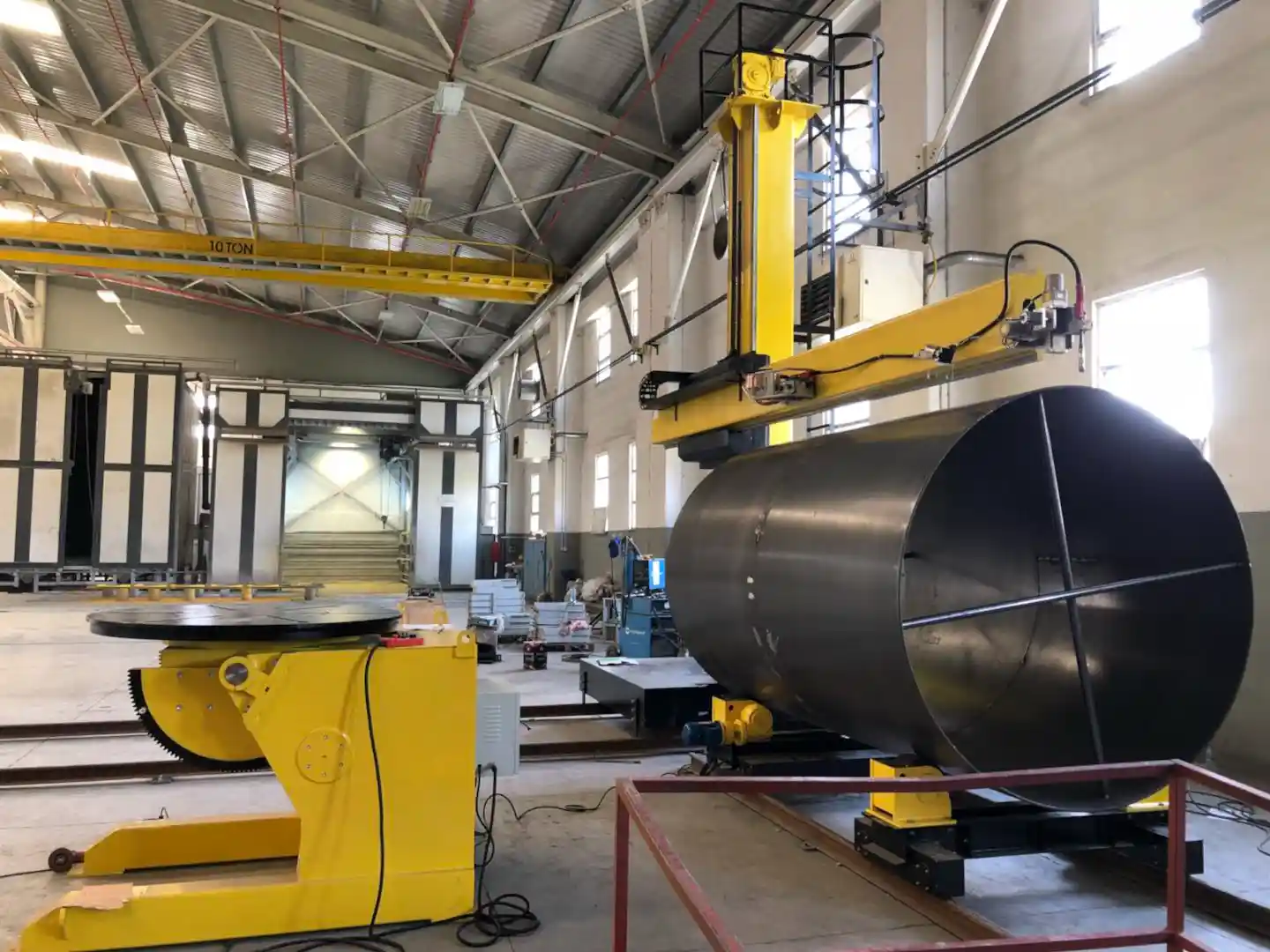
Our LH8080 Welding Manipulator handles longitudinal and circumferential seam welding with positioning accuracy that manual operation cannot match consistently. The precision isn’t academic—it translates directly into weld profiles that pass inspection and joints that perform over decades of service.
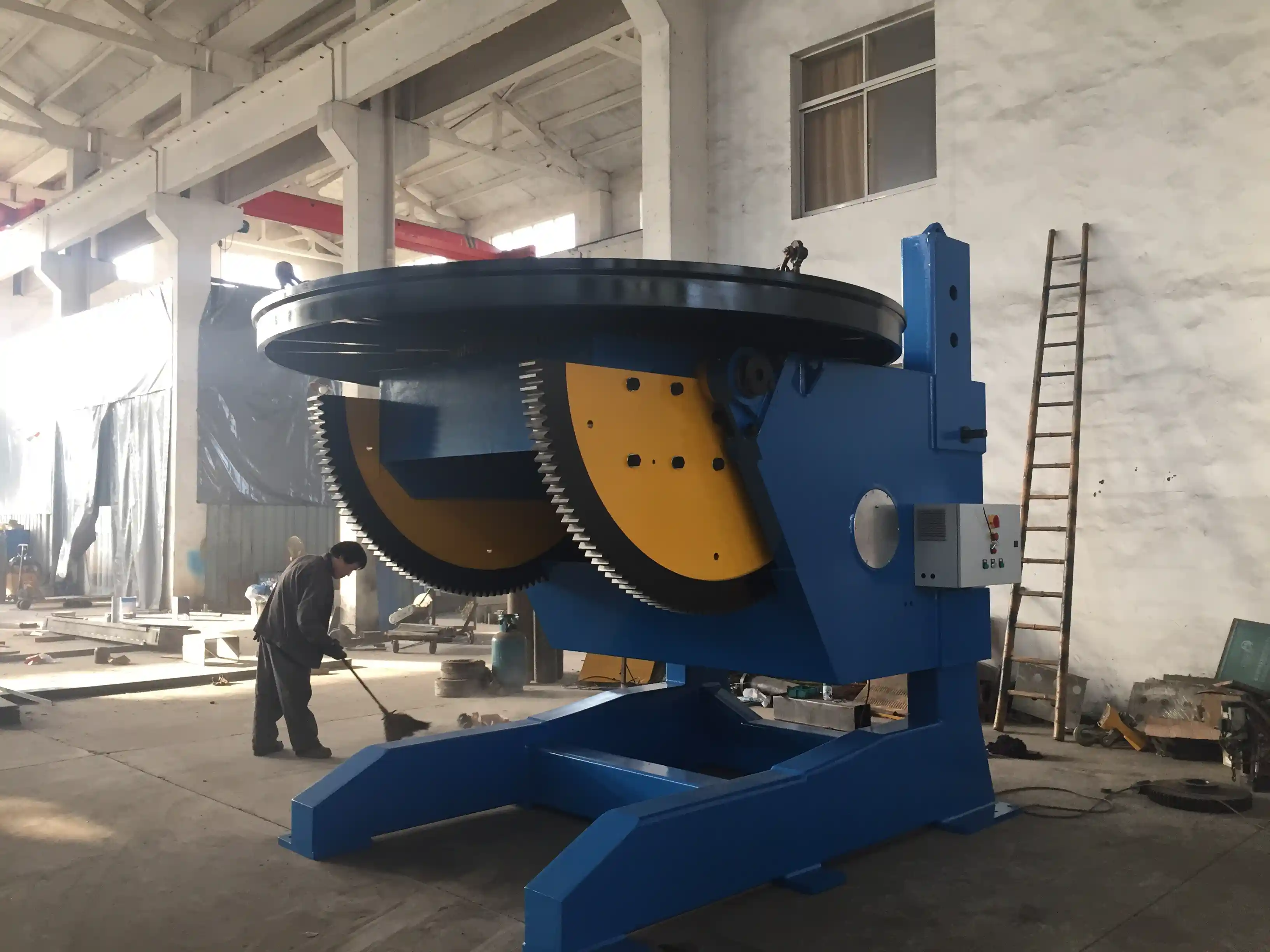
Heavy-duty welding systems like the Posicionador de soldadura de 3 ejes y Posicionador de triple eje provide the synchronized rotation, tilting, and turning that complex offshore components require. Optimal weld positioning reduces defects and improves penetration profiles.
Meeting Standards That Don’t Allow Shortcuts
Quality control in offshore welding operations operates under scrutiny that other industries rarely experience. API and DNV GL certifications exist because offshore structure failures carry consequences measured in lives and environmental damage, not just warranty claims.
Non-destructive testing catches defects that visual inspection misses. Radiographic examination, ultrasonic testing, magnetic particle inspection, and dye penetrant testing each reveal different flaw types. The testing regime for offshore welds typically includes multiple methods because no single technique catches everything.
Welding procedure specification documentation serves purposes beyond regulatory compliance. When a weld performs well, the WPS records what made it work. When problems emerge years later, the WPS provides the starting point for root cause analysis. Welder qualification ensures that the people executing the procedures have demonstrated competence on the specific material and joint configurations they’ll encounter.
Our equipment supports this quality framework through precise parameter control and repeatability. When the welding procedure specification calls for specific heat input ranges, travel speeds, and interpass temperatures, the equipment must deliver those parameters consistently. Variation in equipment performance introduces variation in weld quality that no amount of inspection can fully compensate for.
Access limitations on jacket structures and topside modules create welding challenges that equipment design must address. Confined spaces, overhead positions, and locations where standard equipment won’t fit require adaptable systems and sometimes custom solutions. The welding still must meet the same standards regardless of how difficult the access.
For more information on how fixed-height welding positioners contribute to advancements in offshore manufacturing, consider reading 《Valor de aplicación excepcional: Cómo los posicionadores de soldadura de altura fija impulsan los avances en la fabricación en alta mar y la construcción naval》.
Where Offshore Welding Technology Is Heading
Digital integration is changing how offshore welding operations function. Real-time monitoring captures parameters that previously required manual recording or went untracked entirely. The data enables analysis that identifies drift before it produces defects and supports predictive maintenance that prevents unplanned downtime.
Remote welding capabilities address access and safety concerns simultaneously. Operations that previously required personnel in hazardous locations can increasingly be controlled from safer positions. The technology isn’t mature enough to replace human judgment entirely, but it’s advancing rapidly.
Sustainable welding practices are gaining attention as energy costs and environmental regulations tighten. Reducing shielding gas consumption, optimizing power usage, and minimizing consumable waste contribute to both cost reduction and environmental performance. These improvements often align with quality improvements—processes that waste less material typically produce better welds.
WUXI ABK MACHINERY CO., LTD. develops welding manipulators and welding positioners that incorporate these advancing technologies. Our wind tower welding lines and H beam welding lines reflect the scale and precision requirements of modern offshore structure fabrication. The equipment evolves because the applications demand it.
Working with WUXI ABK MACHINERY on Offshore Projects
Since 1999, WUXI ABK MACHINERY CO., LTD has manufactured heavy-duty welding systems for demanding fabrication applications. Offshore structure fabrication represents some of the most challenging work our equipment supports. Contact us at jay@weldc.com or +86-13815101750 to discuss how our solutions address your specific project requirements.
Common Questions About Offshore Welding Systems
What safety measures matter most for heavy-duty offshore welding operations?
Offshore welding safety starts with regulatory compliance—OSHA standards, DNV GL requirements, and applicable local regulations establish the baseline. Beyond compliance, practical measures include proper ventilation systems sized for the specific processes and enclosure volumes, fire prevention protocols that account for the materials present, and PPE programs that actually get followed rather than just documented. Welder qualification matters because unqualified personnel make errors that create hazards. Automated heavy-duty welding systems reduce human exposure to arc radiation, fumes, and awkward positions that cause cumulative injuries.
How does WUXI ABK MACHINERY verify equipment quality for offshore applications?
Quality verification runs through the entire manufacturing process. Material selection starts with suppliers who provide certification documentation. Machining and assembly follow procedures developed for the specific load and precision requirements of offshore structure fabrication. Testing before shipment includes functional verification under load conditions that simulate actual use. The heavy-duty welding systems we build for offshore applications use heavier components and tighter tolerances than equipment intended for less demanding environments. Post-delivery support includes troubleshooting assistance and spare parts availability because equipment downtime on offshore projects carries costs that justify investment in reliability.
Can equipment be customized for unusual offshore project requirements?
Customization is standard practice for offshore work. A Soldadura de torres eólicas line for one project may require different reach, capacity, or automation features than another. Montaje de la viga H lines vary based on beam dimensions and production volumes. Welding manipulators and positioners often need modifications for specific offshore structure designs that don’t match standard configurations. Our engineering team works through project requirements before proposing solutions because assumptions about what standard equipment can handle often prove wrong when the actual components arrive.
 English
  Español
  Français
  Deutsch
  Português
  Русский