Making boiler tube panels that actually hold up under pressure takes more than good intentions. The bending has to be right, the welds have to be sound, and the calibration has to catch problems before they become failures. Getting any of these wrong means leaks, downtime, or worse. What follows covers the core processes that separate panels you can trust from ones that look fine until they don’t.
Precision Engineering in Boiler Tube Bending
Getting the bend geometry right affects everything downstream. Fluid flow, heat transfer, stress distribution. Modern CNC tube bending gives you repeatable results that manual methods simply can’t match. Cold bending keeps material stress low while still hitting complex profiles. Mandrel bending handles tight radii without the tube collapsing on itself.
The practical impact shows up in performance. Accurate bends mean proper flow patterns and even heat distribution. Get it wrong and you create hot spots that accelerate failure. The machinery matters here. State-of-the-art bending equipment meets the tolerances that high-pressure applications demand, and that translates directly to longer service life and fewer surprises.
Advanced Welding for Boiler Tube Panel Integrity
Every weld on a boiler panel is a potential failure point or a reliable seal. The difference comes down to process control. Orbital welding systems deliver consistent joints that manual welding struggles to replicate. TIG welding remains a go-to method for boiler tubes because it produces clean, precise welds with solid metallurgical properties.
Automation reduces the variables that cause problems. Consistent penetration, fewer defects, less dependence on individual operator skill on any given day. The goal is welds that perform the same way every time, because inconsistency in high-pressure service gets expensive fast.
What are the critical stages in boiler tube panel fabrication?
Panel fabrication starts with material handling and preparation. Tubes get bent to the required geometry, then assembled into panel configurations. Welding joins everything together, and inspection verifies that the work meets spec. Each stage has its own quality gates. Skip one and problems compound through the rest of the process. The final testing confirms that what you built actually performs the way it needs to.
Recomendación de artículo: Si te interesa, echa un vistazo a 《Solución revolucionaria para la soldadura de recipientes a presión: Análisis técnico de los posicionadores de soldadura giratorios de 360 grados》.
Calibration and Quality Assurance for Boiler Panels
Testing catches what visual inspection misses. Non-destructive testing methods like radiographic and ultrasonic inspection reveal internal flaws that would otherwise stay hidden until failure. Hydrostatic testing proves leak integrity under actual operating pressures. Dimensional calibration confirms that components match specifications.
These protocols exist because boiler panels operate in conditions that punish shortcuts. Rigorous inspection at every stage means fewer field failures and longer operational life. The investment in testing pays back in reliability.
How is precision achieved in boiler tube bending and welding?
Precision comes from the combination of capable equipment, trained operators, and continuous calibration. CNC bending machines and robotic welding systems provide the accuracy and repeatability that manual processes can’t sustain. Laser measurement gives real-time dimensional feedback. The technology handles the consistency. The expertise handles the judgment calls about when something needs adjustment.
Material Selection and Preparation for Boiler Tubes
Material choice sets the ceiling on what a boiler tube can handle. The right steel grades resist high temperatures and pressures over years of service. The wrong ones fail early regardless of how well everything else was done. Traceability matters because you need to know what you’re working with at every stage.
Surface preparation before bending and welding prevents contamination that weakens joints. Cleaning and deburring take time but pay off in weld quality. Alloy selection based on actual operating conditions rather than cost optimization alone determines whether panels last or don’t.
Innovations in Boiler Tube Production Technology
Manufacturing technology keeps advancing. Industry 4.0 approaches integrate data analytics with automation, giving better visibility into process performance. Additive manufacturing shows promise for complex geometries that would be difficult or impossible to produce conventionally. Digital twin technology allows virtual testing before committing to physical production.
These developments point toward higher precision and better productivity. Smart factory solutions are changing what’s possible in boiler manufacturing, though the fundamentals of good bending, welding, and testing remain as important as ever.
Conclusión
Reliable boiler tube panels come from getting the basics right. Precise bending, sound welding, thorough calibration. Each process supports the others, and weakness in any one shows up in the final product. The commitment to doing each step well produces panels that perform safely over their intended service life. That’s what integrated boiler production actually means in practice.
Partner with WUXI ABK MACHINERY for Advanced Boiler Tube Production Solutions
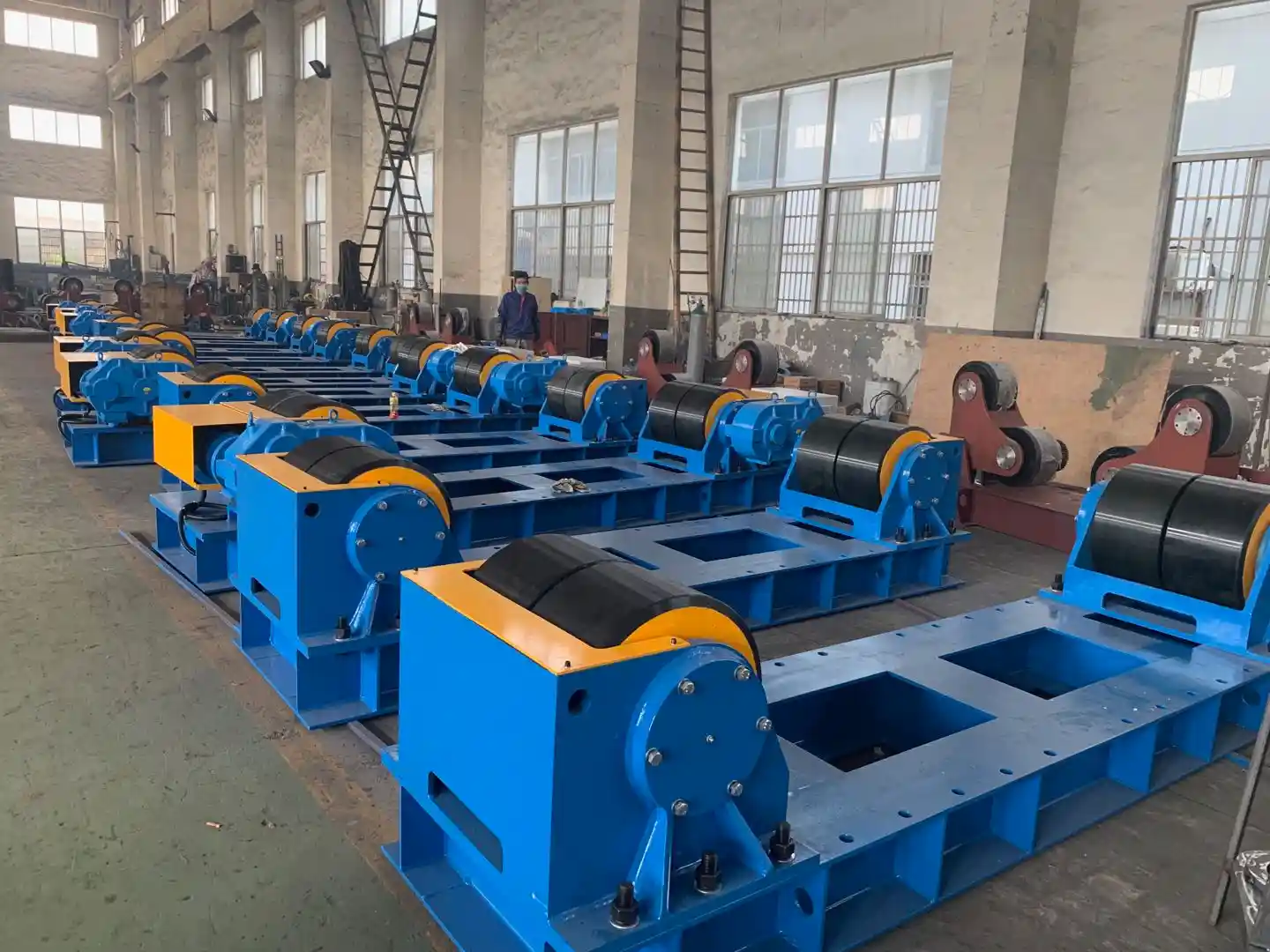
WUXI ABK MACHINERY CO., LTD. provides professional welding equipment and CNC cutting machines built for demanding boiler manufacturing applications. Over two decades of experience backs the tailored solutions we offer for precision, efficiency, and quality in boiler tube panel production. Contact us to discuss your specific project requirements and see how our machinery can support your operations. Our range includes welding manipulators, positioners, and specialized equipment designed for industrial applications that don’t tolerate compromise.
Móvil: +86-13815101750
Fax: +86-510-83559158
Teléfono: +86-510-83555592
Correo electrónico: jay@weldc.com
Frequently Asked Questions About Boiler Tube Panel Production
What quality assurance measures are essential for boiler tube panels?
Non-destructive testing forms the foundation. Radiographic inspection, ultrasonic testing, and magnetic particle inspection each catch different types of flaws. Hydrostatic pressure testing verifies leak integrity under operating conditions. Dimensional verification and material traceability throughout production ensure compliance with industry standards and prevent failures that proper testing would have caught.
How do automated welding systems enhance boiler tube panel quality?
Orbital welding and similar automated systems produce consistent weld penetration with minimal variation between joints. They reduce dependence on individual operator performance and provide precise control over welding parameters. The result is better metallurgical properties, fewer defects, and joints that perform reliably over the service life of the panel.
What are the benefits of CNC tube bending in boiler production?
CNC bending delivers precision in complex geometries that manual methods can’t match consistently. Material waste drops because the process is repeatable. Production efficiency improves because setup times decrease once programs are validated. The tight tolerances required for proper panel assembly become achievable rather than aspirational.
 English
  Español
  Français
  Deutsch
  Português
  Русский