Manufacturing pressure vessels demands precision and robust machinery at every stage. Errors in initial cutting or final welding can compromise structural integrity and operational safety. The focus here is on optimizing each process, from raw material preparation to the most intricate welding applications, achieving superior quality and efficiency while ensuring every vessel meets stringent industry standards.
Material Preparation and Precision Cutting Techniques
The journey of pressure vessel fabrication begins with meticulous material preparation and precision cutting. Achieving optimal plate preparation is fundamental for subsequent welding quality. Advanced CNC cutting technology ensures accuracy and minimizes material waste. This initial phase dictates the dimensional integrity of the final product.
Modern pressure vessel production relies heavily on sophisticated cutting methods. Plasma cutting offers high speed and efficiency for thicker plates, while laser cutting provides superior edge quality for thinner materials. Material handling systems designed to integrate with these cutting processes ensure a smooth flow from stock to the cutting bed. This integration reduces manual intervention and enhances safety.
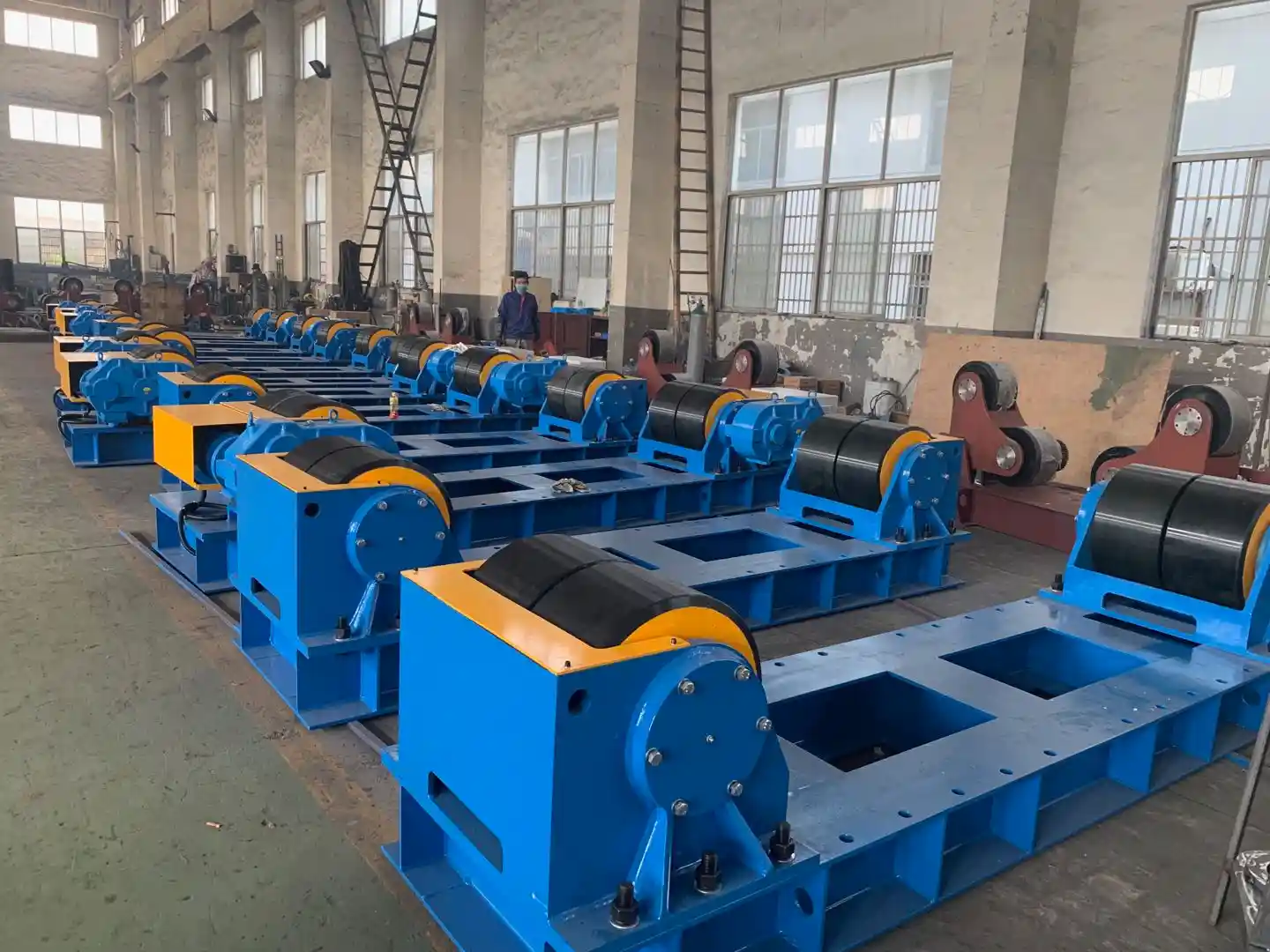
A high-precision CNC Plasma Cutter can process large steel plates with intricate geometries. This capability ensures that each component meets exact specifications before moving to the next stage. Proper plate preparation also minimizes distortion during welding, a factor that matters significantly for pressure vessel integrity.
Continuous improvement in cutting techniques remains a priority. Regular calibration and maintenance of CNC cutting technology equipment are standard practice. This commitment ensures consistent precision and extends the lifespan of machinery. The goal is to deliver components ready for immediate forming and welding, reducing downstream rework.
Forming and Edge Preparation for Vessel Components
Following precision cutting, materials undergo forming and edge preparation. These steps are critical for achieving high-integrity welds in pressure vessels. Various forming methods are employed depending on the vessel’s design and material properties. Plate rolling machines are used for creating cylindrical or conical sections, while dishing presses form vessel heads.
The accuracy of forming directly impacts the fit-up for welding. Imperfections at this stage can lead to costly rework and compromise weld quality. Plate rolling machines and dishing presses require regular maintenance and calibration. This guarantees precise component fabrication.
Edge beveling machines play a vital role in preparing weld joints. These machines create the specific groove geometries required for different welding processes, such as V-grooves or U-grooves. Proper edge preparation ensures full penetration and fusion during welding, which is paramount for pressure vessel safety.
Forming techniques are carefully selected based on material type and thickness. Cold forming is suitable for certain materials to avoid heat-affected zone issues, while hot forming might be necessary for thicker plates or specific alloys. This tailored approach optimizes material properties and prepares components for robust welding.
Automated Welding Solutions for Pressure Vessel Assembly
Automated welding solutions are central to modern pressure vessel assembly. They significantly enhance efficiency and weld quality. A range of automated welding systems, including advanced welding manipulators and welding positioners, ensure repeatable, high-quality welds.
Submerged arc welding (SAW) and gas metal arc welding (GMAW) are commonly used automated processes. SAW is ideal for thick sections and long seams, providing high deposition rates and deep penetration. GMAW offers versatility for various material thicknesses and joint configurations.
Welding manipulators, such as the LH8080 model, provide precise control over the welding torch position. They feature high-strength box-beam structures and linear guideways, ensuring positioning accuracy of ±0.1 mm/m. This precision is vital for longitudinal and circumferential seam welding.
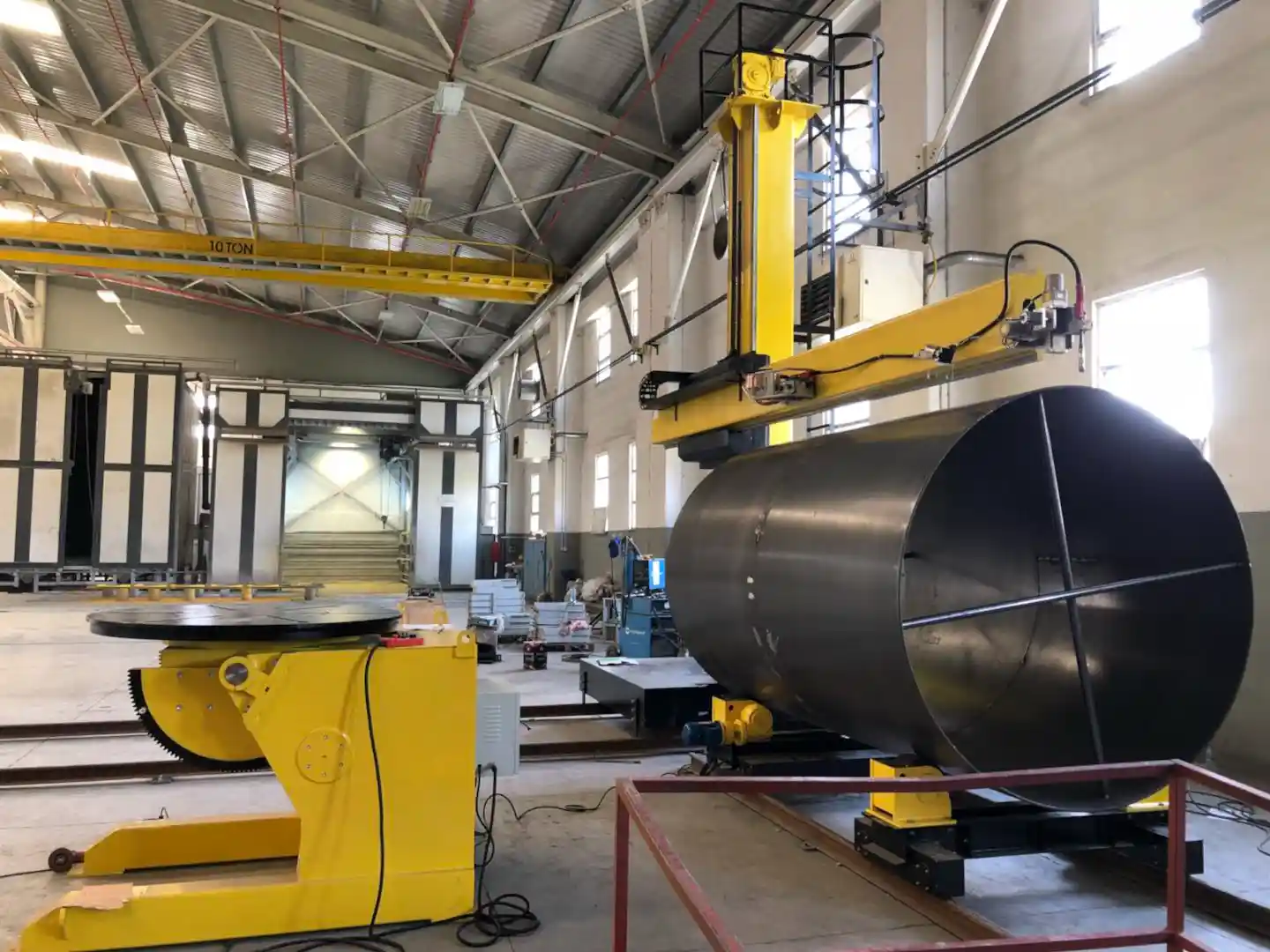
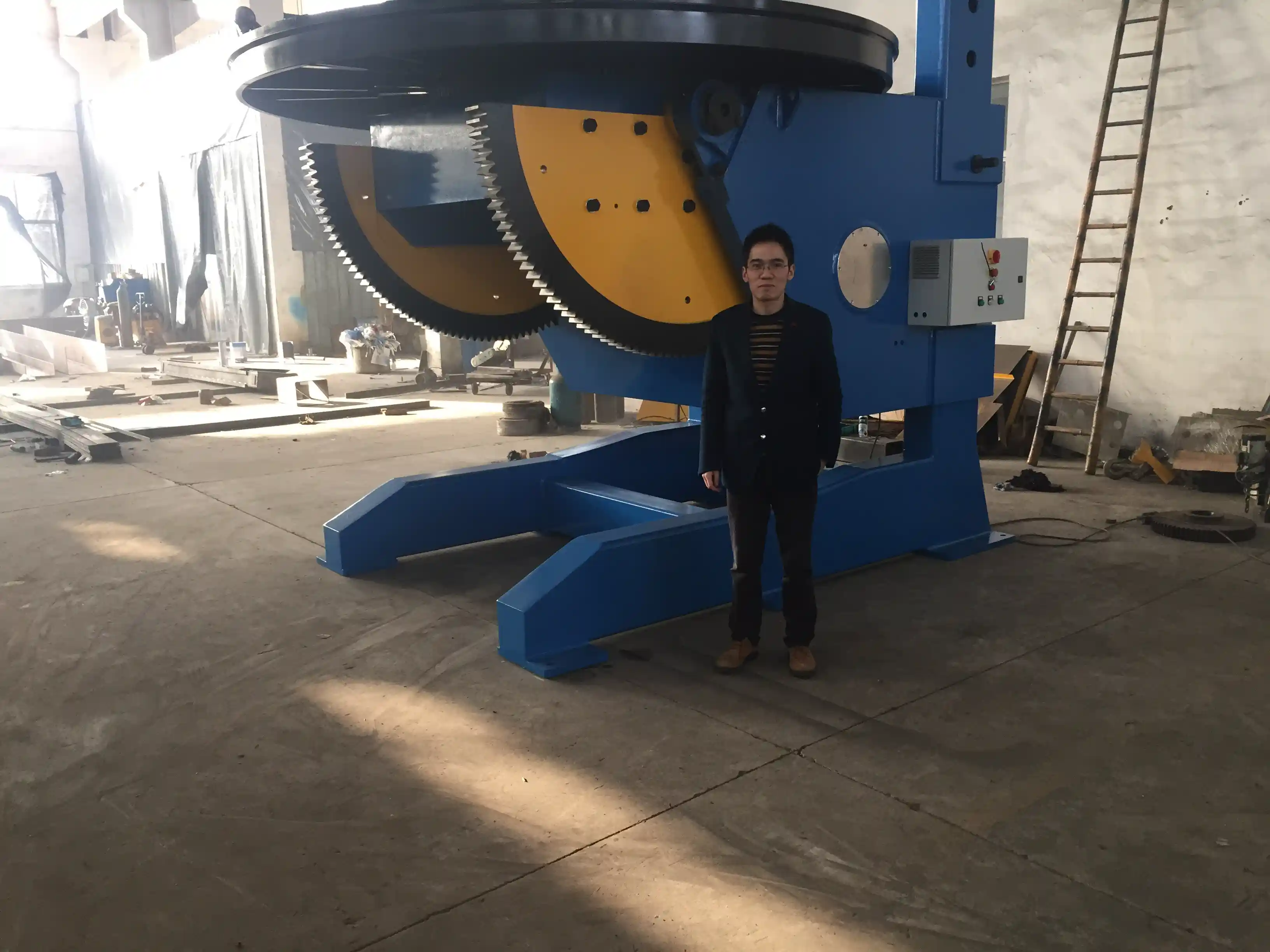
Welding positioners, including 3 Axis Positioner and Triple Axis Positioner models, allow for optimal workpiece orientation. They provide synchronized turning, rotating, and tilting capabilities. The WUXI ABK 5-Ton Triple Axis Positioner offers ±0.05 mm positioning accuracy and 0.02 mm repeatability, which matters for heavy-duty robotic welding. These systems are compatible with leading robotic brands like ABB, KUKA, and FANUC.
What are the critical stages in pressure vessel fabrication?
Pressure vessel fabrication involves several critical stages, each demanding meticulous attention to detail. These stages include material selection, cutting, forming, edge preparation, fit-up, welding, and post-weld treatment. Initial fit-up processes are important for aligning components accurately before welding begins. Subsequent longitudinal seam welding and circumferential welding join these components to form the vessel body. Throughout, rigorous process control ensures adherence to design specifications and safety standards.
For further insights into optimizing welding processes, consider reading 《Solución revolucionaria para la soldadura de recipientes a presión: Análisis técnico de los posicionadores de soldadura giratorios de 360 grados》.
Post Welding Treatment and Quality Assurance
After welding, pressure vessels undergo post-welding treatment and rigorous quality assurance. These steps ensure the integrity and compliance of the finished product. Non-destructive testing (NDT) methods are critical for detecting any internal or surface flaws without damaging the vessel.
Common NDT techniques include radiographic testing (RT) and ultrasonic testing (UT). RT uses X-rays or gamma rays to reveal internal discontinuities, while UT employs high-frequency sound waves to detect flaws. These tests are vital for verifying weld quality and material soundness.
Post-weld heat treatment (PWHT) is often performed to relieve residual stresses induced during welding. This process improves the material’s microstructure and enhances its resistance to brittle fracture and stress corrosion cracking. The specific PWHT parameters depend on the material and vessel design.
Surface finishing operations, such as grinding and polishing, prepare the vessel for its operational environment. They remove surface irregularities and improve corrosion resistance. All these steps are integral to meeting safety and performance standards.
What quality control measures are important for pressure vessel production?
Quality control measures for pressure vessel production encompass a comprehensive framework. This includes stringent material traceability, ensuring all raw materials meet specified standards. In-process inspections are conducted at every stage, from cutting and forming to welding and assembly, to identify and rectify deviations early. Final certification involves thorough documentation and verification that the vessel complies with all relevant codes and regulations, guaranteeing its safety and operational reliability.
For more information on maintaining high standards in fabrication, explore 《Mejora de la calidad y la eficacia en la fabricación de depósitos y recipientes a presión: El principal valor de aplicación de los posicionadores》.
Optimizing Production Line Efficiency and Safety
Optimizing the pressure vessel production line involves enhancing both efficiency and safety. Lean manufacturing principles maximize throughput and minimize risks. Automation benefits are central to achieving these objectives.
Welding automation benefits include faster cycle times and consistent weld quality. Automated welding systems reduce manual labor, thereby lowering labor costs and the risk of human error. This leads to a more predictable and reliable production schedule.
Industrial safety standards are paramount in operations. Robust safety protocols, including machine guarding, emergency stop systems, and comprehensive operator training, ensure a safe working environment while maintaining high productivity.
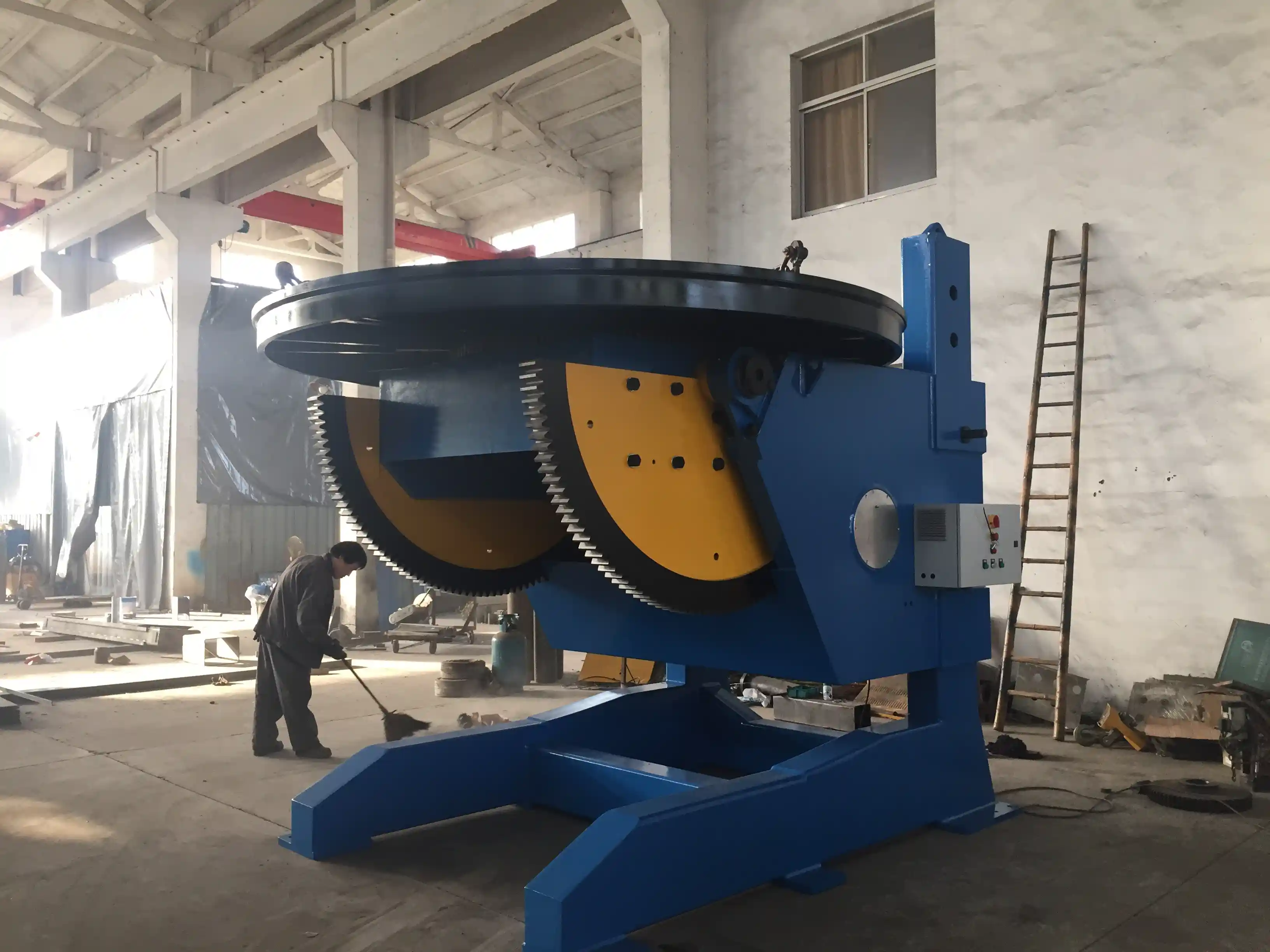
Throughput improvement is a direct result of automation. Automated manipulators and positioners, like the WUXI ABK 3-Ton 3-Axis Welding Positioner, precisely handle large and complex workpieces. This reduces setup times and increases welding arc-on time.
| Característica | Soldadura manual | Soldadura automatizada |
|---|---|---|
| Weld Consistency | Variable | Alta |
| Velocidad de producción | Más lento | Más rápido |
| Costes laborales | Más alto | Baja |
| Operator Safety | Moderado | Alta |
| Tasa de reprocesamiento | Más alto | Baja |
How does automation improve pressure vessel welding efficiency?
Automation significantly improves pressure vessel welding efficiency by integrating robotic welding, automated manipulators, and positioners. These technologies enable faster cycle times through continuous, optimized welding paths. Consistent weld quality is achieved due to precise control over welding parameters, reducing defects and rework. Automation leads to substantial labor cost savings by minimizing the need for manual intervention and allowing operators to focus on supervisory roles. This results in higher productivity and more reliable output.
To understand the full impact of automation on complex welding tasks, read 《Tired of Complex Welding Challenges? How a 3-Axis Positioner Can Boost Productivity by 70%》.
Future Trends in Pressure Vessel Manufacturing
The future of pressure vessel manufacturing is being shaped by emerging technologies. These innovations promise to further enhance efficiency, quality, and sustainability.
AI welding technology is a significant trend. AI-driven systems can monitor and adjust welding parameters in real-time, optimizing weld quality and reducing defects. This technology learns from data, continuously improving its performance.
Advanced materials pressure vessels are also gaining traction. These materials, such as high-strength steels and composites, offer improved performance characteristics, including higher operating pressures and temperatures, and reduced weight. Manufacturing processes are adapting to handle these new materials.
Digital twin manufacturing involves creating virtual replicas of physical pressure vessels and their production lines. These digital twins allow for real-time monitoring, simulation, and predictive maintenance. This capability optimizes production processes and minimizes downtime.
Industry 4.0 welding integrates smart sensors, data analytics, and interconnected systems. This creates a highly efficient and responsive manufacturing environment. Sustainable manufacturing practices are also becoming increasingly important, focusing on reducing energy consumption and waste.
These trends signify a shift towards more intelligent, adaptive, and environmentally conscious production methods.
Enhance Your Pressure Vessel Production Today
WUXI ABK MACHINERY CO., LTD. has been providing welding equipment and CNC cutting machines since 1999, offering robust, high-performance solutions designed for precision and reliability. Contact us to discuss your project requirements and discover how our expertise can optimize your manufacturing processes. Email: jay@weldc.com | Tel: +86-510-83555592
What is the typical lead time for a custom pressure vessel production line?
The lead time for a custom pressure vessel production line from WUXI ABK MACHINERY varies based on complexity and specific equipment requirements. Close collaboration with clients helps define project scopes and provide accurate timelines, ensuring efficient delivery of welding equipment and CNC cutting machines.
How does WUXI ABK MACHINERY ensure the quality of its pressure vessel welding equipment?
WUXI ABK MACHINERY maintains stringent quality control throughout the manufacturing process of welding equipment and CNC cutting machines. Adherence to international standards, utilization of high-grade materials, and comprehensive testing guarantee the performance and reliability of every piece of equipment, from welding manipulators to pipe welders.
Can WUXI ABK MACHINERY provide training for operating advanced pressure vessel production line machinery?
WUXI ABK MACHINERY offers comprehensive training programs for all advanced pressure vessel production line machinery, including wind tower welding lines and H beam welding lines. Expert technicians ensure teams are proficient in operating and maintaining cutting-edge welding equipment and CNC cutting solutions. This training maximizes equipment utilization and operational safety.
 English
  Español
  Français
  Deutsch
  Português
  Русский