
Los paneles de membrana son componentes críticos de los sistemas industriales de intercambio de calor, y cuando su estructura resiste, la seguridad y la eficacia van a la par. Mantenerlos en forma no es sencillo; las cargas de trabajo y los entornos son implacables. Esta descripción general expone los procedimientos de garantía de calidad para la inspección de paneles de membrana, centrándose en métodos que detectan los defectos a tiempo para evitar fallos costosos.
Paneles de membrana y su papel fundamental en los sistemas industriales
Los paneles de membrana son componentes integrales en diversas aplicaciones industriales, principalmente en calderas, intercambiadores de calor y hornos. Están formados por tubos soldados entre sí con barras de membrana, formando una pared estanca al gas. Este diseño mejora la eficacia de la transferencia de calor y la integridad estructural. Su función principal consiste en contener los gases de combustión y facilitar un intercambio de calor eficaz. Entre las industrias que dependen en gran medida de los paneles de membrana se encuentran la generación de energía (centrales térmicas), la petroquímica, las instalaciones de conversión de residuos en energía y otros sectores de fabricación pesada. Las duras condiciones de funcionamiento, que incluyen altas temperaturas, presiones y entornos corrosivos, hacen que su integridad estructural sea primordial para la seguridad y la eficacia operativa.
¿Qué son los paneles de membrana y dónde se utilizan?
Los paneles de membrana forman las paredes de hornos de calderas, generadores de vapor de recuperación de calor y diversos calentadores industriales. Se fabrican soldando tubos y barras planas (membranas). Así se crea una estructura robusta y estanca al gas, capaz de soportar tensiones térmicas y mecánicas extremas. Sus aplicaciones abarcan diversos sectores. Por ejemplo, en las centrales eléctricas, forman las paredes de agua de las calderas, absorbiendo el calor radiante de la combustión. En las instalaciones petroquímicas, se utilizan en los calentadores de proceso para transferir calor de forma eficiente. Las plantas de generación de energía a partir de residuos los utilizan para gestionar los gases de combustión a alta temperatura. Su diseño garantiza una transferencia de calor eficaz y evita las fugas de gases de combustión.
El impacto del fallo de los paneles de membrana: Seguridad, eficiencia y coste
El fallo de los paneles de membrana puede tener consecuencias catastróficas. Entre ellas se incluyen fugas de vapor, explosiones de calderas y paradas no programadas. Estos fallos suponen importantes riesgos para la seguridad del personal y los equipos. También provocan importantes pérdidas económicas debido a los costes de reparación, la pérdida de producción y las posibles multas reglamentarias. Incluso los defectos menores pueden agravarse con el tiempo, comprometiendo la eficiencia de la transferencia de calor y aumentando el consumo de combustible. Por lo tanto, los procedimientos sólidos de garantía de calidad son una necesidad crítica. Estos procedimientos mitigan los riesgos y garantizan un funcionamiento continuo, seguro y eficiente.
Procedimientos clave de garantía de calidad para la inspección de paneles de membrana
Unos protocolos de inspección eficaces son cruciales para mantener la integridad de los paneles de membrana. Aplicamos un enfoque polifacético que combina métodos de ensayo visuales y no destructivos. Esto garantiza una detección exhaustiva de los defectos y un mantenimiento proactivo.
Inspección visual: La primera línea de defensa contra los defectos
La inspección visual suele ser el paso inicial y más fundamental en la garantía de calidad de los paneles de membrana. Consiste en un examen minucioso de las superficies de los paneles. Los inspectores buscan signos visibles de defectos como grietas, corrosión, erosión, deformación e imperfecciones de la soldadura. Estas imperfecciones incluyen socavaduras, porosidad y fusión incompleta. También se observan signos de sobrecalentamiento. Esta inspección puede ser realizada manualmente por personal experimentado. Los boroscopios y los drones ayudan a examinar las zonas de difícil acceso. Una iluminación y un aumento adecuados son cruciales para una evaluación visual eficaz. La documentación de las anomalías observadas es esencial para seguir investigando y planificar las reparaciones.
Métodos de ensayos no destructivos (END) para una evaluación exhaustiva
Las técnicas de ensayos no destructivos (END) son indispensables para detectar defectos internos y superficiales. Estos defectos no son visibles a simple vista. Los principales métodos END utilizados para la inspección de paneles de membrana son:
- Pruebas ultrasónicas (UT): Este método utiliza ondas sonoras de alta frecuencia. Detecta defectos internos como grietas, huecos e inclusiones en los cordones de soldadura y el material base.
- Pruebas radiográficas (RT): Esta técnica emplea rayos X o rayos gamma. Produce una imagen de la estructura interna, revelando defectos como porosidad, inclusiones de escoria y falta de fusión.
- Pruebas de partículas magnéticas (MPT): Este método detecta discontinuidades superficiales y cercanas a la superficie en materiales ferromagnéticos. Aplica campos magnéticos y partículas ferromagnéticas finas.
- Pruebas con líquidos penetrantes (LPT): Esta técnica identifica los defectos que rompen la superficie en materiales no porosos. Se aplica un penetrante líquido que se filtra en los defectos, que luego se hacen visibles.
- Pruebas de corrientes de Foucault (ECT): Este método detecta las grietas superficiales y cercanas a la superficie y el adelgazamiento del material, sobre todo en los tubos.
Cada método ofrece ventajas únicas. La selección depende del material, el tipo de defecto previsto y la accesibilidad.
Para más información sobre los métodos de END, lea Wuxi ABK Equipo rotatorio profesional de soldadura Solución de soldadura de precisión para la fabricación de recipientes a presión.
Aplicación de protocolos sólidos de control de calidad con equipos WUXI ABK
Lograr una alta calidad en la fabricación de paneles de membrana requiere equipos precisos y fiables. Integramos sistemas avanzados de soldadura y posicionamiento para cumplir las estrictas normas del sector. Nuestras soluciones garantizan una producción uniforme y sin defectos.
Garantizar la calidad de la soldadura: La base de la integridad de los paneles de membrana
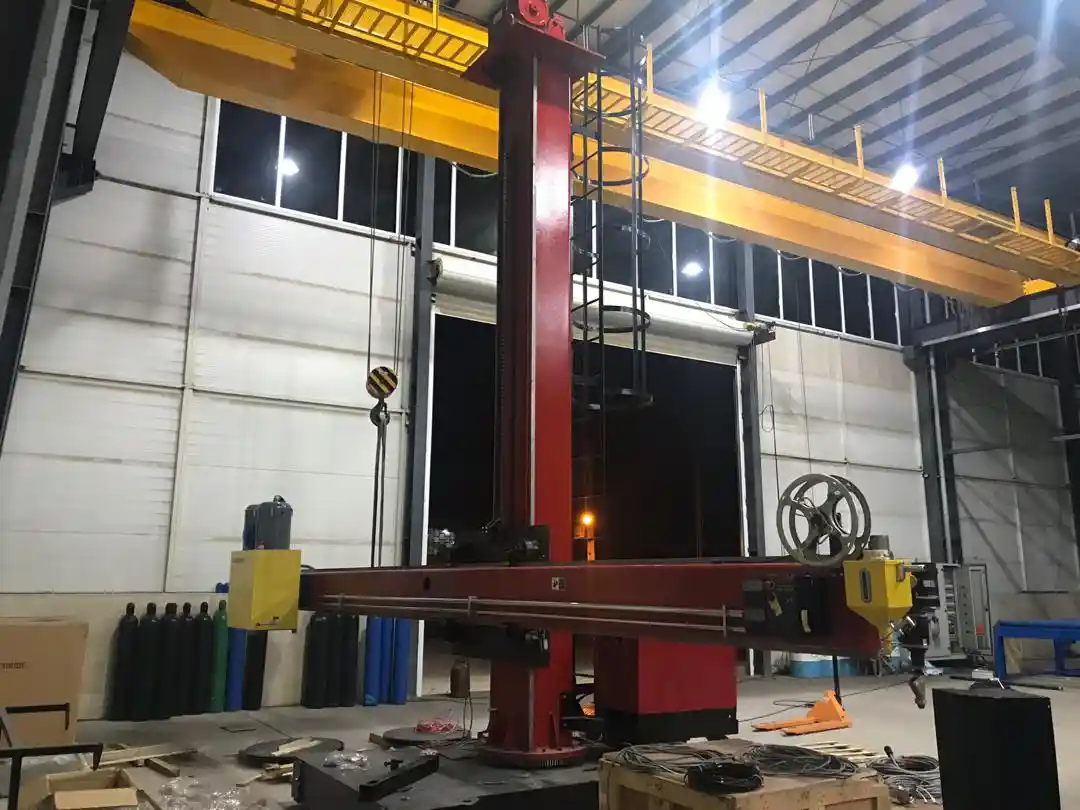
La calidad de las soldaduras es primordial para la integridad general de los paneles de membrana. Las malas prácticas de soldadura pueden introducir defectos. Estos defectos comprometen la resistencia estructural y aceleran el fallo. WUXI ABK MACHINERY CO., LTD está especializada en la fabricación de equipos de soldadura de alta precisión. Estos equipos consiguen una calidad de soldadura superior, reduciendo la probabilidad de defectos. Nuestros manipuladores de soldadura, como la serie LH, y varios proveedores de posicionadores de soldadura (por ejemplo, posicionador de 3 ejes de 1 tonelada, posicionador de soldadura de altura fija de 5 toneladas) proporcionan estabilidad, precisión y automatización. Esto garantiza soldaduras uniformes y de alta calidad en la fabricación de paneles de membrana. Al minimizar el error humano y garantizar un control preciso de los parámetros de soldadura, los equipos de WUXI ABK sientan las bases para unos paneles intrínsecamente más fiables. Estos paneles también son más fáciles de inspeccionar.
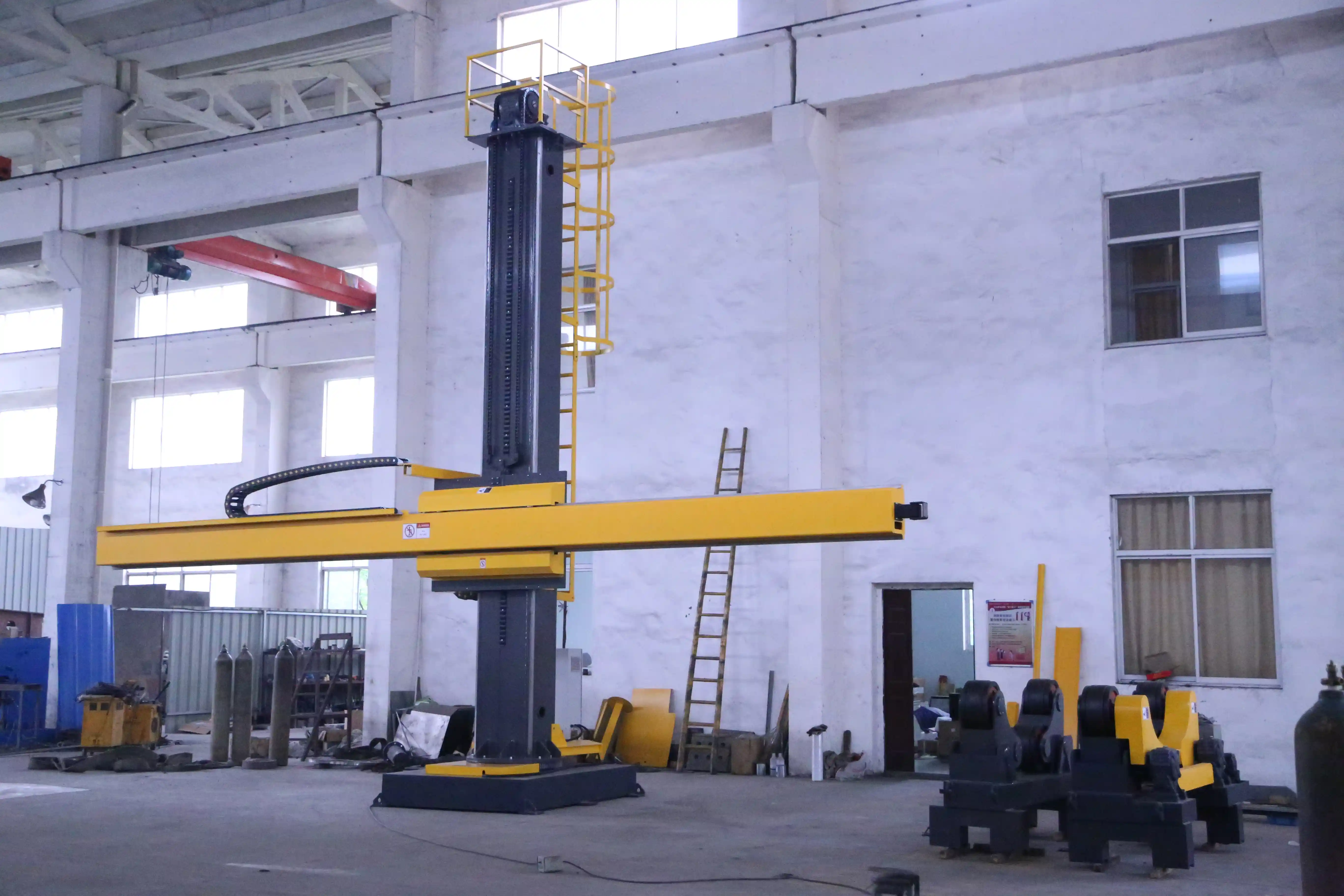
Optimización de la fabricación con manipuladores de soldadura avanzados
Nuestros manipuladores de soldadura están diseñados para la soldadura precisa de cordones longitudinales y circunferenciales. Cuentan con una estructura de viga en caja de alta resistencia, guías lineales y reductores cicloidales. El control continuo de la velocidad garantiza un funcionamiento estable. La precisión de posicionamiento es de ±0,1 mm/m. Algunos modelos ofrecen rotación de columna de 360 grados y desplazamiento motorizado. Las funciones de seguridad incluyen un motor con freno, pasadores de seguridad anticaída y protección eléctrica total. Funciones opcionales como la recuperación de fundentes, la supervisión en tiempo real y el seguimiento de costuras mejoran el rendimiento. El control automatizado de parámetros mejora aún más la eficacia.
| Modelo | Recorrido horizontal | Desplazamiento vertical | Rotación | Velocidad de rotación | Elevación de la pluma | Boom Adelante | Velocidad del carro | Distancia ferroviaria |
|---|---|---|---|---|---|---|---|---|
| LH8080 | 8000 mm | 8000 mm | ±180° | 0,12 m/min | 0,4 m/min | 0,12-1,2 m/min | 0,2-2 m/min | 2700 mm |
| LH4580 | 4500 mm | 8000 mm | ±180° | 0,12 m/min | 0,4 m/min | 0,12-1,2 m/min | 0,2-2 m/min | 2000 mm |
| LH5060 | 5000 mm | 6000 mm | ±180° | 0,12 m/min | 0,4 m/min | 0,12-1,2 m/min | 0,2-2 m/min | 2000 mm |
| LH3040 | 3000 mm | 4000 mm | ±180° | 0,12 m/min | 0,4 m/min | 0,12-1,2 m/min | 0,2-2 m/min | 1500 mm |
| LH1235 | 1200 mm | 3500 mm | Manual 360 | 0,12 m/min | 0,4 m/min | 0,12-1,2 m/min | Manual | 1000 mm |
Estos manipuladores encuentran aplicaciones en la fabricación de calderas, la soldadura de recipientes a presión, la fabricación de tanques de almacenamiento y la soldadura de torres eólicas. También se utilizan en la producción de equipos químicos y petroquímicos y en la fabricación de estructuras pesadas de acero.
Si está interesado, consulte Una nueva era en la fabricación de depósitos El arte de la colaboración de precisión entre rodillos de torneado y manipuladores.
Mejora de la precisión con posicionadores de soldadura avanzados
Nuestros posicionadores de soldadura ofrecen un movimiento multieje sincronizado. Esto garantiza un posicionamiento óptimo de la pieza de trabajo para soldaduras complejas. El posicionador de soldadura de 3 ejes de 1 tonelada ofrece giro de 180°, rotación continua de 360° e inclinación de 0-90°. Alcanza una precisión de posicionamiento de ±0,05 mm y una repetibilidad de 0,02 mm. Las estructuras servoaccionadas, las guías lineales THK y los reductores SEW garantizan la estabilidad. Las funciones de seguridad incluyen desconexión por sobrecarga y frenado de emergencia. El armario de control con clasificación IP54 admite control mediante PLC y pantalla táctil. La compatibilidad con robots ABB, KUKA y FANUC facilita la integración en sistemas automatizados.
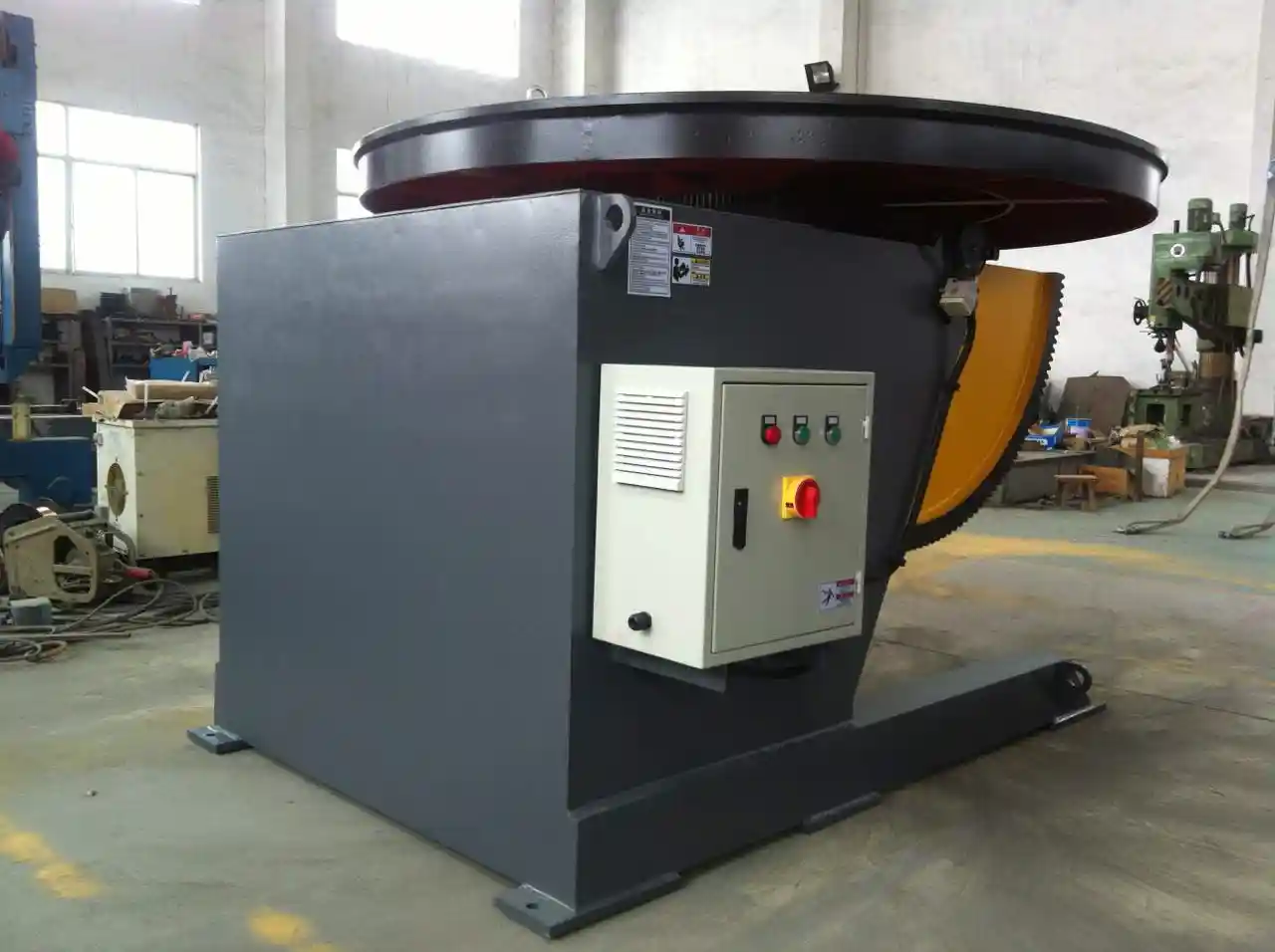
| Modelo | Carga máxima | Carga dinámica | Rango de inclinación | Rotación | Alcance de giro | Precisión de posición | Repetibilidad | Sistema de control | Fuente de alimentación |
|---|---|---|---|---|---|---|---|---|---|
| Posicionador de 3 ejes de 1 tonelada | 1 tonelada | 5 toneladas | 0-90° | 360° cont. | 180° | ±0,05 mm | 0,02 mm | PLC Siemens + HMI | 380V 50Hz IP54 |
| Posicionador de 2 Ton y 3 ejes | 2 toneladas | 5 toneladas | 0-90° | 360° cont. | 180° | 0,05 mm | 0,02 mm | PLC + pantalla táctil | 380V 50Hz IP54 |
| Posicionador de soldadura de 3 ejes 3 Toneladas | 3 toneladas | N/A | 0-90° | 360° cont. | 180° | ±0,05 mm | 0,02 mm | PLC + pantalla táctil | IP54 |
| Mesa de posicionamiento de triple eje 5 toneladas | 5 toneladas | 5 toneladas | 0-90° | 360° cont. | 180° | ±0,05 mm | 0,02 mm | PLC + pantalla táctil | N/A |
Estos posicionadores son ideales para la soldadura de piezas de automoción, la fabricación de componentes aeroespaciales, la reparación de equipos pesados y la soldadura de juntas de recipientes a presión. También se utilizan en células de soldadura automatizadas, soldadura de tuberías y bridas, y sistemas de soldadura MIG y TIG robotizados.
Si está interesado, consulte Revolución en la soldadura naval Cómo los posicionadores de soldadura mejoran la calidad y la eficacia.
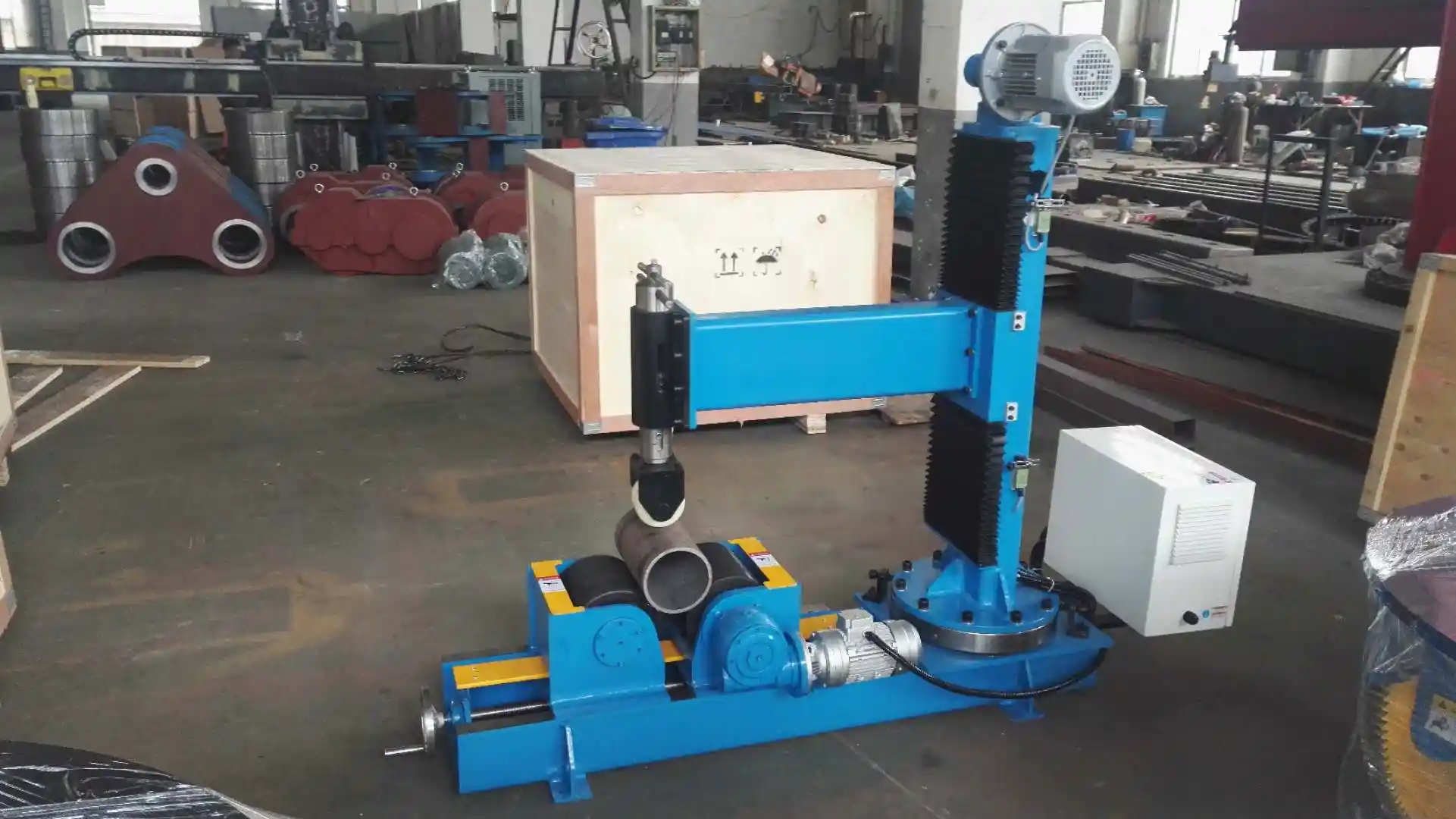
Técnicas avanzadas de inspección y tendencias futuras en la garantía de calidad
La industria de la soldadura evoluciona continuamente, impulsada por las demandas de mayor calidad, mayor eficiencia y mayor seguridad. Las técnicas de inspección avanzadas y las tendencias futuras en garantía de calidad perfeccionarán aún más la integridad de los paneles de membrana. Los sistemas de inspección robotizados, por ejemplo, están ganando adeptos. Estos sistemas utilizan la inteligencia artificial para detectar defectos minúsculos con mayor precisión y rapidez que los inspectores humanos. La supervisión en tiempo real con sensores integrados proporciona datos continuos sobre el estado del panel, lo que permite un mantenimiento predictivo. La tecnología de gemelos digitales crea réplicas virtuales de activos físicos. Esto permite simular el estrés y la fatiga y predecir posibles fallos antes de que se produzcan. Prevemos una mayor integración de estas tecnologías. Esto dará lugar a estrategias de mantenimiento más proactivas y a una mayor vida útil de los paneles de membrana.
Buenas prácticas para mantener el rendimiento de los paneles de membrana
El mantenimiento del rendimiento de los paneles de membrana requiere el cumplimiento de las mejores prácticas a lo largo de su ciclo de vida. Esto comienza con un diseño y una fabricación meticulosos. Garantizamos una selección de materiales adecuada y unos procedimientos de soldadura sólidos. El mantenimiento y la inspección periódicos son igualmente vitales. Establezca un programa de inspección exhaustivo basado en las condiciones operativas y los requisitos normativos. Aplique estrategias de mantenimiento preventivo, abordando los problemas menores antes de que se agraven. Forme a fondo al personal en los procedimientos operativos y de mantenimiento. Documente meticulosamente todas las inspecciones, reparaciones y modificaciones. Esto crea un valioso registro histórico para futuras referencias. Por último, manténgase informado sobre los avances tecnológicos en soldadura e inspección. Esto garantiza una mejora continua de la garantía de calidad.
Preguntas frecuentes
¿Cuáles son los defectos más comunes de los paneles de membrana?
Entre los defectos más comunes se encuentran las grietas de soldadura, la porosidad, las inclusiones de escoria, la fusión incompleta, la corrosión, la erosión y el abombamiento de los tubos. Estos defectos pueden deberse a fallos de fabricación, tensiones operativas o factores ambientales. Las inspecciones periódicas ayudan a detectar estos problemas a tiempo.
¿Con qué frecuencia deben inspeccionarse los paneles de membrana?
La frecuencia de las inspecciones depende de varios factores. Entre ellos se incluyen las condiciones de funcionamiento, la antigüedad del equipo, los requisitos reglamentarios y los datos históricos de rendimiento. Los componentes críticos suelen requerir inspecciones anuales o semestrales. En entornos difíciles o tras cambios operativos significativos, es necesario realizar comprobaciones más frecuentes.
¿Pueden los equipos de soldadura de WUXI ABK ayudar a reducir la necesidad de una inspección exhaustiva de los paneles de membrana?
Aunque la inspección sigue siendo crucial, los equipos de soldadura de precisión de WUXI ABK mejoran significativamente la calidad inicial de la soldadura. Esto reduce la incidencia de defectos. Puede agilizar los procesos de inspección, haciéndolos más eficientes. Las inspecciones pasan a centrarse en el mantenimiento preventivo, en lugar de en la reparación exhaustiva de defectos. Nuestros avanzados manipuladores y posicionadores garantizan soldaduras uniformes y de alta calidad. Esto constituye una base sólida para la integridad de los paneles.
Optimice su fabricación con WUXI ABK
Garantice la máxima calidad y longevidad de sus paneles de membrana con las avanzadas soluciones de soldadura de WUXI ABK. Póngase en contacto con nosotros hoy mismo para saber cómo nuestros equipos de soldadura de precisión pueden mejorar sus procesos de fabricación y reducir los retos de inspección.
Móvil: +86-13815101750
Correo electrónico: jay@weldc.com
 English
  Español
  Français
  Deutsch
  Português
  Русский