
Power plant boiler fabrication spans membrane water wall panels, tube-to-header boiler banks, drums, headers, economizer elements, and heavy steel structures. The challenge is not simply welding; it is maintaining consistent tube spacing, controlling oxidation and distortion, positioning large subassemblies, and meeting code inspection with traceable process data. This guide maps the production equipment categories that matter most in a boiler shop, from plate preparation and panel bending to positioners, rotators, and CNC cutting systems.
Power Plant Boiler Production Equipment: Scope and Codes
A boiler production line must coordinate several distinct manufacturing steps. Raw plate is cut and edge-prepared. Tubes are bent, fit-up, and welded into membrane panels or tube-to-tube configurations. Fin bars are formed and calibrated to maintain consistent spacing. Headers are drilled, beveled, and joined. Large drums and pressure parts are rotated and positioned for circumferential and longitudinal welding. Finally, subassemblies move through fit-up, NDT, hydrostatic testing, and pre-erection marking.
The governing requirements are usually ASME Boiler and Pressure Vessel Code Section I [1], ASME B31.1 for power piping [2], and ISO 3834 for fusion welding quality systems [3]. In European projects, EN 12952 water-tube boiler requirements also apply [4]. Procurement should start from these documents because they define material traceability, weld procedure qualification, joint design, and inspection acceptance criteria.
When evaluating equipment, ask for the following:
- Panel width and tube diameter range.
- Tube pitch tolerance required by the contract.
- Maximum plate thickness for headers and drums.
- Skew or tangent tube arrangements, if any.
- Welding processes planned: GMAW, SAW, GTAW, or a combination.
- NDT requirements and whether the line must store PQR/WPS parameters.
- Available floor space and crane capacity.
Membrane Panel, Fin-Bar, and Tube Bending Equipment
Membrane panel production is the core of an industrial boiler line. The process starts with a tube panel with correct center-to-center spacing. A Membrane Welding Machine must control heat input, weld speed, and side-to-side symmetry so that the web-to-tube seam does not pull the panel out of flatness. Frequent problems include mid-panel bow, inconsistent gap between tube and fin bar, and undercut along the membrane weld.
Fin-bar geometry affects both heat transfer and assembly fit. A dedicated Fin Bar Calibration Manufacturers process verifies straightness, profile height, and edge squareness before panels are joined. If the fin bar is out of tolerance, weld gap variation increases and post-weld straightening becomes difficult.
For boiler banks and economizers, tube-to-tube fabrication is equally critical. A Tube Bending Machine supports serpentine and U-bend production, but ovality and wall thinning must be controlled at the bend. In a high-volume boiler line, booster bending with proper die design is used to reduce flattening and wrinkle formation. After bending, a Tube Welding Machine positions and fuses joints to qualified WPS parameters under ASME Section IX [5]. Fit-up consistency at this station has a major influence on first-pass weld quality and NDT rejection rate.
If you are building a new membrane panel line, a direct equipment review can shorten the iteration loop. Send panel width, tube diameter, wall thickness, and monthly output target to jay@weldc.com for a configuration check before finalizing the layout.
Welding Positioners, Rotators, and Manipulators for Pressure Parts
Heavy boiler pressure parts require more than a stable table. A drum, header, or membrane panel subassembly must be rotated, tilted, or supported in the optimal welding position for each joint. The equipment category divides into positioners, rotators, and manipulators.
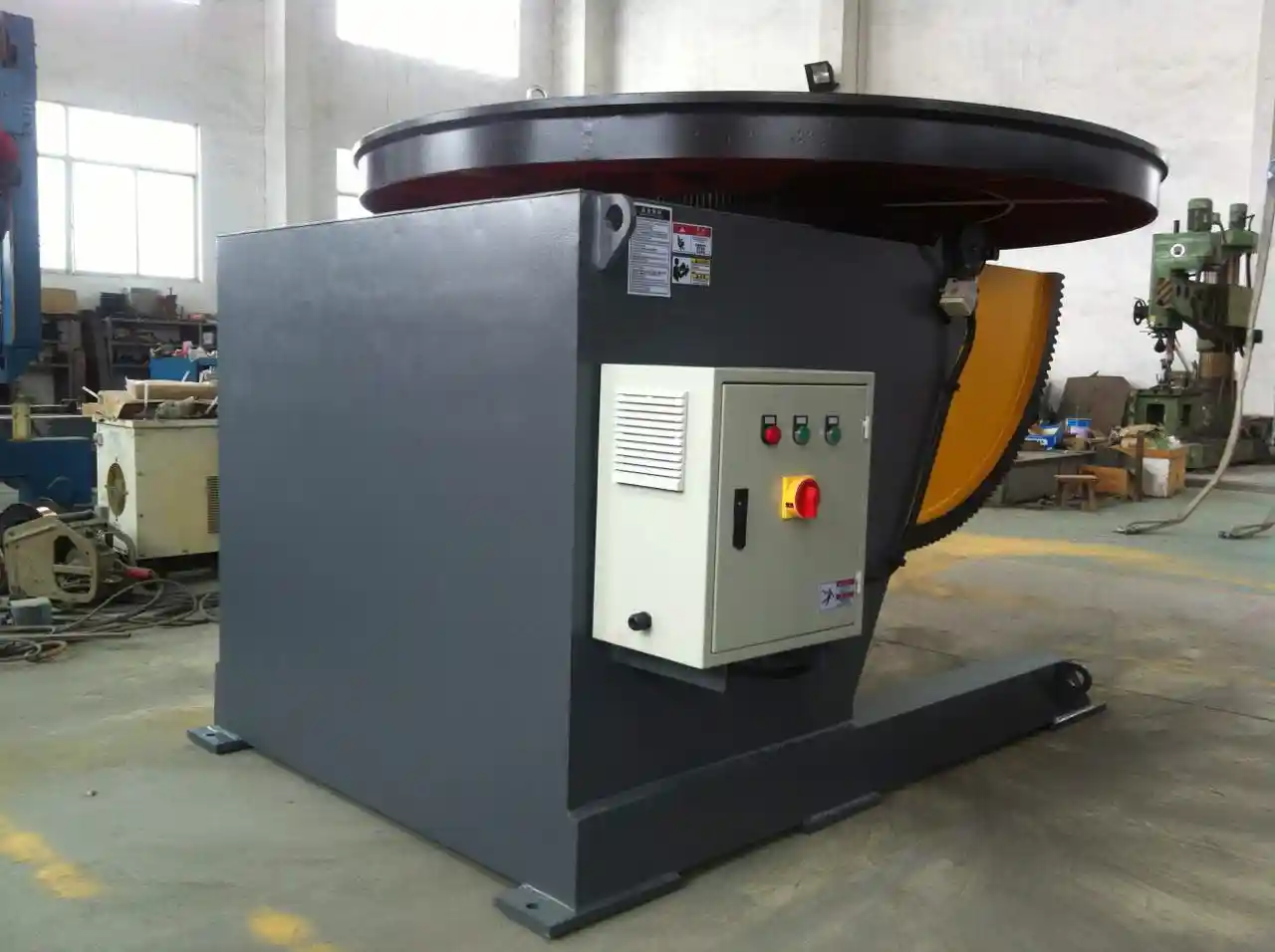
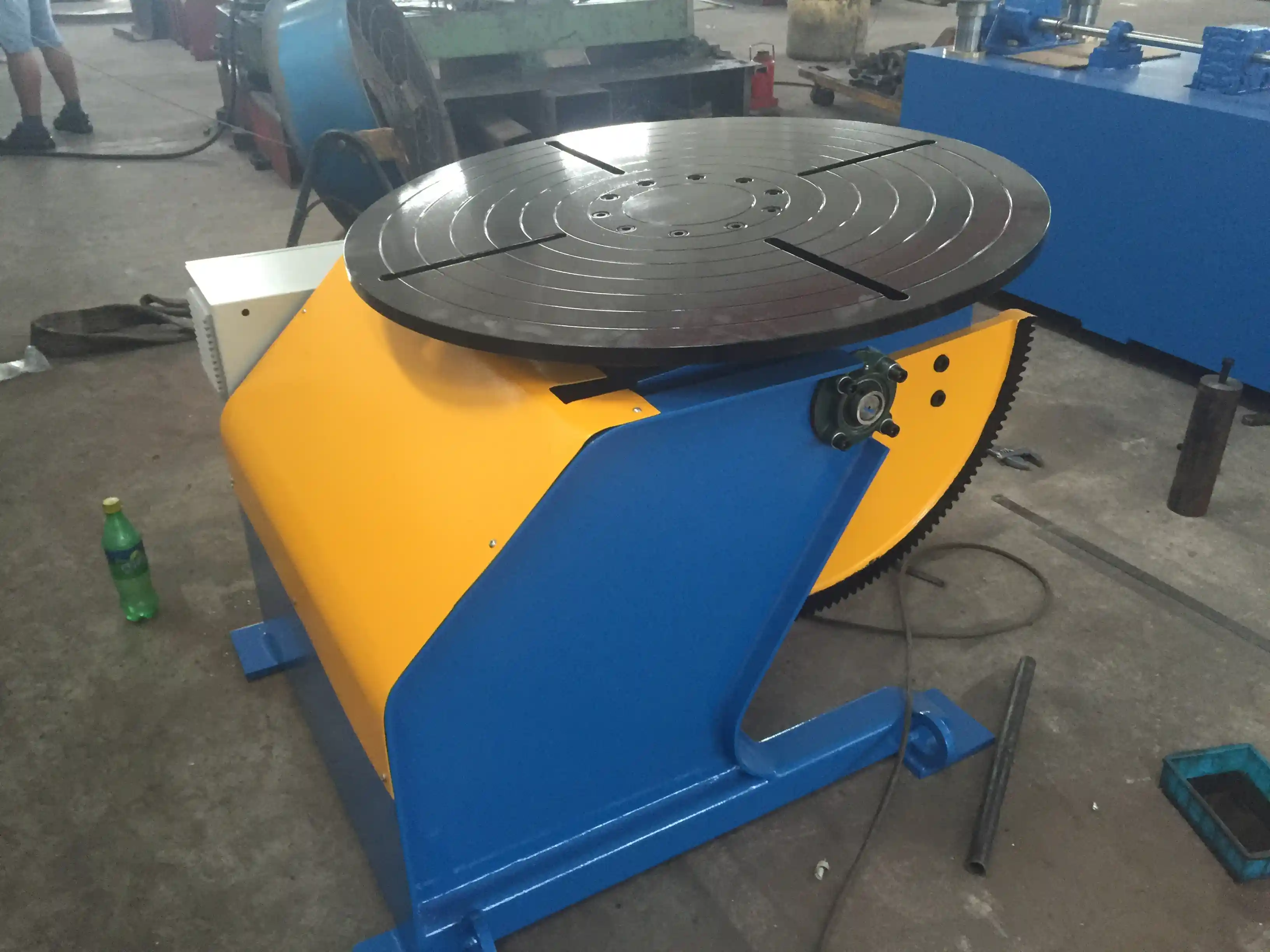
A welding positioner is designed to rotate a workpiece around one or more axes. For header-side and small pressure vessel work, a three-axis positioner allows tilting and continuous rotation with controlled positioning. In automated cells, positioner repeatability should be linked to the robot or welding carriage control so that the torch path follows the joint without manual re-teaching. Product data from WUXI ABK machinery shows positioning accuracy of ±0.5° for fixed-height positioners and ±0.05 mm for servo-driven three-axis models, which makes them suitable for components requiring consistent root pass alignment.
A welding rotator supports cylindrical sections on drive rollers. Boiler drums and large-diameter headers are rotated during circumferential SAW or GMAW welding. Roller type, wheel width, and drive synchronization must be selected for the vessel diameter range and weight. For drums, adjustable-height rotators with self-aligning rollers reduce axial creep and misalignment during multi-pass welding.
A Manipulator zum Schweißen carries the welding head along a vertical boom and horizontal rail. This is especially useful for longitudinal seams on membrane panels and long headers, where the boom keeps travel speed and torch angle steady. For cylindrical drums, a Schwerlast-Rohrrotator can be paired with the manipulator to combine rotation and linear seam tracking.
Boiler drums and header pairs demand consistent rotation and fit-up before welding. <Verbesserung von Qualität und Effizienz bei der Herstellung von Tanks und Druckbehältern: Der zentrale Anwendungswert von Positionierern> covers how positioners stabilize heavy cylindrical sections during circumferential welding.
Positioner and rotator load selection must account for dynamic load, center of gravity, and possible eccentricity. A 20-ton turntable specification is not simply a 20-ton vessel rating; the effective moment and overturn condition must be verified. In a power plant boiler shop, the safest method is to review the largest drum or header assembly, locate its center of gravity, and select the next load class above that calculated value.
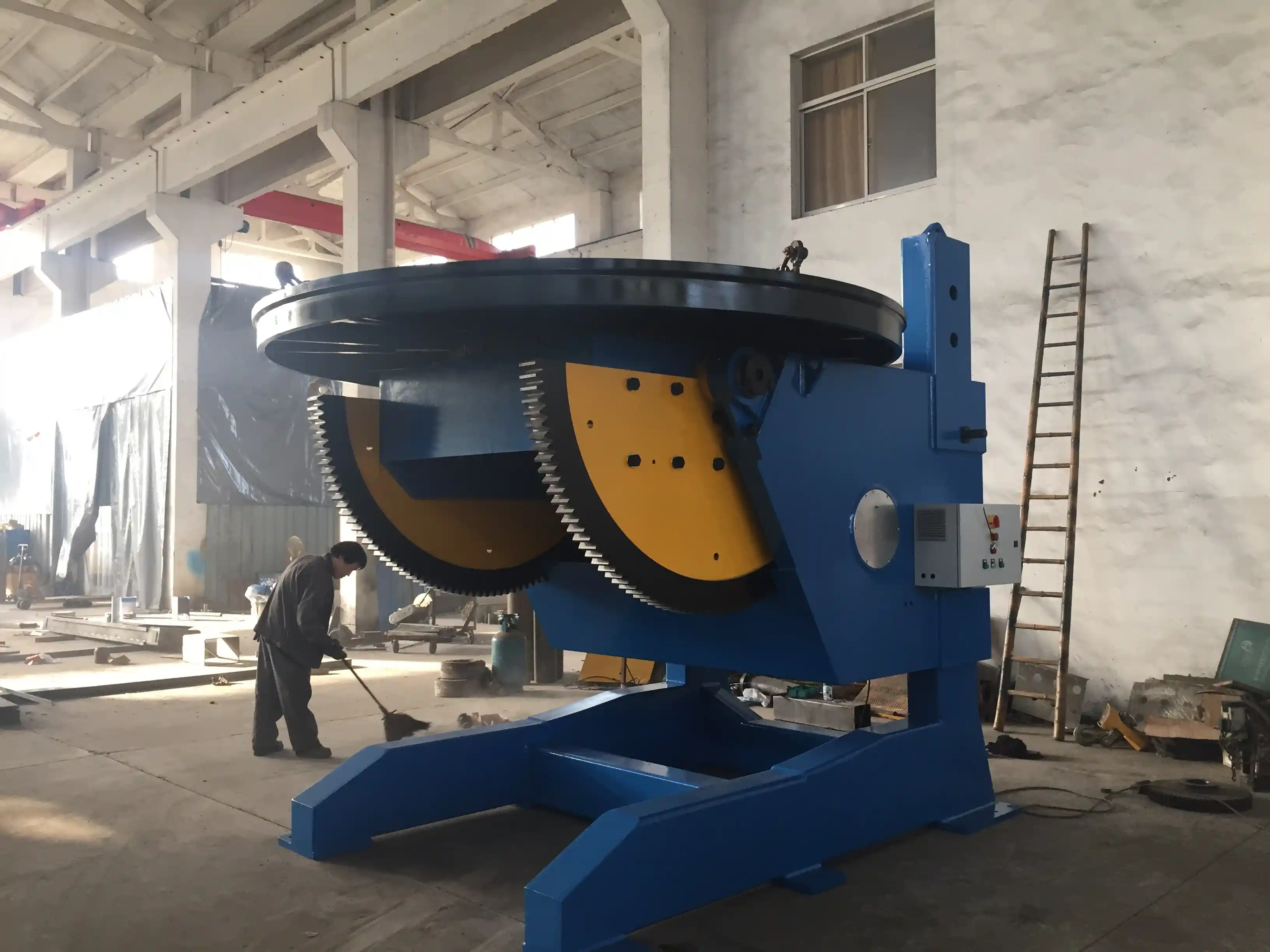
For fabricators automating mixed header and drum work, Schweißen Drehtisch Lösungen und Adjustable Rotator Manufacturers provide application-specific frame styles and capacities. The selection should be driven by the vessel diameter range, the number of circumferential seams, and whether the station must interface with a robotic or column-and-boom welding system.
Tube-to-header joints are among the most inspection-sensitive welds in a boiler. <Verbesserung der Qualität beim Schweißen von Rohren durch einen Hochpräzisions-Schweißpositionierer> covers positioning techniques that reduce misalignment and improve repeatability.
CNC Cutting, Layout, and Workflow Planning
Before welding, plate and tube material enters through cutting and preparation. A boiler shop needs to cut drum shells, header plates, gussets, lugs, and panel end pieces accurately enough for later fit-up. The main options are:
- CNC-Brennschneidmaschine: For thick carbon steel plate, flame cutting remains cost-effective. Slag removal and edge hardening must be controlled.
- CNC-Plasmaschneidmaschine: For medium-thickness parts, plasma offers higher travel speed and better edge quality on stainless or carbon steel.
- Laser Cutting Machine: For thinner sheets and intricate support parts, fiber laser increases accuracy and reduces secondary machining.
Layout planning should follow the actual flow of material. A common arrangement places raw material storage and cutting near the shop entrance, followed by edge preparation and panel bending, then membrane panel welding, tube bending and header assembly, pressure part welding, NDT, and final assembly. The workflow should minimize crane crossings and allow a panel to move forward without returning to the same station. For a medium-size line, consider dividing the shop into cutting, panel manufacturing, tube bank fabrication, and heavy assembly zones.
Capacity planning should start with annual tonnage and the number of panels per shift. From there, calculate cut part throughput, linear meters of membrane panel weld, number of tube-to-tube joints, and drum seam meters per week. Equipment count follows the bottleneck operation, not the fastest operation. In most boiler shops, membrane panel welding or drilling/fit-up becomes the pacing constraint, so the supporting equipment should be configured around that station.
For shops evaluating CNC cutting plus panel welding in one phase, request a combined equipment capacity review at jay@weldc.com; include plate thickness range and annual tonnage.
Quality Control, Inspection, and Maintenance
Boiler fabrication quality is controlled through visual inspection, dimensional checks, NDT, and documented process parameters. ASME Section I requires specific joint preparation and post-weld heat treatment depending on material and thickness [1]. ISO 3834 requires that the manufacturer maintain weld process records, calibrate measuring equipment, and verify operator qualification [3]. For repair and alteration work, the National Board Inspection Code provides inspection and pressure-retaining item guidance [6].
In practice, the equipment should support in-process quality checks. A welding positioner with accurate rotation speed and tilt positioning helps maintain consistent weld bead placement. A membrane welding machine with parameter storage reduces variation from manual adjustments. A manipulator with electronic travel speed control improves repeatability over manual tractor welding.
Maintenance is often underestimated. Positioners and rotators require daily removal of welding spatter and slag from bearings, slideways, and slip rings. Weekly checks should include mounting bolts, drive backlash, and emergency-stop function. Annual maintenance should cover gear inspection, lubrication replacement, and recalibration of positioner encoders. CNC cutting equipment requires torch consumable inspection, gas and water leak checks, and rail alignment. A boiler shop that plans maintenance around these points reduces unplanned downtime during production peaks.
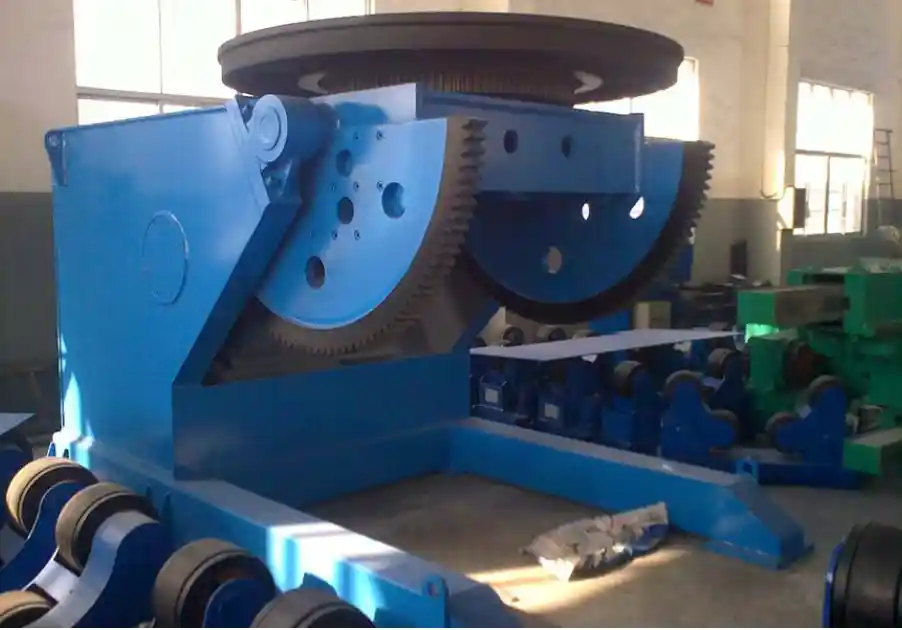
For pressure-part fabrication, rotary equipment must hold alignment under thermal and mechanical load.
Pressure-part fabrication depends on rotary equipment that can hold alignment under thermal and mechanical load. <Wuxi ABK Professionelle Rotationsschweißgeräte: Präzisionsschweißlösung für den Druckbehälterbau> covers precision rotary equipment selection for boiler and pressure vessel shops.
Next Step: Scope Your Boiler Production Equipment
A reliable boiler production line is defined by capacity, process control, and layout. Before issuing an inquiry, prepare the following details:
- Panel width, length, tube diameter, and wall thickness.
- Fin-bar thickness and material grade.
- Number of panels per year or per month.
- Maximum drum or header weight and diameter.
- Welding processes already qualified in your facility.
- Code requirements: ASME, EN, ISO 3834, or project-specific.
- Available floor space and crane capacity.
Send these details to jay@weldc.com or contact WUXI ABK MACHINERY CO., LTD at +86-13815101750 / +86-510-83555592. A complete scope review can identify which stations require automation, where load margins are tight, and what layout best supports future capacity increases.
FAQ
What is the minimum equipment set for a boiler panel production line?
The minimum usually includes a CNC cutting machine, edge preparation equipment, panel bending or tube bending capability, a membrane panel welding machine, welding positioners or rotators, and a welding manipulator for longitudinal seams. If the line includes economizer or boiler bank work, tube-to-tube welding and fin-bar calibration are also required.
How do I choose the right membrane panel welding machine?
Base the selection on panel width, tube diameter, tube pitch tolerance, number of simultaneous welding heads or torches, and the welding process. The machine should allow controlled heat input, stable travel speed, and parameter storage for consistent panel flatness.
What standards apply to power plant boiler fabrication?
ASME Section I and ASME B31.1 are common in international projects. European fabricators often also follow EN 12952. ISO 3834 defines welding quality management, and ASME Section IX governs welder and procedure qualification. The owner’s specification and local code take precedence.
What is the difference between a welding positioner and a welding rotator for boiler work?
A positioner typically clamps and rotates a workpiece on a table or head-tail support and may provide tilting. A rotator supports a cylindrical section on rollers and is used for drums and large-diameter vessels. Both may be required in a complete pressure-part line.
How many operators are required for an automated boiler panel line?
The number depends on automation level and production targets. A semi-automatic membrane panel line may need one or two operators per station, while a fully automated cell can reduce direct operator time but requires more skilled technicians for programming, maintenance, and quality control.
References
[1] ASME Boiler and Pressure Vessel Code, Section I, Rules for Construction of Power Boilers, ASME, 2023.
[2] ASME B31.1, Power Piping, ASME, 2022.
[3] ISO 3834-2:2021, Quality requirements for fusion welding of metallic materials — Part 2: Comprehensive quality requirements, ISO, 2021.
[4] EN 12952-1:2015, Water-tube boilers and auxiliary installations — Part 1: General, CEN, 2015.
[5] ASME Boiler and Pressure Vessel Code, Section IX, Welding, Brazing, and Fusing Qualifications, ASME, 2023.
[6] NB-23, National Board Inspection Code, National Board of Boiler and Pressure Vessel Inspectors, 2023.
Falls Sie daran interessiert sind, lesen Sie doch diese verwandten Artikel:
Schweißmanipulatoren für die Fertigung von Windtürmen: Revolutionierung der Produktionseffizienz
Verbesserung von Qualität und Effizienz bei der Herstellung von Tanks und Druckbehältern: Der zentrale Anwendungswert von Positionierern
Verbesserung von Qualität und Effizienz bei der Herstellung von Windkraftanlagen: Die Schlüsselrolle von Positionierern beim Schweißen von Turmsektionen
Die Schwerindustrie meistern: Wie kletternde Rollenböcke zum Grundstein für effizientes Schweißen werden
 English
 Español
 Français
 Deutsch
 Português
 Русский