For offshore fabrication teams, equipment certification is not a paperwork exercise. A positioner or rotator that shifts under load, loses alignment a few months into service, or cannot produce verifiable documentation during a platform audit turns into a costly liability. DNV offshore equipment certification gives owners and engineering contractors a standardised way to confirm that welding machinery will perform when it matters, on structures where rework costs and access constraints make second chances rare. Drawing on more than twenty years of manufacturing welding automation systems for heavy industry, I have seen how certification requirements filter out equipment that looks capable on a spec sheet but cannot sustain precision in real production environments. This article explains what DNV certification demands from welding positioners, rotators, and related machinery, which design and manufacturing disciplines make compliance possible, and how to evaluate equipment before committing to a platform project.
Understanding DNV Certification for Offshore Fabrication Equipment
DNV (Det Norske Veritas) is one of the classification societies that set technical standards for offshore structures and the equipment used to build them. For welding machinery, DNV certification confirms that the equipment has been designed, manufactured, and tested to meet specified performance, safety, and reliability criteria under marine and offshore service conditions.
What many first-time buyers miss is that DNV does not simply stamp a machine after a single inspection. Certification typically involves a combination of design review, material traceability verification, factory acceptance testing, and ongoing surveillance during production. The scope depends on the equipment type and its role in the fabrication sequence. A 100‑ton welding rotator that turns a monopile section for an offshore wind farm faces a different certification path than a 1‑ton positioner used for smaller topside components, but the underlying principle is the same: the equipment must demonstrate it can hold specified tolerances under the loads and duty cycles stated by the manufacturer.
For procurement teams, this means the certification body is not only evaluating a finished machine. It is auditing the entire manufacturing process behind it. A supplier that cannot provide full material certificates for the steel in its roller frames, or traceability on the gear reducers and slewing bearings, will struggle to satisfy DNV requirements regardless of how the final assembly performs during a shop floor trial.
Core DNV Requirements for Welding Machinery
DNV certification for fabrication equipment rests on a few technical pillars that are easy to overlook if you are accustomed to standard industrial machinery.
Load capacity and structural integrity are the starting point. DNV wants fatigue life calculations for critical structural components, not just static load ratings. A welding positioner rated for 30 tons static load, for instance, must also be assessed for dynamic loading behaviour when a workpiece rotates at 0.5 RPM with an offset centre of gravity. Our manufacturing approach uses stress-relieved Q235‑A steel box-type bases and ZG45 alloy rollers, and we provide finite element analysis documentation for larger rotators to support the certification package. This data is what a classification surveyor reviews before approving the equipment for offshore use.
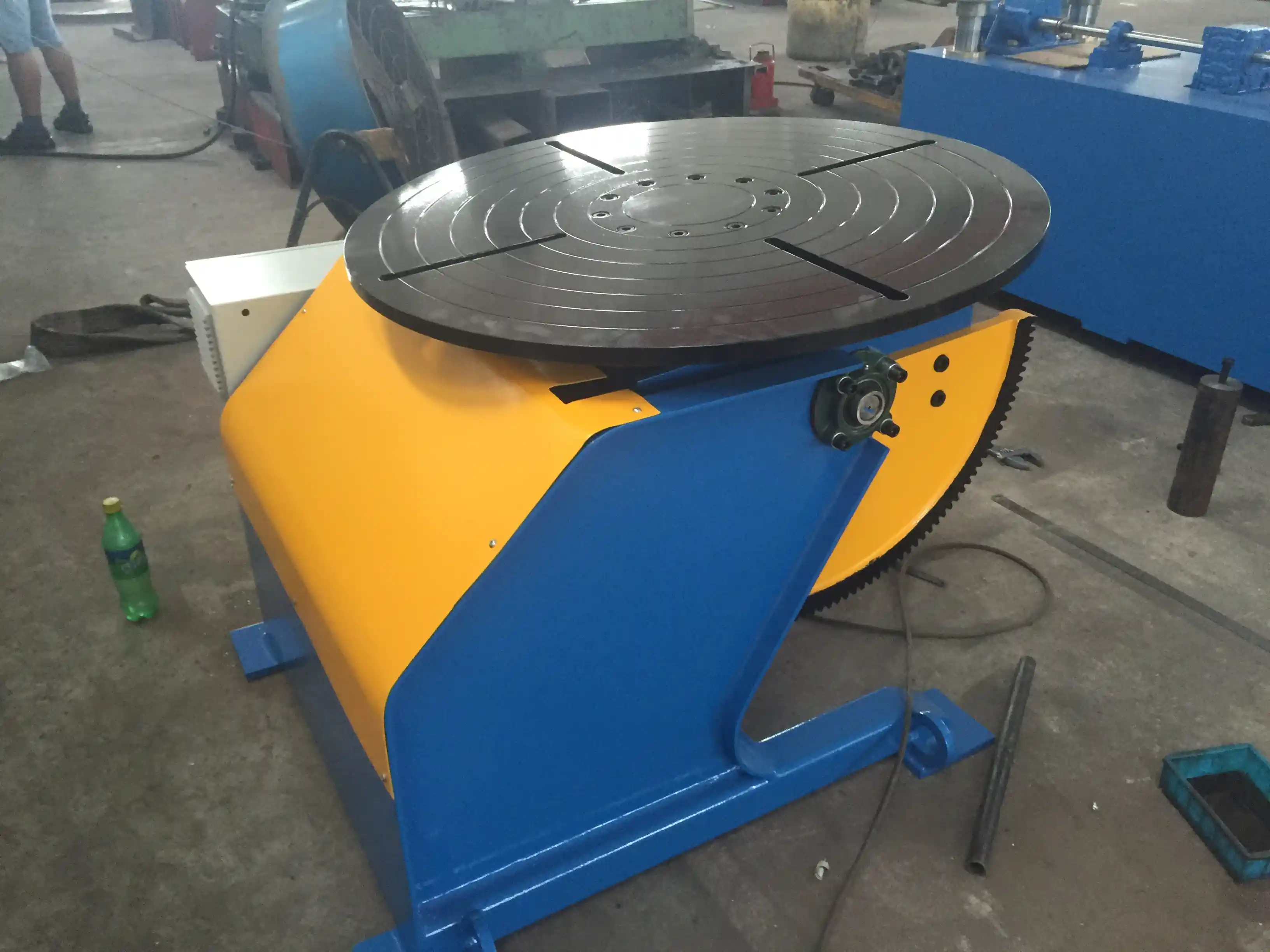
Precision and repeatability are the second pillar. Offshore fabrications demand consistent weld quality across hundreds of meters of seam, often in multi-pass procedures where a slight drift in positioning can cause a rejected joint. DNV expects positioners and rotators to specify and hold clear motion accuracy values. For example, our 3‑axis welding positioners carry a positioning accuracy of ±0.05 mm and repeatability of 0.02 mm, driven by servo motors with THK linear guides and SEW reducers. These are not marketing numbers. They are the figures a DNV surveyor will verify during a witnessed factory acceptance test.
Control system reliability is the third requirement. The control cabinet must provide physical protection commensurate with the operating environment. For offshore fabrication shops near the coast, an IP54 or higher rating is typical to prevent salt-laden moisture from degrading electronics. The control system should also support safety interlocks, emergency stops, and programmable weld sequences so that operators cannot inadvertently exceed parameters that compromise joint integrity.
Materials and welding of the equipment itself are also scrutinised. The steel used in the positioner’s turntable or a rotator’s roller frame must come from mills with certified material test reports. Weldments on the machinery are inspected for proper penetration and freedom from defects, because a cracked frame discovered during a platform project audit would invalidate the equipment certification and halt production.
How Welding Positioners and Rotators Meet DNV Standards
The most frequent question I receive from project engineers is whether standard industrial welding positioners can be upgraded to meet DNV certification without a complete redesign. The answer depends on the baseline design discipline of the original machine. Equipment built with loose tolerance stack-ups, undocumented materials, or basic open-loop drives will almost certainly fail the review.
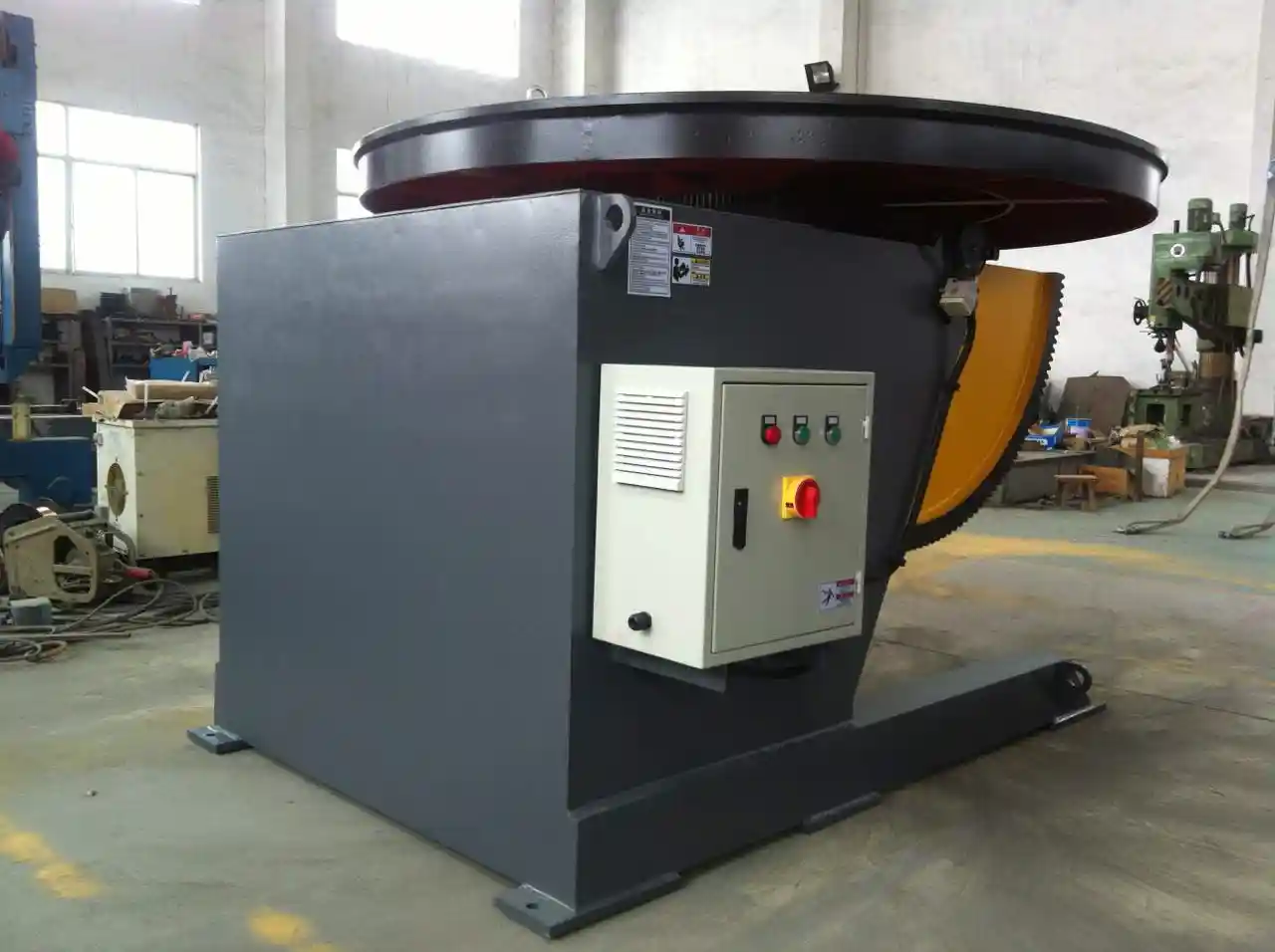
A DNV-grade positioner starts with a rigid structure. The baseframe must resist distortion from welding heat and heavy loads over years of service. We use heavy-duty box-beam construction with stress relief after welding to eliminate residual stresses that could cause geometry shifts. The slewing bearing, which carries both axial and radial loads during tilting, is a high-strength alloy steel component with rotation accuracy of ±0.05°; this is a critical point because excessive bearing play creates wobble that cannot be corrected by the control system.
Rotators face an additional challenge: consistent roller alignment under varying vessel diameters. Adjustable-height rotators must maintain tracking accuracy within 0.5 mm creep prevention to avoid axial drift during circumferential welding. Our variable-height systems use hydraulic elevation with Novo displacement sensors offering 0.01 mm resolution, and the Siemens PLC continuously monitors torque synchronisation between the driving rollers. Even a 60‑ton rotator with a 5‑metre diameter workpiece must maintain this synchronisation across a full 360‑degree rotation while submerged arc welding is in progress. A DNV surveyor will often request a demonstration with a representative test piece to verify this performance.
Manipulator zum Schweißens also come under scrutiny, particularly for column and boom deflection under load. For a machine like the LH8080 with 8‑metre horizontal and 8‑metre vertical travel, the positioning accuracy of ±0.1 mm per meter requires linear guideways and cycloidal reducers, not simple gear drives. Certification documentation must include the measured deflection values and prove they stay within acceptable limits when the boom is fully extended.
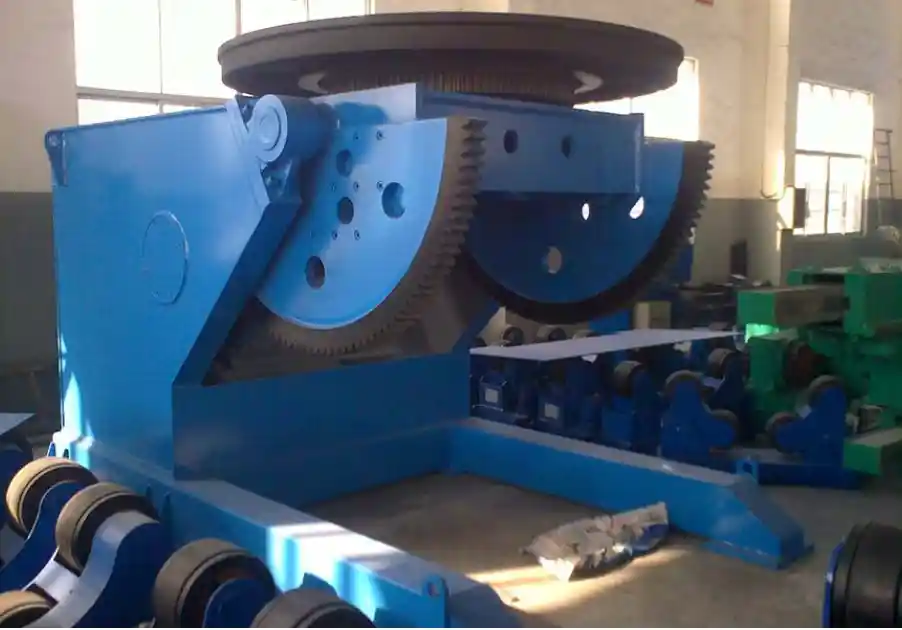
If your project involves robotic welding cells, the positioner must also support communication with ABB, KUKA, FANUC, or other industrial robot controllers. A DNV-certified robotic welding station typically requires that the positioner axes can be controlled synchronously with the robot, with positional data fed back to the robot controller for adaptive path correction. Our multi‑axis systems include Siemens PLC and HMI interfaces with pre‑configured communication protocols to simplify this integration.
Documentation and Traceability for DNV Certification
Nothing delays a certification audit more than missing paperwork. DNV requires a comprehensive documentation package that goes well beyond a generic user manual. The typical package for a welding positioner or rotator includes:
- Certified material test reports (EN 10204 type 3.1 or 3.2) for all structural steel, rollers, and bearing components.
- Weld procedure qualification records for any welded assembly on the machine, along with NDT inspection reports.
- Factory acceptance test reports demonstrating load capacity, motion accuracy, speed range, and safety function verification.
- Electrical schematics and control system architecture with IP rating certification for enclosures.
- Risk assessment documentation per machinery directive 2006/42/EC.
- CE or equivalent declaration of conformity.
What catches some suppliers is the requirement for third-party witnessed testing. It is not enough to run internal checks and stamp a certificate. DNV typically requires a surveyor to be present during load testing and functional verification of the complete system. We schedule these witness tests as part of the manufacturing timeline so that certification does not become a last-minute bottleneck.
For procurement teams reviewing supplier equipment before purchase, ask to see a sample documentation package for a previously certified machine, not just a certificate. The quality and completeness of that package tell you more about a manufacturer’s ability to deliver than a brochure.
Selecting Certified Equipment: A Practical Checklist
After working through multiple offshore platform projects, I have distilled the equipment evaluation into a few concrete checks that save time during the sourcing phase.
First, confirm that the manufacturer can name the specific DNV classification notation that applies to the equipment. For fabrication machinery, typical notations might be related to DNV‑ST‑E101 or similar offshore standards. If the supplier cannot reference the relevant standard without pausing to look it up, they probably have not completed certification for that equipment category before.
Second, request the fatigue analysis for the structural frame. A credible supplier will have either a conservative design with a healthy safety margin backed by FEA, or they will have historical service data from similar machines. If the response is that the machine is “designed for heavy duty” without numbers, that is not sufficient for a DNV review.
Third, inspect the drive train specification. A positioner that uses generic motor-gearbox combinations without documented backlash control will not maintain the required accuracy under alternating load. Certified machines typically specify the reducer type (e.g., cycloidal or planetary with stated backlash) and the motor brand with encoder resolution.
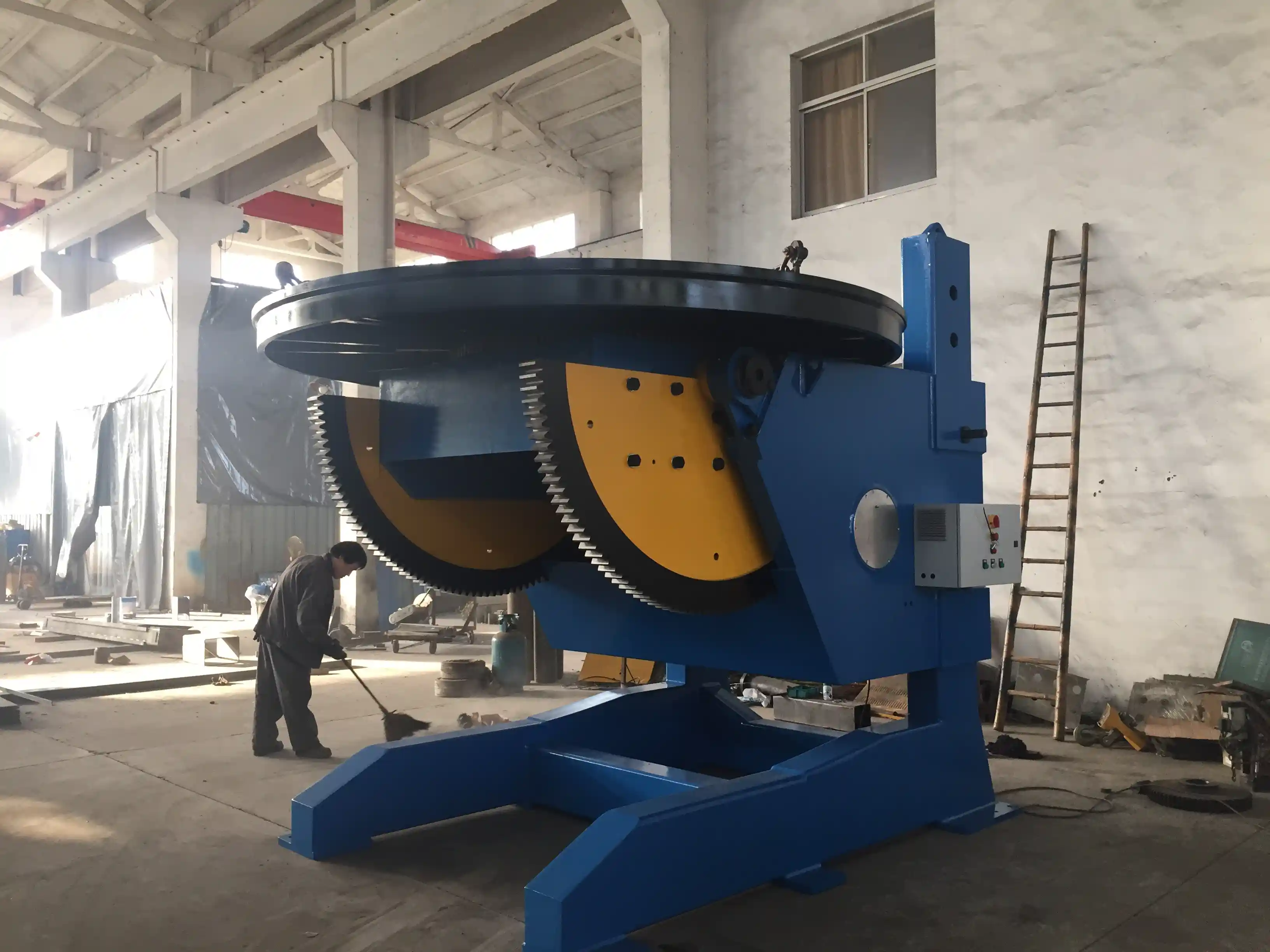
Fourth, ask about the availability of spare parts and service. An offshore project cannot afford to wait weeks for a replacement slewing bearing or control module. A supplier with a well-documented bill of materials and accessible after-sales support, including remote diagnostics, is far preferable. Our positioners include IP54‑rated components and are built to accept standard industrial spares, which simplifies long-term ownership.
Finally, before issuing a purchase order, define the acceptance testing protocol in the contract. Specify that a DNV surveyor will witness the load test and accuracy verification, and that the full documentation package will be delivered before shipment. This contractual clarity protects both the equipment investment and the project schedule.
If your facility is preparing to outfit a production line for offshore fabrication, it is worth confirming the certification requirements of your end client early in the equipment selection process. Different operators may request additional verification beyond the classification society’s minimum, and getting this clarity upfront prevents costly retrofits later.
What Offshore Fabricators Ask About DNV Equipment Certification
Does DNV certification apply only to the final fabricated structure, or also to the welding machinery itself?
DNV rules cover both the structure and the production equipment when the equipment plays a critical role in achieving required weld quality. For positioners, rotators, and manipulators used in offshore fabrication, certification confirms that the machinery will reliably produce welds that meet the structural code requirements, which is why classification societies audit the manufacturing equipment as well as the final product.
How long does DNV equipment certification take from order to final approval?
The timeline depends on the equipment complexity and whether the supplier has previous certification experience. For a standard welding rotator or positioner from a manufacturer with existing certified designs, the review and testing can be completed in six to ten weeks, assuming all documentation is prepared in advance. For custom-designed large-capacity systems, expect twelve to sixteen weeks including design review.
Can existing welding positioners in our workshop be retroactively certified?
In most cases, retroactive certification is not practical. The surveyor needs to verify materials, welds, and structural calculations at the manufacturing stage. Even if the machine is disassembled for inspection, the lack of traceable material certificates usually blocks certification. The better approach is to plan new equipment procurement with certification specified from the start.
Does DNV certification increase the equipment cost significantly?
The cost increment is typically 10 to 20 percent above a comparable uncertified machine, driven mainly by additional engineering documentation, third‑party witness testing, and the use of fully traceable materials. In offshore projects where a single day of production delay due to failed audit or machine breakdown far exceeds this premium, the investment is almost always justified. Share your project scope and we can provide a budget estimate for certified equipment that matches your tonnage and precision requirements. Contact Zhang Jian at jay@weldc.com or call +86‑13815101750.
Falls Sie daran interessiert sind, lesen Sie doch diese verwandten Artikel:
Außergewöhnlicher Anwendungsnutzen: Wie Schweißpositionierer mit fester Höhe den Fortschritt in der Offshore- und Schiffbauindustrie vorantreiben (Teil 2)
Probleme mit dem Absacken von Rohrleitungsbeschichtungen auf Schiffen: Wie intelligente Farbrollerhalter die Erfolgsquote auf 98% steigern
Wuxi ABK Professionelle Rotationsschweißgeräte: Präzisionsschweißlösung für den Druckbehälterbau
Schweißmanipulatoren für die Fertigung von Windtürmen: Revolutionierung der Produktionseffizienz
Präzisionsautomatisierung mit Schweißrotatoren für die industrielle Fertigung: Ein Leitfaden mit Fragen und Antworten von Experten
 English
  Español
  Français
  Deutsch
  Português
  Русский