
Heavy fabrication shops often choose between flame cutting and plasma cutting after looking only at machine price. That approach misses the larger cost drivers: cut speed, material range, edge quality, and downstream welding labor. Flame cutting, also called oxy-fuel cutting, remains the practical choice for thick carbon steel, while plasma cutting is faster on thin plate and is the only one of the two processes that can cut stainless steel and aluminum [1]. The comparison below separates catalog cost from process-level performance.
How Flame Cutting and Plasma Cutting Work
Flame Cutting: Oxidation, Not Melting
Flame cutting uses a fuel-gas flame to preheat the steel and then directs a high-purity oxygen jet at the heated zone. The oxygen reacts with the steel, forms oxide, and the jet ejects the slag. Because the process depends on an oxidation reaction, it works well on carbon steel and low-alloy steel but cannot reliably cut stainless steel, aluminum, or copper [2]. Once a CNC-Brennschneider is set correctly, the process is stable, portable, and highly effective on plate from roughly 25 mm up to several hundred millimeters.
Plasma Cutting: Constricted Arc and Conductive Materials
Plasma cutting uses a constricted electric arc between an electrode and the workpiece. The arc forms a high-temperature ionized gas jet that melts the material and blows it away. Plasma works on any electrically conductive material, including carbon steel, stainless steel, aluminum, copper, and nickel alloys [1]. It produces a narrower kerf and faster starts than flame cutting on typical sheet and medium plate. A CNC plasma cutter generally becomes the stronger production tool when most work is below 25–50 mm and includes nonferrous materials [2].
Cost Comparison: Equipment, Consumables, and Operating Cost
Machine price is only part of the decision. The table below compares the main cost factors reported in fabrication-shop comparisons [3].
| Cost factor | Brennschneiden | Plasmaschneiden |
|---|---|---|
| Entry-level CNC machine | Lower for a comparable table size | Higher, especially air or high-amperage systems |
| Torch and nozzle consumables | Lower tip and nozzle cost | Higher electrode, nozzle, and shield cost |
| Cutting gas | Oxygen plus fuel gas | Compressed air, nitrogen, or oxygen |
| Electrical power | Low; mainly motion and control power | Higher; DC plasma power supply required |
| Thin plate productivity, ≤12 mm | Slower | Faster, often by a wide margin |
| Thick plate productivity, >50 mm | Competitive to superior | May require a high-amperage system |
| Edge preparation cost | Can increase if surface roughness is high | Often lower on thin and nonferrous material |
The correct calculation is cost per acceptable cut part, not cost per consumable. Plasma may have higher consumable expense but can lower labor cost per part when it doubles thin-plate throughput. Flame may have lower consumable cost but can create grinding and fit-up expense when cut quality is not controlled [3].
Engineering review: To size a cutting machine properly, record the material grades, thickness distribution, cut length per shift, and required edge class. Send those four values to jay@weldc.com and evaluate flame cutting and plasma cutting as a production system rather than a torch-only decision.
Performance: Speed, Thickness, and Edge Quality
Cut Speed and Thickness Range
Cutting speed depends on material thickness, amperage, torch count, and gas selection. On 12 mm mild steel, plasma cutting is generally much faster than oxy-fuel. On 75 mm carbon steel and above, a multi-torch flame cutting setup can match or exceed the throughput of many plasma systems while consuming far less electrical power per meter of cut [3][5]. Machinery data tables show that flame cutting becomes more competitive as thickness increases because the limitation is oxygen reaction rate, not arc power [5].
Edge Quality and Tolerance
Edge quality is not a subjective judgment. It is classified by ISO 9013 using ranges from 1 to 5, where range 1 is the best finish and range 5 is the roughest. A fabrication shop should specify a required range before purchasing a cutting machine. Many suppliers will quote a machine without fixing the required perpendicularity, angularity, and roughness values. If the requirement is not defined, the hidden cost moves to grinding, weld repair, or slow fit-up [4].
Selecting the Right Process by Application
| Fabrication requirement | Preferred process | Reason |
|---|---|---|
| Carbon steel plate 6–25 mm, high volume | Plasma | Faster cutting and less dross on thin plate |
| Carbon steel plate 50–150 mm | Flame | Reliable heavy-plate cutting with lower capital cost |
| Stainless steel or aluminum sheet and plate | Plasma | Oxy-fuel cannot cut nonferrous metal |
| Bevel cutting for heavy structural weld preparation | Flame or plasma depending on thickness | Flame is proven on thick sections; plasma gives a narrow kerf on lighter plate |
| Field cutting with limited power | Flame | Portable and does not require a large plasma power supply |
| Mixed nonferrous and light carbon steel production | Plasma | One process covers multiple conductive materials |
Cutting is rarely an isolated station. The cut part determines fit-up gap, edge straightness, and bevel consistency at the welding cell. In pipeline and vessel work, cutting accuracy directly affects downstream alignment. > Cutting accuracy directly affects downstream fit-up. <Übermäßige Fehlausrichtung beim Schweißen von Rohrleitungen: Präzisionspositionierungslösung mit dem Schweißdrehtisch von Wuxi ABK> covers how a precision turntable corrects the fit-up error that often starts with rough cut edges.
From Cut Part to Welded Assembly
The cutting cell should not be specified separately from the welding and material-handling stations. A cut part with inconsistent edge quality slows down the entire line, even when the cutting table is fast. Once the part reaches fit-up, a positioner rotates the assembly so the operator or welding robot stays in the flat position. 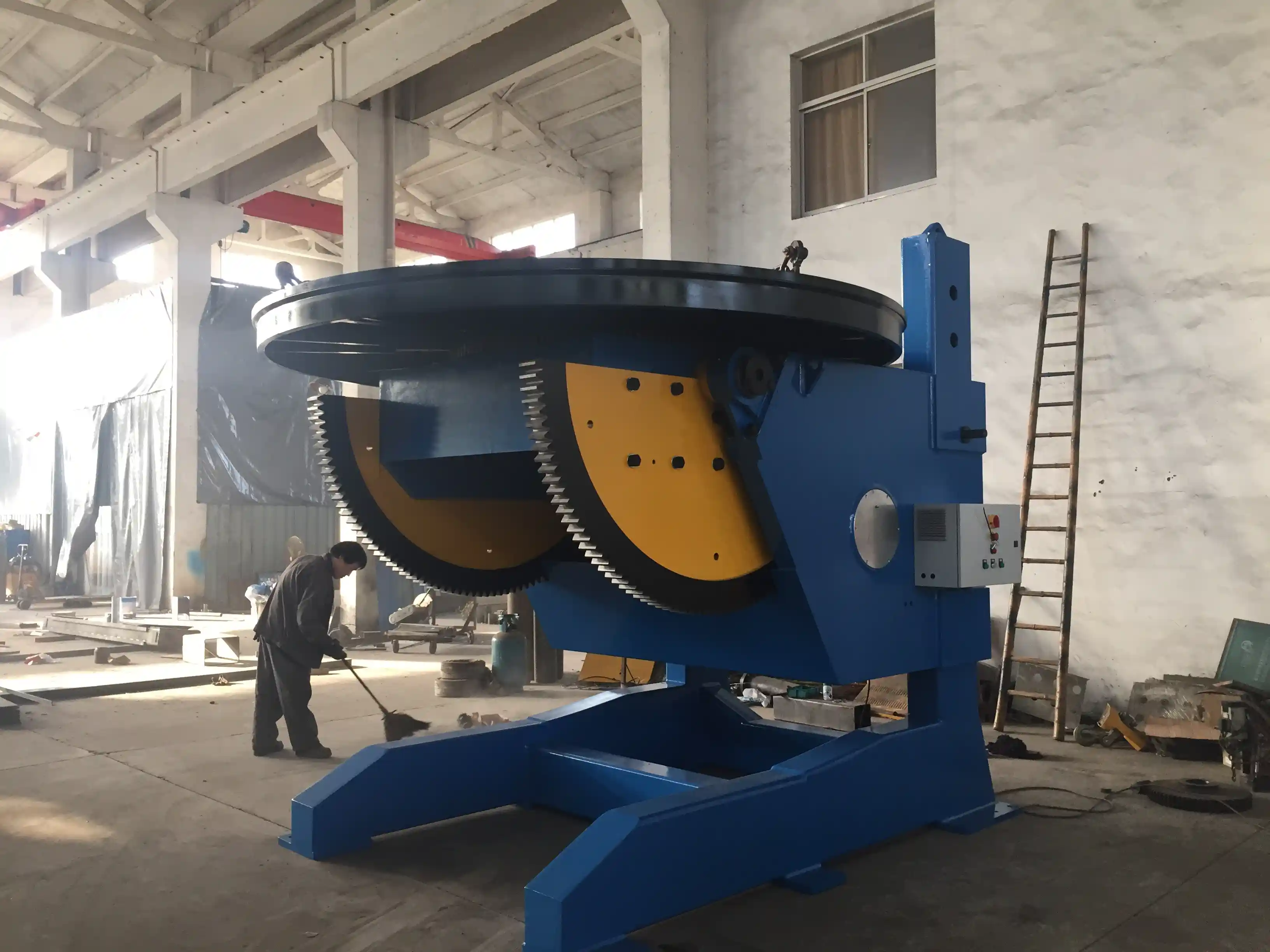
High-mix shops often operate two cutting cells: a plasma table for thin and nonferrous work, and a multi-torch flame cutter for heavy carbon steel. That combination avoids forcing one process outside its economic range. The cut parts are then transferred to automated positioning cells for repeatable weld fit-up. 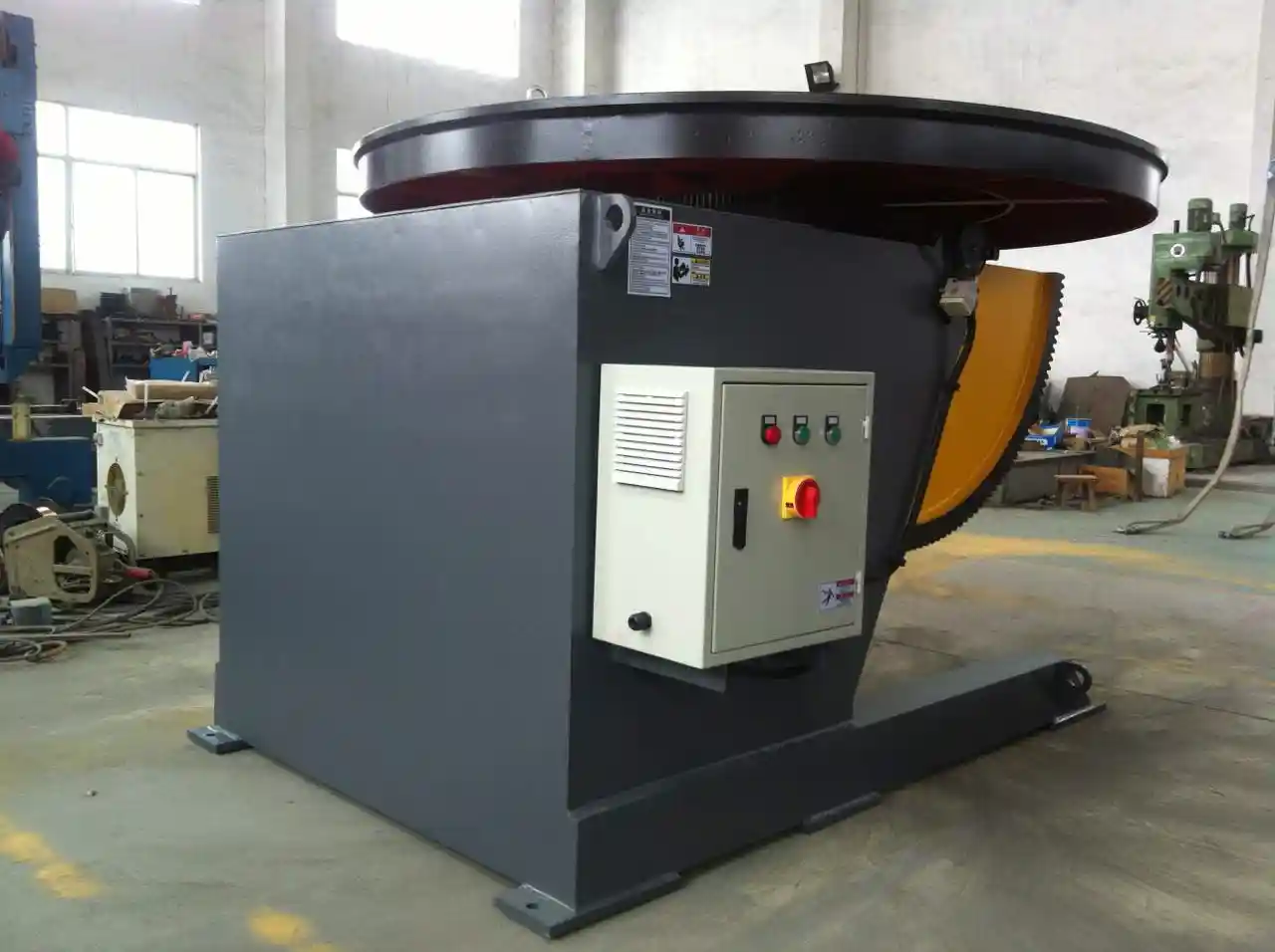
In heavy pipe and vessel work, the cut part is only the first station. <Rohrrotatoren und Drehwalzen: Unverzichtbare Ausrüstungen für die moderne Pipeline-Fertigung> covers how turning rolls keep long pipe joints aligned after plate cutting and fit-up.
Heavy rolling and positioning equipment often absorbs the accuracy errors that cutting must control. <Die tragende Säule der Schwerindustrie: Die herausragende Leistung von Walzgerüsten in Schlüsselprozessen> covers how roller stands support heavy plate and vessel sections through rotation-heavy fabrication steps.
Get a Cutting Cost and Performance Review
Flame versus plasma decisions should be made on your production data, not a catalog comparison. A practical review includes material grade and thickness mix, monthly tonnage, cut length per shift, required ISO 9013 edge range, downstream welding process, floor space, and available power. Send the list to jay@weldc.com or call +86-510-83555592. The technical team can help determine whether a CNC-Flammenschneider, CNC-Plasma-Schneider, or a combination of the two best fits your capacity and payback target. 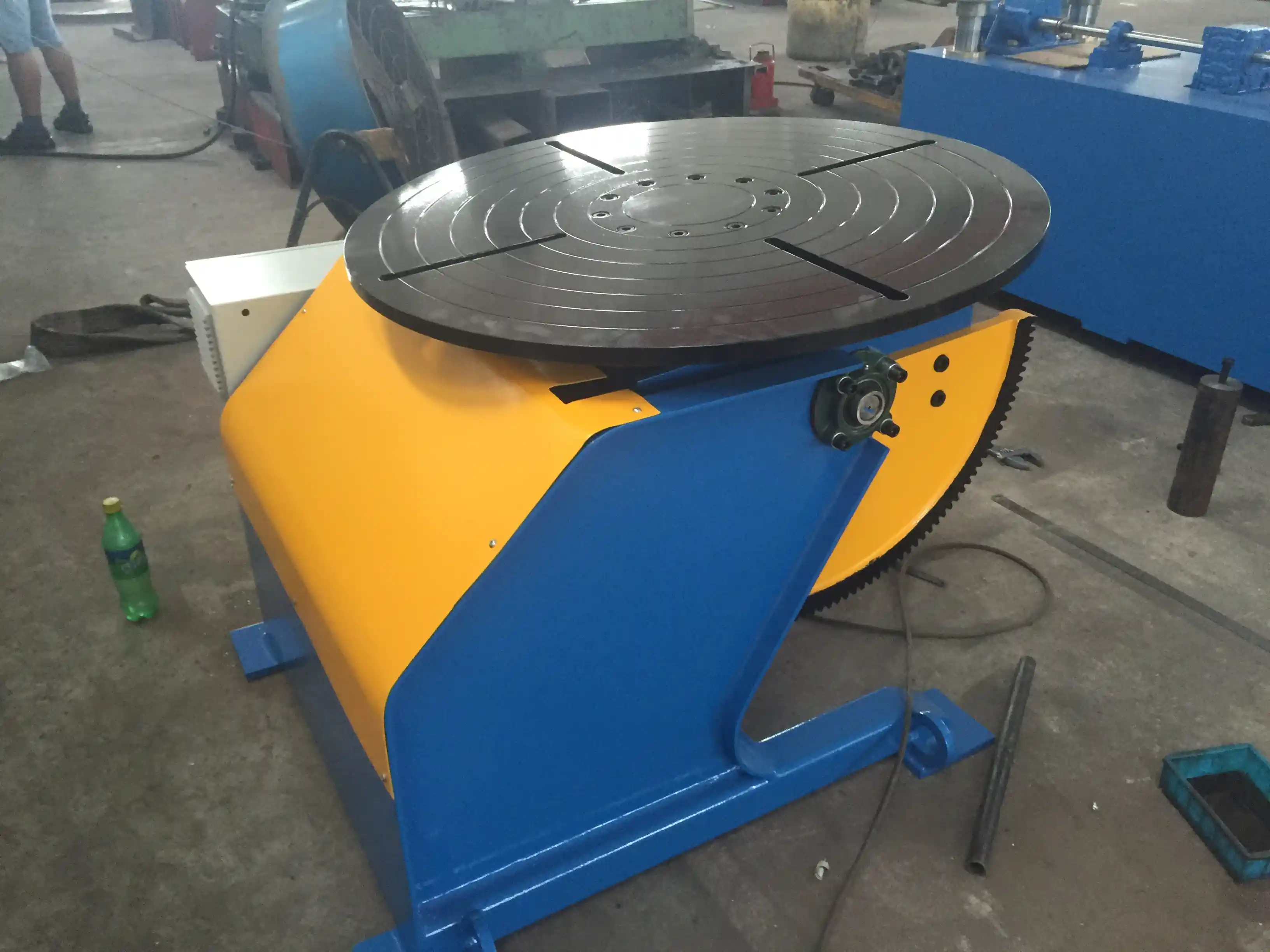
Flame Cutting vs Plasma Cutting: Frequently Asked Questions
Is plasma cutting always faster than flame cutting?
No. On thin and medium plate, plasma is usually faster. On thick carbon steel, especially above 50 mm, a multi-torch flame cutting system can match or exceed plasma throughput because the process is not limited by arc power in the same way [3][5].
Can a flame cutter cut stainless steel?
No. Conventional oxy-fuel cutting depends on steel oxidation, so it does not work on stainless steel, aluminum, or copper. Plasma cutting is the standard thermal choice for those conductive materials [2].
What does ISO 9013 range mean for a fabrication shop?
ISO 9013 groups thermal cuts into quality ranges from 1 to 5. Range 1 has the best edge quality and range 5 the roughest. Shops should define the maximum acceptable perpendicularity, angularity, and roughness before comparing machines; otherwise grinding and fit-up costs become uncontrolled [4].
Which process has the lower operating cost?
There is no single answer. Flame cutting often has lower equipment and consumable cost on thick carbon steel, while plasma cutting can reduce labor and rework on thin or nonferrous work. The correct metric is cost per acceptable cut part, including grinding and fit-up labor [3].
What thickness is outside the practical range for ordinary air plasma?
Practical thickness depends on system amperage and table technology. Many fabrication shops use air plasma up to about 25–50 mm on mild steel and switch to heavier oxy-fuel systems for very thick plate because flame cutting scales efficiently as thickness increases [5].
When should a shop run both flame and plasma cutting?
A high-mix shop usually benefits from both processes. Plasma handles thin plate, nonferrous material, and complex profiles, while a multi-torch flame cutter takes the heavy carbon steel work. Running separate cells prevents the shop from forcing one process outside its economic range [3].
References
[1] Weman K. Welding Processes Handbook. 2nd ed. Cambridge: Woodhead Publishing; 2012.
[2] American Welding Society. Welding Handbook, Volume 2: Welding Processes. 9th ed. Miami, FL: AWS; 2018.
[3] The Fabricator. “Oxyfuel vs. plasma cutting: Which process is right for your shop?” FMA Communications; 2019. Accessed January 2026. https://www.thefabricator.com/thefabricator/article/cuttingweldprep/oxyfuel-vs-plasma-cutting-which-process-is-right-for-your-shop
[4] ISO 9013:2017. Thermal cutting — Classification of thermal cuts — Geometrical product specification and quality tolerances. Geneva: International Organization for Standardization; 2017.
[5] Oberg E., et al. Machinery’s Handbook. 31st ed. New York: Industrial Press; 2020.
Falls Sie daran interessiert sind, lesen Sie doch diese verwandten Artikel:
Verbesserung der Qualität beim Schweißen von Rohren durch einen Hochpräzisions-Schweißpositionierer
Kernprobleme und hochpräzise Lösungen für Schweißpositionierer in der Windkraft- und Schiffbauindustrie: Umfassende technische Analyse
Übermäßige Fehlausrichtung beim Schweißen von Rohrleitungen: Präzisionspositionierungslösung mit dem Schweißdrehtisch von Wuxi ABK
Innovative Einsatzmöglichkeiten von 10-Tonnen-CNC-Schweißdrehvorrichtungen im Druckbehälterbau
 English
  Español
  Français
  Deutsch
  Português
  Русский