Selecting between a fixed-height and an adjustable-height welding rotator is not a trade-off between good and bad equipment. It is a trade-off between mechanical simplicity and mixed-diameter flexibility. The wrong choice rarely announces itself on day one. It appears later as lost setup time, uneven roller wear, or axial drift during circumferential welding. This guide breaks the decision into load capacity, diameter range, alignment tolerance, changeover frequency, and total lifecycle cost.
What Fixed and Adjustable Welding Rotators Actually Change
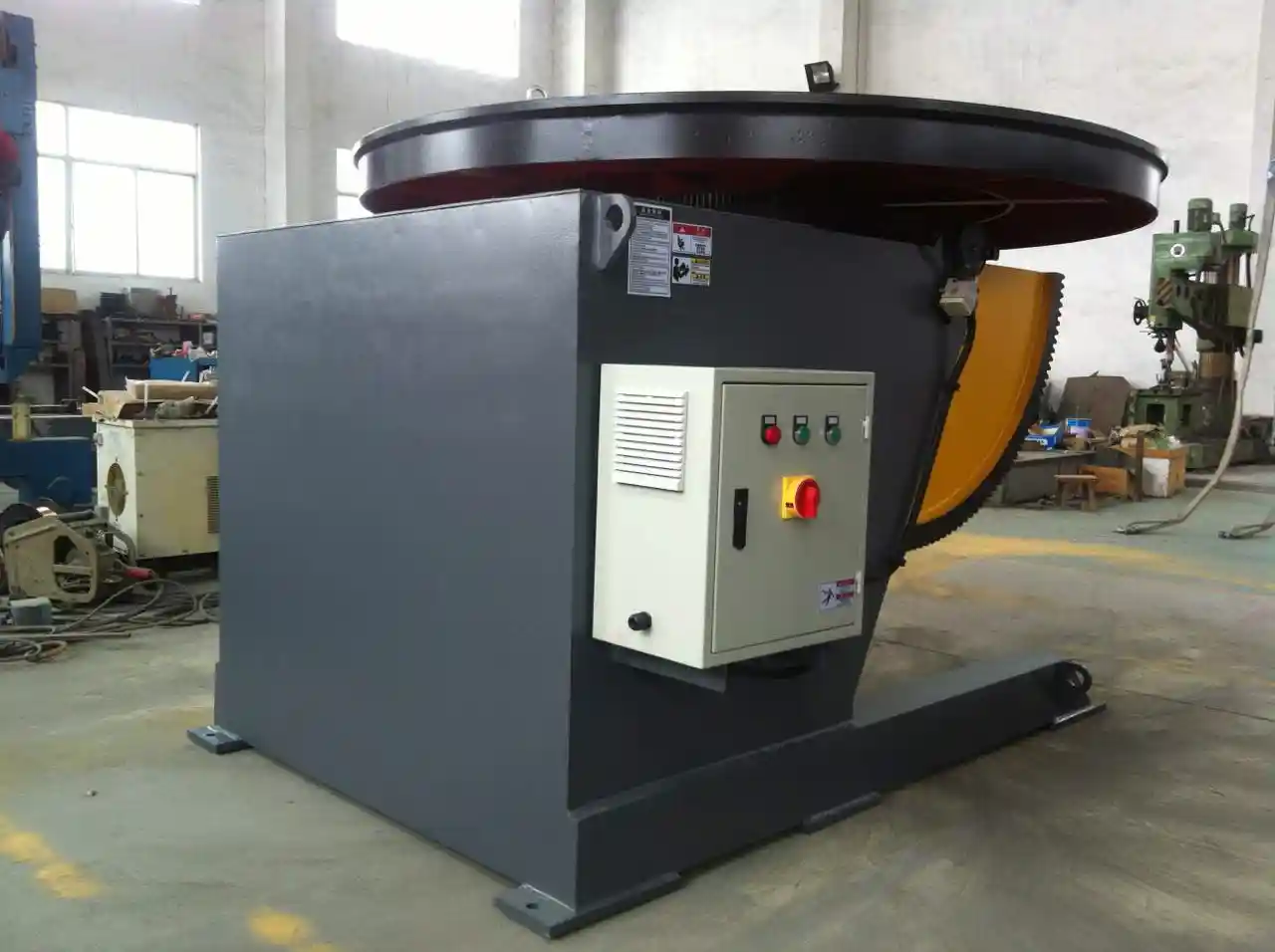
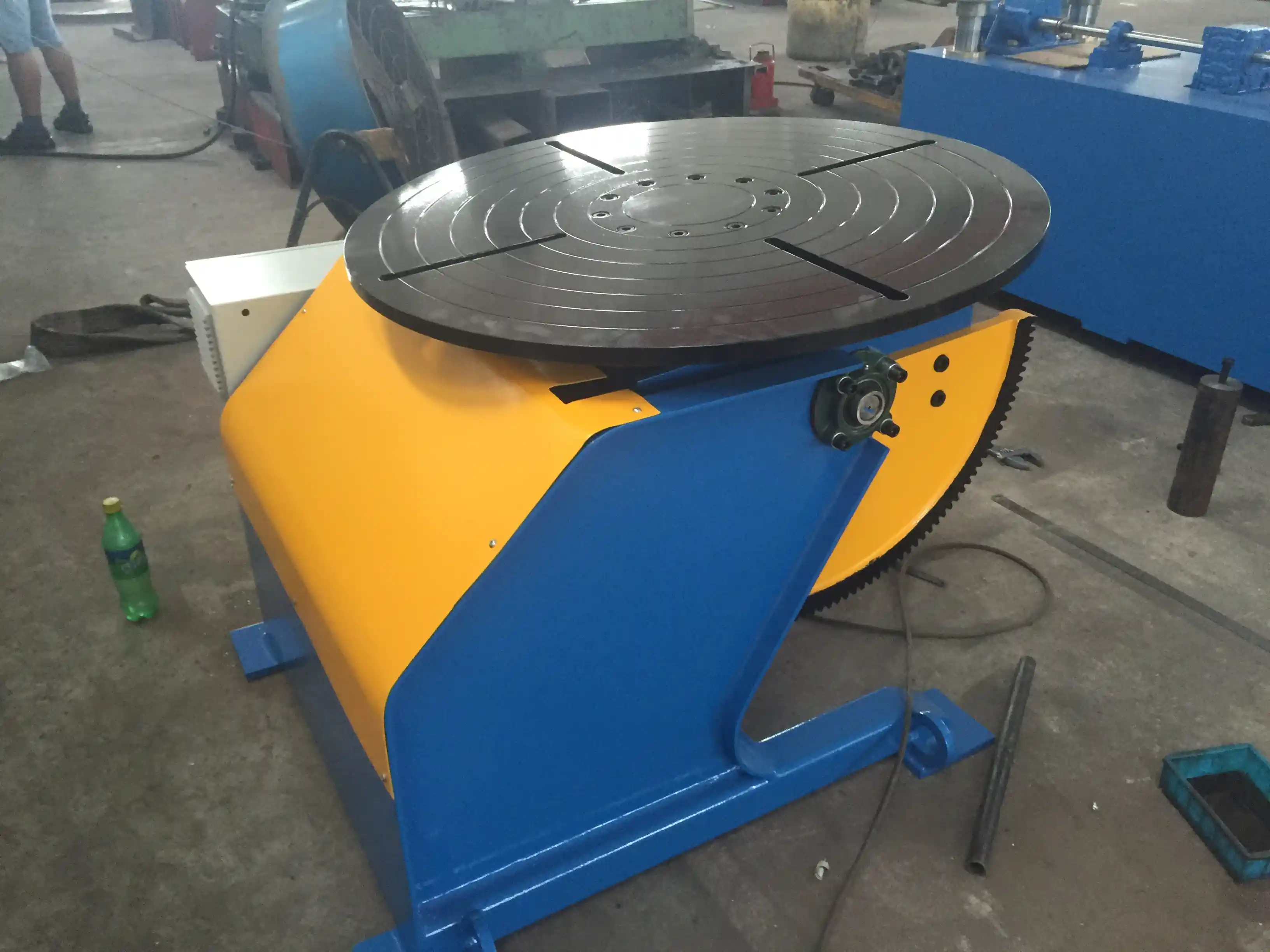
A welding rotator consists of a powered roller frame and an idler roller frame. The rollers support the cylindrical workpiece and rotate it at a controlled surface speed during welding. In a fixed-height design, the roller frames sit on a rigid base with a fixed working height. The machine depends on accurate mechanical alignment at installation. In an adjustable-height design, hydraulic or manual vertical adjustment changes the roller height, allowing the operator to align the contact geometry to different vessel diameters without reworking the foundation.
The difference matters most in production mix. A Standard-Schweißrotator is often the right starting point for a line that welds similar diameters every shift. An einstellbarer Schweißrotator is aimed at shops that move from one vessel size to another several times a week.
Load Capacity and Diameter Range
The first selection factor is not tonnage alone. A rotator must handle the static workpiece weight plus dynamic forces from rotation, eccentric loading, and the weight of tooling or tacked attachments. Both load capacity and diameter range must be checked together.
| Configuration | Model family | Rated load | Typical diameter range | Best application |
|---|---|---|---|---|
| Fixed height | HGZ-5 standard | 5 t | 250–2300 mm | Small repeated cylinders, HVAC and general fabrication |
| Fixed height | HGZ-100 standard | 100 t | 1000–5000 mm | Dedicated tank, wind tower, and pressure vessel lines |
| Adjustable height | HGK-5 | 5 t | 250–2800 mm | Small mixed-diameter pipe and vessel work |
| Adjustable height | HGK-100 | 100 t | 800–5000 mm | Heavy mixed-diameter cylindrical fabrication |
| Auto height | HGK-300 | 300 t | 1000–6000 mm | Super-large vessels and offshore structures |
The table above is product capability data from the WUXI ABK rotary equipment range. Other manufacturers list similar ratings, so the key is to match the rated range to the actual workpiece set, not to the largest vessel the shop may one day produce.
For a shop producing one dominant diameter, a fixed-height rotator can be stable and predictable. For a shop that moves between a 1,500 mm shell and a 4,000 mm vessel, an adjustable-height rotator reduces the need for roller repositioning and shimming.
In heavy fabrication, stable rotation and uniform load distribution often matter more than the lift mechanism itself. <Die tragende Säule der Schwerindustrie: Die herausragende Leistung von Walzgerüsten in Schlüsselprozessen> covers how roller stands perform in tank, pressure vessel, and wind tower applications.
Alignment Control and Weld Quality
Circumferential weld quality depends on keeping the weld joint under the welding torch within an acceptable lateral band. If the workpiece creeps axially during rotation, the arc moves off the joint, weld leg length becomes uneven, and the operator must stop and correct. In comprehensive quality systems, equipment capability is not a side issue; ISO 3834-2 treats process equipment and maintenance as part of the quality system [1].
Fixed-height rotators achieve alignment through rigid mounting and careful initial setup. Once the frames are levelled and the roller contact pattern is verified, there are few moving parts to drift. Adjustable-height rotators add hydraulic elevation and, on larger models, automatic centerline alignment. This introduces more components, but it also allows the operator to correct alignment at the machine rather than by adding shims or moving the roller frames.
The selection test is simple: if alignment problems occur mainly during initial installation, a fixed-height machine may be fine. If alignment must be changed frequently because vessel diameters change, adjustable height becomes a production tool rather than an added cost.
Both fixed and adjustable rotators rely on roller alignment to keep the weld joint within tolerance. <Präzisionsautomatisierung mit Schweißrotatoren für die industrielle Fertigung: Ein Leitfaden mit Fragen und Antworten von Experten> covers alignment, speed, and automation questions in more detail.
Production Mix and Changeover Efficiency
The economic case for adjustable-height equipment usually comes from changeover time. A job shop that welds 10 different diameters per month spends more time setting up than welding if every diameter change requires a crane, shims, and a laser alignment check. An adjustable-height rotator compresses that sequence into a hydraulic adjustment plus a quick verification pass.
A comparison based on typical production behavior:
- Fixed height: lower purchase cost, fewer hydraulic parts, shorter installation time, minimal setup after initial alignment.
- Adjustable height: higher purchase cost, wider diameter acceptance, faster changeover, easier integration with mixed-model production.
- Auto-height: highest cost and maximum flexibility for heavy vessels, offshore components, and large-diameter work.
This is also where an educational example helps. A wind tower line welding the same 4,000–5,000 mm tower sections across multiple shifts can justify a fixed-height 100-ton rotator because the center distance remains predictable. A pressure vessel job shop alternating between 1,200 mm and 4,800 mm shells will likely recover the extra investment of an adjustable-height rotator through shorter setup cycles and fewer misalignment corrections.
This is the point where many selection mistakes happen. To compare fixed and adjustable welding rotators against your actual workpiece range, send the minimum and maximum vessel diameter, total workpiece weight, and desired rotational speed to jay@weldc.com. Our engineering team at WUXI ABK can verify roller contact geometry and provide a technical recommendation.
For mixed-diameter pipe welding, turning roll selection often follows the same fixed-versus-adjustable logic. <Rohrrotatoren und Drehwalzen: Unverzichtbare Ausrüstungen für die moderne Pipeline-Fertigung> covers pipe fabrication configurations and production trade-offs.
Cost, Maintenance, and Floor Space
Fixed-height rotators tend to win on initial price and maintenance simplicity. Without hydraulic cylinders, hoses, and lift controls, there are fewer components to inspect and fewer leak points. Adjustable-height rotators have a higher initial price and require scheduled inspection of hydraulic seals, hoses, and position sensors.
That cost difference should be measured against labor. If an adjustable-height machine saves 30 minutes per diameter change and the shop changes diameter three times per week, the recovery period can be short. The additional maintenance cost remains a real operating expense, but it may be far smaller than the cost of idle welding cells.
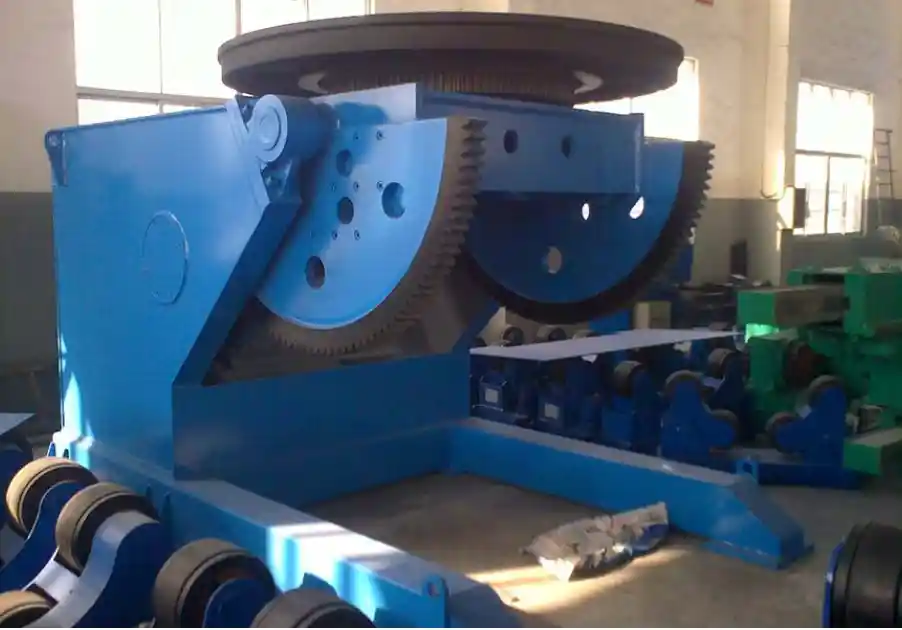
Floor space is another factor. Fixed-height machines can often sit closer to the floor and occupy a smaller vertical envelope. Adjustable-height machines need clearance for the lift mechanism and may require additional guarding. In shops with overhead crane travel, the raised workpiece centerline also affects crane hook height and manipulator boom clearance.
Selection Criteria Checklist
Use this checklist before requesting a quotation.
- Define the repeatable diameter set, not just the largest diameter.
- Calculate maximum load, including dynamic and eccentric forces.
- Set alignment tolerance and anti-creep requirements.
- Count expected diameter changes per month.
- Compare lifecycle cost, including setup labor and maintenance.
- Confirm safety requirements under EN ISO 12100 risk assessment principles [2].
- Verify documentation for structural welding under AWS D1.1 [3] or pressure vessel work under ASME Section VIII [4] if those codes apply.
A workable decision rule is to start with the production mix. If three or fewer diameters account for most output, fixed-height equipment is usually the lowest total-cost choice. If the shop is job-order based or grows primarily by adding new vessel sizes, adjustable-height equipment usually avoids the hidden cost of fixed alignment limits. No single rule replaces a full application review, but this sequence narrows the options quickly.
WUXI ABK Welding Rotator Support
WUXI ABK MACHINERY CO., LTD manufactures both fixed-height and adjustable-height welding rotators from 5 tons to 300 tons. The product range includes standard welding rotators, adjustable-height welding rotators, pipe rotator equipmentund automatic height-adjusting rotators for large vessels.
For a fixed-versus-adjustable comparison based on your vessel dimensions and production mix, contact Zhang Jian at WUXI ABK:
- E-Mail: jay@weldc.com
- Mobil: +86-13815101750
- Tel: +86-510-83555592
Häufig gestellte Fragen
What is the main difference between fixed and adjustable welding rotators?
A fixed-height welding rotator keeps the rollers at a set working height and relies on mechanical alignment. An adjustable-height welding rotator allows vertical adjustment, usually through hydraulic cylinders, so the roller contact geometry can be changed for different vessel diameters with less manual repositioning.
Which load capacity should I select for pressure vessel work?
The load capacity must cover the vessel weight plus dynamic and eccentric loads. For small pressure vessels, 5–20 tons is often sufficient. Large storage tanks, reactor shells, and wind tower sections commonly require 100 tons or more. The diameter range and alignment accuracy should be evaluated together with tonnage.
Is an adjustable-height rotator worth the higher price?
In mixed-diameter production, an adjustable-height rotator can reduce setup time and improve centerline control across vessel sizes. In a dedicated line with a repeatable diameter, a fixed-height rotator may provide a better return because the adjustment feature is not used often enough to justify the extra cost.
Can a fixed-height rotator handle multiple workpiece diameters?
Yes, within its rated diameter range. The rollers can support different diameters, but the operator may need to realign the frames or use shims when the diameter changes significantly. An adjustable-height rotator makes those changes faster and more controlled.
What alignment accuracy should a welding rotator maintain?
Acceptable alignment varies by weld code and joint design. For automated circumferential welding, axial creep should be controlled to a small and repeatable value. Equipment documentation should state the anti-creep mechanism, position feedback, and any relevant calibration requirements under ISO 3834-2 [1].
References
[1] ISO 3834-2:2021, Quality requirements for fusion welding of metallic materials — Part 2: Comprehensive quality requirements. International Organization for Standardization.
[2] EN ISO 12100:2010, Safety of machinery — General principles for design — Risk assessment and risk reduction. European Committee for Standardization.
[3] AWS D1.1/D1.1M:2020, Structural Welding Code—Steel. American Welding Society.
[4] ASME Boiler and Pressure Vessel Code, Section VIII, Division 1, Pressure Vessels. American Society of Mechanical Engineers.
Falls Sie daran interessiert sind, lesen Sie doch diese verwandten Artikel:
Probleme mit dem Absacken von Rohrleitungsbeschichtungen auf Schiffen: Wie intelligente Farbrollerhalter die Erfolgsquote auf 98% steigern
Eine Revolution im Schiffbau: Wie Schweißpositionierer Qualität und Effizienz verbessern
 English
  Español
  Français
  Deutsch
  Português
  Русский