As a welding automation engineer with over twenty years in the field, I’ve seen boiler production line customization become essential for shops that must handle multiple tube diameters and panel configurations on a single line. A line designed for one set of tube sizes often fails when the next contract calls for different dimensions. This article draws on our experience at Wuxi ABK Machinery to explain the machine selection, fixturing, and process adjustments that allow a boiler production line to adapt to varying tube sizes and wall panels without sacrificing weld quality or throughput.
What Machine Adjustments Support Different Tube Sizes in a Boiler Line?
The first equipment to evaluate when changing tube diameter is the tube‑to‑tube welding machine and the booster bender. The tube‑to‑tube welding machine we specify for boiler applications uses interchangeable clamp dies that accommodate tube outside diameters from 38 mm up to 89 mm without changing the entire fixture. On the bending side, the Rohrverstärker-Biegemaschine requires a mandrel change and possibly a wiper die swap when moving from, say, a 51 mm tube to a 63.5 mm tube. The time penalty is about 15 minutes per setup if the tooling is pre‑mounted on quick‑change cassettes. For production lines that bounce between two or three tube diameters daily, we recommend keeping dedicated tooling sets on a cart beside the machine to keep changeover under five minutes.
Beyond the obvious welding and bending stations, the Schweißmanipulator that handles longitudinal seams on membrane panels must be re‑centered when the tube‑to‑tube centre distance changes. Our LH series manipulators use a box‑beam column with linear guideways, so the operator simply jogs the boom to the new horizontal position and saves the offset in the PLC. That takes less than a minute.
How Do Welding Fixtures Adapt for Different Panel Layouts in Boiler Lines?
When a boiler design moves from a narrow water‑wall panel with 76 mm tube spacing to a wider economizer layout, the Membranplatten-Schweißmaschine must realign its wire feed torches and clamping fingers. We build adjustment into the cross‑beam that carries the torch bank. Slotted mounts let the technician shift each torch laterally by hand, and a laser line projected from the machine frame confirms alignment to the new tube centre marks before welding.
Clamping changes are just as critical. On our Plattenbiegemaschines, die sets are modular and can be split to match the new tube‑to‑bar pitch. The hydraulic clamping pressure is programmable, so the same machine can grip a 4 mm thick mild‑steel bar with one set of parameters and a 6 mm stainless bar with another, reducing marring.
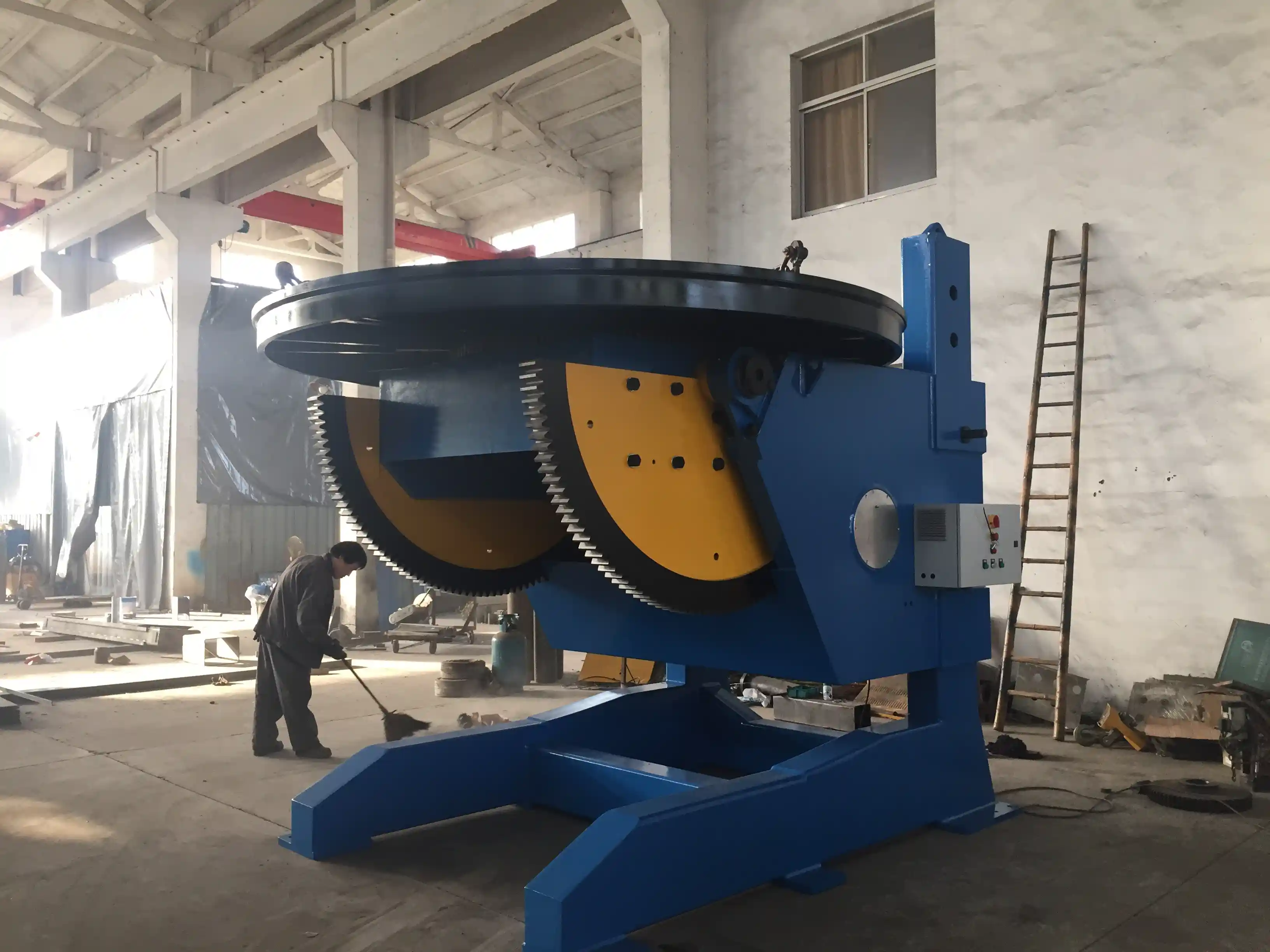
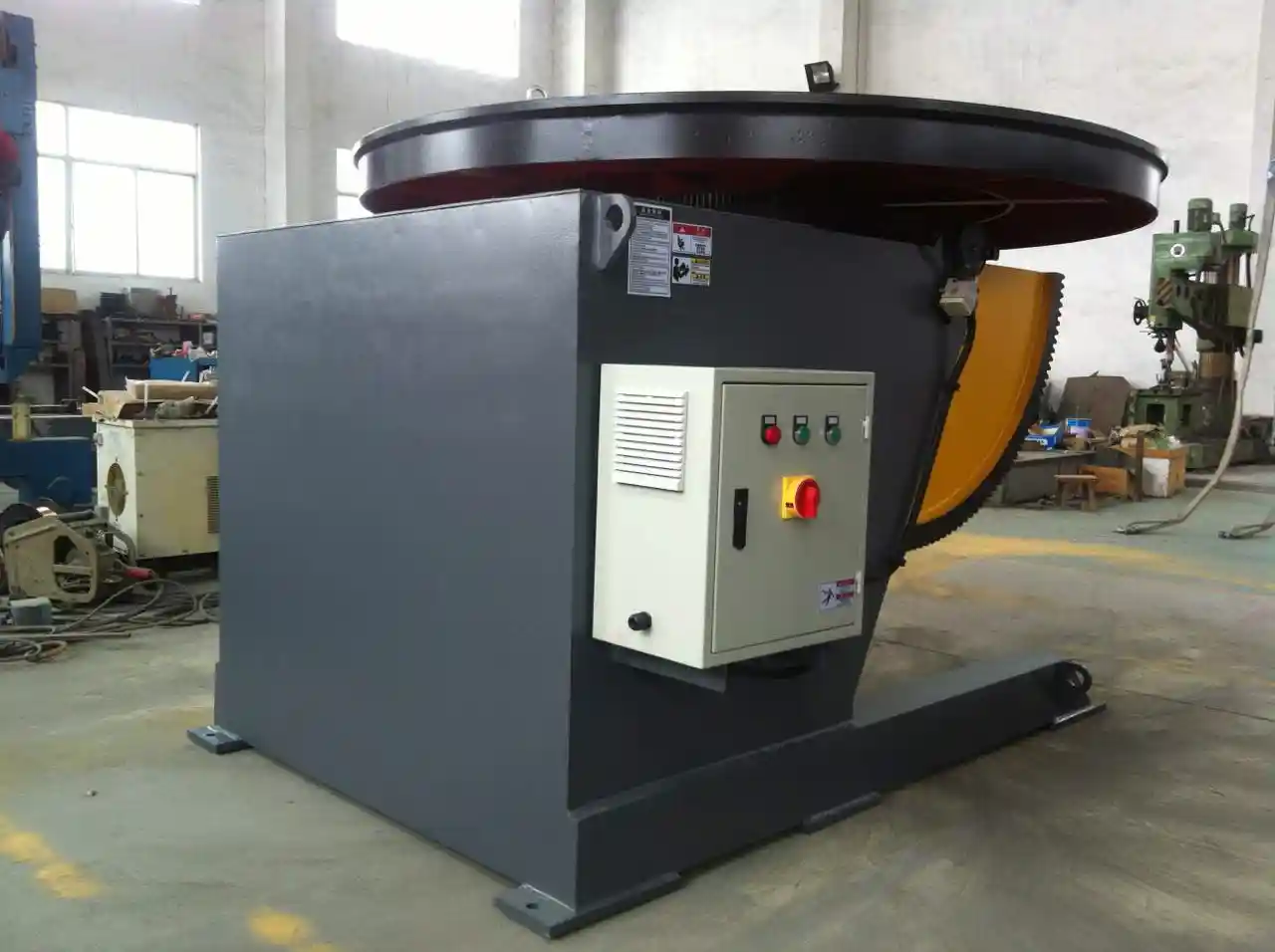
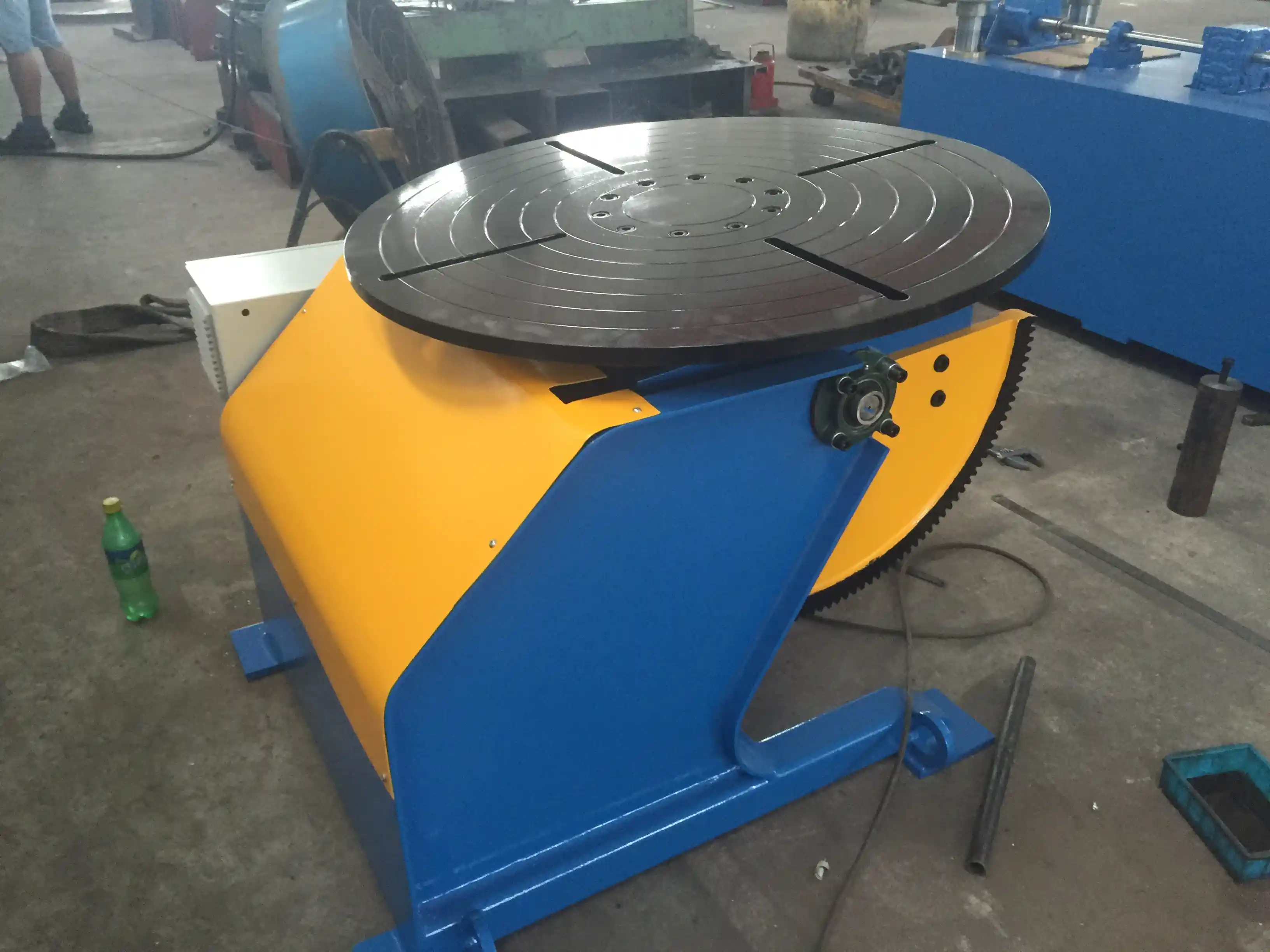
For shops that produce multiple panel widths, a flexible fixture table downstream of the welder keeps the panel flat during assembly. We often pair the membrane panel machine with an adjustable‑height welding positioner that allows the operator to present the joint at the optimum flat position regardless of tube diameter. The table below shows how three of our fixed‑height positioners cover the typical range of boiler tube panel assembly.
| Modell | Tragfähigkeit | Worktable Diameter | Rotationsgeschwindigkeit | Typical Panel Width |
|---|---|---|---|---|
| HBJ‑10 | 1,000 kg | 1,200 mm | 0.05 – 0.5 rpm | up to 800 mm |
| HBJ‑20 | 2,000 kg | 1,200 mm | 0.05 – 0.5 rpm | up to 1,200 mm |
| HBJ‑30 | 3,000 kg | 1,400 mm | 0.05 – 0.5 rpm | up to 1,500 mm |
These positioners share the same Siemens PLC platform, so the weld programs developed for one panel size transfer directly to a larger capacity machine when the shop moves to a longer tube‑panel contract.
Where Does CNC Cutting Fit Into a Custom Boiler Production Line?
Before any welding begins, the tubes and bars need to be cut to length, and here the recipe changes with tube diameter because the bevel geometry on the tube end is often specified by the boiler code. A CNC-Plasmaschneidmaschine with a rotating‑pipe attachment can cut and bevel a bundle of tubes in one cycle. When tube diameter increases, the operator changes the cutting program and, if the wall thickness exceeds the plasma system’s rated capacity on stainless, we may switch to a CNC-Brennschneidmaschine that uses a three‑torch rotating head.
The real productivity gain comes from saving the cutting parameters as named recipes in the CNC control. Toggle the recipe for “63.5 × 4.5 SA‑210” and the machine sets the travel speed, torch height, and preheat time automatically. This eliminates the trial cuts that used to consume half an hour every time the line switched tube sizes.
If your program involves stainless‑steel boiler tubes thinner than 4 mm or heat‑exchanger fin bars where the cut edge quality affects downstream calibration, it is worth confirming the impact of cut finish on the fin‑bar calibration machine before finalizing your cutting method; reach out at jay@weldc.com.
How Can Automation Help Switch Between Tube Specifications Quickly?
We’ve moved away from hard‑wired limit switches to recipe‑driven automation on the Schweißmanipulator and the gantry welder for boiler panels. All the key parameters—boom travel, vertical position, welding speed, wire feed, oscillation width—are tied to a job number. The operator scans the barcode on the work order and the machine sets itself.
This dramatically cuts the risk of running yesterday’s parameters on today’s different tube diameter. I recall a membrane panel line we commissioned in 2019 that produced water‑wall panels in three tube spacings. Before we implemented recipe control, the operator had to write down the torch spacing and speed settings on a whiteboard, which led to one mismatch per week on average. After we moved to a PLC‑based recipe interface linked to the ERP, that dropped to zero mismatches across six months.
For a line that must switch between tube specifications several times per shift, the goal is to get the recipe change time below 90 seconds. With the Siemens touchscreen HMI on our 3‑axis positioners and welding manipulators, an operator can load a new recipe while the previous panel is still being unloaded, so the changeover time is hidden inside the part‑handling window.
How Do You Maintain Consistent Weld Quality Across Mixed Production Runs?
Customizing for tube size variance without sacrificing weld quality requires two things: in‑process monitoring and robust fixturing. We install laser vision seam tracking on the Schweißmanipulator that follows the joint in real time, compensating for the slight variations in tube straightness that become more noticeable with smaller diameters. When the tube is 38 mm, a 1 mm bow creates a bigger percentage offset than on a 76 mm tube, and the seam tracker corrects the torch path automatically.
On the fixturing side, the Schweißpositionierer und die Schweißrotator must hold the workpiece concentric. For boiler tube panels, we use a combination of self‑aligning rollers on the rotator and a fixed tailstock with a live centre. The tailstock applies constant pressure via a hydraulic cylinder, so any thermal expansion during welding is absorbed. When the tube diameter changes, the roller pitch is adjusted by loosening four bolts and sliding the roller housing along a calibrated rail. The rail itself is marked for the common tube sizes, so no measurement is needed.
Consistent quality also depends on the skill of the operator in verifying the first‑off panel. Even with automation, I recommend a physical gauge check of the first panel’s tube spacing and bar alignment after every diameter change. The gauge we use is a simple go/no‑go comb that slips over three adjacent tubes; if it drops on, the spacing is correct. That single check catches any programming offset before the line runs a batch.
Adapting Your Boiler Line Without Replacing the Core Machines
A boiler production line is a long‑term investment. When you face a contract that demands tube diameters outside your current machine range, you don’t need to start over. In most cases, the welding manipulator, positioner, and cutting machine are already sized for the structural load; the modification lies in the tooling, the clamping, and the programmed parameters. I’ve seen too many shops buy duplicate machines for a new tube size when a well‑planned customization of the existing line would have met the spec.
If your next program involves tube sizes or panel layouts that push the limits of your current equipment, we can walk through the specific tooling and fixture changes needed. Write down the tube outside diameter, wall thickness, panel width, and material grade—then send them to jay@weldc.com or call +86‑510‑83555592. We’ll propose a reconfiguration plan that keeps your existing core machines while adding the right accessories to handle the new dimensions.
Common Questions About Boiler Production Line Customization
Does changing tube size affect the welding procedure qualification?
It can. When the tube wall thickness changes enough to fall outside the qualified range of your existing Welding Procedure Specification (WPS), you need a new qualification or a PQR that supports the extended thickness. I always advise customers to check their welding code before accepting a contract; we can supply the machine travel speed and heat input data to support that re‑qualification.
How much floor space does a flexible boiler panel line really need?
A basic line for water‑wall panels with one tube‑to‑tube welder, one membrane panel welder, and a bending station requires roughly 18 meters by 6 meters, including material staging. Adding an adjustable welding positioner for large panels extends the length to about 22 meters. The area stays the same regardless of tube diameter because the machines themselves don’t grow; only the tooling changes.
Can a tube bender handle both carbon steel and stainless boiler tubes on the same line?
Yes, but the tooling material matters. Stainless tubes gall more easily, so the pressure die should be aluminium‑bronze or hardened tool steel with a polished surface. Carbon‑steel tooling can score the stainless, creating a starting point for corrosion. We supply interchangeable die sets for mixed‑material production, and the bending parameters—clamp pressure, boost speed—are stored as separate recipes.
Are there hidden costs when customizing a line for multiple tube layouts?
The main hidden cost is the time lost during changeover if the line isn’t designed for quick tool swaps. A dedicated tool cart, laser alignment aids, and barcode‑driven recipe loading reduce that time to a few minutes, but shops that skip those spend an extra 20–30 minutes per switch. If your production schedule involves two or more changes per week, that adds up to over 50 lost hours per year.
Is it better to buy separate dedicated machines for each tube specification?
In most cases, no. A single welding manipulator with programmable settings and a quick‑change fixture set costs less than two machines and takes up half the floor space. Dedicated machines only make sense when the production volume for each tube size is high enough to run a separate dedicated line non‑stop, which is rare outside of high‑volume boiler OEMs. Share your tube size range and monthly output targets with our team at jay@weldc.com and we’ll help you determine whether one flexible line or two dedicated stations deliver the faster payback.
Falls Sie daran interessiert sind, lesen Sie doch diese verwandten Artikel:
Die tragende Säule der Schwerindustrie: Die herausragende Leistung von Walzgerüsten in Schlüsselprozessen
Rohrrotatoren und Drehwalzen: Unverzichtbare Ausrüstungen für die moderne Pipeline-Fertigung
Geringe Effizienz beim Schweißen von Rohrleitungsbaugruppen: Wie intelligente Rollengestelle die Produktivität steigern – 50%
Verbesserung der Qualität beim Schweißen von Rohren durch einen Hochpräzisions-Schweißpositionierer
Schweißmanipulatoren für die Fertigung von Windtürmen: Revolutionierung der Produktionseffizienz
 English
  Español
  Français
  Deutsch
  Português
  Русский