
Water treatment plants depend on tanks and pressure vessels that must remain tight through years of wet service, chemical exposure, and repeated fill and drain cycles. The fabrication equipment behind those vessels determines whether shell roundness stays within tolerance, seam tracking remains consistent, and weld quality can be repeated across multiple tanks. For water treatment tank and vessel fabrication equipment, the practical starting point is not one machine but a matched line: plate handling and cutting, rolling, fit-up, rotation, welding, and inspection. The most effective configurations coordinate those steps so that plate alignment, weld access, and rotation speed support the joint design instead of fighting it.
Why Water Treatment Tank Fabrication Starts with Fit-Up and Alignment
Water treatment vessels rarely fail first at a cosmetic weld. They fail at joint mismatch, uneven gaps, or distortion that makes a weld difficult to inspect and more likely to leak during hydrostatic testing. Fit-up equipment should hold shell courses in a stable circular position while still allowing controlled adjustment. Hydraulic alignment carriages and fit-up rotators are useful here because they support large cylindrical sections and adjust height to bring adjacent edges into alignment. The goal is to reduce manual jacking and wedging before longitudinal seam welding begins.
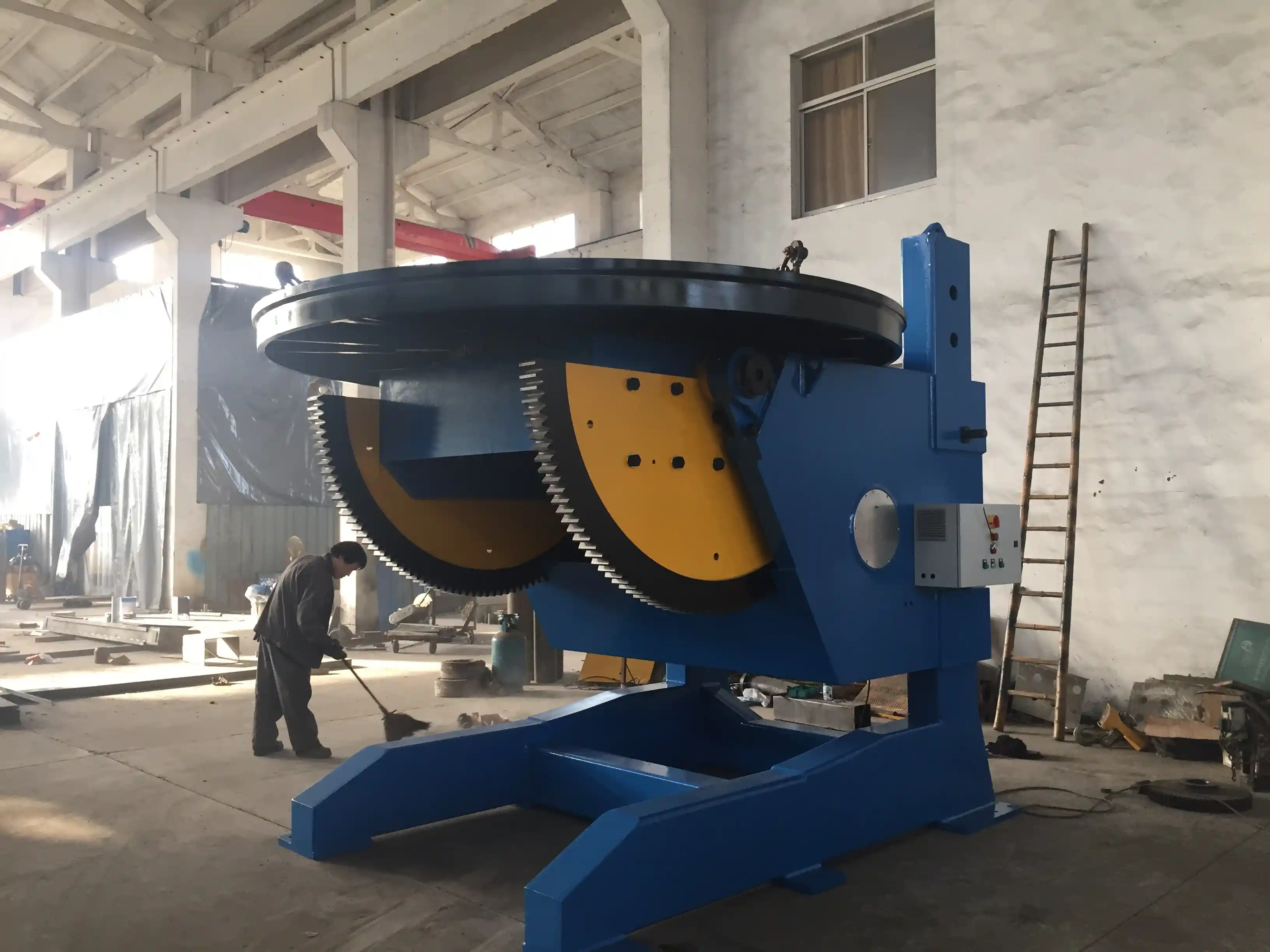
Carbon steel and stainless steel vessels need different handling. Stainless steel requires cleaner surfaces and more careful control of arc strikes, while carbon steel may tolerate more correction. Equipment with controlled roller movement and laser or digital position feedback helps establish repeatable alignment before the first arc is struck.
| Fabrication step | Equipment type | Selection focus |
|---|---|---|
| Plate preparation | CNC-Schneidemaschine | Square edges and accurate shell blanks |
| Shell rolling | Plate bending or rolling system | Roundness and edge parallelism |
| Fit-up | Fit-up rotator or alignment carriage | Gap control and root alignment |
| Schweißen | Manipulator zum Schweißen or gantry | Stable travel speed and torch position |
| Drehung | Welding rotator or positioner | Constant speed under changing load |
| Inspection | UT or radiography support fixtures | Access and repeatable reference positions |
Tank and vessel fabrication relies on alignment before welding to avoid stored stress and later distortion. <Verbesserung von Qualität und Effizienz bei der Herstellung von Tanks und Druckbehältern: Der zentrale Anwendungswert von Positionierern> covers how positioners help hold vessel sections in a stable orientation during long seam work.
Rotators and Positioners for Shell and Circumferential Welding
Once the shell course is rolled and tacked, the next requirement is controlled rotation. A welding rotator supports the vessel while a manipulator or submerged arc welding tractor carries the torch along the joint. The rotator must match the vessel diameter, weight, and length without allowing axial creep. Water treatment plants may fabricate small filter vessels, large clarifier tanks, and pressure vessels for membrane or chemical feed systems, so rotator capacity should be calculated from the actual load plus fixtures, not only the bare shell weight.
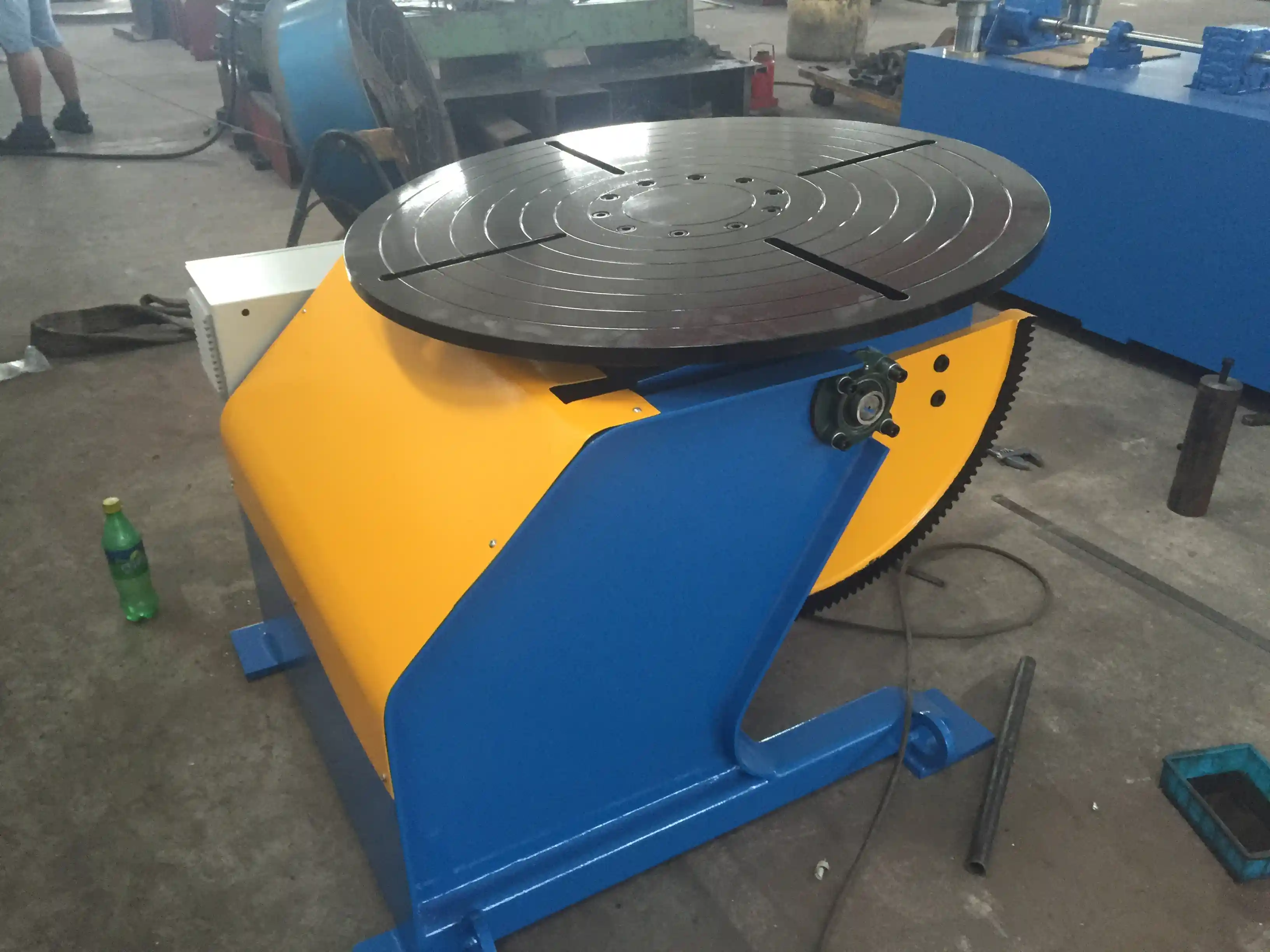
Supplied rotator options range from 5 ton units with approximately 250 to 2300 mm diameter capacity up to 200 ton systems for 800 to 5000 mm diameter workpieces. Larger systems use hydraulic elevation and automatic centerline alignment to limit creep during long circumferential welds. Positioning is not only rotation. It is also the ability to tilt a vessel or component so the welder can work in the flat or horizontal position. Fixed and adjustable height positioners, head and tail positioners, and three-axis positioners serve different vessel shapes. For stub connections, nozzle welding, and manway reinforcement, a positioner helps keep the weld in the most controllable orientation.
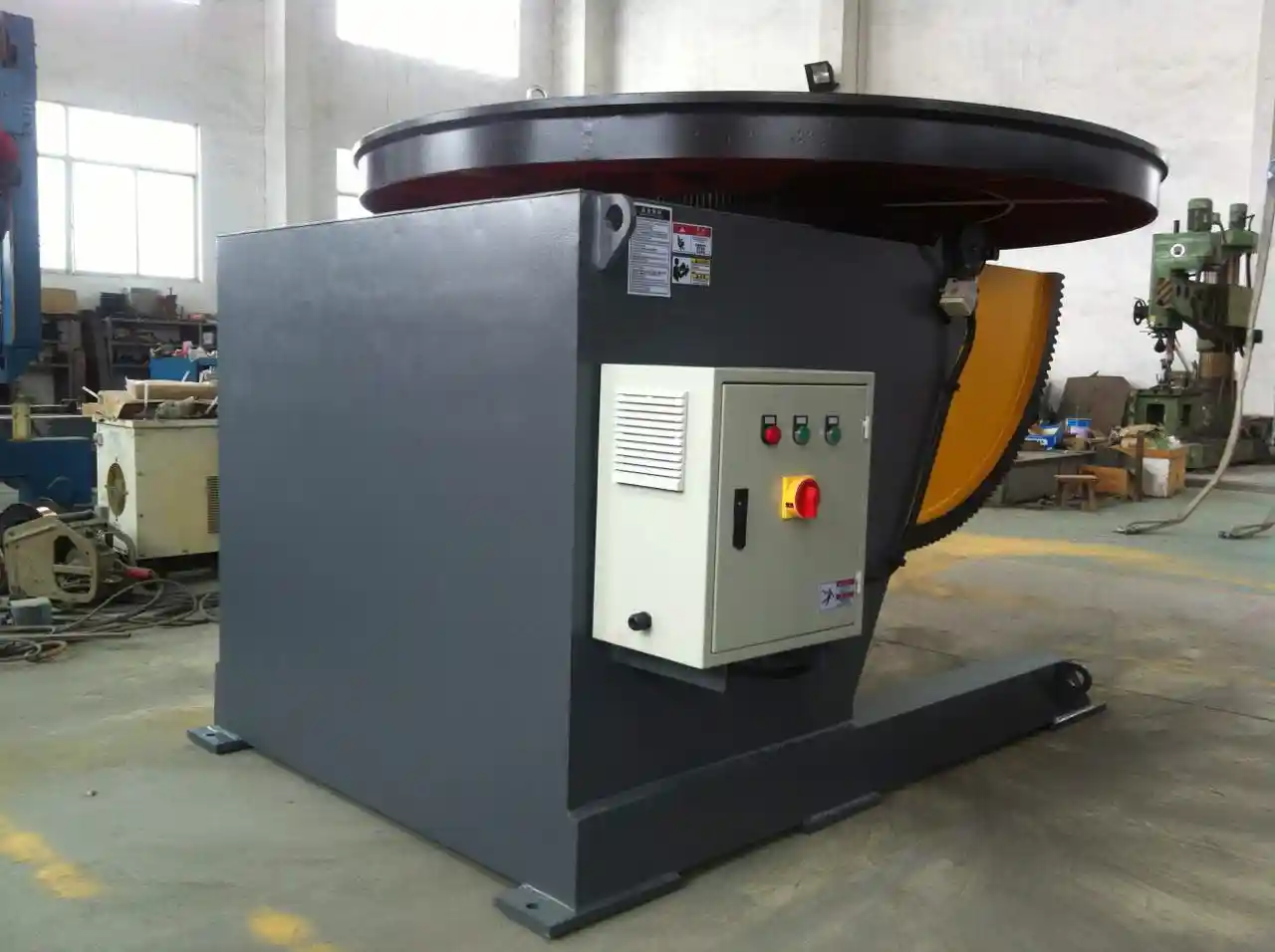
Controlled rotation and positioning directly affect weld consistency on cylindrical vessels. <Präzisionsautomatisierung mit Schweißrotatoren für die industrielle Fertigung: Ein Leitfaden mit Fragen und Antworten von Experten> covers the automation and accuracy questions fabricators should review when specifying rotator systems.
Automation and Inspection for Repeatable Tank Production
Automated welding manipulators and column and boom systems add value in water treatment tank fabrication when the seam is long and joint access is consistent. A manipulator can move the welding head at a controlled speed while the rotator turns the vessel, which is more repeatable than hand welding around a large circumference. The supplied manipulator models include horizontal travel from 1200 mm to 8000 mm and vertical travel from 3500 mm to 8000 mm, with positioning accuracy of ±0.1 mm/m. These figures help match the equipment to tank diameter and available bay area.
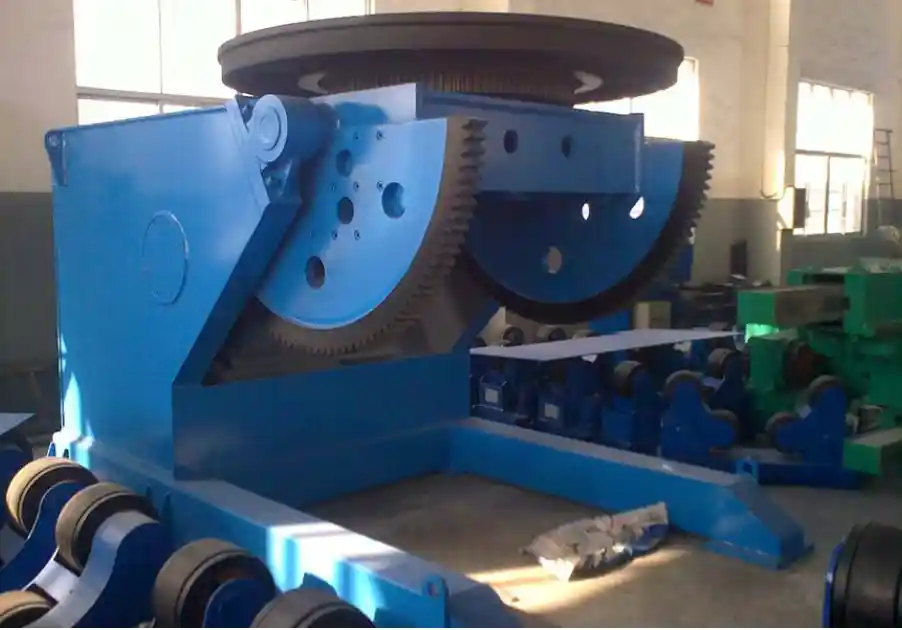
Inspection should be planned into the line, not added after welding. For water treatment vessels, hydrostatic testing, dye penetrant or magnetic particle testing, and ultrasonic or radiographic inspection require access and traceability. The fabrication equipment should therefore support repeatable weld position, stable rotation, and clear operator visibility. A positioner with slip rings and continuous rotation helps avoid cable entanglement during long circumferential welds.
Large-diameter vessel work also benefits from turning rolls that keep the shell moving without local loading. <Rohrrotatoren und Drehwalzen: Unverzichtbare Ausrüstungen für die moderne Pipeline-Fertigung> covers how rotator selection affects alignment and production flow in cylindrical fabrication.
Matching Equipment to Water Treatment Project Conditions
Water treatment projects differ by material, vessel size, site conditions, and required documentation. Stainless steel vessels call for rollers and fixtures that limit carbon steel contamination. Large field-erected tanks may need portable or site-ready equipment, while shop-built vessels can use a fixed production line. The equipment plan should start with the maximum vessel diameter, maximum shell weight, wall thickness, joint preparation, and the welding processes approved in the project specification.
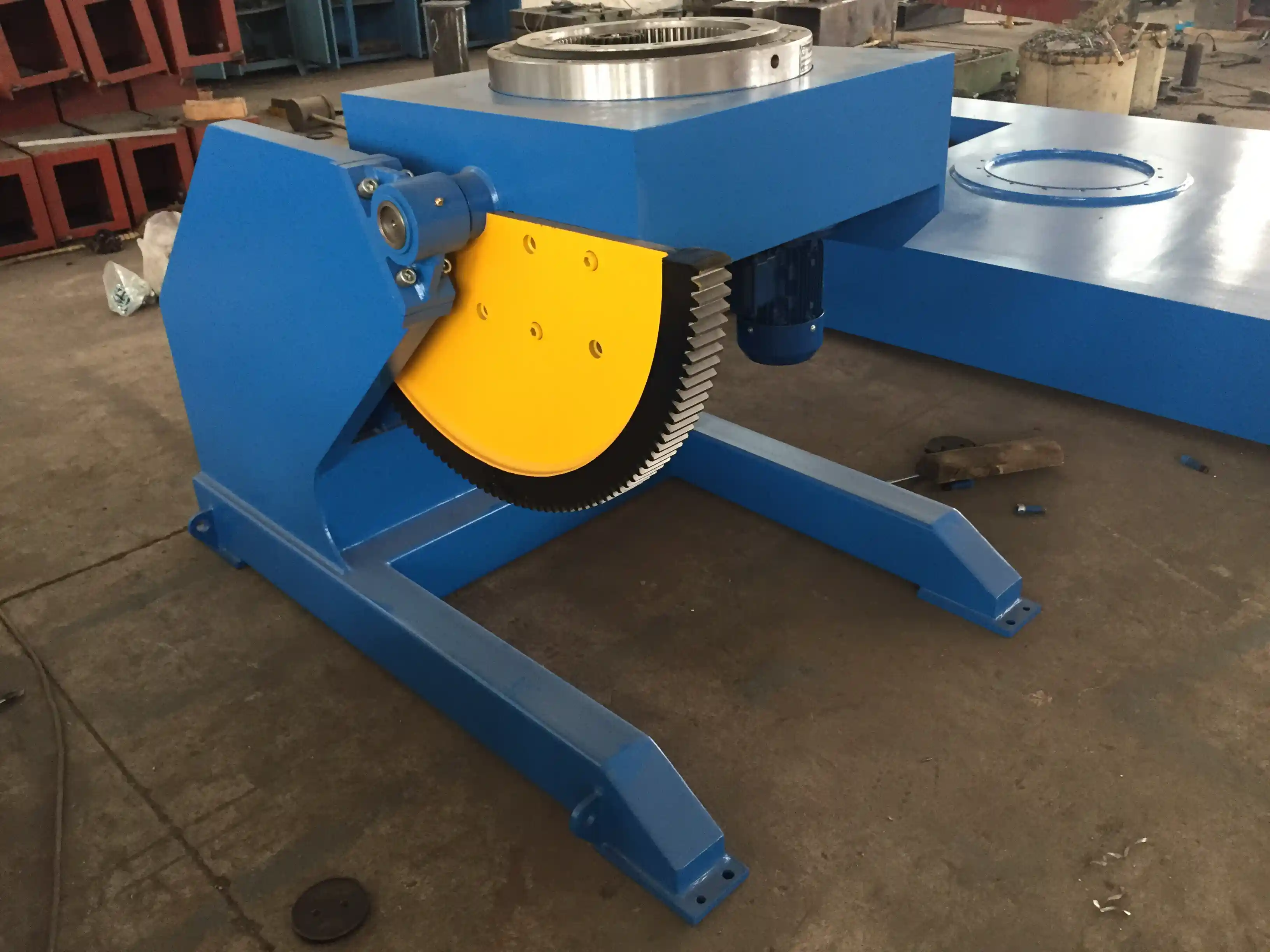
A practical specification sequence covers the main decision points. First, define tank diameters, heights, and maximum piece weights. Second, confirm material grades and surface protection requirements. Third, select a rotator pair and manipulator combination that can handle the largest shell course. Fourth, plan fit-up stations with hydraulic alignment where shell roundness is difficult to hold. Fifth, specify weld tracking or monitoring when repeatability must be documented. Finally, include inspection access and turning capability before the layout is locked.
Plan Your Water Treatment Tank Fabrication Line
If you are specifying or upgrading a water treatment tank and vessel fabrication line, the most useful next step is to confirm load, diameter, and joint requirements before selecting individual machines. Send the following information and we can help match rotator, positioner, manipulator, and fit-up equipment to your project: maximum vessel diameter and weight, material grades, wall thickness range, welding process, required inspection level, and annual production volume.
Contact Wuxi ABK Machinery at jay@weldc.com or +86-13815101750. Include your facility layout or existing equipment list if you are adding capacity to an active shop.
Häufig gestellte Fragen
How is tank welding equipment different from general structural welding equipment?
Tank fabrication equipment is designed around cylindrical rotation and long continuous seams. General structural welding may focus on beams and stiffeners, while vessel work needs rotators, fit-up beds, manipulators, and positioners that keep the workpiece stable during 360 degree movement and control axial creep.
What size range can water treatment tank rotators and positioners handle?
It depends on the selected equipment. The supplied catalog includes rotators from 5 ton to 300 ton capacity and vessel diameter ranges from about 250 mm to 6000 mm. Confirm the supported diameter range and the actual loaded weight, including fixtures and attachments, because maximum diameter and maximum weight may not occur on the same vessel.
Should a water treatment plant prioritize manual, semi-automatic, or automated welding?
For low-volume, one-off vessels, semi-automatic welding with a rotator and manipulator is often the most practical choice. For repeated tank diameters, automation with seam tracking and programmed parameters becomes more valuable. The decision should follow production volume, joint access, welder availability, and inspection requirements rather than automation for its own sake.
What information should I prepare before specifying a tank fabrication line?
Prepare the maximum vessel diameter and weight, material grades, plate thickness, joint design, welding process, inspection standard, and expected output. Include the available workshop length and crane capacity. That information helps determine whether a fixed production line, portable equipment, or a combination is the better fit.
Falls Sie daran interessiert sind, lesen Sie doch diese verwandten Artikel:
Erneut Probleme beim Schweißen von Windkrafttürmen: Wie intelligente Rotatoren für Fertigungslinien die Produktivität steigern – von 50%
Außergewöhnlicher Anwendungsnutzen: Wie Schweißpositionierer mit fester Höhe den Fortschritt in der Offshore- und Schiffbauindustrie vorantreiben (Teil 2)
Tired of Complex Welding Challenges? How a 3-Axis Positioner Can Boost Productivity by 70%
Revolutionäre Lösung für das Schweißen von Druckbehältern: Technische Analyse von 360-Grad-Rotationsschweißpositionierern
 English
 Español
 Français
 Deutsch
 Português
 Русский