Modern heat exchanger manufacturing lives or dies by how well your production equipment works together. Getting the workflow right, hitting tight tolerances, and maintaining consistent quality across thousands of units—these challenges keep production managers up at night. What follows covers how current welding, cutting, and positioning technologies actually reduce those bottlenecks and push throughput numbers higher. The focus stays on practical solutions that meet real industry requirements while making operations run smoother.
Making Heat Exchanger Production Workflows Actually Work
Efficient heat exchanger production depends on workflows that don’t trip over themselves. Integrated production equipment changes the game by automating material handling and tightening up each fabrication stage. Lean manufacturing principles help spot and cut waste, which translates directly to better throughput numbers. Automated systems pull humans out of repetitive tasks, and that consistency shows up in both quality metrics and cycle times. Production schedules get easier to hit when the line runs predictably.
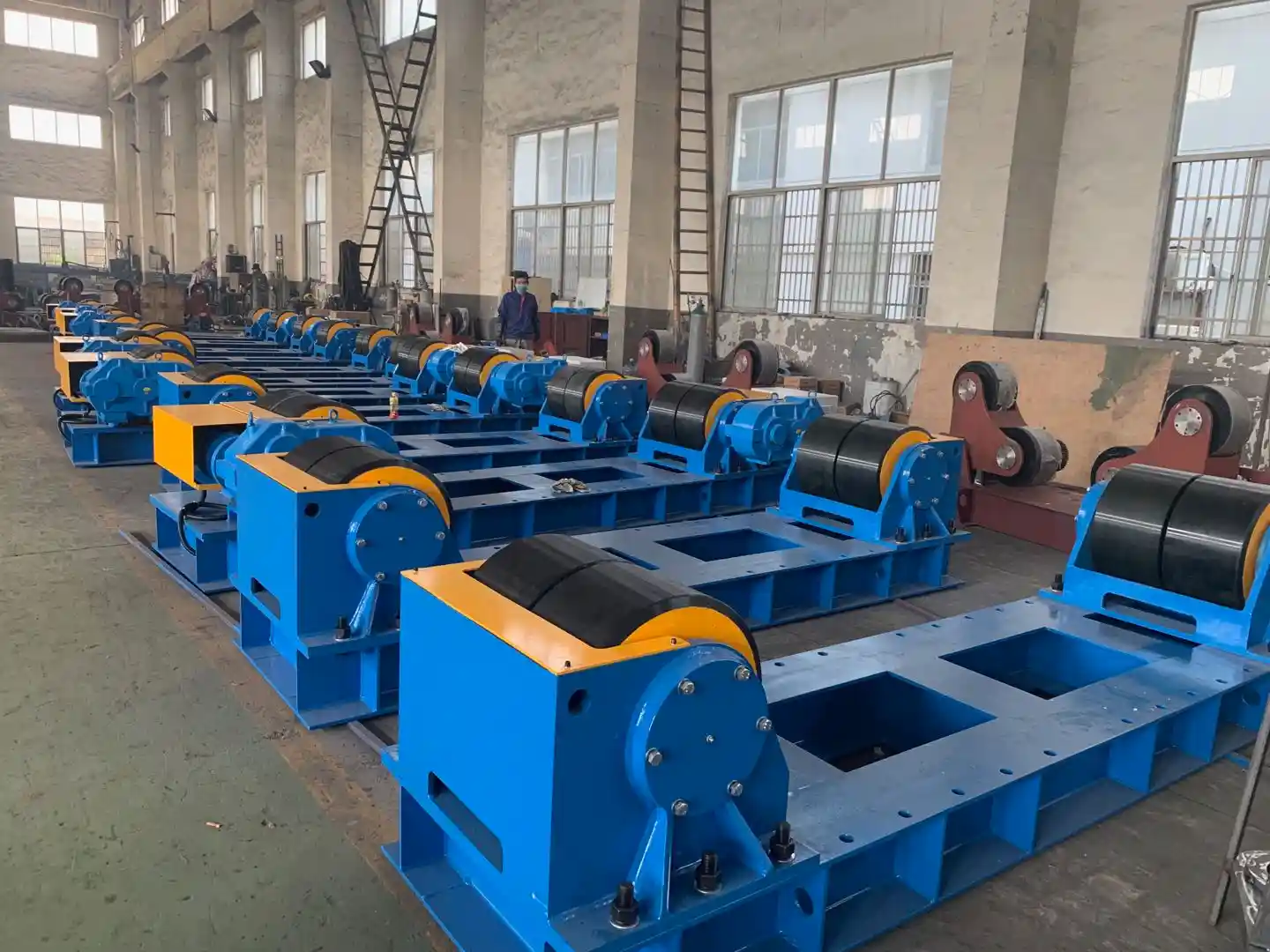
The real value comes from connecting everything—material prep through final assembly and testing—into one coordinated system. When each machine talks to the next, delays disappear and line performance improves across the board. Operations get leaner, costs drop, and productivity climbs. These workflows keep evolving as manufacturing demands shift.
Welding and Cutting Technologies That Deliver Results
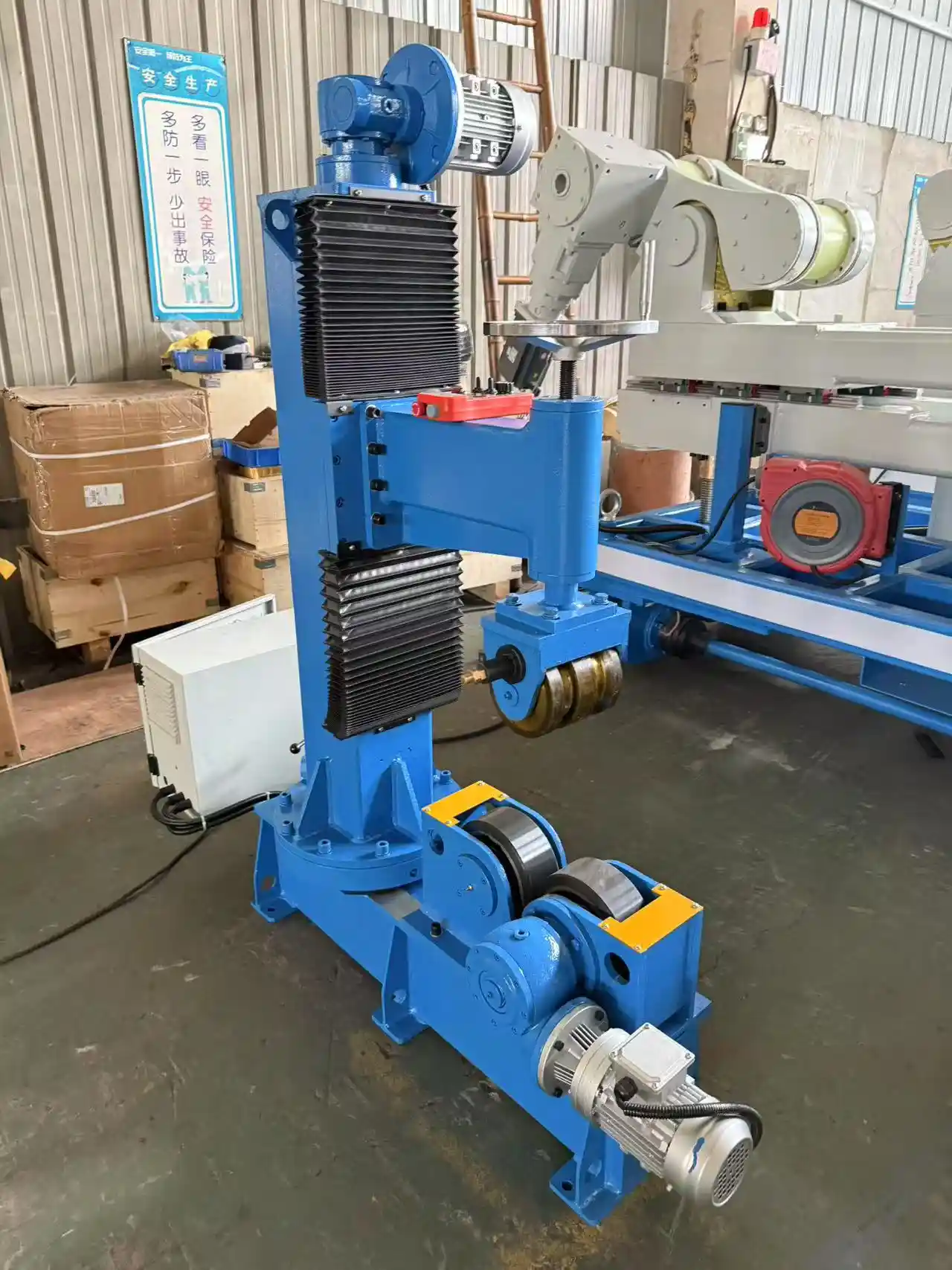
Welding and cutting precision determine whether a heat exchanger holds up or fails in service. Wuxi ABK builds automated welding systems and CNC cutting technology that hit the accuracy marks manufacturers need. The welding manipulators handle longitudinal and circumferential seam welding with positioning accuracy of ±0.1 mm/m. That kind of precision cuts defect rates and eliminates rework.
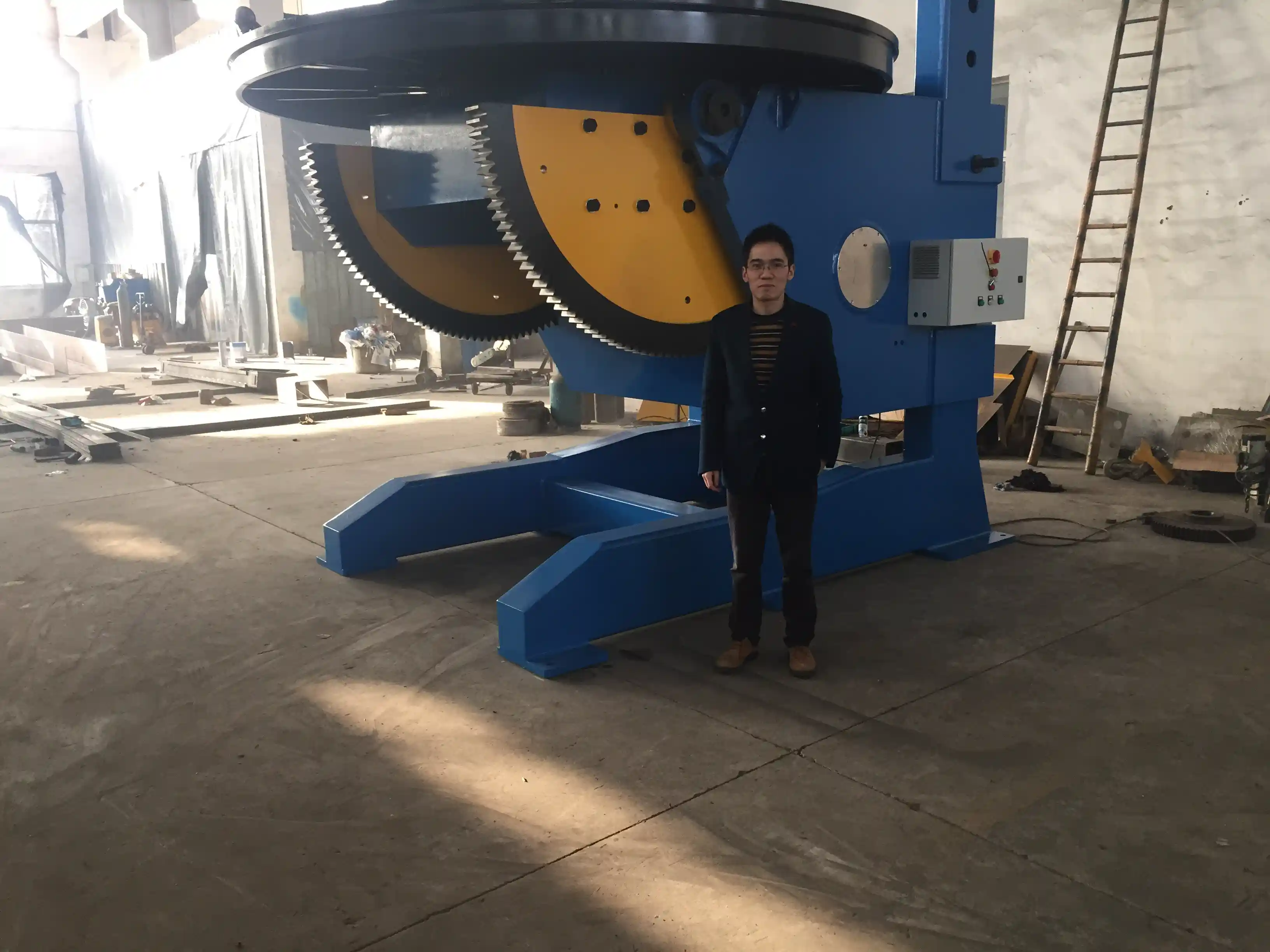
CNC plasma cutting handles intricate designs and tight tolerances that manual methods struggle to match. These capabilities matter most when fabricating complex heat exchanger components where small errors compound into big problems. The equipment lineup includes 3 Axis Positioners and Triple Axis Positioners with synchronized turning and tilting for optimal weld access. These systems achieve ±0.05 mm positioning accuracy and 0.02 mm repeatability—numbers that robotic welding cells require to function properly.
Wenn Sie interessiert sind, schauen Sie unter 《Verbesserung der Qualität beim Schweißen von Rohren durch einen Hochpräzisions-Schweißpositionierer》.
Welding Technologies Compared
| Merkmal | Automated Welding Systems | Manuelles Schweißen |
|---|---|---|
| Präzision | High (±0.05 mm) | Mäßig |
| Speed | Schnell | Langsam |
| Consistency | Ausgezeichnet | Variabel |
| Nachbearbeitungsrate | Niedrig | Hoch |
| Operator Skill Need | Moderate (Programming) | Hoch |
Quality and Reliability That Holds Up Under Scrutiny
High quality and reliability aren’t optional in heat exchanger fabrication—they’re the baseline expectation. Integrated production equipment builds in advanced inspection systems and non destructive testing (NDT) capabilities from the start. Material traceability stays intact, and stringent industry standards get met without constant manual verification.
Automated quality control systems watch critical parameters continuously, catching potential issues before they become expensive problems. This approach keeps errors rare and extends product lifespan. The machinery performs consistently shift after shift, which feeds directly into final heat exchanger reliability. These systems work together to provide quality assurance that actually means something.
What are the critical components of an integrated heat exchanger production line?
An integrated heat exchanger production line brings together several systems that need to work as one. CNC cutting systems and automated welding systems handle the fabrication work. Material handling equipment—conveyors, robotic arms—keeps material moving without bottlenecks. Assembly stations put components together with precision, and testing equipment confirms structural integrity and performance before anything ships. When these pieces connect properly, production runs efficiently and quality stays high.
Solutions Built for Different Heat Exchanger Designs
Wuxi ABK configures integrated production equipment for the specific heat exchanger design being manufactured. Shell and tube heat exchangers, plate heat exchanger manufacturing, fin tube production—each type needs its own fabrication approach. The machinery adapts to those requirements rather than forcing compromises.
Custom fabrication equipment gets configured to optimize production for specific applications. Specialized welding positioners and manipulators match particular geometries and material properties. The Welding Manipulator models LH8080 and LH4580, for instance, handle large pressure vessel welding and boiler fabrication where standard equipment falls short.
Equipment Matched to Heat Exchanger Type
| Heat Exchanger Type | Recommended Equipment | Hauptmerkmal |
|---|---|---|
| Shell and Tube | Welding Manipulator, Pipe Rotator Equipment | Longitudinal/Circumferential Welding Accuracy |
| Plate Heat Exchanger | 3 Axis Welding Positioner, CNC Plasma Cutter | Precision Component Alignment, High Repeatability |
| Fin Tube | Tube Bending Machine, Tube Welding Machine | Automated Bending & Joining |
| Large Pressure Vessels | Adjustable Welding Positioner, Heavy Duty Pipe Rotator | High Load Capacity, Multi-axis Positioning |
Where Heat Exchanger Manufacturing Automation Heads Next
Heat exchanger manufacturing keeps moving toward deeper automation and digital integration. Industry 4.0 manufacturing principles, robotics, and artificial intelligence manufacturing are reshaping what’s possible. These technologies bring better efficiency and predictive capabilities that weren’t available five years ago.
Digital twin technology enables virtual prototyping and real-time monitoring—problems get solved before physical fabrication starts. Sustainable production practices reduce energy consumption and material waste, which matters both for costs and compliance. These advancements translate into manufacturing solutions that perform better than previous generations.
How do advanced manufacturing technologies improve heat exchanger efficiency and reliability?
Advanced manufacturing technologies boost heat exchanger efficiency and reliability by taking variability out of the process. Robotics and smart systems reduce human error, which shows up as consistent component quality. Predictive maintenance powered by AI and digital twin technology catches problems before they cause downtime, extending equipment lifespan. The result is measurable manufacturing efficiency gains, better equipment reliability, and heat exchangers that deliver energy savings in operation.
What are the key considerations for selecting production equipment for various heat exchanger types?
Picking the right production equipment for different heat exchanger types requires looking at several factors together. Material being processed, required production volume capacity, and target precision levels all matter. Material compatibility equipment prevents contamination and ensures weld integrity. A realistic cost benefit analysis should weigh initial investment against long-term operational savings—the cheapest option upfront rarely stays cheapest over time.
Partner with Wuxi ABK Machinery
Elevate your heat exchanger manufacturing capabilities with Wuxi ABK Machinery. Contact us today to discuss integrated production solutions tailored to your specific operational needs and achieve unparalleled efficiency and product quality. Reach out to our experts at jay@weldc.com or call +86-13815101750.
What types of heat exchanger manufacturing equipment does Wuxi ABK provide?
Wuxi ABK Machinery builds comprehensive heat exchanger manufacturing equipment—advanced welding lines, CNC cutting machines, Welding Manipulator, and positioners designed for integrated production. The solutions cover various heat exchanger designs and deliver precision and efficiency through every fabrication stage.
How can integrated production equipment enhance the efficiency of heat exchanger fabrication?
Integrated production equipment like automated welding systems and CNC cutting technology connects the entire heat exchanger fabrication process. Manual intervention drops, production time shrinks, material utilization improves, and overall manufacturing efficiency and output climb significantly.
Does Wuxi ABK offer customized solutions for specific heat exchanger production requirements?
Yes. Wuxi ABK Machinery specializes in customized integrated production equipment solutions. The team works directly with clients to understand their specific heat exchanger manufacturing needs, then delivers designs and configurations that optimize their particular production workflows and quality standards.
 English
  Español
  Français
  Deutsch
  Português
  Русский