
In too many fabrication shops I walk into, the production schedule is built from delivery dates and hope. It looks fine on a whiteboard, but by Wednesday afternoon a welding positioner is sitting idle while three sections queue behind a single rotator station. The schedule didn’t fail because the planner was careless. It failed because nobody calculated what each piece of equipment could actually move through in a shift. Production scheduling optimization in heavy fabrication has less to do with scheduling software and everything to do with understanding the real throughput limits of your welding and cutting stations before you commit to a timeline.
What Production Scheduling Actually Controls
A production schedule is not a wish list. It is a set of interdependent commitments where each operation consumes a fixed amount of equipment time. When the schedule assigns more hours to a station than the station has available, the downstream consequences compound fast. A two-hour delay at a manipulador de soldadura doesn’t stay two hours. It pushes into the next shift’s rotator time, which cascades into the cutting queue, and by Friday the entire line is running overtime to recover what was never recoverable.
I’ve watched shops with well-maintained equipment and skilled welders still miss delivery targets by weeks because the schedule treated every station as if it had infinite capacity. The fix was never upgrading to a more expensive ERP system. It was recalculating actual station throughput and rebuilding the schedule from those numbers.
Calculate Real Equipment Capacity Before Scheduling
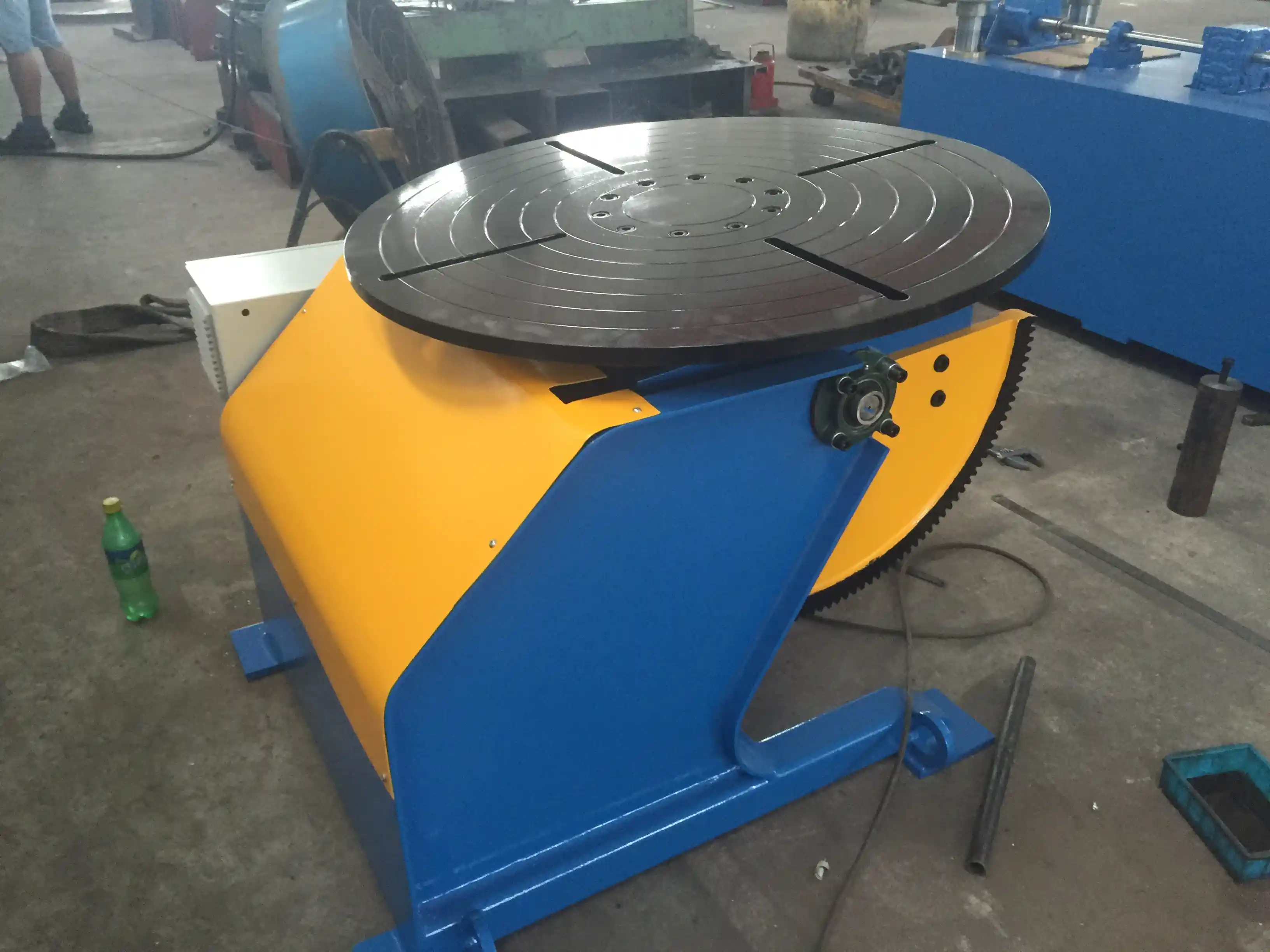
Most capacity planning starts and ends with a machine’s nameplate rating. A welding rotator rated for 20 tons and a diameter range of 500 to 3500 millimeters tells you it can physically handle the workpiece. It does not tell you how many workpieces it can process in a shift, which is the number the schedule actually needs.
Real capacity for any fabrication station must account for load and unload time, fit-up time, actual welding speed at the required deposition rate, and the repositioning cycles between passes. For a circumferential seam on a 3000-millimeter diameter vessel section using submerged arc welding, the arc-on time alone might be 45 minutes, but total station occupancy could run to 90 minutes once you include crane time, tack inspection, and slag removal. If the schedule allocates 60 minutes per section, every section runs late.
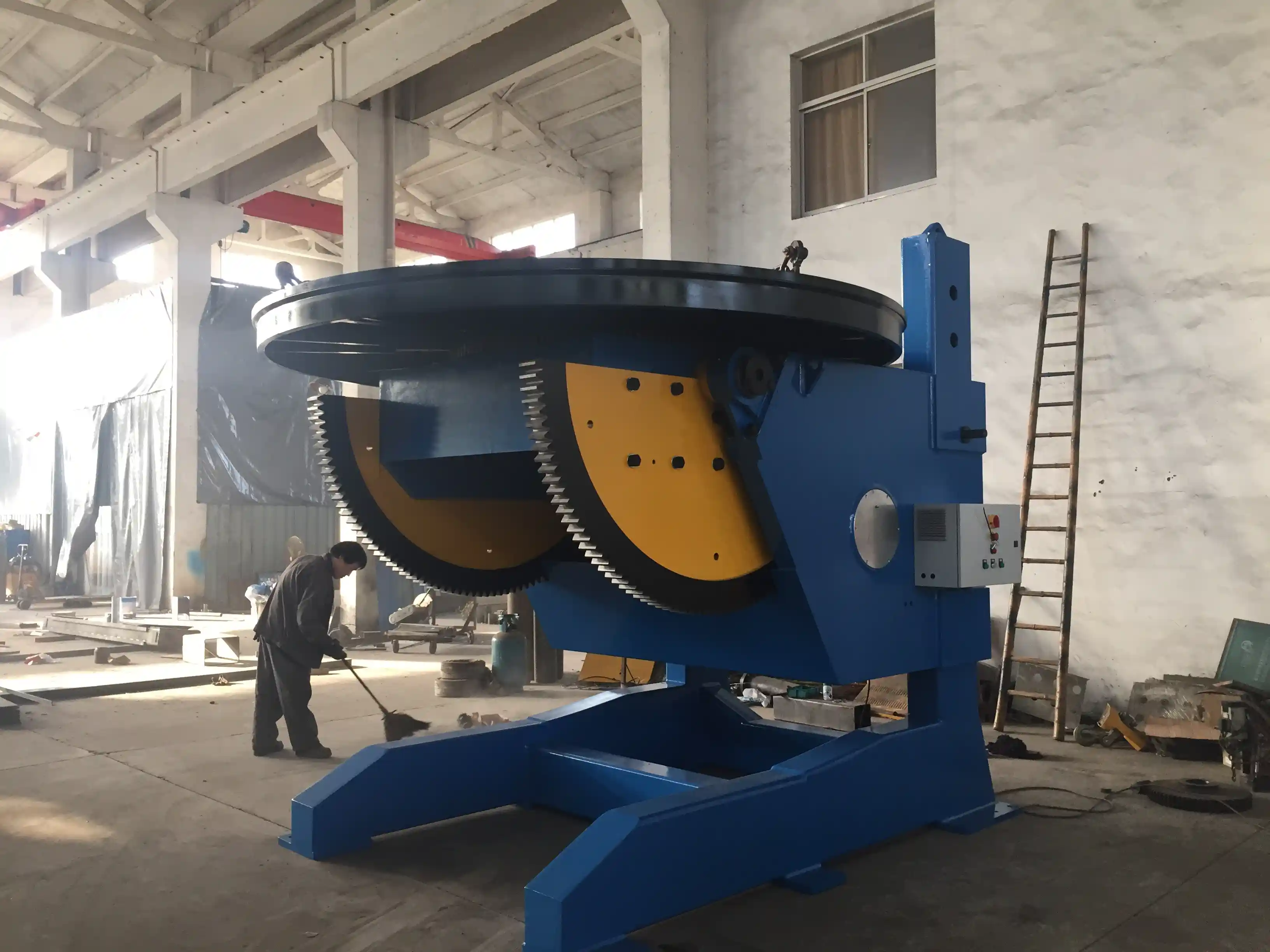
On a recent wind tower production line we configured, the 30-ton adjustable height positioner could rotate at 0.05 to 0.5 RPM, and the welding manipulator delivered consistent travel speeds across 8-meter vertical strokes. But the bottleneck wasn’t either machine. It was the crane that had to shuttle between two stations because the layout never accounted for simultaneous lift requirements. The schedule looked feasible on paper. The crane made it impossible in practice.
| Capacity Factor | What Nameplate Tells You | What the Schedule Needs |
|---|---|---|
| Rotator load rating | Maximum weight capacity | Cycle time per workpiece at production speed |
| Welding speed | Wire feed rate or travel speed | Arc-on time plus all handling and setup minutes |
| Positioner tilt range | Degrees of movement | How many repositions per weldment and time per move |
| Multi-station interaction | Individual machine specs | Crane, operator, and material flow conflicts across stations |
Why Bottlenecks Move and How to Track Them
A bottleneck that stays in one place is easy to manage. You add a shift, upgrade the machine, or buffer work ahead of it. The real scheduling problem in heavy fabrication is that bottlenecks migrate. This week the constraint is the H-beam welding line because the order book shifted toward heavier sections. Next week it’s the CNC cutting table because nesting efficiency dropped with a batch of odd-sized plates.
The only reliable way to keep a schedule aligned with reality is to track station-by-station throughput against planned throughput at the end of every shift. When a station’s actual output drops below 85 percent of plan for two consecutive days, the constraint has moved, and the schedule must be rebuilt from that station outward. Ignoring the shift and running the existing schedule only guarantees that upstream stations pile up work-in-progress while downstream stations starve.
In the H-beam production lines we’ve delivered, the automated assembly machine, welding stations, and straightening machine form a sequential chain. If the welding station runs at 80 percent of planned speed because the section sizes changed mid-batch, the straightening machine downstream has nothing to process by mid-shift, and the assembly machine upstream is building a queue that clogs the material handling path. The schedule needs to be rebalanced the moment the welding station’s actual throughput diverges from plan.
Scheduling Strategies That Account for Real Constraints
Three practical scheduling approaches work in heavy fabrication, and none of them require advanced software. They require honest capacity numbers and the discipline to update them.
First, backward scheduling from the constraint. Identify which station is currently limiting total line output, calculate its true daily throughput, and build every other station’s schedule backward and forward from that point. Upstream stations produce only what the constraint can consume. Downstream stations are scheduled to process what the constraint delivers. This prevents the common failure mode where non-constraint stations overproduce and bury the bottleneck in WIP.
Second, buffer time allocation based on station reliability. A welding manipulator with a 95 percent uptime record doesn’t need the same schedule cushion as a plasma cutting table that loses two hours a week to consumable changes and torch maintenance. Assign buffer minutes proportionally to each station’s demonstrated downtime, not a flat 10 percent across the board. The stations that break schedule predictability are the ones with unaccounted downtime, not the ones running slowly.
Third, parallel path scheduling for recurring bottlenecks. If a specific weldment always queues at the rotator station because it requires multiple repositioning cycles, consider whether a second smaller rotator or a fixed positioner can handle the straight seams while the primary rotator takes the circumferential work. A 1-ton or 2-ton fixed height positioner costs a fraction of a full rotator and can pull enough work out of the queue to collapse the bottleneck entirely.
Capacity Planning for Welding Positioners and Rotators
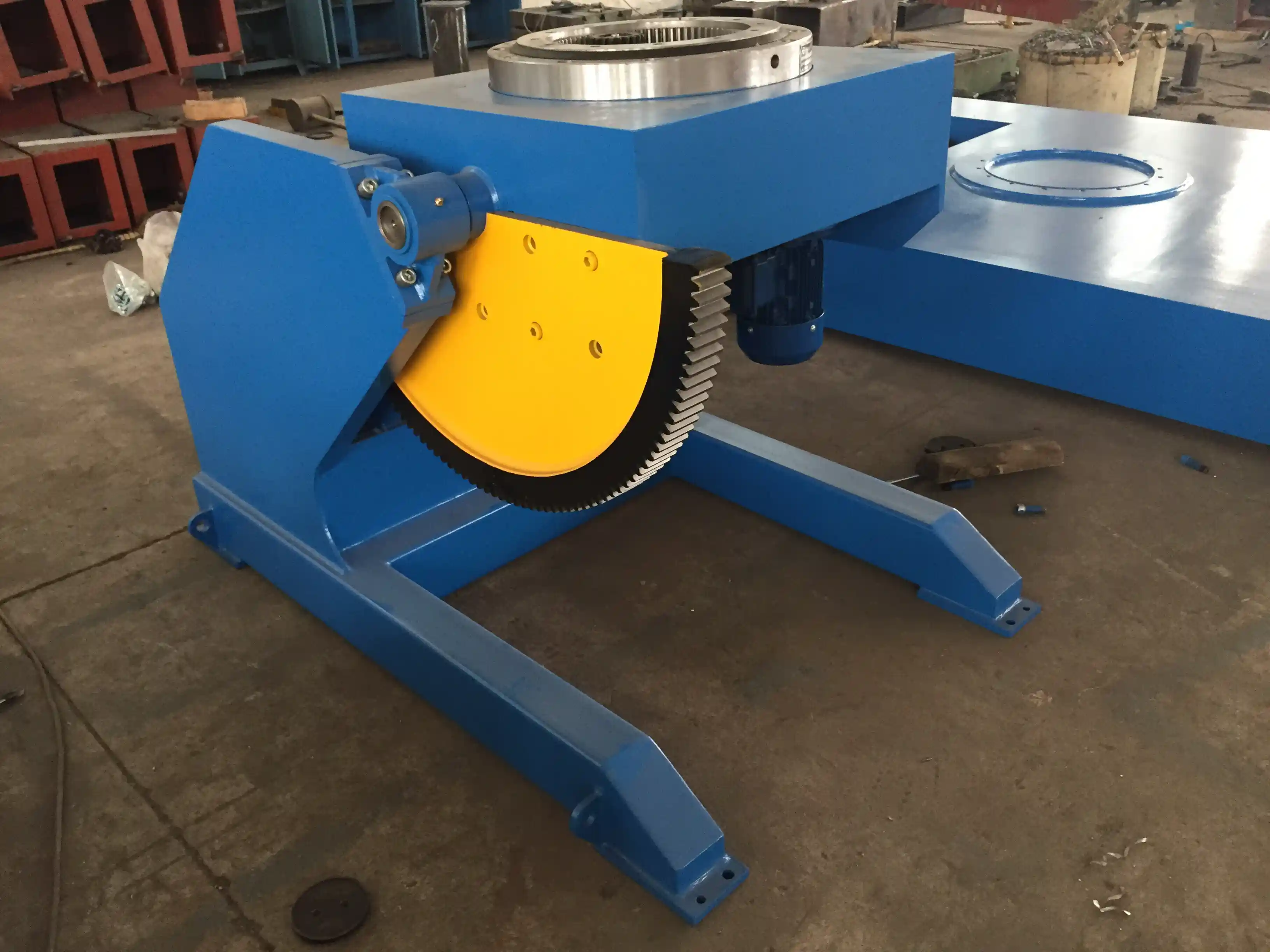
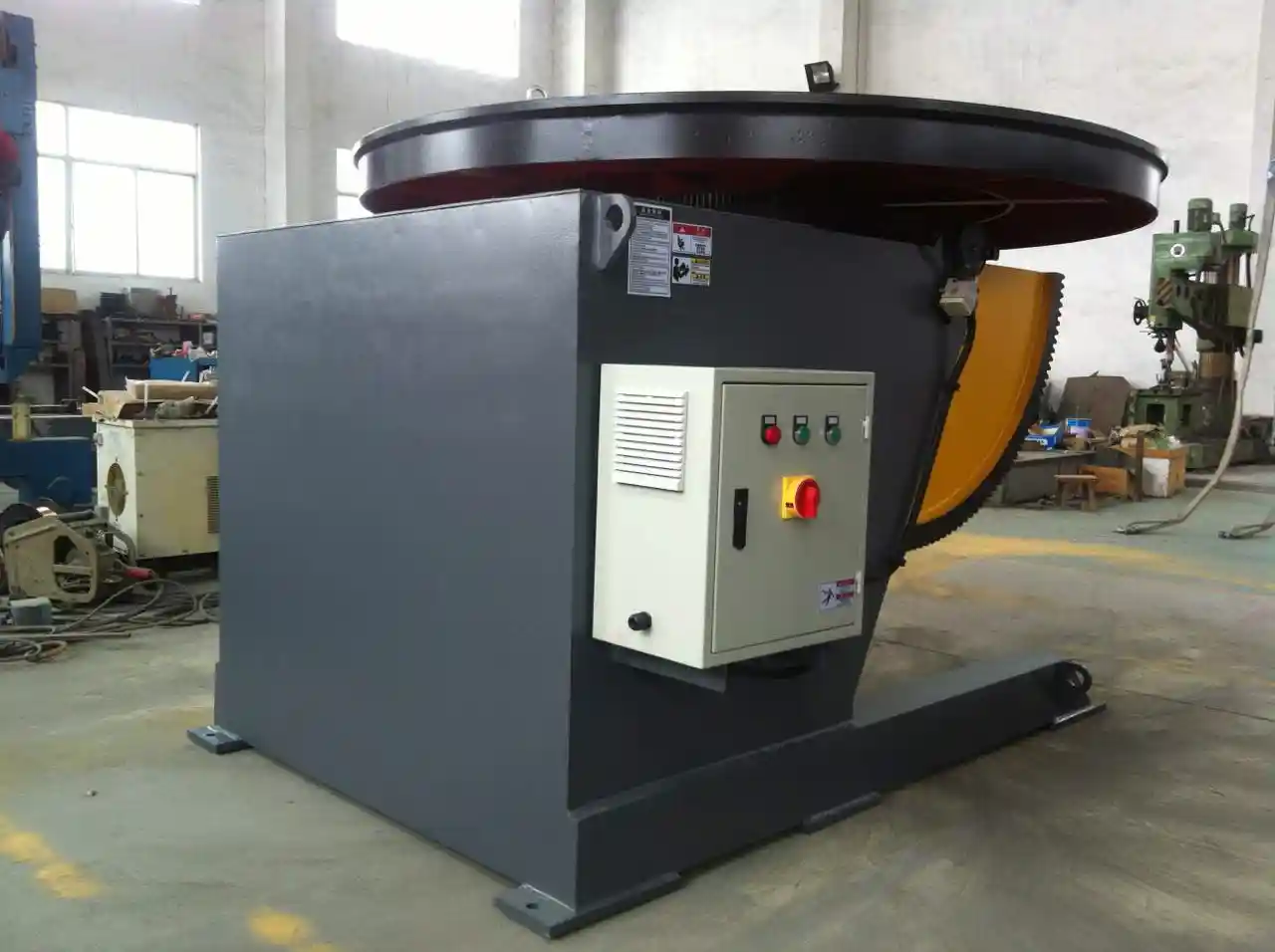
Welding positioners and rotators are the stations I see scheduled most inaccurately across fabrication shops. The assumption is that if the workpiece fits on the table and the positioner can tilt to the required angle, the schedule slot is valid. But capacity depends on how many repositions the weldment needs, not just whether the machine can hold it.
A 5-ton 3-axis positioner with 360-degree continuous rotation and 0 to 90-degree tilting can handle a complex structural weldment. But if the part requires three repositions and each reposition cycle takes four minutes including clamp adjustment, that’s 12 minutes of non-welding time per piece. Multiply across 20 pieces per shift, and the schedule has allocated four hours of positioner time while the actual welding output claims only a portion of it. The schedule needs to account for the full station occupancy, not just the arc time.
The same logic applies to welding rotators. A standard 20-ton rotator with a diameter range of 500 to 3500 millimeters and stepless speed control can rotate continuously through a girth weld. But the schedule must include the time to load the vessel section onto the rollers, align the seams, and adjust the roller spacing for diameter changes between batches. These handling minutes are not optional, and they are not fast. In shops running mixed-diameter batches, the roller adjustment time between setups can consume 30 to 45 minutes per changeover. If the schedule assumes continuous rotation without setup, the math will never hold.
Common Scheduling Mistakes That Kill Throughput
The most damaging scheduling mistake I see repeatedly is treating capacity as a fixed number across all product mixes. A positioner that processes 15 excavator boom sections per shift doesn’t automatically process 15 pressure vessel heads per shift. The weld length, number of passes, and repositioning requirements are different, and the schedule must reflect the actual cycle time for the specific work mix running that week.
The second mistake is scheduling to 100 percent utilization. A station running at full capacity has no room to recover from a 20-minute stoppage. The entire downstream schedule absorbs that delay, and there’s no slack anywhere to compensate. Scheduling to 85 percent of demonstrated capacity leaves recovery margin for the minor disruptions that happen every day: a wire feeder jam, a late material delivery, an inspection that runs long.
The third mistake is confusing equipment availability with equipment suitability. A shop may own six welding positioners, but if only two have the load capacity and tilt range for the current work package, the other four do not count toward capacity for that schedule. The effective station count for any given schedule is only the number of machines rated for the specific workpieces in the queue.
Questions Fabrication Managers Ask About Capacity Scheduling
How often should I recalculate station throughput?
At minimum, recalculate whenever the product mix changes meaningfully. If your shop shifts from standard tank sections to heavier pressure vessel components, every station’s cycle time needs to be re-measured. Even without a mix change, I recommend a full throughput audit every quarter. Wear, maintenance intervals, and operator changes all shift actual output over time, and schedules built on six-month-old cycle times drift further from reality each week.
Should I schedule overtime to handle bottlenecks?
Overtime is a temporary patch, not a capacity planning strategy. If a bottleneck station consistently requires overtime to meet the schedule, adding overtime hours only masks the underlying constraint. The correct response is either to increase the station’s base capacity through equipment upgrades or to offload work that doesn’t require the bottleneck station’s specific capabilities. Adding a second shift at a constrained station may be necessary, but only after confirming that material supply and downstream stations can absorb the increased output.
How do I handle scheduling when multiple large projects overlap?
Overlapping large projects expose capacity conflicts that single-project schedules hide. Map each project’s station requirements across the overlapping period and identify which stations are claimed by more than one project simultaneously. Those stations become the governing constraints for both projects. If the combined demand exceeds the station’s capacity, one project must move its timeline, or the station needs temporary capacity expansion. Running both schedules simultaneously without resolving the conflict only guarantees both projects run late.
What is the most overlooked capacity drain in a fabrication shop?
Material handling between stations. Cranes, forklifts, and transfer cars are capacity constraints just as much as welding and cutting equipment, but they rarely appear in capacity calculations. A crane serving three stations can only be in one place at a time, and when two stations need a lift simultaneously, one waits. Track crane utilization across a typical week and you will find the hidden capacity losses that the equipment schedule never shows.
Is it worth investing in a larger positioner just to have scheduling flexibility?
The decision depends on your work mix variability. If 80 percent of your work fits on a 5-ton positioner and only occasional jobs require 10-ton capacity, the larger machine may sit underutilized most of the year. But if your order book shows a clear trend toward heavier components, upgrading proactively prevents the schedule from fracturing every time a large job enters the queue. The right question is not whether the machine can handle the biggest workpiece you might see, but whether your typical work mix will keep it loaded above 60 percent utilization. If your current project pipeline includes larger vessel sections and heavier structural components, investing in capacity headroom now prevents scheduling bottlenecks from forming as the mix shifts. Share your typical workpiece sizes and production volumes with us at jay@weldc.com or call +86-510-83555592, and we’ll work through the capacity calculations for your specific line configuration.
Se estiver interessado, consulte estes artigos relacionados:
Revolução na soldadura naval: como os posicionadores de soldadura melhoram a qualidade e a eficiência
Valor de aplicação excecional: como os posicionadores de soldadura de altura fixa impulsionam os avanços na indústria offshore e na construção naval (Parte 2)
Melhorar a Qualidade e a Eficiência no Fabrico de Reservatórios e Recipientes sob Pressão: O principal valor de aplicação dos posicionadores
Como melhorar a qualidade da soldadura de tubos através de um posicionador de soldadura de alta precisão
Solução revolucionária para a soldadura de vasos de pressão: Análise técnica de posicionadores de soldadura rotativos de 360 graus
 English
  Español
  Français
  Deutsch
  Português
  Русский