Membrane panel welding joins boiler tubes to flat steel bars or fins to form gas-tight water wall panels for power boilers, waste-heat boilers, and heat recovery steam generators. The manual-versus-automated decision affects more than weld appearance: it influences code acceptance, distortion control, operator skill loading, and the cost per panel delivered. This article compares the two routes from the production floor perspective, including the evidence standards that matter for ASME Section I [1], ASME Section IX [2], ISO 3834-2 [3], and EN 12952-5 [4].
What separates acceptable membrane panels from rework?
Boiler panel welding must hold both pressure boundary and structural duties. For a membrane wall panel, the critical features are tube-to-fin leg length, penetration profile, gap consistency, and final panel flatness. ASME Section I requires pressure-retaining welds to be made under qualified procedures [1], while ASME Section IX sets the qualification path for welders and welding operators [2]. ISO 3834-2 adds a factory-level quality framework for weld coordination, inspection, and traceability [3].
That explains why manual welding remains common but difficult to defend at scale. Skilled welders can adapt to short-run panels, odd joint conditions, and field repair. But manual tube-to-fin welding introduces variable travel speed, torch angle, and heat input. These variables show up later as uneven penetration, lateral bowing, and panels that fail flatness checks before header fit-up.
Manual welding: where it fits
Manual membrane panel welding still makes sense for low-volume replacement panels, small boilers, mixed tube diameters, and in-situ repairs where automation access is limited. A qualified welder using GMAW or FCAW can produce acceptable short seams if the panel is properly fixtured and the fit-up is controlled. The capital cost is far lower than a dedicated panel line. However, the output depends heavily on operator fatigue, position, and consistency over a full shift.
More importantly, manual welding rarely holds the same repeatability as mechanized travel. If the production run requires hundreds of identical panel meters, small variations in leg length or weld toe angle accumulate. They create fit-up stress at header assembly and may require straightening or repair. For code shops, this adds inspection time and documentation burden.
Need help evaluating whether your manual panel welding procedure meets code and flatness requirements? Send your panel drawing and current WPS to jay@weldc.com for a technical review by a welding automation engineer.
Automated membrane panel welding: the production route
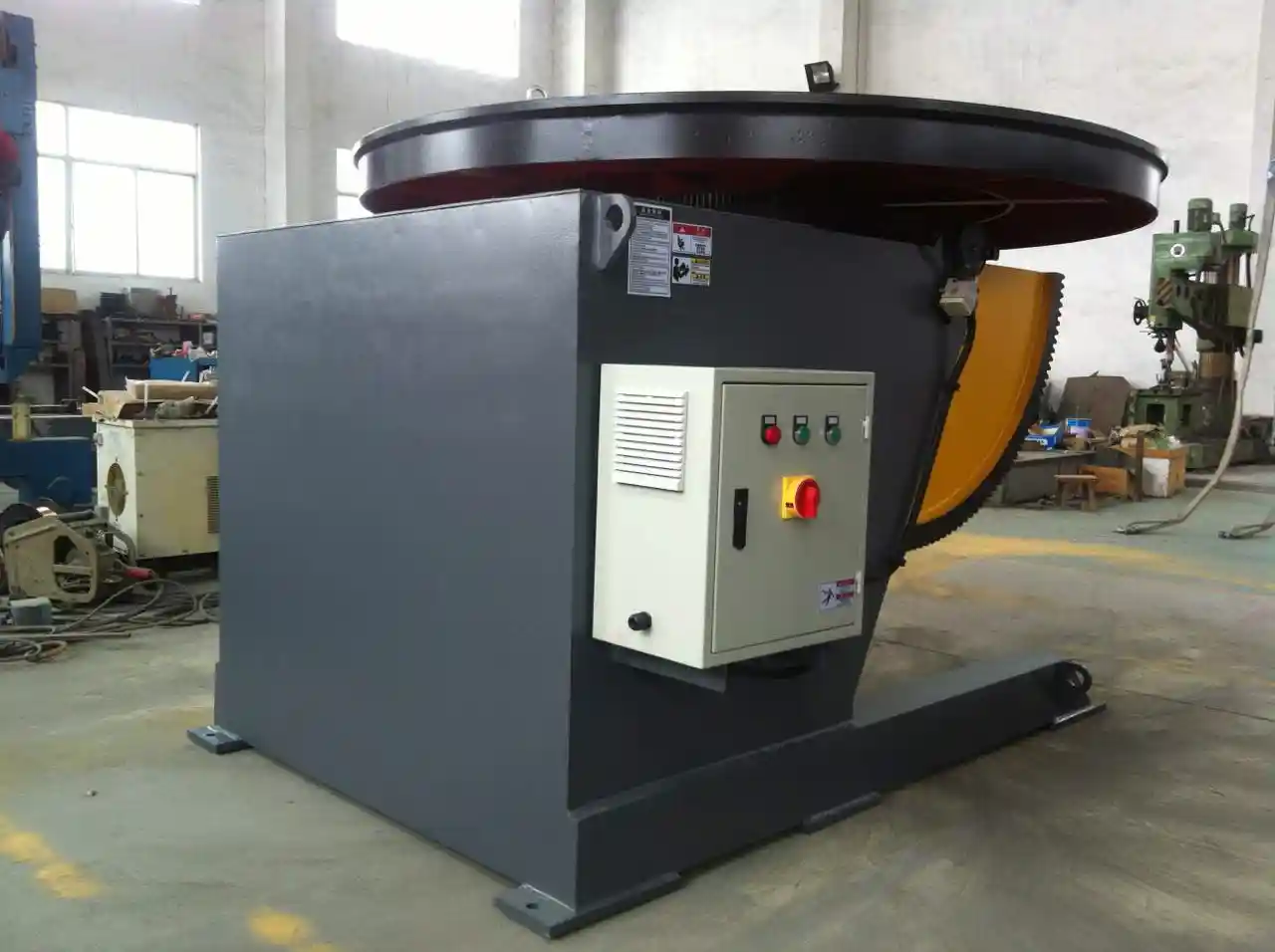
Automated membrane panel welding uses a dedicated panel welding machine or a multi-torch gantry to move welding heads along the tube-to-fin joints with controlled speed, voltage, current, and torch angle. In a properly configured station, the panel is clamped on a flat bed or positioner, and the welding sequence follows a planned pattern to balance heat input. That changes the production equation: parameters stay inside the qualified WPS range [2], and the panel receives the same heat distribution on each repeated pass.
The main advantage is repeatability, not raw speed alone. Automated equipment reduces the difference between the first panel and the fortieth panel on the same shift. Once parameters are validated on a sample, the system reports stable travel speed and arc voltage instead of relying on operator technique. This supports ISO 3834-2 documentation because weld data can be recorded per joint and linked to panel serial numbers [3].
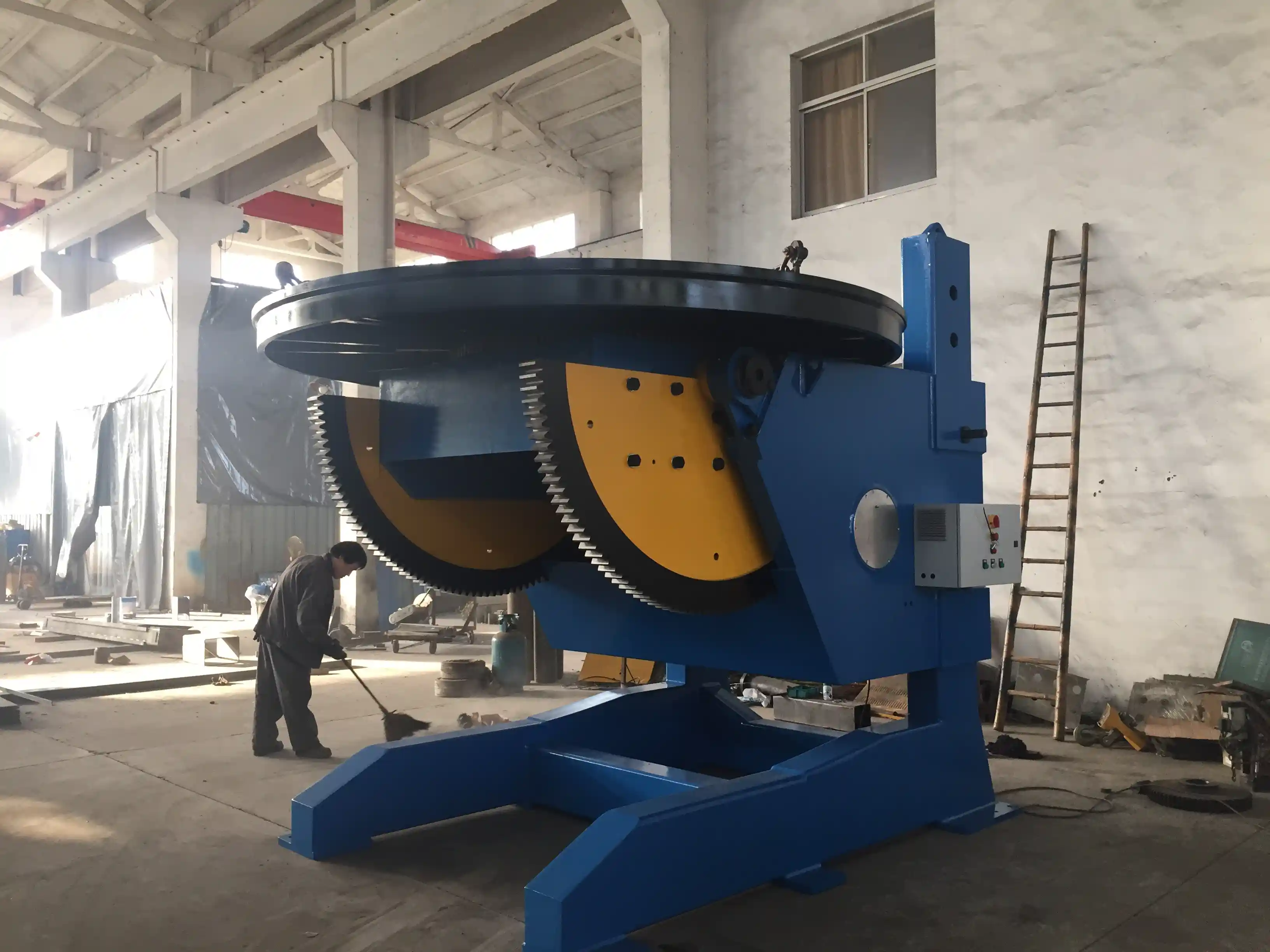
For heavy panel handling, the same positioning logic applies beyond boiler work. <Tired of Complex Welding Challenges? How a 3-Axis Positioner Can Boost Productivity by 70%> covers how precision positioners reduce setup time and raise output.
A second advantage is distortion control. Membrane panels are long, thin assemblies. Uneven manual heat input tends to pull the panel into a bow. An automated sequence can alternate weld direction, balance left and right seams, and use clamps or pre-set camber to keep the panel within tolerance. EN 12952-5 addresses workmanship and construction of boiler pressure parts, including alignment and dimensional requirements for water-tube boiler components [4]. Although automation does not replace a sound welding procedure, it makes the execution path more deterministic.
The trade-off is higher capital cost and more engineering preparation. Automated panel welding requires straight tube lengths, consistent fin-bar dimensions, and enough floor space for infeed, welding, and outfeed. If the shop runs mixed panel widths or frequent changeovers, the setup time may erase part of the productivity gain.
Head-to-head: manual vs automated membrane panel welding
| Factor | Manual welding | Automated welding |
|---|---|---|
| Capital cost | Low initial investment; higher long-term labor cost | High initial investment; lower per-panel labor cost |
| Weld consistency | Depends on operator skill and fatigue | Repeatable travel speed and voltage within WPS limits |
| Heat input control | Variable; higher bowing risk on long panels | Controlled sequence; easier distortion management |
| Tube spacing / gap tolerance | Sensitive to fit-up skill and tacking | Requires stable pre-set geometry; good fit-up still needed |
| Flexibility for short runs | High for small lots and field repair | Lower unless quick-change fixtures are planned |
| Documentation and traceability | Manual records; harder to link per-joint data | Digital parameter recording supports code audits |
| Qualified labor dependency | High | Moderate; operator trained on machine control |
| Quality assurance burden | Higher inspection and rework risk | Lower first-pass risk when setup validated |
The table does not say that automation is always better. It says that automation shifts the burden from in-process operator judgment to up-front engineering and parameter validation. Shops with steady panel volumes usually benefit; shops with one-off repair work usually do not.
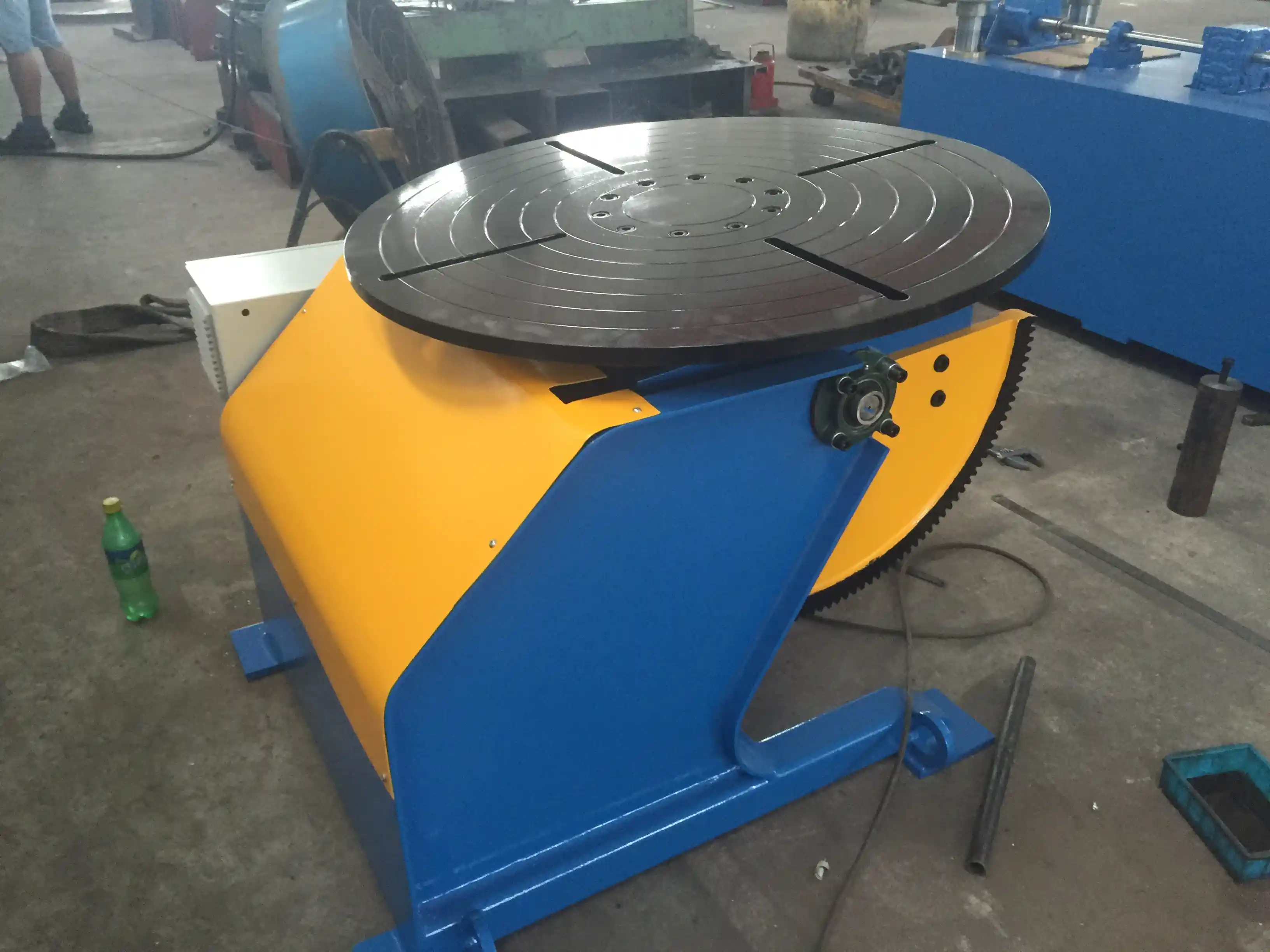
Manual processes in panel fabrication share the alignment and repeatability pain points seen in heavy tubular work. <Core Pain Points and High-Precision Solutions of Welding Positioners in the Wind Power and Shipbuilding Industries: Comprehensive Technical Analysis> covers how high-precision positioners address similar fit-up and distortion risks.
When manual still makes sense
Manual membrane panel welding remains practical in these situations:
- Short replacement panels for existing boilers
- Mixed tube diameters or non-standard panel layouts
- Low-volume job shop work with frequent design changes
- Field repair where access prevents a machine setup
- Initial prototyping or procedure development
In those cases, use strong tacking, a flat assembly table, and qualified welders. If the panel is long, manual heat input control becomes more difficult; consider straightening or pre-camber as part of the procedure.
When automated membrane panel welding pays off
Automation is usually the stronger choice when:
- Annual panel quantities are stable across several boiler models
- Tube diameter and fin-bar width fall within one machine range
- The shop must satisfy EN 12952 or ASME code documentation with high audit frequency
- Flatness and pitch tolerance create recurring rework
- Welders are scarce or the shop needs night-shift capacity without increasing weld head count
For these conditions, a dedicated membrane panel welding machine with proper positioners and clamping typically returns value through lower rework, faster panel output, and less straightening labor. One educational example is a multi-torch membrane panel welding station with synchronized welding heads: the machine applies the same weld sequence on both sides of the tube, which reduces panel bowing compared with manual one-sided progression [4].
Need help deciding where manual welding still fits? Send your panel width, tube diameter, and current operator count to jay@weldc.com; a welding automation engineer will review your manual-versus-automated case and recommend a path.
Membrane panel welding decision checklist
Use this short checklist to evaluate the manual-to-automated transition:
- Confirm tube OD, wall thickness, fin-bar width, and panel length range.
- Check current first-pass reject rate and rework hours per panel.
- Review whether your WPS/PQR already covers mechanized welding modes [2].
- Measure floor space and material flow for infeed/outfeed.
- Compare labor availability with annual panel meter demand.
- Define flatness and tube spacing tolerances from the governing code [4].
- Run a sample panel on manual and automated equipment to compare distortion, penetration, and documentation.
Tube-to-tube and tube-to-fin joints both fail when fit-up drifts. <How to Improve the Quality of Pipe Welding Through a High-Precision Welding Positioner> covers parameter control and positioner accuracy for repeatable tubular welds.
Plan Your Membrane Panel Welding Upgrade
If you are comparing manual panel welding with a dedicated production line, send the following details to jay@weldc.com for a technical review from Wuxi ABK Machinery:
- Panel length, width, and thickness range
- Tube diameter, wall thickness, and tube spacing
- Fin-bar or membrane bar width and material grade
- Current welding process and annual output per shift
- Workshop floor space and power supply
Our team will review your manual vs automated business case and propose a configuration for a membrane panel welding machine or a welding manipulator where it fits. Contact Jay at +86-13815101750 or jay@weldc.com.
FAQ
Is automated membrane panel welding always better than manual?
No. Automation provides repeatability and documentation advantages for stable production runs, but manual welding remains appropriate for short-run replacement panels, field repair, and mixed geometries. The decision should consider annual panel meter demand, floor space, and code requirements [1][3].
What is the biggest quality risk in manual membrane panel welding?
Heat input variation. Uneven travel speed and torch angle create inconsistent penetration and panel bowing, especially on long panels. This can lead to fit-up issues at header assembly and increased straightening or repair.
Can one membrane panel welding machine handle different tube diameters?
It depends on the machine range. Dedicated panel machines handle a defined tube-to-tube pitch and fin width. For mixed diameters, quick-change fixtures or semi-automatic stations may be needed.
Does automated welding remove the need for qualified welders?
No. The shop still needs qualified welding procedure specifications and operators trained on machine setup, monitoring, and inspection. ASME Section IX qualification still applies to mechanized welding [2].
What codes apply to membrane panel welding?
ASME Section I and Section IX are common for power boilers in many markets. ISO 3834-2 provides a factory quality framework, and EN 12952-5 covers workmanship for water-tube boiler pressure parts in European projects [1][2][3][4].
References
[1] ASME Boiler and Pressure Vessel Code, Section I, Rules for Construction of Power Boilers, American Society of Mechanical Engineers.
[2] ASME Boiler and Pressure Vessel Code, Section IX, Welding, Brazing, and Fusing Qualifications, American Society of Mechanical Engineers.
[3] ISO 3834-2:2005, Quality requirements for fusion welding of metallic materials — Part 2: Comprehensive quality requirements, International Organization for Standardization.
[4] EN 12952-5:2011, Water-tube boilers and auxiliary installations — Part 5: Workmanship and construction of pressure parts of the boiler, European Committee for Standardization.
If you’re interested, check out these related articles:
Low Efficiency in Pipeline Group Welding: How Intelligent Roller Racks Increase Productivity by 50%
Ship Pipeline Coating Sagging Issues: How Intelligent Paint Roller Racks Boost Pass Rates to 98%
Exceptional Application Value: How Fixed-Height Welding Positioners Drive Advancements in Offshore and Shipbuilding Manufacturing
 English
  Español
  Français
  Deutsch
  Português
  Русский