
Global demand for renewable energy keeps pushing wind turbine manufacturing forward. Building wind towers and nacelles that hold up under decades of stress requires equipment and processes that leave no room for error. The work spans from shaping raw steel plates into tower sections to assembling the complex machinery inside a nacelle. Each step has its own technical demands, and getting any of them wrong shows up eventually in maintenance costs or, worse, structural failures.
Wind Tower Fabrication Starts With Getting the Steel Right
Wind tower fabrication begins with large steel plates that need to become conical or cylindrical sections. The tolerances here are tight because any deviation compounds as sections stack during assembly. Steel plate rolling forms these sections, and the machinery has to handle plates that are both thick and wide without introducing warping or inconsistent curvature.
Once sections are formed, wind tower welding lines take over. Submerged Arc Welding (SAW) dominates this stage because it delivers high deposition rates and deep penetration, both necessary when joining thick steel. The flux blanket in SAW also shields the weld pool from atmospheric contamination, which matters for welds that will face constant cyclic loading from wind forces.
Automated welding wind towers has become standard practice. Manual welding on these large sections introduces variability that shows up in quality control, and the physical demands on welders working on curved surfaces for extended periods create consistency problems. Automation addresses both issues.
Quality control wind tower sections involves non-destructive testing at multiple stages. Ultrasonic inspection can detect subsurface flaws that visual inspection misses. Every weld that passes inspection represents one less potential failure point over the tower’s operational life.
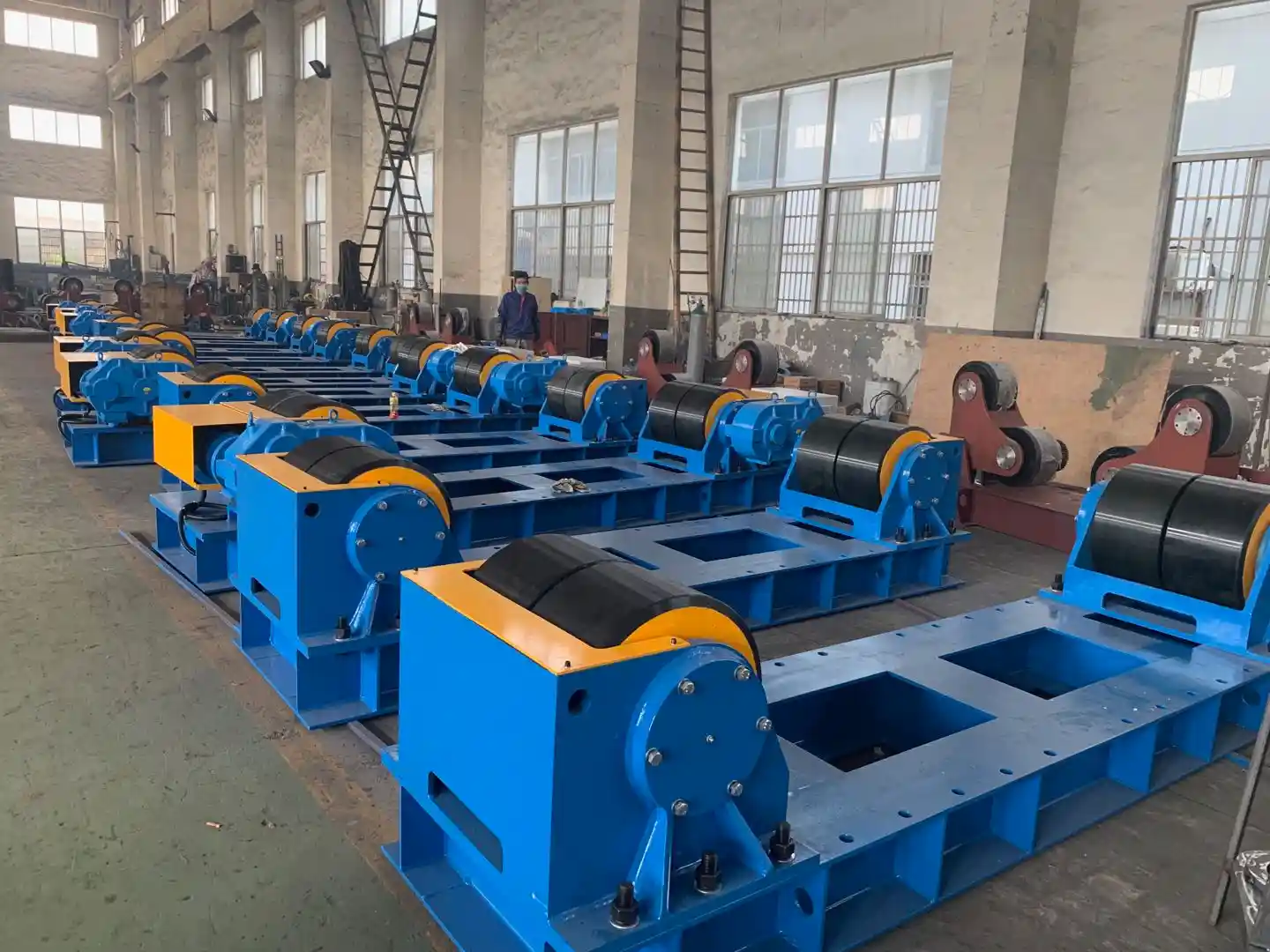
Article Recommendation: If you are interested in optimizing your production, explore 《Wind Tower Welding Problems Again: How Intelligent Growing Line Rotators Boost Productivity by 50%》.
Nacelle Manufacturing Demands Precision Across Multiple Component Types
The nacelle sits at the top of the tower and contains everything that converts wind into electricity. Nacelle assembly equipment has to accommodate components that vary dramatically in size, weight, and precision requirements.
Wind turbine hub manufacturing produces the part that connects the blades to the drivetrain. Hubs experience enormous bending moments as blades rotate, so casting quality and subsequent machining determine whether the hub survives its design life. Gearbox housing production faces similar demands since the housing must maintain precise alignment between gears under varying loads and temperatures.
Main shaft forging creates one of the heaviest single components in the nacelle. The forging process itself establishes the grain structure that determines fatigue resistance, and subsequent machining must achieve tight tolerances without introducing residual stresses that could initiate cracks.
Nacelle welding techniques vary by component. Some joints need deep penetration for structural strength while others require minimal heat input to avoid distortion of precision-machined surfaces. Component integration nacelle work then brings everything together, with alignment tolerances measured in fractions of a millimeter for components that weigh several tons.
Automation Changes What Wind Component Production Can Achieve
Automation has reshaped wind energy component production in ways that go beyond simple labor replacement. Robotics in wind component production handles tasks that require either dangerous positioning or repetitive precision that fatigues human workers.
CNC cutting wind tower sections produces consistent results across hundreds of cuts. The programming captures the optimal cutting parameters once, then reproduces them exactly. This consistency matters because variations in cut quality affect fit-up for subsequent welding operations.
Automated material handling wind energy systems move components that are too heavy for manual handling and too valuable to risk dropping. A tower section that gets damaged during handling represents weeks of production time lost. Automated systems reduce this risk while also improving throughput by eliminating bottlenecks at handling stages.
Production efficiency wind turbines improves when automation connects previously separate operations. Digital manufacturing wind components enables real-time monitoring that catches problems before they propagate through subsequent production stages.
| Merkmal | Manual Welding | Automated Welding |
|---|---|---|
| Consistency | Variable, operator-dependent | High, machine-controlled |
| Speed | Slower | Faster |
| Precision | Lower | Higher |
| Arbeitskosten | Hoch | Lower (per unit) |
| Safety | Higher risk | Lower risk |
| Reproduzierbarkeit | Niedrig | Hoch |
Weld Quality Determines How Long Wind Turbines Last
Structural integrity in wind turbines depends on welds that perform under conditions most welded structures never face. Tower sections experience millions of load cycles over their operational life as wind speeds vary. Offshore wind foundation welding adds corrosive saltwater exposure to the stress picture.
Precision welding wind turbine reliability comes from controlling every variable that affects weld quality. Joint preparation, preheat temperature, interpass temperature, travel speed, and shielding gas composition all influence the final result. Automated systems can maintain these parameters within tighter ranges than manual welding typically achieves.
Non-destructive testing welding catches flaws before components leave the factory. Ultrasonic testing detects internal discontinuities. Radiographic inspection reveals porosity and inclusions. Magnetic particle inspection finds surface and near-surface cracks. Each method has strengths for particular flaw types, so comprehensive quality programs use multiple techniques.
Fatigue life wind components depends on weld geometry as much as weld soundness. Stress concentrations at weld toes can initiate cracks even in welds that pass all quality tests. Post-weld treatments like grinding or peening can improve fatigue performance by reducing these stress concentrations.
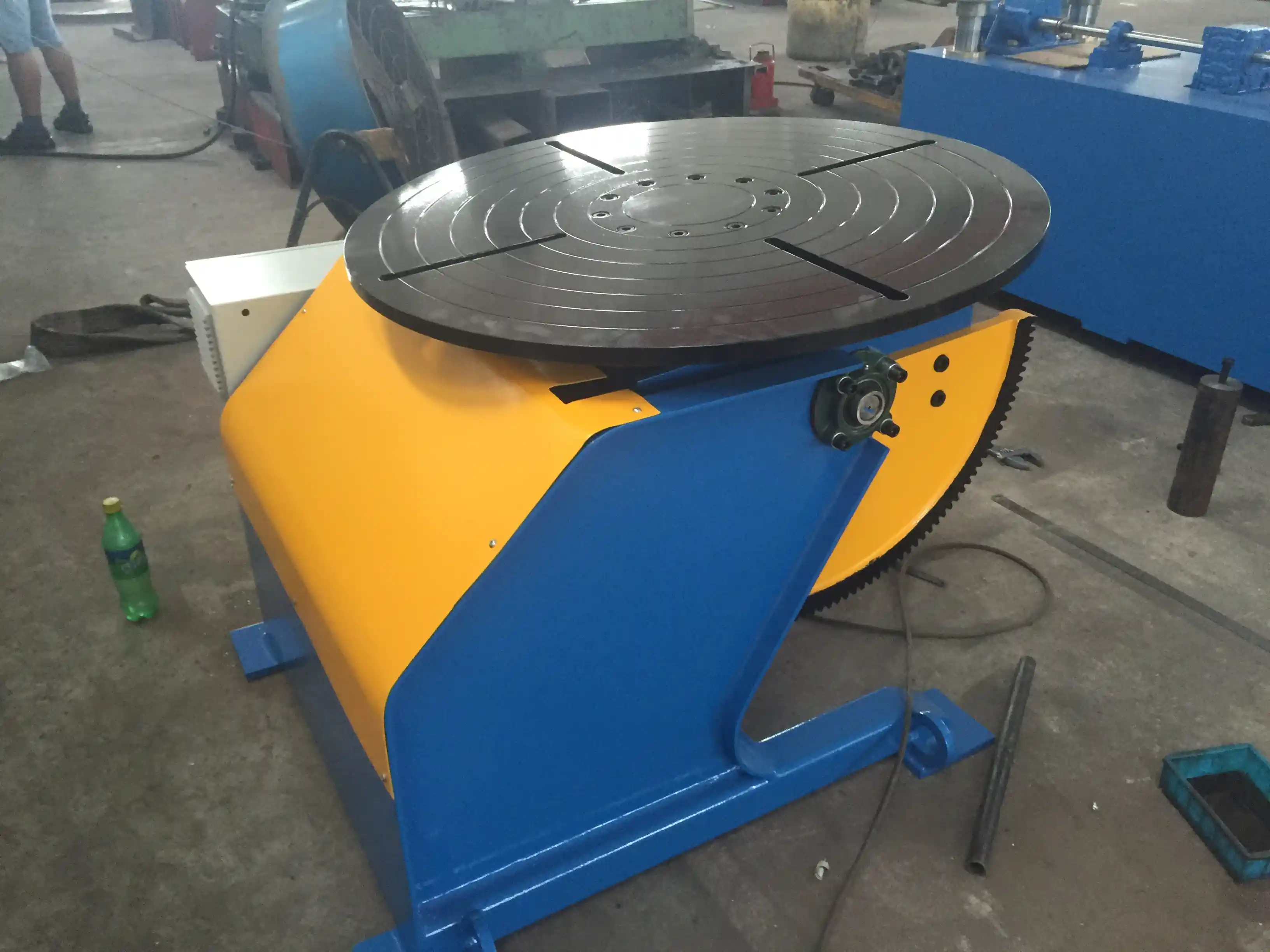
Article Recommendation: Discover more about precision welding in 《Core Pain Points and High-Precision Solutions of Welding Positioners in the Wind Power and Shipbuilding Industries: Comprehensive Technical Analysis》.
Moving Massive Components Creates Its Own Set of Problems
Wind energy components push the limits of what transportation infrastructure can handle. Onshore wind tower logistics involves tower sections that may exceed road width limits, require bridge weight assessments, and need specialized trailers that can negotiate curves without damaging the cargo or the road.
Offshore wind component transport adds marine logistics complexity. Vessels must be capable of loading, securing, and unloading components that weigh hundreds of tons. Weather windows constrain scheduling since heavy lifts cannot proceed in high seas.
Supply chain management wind turbines coordinates dozens of suppliers across multiple countries. A delay in blade delivery can idle an installation vessel that costs tens of thousands of dollars per day. Project planning wind farm construction must build contingency into schedules while keeping projects economically viable.
Site assembly wind components requires heavy lift equipment and precise positioning. Foundation bolts must align with tower base holes. Tower sections must mate without forcing. Nacelle placement must achieve the alignment that drivetrain components require. Equipment that facilitates efficient handling at each stage reduces both time and risk.
FAQs About Wind Component Manufacturing
What welding techniques work best for wind tower sections?
Submerged arc welding handles most wind tower section joints because it deposits weld metal quickly while achieving the penetration that thick steel requires. The flux layer that gives SAW its name also produces clean welds with minimal spatter. For positions or joint configurations where SAW cannot reach, gas metal arc welding and flux-cored arc welding provide alternatives. Robotic automation runs these processes with the consistency that manual welding struggles to match across production volumes.
How do manufacturers verify nacelle component integrity?
Verification starts with material certification and continues through every manufacturing stage. Castings undergo radiographic inspection to detect internal shrinkage or porosity. Forgings receive ultrasonic testing to confirm that the forging process produced sound material throughout. Machined surfaces get dimensional inspection against tolerances that ensure proper fit and function. Welded assemblies face the same non-destructive testing applied to tower sections. Finite element analysis and physical fatigue testing validate that designs will survive operational stresses before production begins.
What makes scaling wind component production difficult?
Volume increases expose weaknesses that low-rate production can work around. A welding procedure that works when a skilled operator has time to adjust parameters may fail when production pressure demands faster cycle times. Supply chains that deliver adequate quantities for prototype builds may not scale to support full production rates. Equipment that handles occasional heavy lifts may not survive continuous duty cycles. Manufacturers who scale successfully invest in automation, supplier development, and equipment rated for production rather than prototype volumes.
Partner with WUXI ABK for Advanced Wind Energy Solutions
WUXI ABK MACHINERY CO., LTD provides welding and cutting solutions designed for wind energy manufacturing demands. Our Wind Tower Welding lines, CNC-Plasma-Schneiders, and specialized equipment address the precision, efficiency, and reliability requirements that wind component production demands. Contact us to discuss how our equipment can support your manufacturing operations. Email jay@weldc.com or call +86-13815101750.
 English
  Español
  Français
  Deutsch
  Português
  Русский