
When you spend your days around roll formers and stamping presses, you learn fast that a fin height drifting by a few micrometers can turn a well-behaved heat exchanger into a problem child. As a welding automation engineer, I rely on tight control of dimensions, materials, and process variables, backed by tolerances I can defend and acceptance criteria that hold up under real operating conditions. What follows lays out what fin-bars are and where they’re used, the dimensional, material, and surface finish tolerances that matter, the standards and tests that define acceptance, and the in-process controls, automation, and continuous improvement practices that keep quality steady.
Defining Fin-Bar Production and Its Importance in Manufacturing
1. What are Fin-Bars and Their Primary Applications?
Fin-bars are purpose-built elements in heat exchange systems and they do the quiet, hard work of moving heat. They are thin strips of metal, often aluminum, copper, or stainless steel, formed to increase surface area for efficient heat transfer. Manufacturers integrate fin-bars into radiators, condensers, evaporators, and intercoolers used in automotive, HVAC, power generation, and chemical processing. Their job is to boost thermal efficiency so systems can dissipate or absorb heat more effectively. The design and material set are chosen to match the application’s thermal load and environment.
2. Why Quality Control is Crucial for Fin-Bar Performance
Quality control in fin-bar production directly shapes system performance and service life. Deviations in fin geometry, material properties, or surface finish cut heat transfer efficiency, push up energy use, and can trigger early failures. I have seen improper fin spacing or height choke airflow, and I have also seen surface imperfections become hotspots or corrosion starters. Tight quality control keeps fin-bars on design, preserves thermal performance, and avoids costly downtime. It also protects safety margins in high-consequence applications.
Establishing Key Tolerances in Fin-Bar Manufacturing Processes
1. Geometric Tolerances for Fin-Bar Dimensions
Geometric tolerances define the allowed variation in size and form, which is central to fit, assembly, and thermal performance inside a heat exchanger. Key parameters include fin height, pitch (spacing between fins), thickness, and straightness. For example, a tight tolerance on fin height stabilizes airflow distribution, and precise pitch preserves the designed heat transfer area. We specify these in micrometers or thousandths of an inch, depending on required precision. Robust measurement, including optical inspection systems, is used to verify these dimensions.
2. Material and Surface Finish Tolerances for Optimal Functionality
Material and surface finish tolerances carry equal weight. Material specifications define alloy composition, hardness, and thermal conductivity so the fin-bar can handle operating temperatures and pressures while moving heat efficiently. Surface finish, including roughness and coating thickness, influences corrosion resistance, cleanliness, and aerodynamic behavior. A smooth, uniform surface helps reduce pressure drop and limits fouling, which otherwise erodes performance over time. Specialized coatings, applied within strict thickness bands, add durability and resist environmental damage.

3. Process Parameters Influencing Fin-Bar Tolerances
Multiple process variables drive the achieved tolerances. Equipment precision in stamping or rolling, cutting tool wear, and material feed rates all matter. Inconsistent tension during roll forming, for instance, shows up as variation in fin height and pitch. Worn tooling creates burrs or uneven edges, which affects both surface finish and dimensional accuracy. Temperature and humidity influence material behavior, so controlled environments help. Regular calibration and maintenance of machinery are required to hold tight tolerances.
Developing Robust Acceptance Criteria for Fin-Bar Quality Assurance
1. Industry Standards and Regulatory Requirements for Fin-Bars
Industry standards and regulatory frameworks anchor acceptance criteria. Groups such as ISO, ASTM, and industry bodies like ASME for pressure vessels publish guidelines for material properties, dimensional tolerances, and testing methods. Working to these standards supports safety, reliability, and interchangeability. In automotive heat exchangers, manufacturers must meet specific performance and durability requirements to avoid early failure. Compliance reduces legal exposure and improves market acceptance. We ensure our manufacturing processes align with these requirements.
2. Visual Inspection and Non-Destructive Testing Methods
Visual inspection and non-destructive testing are the first line of defense in quality assurance. Visual checks catch dents, scratches, burrs, or missing fins, and automated optical systems can scan large batches quickly. NDT techniques, including eddy current testing or ultrasonic testing, uncover subsurface cracks, material inconsistencies, or coating thickness variations without harming the part. These methods expose defects that threaten structural integrity or thermal performance. Running these checks early prevents wasted effort on parts that will not pass.
3. Mechanical and Performance Testing for Fin-Bar Acceptance
Mechanical and performance testing confirm that fin-bars tolerate service stresses and meet thermal targets. Mechanical tests include tensile strength, hardness, and fatigue to validate material integrity. Performance tests such as pressure drop, airflow resistance, and heat transfer coefficient simulate real operating conditions. For specialized cases, thermal shock testing or vibration analysis may be needed. The resulting data show whether the fin-bars meet or exceed the specified benchmarks.
We recommend reading “Improving Quality And Efficiency In Tank And Pressure Vessel Manufacturing The Core Application Value Of Positioners” for more insights into quality assurance in manufacturing.
Implementing Effective Quality Control Strategies in Fin-Bar Production
1. Best Practices for In-Process Quality Monitoring
In-process quality monitoring keeps output stable from shift to shift. That means real-time data collection and analysis at defined stages of the line. We use statistical process control to track key parameters, spot trends, and catch issues before they create defects. Automated sensors and cameras watch dimensions, surface quality, and material flow continuously. Operators get immediate feedback so they can adjust before parts drift out of spec. This approach cuts waste and rework and supports steady throughput.
2. The Role of Automation and Advanced Measurement Systems
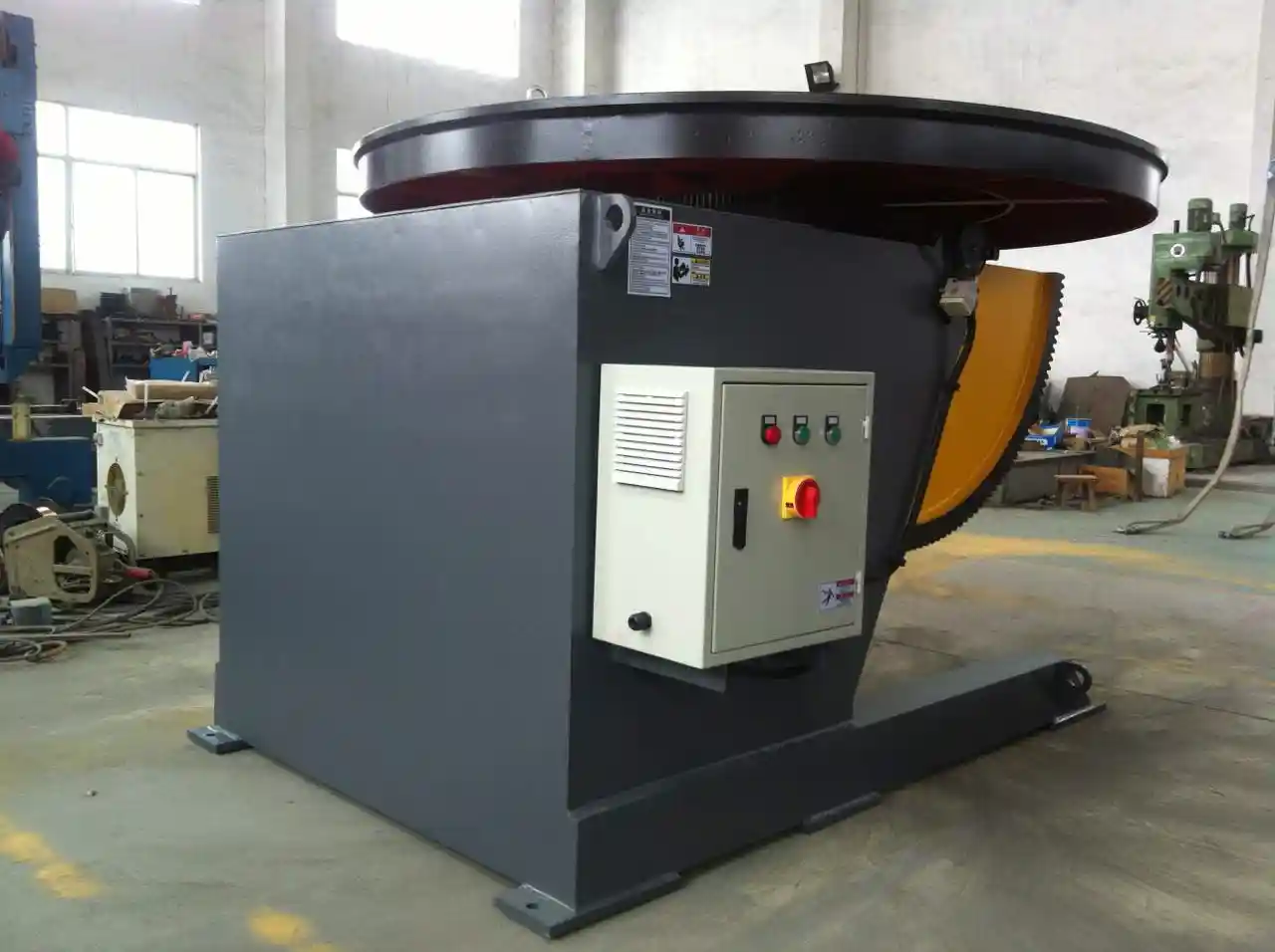
Automation and advanced measurement systems are the backbone of precision here. Robotic handling keeps positioning consistent and reduces human error. High-speed laser micrometers and 3D optical scanners deliver accurate, non-contact measurements and capture complex geometries in detail. Automated defect detection that uses artificial intelligence and machine learning flags subtle flaws that human inspectors might miss. These tools raise inspection speed, accuracy, and repeatability, which shows up as better product quality.
For further reading, explore “Welding Manipulators for Wind Tower Fabrication: Revolutionizing Production Efficiency”.
3. Continuous Improvement and Defect Prevention in Fin-Bar Manufacturing
Continuous improvement is how we prevent defects rather than just catching them. We apply Six Sigma and Lean Manufacturing to find and remove variation and waste. Root cause analysis explains why defects occur so corrective and preventive actions are targeted and lasting. Regular training keeps teams sharp on equipment operation and quality protocols. Over time, this builds a strong quality culture and lifts both product performance and operational efficiency.
Partner with WUXI ABK for Precision Manufacturing Solutions
At WUXI ABK MACHINERY CO., LTD, we specialize in advanced welding equipment and CNC cutting machines that support high-precision manufacturing. Our expertise ensures your production processes meet the most rigorous quality standards. Contact us today to discuss how our solutions can enhance your fin-bar production quality and overall manufacturing efficiency.
E-Mail: jay@weldc.com
Mobil: +86-13815101750
FAQs
1. What are the most common defects found in fin-bar production?
Common defects include dimensional inaccuracies such as incorrect fin height or pitch, surface imperfections such as scratches, burrs, or uneven coatings, and material flaws such as cracks or inclusions. Any of these can undercut thermal performance and structural integrity.
2. How do environmental factors affect fin-bar quality and tolerances?
Temperature swings and humidity influence material properties and machine precision. For example, thermal expansion or contraction can shift dimensions if conditions are not controlled during manufacturing.
3. What is the difference between tolerance and acceptance criteria?
Tolerance is the allowed deviation from a specified dimension or property for a part to be acceptable. Acceptance criteria define the broader conditions for satisfaction, including tolerances, visual standards, and performance test results.
4. Can fin-bar quality impact the efficiency of heat exchange systems?
Yes. Incorrect dimensions or surface finish can restrict airflow, reduce heat transfer area, and increase pressure drop, which lowers system performance and raises energy consumption.
5. What are the latest advancements in fin-bar quality inspection technology?
Recent tools include high-speed 3D optical scanning for full dimensional checks, AI-powered visual inspection for automated defect detection, and inline NDT for real-time verification of material integrity. These raise precision and throughput.
 English
  Español
  Français
  Deutsch
  Português
  Русский