Membrane panels carry a lot of responsibility in power generation and chemical processing, and the quality of their welds sets the tone for safety, efficiency, and uptime. Reliable joints prevent costly failures and keep performance steady under heat, pressure, and corrosion. From materials and joint design to standards, process control, and NDT, every decision shows up in service life. We push for strict best practices and advanced welding technologies to deliver consistent, code-compliant results.
Understanding the Criticality of Membrane Panel Welding Quality
1. The Role of Membrane Panels in Industrial Applications
Membrane panels form integral parts of heat recovery steam generators (HRSG), boilers, and various heat exchange systems. They consist of tubes welded together with membrane bars, creating a gas-tight wall necessary for efficient heat transfer and containment. These panels operate under extreme conditions, including high temperatures, fluctuating pressures, and corrosive environments. Their structural integrity is vital for preventing leaks, ensuring thermal efficiency, and maintaining overall system reliability. The demanding operational environment necessitates flawless welding to guarantee their longevity and performance.
2. Consequences of Substandard Welding in Membrane Panels
Substandard welding in membrane panels leads to severe consequences. Weld defects such as porosity, cracks, lack of fusion, and incomplete penetration can compromise structural integrity. These defects often initiate fatigue failures, stress corrosion cracking, or creep damage, resulting in premature component failure. Such failures cause significant operational downtime, costly repairs, and potential safety hazards. In critical applications, a single weld failure can lead to catastrophic system breakdowns, environmental damage, and substantial financial losses. Therefore, maintaining superior weld quality is not merely a best practice; it is an absolute necessity.
Essential Quality Requirements for Membrane Panel Welding
1. Material Selection and Compatibility Considerations
Proper material selection is the foundational step for high-quality membrane panel welding. Materials must withstand specific operational temperatures, pressures, and corrosive agents. Common materials include carbon steel, alloy steel, and stainless steel, each chosen for its unique properties. Compatibility between the base material and the welding consumables (electrodes, filler wires) must be maintained. Incompatible materials can lead to metallurgical issues, such as hot cracking or reduced corrosion resistance, compromising weld integrity. Material certifications and traceability are vital to ensure compliance with design specifications and industry standards.
2. Pre-Welding Preparation and Joint Design Optimization
Thorough pre-welding preparation and optimized joint design significantly influence weld quality. Joint edges must be precisely machined to achieve the specified geometry, typically a V-groove or U-groove. Cleaning removes contaminants such as rust, oil, and paint, which can cause weld defects. Proper fit-up, ensuring accurate alignment and gap control, minimizes residual stresses and distortion. Preheat, if required, controls cooling rates, reducing hydrogen-induced cracking risks in susceptible materials. The joint design dictates weld accessibility, material deposition rates, and overall weld strength.
3. Adherence to Industry Standards and Codes for Membrane Panels
Adherence to industry standards and codes is non-negotiable for membrane panel welding. Organizations like ASME (American Society of Mechanical Engineers), AWS (American Welding Society), and EN (European Standards) provide detailed guidelines. These codes specify material requirements, welding procedures, welder qualifications, and inspection criteria. Compliance ensures that welds meet minimum strength, ductility, and toughness requirements. Deviations from these standards can result in non-conforming products, regulatory penalties, and significant liability issues. Implementing a robust quality management system ensures consistent adherence to these critical benchmarks.
Implementing Best Practices for Membrane Panel Welding
1. Advanced Welding Techniques for Membrane Panels
Advanced welding techniques are vital for achieving superior quality in membrane panel fabrication. Automated processes, such as Submerged Arc Welding (SAW), Gas Metal Arc Welding (GMAW), and Gas Tungsten Arc Welding (GTAW), offer precise control over welding parameters. These methods minimize human error and ensure consistent, high-quality welds. For instance, SAW provides high deposition rates and deep penetration, suitable for thick sections. Pulsed GMAW offers better control over heat input, reducing distortion and improving weld bead appearance. Orbital welding systems are particularly effective for consistent circumferential welds in tubes.
2. Controlling Heat Input and Distortion in Membrane Panel Welding
Controlling heat input and distortion is critical for maintaining the dimensional accuracy and mechanical properties of membrane panels. Excessive heat input can lead to grain growth, reduced toughness, and significant distortion. Strategies for control include optimizing welding parameters (current, voltage, travel speed), using multi-pass welding with controlled interpass temperatures, and employing specialized welding sequences. Fixturing and clamping mechanisms help restrain movement during welding. Post-weld heat treatment (PWHT) can relieve residual stresses and improve microstructure, although it adds to production time and cost.
Wenn Sie interessiert sind, schauen Sie unter 《Mastering Heavy Manufacturing How Climbing Roller Stands Become The Cornerstone Of Efficient Welding》.
3. Utilizing Precision Welding Equipment for Enhanced Quality
Precision welding equipment is indispensable for achieving high-quality membrane panel welds. Automated systems offer superior control and repeatability compared to manual welding. Robotic welding cells, for example, can execute complex weld paths with extreme accuracy. Welding manipulators provide stable platforms for welding torches, ensuring consistent travel speed and arc length. Positioners and rotators orient workpieces optimally, allowing for downhand welding positions that improve weld quality and welder comfort. Investing in advanced equipment minimizes defects, boosts productivity, and enhances overall weld integrity.
Comprehensive Quality Control and Inspection for Membrane Panels
1. Non-Destructive Testing (NDT) Methods for Weld Integrity
Non-Destructive Testing (NDT) methods are essential for verifying weld integrity without damaging the component. Common NDT techniques include visual inspection, liquid penetrant testing (PT), magnetic particle testing (MT), ultrasonic testing (UT), and radiographic testing (RT). Visual inspection identifies surface defects. PT and MT detect surface-breaking and near-surface discontinuities, respectively. UT and RT are used for detecting internal flaws such as cracks, porosity, and inclusions. These inspections ensure compliance with specified quality standards and prevent defective components from entering service.
2. Post-Weld Treatment and Surface Finishing Techniques
Post-weld treatment and surface finishing enhance the performance and longevity of membrane panel welds. Post-weld heat treatment (PWHT) reduces residual stresses, improves toughness, and modifies microstructure. Grinding and machining remove excess weld material, creating a smooth surface that reduces stress concentrations and improves fatigue life. Shot blasting or pickling can clean surfaces, removing scale and improving corrosion resistance. Proper surface finishing is particularly important in corrosive environments or where aesthetic requirements are strict.
3. Documentation and Traceability for Quality Assurance
Thorough documentation and traceability systems are vital for quality assurance in membrane panel fabrication. Every step, from material procurement to final inspection, must be recorded. This includes material certificates, welding procedure specifications (WPS), procedure qualification records (PQR), welder performance qualifications (WPQ), and NDT reports. Traceability ensures that each weld can be linked back to its specific materials, welders, and procedures. This detailed record-keeping is vital for regulatory compliance, failure analysis, and continuous improvement processes.
The Role of WUXI ABK Equipment in Ensuring Welding Excellence
At WUXI ABK MACHINERY CO., LTD, we understand the critical demands of membrane panel welding. Our advanced welding equipment is engineered to meet these rigorous standards, providing precision, reliability, and efficiency. We are a professional manufacturer of welding equipment and CNC cutting machines, established in 1999. Our solutions enhance welding quality, reduce defects, and optimize production workflows.
1. Enhancing Precision with WUXI ABK Welding Manipulators
WUXI ABK Welding Manipulators are designed for precise longitudinal and circumferential seam welding. These column and boom systems offer stable operation with positioning accuracy of ±0.1 mm/m. Features like high-strength box-beam structures, linear guideways, and stepless speed control ensure consistent weld quality. Optional flux recovery, real-time monitoring, and seam tracking further enhance precision and control.
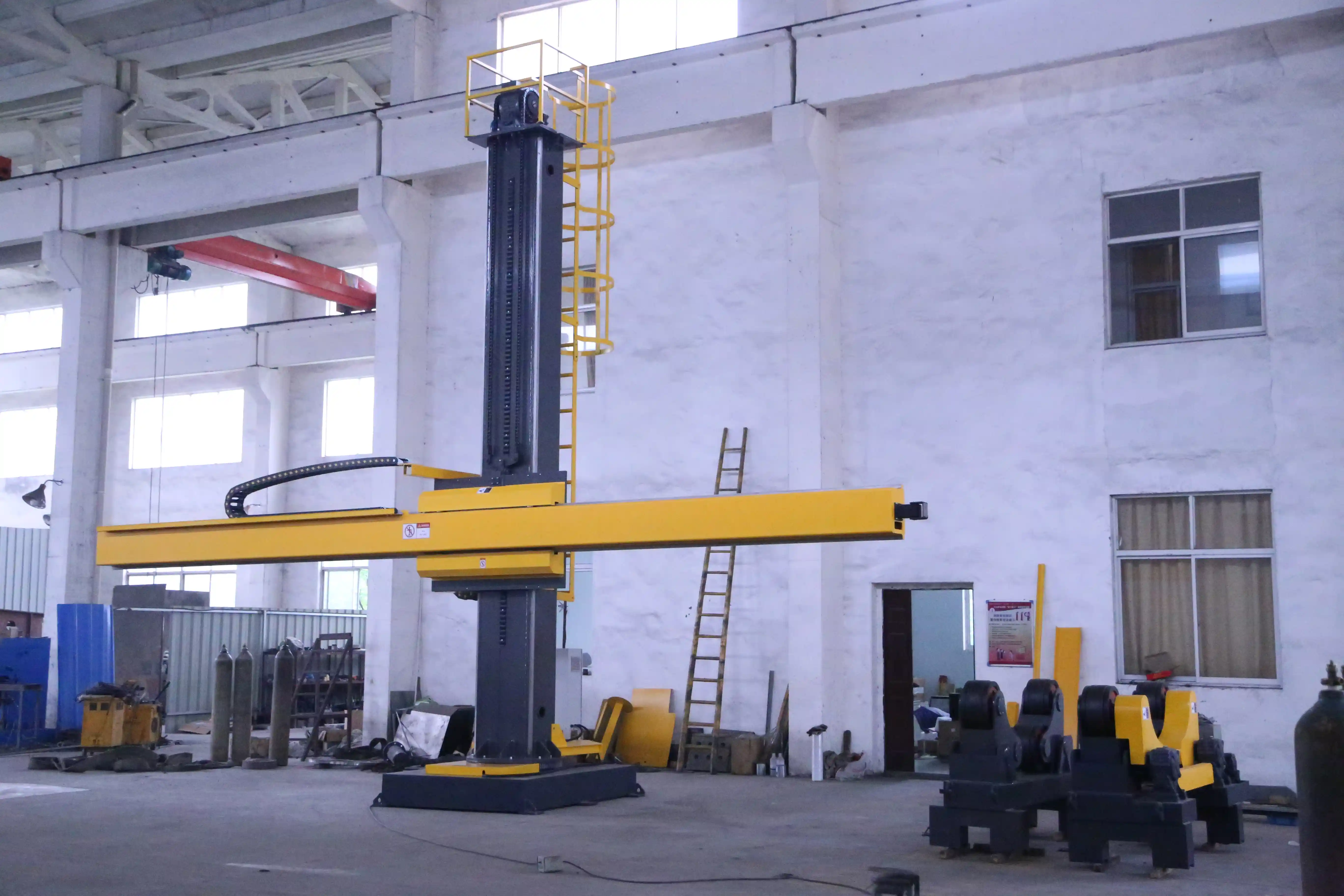
| Modell | Horizontale Bewegung | Vertikales Reisen | Drehung | Positionierungsgenauigkeit | Anwendungen |
|---|---|---|---|---|---|
| LH8080 | 8000 mm | 8000 mm | ±180° | ±0,1 mm/m | Boiler fabrication, Pressure vessel welding |
| LH4580 | 4500 mm | 8000 mm | ±180° | ±0,1 mm/m | Herstellung von Lagertanks, Schweißen von Windkrafttürmen |
| LH5060 | 5000 mm | 6000 mm | ±180° | ±0,1 mm/m | Chemical equipment, Heavy steel structures |
Our manipulators are ideal for large-scale projects requiring high accuracy, such as boiler fabrication and pressure vessel welding. They provide the stability needed for consistent, high-quality welds.
2. Optimizing Positioning with WUXI ABK Welding Positioners
WUXI ABK Welding Positioners ensure optimal workpiece orientation for superior welding. Our 3-axis positioners offer synchronized turning, rotating, and tilting with positioning accuracy of ±0.05 mm and repeatability of 0.02 mm. These systems are compatible with leading robotic brands like ABB, KUKA, and FANUC. Servo-driven structures and high-precision reducers guarantee smooth, accurate movement. This precision allows welders to achieve optimal downhand positions, improving weld quality and reducing operator fatigue.
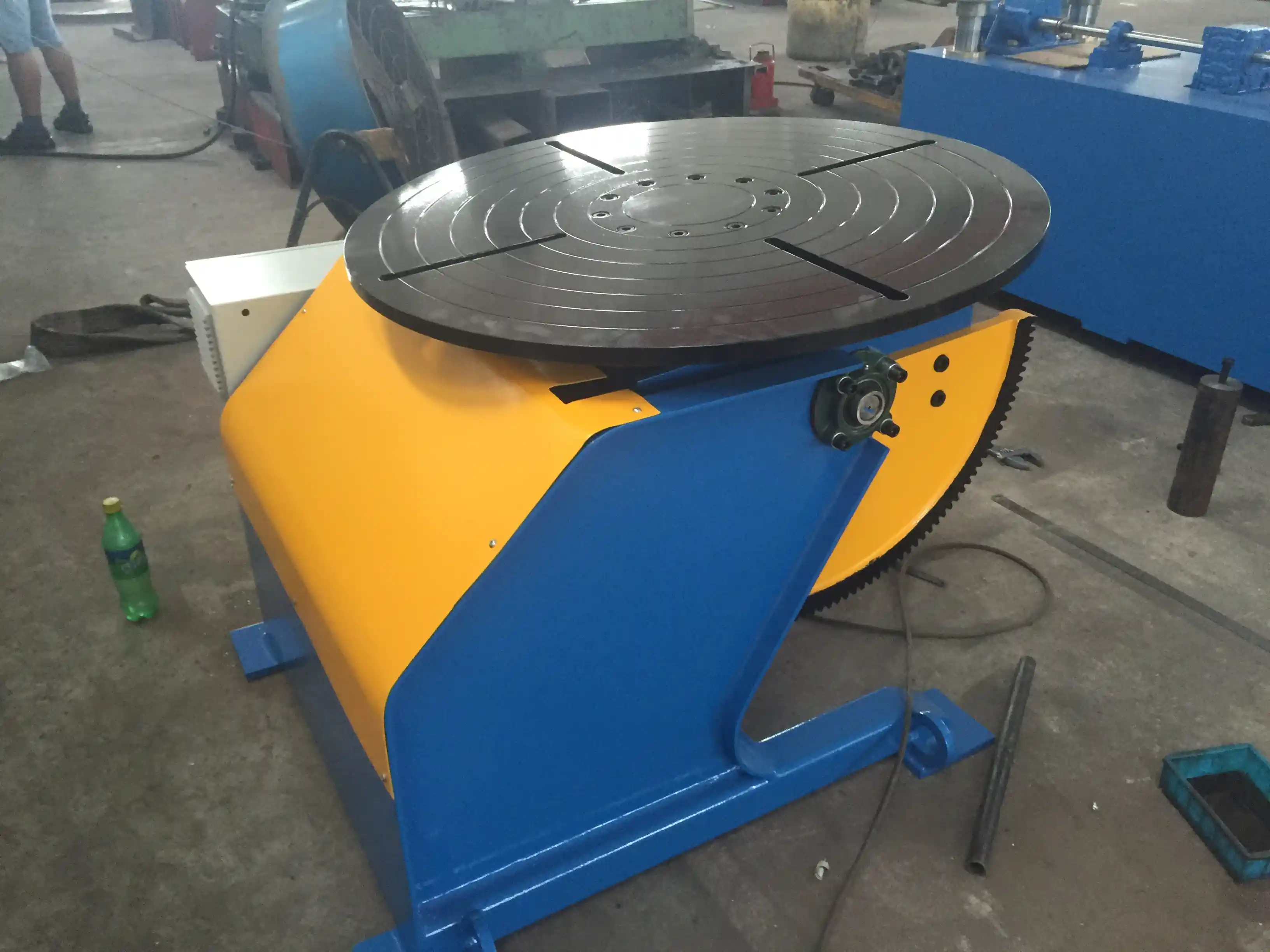
| Modell | Maximale Belastung | Positionsgenauigkeit | Reproduzierbarkeit | Anwendungen |
|---|---|---|---|---|
| 1 Tonne 3-Achsen-Positionierer | 1 Tonne | ±0,05 mm | 0,02 mm | Automotive, Aerospace, Pressure vessel seam welding |
| 2 Tonnen 3-Achsen-Positionierer | 2 Tonnen | 0,05 mm | 0,02 mm | Automated welding cells, Pipe and flange welding |
| 3-Achsen-Schweißpositionierer 3 Tonnen | 3000 kg | ±0,05 mm | 0,02 mm | Robotic welding stations, Metal structure assembly |
| Dreifach-Achsen-Positioniertisch 5 Tonnen | 5000 kg | ±0,05 mm | 0,02 mm | Pressure vessel welding, Shipbuilding fixtures |
Our positioners are crucial for complex assemblies, ensuring every weld is executed with maximum precision. For more insights, refer to Revolutionäre Lösung für das Schweißen von Druckbehältern Technische Analyse von um 360 Grad drehbaren Schweißpositionierern
3. Streamlining Rotational Welding with WUXI ABK Rotators
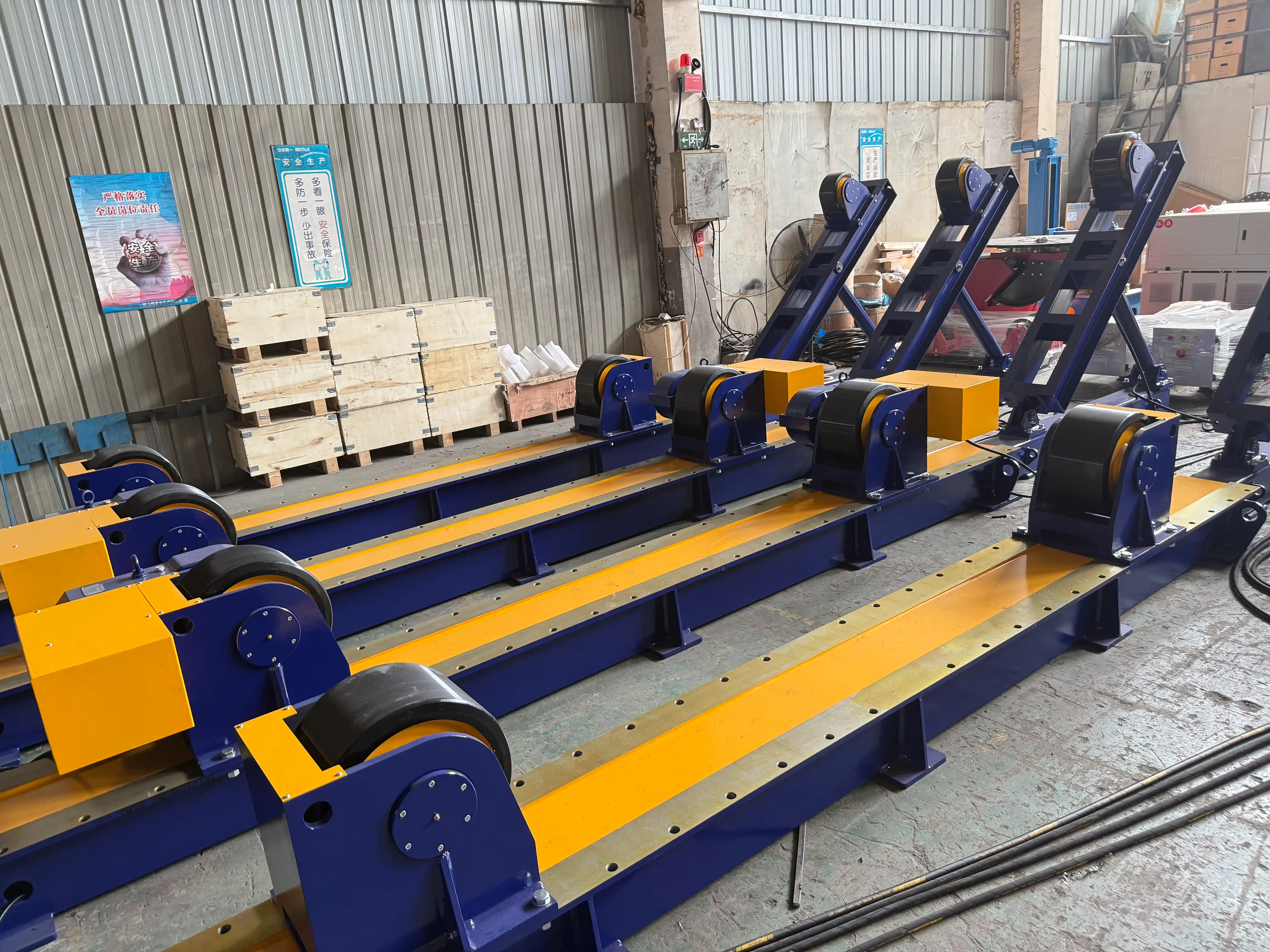
WUXI ABK Rotators are designed for efficient and precise rotational welding of cylindrical components. Our adjustable height pipe rotators, like the HGK series, accommodate a wide range of vessel diameters and weights. They feature stepless speed control, automatic centerline alignment, and anti-creep mechanisms, ensuring stable rotation and precise positioning. High-performance cast steel rollers provide exceptional wear resistance and durability. These rotators significantly enhance productivity and weld quality for large-diameter pipes and pressure vessels.
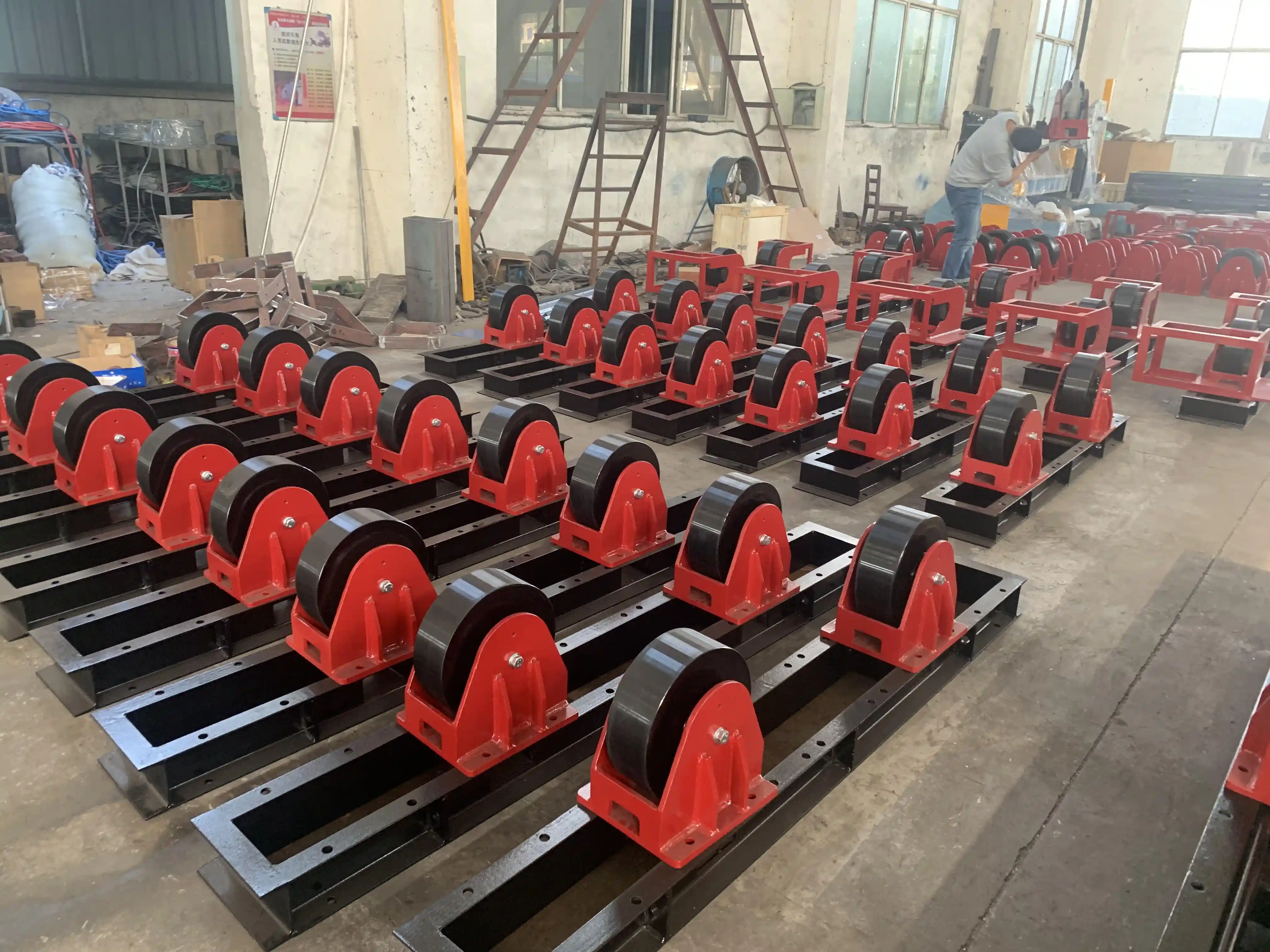
| Modell | Tragfähigkeit | Bereich der Gefäßdurchmesser | Raddrehzahl | Anwendungen |
|---|---|---|---|---|
| HGK-5 (5 Tons) | 5 Tonnen | 250-2800mm | 6-60 m/h | Pressure vessel fabrication, Pipeline girth welding |
| HGK-10 (10 Tons) | 10 Tonnen | 300-3200mm | 6-60 m/h | Wind tower flange welding, Large-diameter pipe welding |
| HGK-20 (20 Tons) | 20 Tonnen | 500-4500mm | 6-60 m/h | Heavy steel structure welding, LNG tank fabrication |
| HGK-40 (40 Tons) | 40 Tonnen | 500-4800mm | 6-60 m/h | Offshore platform construction, Boiler manufacturing |
| HGK-100 (100 Tons) | 100 Tonnen | 800-5000mm | 6-60 m/h | Wind tower production, Shipbuilding components |
These rotators are essential for maintaining consistent weld parameters, reducing manual effort, and improving overall efficiency in fabricating cylindrical structures. Our standard welding rotator solutions also support diverse industrial needs.
Partner with WUXI ABK for Unmatched Welding Quality
Achieving excellence in membrane panel welding requires a combination of meticulous planning, skilled execution, and advanced equipment. WUXI ABK MACHINERY CO., LTD offers state-of-the-art welding manipulators, positioners, and rotators designed to meet the highest industry standards. Our solutions improve precision, enhance efficiency, and ensure the long-term integrity of your critical components. Contact us today to discuss your specific welding automation needs and discover how our expertise can benefit your projects.
E-Mail: jay@weldc.com
Mobil: +86-13815101750
Tel: +86-510-83555592
FAQs
1. What are the most common defects in membrane panel welding and how can they be prevented?
Common defects include porosity, cracks, lack of fusion, and incomplete penetration. These often stem from improper material preparation, incorrect welding parameters, or insufficient shielding gas. Prevention involves strict adherence to welding procedures, thorough cleaning, optimal heat input control, and using high-quality consumables. Regular welder training and equipment calibration also minimize these issues.
2. How do different welding processes impact the quality of membrane panel welds?
Different welding processes offer varying levels of control and deposition rates. GTAW provides high-quality, precise welds with excellent control over heat input, ideal for root passes. GMAW offers higher deposition rates and is suitable for fill passes. SAW delivers deep penetration and high productivity for thick sections. The choice of process depends on material type, thickness, and joint configuration to optimize quality.
3. What specific quality standards apply to membrane panel welding in power generation or chemical industries?
In power generation and chemical industries, membrane panel welding typically adheres to ASME Boiler and Pressure Vessel Code (BPVC), particularly Section IX for welding and brazing qualifications, and Section I for power boilers. Other relevant standards include AWS D1.1 for structural welding and various ISO standards for quality management and NDT. Compliance ensures safety and reliability.
4. Can automated welding systems improve membrane panel welding quality and efficiency?
Yes, automated welding systems significantly improve both quality and efficiency. They provide consistent control over welding parameters, reducing human error and ensuring repeatable, high-quality welds. Automation increases welding speed, minimizes rework, and optimizes material usage. This leads to higher productivity, lower operational costs, and superior mechanical properties in the final product.
5. What maintenance practices are crucial for welding equipment used in membrane panel fabrication?
Key maintenance practices include daily cleaning of welding equipment, regular inspection of cables, torches, and consumables, and periodic calibration of power sources and wire feeders. Lubrication of moving parts in manipulators, positioners, and rotators is also vital. Following manufacturer guidelines for scheduled maintenance prevents unexpected breakdowns and ensures consistent performance.
 English
  Español
  Français
  Deutsch
  Português
  Русский