Precision has a way of humbling you on the shop floor. I have watched a fin-bar miss by a fraction and turn into heat-loss issues, ugly welds, and a scramble to rework. Calibration is where quality, safety, and uptime start, especially in boiler lines and heat exchangers. Here is how we frame the standards, the measurements that matter, and the test methods that keep fin-bar geometry tight and repeatable.
Understanding the Importance of Fin-Bar Calibration in Industrial Applications
1. Defining Fin-Bar Components and Their Role in Manufacturing
Fin-bars are critical components found in boiler production equipment, heat exchangers, and other heavy industrial machinery. They are made from metal strips or plates, sometimes with integrated fins, built to enhance heat transfer or add structural support. Their dimensions and geometry must be precise for performance and structural integrity. In boiler fabrication, for example, fin-bars form part of the membrane walls, where spacing and alignment have a direct effect on thermal efficiency and operational safety.
2. Why Accurate Calibration is Crucial for Performance and Safety
Accurate calibration keeps fin-bars within design parameters, which translates to reliable performance and stronger safety margins. Misaligned or out-of-tolerance fin-bars cause inefficient heat transfer, elevated material stress, and, at the worst, catastrophic equipment failure. In welding operations, tight component dimensions are a prerequisite for strong, defect-free welds. On our lines, strict adherence to calibration protocols has reduced rework and lifted overall product quality.

3. The Impact of Miscalibration on Production Quality and Costs
Miscalibrated fin-bars introduce risk and cost into manufacturing. Dimensional errors can undermine the structural integrity of assemblies, leading to premature wear or failure. The fallout is familiar, expensive rework, wasted material, and delays. Falling short of industry standards also brings penalties and dents a company’s reputation. Investing in rigorous calibration safeguards quality and keeps costs under control.
Key Industry Requirements for Fin-Bar Calibration
1. Overview of Relevant International and National Standards (e.g., ISO, ASTM)
International and national standards provide the framework for consistent, reliable fin-bar calibration. ISO standards, such as ISO 17025 for calibration laboratories, set competence and impartiality benchmarks for testing. ASTM standards define material properties and test methods relevant to fin-bar applications. Compliance is both a regulatory requirement and a commitment to quality and safety. In pressure vessel manufacturing, for instance, strict dimensional tolerances mandated by ASME codes depend on accurate calibration.
2. Specific Requirements for Different Industrial Sectors (e.g., Welding, Aerospace, Automotive)
Different sectors add their own demands to fin-bar calibration. Aerospace tolerances are extremely tight, so calibration must reach ultra-high precision. The automotive industry emphasizes high-volume consistency, which calls for automated, repeatable calibration processes. Welding applications in heavy fabrication, such as wind towers and pipelines, need precise control of joint geometry that fin-bar calibration directly influences. We find that custom calibration solutions are often required to meet sector-specific needs.
If you are interested in how precise positioning enhances welding quality, check Wie man die Qualität des Rohrschweißens durch einen Hochpräzisions-Schweißpositionierer verbessert.
3. Regulatory Compliance and Certification for Fin-Bar Systems
Regulatory compliance and certification are non-negotiable for fin-bar systems in critical services. Certifications from bodies like CE or ISO confirm that products and processes meet established safety and quality benchmarks. For fin-bar calibration, that means demonstrating traceability to national or international measurement standards. Regular audits and documented procedures keep those certifications intact. Compliance supports market access and builds trust with clients and regulators.
Essential Calibration Standards and Metrology Principles for Fin-Bars
1. Exploring Fundamental Metrology Concepts for Precision Measurement
Metrology, the science of measurement, underpins precision calibration. Core concepts include accuracy, precision, repeatability, and reproducibility. Accuracy is closeness to the true value, while precision is the consistency of repeated measurements. Understanding these principles is the basis for effective fin-bar calibration strategies. We leverage advanced metrology to deliver consistent, high-fidelity measurements.
2. Detailed Examination of Specific Calibration Standards for Fin-Bar Geometry and Function
Calibration standards for fin-bars focus on critical geometric parameters such as length, width, thickness, parallelism, and flatness. For finned designs, fin height, spacing, and angle also require precise measurement. Functional aspects, such as material hardness or surface finish, may be in scope depending on the application. Specialized equipment, often using optical or laser-based measurement systems, verifies these parameters against design specifications.
| Parameter | Standard Tolerance (Typical) | Measurement Method | Instrument Examples |
|---|---|---|---|
| Length/Width | ±0,05 mm | CMM, Laser Scanner | Digital Calipers, Micrometers |
| Dicke | ±0,02 mm | Digital Micrometer, Ultrasonic | Thickness Gauge |
| Parallelism | 0.01 mm/100 mm | Dial Indicator, Laser Tracker | Coordinate Measuring Machine (CMM) |
| Flatness | 0.02 mm/500 mm | Surface Plate, Autocollimator | Flatness Gauge |
| Fin Spacing | ±0.03 mm | Optical Comparator, Vision System | Profile Projector |
3. Traceability and Uncertainty in Fin-Bar Calibration Measurements
Traceability means each measurement can be tied to national or international standards through an unbroken, documented chain. Every comparison in that chain carries a stated uncertainty. Uncertainty quantifies the doubt in a result and defines the range where the true value is expected to fall. Establishing traceability and quantifying uncertainty are vital to credible, reliable fin-bar calibration. That rigor is what protects the integrity of every measurement.
Comprehensive Testing Methodologies for Fin-Bar Performance
1. Step-by-Step Guide to Fin-Bar Calibration Procedures and Techniques
A structured approach keeps fin-bar calibration consistent and accurate.
1. Clean the fin-bar surfaces to remove contaminants.
2. Let the fin-bar stabilize at ambient temperature to avoid thermal expansion errors.
3. Choose measurement tools that match the required precision and geometry.
4. Secure the fin-bar on a stable surface to minimize vibration and movement.
5. Take initial measurements of key dimensions, including length, width, and thickness.
6. Measure fin-specific features such as height, pitch, and angle with dedicated instruments.
7. Record all readings carefully and note any deviations from specified tolerances.
8. Adjust the fin-bar or recalibrate equipment if any values are outside acceptable ranges.
9. Document results, including environmental conditions and the equipment used.
10. Apply a calibration label with the calibration date and the next due date.
These steps make the process systematic and verifiable.
2. Advanced Testing Equipment and Tools for Ensuring Accuracy
Modern manufacturing relies on advanced equipment for precise fin-bar calibration. Coordinate Measuring Machines provide high-precision 3D measurement for complex geometries. Laser trackers deliver non-contact, accurate measurements over long distances, which suits longer fin-bars. Optical comparators and vision systems excel at checking intricate fin profiles and spacing. These tools tighten accuracy, cut human error, and speed up calibration.
For insights into the automation of welding processes, consider reading Schweißmanipulatoren für die Fertigung von Windtürmen revolutionieren die Produktionseffizienz.
3. Interpreting Calibration Results and Implementing Corrective Actions
Interpreting results means comparing measurements to specified tolerances and considering measurement uncertainty. If a fin-bar falls outside limits, corrective action is immediate, adjust manufacturing parameters, rework the part, or reject it. Calibration data also feeds process improvements by pointing to root causes of non-conformity. Done well, interpretation turns into continuous quality improvement.
Best Practices for Maintaining Fin-Bar Calibration and Ensuring Longevity
1. Establishing a Regular Calibration Schedule and Maintenance Program
Regular calibration and maintenance are key to holding accuracy over time. We recommend a strict schedule based on usage, environment, and manufacturer guidance. Staying proactive prevents drift and costly interruptions. A maintenance program should include routine cleaning, lubrication, and inspection of all calibration equipment.
2. Training and Competency Requirements for Calibration Technicians
The capability of calibration technicians directly affects measurement reliability. They need thorough training in metrology principles, specific procedures, and operation of advanced testing equipment. Certification programs from national metrology institutes validate competency. Ongoing development keeps technicians aligned with evolving standards and technologies.
3. Integrating Fin-Bar Calibration with Overall Quality Management Systems
Bringing fin-bar calibration inside a broader Quality Management System creates a holistic approach to assurance. This includes documented procedures, maintained records, and internal audits to verify compliance. A robust QMS, often based on ISO 9001, ensures calibration activities are managed systematically and improved over time. That integration strengthens product quality and operational reliability.
For further details on enhancing manufacturing efficiency through welding positioners, see Verbesserung von Qualität und Effizienz bei der Herstellung von Tanks und Druckbehältern - die Hauptanwendung von Positionierern.
Partner with WUXI ABK MACHINERY CO., LTD for Precision Solutions
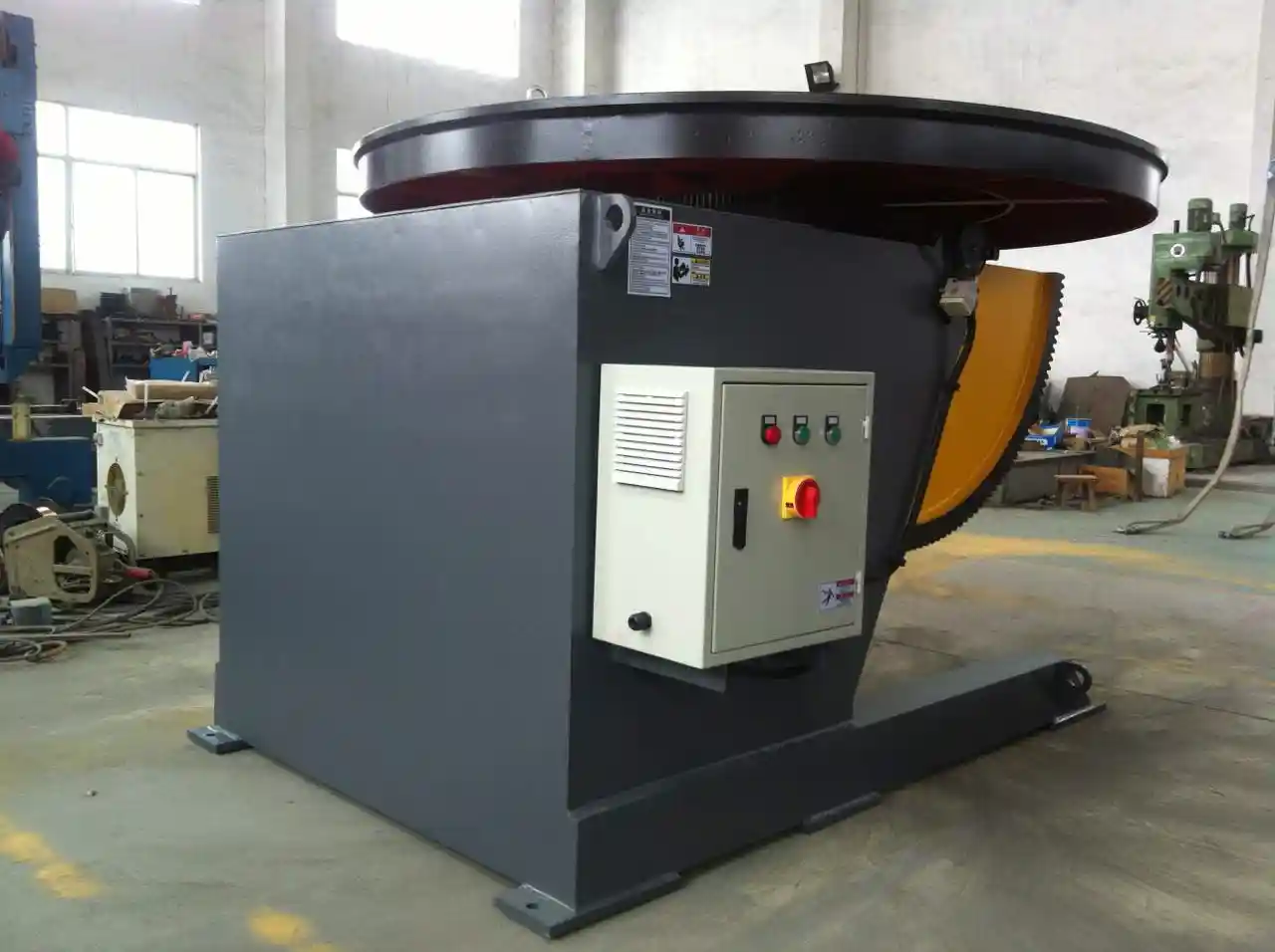
At WUXI ABK MACHINERY CO., LTD, we specialize in high-precision welding equipment and CNC cutting machines that depend on accurate calibration. Our team makes sure your fin-bar components line up with the most demanding industry standards. Contact us to discuss calibration and equipment needs.
Mobil: +86-13815101750
E-Mail: jay@weldc.com
FAQs
1. What is a fin-bar and where is it typically used?
A fin-bar is a metal component, often with integrated fins, used in industrial applications such as boilers, heat exchangers, and pressure vessels. Its primary function is to enhance heat transfer efficiency or provide structural support. Precise dimensions are crucial for its performance.
2. How often should fin-bar components be calibrated?
The calibration frequency for fin-bar components depends on usage intensity, environmental conditions, and criticality of the application. Generally, annual calibration is a good starting point, but high-precision or high-stress applications may require more frequent checks.
3. What are the consequences of not calibrating fin-bars regularly?
Failure to calibrate fin-bars regularly can lead to dimensional inaccuracies, reduced operational efficiency, increased material waste, and potential equipment failure. It can also result in non-compliance with industry regulations, incurring fines and reputational damage.
4. Can WUXI ABK MACHINERY CO., LTD’s equipment assist in processes requiring fin-bar precision?
Yes, WUXI ABK MACHINERY CO., LTD manufactures equipment like welding manipulators and positioners that are designed for high precision. These machines enable accurate positioning and welding of components, indirectly supporting the precision required for fin-bar integration and fabrication.
5. What certifications are important for fin-bar calibration services?
For fin-bar calibration services, ISO/IEC 17025 accreditation matters because it demonstrates technical competence and the ability to produce precise and accurate calibration data. Other relevant certifications may include industry-specific standards like ASME or ASTM, depending on the application.
 English
  Español
  Français
  Deutsch
  Português
  Русский