Wind towers keep getting bigger, and the welding challenges follow right behind. I’ve watched fabrication shops struggle with the same bottlenecks for years—inconsistent seam quality, skilled welder shortages, and production schedules that slip because manual processes simply can’t keep pace with demand. The renewable energy sector isn’t slowing down, which means manufacturers face a straightforward choice: upgrade welding capabilities or fall behind competitors who already have.
Why Wind Tower Fabrication Demands Better Welding Technology
The renewable energy sector’s expansion has fundamentally changed what manufacturers need from their welding operations. Wind turbines now reach heights and capacities that seemed impractical a decade ago, and the towers supporting them must meet structural requirements that leave no room for quality compromises.
Manual welding hits its limits quickly in this environment. Operators fatigue over long shifts, weld consistency varies between workers, and throughput caps out well below what modern project timelines demand. These aren’t minor inconveniences—they translate directly into rejected components, schedule delays, and cost overruns that erode profit margins.
Automated wind tower welding equipment addresses these constraints at their source. Precision control over welding parameters eliminates the variability that causes defects. Continuous operation without fatigue-related quality drift keeps production moving. The result is fabrication that actually matches the pace renewable energy projects require.
We design our automated solutions specifically for these conditions. The equipment integrates into existing workflows without forcing complete facility overhauls, and the precision it delivers meets the structural integrity standards that wind tower applications demand.
Building a Sound Financial Case for Welding Line Investment
Major equipment purchases deserve rigorous financial analysis, not gut feelings. A proper capital expenditure evaluation for wind tower welding equipment examines costs and benefits across the full ownership timeline, not just the purchase price.
The analysis framework should capture several interconnected factors. Initial capital expenditure includes equipment, installation, and facility modifications. Operational expenditure covers energy consumption, consumables, maintenance, and labor. Return on investment calculations must account for productivity gains, quality improvements, and waste reduction—not just direct cost savings.
Payback period calculations reveal how quickly the investment recovers its cost through operational benefits. Total cost of ownership extends this view across the equipment’s useful life, incorporating depreciation schedules and potential tax incentives for manufacturing investments.
Risk assessment belongs in this analysis too. What happens if demand fluctuates? How does equipment reliability affect production planning? A structured approach to these questions produces investment decisions that hold up under real-world conditions.
What Returns Can Manufacturers Expect from Automated Wind Tower Welding Lines?
Automated wind tower welding equipment typically delivers returns between 18% and 36%, with payback periods ranging from two to four years. These figures reflect the combined impact of several operational improvements.
Labor cost reductions come from decreased reliance on skilled manual welders—a workforce that’s increasingly difficult to recruit and retain. Material waste drops when automated systems maintain consistent weld parameters, eliminating the overwelding and defects that consume extra consumables and require rework.
Productivity gains often prove the largest contributor to ROI. Automated systems maintain output rates that manual operations cannot sustain, and they run through shift changes without the quality variations that typically accompany operator transitions. The precision of automated welding also reduces inspection failures and customer rejections, protecting both revenue and reputation.
Matching Equipment to Wind Tower Production Requirements
Selecting automated welding equipment for wind tower fabrication involves matching capabilities to specific production demands. The scale of wind tower components—large diameters, thick materials, long seams—requires specialized machinery designed for heavy-duty applications.
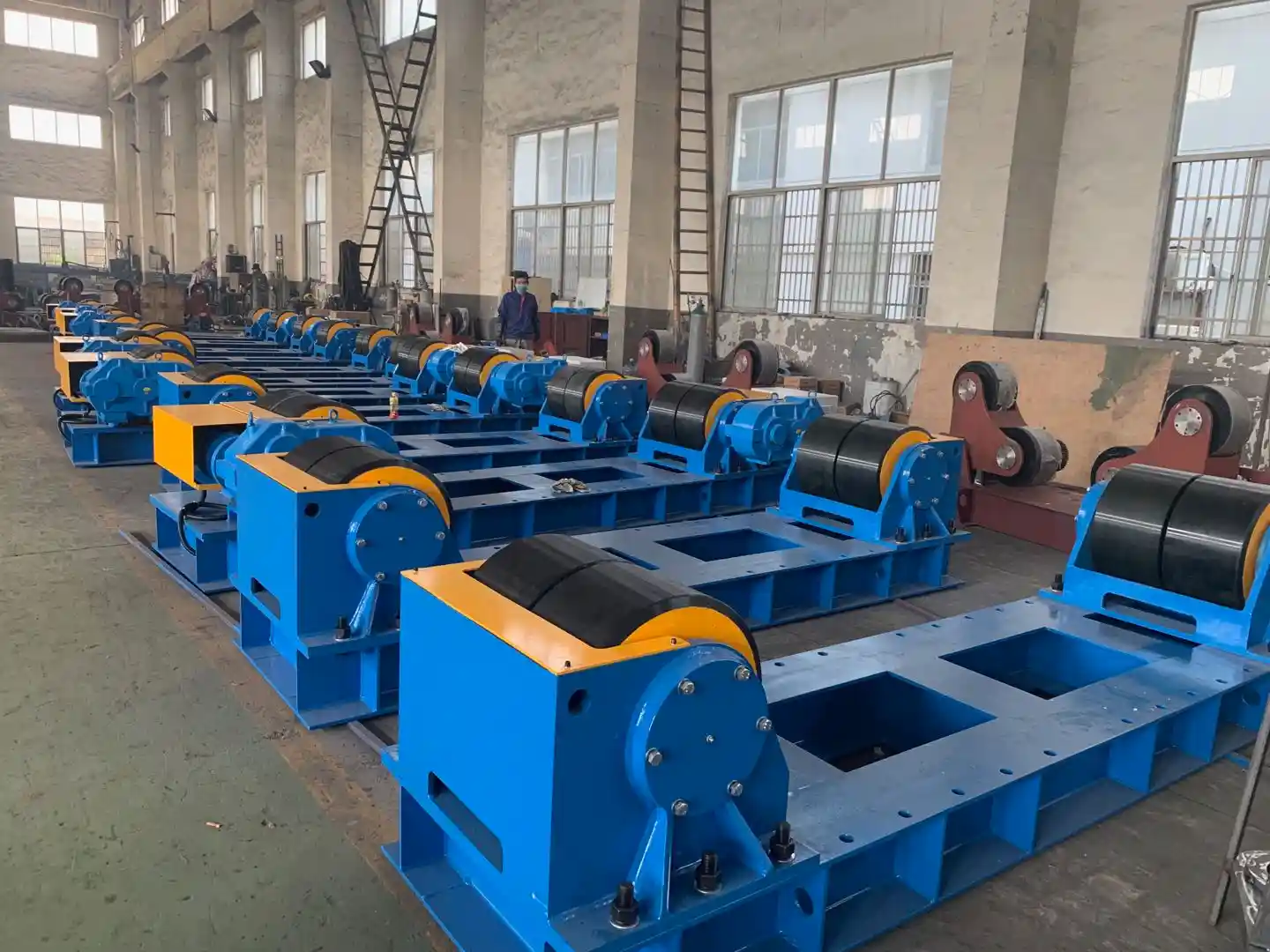
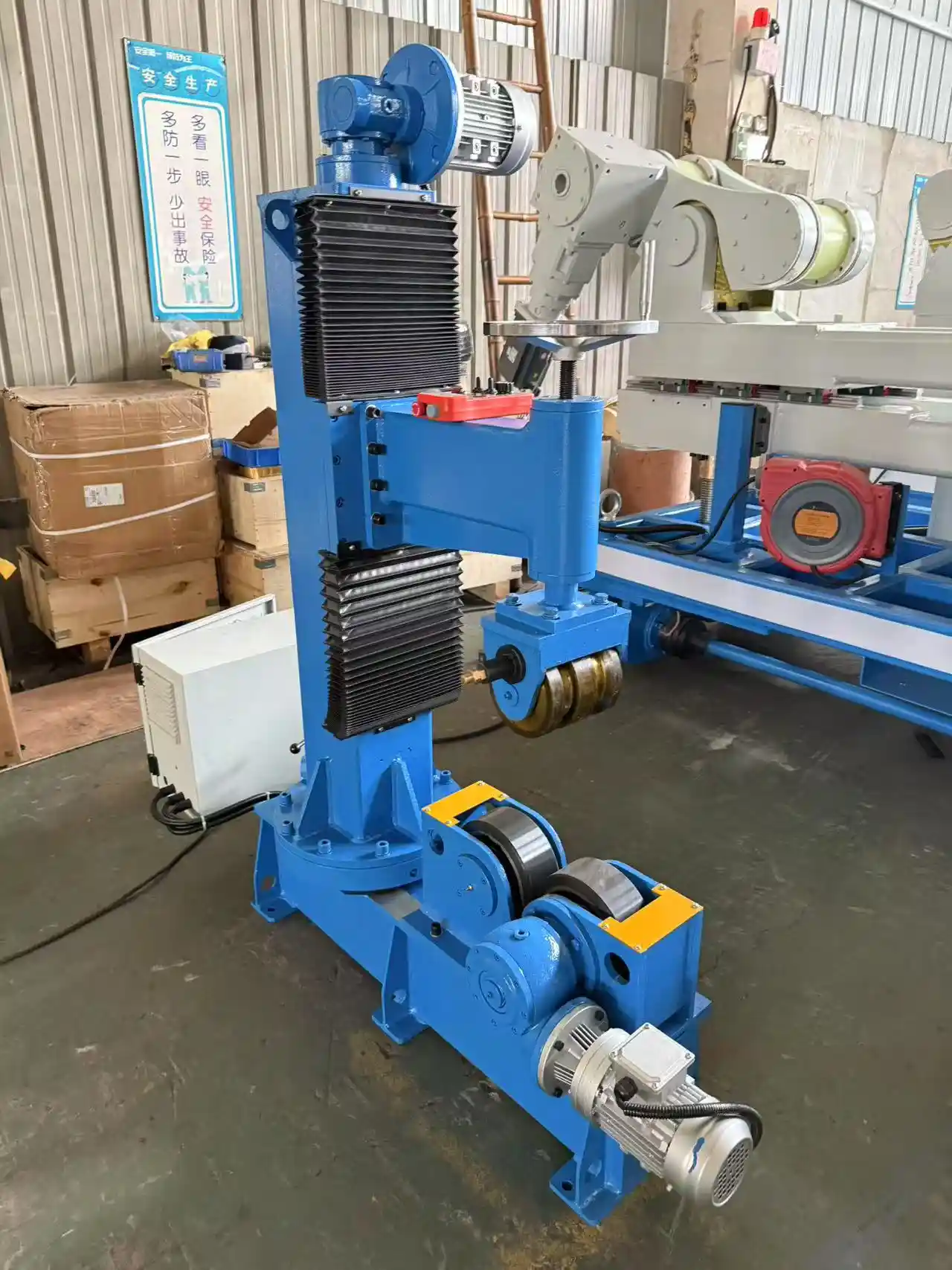
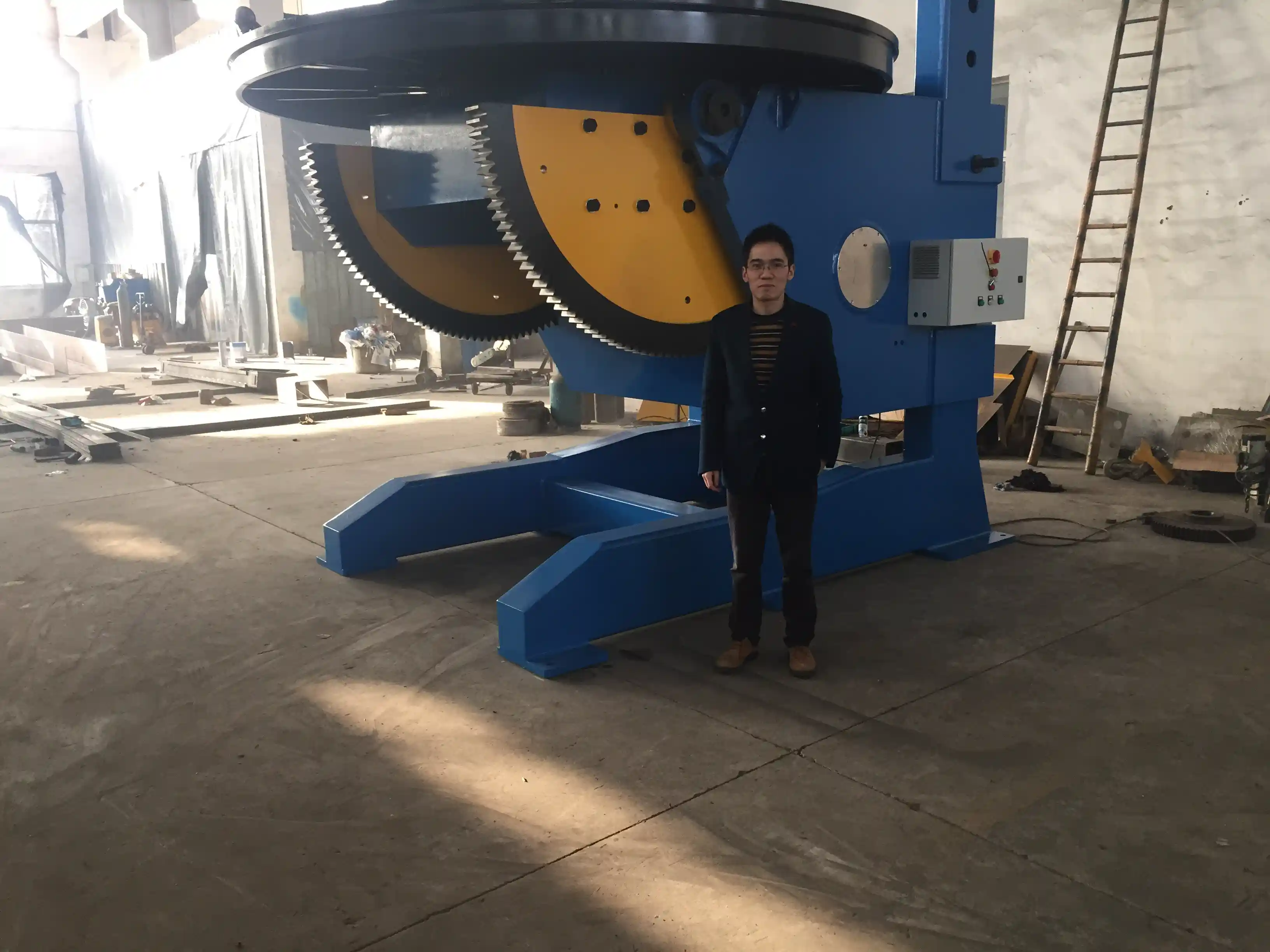
Manipulador de soldaduras handle the longitudinal and circumferential seams that define wind tower construction. These systems position welding heads with the precision needed for consistent penetration and fusion across seams that can extend many meters. Soluções para mesas giratórias de soldadura e Adjustable Welding Positioners rotate and tilt workpieces to maintain optimal welding positions throughout the process.
The welding processes themselves matter too. Submerged Arc Welding (SAW) delivers the high deposition rates that thick-walled tower sections require. MIG/MAG processes offer flexibility for varied joint configurations. Seam tracking systems maintain torch positioning even when workpiece geometry varies slightly from nominal dimensions.
| Tipo de equipamento | Caraterísticas principais | Primary Application |
|---|---|---|
| Manipulador de soldadura (LH8080) | 8m horizontal/vertical travel, ±0.1 mm/m accuracy, 360° rotation | Longitudinal and circumferential wind tower seams |
| 30-ton Soluções para mesas giratórias de soldadura (HB-300) | 30-ton capacity, 3000mm worktable, ±0.1° precision | Wind tower welding, large vessel fabrication |
| 100-ton Rotador de tubos para serviço pesado (HGK-100) | 100-ton capacity, 800-5000mm vessel diameter range | Wind tower production, large pipeline welding |
| 20-ton Rotador de encaixe para serviço pesado | 20-ton capacity, 1-4m diameter range, 0.5mm accuracy | Wind tower section alignment, offshore platform fabrication |
| 5-ton L-Type Adjustable Welding Positioner (LHBJ-50) | 5-ton capacity, 0.5° accuracy, 0-135° tilt range | Wind tower component assembly, structural welding |
Preparatory equipment matters as well. Cortador a plasma CNCs and plate rolling machines determine the quality of materials entering the welding process. Poor preparation creates problems that even excellent welding equipment cannot fully correct.
Equipment selection criteria should include reliability track records, non-destructive testing compatibility, and customization options that match specific production line configurations.
How Automated Welding Improves Quality and Safety in Wind Tower Fabrication
Quality improvements from automated wind tower welding equipment stem from parameter control that human operators simply cannot replicate over extended periods. Travel speed, wire feed rate, voltage, and current remain within specified ranges throughout every weld, eliminating the drift that causes porosity, lack of fusion, and other defects.
This consistency translates directly into structural integrity. Wind towers experience cyclic loading from wind forces throughout their operational lives—often 20 to 25 years. Weld defects that might seem minor can become crack initiation sites under these conditions. Automated welding reduces this risk by maintaining the quality standards that long-term structural performance requires.
Safety benefits are equally significant. Manual welding exposes operators to arc flash, welding fumes, and the physical demands of working in awkward positions around large components. Automated systems move operators away from these hazards, reducing injury rates and the long-term health effects associated with welding work.
Critical Factors When Evaluating Automated Welding Solutions
Purchase price represents only one dimension of equipment selection. Several other factors determine whether a wind tower welding system delivers value over its operational life.
Scalability matters because production demands change. Equipment that handles current volumes but cannot accommodate growth forces premature replacement or constrains business expansion. Integration requirements determine how smoothly new equipment fits into existing production lines—incompatibilities create hidden costs and operational disruptions.
Maintenance requirements and technical support availability affect long-term reliability. Equipment that performs well initially but proves difficult to maintain becomes a liability. Operator training programs determine how quickly staff become proficient and how well they can troubleshoot problems independently.
Experienced manufacturers understand these considerations and design equipment accordingly. Customization options allow systems to match specific facility layouts and production workflows rather than forcing operations to adapt around equipment limitations.
Operational Gains and Sustainability Benefits from Welding Automation
Automated wind tower welding equipment transforms production economics beyond the direct cost savings that ROI calculations capture. Productivity improvements compound over time as operators become more proficient with systems and as process refinements accumulate.
Labor utilization shifts from direct welding work to supervision, quality verification, and process optimization. This change addresses the skilled welder shortage that constrains many fabrication operations—automated systems reduce dependence on a workforce that’s increasingly difficult to recruit.
Cycle time reductions accelerate throughput without proportional increases in facility space or equipment. Waste reduction extends beyond material savings to include energy consumption, which drops when processes run efficiently rather than requiring rework and extended operation times.
Digital integration enables real-time monitoring and predictive maintenance. Rather than reacting to equipment failures, maintenance teams can address developing issues before they cause unplanned downtime. This proactive approach extends equipment lifespan and maintains the consistent output that production schedules require.
These operational improvements support broader sustainability objectives. Reduced energy consumption and material waste align with environmental goals that increasingly influence customer purchasing decisions and regulatory requirements.
Finding the Right Equipment Partner for Wind Tower Welding Investment
Equipment supplier selection affects investment outcomes as much as equipment specifications. A reliable partner provides technical expertise, responsive support, and the manufacturing capability to deliver equipment that performs as specified.
Evaluation criteria should include track record with similar applications, spare parts availability, and training program quality. Technical support responsiveness matters when production depends on equipment uptime—delays in resolving issues translate directly into schedule slippage and cost overruns.
Customization capabilities determine whether equipment matches specific production requirements or forces operational compromises. Project management support helps coordinate installation and commissioning with minimal disruption to ongoing operations.
WUXI ABK MACHINERY CO., LTD has manufactured welding automation equipment since 1999. Our experience spans Soldadura de torres eólicas lines, manipulators, positioners, and the supporting equipment that complete fabrication systems. This background informs equipment designs that address real production challenges rather than theoretical specifications.
A strong supplier relationship extends beyond initial purchase. Ongoing support, training updates, and equipment upgrades maintain system performance as production demands evolve and technology advances.
Common Questions About Wind Tower Welding Equipment Investment
What Financing Approaches Work for Major Welding Equipment Purchases?
Large capital investments in wind tower welding equipment can be structured through several financing mechanisms. Equipment leases spread costs over time while preserving capital for other uses. Traditional bank loans and specialized industrial financing offer ownership from the start with structured repayment terms.
Government incentives for renewable energy manufacturing or capital equipment investment may reduce effective costs. These programs vary by jurisdiction and change over time, so current research is essential. WUXI ABK MACHINERY CO., LTD can provide guidance on financing approaches and connect manufacturers with financing partners familiar with industrial equipment investments.
How Can Manufacturers Maximize Equipment Lifespan and Performance?
Wind tower welding equipment longevity depends on consistent maintenance practices and proper operation. Regular maintenance schedules prevent the gradual degradation that eventually causes failures. Genuine spare parts maintain the tolerances and material properties that original components provide.
Operator training ensures equipment runs within design parameters and that staff can identify developing problems before they cause failures. Partnership with manufacturers who provide robust after-sales support and quality components protects the investment over its full operational life.
Why Does Customization Matter for Wind Tower Welding Solutions?
Standard equipment configurations rarely match specific production requirements perfectly. Customized wind tower welding equipment—whether manipulators, positioners, or integrated lines—can address unique facility layouts, product specifications, and workflow requirements.
This tailoring improves efficiency by eliminating workarounds that standard equipment would require. It also enhances return on investment by ensuring equipment capabilities match actual production needs rather than providing features that go unused while lacking others that would add value.
Manufacturers with design and fabrication capabilities can develop solutions for complex requirements that off-the-shelf equipment cannot address.
Start Improving Your Wind Tower Fabrication Capabilities
WUXI ABK MACHINERY CO., LTD has provided advanced welding and CNC cutting solutions since 1999. Our wind tower welding lines, manipulators, and positioners address the specific challenges that large-scale fabrication presents.
Contact our team for a consultation on how automated welding equipment can improve your operational efficiency and strengthen your capital investment returns. Reach us at jay@weldc.com or +86-510-83555592.
If you’re interested, check out these related articles:
Melhorar a Qualidade e a Eficiência no Fabrico de Reservatórios e Recipientes sob Pressão: O principal valor de aplicação dos posicionadores
Revolution in Ship Welding: How Welding Positioners Improve Quality and Efficiency
Wind Tower Welding Challenges: How Advanced Hydraulic Lifting Systems Boost Production by 40%
Pipe Welding Misalignment Issues: How Intelligent Welding Pipe Rotators Boost Oil Pipeline Pass Rates
 English
  Español
  Français
  Deutsch
  Português
  Русский