Manufacturing wind towers throws up a surprising number of headaches that most people outside the industry never consider. The sheer scale of these structures, combined with the precision required at every joint and seam, creates a production environment where small errors compound quickly. Getting the complete configuration right from the start saves enormous amounts of rework and frustration down the line. This piece walks through the full setup of a wind tower production line, covering the foundational work, welding automation, and the quality systems that keep everything on track.
Foundational Elements of Wind Tower Manufacturing
The initial stages of wind tower production set the tone for everything that follows. Steel plate preparation comes first, involving precise cutting and beveling to ensure optimal fit-up for subsequent welding. Integrating advanced CNC cutting machines addresses many common wind tower fabrication challenges, delivering high accuracy across various plate thicknesses. After cutting, rolling and forming processes shape flat steel plates into cylindrical or conical sections. Material handling solutions move these heavy components safely and efficiently between workstations, keeping bottlenecks from forming. Getting this foundational setup right ensures structural integrity and dimensional accuracy throughout the entire fabrication process.
Flowchart: Wind Tower Production Stages
graph TD
    A[Raw Material Receiving] --> B{Steel Plate Preparation};
    B --> C[Cutting & Beveling];
    C --> D[Plate Rolling & Forming];
    D --> E[Longitudinal Seam Welding];
    E --> F[Fit-Up of Segments];
    F --> G[Girth Seam Welding];
    G --> H[Internal Welding];
    H --> I[External Welding];
    I --> J{Post-Welding Operations};
    J --> K[Surface Treatment & NDT];
    K --> L[Coating & Painting];
    L --> M[Final Assembly & Inspection];
    M --> N[Dispatch];
Advanced Welding Automation for Wind Tower Segments
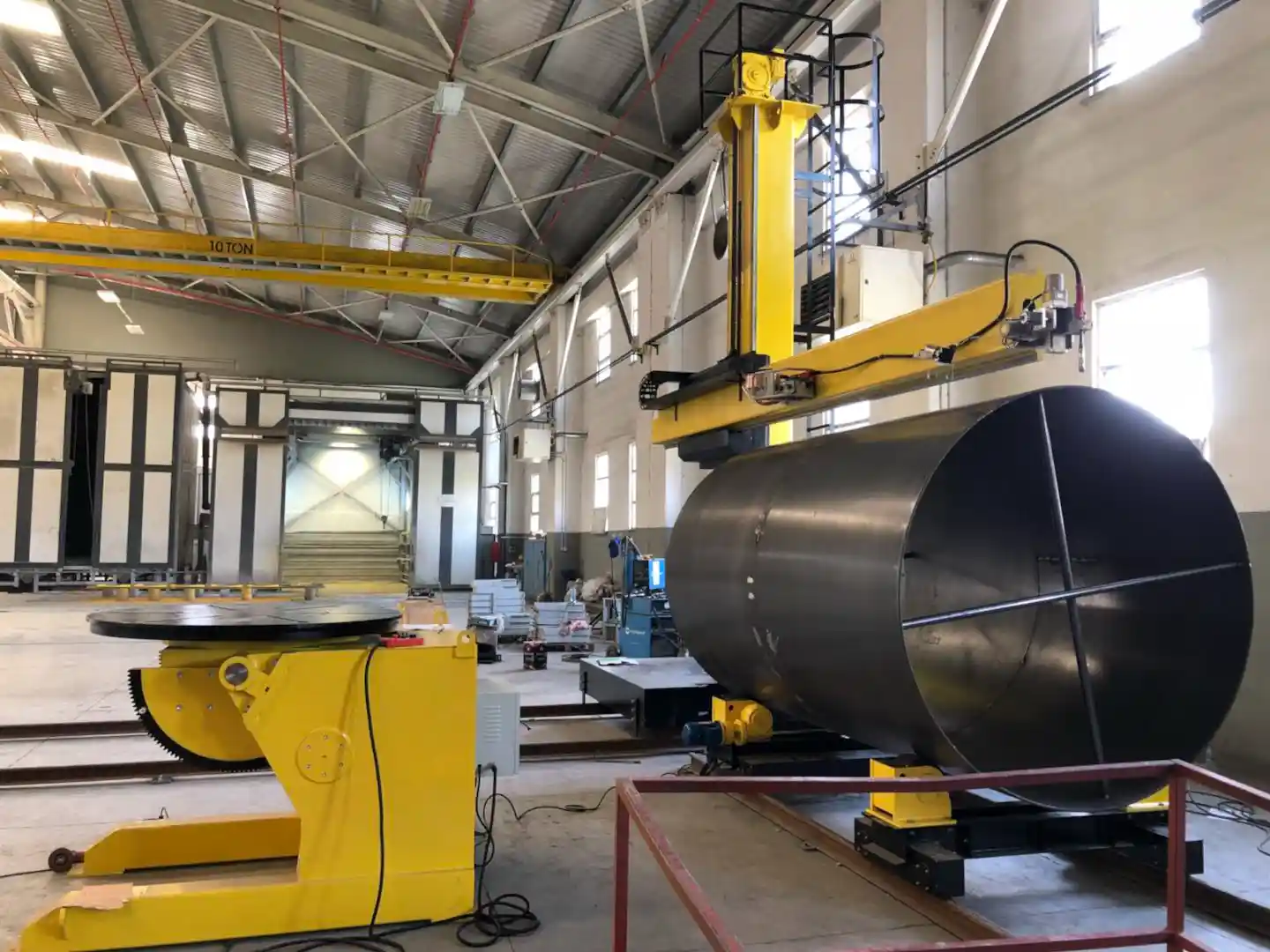
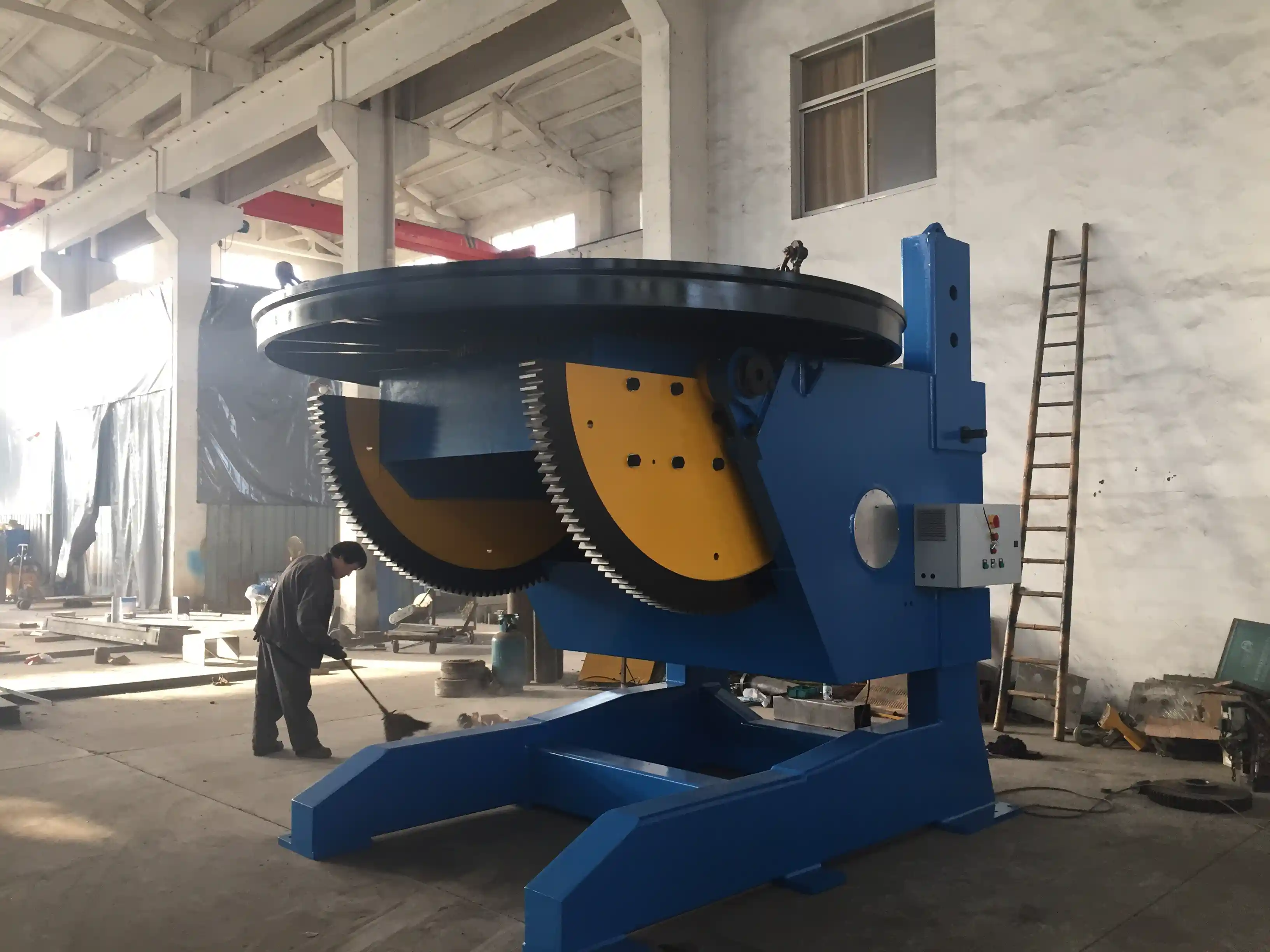
Automated welding systems have changed what’s possible in terms of structural integrity and production speed for wind tower manufacturing. These systems maintain precise control over welding parameters, cutting down on human error and delivering consistent weld quality across thousands of meters of seam. Integration of advanced welding equipment, including Manipulador de soldaduras and Welding Turntable Solutions, boosts both productivity and safety. This automation matters most when handling the large, heavy sections that make up wind towers.
Stages That Make or Break a Wind Tower Production Line
The welding process for wind tower segments moves through several stages where quality either holds or falls apart. Longitudinal seam welding joins the rolled plates to form individual tower sections. Wind tower segment assembly follows, where these sections get precisely aligned. Fit-up welding rotators, such as the Heavy Duty Fit-Up Rotator with 50-ton capacity, align workpieces with ±0.5mm precision. Internal welding processes then complete the inner seams, often requiring specialized equipment just to get access. External welding techniques finish the outer girth seams, locking in structural integrity.
How Automation Delivers on Efficiency and Quality
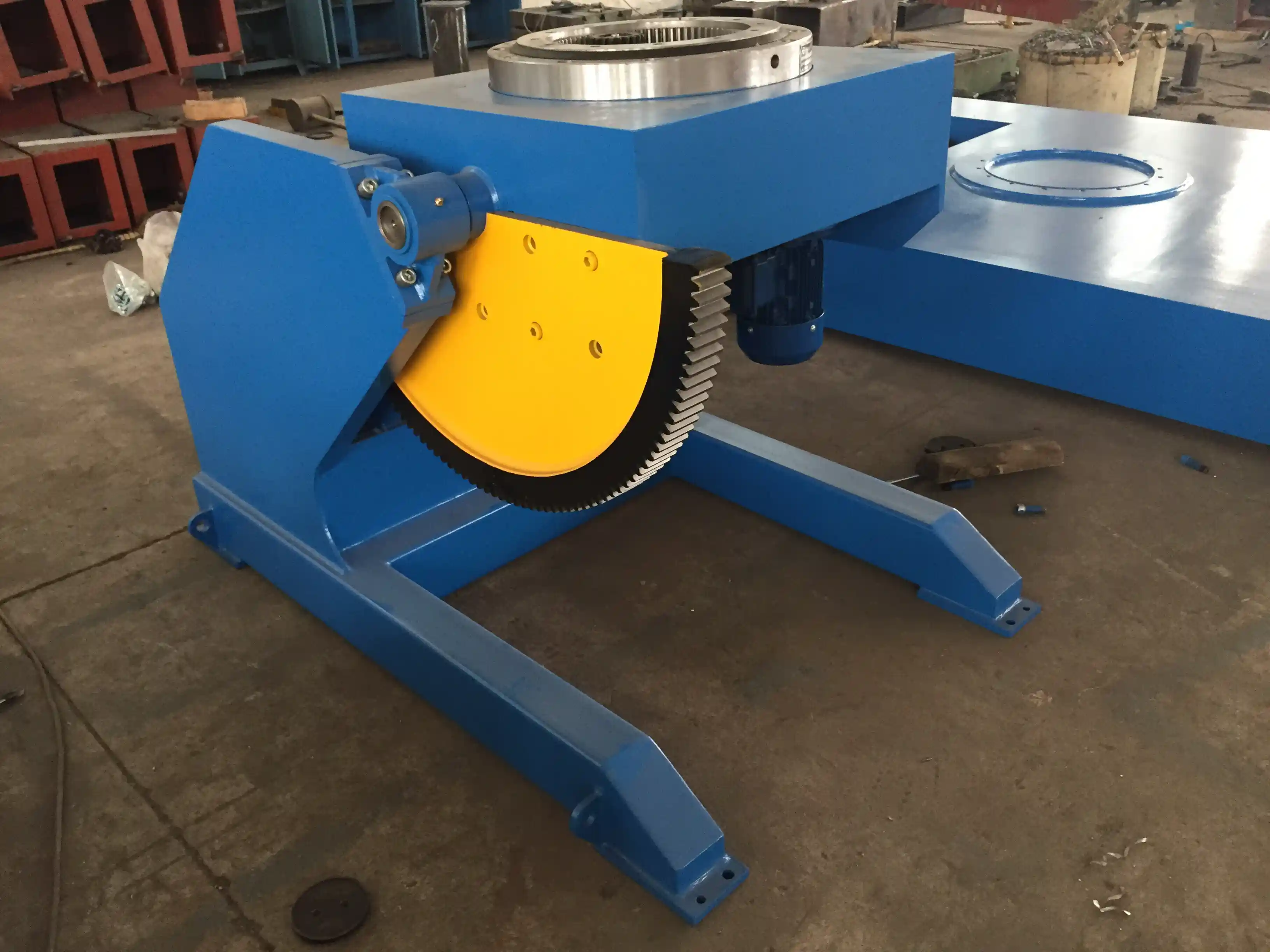
Automation pulls its weight in both efficiency and quality for wind tower welding. Welding manipulators, like the LH8080 model with 8000mm horizontal and vertical travel, provide stable platforms for precise welding. 3 Axis Welding Positioners, such as the WUXI ABK 3-Ton model, offer ±0.05 mm positioning accuracy and 0.02 mm repeatability, making them well-suited for robotic welding cells. Robotics in welding reduce labor costs while improving weld consistency. Quality control for wind towers benefits from automated inspection systems that catch defects before they become expensive problems.
| Feature | Manual Welding | Automated Welding |
|---|---|---|
| Weld Quality | Variable | Consistent, High |
| Production Speed | Slow | Fast |
| Custo do trabalho | High | Reduced |
| Repetibilidade | Low | High |
| Safety | Lower | Higher |
| Material Waste | Higher | Lower |
For further insights into optimizing your welding processes, we recommend reading 《Manipuladores de soldadura para o fabrico de torres eólicas: Revolucionando a eficiência da produção》.
Integrated Post Welding Operations and Finishing
Post-welding operations determine whether a wind tower will hold up over its intended service life. After welding, surface treatment for wind towers involves grinding and cleaning to remove slag and prepare the surface. Non-destructive testing methods, including ultrasonic testing and radiographic inspection, verify weld integrity. Coating and painting systems then apply protective layers that enhance corrosion resistance and visual appearance. Final assembly and inspection confirm all components meet design specifications before dispatch.
Comparison Chart: NDT Methods for Wind Towers
| NDT Method | Principle | Advantages | Disadvantages |
|---|---|---|---|
| Ultrasonic Testing | Sound wave reflection | Detects internal flaws, fast | Requires coupling, operator skill |
| Radiographic Test | X-ray/Gamma ray penetration | Detects internal flaws, precise | Radiation hazard, slow, costly |
| Magnetic Particle | Magnetic field distortion | Detects surface/sub-surface flaws | Only for ferromagnetic materials |
| Liquid Penetrant | Capillary action of dye | Detects surface flaws, low cost | Only for surface flaws, messy |
Optimizing Production Flow and System Integration
Getting production flow and system integration right maximizes throughput and keeps bottlenecks from choking the entire line. This involves careful factory layout optimization and the application of lean manufacturing principles to cut waste. Production efficiency metrics need continuous monitoring to spot areas for improvement. Supply chain integration ensures a steady flow of materials and components, preventing the delays that throw schedules off track.
Advanced Technologies Reshaping Wind Tower Manufacturing
Modern wind tower manufacturing has embraced advanced technologies that create real competitive advantages. Industrial IoT welding systems enable real-time data collection and analysis, optimizing parameter control on the fly. Digital twin manufacturing creates virtual models of the production line, allowing for simulation and predictive maintenance planning. These technologies improve operational efficiency and reduce the downtime that eats into margins.
Quality Assurance and Industry Compliance Standards
Quality and regulatory adherence sit at the center of wind tower production. Wind tower quality control processes run at every stage, from material inspection through final product verification. Adhering to international welding standards, such as ISO 3834, guarantees weld integrity. Certification processes validate compliance with national and international regulations. Safety regulations in manufacturing are followed strictly to protect personnel and maintain operational safety.
Partner with WUXI ABK MACHINERY for Advanced Wind Tower Production Solutions
Leverage WUXI ABK MACHINERY CO., LTD’s two decades of expertise in welding and CNC cutting equipment. Our comprehensive wind tower welding lines and integrated solutions are engineered to deliver unparalleled precision, efficiency, and reliability for your most demanding projects. Contact us today to discuss how our advanced machinery can optimize your production capabilities and drive your success in the renewable energy sector. Reach out for a consultation: Email: jay@weldc.com | Mobile: +86-13815101750.
Frequently Asked Questions About Wind Tower Production Lines
What are the key benefits of investing in a complete wind tower production line?
A complete wind tower production line offers significant advantages including enhanced operational efficiency, consistent high-quality output, reduced labor costs through automation, and improved safety standards. It streamlines the entire manufacturing process from material preparation to final assembly, ensuring optimal throughput and adherence to stringent industry specifications.
How does WUXI ABK MACHINERY ensure the quality of its wind tower welding equipment?
WUXI ABK MACHINERY CO., LTD. ensures superior quality through rigorous design, precision manufacturing, and comprehensive testing of all our welding equipment. We utilize advanced CNC cutting machines and integrate state-of-the-art Manipulador de soldaduras and 3 Axis Positioners to guarantee accuracy and durability. Our commitment to ISO standards and continuous innovation ensures reliable and high-performance solutions for wind tower fabrication.
Can WUXI ABK MACHINERY customize a wind tower production line to specific requirements?
Absolutely. WUXI ABK MACHINERY specializes in providing tailored solutions. We work closely with clients to understand their unique production needs, facility layouts, and desired output. Our engineering team designs and configures bespoke wind tower welding lines and associated equipment, ensuring seamless integration and optimal performance for specific project demands.
 English
  Español
  Français
  Deutsch
  Português
  Русский