
Welding Positioner Alignment Troubleshooting and Maintenance
When a welding positioner starts drifting mid-rotation or the weld bead suddenly looks uneven, production stops feeling routine. I’ve seen shops lose entire shifts chasing alignment problems that could have been caught with a quick inspection. The frustrating part is that most welding positioner alignment issues follow predictable patterns once you know where to look. Misalignment drives up rework costs, wastes material, and creates genuine safety concerns when heavy workpieces become unstable. This covers the practical steps for diagnosing problems fast and the maintenance habits that keep positioners running accurately over the long term.
Why Welding Positioners Lose Their Alignment
Welding positioners, including welding turntables and rotary positioners, form the backbone of efficient fabrication work. They also accumulate wear in ways that gradually compromise weld integrity. Workpiece stability problems like wobbling or uneven rotation often trace back to improper loading or components that have degraded past their tolerance limits. Fixture misalignment introduces angular errors that show up directly in weld geometry. The root causes typically fall into a few categories: mechanical wear from repeated use, setup mistakes during workpiece loading, and environmental factors like temperature swings or vibration from nearby equipment.
Separating Mechanical Problems from Electrical Faults
Effective troubleshooting means figuring out whether you’re dealing with something physical or something in the control system. Mechanical issues involve actual wear or damage to parts. Electrical problems live in the sensors, drives, and control logic. Jumping between both without a clear diagnostic approach wastes time and sometimes leads to replacing parts that weren’t the actual problem.
Mechanical Wear That Causes Positioner Drift
Mechanical wear accounts for most welding positioner alignment failures over time. Gears, bearings, and structural elements all degrade with use, eventually introducing play or instability into the system. Excessive gear backlash shows up as jerky movements during rotation, particularly when the positioner changes direction. Bearing failure often announces itself through unusual noises or excessive heat at the bearing locations. Gearbox inspection should look for metal particles in the lubricant, unusual play when the shaft is moved by hand, and any visible damage to gear teeth. The base and frame need checking for cracks or deformation, especially on positioners that handle heavy loads or have been in service for years.
Control System and Sensor Calibration Issues
Electrical faults can be harder to spot but affect positioner accuracy just as severely. Motor synchronization errors cause uneven rotation that looks like a mechanical problem until you check the drive signals. Positioner sensor calibration determines whether the control system receives accurate position feedback. When encoders drift out of calibration, the positioner thinks it’s in one position while actually being somewhere else. Motor drive diagnostics should check power supply stability and control signal integrity. The control panel itself can develop faults in relays or connections that create intermittent problems, which are always the most frustrating to track down.
Calibration Procedures That Actually Hold
Getting alignment right and keeping it right requires attention to both the correction process and the setup practices that prevent problems from recurring. Precision calibration for welding positioners works as both a fix and a preventive measure. Operator setup errors contribute to a surprising number of alignment complaints, which is why training matters as much as the equipment itself. Precise welding positioner alignment directly affects bead consistency, penetration depth, and the structural integrity of finished welds. Calibration frequency depends on how hard the equipment works and how tight the tolerances need to be.
Getting Workpiece Balance Right
Workpiece balance determines whether alignment holds during actual welding or drifts as the positioner rotates. Uneven load distribution creates dynamic forces that push the system out of alignment mid-cycle. Proper workpiece clamping prevents movement, but clamping alone doesn’t solve balance problems. Heavy components need careful positioning to distribute weight evenly across the positioner’s rated capacity. This reduces stress on bearings and drive components while ensuring smooth rotation throughout the full range of motion. Taking time to balance the load properly prevents the kind of progressive wear that leads to alignment problems down the road.
Fine-Tuning Digital Control Systems
Modern welding positioners rely on control systems that need their own calibration beyond the mechanical setup. Digital positioner calibration involves adjusting software parameters to match the actual mechanical behavior of the equipment. Encoder feedback systems provide real-time position data, and any drift in encoder calibration accumulates into noticeable errors over time. PLC programming for welding applications allows customized motion profiles that optimize rotation speed, acceleration curves, and tilt angles for specific workpiece geometries. Getting these parameters right improves both accuracy and cycle time.
Maintenance That Prevents Alignment Problems
Waiting for problems to appear costs more than preventing them. A structured preventive maintenance program for welding equipment catches developing issues before they cause downtime or quality problems. The approach focuses on regular inspections at appropriate intervals and replacing wear components before they fail.
| Maintenance Task | Frequency | Details |
|---|---|---|
| Visual Inspection | Daily | Check for loose fasteners, visible damage, or unusual wear patterns. |
| Lubrificação | Weekly/Monthly | Follow the manufacturer’s lubrication schedule for all specified points. |
| Electrical Checks | Trimestral | Inspect wiring, connections, and control panel components for faults. |
| Mechanical Component Review | Trimestral | Check gears, bearings, and drives for excessive play or wear. |
| Calibration Verification | Annually | Confirm positioner accuracy against known references and recalibrate if needed. |
| Safety System Test | Mensal | Verify emergency stops and interlocks function correctly. |
Following this inspection routine consistently extends welding positioner lifespan and maintains the accuracy needed for quality welds.
How Alignment Affects Weld Quality and Shop Safety
Poor welding positioner alignment creates problems that extend beyond inconvenience. Welding quality defects from misalignment include inconsistent bead geometry, incomplete penetration, and porosity. These defects compromise structural integrity in ways that may not be obvious until the welded component fails in service. The safety implications are more immediate. An unstable or misaligned workpiece can shift unexpectedly during rotation, creating serious risks for operators and potentially damaging surrounding equipment. Production downtime from accidents or extensive rework adds up quickly. Safety protocols in welding operations exist for good reasons, and maintaining precise positioner alignment is fundamental to following them effectively.
WUXI ABK MACHINERY Welding Positioner Solutions
WUXI ABK MACHINERY CO., LTD. manufactures welding positioners engineered to maintain alignment under demanding production conditions. The product range includes 3 Axis Positioners in 1-ton, 2-ton, 3-ton, and 5-ton capacities, all built to ±0.05 mm positioning accuracy with 0.02 mm repeatability. These systems use Siemens PLC control with HMI touchscreens and integrate with robotic welding systems from ABB, KUKA, and FANUC. Fixed Height Welding Positioners and Adjustable Welding Positioners handle capacities up to 100 tons for heavy industrial applications. Support services include cost-effective positioner repair and maintenance to keep equipment running accurately over its full service life.
!WUXI ABK Welding Positioner in action
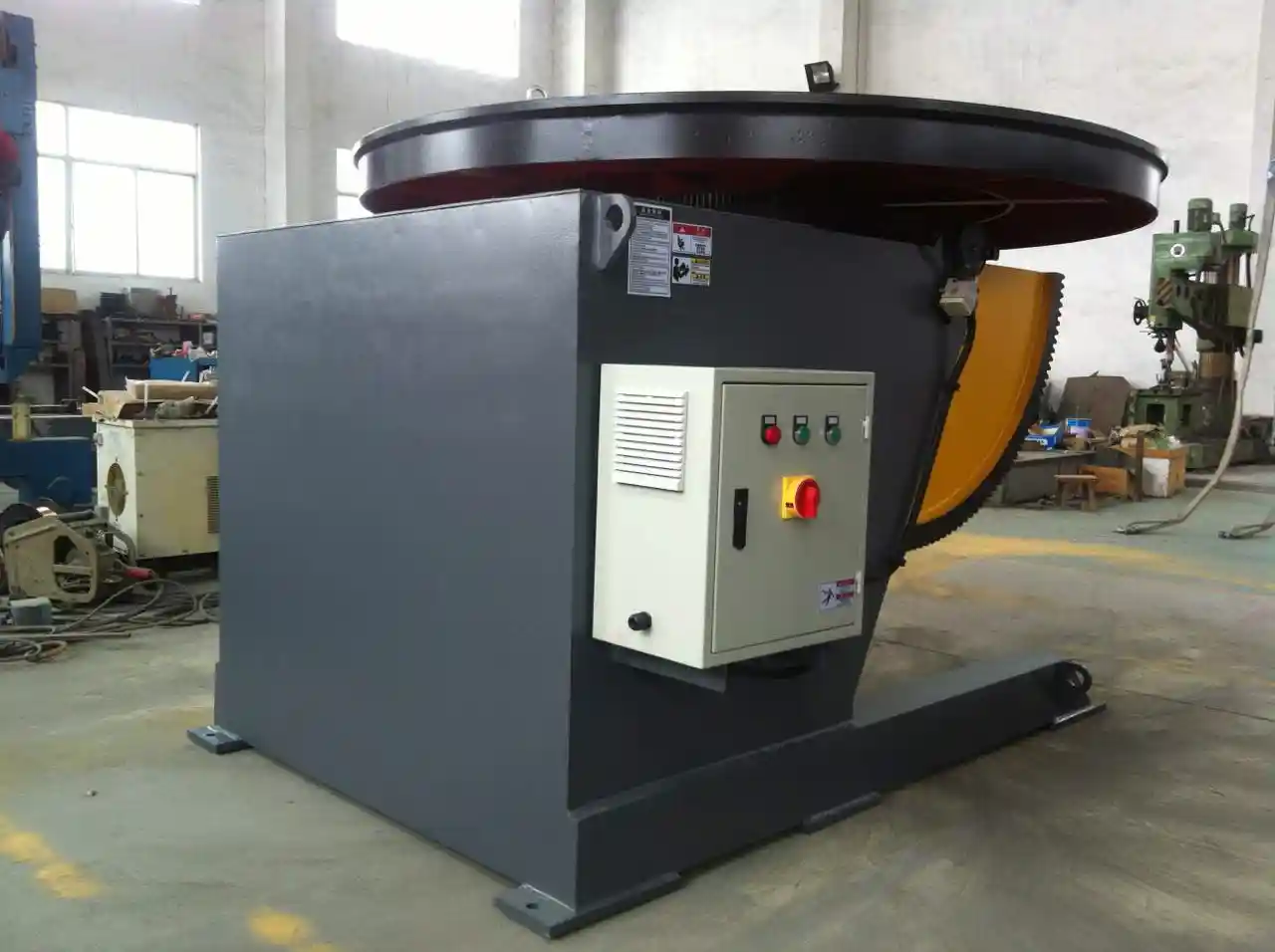 For industrial welding solutions built around accuracy and durability, WUXI ABK MACHINERY CO., LTD. delivers equipment designed for sustained performance.
Frequently Asked Questions About Welding Positioner Alignment
What are the common signs of a misaligned welding positioner?
The most obvious sign is inconsistent weld bead appearance that changes as the positioner rotates. Uneven rotation, excessive vibration during operation, and difficulty maintaining a stable arc all point toward alignment problems. Operators often notice the workpiece drifting from its intended angle or not holding position during rotation. Premature wear on positioner components, particularly bearings and gears, can indicate that misalignment is putting extra stress on the mechanical system. Any of these symptoms warrant investigation before the problem worsens.
How often should a welding positioner be calibrated for optimal performance?
Calibration frequency depends on usage intensity and precision requirements. Heavy production environments with tight tolerances benefit from quarterly calibration checks, while lighter-duty applications may only need annual verification. The manufacturer’s recommendations provide a starting point, but actual conditions should guide the schedule. Daily visual inspections catch obvious problems early. High-precision applications or positioners showing any signs of drift should be checked more frequently until the root cause is identified and corrected.
Can improper positioner alignment lead to welding defects or safety hazards?
Both, and the consequences can be serious. Welding defects from misalignment include uneven penetration, incomplete fusion, porosity, and inconsistent bead geometry. These defects weaken the structural integrity of welded components in ways that may cause failure under load. The safety hazards are more immediate. A misaligned positioner can allow workpieces to shift or fall during rotation, putting operators at risk and potentially damaging other equipment. Maintaining precise welding positioner alignment is essential for both weld quality and workplace safety.
Ensure your welding operations run flawlessly with WUXI ABK MACHINERY CO., LTD.’s precision-engineered welding positioners and expert support. Established in 1999, we are a trusted leader in welding equipment, committed to delivering unparalleled reliability and performance. Contact us today at +86-13815101750 or jay@weldc.com for a consultation or to explore our advanced solutions tailored to your specific needs. Optimize your production, enhance weld quality, and minimize downtime with WUXI ABK.
 English
  Español
  Français
  Deutsch
  Português
  Русский