
Welding manipulators keep automated welding lines running, but when their electrical systems act up, everything stops. I’ve seen a single loose connection shut down an entire wind tower production run for half a day. The electrical side of these machines—motors, sensors, PLCs, power supplies—demands attention before small glitches become expensive failures. What follows covers the faults that actually show up in the field, how to track them down efficiently, and the maintenance habits that prevent most problems from happening in the first place.
Electrical Faults That Actually Shut Down Welding Manipulators
Electrical problems in welding manipulators range from nuisance-level sensor drift to complete motor failures that halt production. The trick is catching them early, before a minor issue cascades into something that damages components or compromises weld quality. These patterns show up consistently across pressure vessel work, boiler fabrication, and heavy structural welding.
| Fault Type | Common Symptoms | Potential Causes |
|---|---|---|
| Control panel issues | Unresponsive buttons, incorrect display readings, intermittent operation | Loose connections, faulty HMI, software glitches, component failure |
| Motor malfunction | Erratic movement, overheating, complete failure | Overload, bearing wear, winding damage, incorrect voltage, VFD issues |
| Power supply problems | Intermittent power, system shutdowns, component damage | Voltage fluctuations, faulty circuit breakers, loose wiring, inadequate grounding |
| Sensor errors | Inaccurate positioning, erratic feedback, system halts | Contamination, damage, calibration drift, wiring issues |
| Circuit breaker tripping | Sudden power loss, inability to reset breaker | Short circuits, overcurrent, ground faults, component failure |
| Contactor failure | Motors failing to start, intermittent power to components | Worn contacts, coil failure, incorrect voltage |
| Relay faults | Control circuit malfunctions, incorrect sequencing | Coil damage, contact pitting, incorrect wiring |
| Arc voltage control instability | Inconsistent arc length, poor weld penetration | Sensor malfunction, control board issues, wiring interference, power fluctuations |
Welding manipulator control panel issues often trace back to something as simple as a connector that’s worked loose from vibration. Motor malfunction causes tend to involve thermal stress—either from overloading or inadequate cooling. Sensor errors hit precision hard; on LH series manipulators rated for ±0.1 mm/m positioning accuracy, even slight calibration drift becomes visible in the weld. Arc voltage control instability shows up immediately in penetration consistency, which matters enormously in pressure vessel welding and wind tower welding where code compliance depends on uniform fusion.
Tracking Down Electrical Problems Without Wasting Time
Random poking around with a multimeter rarely finds anything. A structured diagnostic approach cuts through the guesswork and gets the welding manipulator back online faster.
Start with what the machine is telling you. Error codes on the HMI interface often point directly at the problem, or at least narrow down the search area. If the display shows nothing useful, observe the manipulator’s behavior—does it fail consistently or intermittently? Does it fail in specific positions or movements?
Power verification comes next. Check voltage and current at the main input. Voltage sag under load causes all sorts of strange behavior that looks like component failure but isn’t. Pull out the electrical schematics and trace the circuit from power source to the component that’s misbehaving.
Component testing with a multimeter confirms what the schematic analysis suggests. Continuity, resistance, voltage drop across connections—these measurements isolate whether a motor winding has failed, a relay coil has opened, or a sensor has drifted out of spec.
PLC troubleshooting steps involve accessing the system diagnostics. Error logs and status indicators reveal what the controller saw when the fault occurred. Variable frequency drives have their own fault codes and parameter readouts that often pinpoint motor or power issues.
Grounding fault detection matters more than many technicians realize. Poor grounding introduces electrical noise that causes erratic sensor readings and control instability. Overcurrent protection checks confirm that circuit breakers and fuses are sized correctly and haven’t degraded.
Encoder feedback testing verifies that position signals match actual manipulator movement. A welding manipulator like the LH8080 depends on accurate encoder data for its positioning precision. Corrupted feedback signals cause the kind of positioning errors that ruin welds.
Identifying Electrical Faults Through Multiple Channels
Motor control issues, power supply irregularities, and sensor malfunctions account for most electrical failures in welding manipulators. Visual inspection catches obvious problems—burnt insulation, discolored connections, loose terminals. Listen for audible cues: humming from motors suggests bearing wear or electrical imbalance, while grinding noises point to mechanical binding that overloads the electrical system.
Thermal imaging reveals hot spots that indicate high-resistance connections or components operating beyond their ratings. A connection running 20°C hotter than adjacent terminals is failing, even if it still works today. Catching these early prevents the sudden failures that shut down production at the worst possible moment.
Maintenance Habits That Prevent Electrical Failures
Reactive maintenance costs more than preventive maintenance, both in parts and in lost production time. These routines keep welding manipulator electrical systems reliable over the long haul.
Routine electrical inspections should happen on a fixed schedule, not just when something seems wrong. Check all wiring, connections, and components for wear, heat damage, or contamination. Cable management best practices matter because cables that flex repeatedly or rub against structures eventually fail. Proper routing, strain relief, and protection from welding spatter extend cable life significantly.
Component cleaning procedures remove the metal dust and particles that accumulate in electrical cabinets. This conductive contamination causes tracking and eventual short circuits. Connection tightening addresses the gradual loosening that vibration causes—a connection that was tight during installation may have developed enough resistance after six months to cause voltage drop and heating.
Environmental protection for electronics keeps moisture, temperature extremes, and corrosive fumes away from sensitive components. Enclosure seals degrade over time and need inspection. Calibration procedures maintain the positioning accuracy that makes welding manipulators valuable in the first place. Drift happens; regular recalibration catches it before it affects weld quality.
Safety interlocks testing confirms that emergency stops and protective circuits actually work. These systems sit unused until something goes wrong, and that’s exactly when you need them to function perfectly.
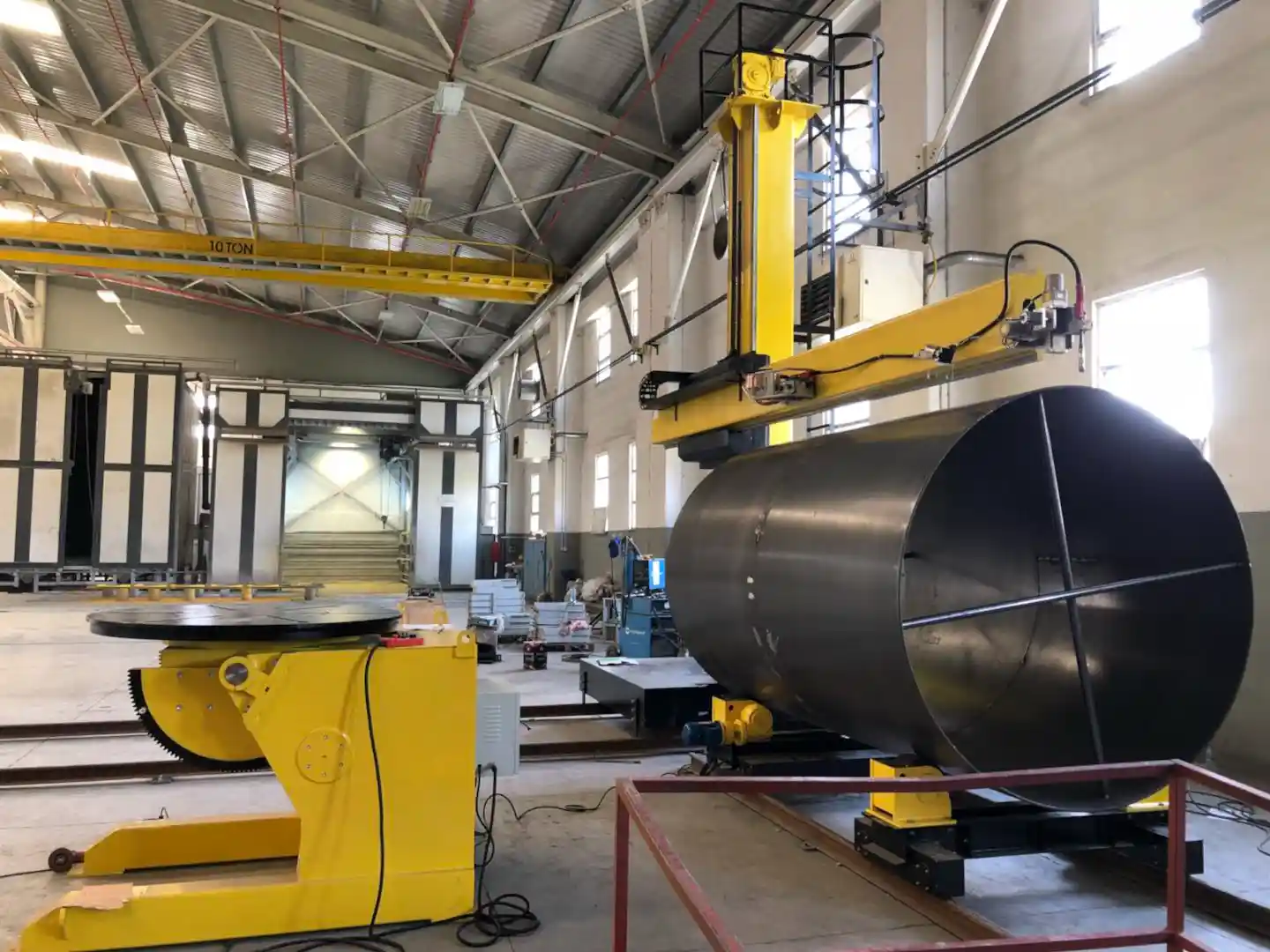
The Real Cost of Skipping Electrical Maintenance
Regular electrical maintenance extends equipment lifespan and prevents the kind of breakdowns that stop production for days while parts ship. The precision required for quality welds depends on electrical systems that perform consistently. A welding manipulator that drifts out of calibration produces welds that may not meet code requirements—and discovering that during inspection is far more expensive than maintaining calibration in the first place.
The math favors prevention. Scheduled maintenance happens during planned downtime. Failures happen whenever they feel like it, usually during a critical production run.
Electrical Safety Practices That Protect People and Equipment
Electrical work on welding manipulators involves real hazards. The voltages present can kill, and arc flash events cause severe burns even when they don’t prove fatal. These protocols aren’t bureaucratic overhead—they’re what keeps technicians safe.
Lockout tagout procedures must happen before any electrical work begins. De-energize the system, lock out the disconnect, and verify zero energy with a meter. No exceptions, no shortcuts. Personal protective equipment requirements depend on the specific task and the arc flash hazard level, but insulated gloves, safety glasses, and arc-rated clothing are baseline requirements for most electrical work.
Electrical safety training ensures that everyone working on these systems understands the hazards and the procedures. Arc flash hazards awareness includes knowing the incident energy levels at various points in the system and maintaining appropriate working distances.
Emergency stop circuits testing confirms that the big red button actually stops everything when someone hits it. Test these regularly—a failed emergency stop circuit is invisible until someone needs it to work.
Grounding safety protects against shock hazards and provides a path for fault currents that trips protective devices quickly. Verify grounding connections during routine inspections.
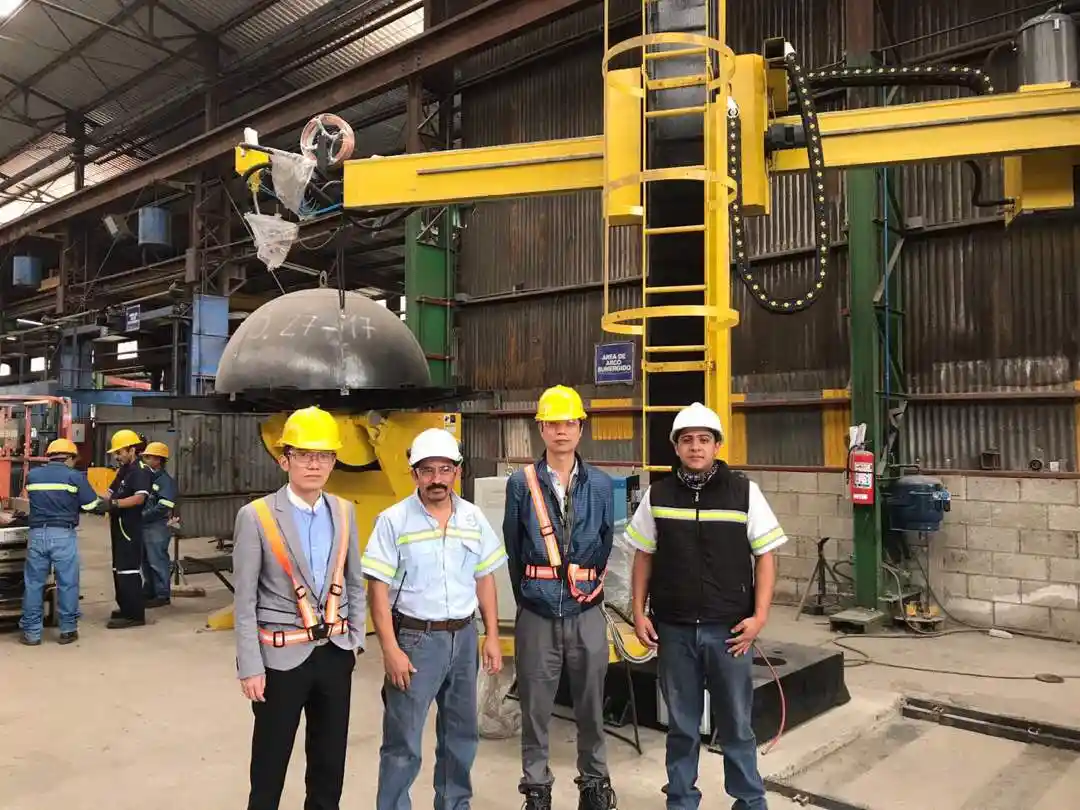
Getting More From Welding Manipulator Electrical Systems
Basic troubleshooting and maintenance keep equipment running. Advanced electrical considerations push performance higher and catch problems before they cause failures.
Power quality monitoring tracks voltage stability, frequency variations, and harmonic distortion. Modern welding manipulators contain sensitive electronics that misbehave when power quality degrades. Harmonic distortion mitigation through filters or active conditioners reduces electrical noise and improves efficiency.
EMC compliance prevents electromagnetic interference between components. In a welding environment full of high-frequency switching and arc noise, proper shielding and filtering keep control signals clean.
System upgrades make sense when older control systems limit capability or when newer technologies offer significant efficiency gains. The cost of an upgrade often pays back quickly through improved productivity or reduced maintenance.
Remote diagnostics capabilities allow monitoring welding manipulator performance from anywhere. When a problem develops, diagnostic data is already available before a technician arrives on site. Predictive maintenance technologies use sensor data and analytics to anticipate failures—replacing a component during scheduled maintenance because the data shows it’s degrading beats replacing it after it fails during production.
For applications like wind tower welding where production efficiency directly affects project economics, these advanced capabilities deliver measurable returns. If you’re interested, check 《Manipuladores de soldadura para o fabrico de torres eólicas: Revolucionando a eficiência da produção》.
Contact Us for Expert Support
For further assistance with your welding manipulator’s electrical systems or to inquire about our advanced welding equipment, please contact us. Our team of experts is ready to provide support and solutions tailored to your needs.
Correio eletrónico: jay@weldc.com
Phone: +86-13815101750
 English
  Español
  Français
  Deutsch
  Português
  Русский