Tube bending machine specifications often get reduced to a single tonnage number, and that is where most purchase mistakes begin. Tonnage tells you whether the machine can pull the bend once. Die size determines whether the tube keeps its shape during the pull. Minimum radius determines how tight the part can actually be produced without buckling or cracking. Those three values interact with material tensile strength and wall thickness more than most generic capacity charts show, so the practical selection path starts with the bend itself rather than the machine frame.
How Much Tonnage Does a Tube Bending Machine Need for Round Tube?
The quick answer is enough tonnage to bend the largest tube you run at the tightest radius, plus a service factor. The underlying force calculation grows with material tensile strength and wall thickness squared, and it shrinks as the centerline radius increases. For a simple draw bend in mild steel tube, I start with an approximate relationship:
F = K × UTS × t² / R
where F is bending force, K is a method constant, UTS is ultimate tensile strength, t is wall thickness, and R is centerline radius. I use this only as a first pass because mandrel friction, wiper drag, and pressure die load all add to the cylinder requirement. The nameplate tonnage covers the whole hydraulic system, not just the theoretical bend force, so I prefer to leave 20 to 30 percent margin on the selected machine. For thin-wall stainless, that margin is not optional.
Material Grade Changes the Tonnage Result
Mild steel and 304 stainless bend differently even at the same outside diameter and wall. Stainless work-hardens under the pressure die, so the required force is often 1.5 to 2 times higher than mild steel at the same radius. I have seen a 50 mm outside diameter, 3 mm wall tube need around 40 tons in mild steel and close to 60 tons in 304 stainless on a tight radius. Those values are not guarantees; they are starting points that show why the material grade belongs on the inquiry next to the tube diameter and wall.
The Mandrel and Pressure Die Add Load
If the machine runs a mandrel, the hydraulic requirement changes because the mandrel has to resist the tube inner wall without being pulled through the bend. A thin-wall tube below about 2D radius usually needs mandrel support to hold ovality. The tonnage rating still matters, but the die set and mandrel reach determine whether the capacity is usable.
What Die Size Should You Specify for Different Tube Profiles?
Die size starts with the tube outside diameter. The clamp die and pressure die are machined to match the exact tube OD, with a tolerance band that has to cover the actual mill variation. If the tube comes in at 50 mm OD ±0.2 mm, a die cut to exactly 50 mm may bind on the high side of the tolerance. A die cut for 50.25 mm may not grip the low side. The die specification therefore needs two values: the nominal tube OD and the tolerance band the tooling must accept.
Round tube is the simplest case. Square and rectangular tube dies are more complex because the profile has corners, and the die set has to orient the part before the bend. A tube bender sold for round tube will not automatically handle square tube at the same nominal size. The die set determines the shape, while the machine controls the bend angle and feed.
Round, Square, and Rectangular Profile Die Sets
Round tube dies usually use a clamp die, pressure die, and bend die matched to the OD. For square and rectangular profiles, the die set includes the same functional parts but the bend die cavity is machined to the profile shape. It is not enough to quote the tube diameter. Buyers should list the full section size, wall, corner radius, and desired bend axis, especially for rectangular tube that may be bent the hard way or the easy way.
Why Does Minimum Bend Radius Change With Tube Diameter and Material?
Minimum bend radius is usually stated as a multiple of tube diameter. A 1.5D bend on a 50 mm tube is a 75 mm centerline radius. The reason the minimum changes is not simply machine power. The outer wall of the bend stretches, the inner wall compresses, and the wall must distribute that strain before it buckles or flattens. Thinner wall tube needs a larger radius or a mandrel to keep the cross section stable. Harder material needs more force and more springback compensation, but it can also crack on the outside radius if the radius is too tight.
For most structural tube work, 2D is a sensible starting point. For architectural handrail in thin-wall stainless, 2.5D to 3D is more realistic without a mandrel. Mandrel tooling can push mild steel and some stainless to 1.5D, but it adds tooling cost and setup time. I would not specify a 1D radius on a general-purpose tube bender unless the need is proven by a physical sample, because the machine may pull it once but the pressure die and wiper will wear fast and the ovality will sit close to the limit.
For downstream work where bent sections are joined into pipe or vessel assemblies, <Rotadores de tubos e rolos de torneamento: Equipamento essencial para o fabrico moderno de condutas> covers how powered turning rolls keep circumferential seams aligned, which becomes a practical concern when bent spools meet long cylindrical runs.
If your tube list includes thin-wall stainless below 2D or high-strength tube that has to be bent before welding, confirm the pressure die and wiper configuration before you finalize the BOM. Send your tube OD, wall, material grade, and target radius to jay@weldmc.com and we will check the tooling set against the part tolerance.
Which Tube Bending Machine Specifications Matter Most for Production Work?
Tonnage, die size, and radius are the headline values, but production behavior comes from the less obvious specs: pressure die length, mandrel reach, bend arm speed, and tooling change time. A shop making 500 identical chair frames per day has different needs than a job shop bending ten different handrail radii per week. The job shop needs quick-change die sets and programmable angle correction. The production shop needs repeatability across thousands of cycles, which depends more on the control system and hydraulic regulation than on maximum tonnage.
| Tube OD | Wall thickness | Material | Typical radius range | Approximate machine class |
|---|---|---|---|---|
| 25 mm | 1.5 mm | Mild steel | 2D to 3D | 10 ton |
| 50 mm | 3 mm | Mild steel | 2D to 3D | 40 ton |
| 50 mm | 3 mm | 304 stainless | 2.5D to 3.5D | 60 ton |
| 75 mm | 4 mm | 4130 chromoly | 2.5D to 4D | 100 ton |
| 100 mm | 6 mm | Mild steel | 2D to 3D | 160 ton plus |
Treat this table as a filter, not a final selection. The frame may have the tonnage, but if the die holder cannot accept the high-tolerance tube or the control cannot compensate springback, the capacity is theoretical. I also check whether the machine can be fitted with the right die sets before the first production run, because a special die set shipped later can add more schedule risk than a modest increase in machine capacity.
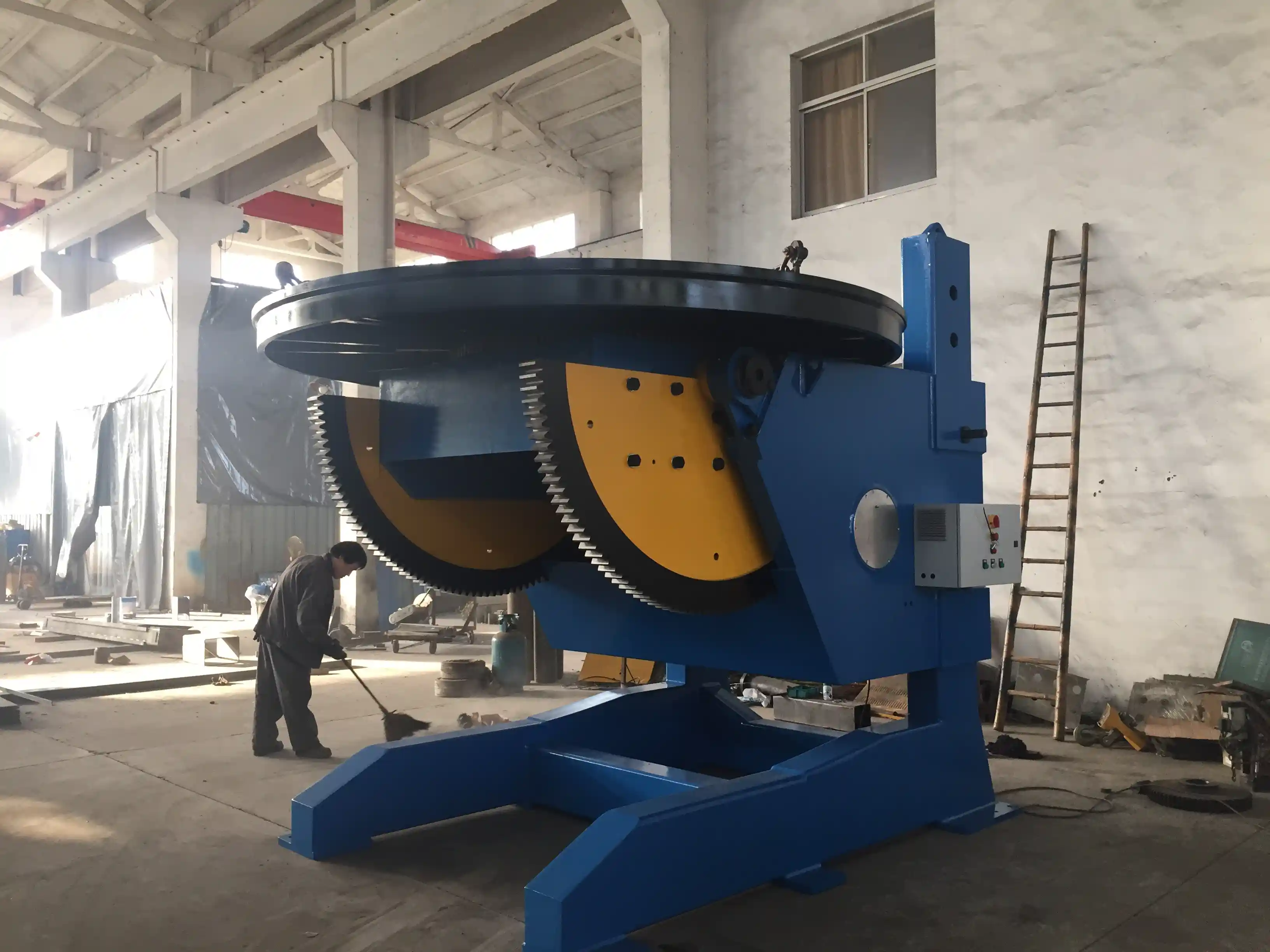
For shops handling large-diameter pipe rather than small structural tube, <Obtenção de soldaduras perfeitas em tubos de grande diâmetro com equipamento de laminagem profissional> covers the rolling equipment side of the same dimensional control problem: keeping heavy round parts stable while welding.
Need a Reality Check Before You Finalize Tube Bending Machine Specifications?
The most common failure I see is a specification sheet that stops at tonnage. Tonnage tells you whether the frame and cylinder can pull the bend once. It does not tell you whether the wiper die will survive interrupted production, whether the pressure die can hold a 2.5D radius without collapse, or whether the tooling set will still accept your tube tolerance band six months later. If your part print includes high-strength steel, thin-wall stainless, or a radius under 2D, the safer move is to have a forming and welding equipment engineer review the complete specification before you commit.
Send your tube outside diameter, wall thickness, material grade, bend radius, and monthly quantity to jay@weldmc.com. You can also call Wuxi ABK Machinery at +86-13815101750. We will confirm the tonnage, die configuration, and minimum radius that fit the part without overspecifying the machine.
What Should Buyers Ask Before Ordering Tube Bending Equipment?
Does a Higher Tonnage Rating Mean Tighter Bends Are Possible?
No. Tonnage tells you how much force the machine can generate, but the minimum radius is governed by the die set, mandrel, wiper, and tube wall stability. A high-tonnage machine without the correct tooling can still buckle a thin-wall part on a tight radius. For any radius under 2D, ask for a bend trial or tooling review before relying on frame size alone.
What is the difference between bend radius and bend diameter in machine specs?
A common assumption is that bend diameter and bend radius are interchangeable. They are not. Bend radius usually means centerline radius, the distance from the center of the bend to the middle of the tube. Bend diameter is twice that value. Some suppliers list diameter because it sounds wider, so I always confirm whether a 3D spec means three times the tube outside diameter or a 3-inch true radius. Ask for the dimension marked on the part drawing, not the brochure term.
Can one die set handle multiple tube sizes?
It depends on the die type. The pressure die and clamp die are usually machined to one outside diameter with a narrow tolerance, so one die set cannot reliably run several sizes. Some machines use interchangeable inserts, but the bend die cavity must still match the profile. If your project mixes 25 mm, 32 mm, and 38 mm round tube, budget for three die sets or a machine designed for quick die change. Running one die across several sizes tends to produce scoring, slippage, and ovality.
How much springback should I expect in tube bending?
In production, I have seen structural mild steel spring back 1 to 3 degrees on typical 2D to 3D bends, with higher correction for high-strength tube and tight radii. The exact value depends on material, wall thickness, and machine setup, so the control should include springback correction and the first article should be checked after the clamp is released. Without that sample check, a part can meet the drawing on the machine and still miss tolerance in the fixture.
What documentation should I request before ordering a tube bending machine?
Request the bending capacity chart for your tube OD and wall range, the die set configuration, the minimum and maximum centerline radius, and the equipment hydraulic and electrical requirements. If the supplier cannot state those values for your actual material grade, the quote is not complete. Ask whether the machine is CE marked for your market and whether the control has program storage. Share your requirements and we’ll confirm compliance documentation availability.
Se estiver interessado, consulte estes artigos relacionados:
Como melhorar a qualidade da soldadura de tubos através de um posicionador de soldadura de alta precisão
Problemas de escorrimento no revestimento de condutas de navios: como os suportes inteligentes para rolos de pintura aumentam a taxa de aprovação para 98%
Desalinhamento excessivo na soldadura de condutas: Solução de posicionamento de precisão com plataforma giratória da Wuxi ABK Welding
Rotadores de tubos e rolos de torneamento: Equipamento essencial para o fabrico moderno de condutas
Revolução na soldadura naval: como os posicionadores de soldadura melhoram a qualidade e a eficiência
 English
  Español
  Français
  Deutsch
  Português
  Русский