
Industrial fabrication has shifted in ways that catch your attention once you’ve watched a few production floors evolve. Manufacturers aren’t just chasing output numbers anymore—they’re rethinking how work gets done at the weld joint itself. The push toward automation has sparked real debate about where robotic systems make sense and where traditional methods still hold ground. What follows breaks down the practical differences, the numbers that matter, and the trade-offs that don’t always show up in sales brochures.
Why Robotic Welding Delivers Measurable Gains in Precision and Output
Robotic welding systems separate themselves from traditional manipulators through performance metrics that compound over time. Higher throughput, shorter cycle times, and weld quality that stays consistent across shifts—these aren’t marketing claims, they’re measurable outcomes. Automated welding systems execute precision welding applications with positioning accuracy that human operators simply cannot sustain hour after hour. Fatigue doesn’t factor into a robot’s tenth hour the way it does for a skilled welder. The result is welding productivity that scales predictably.
The Mechanics Behind Operational Efficiency Gains
Robotic welding improves operational efficiency through mechanisms that reinforce each other. Robots follow pre-programmed weld paths with extreme accuracy, which means fewer defects and less time spent on rework. Automated systems don’t take breaks, don’t slow down at the end of a shift, and don’t vary their technique based on how their morning went. Cycle times drop because movement is optimized and processing happens faster than manual setups allow. This affects resource utilization directly—less material waste, fewer labor hours per unit, and production output that matches forecasts. The return on investment from automation comes from optimizing the welding process itself, not just from replacing headcount.
| Caraterística | Robotic Welding | Manual Welding (Traditional Manipulators) |
|---|---|---|
| Velocidade | High (consistent, optimized paths) | Variable (operator skill, fatigue) |
| Accuracy | High (±0.05 mm positioning accuracy) | Moderate (human precision limits) |
| Consistência | Excellent (repeatable results) | Variable (operator dependent) |
| Qualidade da soldadura | Superior (fewer defects, uniform beads) | Moderate (prone to inconsistencies) |
| Cycle Time | Reduced (faster processing) | Longer (setup, breaks, slower pace) |
| Custo do trabalho | Lower (reduced direct labor, supervision) | Higher (skilled labor demand) |
| Segurança | Enhanced (operators away from hazards) | Moderate (direct exposure to hazards) |
| Data Collection | Comprehensive (real-time monitoring) | Limited (manual inspection) |
Where Traditional Welding Manipulators Fall Short
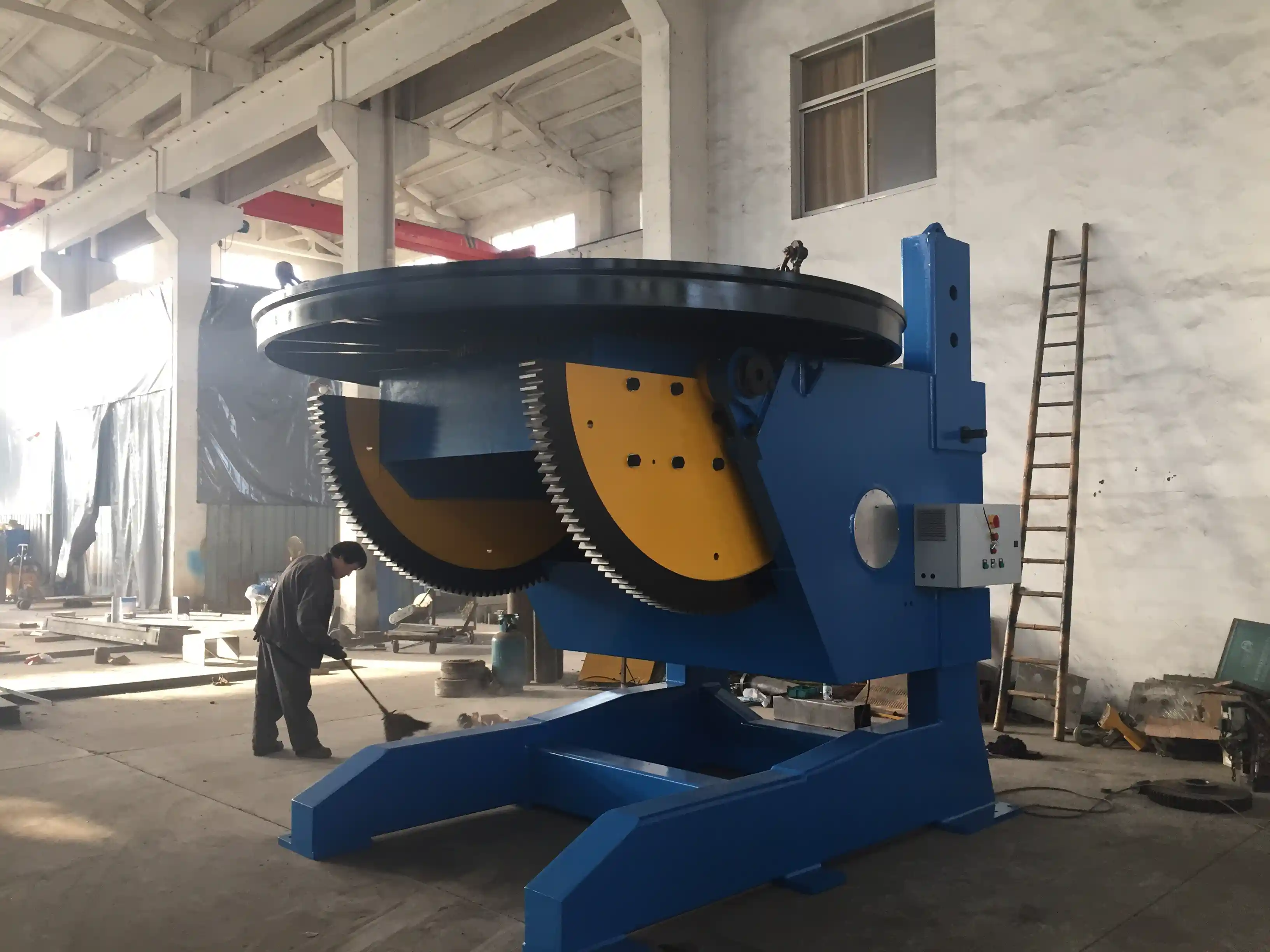
Traditional welding techniques and manual processes carry limitations that become more visible as production demands increase. These methods depend heavily on operator skill and physical endurance. A welder’s first hour looks different from their eighth hour, and that variability shows up in weld quality and production rates. Manual welding challenges include inconsistent bead profiles, higher defect rates, and the reality that skilled welders are increasingly difficult to find and retain. The welding skill gap compounds these issues across the industry.
Operator safety remains a persistent concern. Exposure to fumes, intense heat, and UV radiation creates health risks that accumulate over a career. Traditional welding manipulators help with positioning but don’t eliminate these hazards. Material handling in manual setups adds time and physical strain that automated systems avoid entirely.
Operational Efficiency Differences in Practice
The efficiency gap between robotic welding and traditional manipulators shows up in daily operations. Robotic systems maintain speed and repeatability that translate to higher output per shift. They require less direct labor, which reduces labor costs in welding operations. Traditional manipulators offer flexibility for certain tasks, but human factors limit their ceiling. Fatigue, skill variations, and mandatory breaks create production bottlenecks that don’t exist with automated systems. Robotic welding maintains consistent quality and speed, which makes production schedules predictable. When a different weld configuration is needed, reprogramming takes hours rather than retraining operators over weeks.
《Exceptional Application Value: How Fixed-Height Welding Positioners Drive Advancements in Offshore and Shipbuilding Manufacturing》
How Advanced Welding Technologies Are Reshaping Fabrication
The direction of fabrication points toward deeper integration of advanced welding technologies. Industrial automation and Industry 4.0 welding principles are moving from pilot projects to standard practice. AI and IoT integration creates smart factories where real-time monitoring catches problems before they become scrap. Predictive maintenance reduces unplanned downtime. Digital transformation in manufacturing gives decision-makers visibility into operations that manual tracking never provided. Welding innovation now focuses on systems that adapt to variations in real time—autonomous enough to handle the unexpected while maintaining the precision that justifies the investment.
The Business Case for Robotic Welding Investments
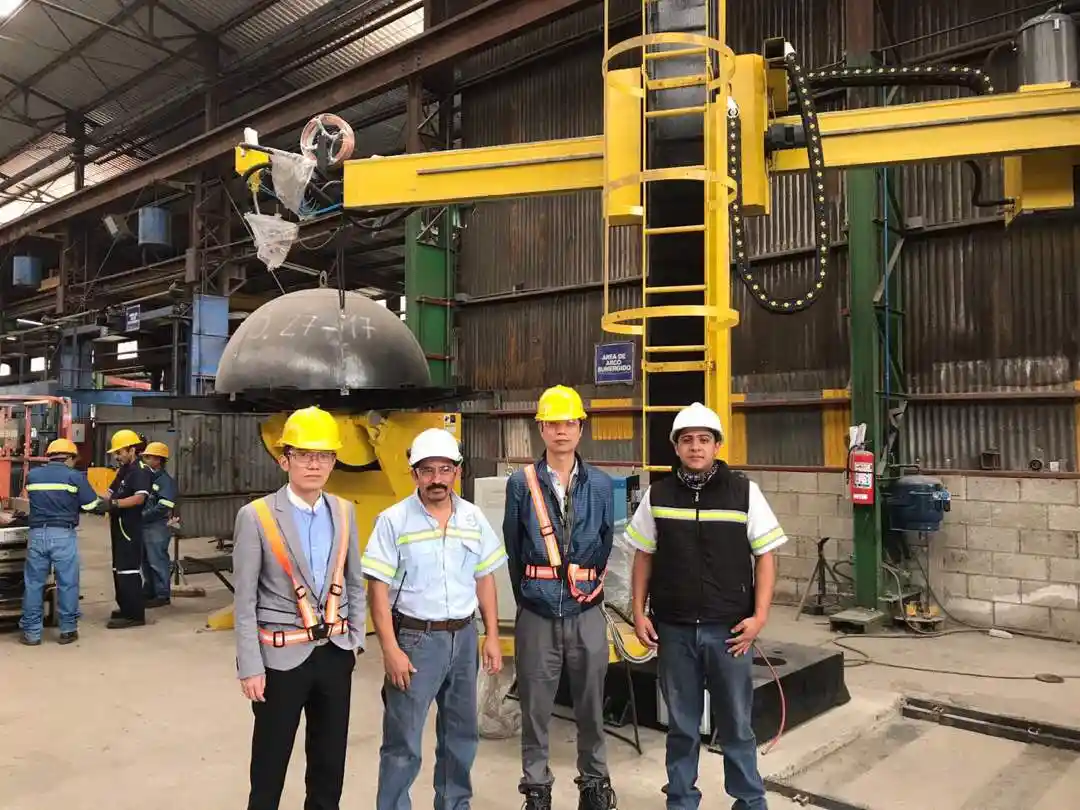
Robotic welding systems justify their cost through both commercial returns and practical improvements. The return on investment becomes substantial when you factor in productivity gains alongside reduced operational costs. Safety improvements matter beyond compliance—removing operators from hazardous welding environments changes injury rates and insurance costs. The risks from heat, fumes, and arc flash drop dramatically when humans aren’t positioned at the weld joint. For heavy fabrication solutions, the long-term cost-effectiveness of robotic welding typically outweighs the initial capital expenditure within a few years.
Realistic ROI Timelines for Heavy Fabrication
ROI for robotic welding systems in heavy fabrication varies by application, but payback periods commonly fall between 18 and 36 months. Several factors drive this timeline. Reduced labor costs show up immediately. Increased production speed compounds over time. Improved weld quality means lower rework rates and less material waste, which contribute to manufacturing cost savings that aren’t always obvious in initial projections. The capital expenditure for welding automation gets offset by operational efficiencies that continue year after year. For facilities with consistent production volumes, the financial case is straightforward.
| ROI Calculation Factors | Description | Impact on ROI |
|---|---|---|
| Labor Cost Reduction | Fewer operators needed, reduced overtime, lower benefits costs. | Significant cost savings. |
| Increased Throughput | Faster cycle times, continuous operation, higher production volume. | Higher revenue potential. |
| Improved Quality & Reduced Rework | Consistent welds, fewer defects, less scrap material. | Reduced material and labor waste, improved customer satisfaction. |
| Enhanced Safety | Fewer workplace accidents, lower insurance premiums, reduced liability. | Direct cost savings, improved employee morale. |
| Energy Efficiency | Optimized power consumption, reduced idle time. | Moderate operational cost savings. |
| Maintenance & Downtime | Predictive maintenance, reduced unplanned downtime, longer equipment life. | Minimized production interruptions, lower repair costs. |
《Revolutionary Solution for Pressure Vessel Welding: Technical Analysis of 360-Degree Rotating Welding Positioners》
WUXI ABK MACHINERY CO., LTD’s Approach to Modern Welding Equipment
WUXI ABK MACHINERY CO., LTD has been building advanced welding equipment since 1999. Our focus areas include wind tower welding lines and H beam welding lines, along with precision welding manipulators and welding positioners. The LH series welding manipulator delivers ±0.1 mm/m positioning accuracy, which matters for longitudinal and circumferential seam welding where tolerances are tight. Our 3-axis positioners—available in 1-ton, 2-ton, 3-ton, and 5-ton configurations—achieve ±0.05 mm positioning accuracy with 0.02 mm repeatability. These integrate with ABB, KUKA, and FANUC robots for automated welding cells.
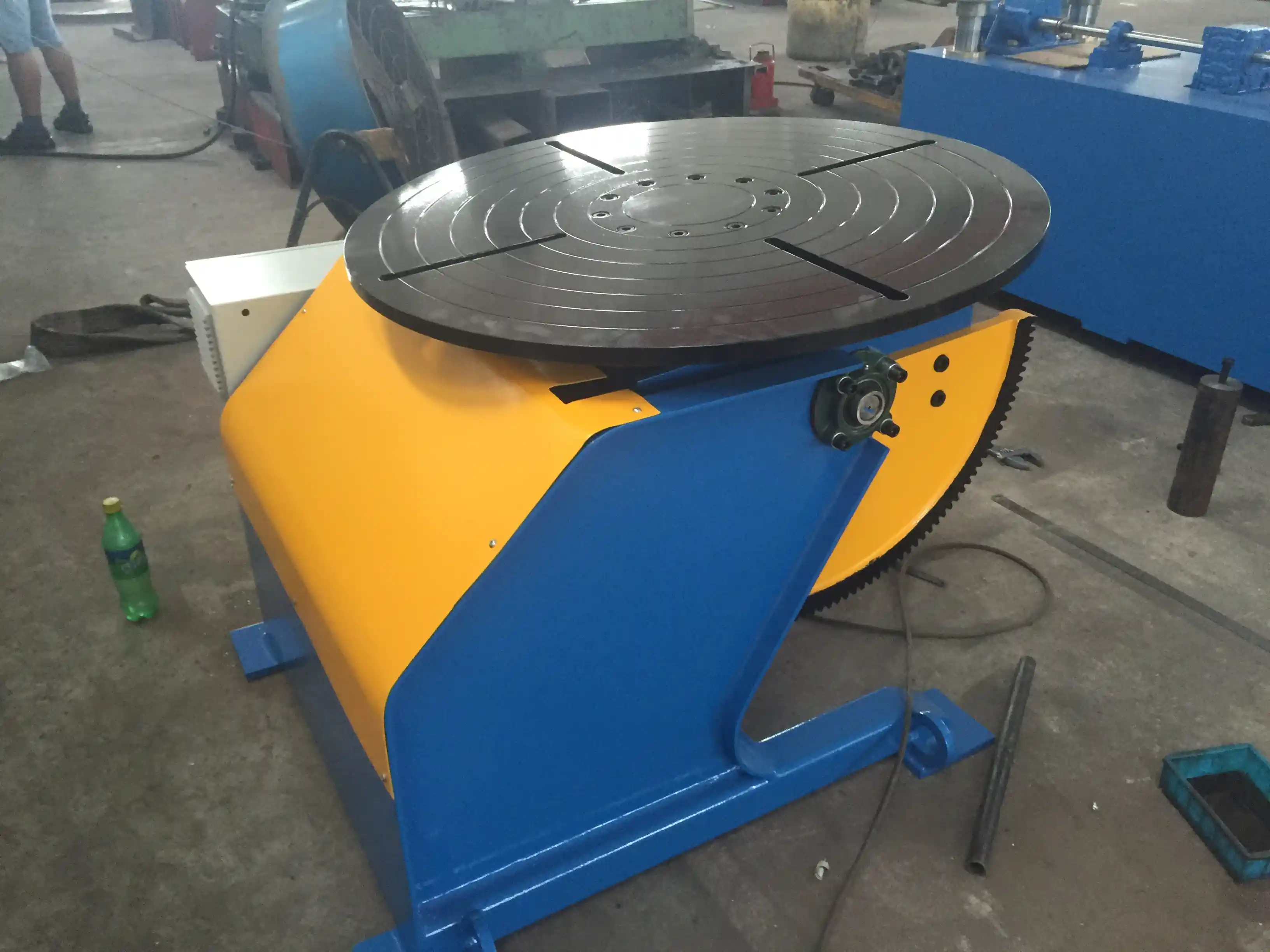
The welding rotator equipment we manufacture includes adjustable and fixed height options handling loads up to 300 tons. These serve heavy fabrication, pressure vessel welding, and structural steel assembly applications. Our 30 Tons Adjustable Height Positioner handles heavy equipment fabrication and wind tower sections using hydraulic lifting with stepless speed control. The L-Type Welding Positioners, including models LHBJ-30 and LHBJ-50, handle medium to heavy-duty workpieces with 0.5-degree accuracy and continuous 360-degree rotation—suitable for pipe fabrication and robotic welding processes. Welding Turntable Solutions range from 200kg to 30-ton capacities for applications from pipe and flange welding to large pressure vessel manufacturing. The HGZ series Standard Rotators, with models up to 100 tons, provide solutions for pipe girth welding and wind energy components using advanced PLC controls and anti-creep technology.
《Welding Manipulators for Wind Tower Fabrication: Revolutionizing Production Efficiency》
Partner with WUXI ABK MACHINERY CO., LTD for Your Fabrication Needs
The fabrication landscape continues shifting toward automation, and equipment choices made now affect competitiveness for years. WUXI ABK MACHINERY CO., LTD brings decades of experience in wind tower welding lines, H beam welding lines, pipe welders, and precision welding manipulators and positioners. Contact our specialists to discuss how our solutions might fit your production requirements. We offer personalized consultations and product demonstrations.
Mobile: +86-13815101750 | Tel: +86-510-83555592 | Email: jay@weldc.com
Frequently Asked Questions About Welding Automation
How does robotic welding improve weld quality and consistency compared to manual processes?
Robotic welding eliminates the variability that comes from human fatigue and technique differences. Robots execute pre-programmed paths with precise control over speed, arc length, and wire feed rate. This produces uniform welds with consistent penetration and bead profiles. Defect rates drop because the process doesn’t drift over time the way manual welding does. The repeatability translates to fewer reworks and more reliable structural integrity across production runs.
What are the primary safety benefits of integrating robotic welding systems?
The main safety benefit is removing human operators from the hazard zone. Welders face exposure to intense heat, UV radiation, toxic fumes, and spatter throughout their shifts. Robotic systems handle these conditions without the health consequences. Burns, eye injuries, and respiratory problems decrease when humans aren’t positioned at the arc. Insurance costs often reflect this improvement, and the workplace culture shifts when the most dangerous tasks are automated.
Can existing fabrication facilities integrate robotic welding systems, or is a complete overhaul required?
Most existing facilities can integrate robotic welding systems without rebuilding from scratch. Modern robotic welding solutions are designed with modularity in mind and can adapt to current production layouts. Some retooling or workstation reconfiguration is usually necessary, but the scope varies by application. Manufacturers like WUXI ABK MACHINERY CO., LTD provide customizable solutions and integration support to work within existing infrastructure while upgrading capabilities where they matter most.
 English
  Español
  Français
  Deutsch
  Português
  Русский