
Multi-machine control systems let a single operator manage multiple welding and cutting machines at once, and the result is a 30 to 50 percent jump in output without adding headcount. Instead of an operator standing idle while a machine runs a cycle, the person loads the next part on a second machine or monitors a third. I’ve seen fabrication shops go from two operators running three machines to one operator running three machines and actually improve consistency, because the operator’s attention shifts to exceptions, not routine tasks. The trick is not buying a fleet of robots; it is connecting the machines you already own so their cycles don’t overlap in ways that waste time. This approach works for manipulador de soldaduras, positioners, Cortador a plasma CNCs, and even máquina de soldar tuboss.
The Productivity Gains of Multi-Machine Control
An operator watching a weld cycle or waiting for a CNC cut to finish is time you never get back. In a conventional setup, one machine runs while the operator stands ready for the next load, which might leave 30 to 50 percent of the operator’s shift as idle time. Shift that operator to a multi-machine cell, and the idle gap closes. While a plasma cutter pierces and cuts plate one, the operator clamps a workpiece into a positioner for the next weld, and a welding manipulator runs a longitudinal seam without attention. Throughput rises because machine utilization climbs closer to 90 percent rather than the 60 percent typical of single-machine tending. The operator’s role changes from button-pusher to cell manager: loading, inspecting, and handling exceptions. In projects we’ve implemented, this change alone reduced labor cost per part by roughly 35 percent without altering the machines themselves, only how their cycles were sequenced.
Machine Types Suitable for Multi-Machine Control
Not every machine on your floor is ready to join a multi-machine cell, but most modern welding and cutting equipment can be adapted. The table below summarizes the machine types that adapt most easily and what they need.
| Machine Type | Multi-Machine Capability | Key Enablers |
|---|---|---|
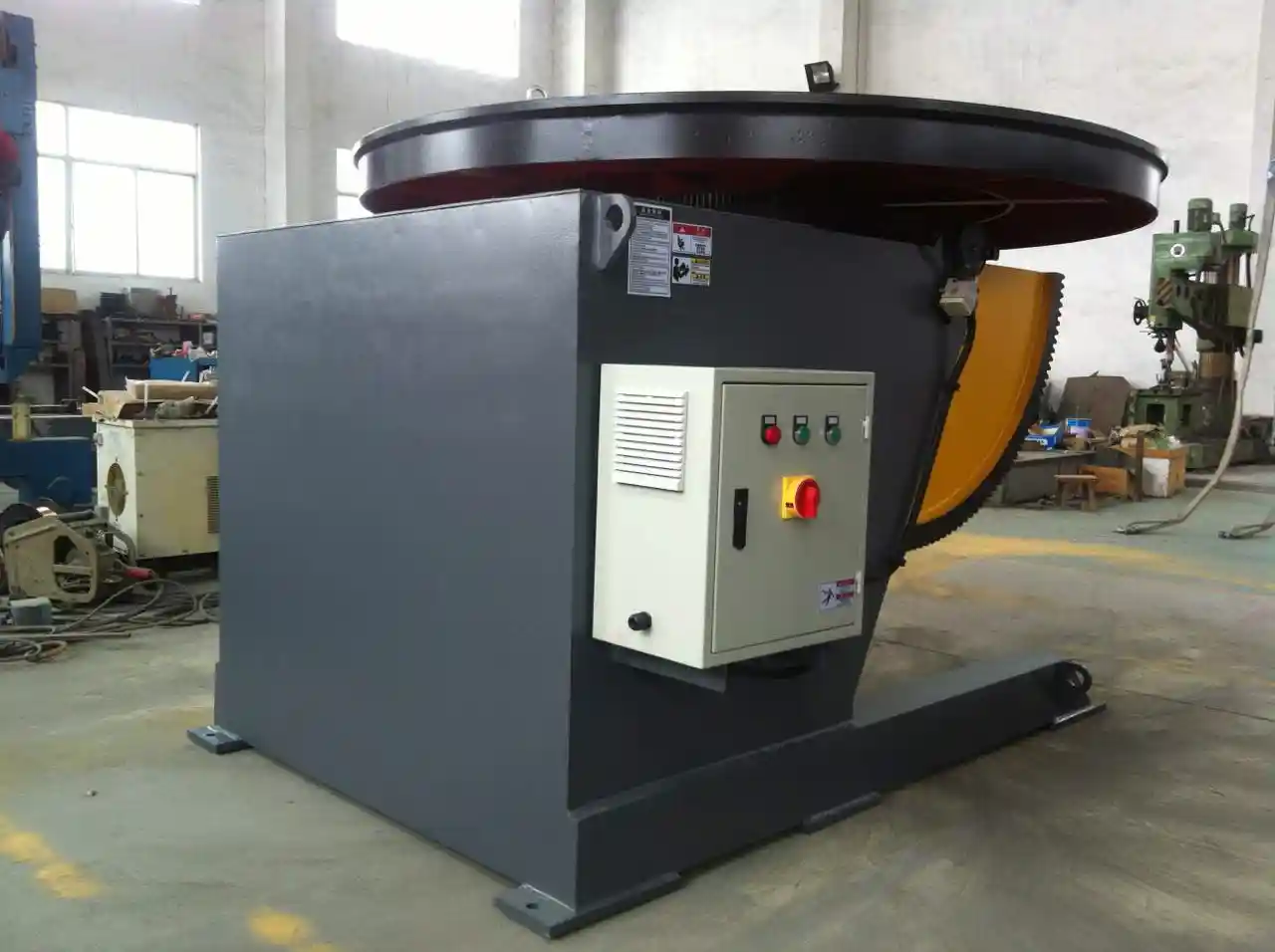
| Manipulador de soldadura | Yes, with remote I/O or PLC interface | Boom travel and speed control, optional seam tracking, remote start/stop terminals |
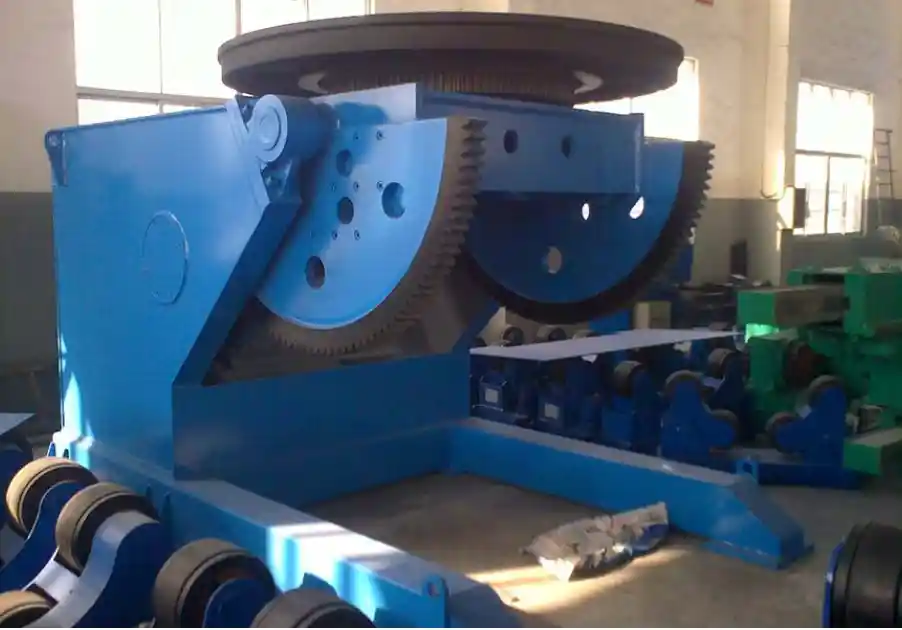
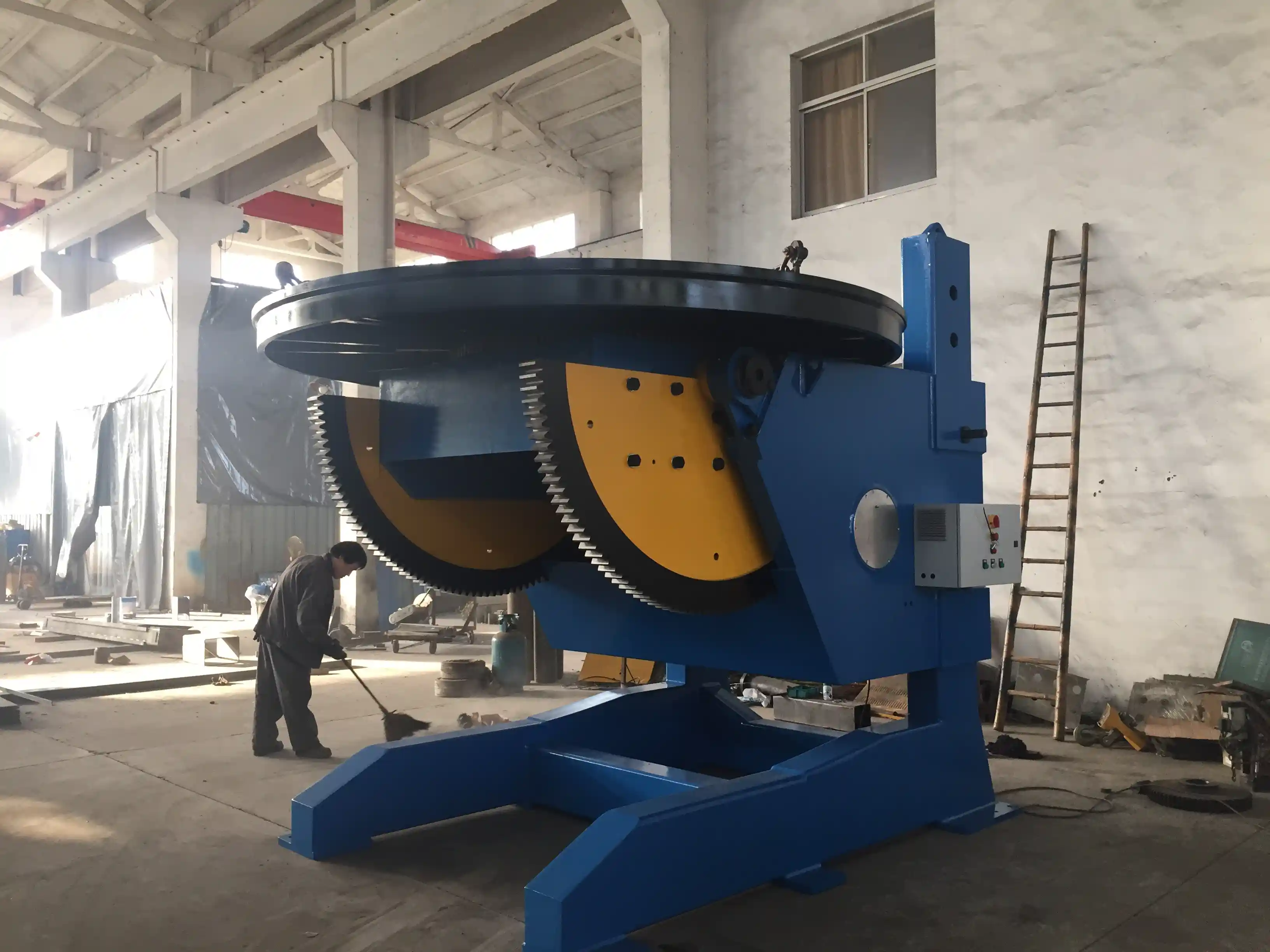
| Posicionador de soldadura | Yes, with PLC and HMI | Rotation and tilt feedback, position accuracy ±0.05 mm, robot-compatible interface |
| Cortador a plasma CNC | Yes, with open controller protocol | Modbus or EtherNet/IP support, automatic torch height control, program auto-start |
| Rotador de soldadura | Yes, with frequency drive and remote control | Stepless speed regulation, remote run signal, 0.1 mm/m accuracy |
| Tube-to-Tube Welding Machine | Conditional; depends on control system | PLC-based weld cycle control, automatic clamping and release |
The WUXI ABK LH series welding manipulators, for instance, include remote control terminals and optional PLC integration, so they can be made part of a larger cell without a full rebuild. Similarly, our positioners with Siemens PLCs store multiple welding programs and can accept remote start and stop commands. Older CNC machines that lack open communication protocols can sometimes be retrofitted with an external I/O module to tie into a central controller, but the cost and effort need to be weighed against the productivity gain.
Centralized Control Architecture for Multi-Machine Cells
The missing piece is usually a central controller, not a new machine. A small industrial PLC or an industrial PC with an HMI screen can coordinate the cell. Each machine connects to the PLC through digital I/O or a fieldbus network like Modbus TCP. The PLC monitors machine status (running, idle, fault) and determines when each machine can start its next cycle based on the operator’s availability and the condition of safety devices.
I’ve seen this work in a cell that combined a welding manipulator, a 3-axis positioner, and a CNC plasma cutter. The HMI showed a simple dashboard: one bar for the manipulator seam progress, one for the positioner rotation angle, and one for the plasma program status. The operator stood at the load station between the machines. When the plasma finished a cut, the screen prompted the operator to remove the part and load a fresh plate. Meanwhile, the manipulator continued a long seam and the positioner held a part in position for a girth weld. The operator only had to switch attention when a light tower signaled a cycle complete. No fancy robotics, just synchronized start signals and a well-timed queue.
If you’re planning to connect machines from different suppliers, the protocol mismatch can be the biggest roadblock. Share your equipment list with us at jay@weldc.com and we’ll help you map out the communications architecture.
Floor Layout for Efficient Multi-Machine Operation
Arranging the machines so one person can reach them without wasted steps is as important as the control system itself. A U-shaped layout works well: the operator stands inside the U, with a loading table at the center. Machines line the perimeter, each within a few meters. In a cell we designed for membrane panel production, the operator faced a welding positioner on the left and a tube-to-tube welding machine on the right; a small jib crane overhead brought tube bundles to the loading station without walking. The machines ran independent cycles, and the operator loaded parts as each cycle finished.
Material handling must be part of the layout from day one. If the operator is expected to lift heavy plates or long beams, productivity crumbles. Roller conveyors, lift tables, or a simple overhead crane with pendant control keep the operator’s effort minimal. In one case, adding a manual gantry crane reduced the load/unload time from 90 seconds to 30 seconds per part, which freed up more than an hour of machine run-time per shift.
Safety Interlocks and Emergency Systems for Multi-Machine Control
When a single operator is responsible for multiple machines, the safety system must be able to stop every machine in the cell with one action. The emergency stop circuit must be hardwired so that pressing any E‑stop immediately kills power to all machine motions, not just the nearest one. Software-based stops are not acceptable for personnel safety.
Our welding positioners and manipulators provide dual-channel emergency stop buttons and fail-safe circuits. In a multi-machine cell, these circuits are wired in series, so a stop on one machine trips the entire line. Light curtains or safety laser scanners at the load station add a second layer of protection: if the operator steps into a machine’s working envelope during its cycle, only that machine stops, while the others can continue, but only if the safety zones are spatially isolated and the risk assessment confirms no reach hazard. A qualified safety engineer must design the interlock logic; do not guess here.
ROI Calculation for Multi-Machine Control
The payback for multi-machine control usually arrives in less than a year, even after adding the cost of a small PLC, some sensors, and wiring. A typical midsize shop might spend $8,000 to $15,000 on controls and integration for a three-machine cell, but save one full-time operator at an annual cost of $30,000 to $50,000. The table below shows a simplified comparison.
| Item | Single-Machine Tending (per shift) | Multi-Machine Cell (per shift) |
|---|---|---|
| Operators required | 3 | 1 |
| Average machine utilization | 55–65% | 85–95% |
| Annual labor cost for operators | $90,000–$150,000 | $30,000–$50,000 |
| One‑time control upgrade cost | $0 | $8,000–$15,000 |
| Payback period | N/A | 3–6 months |
Real numbers will vary with part complexity and material handling, but the logic holds: if a machine spends a third of its time waiting for an operator, the capacity gain covers the control cost quickly.
Common Questions About Multi-Machine Control
Can older CNC machines be retrofitted for multi-machine control?
Most CNC machines from the last 15 years have at least digital I/O ports that can be connected to a PLC with an interface module. The challenge is not connectivity but cycle timing: older controls may not output a reliable “cycle complete” signal. In our experience, machines with a fixed program cycle — like a CNC plasma cutter running a preloaded nesting program — are the easiest to integrate. If the machine has no remote start capability, a simple relay and a light curtain can at least enable automatic stop-on-intrusion while the operator oversees another machine.
Is multi-machine control only for high-volume production?
This is the most common misconception. High-volume production certainly benefits, but small job shops can see an equally large improvement because the operator is no longer tied to one machine during long setup or run times. If your shop runs batches of five to fifty parts, the ability to have the operator load the next job on a different machine while a long weld runs on the first is pure throughput. The cycle time of the longest task dictates the cell output, not the total number of parts.
How many machines can one operator manage safely?
In practice, two to four machines is the sweet spot, depending on cycle time and material handling. We’ve built cells where one operator managed a welding manipulator, a positioner, and a plasma cutter. The limit is not the number of machines but the sum of the manual load/unload times and the walking distance. If the operator is running nonstop just to load parts, the cell is not balanced. We aim for a setup where the operator has 10 to 15 seconds of idle window per cycle to inspect quality.
What training does the operator need?
The operator needs to understand each machine’s basic function and the cell’s HMI, not how to program g‑code or weld parameters. We train operators on the start‑stop sequence, emergency stops, and light tower signals. In most cases, a welder or machine operator can become proficient on a multi-machine cell in two to three days, because the machines still run their own programs; the operator only responds to prompts.
What’s the biggest risk when integrating multiple machines?
The risks split into two categories: safety and crashes. If the interlocking is not tight, one machine can start while the operator is inside a neighboring machine’s zone, which is unacceptable without proper guarding. The second risk is mechanical: if the PLC sends a start signal to a machine that is not ready (e.g., a clamp is not closed), a collision can happen. Both are preventable with thorough signal mapping and a structured commissioning process. If you’re unsure where to start, share your machine list and we’ll identify the highest-priority safety gaps — email jay@weldc.com.
If your shop floor has machines that spend more time waiting for an operator than running, multi-machine control is worth a closer look. Send us your current machine list and a rough layout sketch to jay@weldc.com or call +86-510-83555592, and we’ll advise on the simplest path to higher output per operator.
Se estiver interessado, consulte estes artigos relacionados:
Cansado de desafios complexos na soldadura? Como um posicionador de 3 eixos pode aumentar a produtividade em 70%
Problemas de soldadura de torres eólicas novamente: Como os rotadores inteligentes da linha de crescimento aumentam a produtividade por 50%
 English
  Español
  Français
  Deutsch
  Português
  Русский