Boiler tube production is unforgiving, and membrane panel welding is where that truth shows up first. After years around shop floors and hydro tests, we treat these seams like they decide the boiler’s lifespan, because they do. Consistent, high-caliber welds come from disciplined technique, purpose-built equipment, and tight quality control. What follows is a practical walk-through of proven methods and the automation we rely on to lift quality and throughput, without giving an inch on safety.
Understanding Membrane Panel Welding in Boiler Tube Production
1. The Critical Role of Membrane Panels in Boiler Design
Membrane panels form the critical heat exchange surfaces within boilers. They consist of multiple boiler tubes joined together by welded fin strips, creating a gas-tight wall. This design maximizes heat transfer efficiency and structural integrity, vital for high-pressure, high-temperature environments. The reliability of these welds directly influences boiler performance and operational safety.
2. Challenges and Precision Requirements in Boiler Tube Welding
Welding membrane panels brings its own set of demands. We must hold tight tube alignment and maintain consistent weld penetration. Distortion control stays front and center due to the thin fin material and repetitive welding sequences. Hitting top-tier, defect-free welds under these conditions calls for specialized know-how and advanced equipment. Manual setups often struggle with the required dimensional tolerances and production rates.
3. Key Welding Processes for Membrane Panel Fabrication
Several welding processes are used in membrane panel fabrication, each with clear advantages. Submerged Arc Welding (SAW) offers high deposition rates and deep penetration, ideal for long, straight seams. Gas Metal Arc Welding (GMAW) and Flux-Cored Arc Welding (FCAW) add flexibility and suit a range of joint configurations. Precision and automation carry weight across all of these processes.
Se estiver interessado, consulte 《Boilers And Pressure Vessels How Welding Rotators Enhance Manufacturing Efficiency》.
Advanced Welding Techniques for High-Quality Membrane Panels
1. Automated Submerged Arc Welding (SAW) for Boiler Tubes
Automated SAW is a preferred method for membrane panel welding due to its high efficiency and consistent quality. This process uses a continuously fed electrode and a blanket of granular flux, shielding the arc and molten weld pool. Automated SAW systems produce uniform weld beads, deep penetration, and minimal spatter. That sharply cuts post-weld cleaning and rework.
2. Gas Metal Arc Welding (GMAW) and Flux-Cored Arc Welding (FCAW) Applications
GMAW, or MIG welding, uses a continuously fed wire electrode and a shielding gas, which supports high productivity and reliable weld quality. FCAW employs a tubular electrode filled with flux, delivering strong arc stability and good penetration, often without external shielding gas. Both processes adapt well to automation for tighter consistency.
3. Optimizing Welding Parameters for Membrane Panel Integrity
Dialing in parameters is non-negotiable for sound membrane panel welds. Current, voltage, travel speed, and wire feed speed directly shape weld quality. We calibrate these inputs to control heat input, penetration, and bead profile. Keeping parameters consistent helps prevent porosity, lack of fusion, and distortion, which protects long-term integrity.
Essential Equipment for Efficient Boiler Tube Panel Production
1. How Welding Manipulators Enhance Precision and Productivity
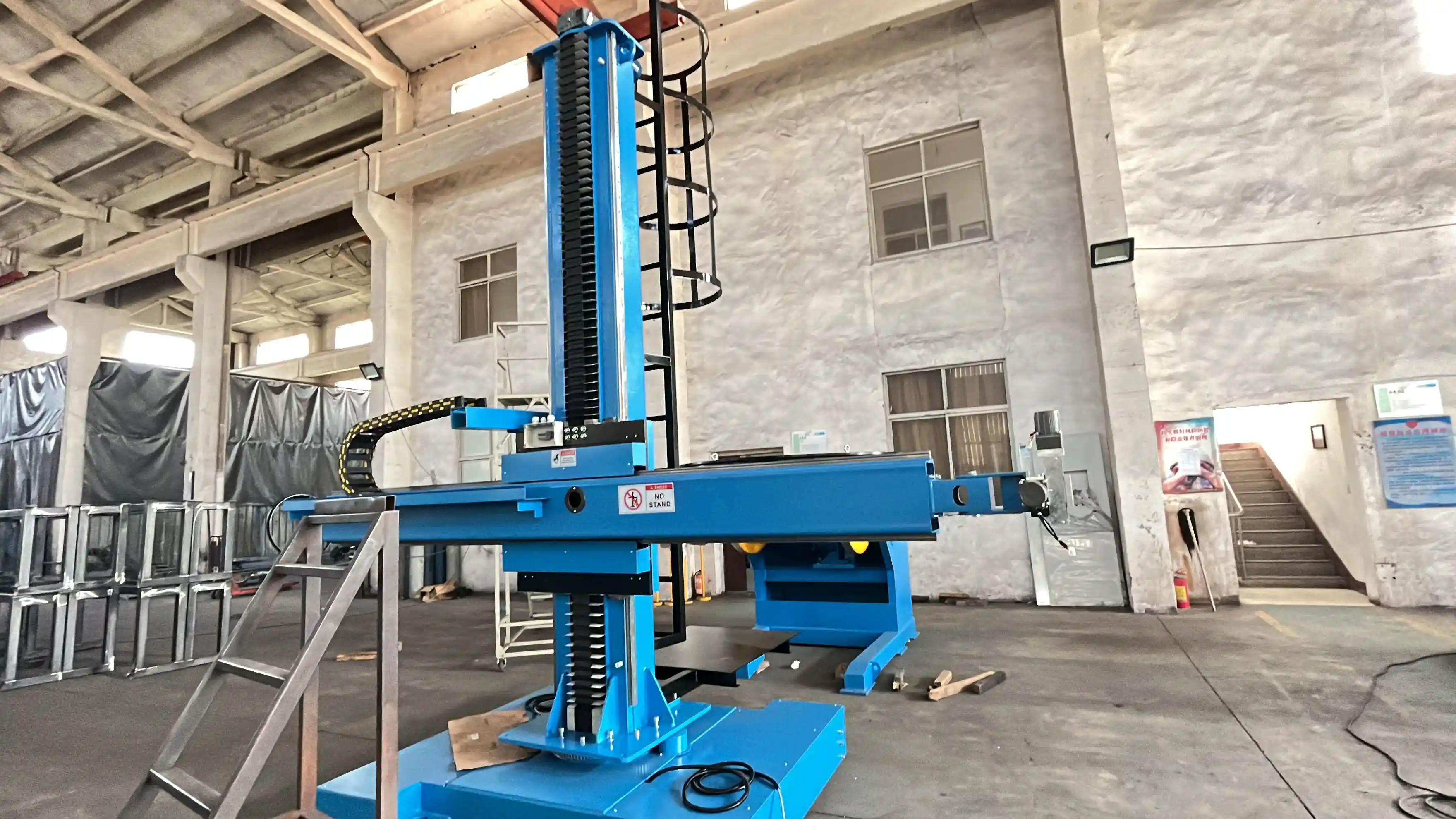
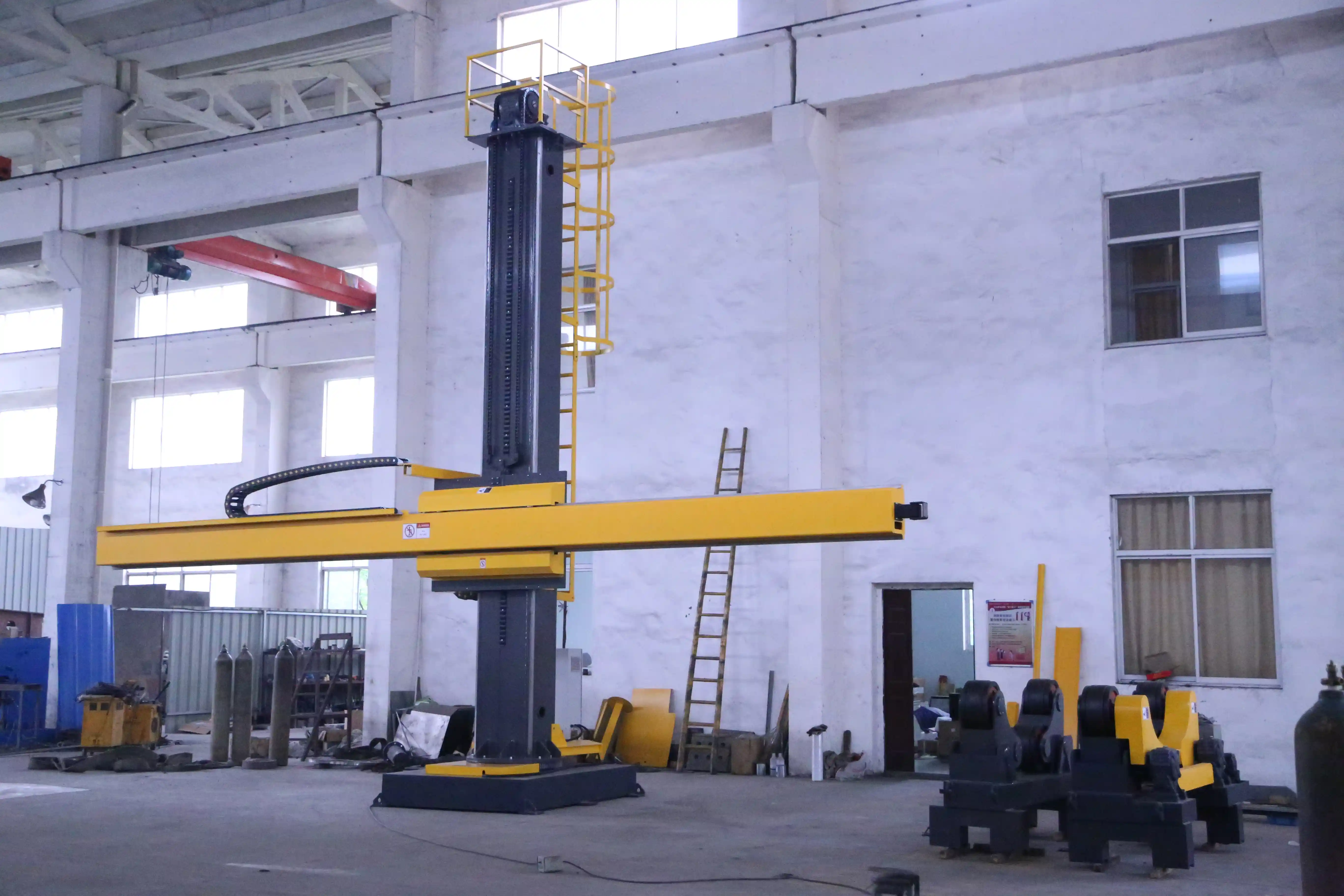
Manipulador de soldaduras are indispensable for membrane panel welding. They provide stable platforms for precise torch positioning and movement. Our manipulators feature high-strength box-beam structures and linear guideways, ensuring positioning accuracy of ±0.1 mm/m. Models like the LH8080 offer extensive horizontal and vertical travel, accommodating large boiler panels. These systems raise weld quality and production efficiency.
2. The Role of Welding Positioners in Complex Panel Assembly
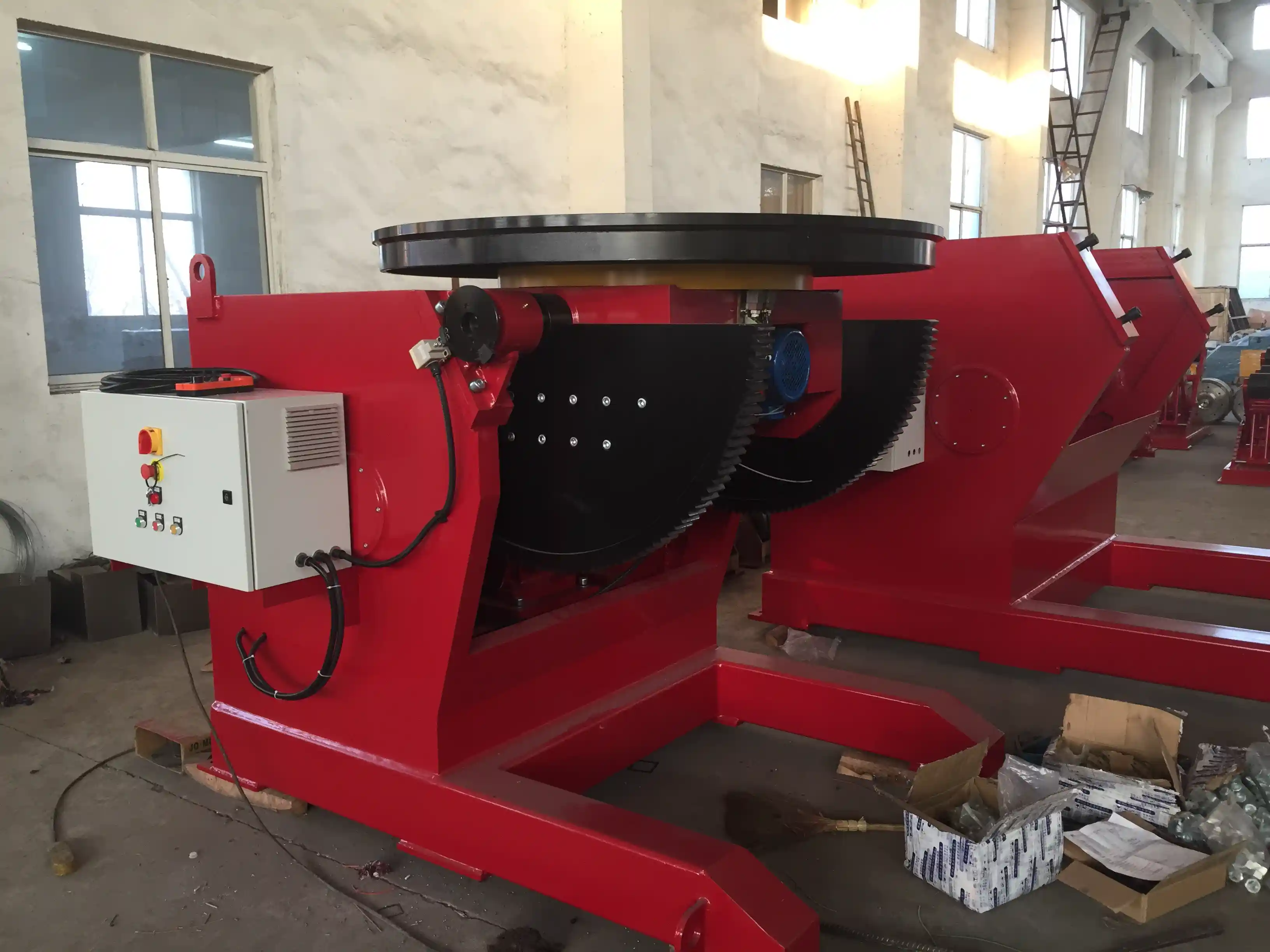
Welding Positioners are central to orienting complex membrane panel sections. They allow operators to rotate, tilt, and turn workpieces to reach optimal welding positions. This improves welder access and supports gravity welding, upgrading weld quality while reducing operator fatigue. Our 3-axis positioners, such as the Triple Axis Positioner, offer precise control and high load capacities for heavy boiler components.
Se estiver interessado, consulte 《Empowering Pressure Vessel Manufacturing How Welding Positioners Become The Core Engine Of Quality And Efficiency》.
3. Utilizing Welding Rotators for Cylindrical Boiler Components
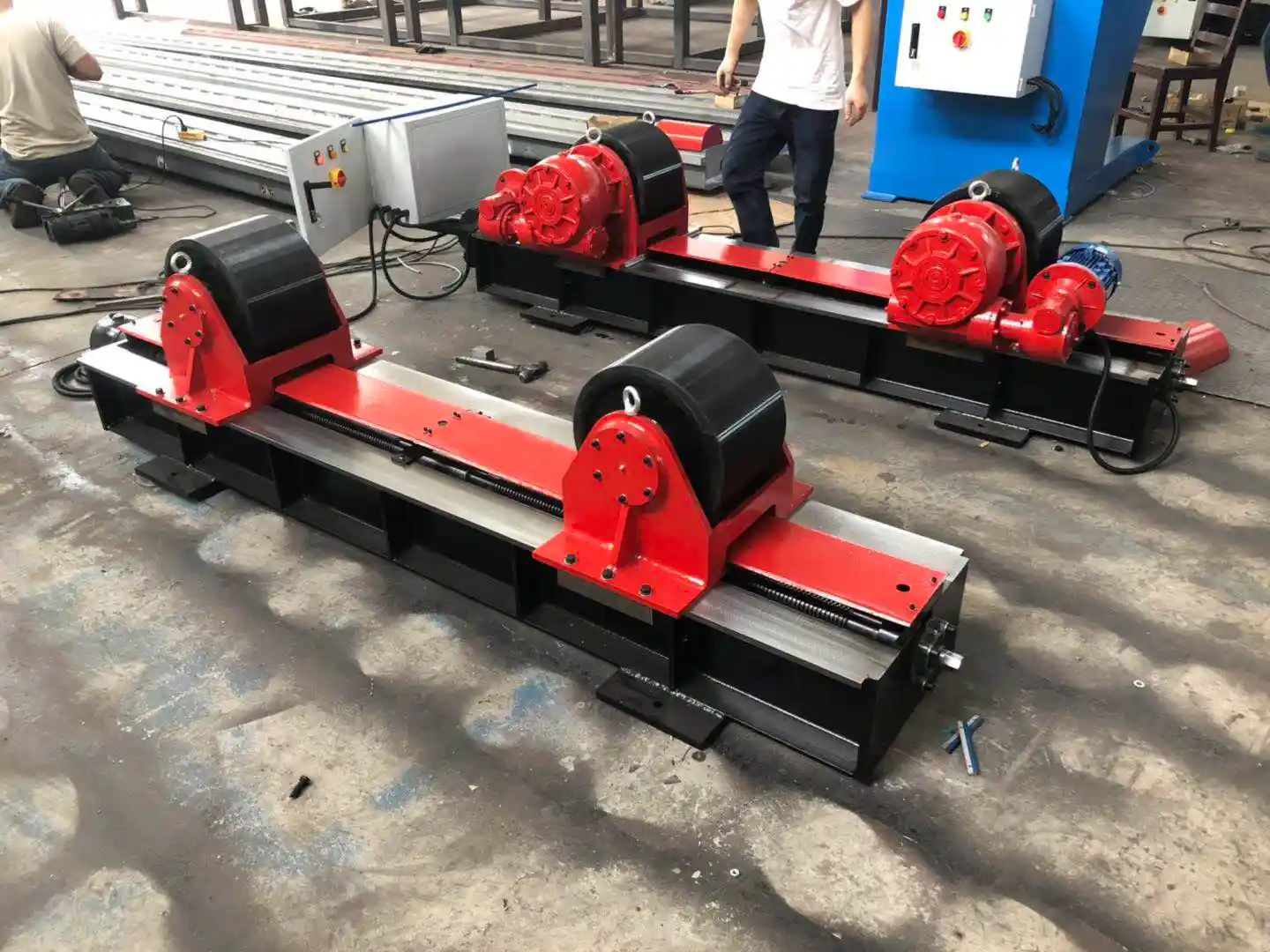
Welding Rotators are required for welding cylindrical boiler components, such as drums and headers. They provide controlled rotation, ensuring continuous, uniform circumferential welds. Adjustable height and self-aligning features accommodate various diameters and lengths. Our adjustable height welding rotators, like the HGK-40, handle up to 40 tons, ensuring stable rotation and precise seam tracking. This equipment is vital for maintaining consistent weld quality on large, heavy workpieces.
Quality Control and Inspection in Membrane Panel Welding
1. Métodos de ensaio não destrutivo (NDT) para a integridade da soldadura
Non-Destructive Testing (NDT) is vital for confirming membrane panel weld integrity. We commonly use ultrasonic testing (UT) to spot internal flaws, radiography (RT) for volumetric defects, and liquid penetrant testing (PT) or magnetic particle testing (MT) for surface discontinuities. These methods verify weld soundness without damaging the component. Regular NDT keeps production aligned with strict quality standards.
2. Common Welding Defects and Their Prevention Strategies
Common welding defects in membrane panels include porosity, lack of fusion, cracks, and distortion. Porosity often stems from poor shielding gas coverage or contaminated base material; correct gas flow and thorough cleaning eliminate the issue. Lack of fusion ties back to low heat input or weak joint preparation; tuning parameters and refining joint design helps. Cracks call for careful material selection and controlled cooling rates. Distortion is managed with solid fixturing, controlled heat input, and planned welding sequences.
3. Adhering to Industry Standards and Certifications
Adhering to industry standards and certifications is non-negotiable in boiler manufacturing. Organizations like ASME (American Society of Mechanical Engineers) and ISO (International Organization for Standardization) set strict requirements for materials, welding procedures, and quality control. Compliance ensures the safety, reliability, and longevity of boiler components. We maintain rigorous internal quality assurance programs to meet these global benchmarks.
WUXI ABK Solutions for Boiler Tube Panel Welding
1. Precision Welding Manipulators for Longitudinal and Circumferential Seams
WUXI ABK offers precision Welding Manipulator Manufacturers for boiler tube panel welding. Our LH series manipulators provide stable, accurate movement for both longitudinal and circumferential seams. Models like the LH8080 offer 8000mm horizontal and vertical travel, ensuring comprehensive coverage for large panels. These manipulators integrate with automated welding systems, delivering consistent, high-quality welds.
| Modelo | Deslocação horizontal | Deslocação vertical | Rotação | Precisão de posicionamento | Aplicações |
|---|---|---|---|---|---|
| LH8080 | 8000 mm | 8000 mm | ±180° | ±0,1 mm/m | Fabrico de caldeiras, soldadura de recipientes sob pressão |
| LH4580 | 4500 mm | 8000 mm | ±180° | ±0,1 mm/m | Fabrico de tanques de armazenamento, soldadura de torres eólicas |
| LH5060 | 5000 mm | 6000 mm | ±180° | ±0,1 mm/m | Chemical and petrochemical equipment |
| LH3040 | 3000 mm | 4000 mm | ±180° | ±0,1 mm/m | Produção de estruturas de aço pesadas |
| LH1235 | 1200 mm | 3500 mm | 360° (manual) | N/A | Smaller boiler components, repair work |
2. High-Capacity Welding Positioners for Heavy Boiler Components
Our high-capacity Welding Positioner Suppliers are engineered for heavy boiler components. The WUXI ABK 3-Axis Welding Positioner series (1-Ton, 2-Ton, 3-Ton, 5-Ton) provides synchronized turning, rotating, and tilting capabilities. They achieve ±0.05 mm positioning accuracy and 0.02 mm repeatability, vital for robotic welding cells. These positioners improve safety and efficiency by presenting workpieces in optimal positions.
3. Adjustable Height Welding Rotators for Optimal Workpiece Handling
WUXI ABK’s adjustable height welding rotators optimize workpiece handling for cylindrical boiler sections. Our HGK series, ranging from 5-ton to 300-ton capacities, offers precise rotation and hydraulic elevation adjustment. These rotators ensure stable, controlled movement for uniform welds on large-diameter pipes and pressure vessels. Features like anti-creep mechanisms and PLC control guarantee consistent performance.
Se estiver interessado, consulte 《Welding Rotator Precision Automation For Industrial Fabrication Expert FAQ Guide》.

Partner with WUXI ABK for Advanced Boiler Tube Production
Achieving excellence in membrane panel welding takes the right mix of advanced technology, skilled execution, and rigorous quality control. WUXI ABK Machinery Co., Ltd. provides cutting-edge welding equipment built for the demands of boiler tube production. Our solutions sharpen precision, raise productivity, and uphold the highest quality standards. Contact us today to discuss your specific needs and see how our expertise can optimize your operations.
Telemóvel: +86-13815101750
Correio eletrónico: jay@weldc.com
FAQs
1. What are membrane panels in boiler tubes and why are they important?
Membrane panels are integral components of boilers, forming gas-tight walls from tubes joined by fin strips. They are crucial for efficient heat transfer and structural integrity in high-pressure steam generation. Their precise fabrication directly impacts boiler performance and safety.
2. What types of welding equipment are essential for membrane panel production?
Core equipment includes automated welding manipulators for precise torch movement, welding positioners for optimal workpiece orientation, and specialized welding rotators for cylindrical components. These tools support accuracy, consistency, and efficiency throughout production.
3. How can welding defects in boiler tube panels be minimized?
Minimizing defects requires strict control over welding parameters, proper joint preparation, and appropriate shielding. Automated systems reduce human error, and regular equipment maintenance sustains consistent performance. Robust quality control protocols tie it together.
4. What are the key quality control measures for membrane panel welding?
Key measures include visual inspection, non-destructive testing (NDT) methods like ultrasonic and radiographic testing, and adherence to industry standards such as ASME and ISO. These checks verify weld integrity and compliance with design specifications.
5. How does automation improve membrane panel welding efficiency and quality?
Automation increases welding speed and trims manual labor. It raises quality through precise parameter control, consistent bead geometry, and reduced human error. Automated systems also curb distortion and improve repeatability, which boosts overall productivity.
 English
  Español
  Français
  Deutsch
  Português
  Русский