
Maximizing production capacity through multi-shift operations sounds straightforward: add a second or third shift and output doubles. But in heavy fabrication environments, running manipulador de soldaduras, positioners, and CNC cutting machines around the clock exposes weaknesses that single-shift operations never reveal. Without equipment designed for continuous duty, the added hours translate into unplanned downtime, rising maintenance costs, and inconsistent weld quality. The real multiplier is machinery engineered for the thermal loads, wear patterns, and automation demands of nonstop production. This article explains what to look for in equipment, how to integrate automation, and what maintenance strategies keep throughput climbing across every shift.
Assess Your Equipment’s Readiness for Multi-Shift Operations
Before adding a night shift, a candid audit of your existing machinery avoids a false start. I’ve seen a 5-ton welding positioner gearbox fail after six weeks of double-shift use because the worm gear reducer was sized for intermittent loads and could not dissipate heat with only a four-hour stop between shifts. The result was not just a rebuild cost, it was a week of lost production for a pressure vessel line.
The first checkpoint is duty cycle rating. Most positioners and rotators built for single-shift shops use cast iron housings and standard insulation class motors. They are fine for eight hours a day but accumulate heat when restarting every few hours. Look for machines with Class F or higher motor insulation, oversized oil reservoirs, and direct-drive transmission designs that minimize friction. Equipment with stepless speed regulation, such as AC frequency drives, generates less heat during ramp-up and ramp-down across repetitive cycles.
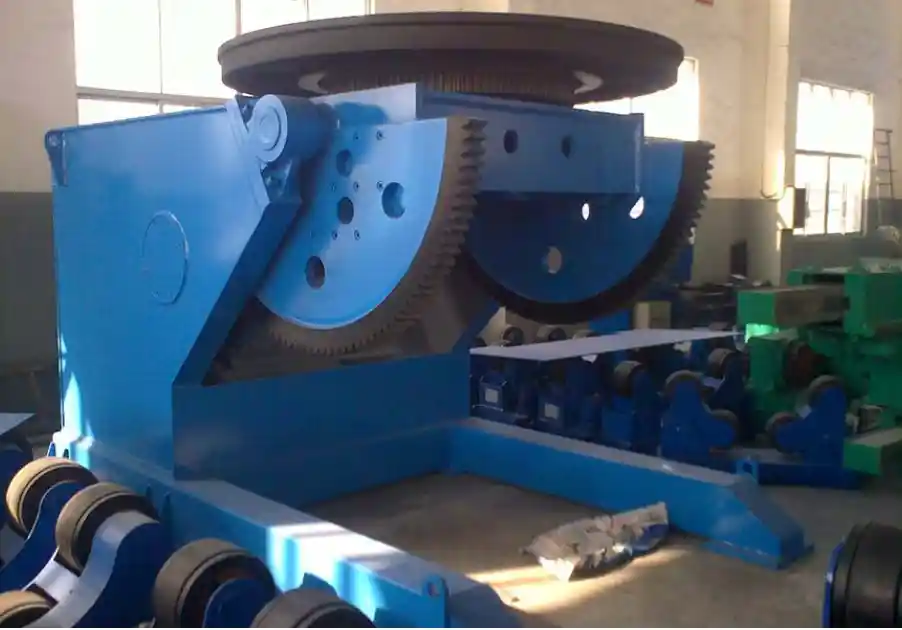
Environmental protection is equally critical. Multi-shift facilities generate more dust, spatter, and debris simply because the machines never have a long quiet period for cleanup. Open-frame positioners quickly cook their internal wiring in slag buildup. IP54 or higher ratings, featured on WUXI ABK’s welding positioners and rotators, seal out conductive dust and water spray, keeping bearings and motor terminals clean across three shifts. The table below lists key parameters to check before committing equipment to round-the-clock production.
| Parâmetros do equipamento | Single-Shift Rating | Multi-Shift Recommended |
|---|---|---|
| Motor insulation class | B (130°C) | F (155°C) or H (180°C) |
| IP protection level | IP44 | IP54 minimum |
| Gearbox cooling | Natural convection | Forced air or oil circulation |
| Bearing lubrication interval | 500 hours | 250 hours or automatic grease system |
| Control cabinet ambient temp | Up to 40°C | Up to 55°C with cooling |
If your current machines fall short on two or more of these, the shift expansion should include an equipment upgrade plan.
Engineering Features That Enable Continuous Production
When a welding manipulator runs 20 hours a day instead of eight, the accumulated strain on the column and boom structure tests every welded joint. Standard mild-steel frames with minimal ribbing can develop micro-cracks within a year under dynamic loading. For continuous operation, the base frame must be fabricated from stress-relieved Q235-A steel plate with box-type reinforcement, a construction we specify on the WUXI ABK HBJ series welding positioners to keep deformation below 0.08 mm/m² even after tens of thousands of rotation cycles.
Bearing selection is the second differentiator. Single-row slewing bearings work for light, intermittent loads. Multi-shift heavy fabrication demands high-strength alloy steel slewing bearings, often double-row or crossed-roller, that can handle combined axial, radial, and overturning moment loads while maintaining ±0.05° rotation accuracy. Combined with cycloidal-worm dual-stage reducers, these bearings hold positioning tolerance over millions of revolutions. That matters when a wind tower section takes 90 minutes to weld and any drift mid-seam risks rejection.
Anti-creep mechanisms become non-negotiable on welding rotators in round-the-clock service. Without them, a 30-ton vessel can slowly walk off the roller during a long shift, causing misalignment that an operator on the next shift must rework. ABK’s HGZ series rotators incorporate hydraulic anti-creep systems that limit deviation to less than 0.5 mm per 24-hour period, verified by integrated NOVO displacement sensors with 0.01 mm resolution.
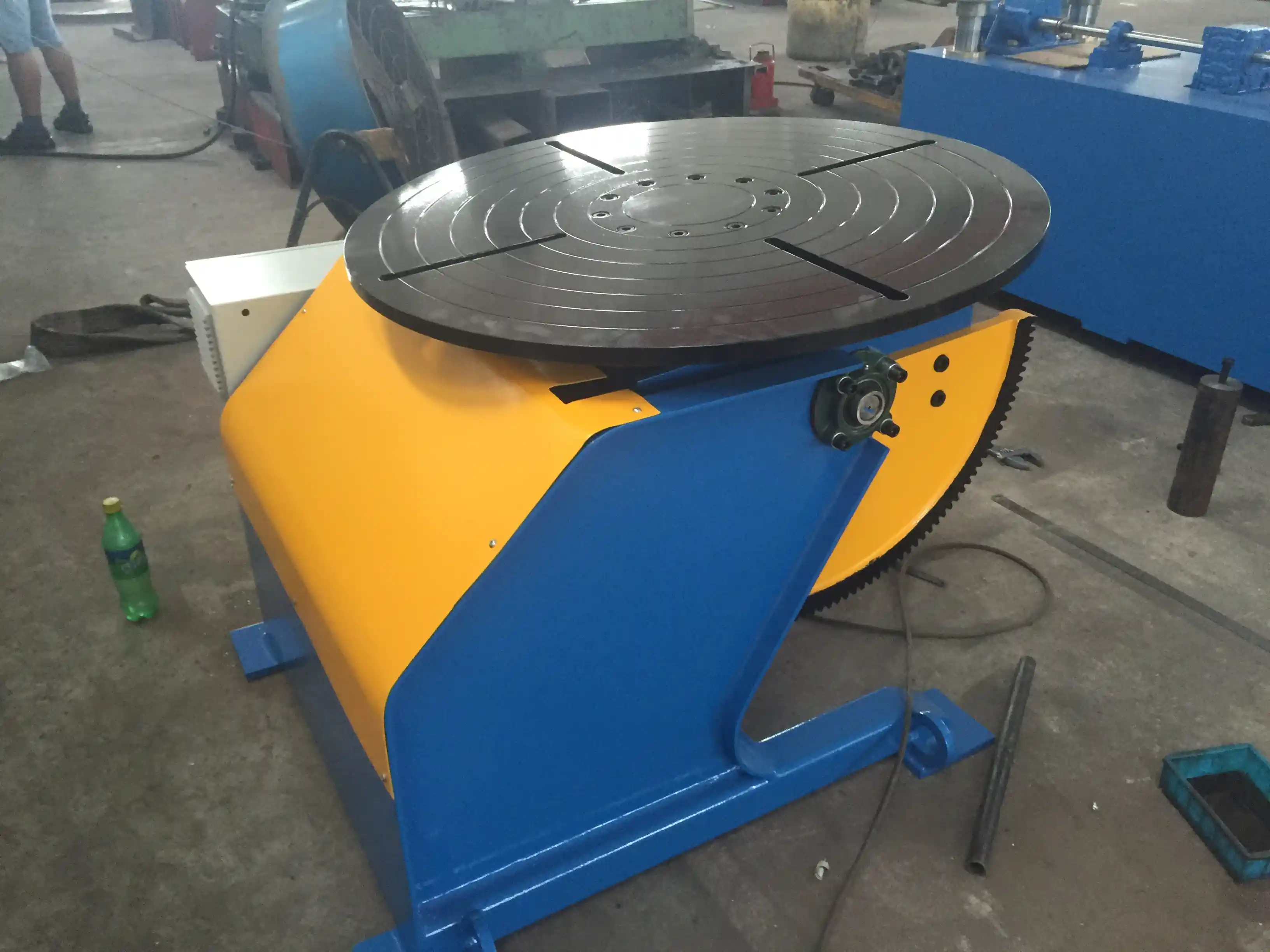
Feature comparisons help clarify what continuous-duty equipment brings beyond standard models. The table below shows three ABK welding positioners and their suitability for multi-shift work.
| Modelo | Capacidade de carga | IP Rating | Motor Insulation | Anti-Fall Safety | Continuous Rotation |
|---|---|---|---|---|---|
| HBJ-10 1-Ton | 1,000 kg | IP54 | Class F | Standard brake motor | Yes, with conductive slip rings |
| HBJ-30 3-Ton | 3,000 kg | IP54 | Class H | Overload shutdown & emergency braking | Yes, with servo-driven tilt |
| LHBJ-50 5-Ton Adjustable Height | 5,000 kg | IP54 | Class H | Dual-motor drive with reverse gears | Yes, 360° rotation and 0-135° tilt |
Each of these positioners uses sealed gearing and motor enclosures to reduce contamination entry, cutting the daily cleaning time that would otherwise eat into shift production.
Automation Integration to Reduce Operator Dependency Per Shift
The single largest constraint in multi-shift expansion is not machine availability; it is finding skilled welders and operators willing to work nights and weekends. Even if you fill the roster, hand-welding quality varies between shifts, and rework costs multiply when a defect found on third shift requires the day team to regrind and reweld. Automation flattens that curve.
Robot-compatible positioners let one operator supervise two or three cells instead of torching each seam. ABK’s 3-ton 3-axis welding positioner provides 360° continuous rotation, 0-90° tilting, and 180° turning with ±0.05 mm positioning accuracy and 0.02 mm repeatability. It communicates directly with ABB, KUKA, and FANUC controllers through PLC interface. Once the program is proven on the day shift, the night shift operator only loads the workpiece, hits start, and the robot completes all welds. The cell runs unattended for an hour, sometimes more, depending on part size.
CNC cutting tables benefit from multi-torch configurations and automatic nesting software that maximize plate utilization across back-to-back shifts. A laser cutter with a 6,000 W source can process 20 mm carbon steel at the same speed at 2 a.m. as at 10 a.m., provided the chiller unit maintains coolant temperature. Plasma cutters operating overnight rely on torch height control (THC) to compensate for plate warping; without it, the second-shift operator spends hours adjusting, negating the capacity gain.
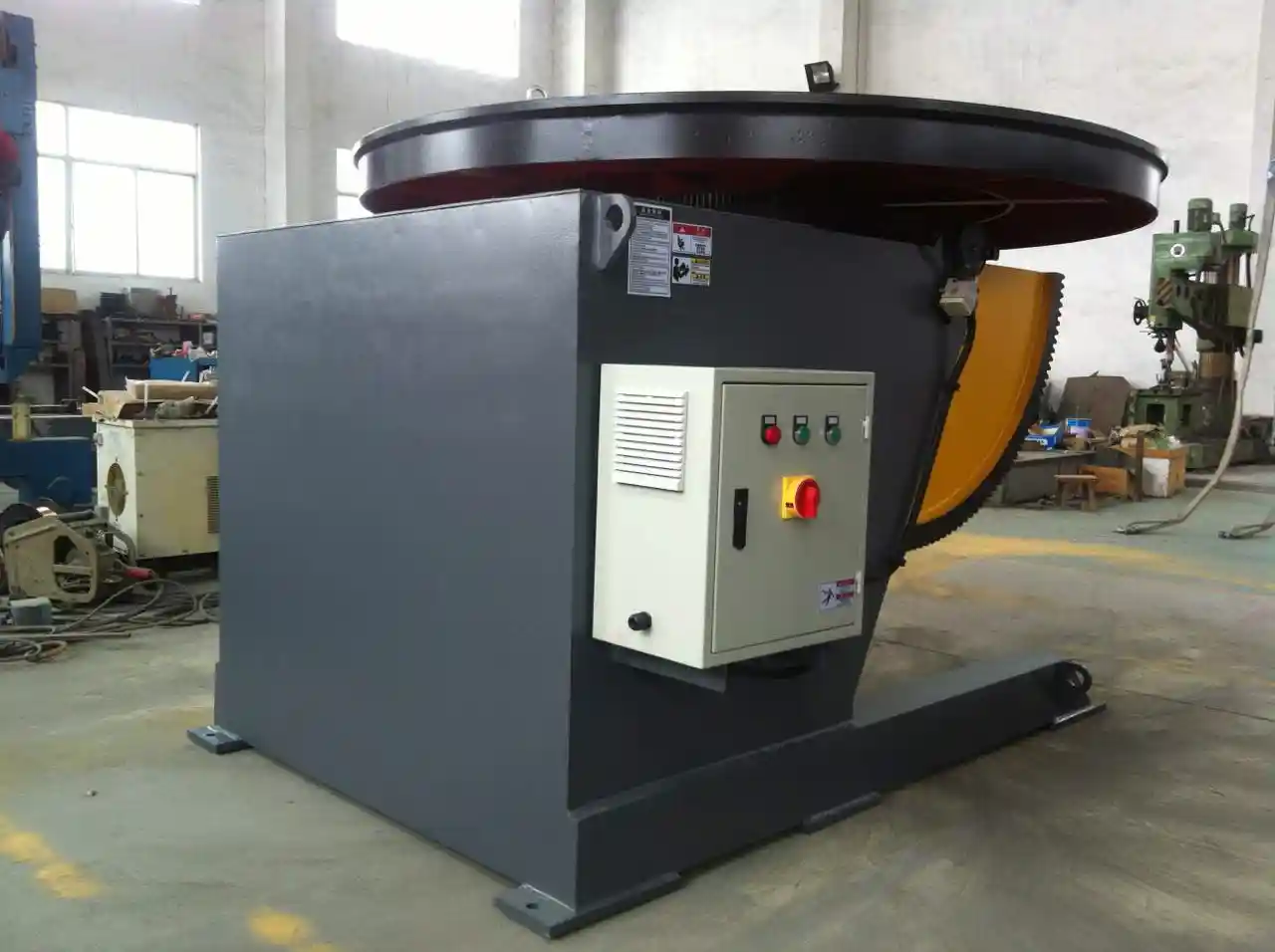
The reduction in direct labor is the most visible saving, but the bigger benefit is process consistency. When every shift runs the same automated programs, weld dimensions and cut tolerances remain within spec. Scrap rate falls, and the inspection team spends less time sorting borderline parts. In a boiler panel production line we supported, moving from manual welding to a semi-automated positioner station reduced inter-shift quality variance by 40% within the first quarter while increasing nightly throughput by 25%.
Maintenance Strategies for Round-the-Clock Welding and Cutting
Maintenance habits that work for a single shift fail when machinery runs 20 hours. The window for preventive tasks shrinks from an eight-hour gap to, at best, a four-hour overlap between shifts, often used for urgent repairs. The solution is not more maintenance staff; it is equipment that communicates its condition and designs that simplify common tasks.
Remote condition monitoring converts maintenance from reactive to predictive. NOVO sensors on WUXI ABK rotators, for instance, measure roller alignment in real time. If the 0.5 mm creep threshold is exceeded, the control system sends an alert before misalignment causes a defective weld. Operators can correct the issue during the next scheduled pause rather than scrapping a shift’s output. Similarly, motor current monitoring on positioners flags increasing load indicative of bearing wear or slag binding well before a catastrophic stop.
Daily routines still matter but can be streamlined. Equipment with IP54 or higher protection keeps dust and spatter out of motors and gearboxes, so the daily cleanup becomes a 15-minute wipe-down rather than a disassembly. Lubrication is the second bottleneck. Automatic grease dispensers for slewing bearings and roller shafts, available as an option on ABK rotators, extend lubrication intervals to match the weekly inspection schedule. The table below suggests a realistic maintenance cadence for continuous production.
| Interval | Task | Machine Focus |
|---|---|---|
| Daily between shifts | Remove heavy slag from T-slots and touch-clean nozzle tips | All welding positioners |
| Weekly | Inspect electrical cables, gearbox oil level, and limit switch function | Manipulators and rotators |
| Mensal | Torque all mounting bolts, test emergency stop circuits, check PLC fault logs | All machines |
| Trimestral | Replace gear oil in worm reducers, recalibrate seam tracking sensors | Heavy-load positioners |
| Anualmente | Full bearing replacement per manufacturer schedule, motor insulation testing | All machines |
Adopting this schedule keeps welding manipulators and rotators out of the unplanned downtime column, which directly supports hitting shift targets.
Calculating the ROI of Multi-Shift Production Capacity
The business case for multi-shift equipment comes from two sides: the value of additional output and the cost of unreliability. A fabrication shop running a single shift with a manual welding station might produce 800 linear meters of weld per week. Adding a second shift without equipment changes could theoretically double capacity, but in practice, fatigue failures, set-up delays, and rework erode that to a 40–60% gain. Equipment specifically built for continuous duty pushes the actual increase closer to the theoretical maximum.
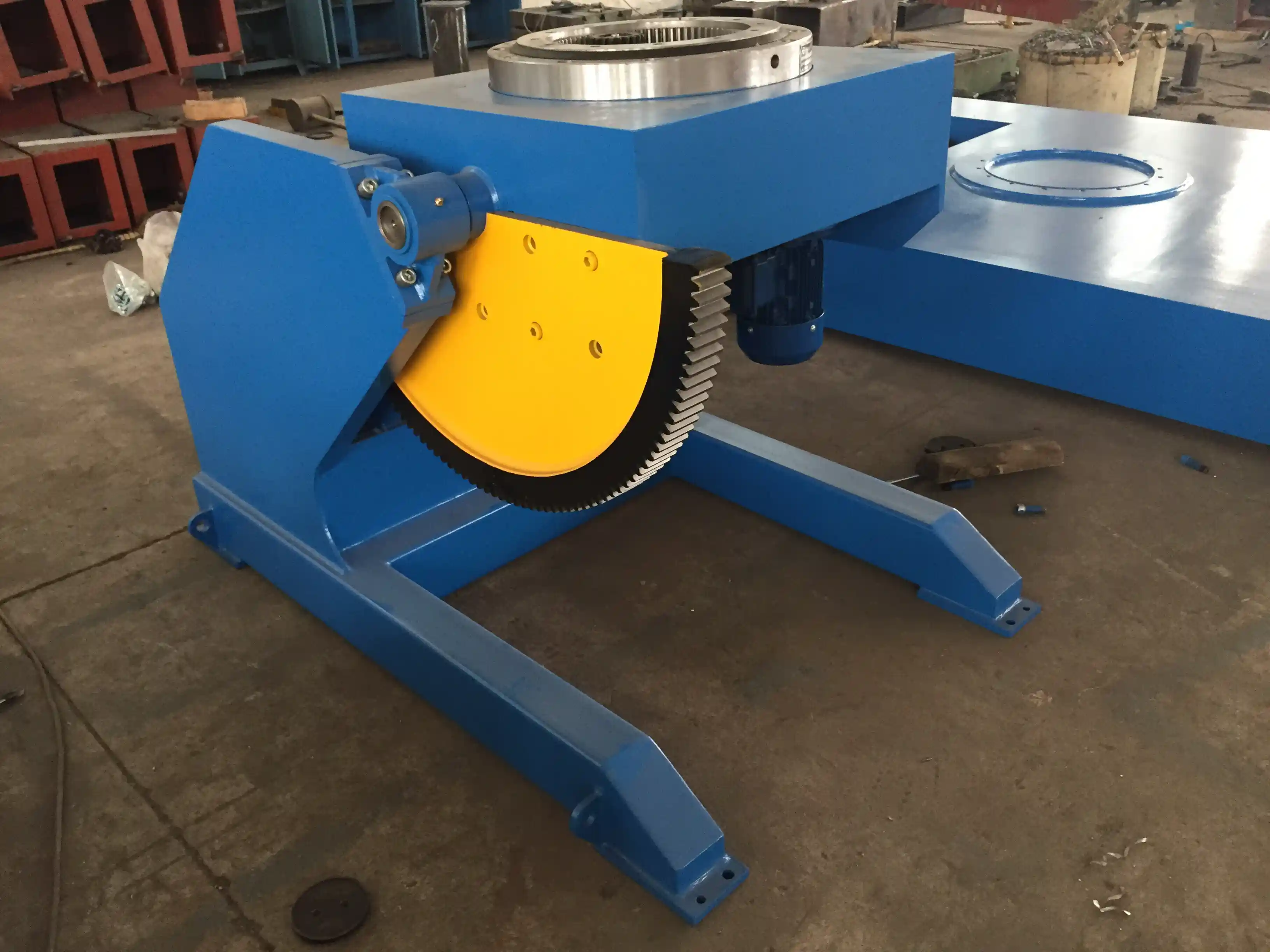
Consider a mid-size structural steel shop with two welding manipulators. Upgrading from a base model to a heavy-duty manipulator with brake motor, anti-fall safety pins, and IP54 protection adds a capital cost premium. But the throughput gain from stable, uninterrupted double-shift operation often recovers that premium within 12 to 18 months. For example, switching to a positioner with automated sequence control eliminated idle time during setup changes, adding roughly two hours of effective arc-on time per shift. At typical fabrication rates, that extra time alone generated enough revenue to cover the equipment price differential in under a year.
Energy efficiency is an under-recognized contributor to ROI. AC frequency stepless speed regulation on manipulator trolleys and rotator drives avoids the power spikes of across-the-line motor starting, shaving 8–12% off electrical consumption in multi-shift duty. Lower scrap rates from consistent positioning add another margin layer. When one rejected pressure vessel head costs thousands in material and rework, the ±0.5° repeatability of a quality positioner pays for itself several times over by preventing even a handful of rejects per year.
Planning for multi-shift operation at the time of equipment purchase is always less expensive than retrofitting later. Machines bought with extra thermal capacity, sealed bearings, and automation interfaces cost marginally more upfront but eliminate the need for mid-production upgrades that disrupt revenue. The key is to treat the machinery not as a commodity but as the engine that determines whether your shift expansion hits its revenue targets.
Common Questions About Multi-Shift Equipment Operations
Can any welding machine be used for multi-shift production?
Not reliably. Machines designed for single-shift work typically have lower IP ratings, standard motor insulation, and gearboxes intended for intermittent start-stop cycles. Running them 16 to 24 hours a day accelerates wear and heat degradation. We require at minimum IP54 protection, Class F motor insulation, and overload braking for any machine that will run more than 12 hours daily. The cost of upgrading when a machine fails mid-shift far exceeds the initial price difference.
How many operators do I need for a 24/7 shift pattern?
With automated equipment, one operator per shift can manage multiple cells. A robot-compatible 3-axis positioner feeding a cobot welding station may need only a loader and inspector per shift. Manual processes still demand at least one experienced welder per station per shift, but that number drops quickly as you layer on positioners and programmable cutting sequences.
What is the most critical maintenance task in continuous operation?
Daily slag removal and spatter cleaning, especially on positioner T-slots and rotator roller surfaces. Contamination changes the surface friction, causing uneven rotation and accelerated wear on gear teeth. Once a month, verify gearbox oil condition and torque all structural bolts. In shops we support, a 15-minute shift handover cleaning procedure prevents the majority of unplanned stops.
Does multi-shift operation shorten the lifespan of my equipment?
Not if the equipment was built for it. Continuous operation actually stabilizes thermal conditions, reducing expansion and contraction cycles that fatigue components. The real lifespan killer is inadequate cooling during the short stop between shifts. Machines with oil-circulation cooling and properly sized motors last as long in multi-shift duty as in single-shift, provided the maintenance schedule is followed. To evaluate whether your current or planned equipment is suited for the load, send the part dimensions and shift hours to jay@weldc.com or call +86-510-83555592. We will review the specifications and confirm whether the capacity matches your target.
Se estiver interessado, consulte estes artigos relacionados:
O pilar central da produção pesada: O excelente desempenho dos suportes de rolos nos principais processos
Valor de aplicação excecional: como os posicionadores de soldadura de altura fixa impulsionam os avanços na indústria offshore e na construção naval (Parte 2)
 English
  Español
  Français
  Deutsch
  Português
  Русский