
H-beam production line applications in construction are not only about welding more beams per shift. The more important issue is how the line controls the handoff from plate cutting to assembly, welding, straightening, and inspection. A beam with a sound weld but excessive web distortion will still create fit-up problems and delay erection. For fabricators serving steel structure contractors, bridge builders, and industrial plant projects, the line should be configured around the beam depth and weight range, the required dimensional and weld quality, and the available shop flow. Speed matters, but only after those constraints are met.
What an H-Beam Production Line Covers in Construction
An H-beam production line for construction is a sequence of stations that converts steel plate into welded built-up beams. The work does not stop at welding. A complete line includes plate cutting, web and flange assembly, longitudinal welding, flange straightening, web distortion correction, surface preparation, and final dimensional inspection. In building construction, the line may run repeated columns, rafters, and crane beams. In bridge or industrial plant work, the same line may be re-tasked for plate girders and built-up box members when the equipment has enough beam depth and roller support capacity.
Core Stations That Turn Steel Plate into Structural Beams
In construction applications, the biggest production risks tend to appear at the handoffs between stations. A cut plate that is not square makes assembly harder. Poor fit-up creates extra weld volume and distortion. A poorly supported beam during welding can sag and lock in camber error.
| Station | Main function | Construction line selection signal |
|---|---|---|
| Cutting | Plate and flange strip cutting | Plate thickness, bevel accuracy, and nesting efficiency |
| Assembly | Web-to-flange fit-up and tack welding | Beam depth range, flange width, and camber control |
| Soldadura | Longitudinal fillet or butt welding | Wire and flux type, torch travel, and preheat needs |
| Straightening | Correct flange tilt and web distortion | Beam depth, flange thickness, and straightness tolerance |
| Blasting | Surface preparation | Coating specification and required surface profile |
| Inspection | Dimensional and weld checking | Project tolerance and NDT requirements |
Assembly and fit-up
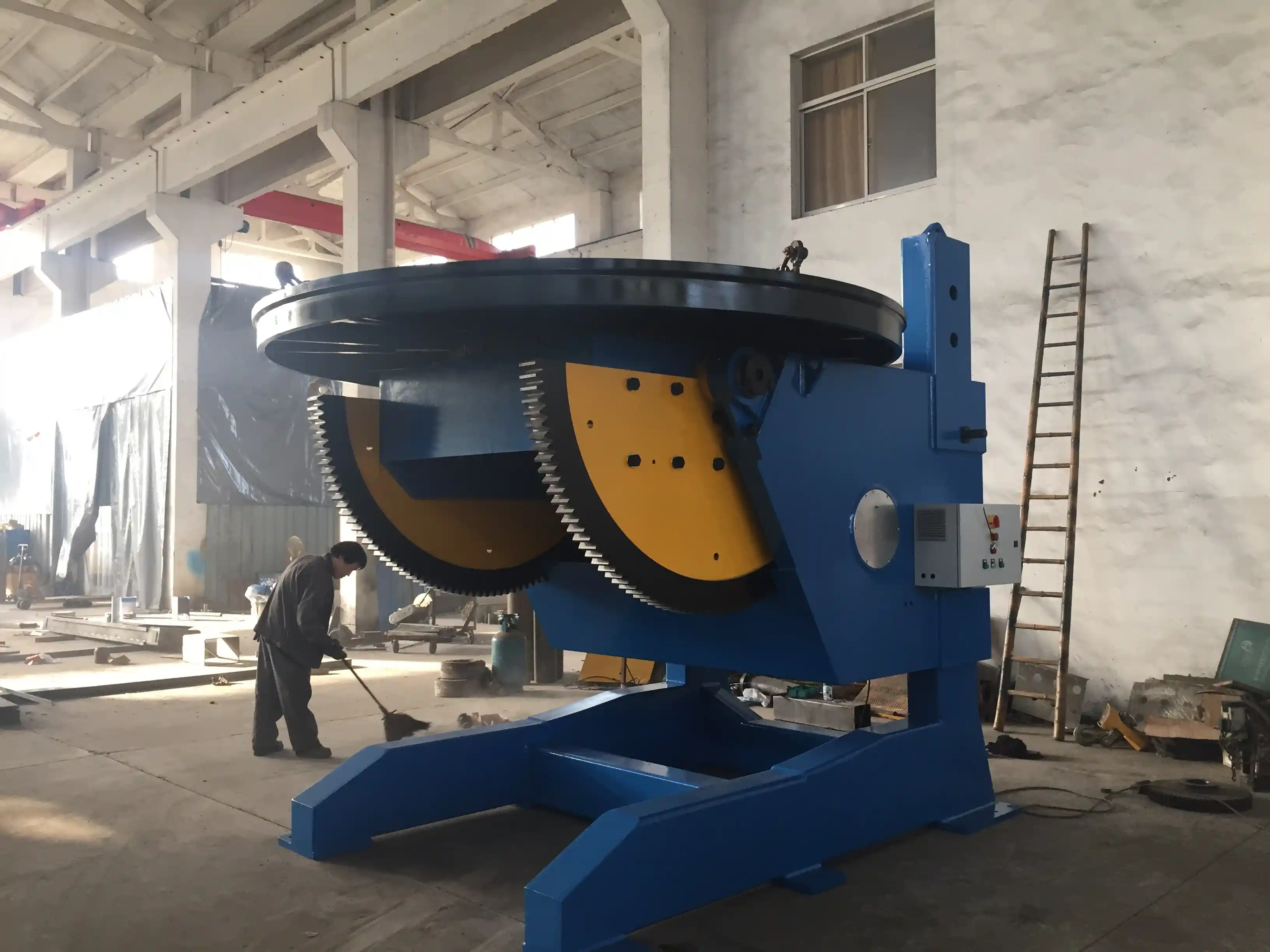
The assembly station aligns the web to the flanges and applies tack welds. A dedicated H-beam assembly machine or a manual fit-up bed can do this. For construction fabricators with a wide mix of beam sizes, the assembly equipment should handle the full web depth range without frequent changeover.
Longitudinal welding
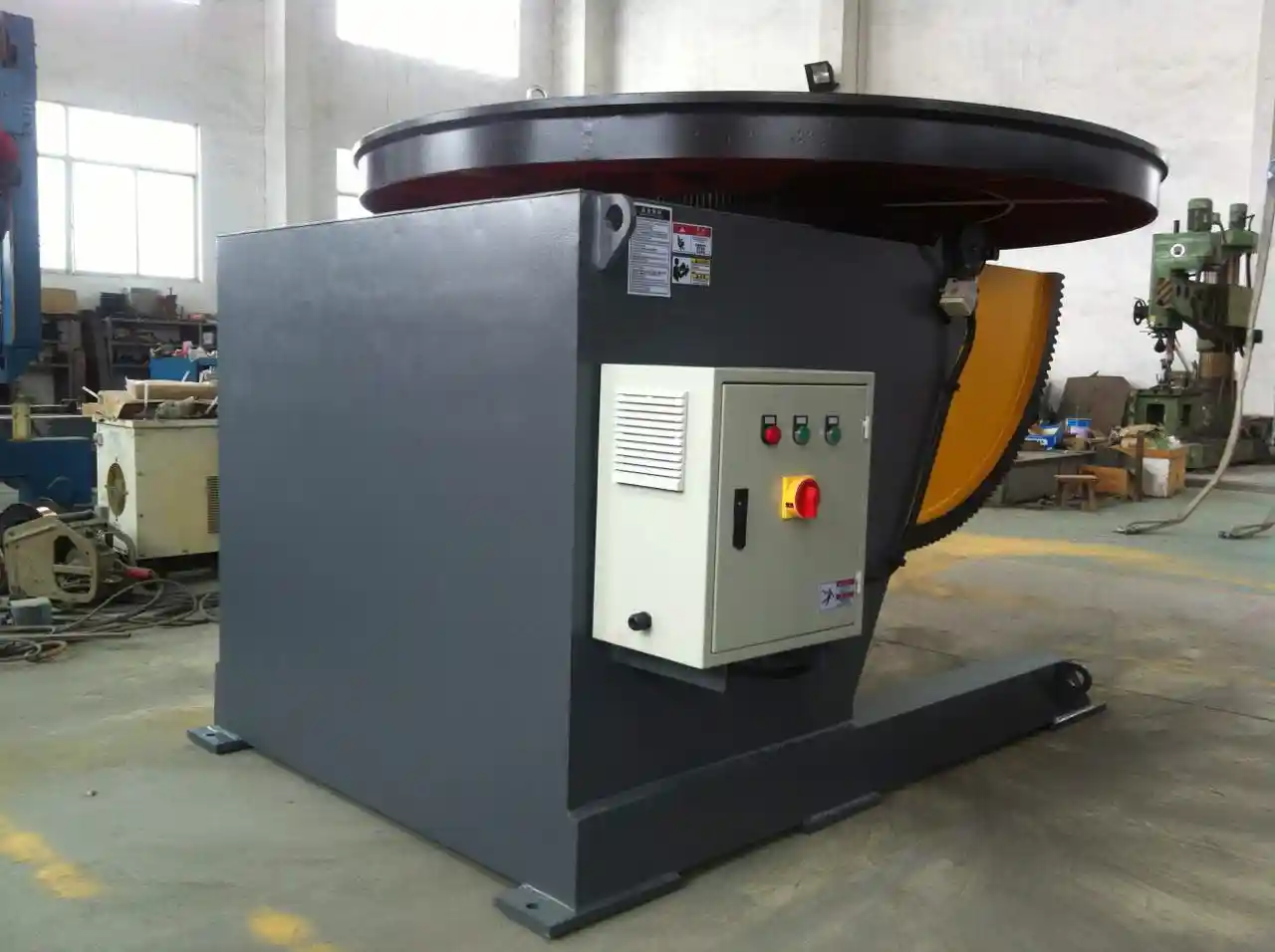
For most construction beams, the main welds are fillet welds between the web and flanges, usually run with submerged arc welding. A manipulador de soldadura ou gantry welding machine provides the torch travel and positioning. The line becomes more controllable when the welding station keeps the torch aligned to the joint while the beam remains supported on the same reference plane.
Straightening and finishing
After welding, construction beams often need flange straightening and web correction. A straightening machine controls the residual deformation left by heat input. Shot blasting then prepares the surface for coating or galvanizing. If these stations are undersized, the line will produce acceptable welds but unacceptable final geometry.
Matching the Line to the Construction Project Mix
Not every construction fabricator needs the same H-beam line. A workshop that mainly supplies light industrial buildings will prioritize changeover and moderate beam sizes. A fabricator serving high-rise steel structures or bridge projects will need deeper beams, heavier flange plates, and stronger roller conveyance.
Building frames and industrial structures
For building columns, rafters, and crane beams, the line usually works within a narrower size band but runs many similar pieces. The payback comes from reducing setup time, keeping welding parameters stable, and moving material without repeated crane lifts.
Bridge girders and heavy plate girders
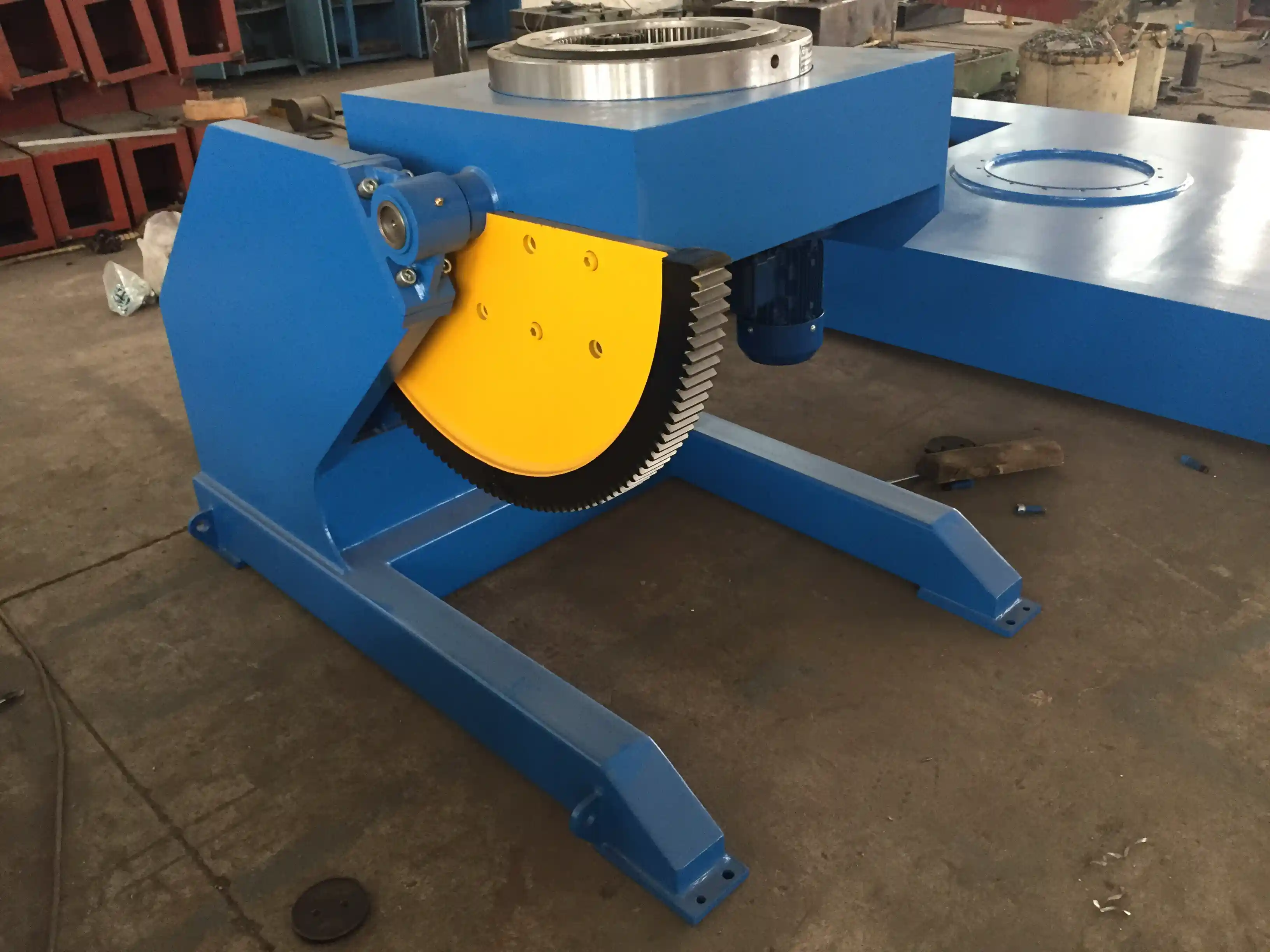
Bridge work changes the requirements. Beams are longer, flange plates are thicker, and the permitted distortion is often tighter. The line must hold the beam straight during welding and give the operator a way to check camber and sweep before the beam leaves the station. The same heavy-positioning approach used for long girders also appears in related heavy fabrication, where a head-and-tail positioner or large rotator supports the workpiece during seam welding.
Long heavy girders require more than a straight conveyor. <Dominar a produção pesada: Como os suportes de rolos trepantes se tornam a pedra angular de uma soldadura eficiente> covers how climbing roller stands help support and align heavy workpieces during welding.
Welding and Positioning Equipment That Protect Beam Quality
In construction steelwork, beam quality is not solely decided at the welding arc. It is decided by how well the beam is positioned before and during welding. If the web is not vertical to the flange, the fillet weld can be uneven. If the beam sags between supports, the measured camber will be wrong even when the weld is sound.
Column and boom manipulador de soldaduras are commonly used for long H-beam welding because they provide stable torch travel over a long horizontal distance. WUXI ABK’s LH series, for example, offers models with horizontal travel from 1,200 mm to 8,000 mm and vertical travel from 3,500 mm to 8,000 mm. The value in construction is not only travel length. It is keeping the torch position repeatable along the joint.
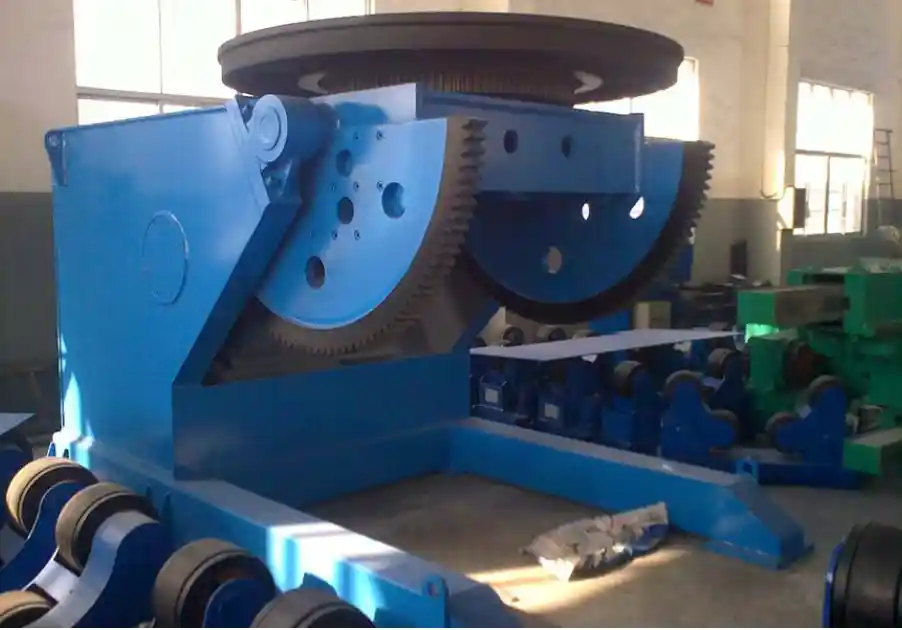
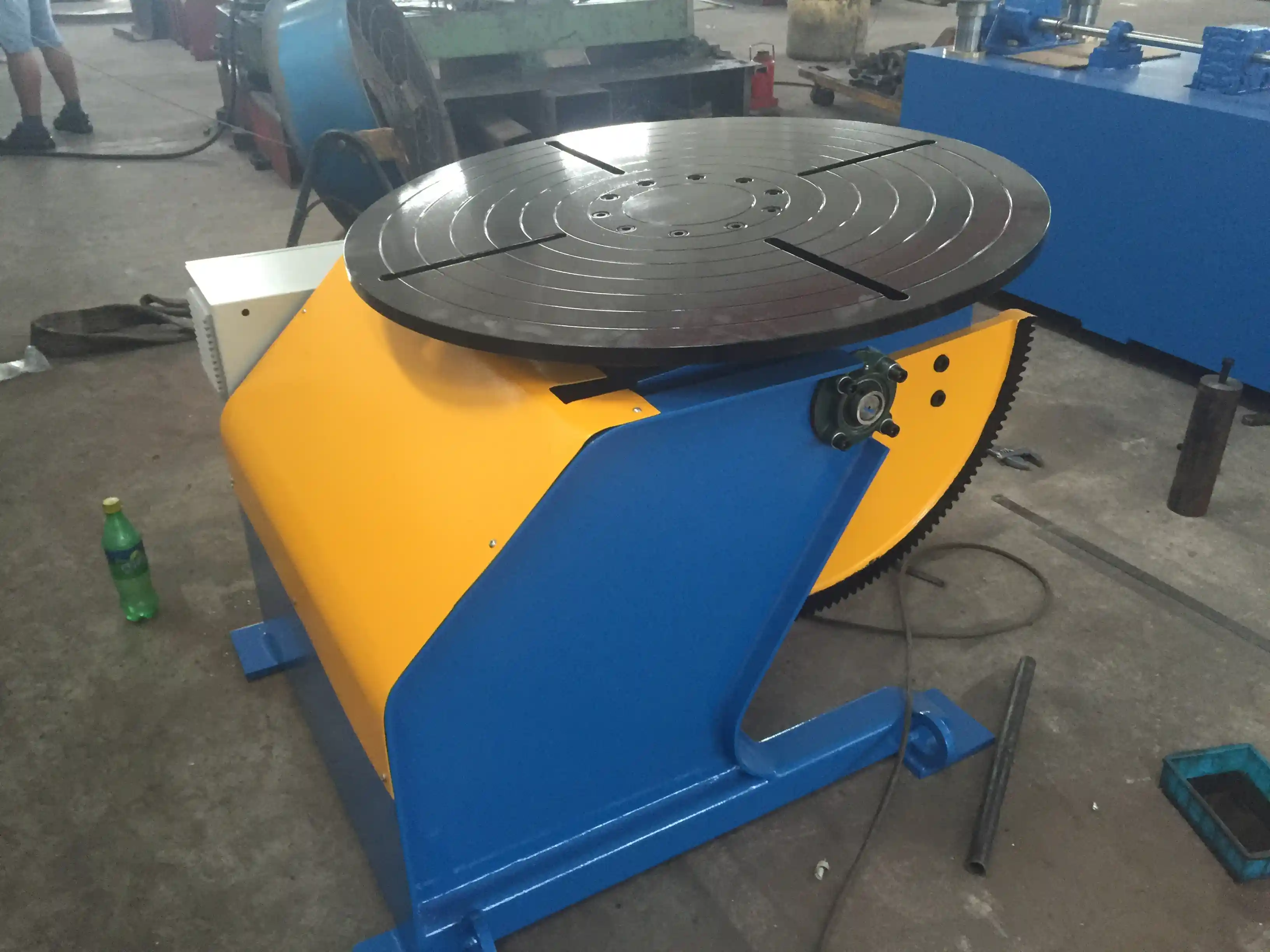
Roller supports, climbing stands, and adjustable positioners matter for the same reason. They keep the beam from sagging between the assembly and welding stations and reduce the time spent re-leveling a heavy section.
Roller stands are not only storage aids; they carry alignment and rotation load during welding. <O pilar central da produção pesada: O excelente desempenho dos suportes de rolos nos principais processos> covers how roller stands perform in heavy manufacturing processes.
Shop Layout and Material Flow Decisions
An H-beam line is a material flow system, not a row of individual machines. Plate enters the cutting area, moves to assembly, then to welding, straightening, blasting, and inspection. If the beam must double back across the shop between stations, crane time and handling damage rise. A compact line with a straight material path generally reduces non-welding time.
A Máquina de corte por plasma CNC ou Máquina de corte por chama CNC can be placed close to plate storage so that nested parts flow into assembly without unnecessary transport. Column boom machines can also help where floor space is limited because they use vertical reach instead of spreading out along the floor.
Floor space is often a hidden limit in steel fabrication. <O espaço da oficina é demasiado pequeno? Como as lanças de coluna poupam espaço no chão da 50%, ao mesmo tempo que aumentam a segurança e a eficiência> covers how column booms reduce floor space demand while supporting safer operation.
Quality Checks Before the Beam Leaves the Line
Construction steelwork specifications usually define dimensional tolerances before they define welding procedure details. The line should include checks for web-to-flange alignment, flange tilt, beam camber, sweep, and overall length. These checks are more useful when they happen early enough to correct the process, not after a full bundle has been produced.
Dimensional control
Use the assembly station to control web offset and flange fit-up before welding. After welding, measure camber and sweep against the project tolerance. If the line has a straightening machine, correct the beam while the data is still attached to that beam.
Weld inspection
Visual inspection, magnetic particle inspection, and ultrasonic testing are common depending on the joint and applicable construction code. The responsible welding standard determines which method applies and what the acceptance limit is. The production line should make the welded joint accessible for inspection and keep the beam identification linked to its welding parameters.
Plan Your H-Beam Line Around Your Construction Mix
Line configuration becomes easier when you define the beam size range, plate thickness, annual tonnage, welding process, and available floor area before comparing equipment. Send those project inputs to Wuxi ABK Machinery Co., Ltd. at jay@weldc.com or +86-13815101750. We can help confirm which stations are needed, which welding manipulator or positioner capacities match the heaviest beam, and how to stage the line for future bridge or heavy-column work.
H-Beam Production Line FAQ
What is the difference between a light, medium, and heavy H-beam line?
The difference is mainly the beam depth, flange plate thickness, and support capacity. A light line may run shallow beams with faster changeovers. A heavy line must support deeper webs, thicker flanges, and longer members without allowing sag or camber drift during welding.
Can one H-beam line handle both building columns and bridge girders?
It can, but only if the assembly, welding, and straightening stations are sized for the largest cross-section and longest member the shop expects. If the line is optimized only for short repetitive columns, bridge girder work will usually reveal limits in support spacing, straightening force, and material handling.
Which welding process is best for H-beam production?
Submerged arc welding is common for the main web-to-flange fillet welds because it supports high deposition and stable long joints. Gas-shielded processes may be used for tacking, short joints, or access-limited areas. The best choice depends on plate thickness, joint type, production volume, and the welding standard governing the construction project.
How is H-beam straightness controlled after welding?
Straightness begins with accurate cutting and square fit-up. After welding, a straightening machine corrects flange tilt and web distortion while the beam data is still known. The operator should measure camber and sweep before and after straightening to confirm that the correction meets the project tolerance.
What output should a construction fabricator plan for per shift?
Output depends on beam size, plate thickness, number of welding torches, and how much time is lost to crane handling and setup. A useful planning method is to measure the line by completed stations per shift, then identify whether cutting, fit-up, welding, or straightening is the bottleneck before adding capacity.
Se estiver interessado, consulte estes artigos relacionados:
Desalinhamento excessivo na soldadura de condutas: Solução de posicionamento de precisão com plataforma giratória da Wuxi ABK Welding
Problemas de soldadura de torres eólicas novamente: Como os rotadores inteligentes da linha de crescimento aumentam a produtividade por 50%
Cansado de desafios complexos na soldadura? Como um posicionador de 3 eixos pode aumentar a produtividade em 70%
 English
 Español
 Français
 Deutsch
 Português
 Русский