Bridge work teaches you quickly that components either perform under load or they don’t. There’s no middle ground when you’re fabricating structural elements that will carry traffic for decades. WUXI ABK MACHINERY CO., LTD. builds H-beam and box beam production lines for exactly this reality. Our systems bring together welding and cutting technologies that deliver the dimensional accuracy and weld quality bridge projects demand. The equipment runs, the tolerances hold, and the components go into service.
What Makes H-Beam Production Work for Bridge Structures
H-beams carry loads in bridge construction because their geometry distributes stress efficiently across the cross-section. Getting them right during fabrication matters more than most people realize. The welding has to penetrate fully without creating distortion that throws off the final dimensions. Advanced H-beam welding lines handle this through automated sequences that control heat input and travel speed precisely. When you’re building bridge girders, the structural steel fabrication process directly determines how much load the finished beam can handle and how long it will last in service.
Our H-beam production systems integrate material handling with welding operations in a continuous flow. The automation removes the variability you get with manual processes. Weld quality stays consistent from the first beam to the thousandth. This matters for bridge girder manufacturing because inspectors will check every critical weld, and rework costs time and money nobody budgeted for.
H-Beam Production Process Flow
- Material Preparation: Steel plates go through CNC cutting machines to achieve precise dimensions.
- Flange and Web Assembly: Plates get positioned accurately for H-beam formation.
- Tack Welding: Initial welds lock the H-beam shape in place.
- Main Welding: Submerged arc welding or other automated systems complete the full H-beam profile.
- Straightening: Beams pass through straightening equipment to correct thermal distortion.
- Inspection: Quality control verifies dimensional accuracy and weld integrity.
H-Beam Size and Application Guide
| H-Beam Size (mm) | Aplicação típica | Max. Span (m) |
|---|---|---|
| 200-400 | Short-span bridges | 20 |
| 400-800 | Medium-span bridges | 50 |
| 800-1200 | Long-span bridges | 100 |
Box Beam Manufacturing for Contemporary Bridge Projects
Box beams show up in modern bridge designs for good reasons. The closed rectangular section resists twisting forces far better than open profiles, and architects appreciate the clean visual lines. Manufacturing them takes more sophisticated equipment than H-beams require. You’re welding four plates into a closed section, which creates access challenges for internal welds and inspection.
WUXI ABK builds bridge box girder production lines that handle these complexities. The welding automation solutions we integrate can reach internal seams and maintain quality throughout the enclosed structure. For large-span bridge components, this capability becomes essential. We also support custom beam manufacturing when projects call for non-standard dimensions or configurations. The production line adapts to what the design requires rather than forcing compromises.
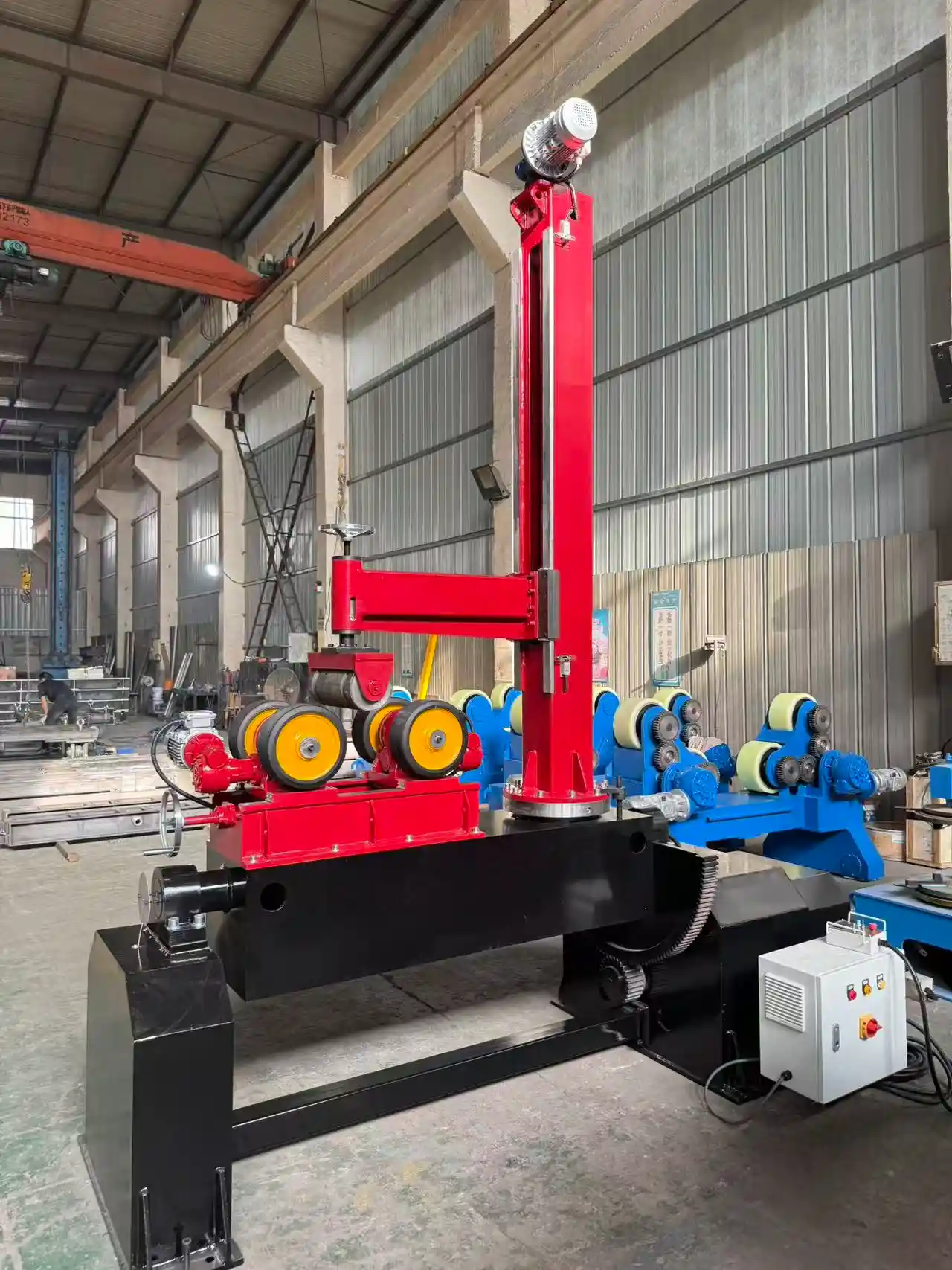
!custom welding rotator
 ### How H-Beam and Box Beam Production Lines Differ
The structural geometry drives everything. H-beam production joins three plates: two flanges and one web. The welds are accessible from both sides, and inspection is straightforward. Box beam fabrication welds four plates into a closed rectangle. This means more weld seams, more complex fixturing, and specialized approaches for reaching internal joints.
Box beam production lines need more sophisticated welding automation and material handling as a result. The enclosed section also requires different inspection methods since you can’t always see or access internal welds directly. Both beam types serve bridge construction well, but the manufacturing complexity differs substantially.
Welding and Cutting Technologies That Deliver Precision
The beam production lines we build use advanced welding equipment and CNC cutting machines because precision matters at every step. Gantry welding manipulators and welding manipulators handle longitudinal and circumferential seams with positioning accuracy of ±0.1 mm/m. The high-strength box-beam structures and linear guideways in these systems keep everything stable during operation.
Plasma cutting and CNC Flame Cutter systems prepare materials to accurate dimensions before welding begins. Starting with precise components makes the welding process more predictable and reduces fit-up problems. Submerged arc welding gets used frequently for bridge components because it deposits metal quickly and penetrates deeply. Both characteristics matter when you’re joining thick structural steel.
Our LH8080 welding manipulator offers 8000mm of horizontal and vertical travel, 360-degree column rotation, and stepless speed control. This range covers most bridge component welding applications without repositioning the workpiece.
Production Efficiency and Quality Control in Bridge Fabrication
Bridge component manufacturing runs on tight schedules with no room for quality failures. The production efficiency and quality control systems we build into our equipment address both concerns. Lean manufacturing principles guide the layout and workflow, minimizing wasted motion and material handling steps.
Automated material handling reduces the manual labor involved in moving heavy steel components between operations. This speeds up production cycles and reduces the risk of handling damage. The equipment monitors critical parameters during welding and cutting, flagging deviations before they become defects. Consistent quality and adherence to industry standards follow from this approach, and project timelines benefit from fewer interruptions for rework.
How Automation Changes Bridge Component Manufacturing
Automation transforms both efficiency and quality in bridge fabrication. Robotic welding systems perform repetitive operations with identical parameters every time. Human welders, however skilled, cannot match this consistency over thousands of welds. The result is fewer defects and less rework.
Automated systems also collect data continuously. You can track what happened during every weld and identify trends before they cause problems. This real-time monitoring enables adjustments that keep quality high throughout production runs. The time and cost savings accumulate quickly on large bridge projects.
Custom Equipment for Specialized Bridge Components
Standard production lines work for standard components. Bridge projects often need something different. WUXI ABK provides custom fabrication equipment and tailored welding solutions for unique designs. Our engineering team works through the specific requirements and designs production lines that match.
Heavy steel processing for plate girders, truss structures, and other bridge elements requires equipment sized and configured for the actual work. Our customizable beam production lines handle unusual geometries and material specifications without forcing design compromises. This flexibility lets clients take on diverse infrastructure projects with confidence that the fabrication equipment will perform.
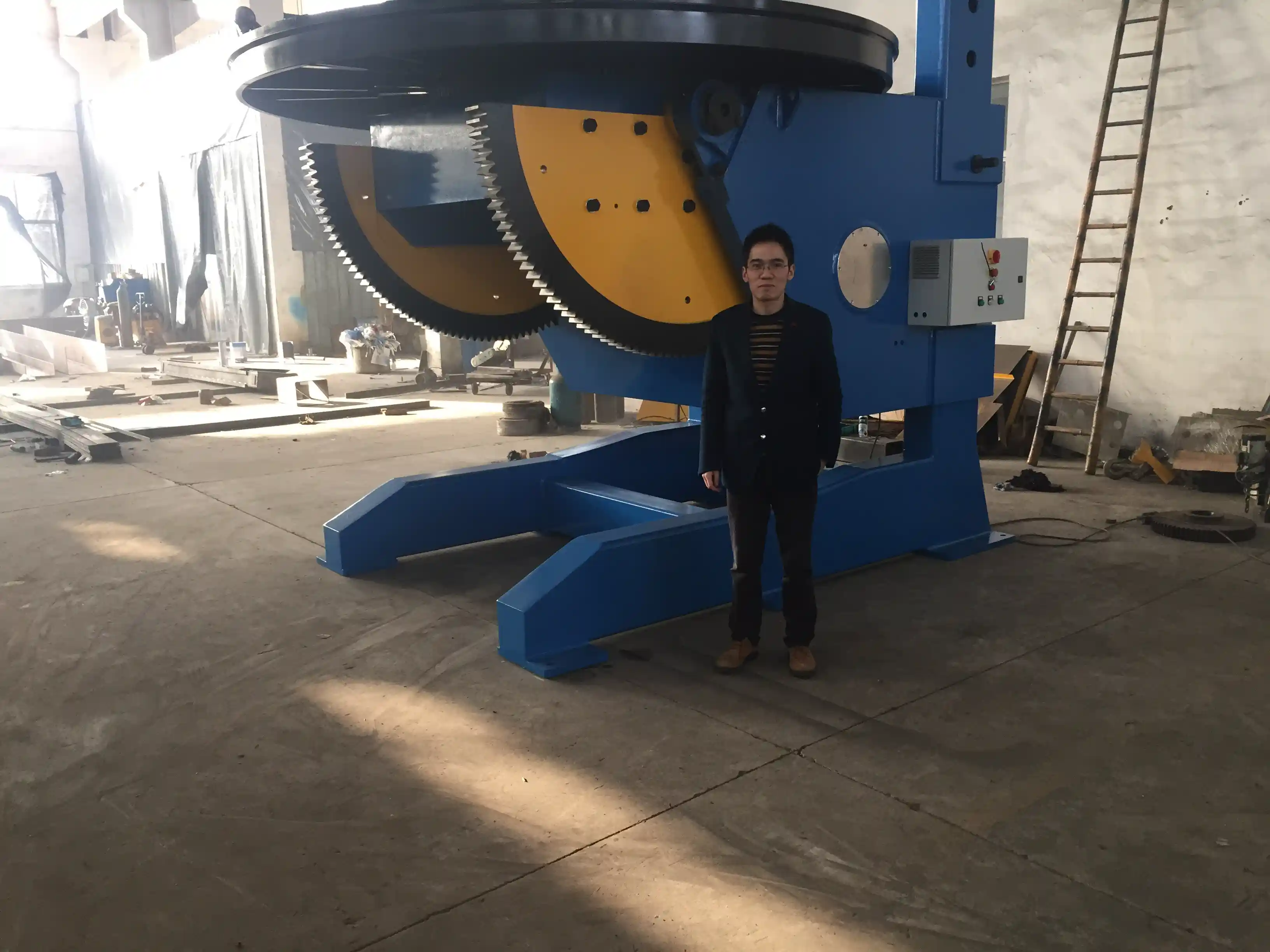
!Heavy Duty Positioner
 ## Keeping Beam Production Lines Running
Heavy equipment needs maintenance. Welding equipment maintenance and production line support determine whether your investment keeps producing or sits idle waiting for repairs. We emphasize preventative maintenance because catching problems early costs far less than emergency repairs.
Daily cleaning removes welding slag before it causes problems. Monthly checks cover torque on bolts and condition of drive mechanisms. Annual maintenance includes bearing and seal replacement, complete relubrication, and system recalibration. Following this schedule keeps equipment reliable and extends its useful life. We provide detailed maintenance guidelines and technical support to help clients maintain their beam production lines effectively.
Maintenance Essentials for Heavy-Duty Beam Welding Equipment
The maintenance requirements for heavy-duty welding equipment follow a predictable pattern. Daily attention to welding slag and regular lubrication prevents most minor issues. Monthly inspections catch wear before it causes failures. Annual overhauls address the components that degrade slowly over time.
This proactive approach to equipment care pays off in reliability. Production schedules depend on equipment availability, and unexpected breakdowns disrupt everything downstream. Investing time in maintenance avoids the larger costs of unplanned downtime.
Partner with WUXI ABK
Partner with WUXI ABK MACHINERY CO., LTD for bridge component production expertise built on real manufacturing experience. Our H-Beam and Box Beam Lines deliver the precision, efficiency, and durability that infrastructure projects require. Contact us for a consultation and learn how our welding and cutting solutions can strengthen your manufacturing capabilities. Reach out at jay@weldc.com or call +86-13815101750 to discuss your specific project needs.
Frequently Asked Questions About Bridge Beam Production
What safety requirements apply to H-beam and box beam production line operations?
Heavy-duty beam production lines present real hazards that require systematic safety measures. Operators need thorough training on welding equipment and CNC cutting machines before working independently. Automated safety stops must function reliably. Ventilation systems need to handle welding fumes effectively. Regular machinery inspections catch developing problems before they create dangerous conditions. WUXI ABK designs safety considerations into our bridge component manufacturing equipment from the start.
How does WUXI ABK verify quality and precision in beam production equipment?
Quality and precision come from combining good technology with rigorous verification. We use high-precision CNC cutting and automated welding systems with real-time monitoring throughout production. Quality control checks happen at every stage, not just at the end. Our equipment adheres to international welding standards, and we test thoroughly before delivery. The goal is ensuring structural integrity and dimensional accuracy in every bridge component the equipment produces.
Does WUXI ABK build custom equipment for unusual bridge component designs?
Yes. Custom fabrication equipment for unique bridge components is a core part of what we do. Our engineering team works directly with clients to understand specific project requirements, whether for H-beam, box beam, or specialized bridge girders. We design and manufacture production lines that fit your existing workflow and deliver the performance your particular application demands.
 English
  Español
  Français
  Deutsch
  Português
  Русский