
Power generation heat exchanger manufacturing equipment becomes a sound investment only when the machine set can hold tube alignment, shell roundness, and weld fit-up within the tolerances the applicable code will inspect. A heat exchanger is not a single welded assembly; it is a combination of tube circuits, tube sheets, baffles, shells, channels, and headers. The equipment decision therefore covers cutting, fit-up, positioning, welding, and inspection as one process chain. The strongest specification starts with the largest and most difficult exchanger in the production plan, then works backward to machine capacity and control.
Which Equipment Does a Power Generation Heat Exchanger Line Need?
Most power generation heat exchanger manufacturing lines need six machine types: CNC cutting for tube sheets, baffles, and shell plates; tube-to-tube welding stations; a manipulador de soldadura for shell and header seams; positioners for heavy components; rotators or turning rolls for cylindrical assemblies; and inspection tooling or jigs integrated into the welding cell. The selection becomes clearer when it is based on component size and weld position. A small fin-tube heat exchanger may need only a compact tube welding station and a 1-ton positioner. A large feedwater heater or condenser waterbox may require a manipulator with several meters of boom travel and a rotator set rated for the completed shell.
| Equipment | What to confirm | Why it matters |
|---|---|---|
| Máquina de corte CNC | Kerf, edge squareness, straightness, nesting output | Tube sheets and baffles must fit up without forcing |
| Manipulador de soldadura | Horizontal and vertical travel, boom reach, speed range | Long shell and header seams need stable, repeatable travel |
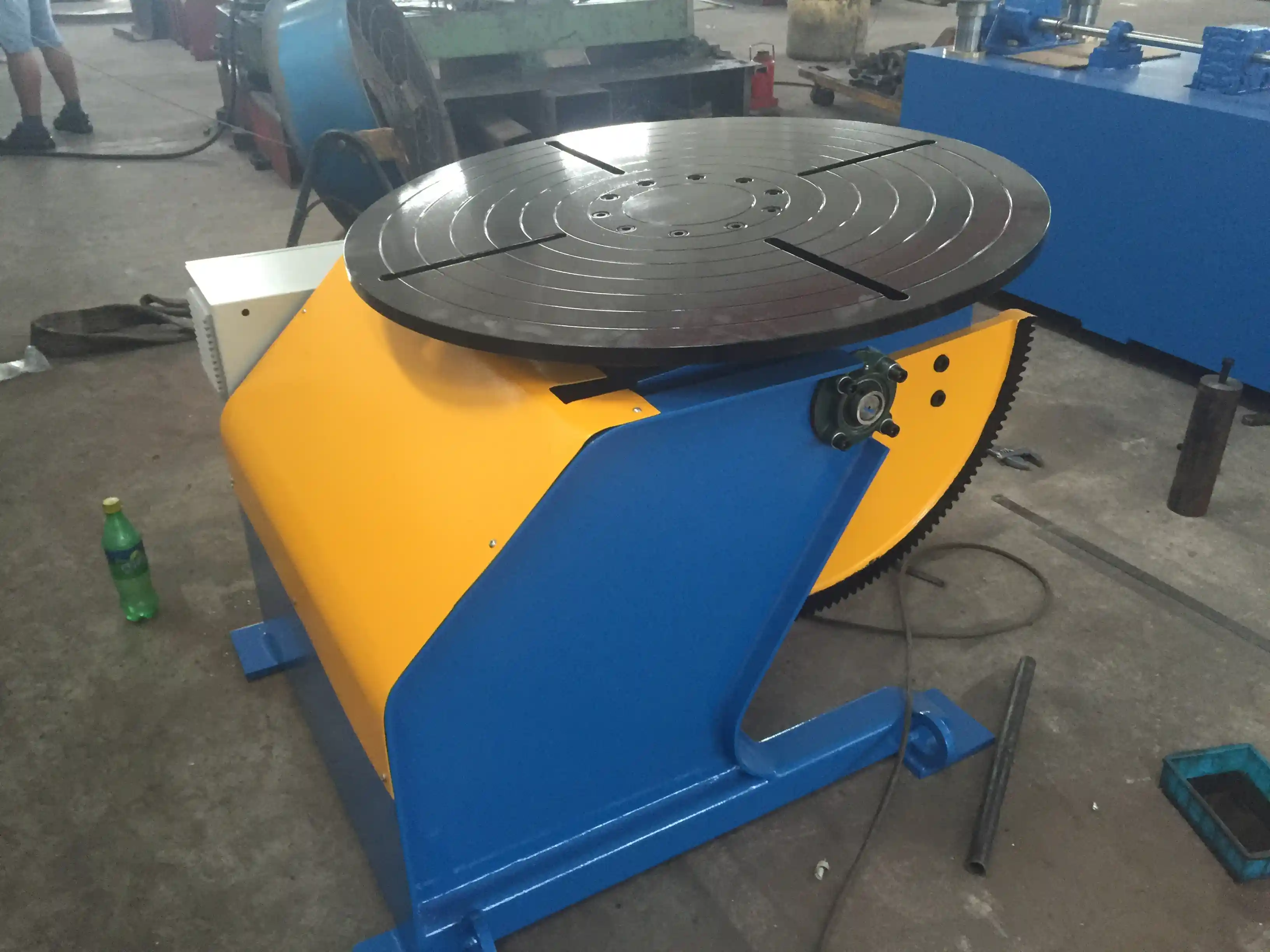
| Posicionador de soldadura | Load capacity, tilt range, rotation accuracy, repeatability | Keeps heavy tube bundles and headers in the right weld position |
| Rotador de soldadura | Roller diameter, adjustable height, vessel diameter range | Supports shell rotation without slipping or axial drift |
| Tube-to-tube welding station | Joint preparation, clamping, purge access, program control | Repeatable tube joints reduce repair and inspection time |
How to Match Cutting and Fit-Up Accuracy to Heat Exchanger Components
Cutting accuracy should be evaluated differently for the tube sheet, baffle, and shell. The tube sheet hole pattern matters more than the cut edge alone, because tube holes are usually drilled or machined after thermal cutting. Baffles need clean edges and accurate alignment so tubes can pass through without being scratched or forced. Shell plates need square edges and controlled camber so the longitudinal seam closes with a consistent gap before welding.
The cutting method should follow material thickness, edge quality, and downstream machining. Plasma and laser cutting can reduce edge cleanup time on thinner shell plates and baffles, while flame cutting may be more economical for thick carbon steel. The key check is not the machine maximum power alone. It is whether the cutting table, torch height control, and nesting software can produce parts that fit the next station without manual rework. If the shop uses cut parts directly in fit-up, edge straightness and hole position tolerance should be written into the part acceptance check before welding begins.
What to Look for in Welding Positioners and Rotators
For heat exchanger work, a welding positioner should be specified by load, center of gravity distance, tilt range, table diameter, rotation speed, and positioning accuracy. A fixed-height positioner is useful when the exchanger type does not require frequent elevation changes. An adjustable-height model becomes necessary when the same station must serve shells or headers of different diameters.
A 1-ton fixed-height positioner may be enough for small headers and return bends, while a 20-ton or 30-ton positioner is often needed for large tube bundles and waterboxes. The table diameter and slot pattern should match the exchanger component support points, not just the nominal tonnage. Positioners with stepless speed control and conductive slip rings allow multi-pass welding without cable entanglement.
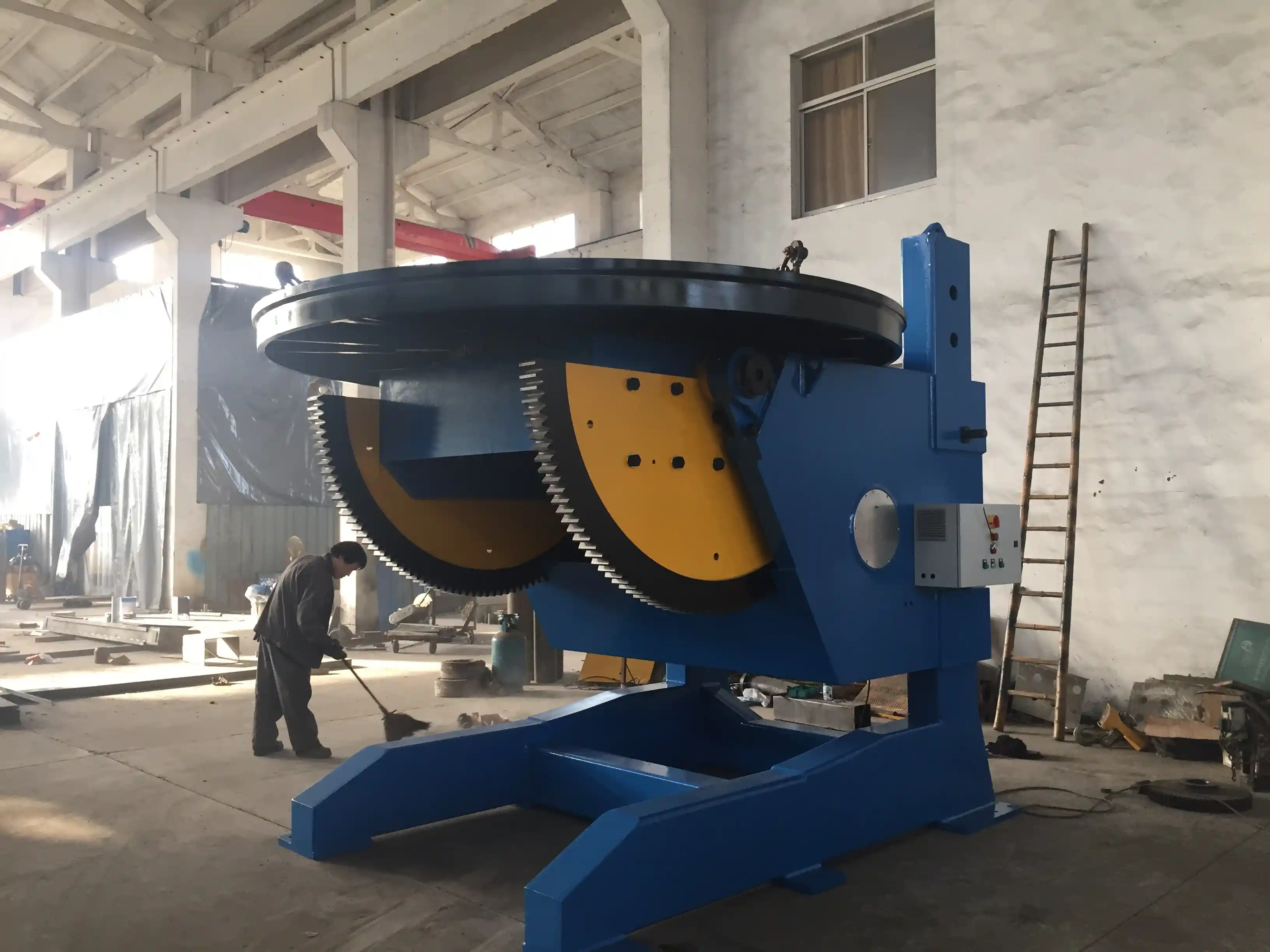
Positioner accuracy matters most when a heavy tube bundle must be turned without shifting the pre-set weld path. <Como melhorar a qualidade da soldadura de tubos através de um posicionador de soldadura de alta precisão> covers how high-precision positioning supports more consistent pipe welds.
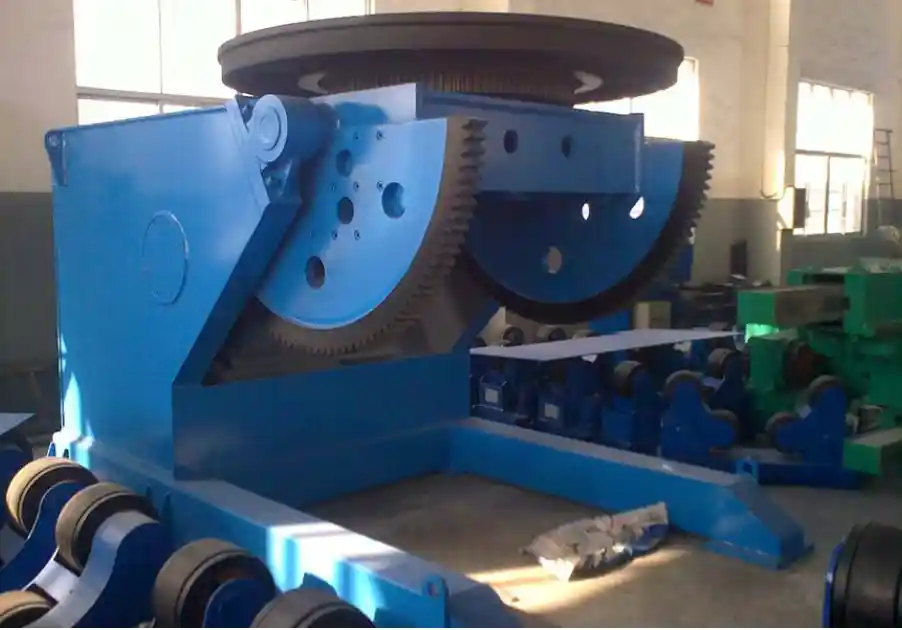
Rotators are selected by vessel diameter and weight. For a shell-and-tube exchanger, the rotator must support the shell during longitudinal seam welding and circumferential seam welding. Self-aligning rollers, adjustable roller spacing, and stepless speed control reduce the chance of axial drift. If the shell is long, a powered and idler pair may be needed. Rotators with hydraulic height adjustment also help when the shop must bring different shell diameters to the same welding centerline.
Rotator setup becomes a larger factor when the shell diameter and weld pass must stay consistent over long seams. <Aplicações inovadoras de rotores de soldadura CNC de 10 toneladas no fabrico de recipientes sob pressão> covers how CNC rotators support pressure vessel and heat exchanger weld sequencing.
How to Plan Tube-to-Tube and Tube-to-Header Welding
Tube-to-tube welding and tube-to-tube-sheet welding require more than a power source. The workholding must keep the joint aligned, limit gap, and provide purge access for stainless and alloy tubes. For manual or mechanized TIG, the tube end should be clean, square, and burr-free. For orbital or automated tube welding, the clamping fixture largely sets repeatability.
Custom fixtures may be justified for high-volume heat exchangers with one tube diameter, while adjustable fixtures help when the shop mixes tube sizes. The tube-to-tubesheet joint is usually treated as a separate operation because access, leak testing, and inspection requirements differ. Tube length, tube sheet thickness, and the number of tubes per bundle should drive the fixture strategy before the welding process is finalized.
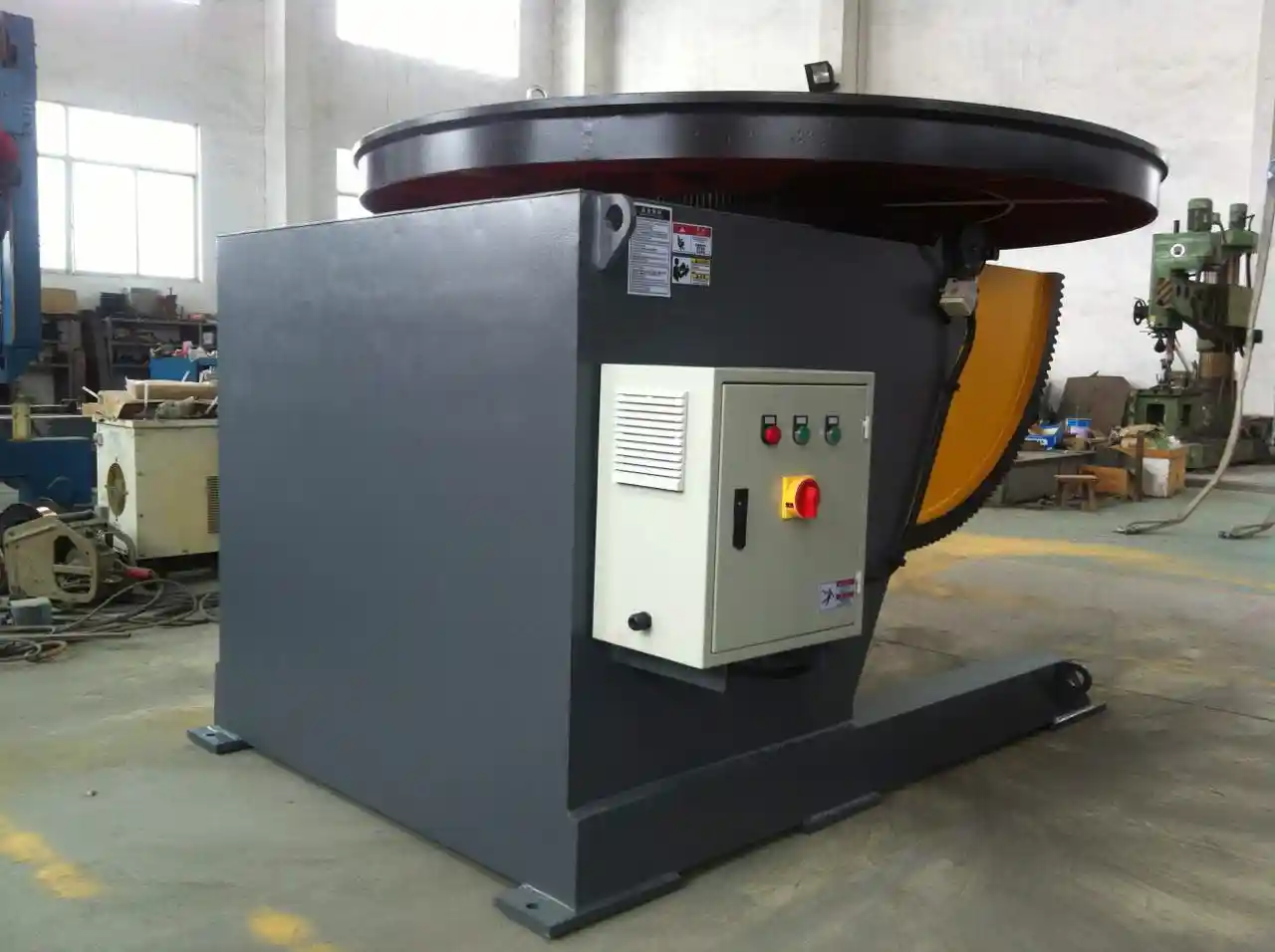
Tube welding consistency starts with joint preparation and holding, not just the selected welding process. <Welding Rotator Precision Automation for Industrial Fabrication: Expert FAQ Guide> covers precision rotator automation for industrial fabrication.
How to Verify Quality and Inspection Readiness
Quality planning should be part of the equipment layout, not an afterthought. Weld heads and manipulators need enough clearance for visual inspection, dye penetrant, or radiography access. Positioners with conductive slip rings allow continuous rotation during multi-pass welding without twisting cables or losing torch position. For code-built exchangers, it is also useful to record the pass count, voltage, current, speed, and operator or program identification.
If the exchanger falls under a pressure equipment code, the acceptance method and examination extent should be known before the first weld. The equipment can support inspection by holding the joint at the required angle, but the equipment alone does not establish weld quality. A qualified procedure, controlled fit-up, and recorded parameters must work together. It is better to define the inspection access points during line layout than to discover after installation that a shell seam is difficult to reach.
A rotator that can hold a stable speed also makes inspection and repair passes easier to plan. <Welding Rotator Precision Automation for Industrial Fabrication: Expert FAQ Guide> covers rotator automation and control for industrial welded assemblies.
How to Compare Line Configurations and Capacity
Capacity should be compared by realistic cycle time, not only by machine speed. A welding manipulator with 3000 mm, 4500 mm, 5000 mm, or 8000 mm horizontal travel and a positioner rotating at 0.05 to 0.5 RPM must be evaluated together with fit-up, welding process, and inspection time. For a heat exchanger line, the bottleneck is often not the welding arc. It is the handling and repositioning of the tube bundle.
For large exchanger shells, an adjustable-height rotator or a heavy positioner becomes important because the shell must be rolled and supported without overloading the tube sheet or nozzle connections.
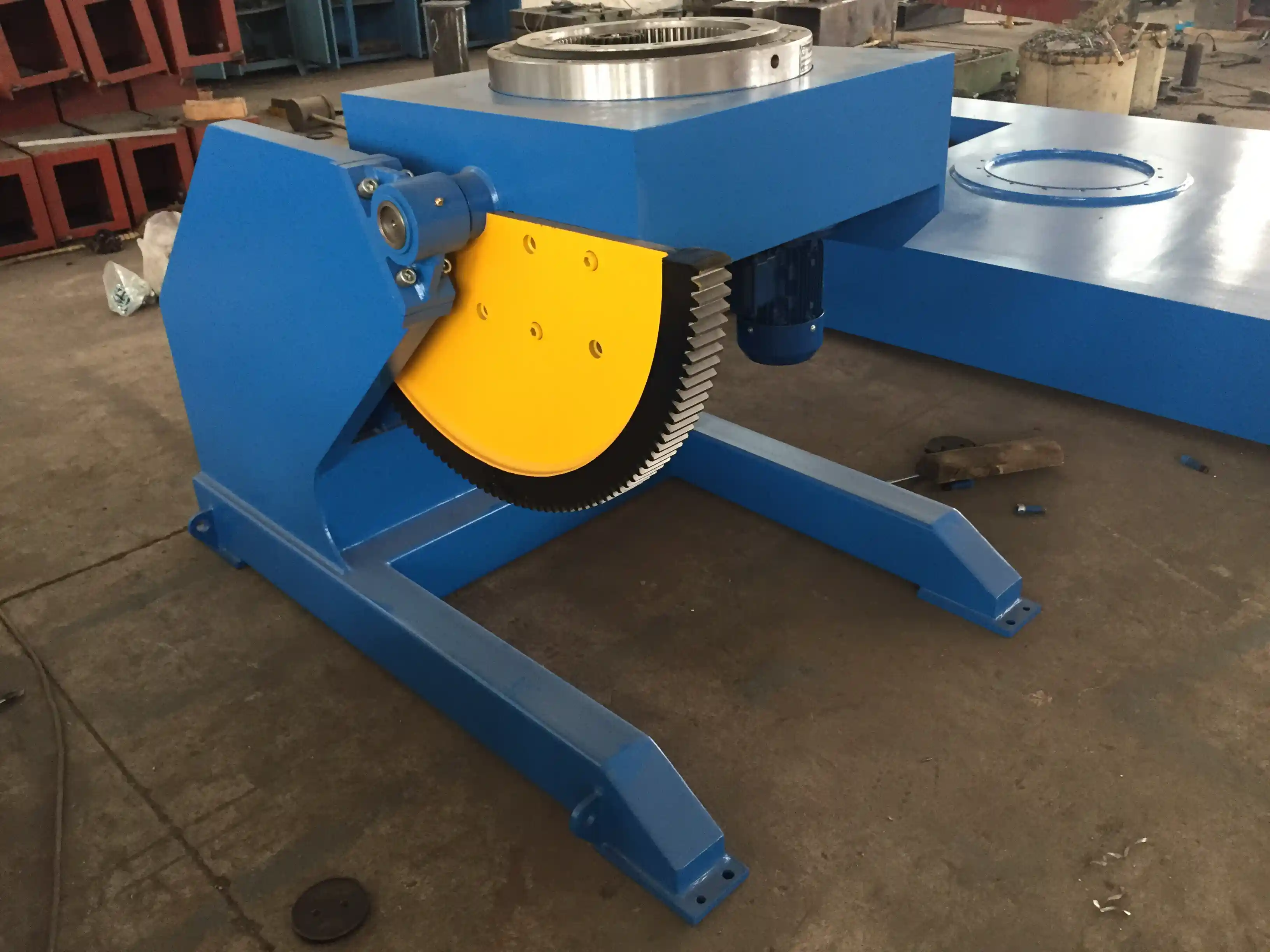
An integrated line should also leave space for maintenance, consumable handling, and inspection personnel. A modular configuration is usually more practical than a fixed purpose-built line unless the shop produces one heat exchanger family in high volume. Ask how the equipment set performs when the product mix changes. A line that can handle multiple shell diameters and tube lengths will usually provide better long-term value than a tightly optimized single-product cell.
Define Your Heat Exchanger Equipment Requirements
When you are ready to compare equipment, send the maximum exchanger shell diameter and weight, tube diameter and wall thickness, tube sheet thickness, material grade, weld process, and applicable code. Wuxi ABK Machinery Co., Ltd. can help match a welding manipulator, positioner, rotator set, or tube welding station to your heat exchanger production sequence. Contact jay@weldc.com or +86-13815101750.
FAQ
How do I choose between a fixed-height and adjustable-height welding positioner?
Choose a fixed-height positioner when the exchanger type and workplace height stay consistent. Choose an adjustable-height positioner when the same station must serve shells, headers, or tube bundles of different diameters. The decision should be based on setup frequency and load stability, not only on the initial price difference.
What welding process is most common for heat exchanger tube joints?
TIG welding is often used for stainless and alloy tube-to-tube or tube-to-tube-sheet joints because it gives better control of the root profile and heat input. MIG, flux-cored, or submerged-arc welding may be used for shell seams where higher deposition improves productivity. The final selection depends on material, joint position, code requirements, and the available equipment.
Do I need a welding rotator if I already have a positioner?
They perform different work. A positioner tilts and turns a workpiece for better weld access. A rotator supports a long cylindrical shell and drives it during circumferential welding. Many heat exchanger lines need both, especially when the shell is too long to be handled safely by a positioner alone.
What information should I prepare before requesting an equipment quotation?
Prepare the shell diameter and weight, tube diameter and wall thickness, tube sheet thickness, material grades, required weld positions, production volume, and applicable code. Also include available floor space, lifting capacity, and power supply. This information keeps the proposal focused on the correct manipulator, positioner, rotator, and tube welding combination.
Se estiver interessado, consulte estes artigos relacionados:
Valor de aplicação excecional: Como os posicionadores de soldadura de altura fixa impulsionam os avanços no fabrico offshore e de construção naval
Principais pontos problemáticos e soluções de alta precisão dos posicionadores de soldadura nas indústrias da energia eólica e da construção naval: Análise técnica exaustiva
Baixa eficiência na soldadura em grupo de tubagens: como os suportes de rolos inteligentes aumentam a produtividade em 50%
 English
 Español
 Français
 Deutsch
 Português
 Русский