
Industrial boiler tube welding and bending equipment works as one dimensional chain. The bending machine sets ovality, wall thinning, and springback; the welding cell then has to compensate for whatever variation reaches the root opening. If a shop treats bending and welding as separate purchases, it can end up with a tube panel line that hits individual machine tolerances but still fails fit-up and distortion control. For boiler panels, membrane walls, and tube-to-header joints, the more practical selection question is not which machine has the highest speed, but how the bending output and welding positioners keep tube centerline, gap, and alignment stable from first bend to final inspection.
How Boiler Tube Welding and Bending Equipment Interact
The first decision point is not whether a tube bending machine or a tube-to-tube welding cell is more important. In boiler panel production, the bender and welder are connected by the fit-up gap. A bend with low ovality but too much springback can still create a root opening that shifts after tacking. A weld cell with precise rotation cannot recover wall thinning or a poor bend angle; it simply welds the variation into the panel.
A practical line sequence is cut to length, bend the tube, inspect bend angle and ovality, trim for fit-up, tack, weld, and then check panel straightness. For membrane panels, tube spacing and the bar width from the assembly fixture must stay parallel with the tube centerline. If the forming equipment outputs tubes with slightly different radii, the operator corrects the mismatch by pulling the joint, which changes the gap and the residual stress before the first arc.
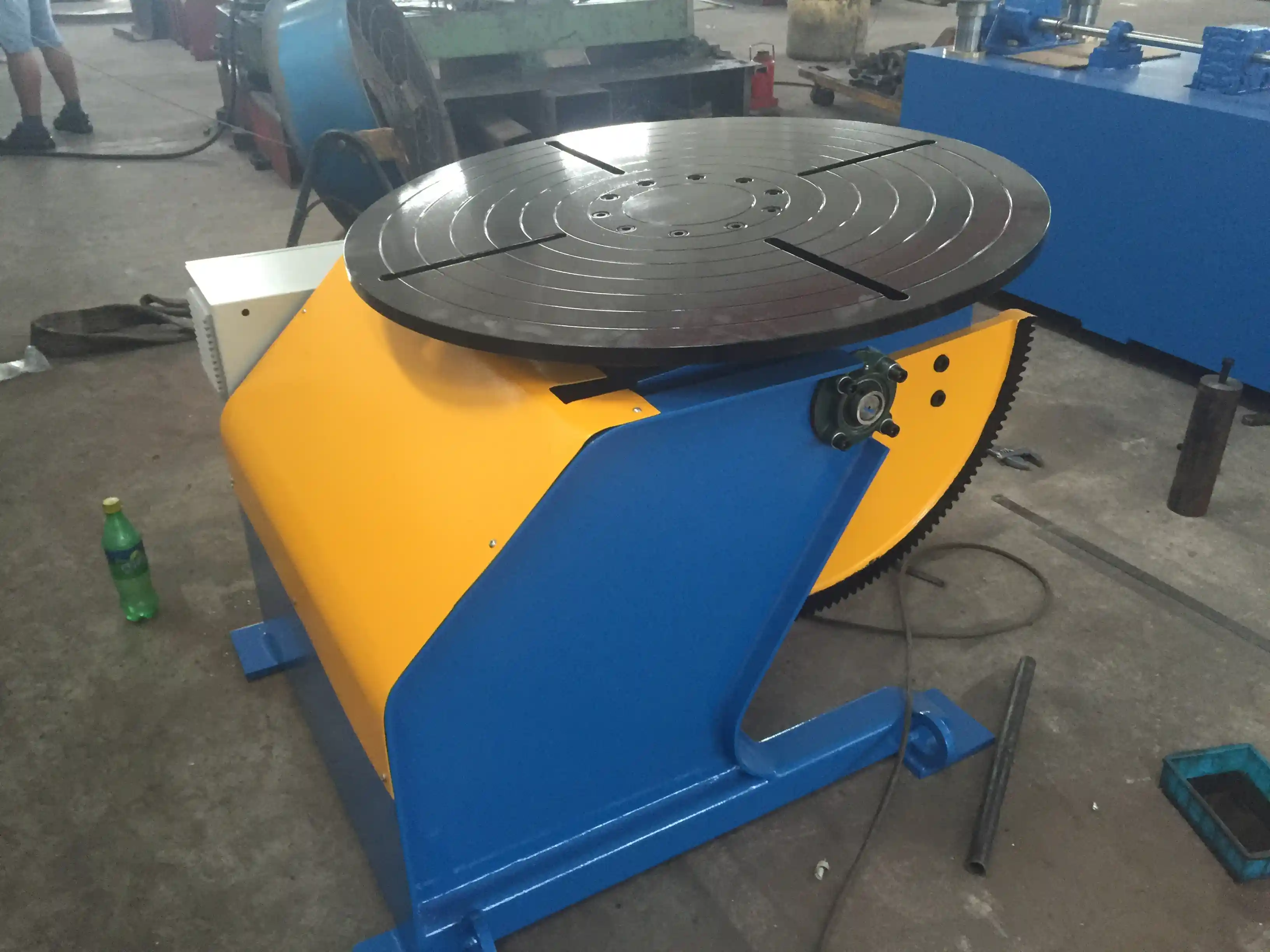
The selection process should therefore start from the accumulated tolerance: bend radius variation, springback by material heat, clamping distortion, weld shrinkage, and positioner runout. Buyers who compare only cycle time will miss the line-balance problem that appears when fast welding feeds on poorly matched tube geometry.
Match the Tube-to-Tube Welding Method to the Joint
Different boiler tube joints favor different welding methods. In most shops, the practical choice balances material, joint access, first-pass quality, and the cost of rework. TIG gives a clean root and good control on stainless and chrome-moly tube, but it is slower. MIG and MAG are easier to automate for carbon steel panel subassemblies. Laser welding works well when tube edges are consistent and the joint is tightly fixtured, but it has little tolerance for mismatch or contamination.
| Method | Best fit | Advantage | Main condition to verify |
|---|---|---|---|
| TIG | Root passes on stainless and chrome-moly tube, small diameter tube-to-tube joints | Good heat control and low spatter | Needs skilled operator or orbital head for repeatability |
| MIG/MAG | High-volume carbon steel boiler panel subassemblies | Higher deposition and easier robotic integration | Requires controlled gap and stable shielding gas coverage |
| Laser | Thin-wall tube with consistent edge preparation | Narrow heat-affected zone and minimal distortion | Demands tight fit-up and clean joint alignment |
| Orbital TIG | Repetitive tube-to-tube welds in pipe headers | Stable weld position and repeatable parameters | Fixture must keep the torch centered on the joint |
The welding method should be confirmed with the same tube material and fit-up condition that production will use. A laser trial on polished tube does not validate a production cell that receives saw-cut, shop-handled ends. In the same way, a MIG root pass may be acceptable on a noncritical panel but not on a high-pressure tube where incomplete fusion or excessive reinforcement matters. The tube-to-tube welding machine must hold the joint in front of the torch without side-to-side drift, especially when the panel includes several joints in a row.
Bend Ovality and Springback Control the Fit-Up
Boiler tube bending is rarely a simple form operation. For small radius bends on thin-wall or heat-resistant tube, booster bending is used because it applies axial force to the tube while the rotary die rotates. That axial push can move material toward the bend, reduce tensile strain on the outside of the bend, and lower the chance of wall thinning or cracking at the extrados. The tradeoff is that incorrect booster pressure can produce wrinkles at the intrados or leave residual axial stress that changes the bend angle after the clamp releases.
Two acceptance checks matter more than the nominal radius: ovality and springback. Ovality is the flattening of the round cross-section, which changes the root face and can prevent a matching tube or header hole from fitting cleanly. Springback is the bending angle recovery after unloading, which varies by material, wall thickness, and even heat lot. A first article check should measure the bend angle after release, ovality at the bend center, and wall thickness at the intrados and extrados. If the tooling set cannot hold those values without repeated operator correction, adding a welding robot will not recover the production target.
Fit-Up Fixtures and Positioners Keep the Weld Joint Stable
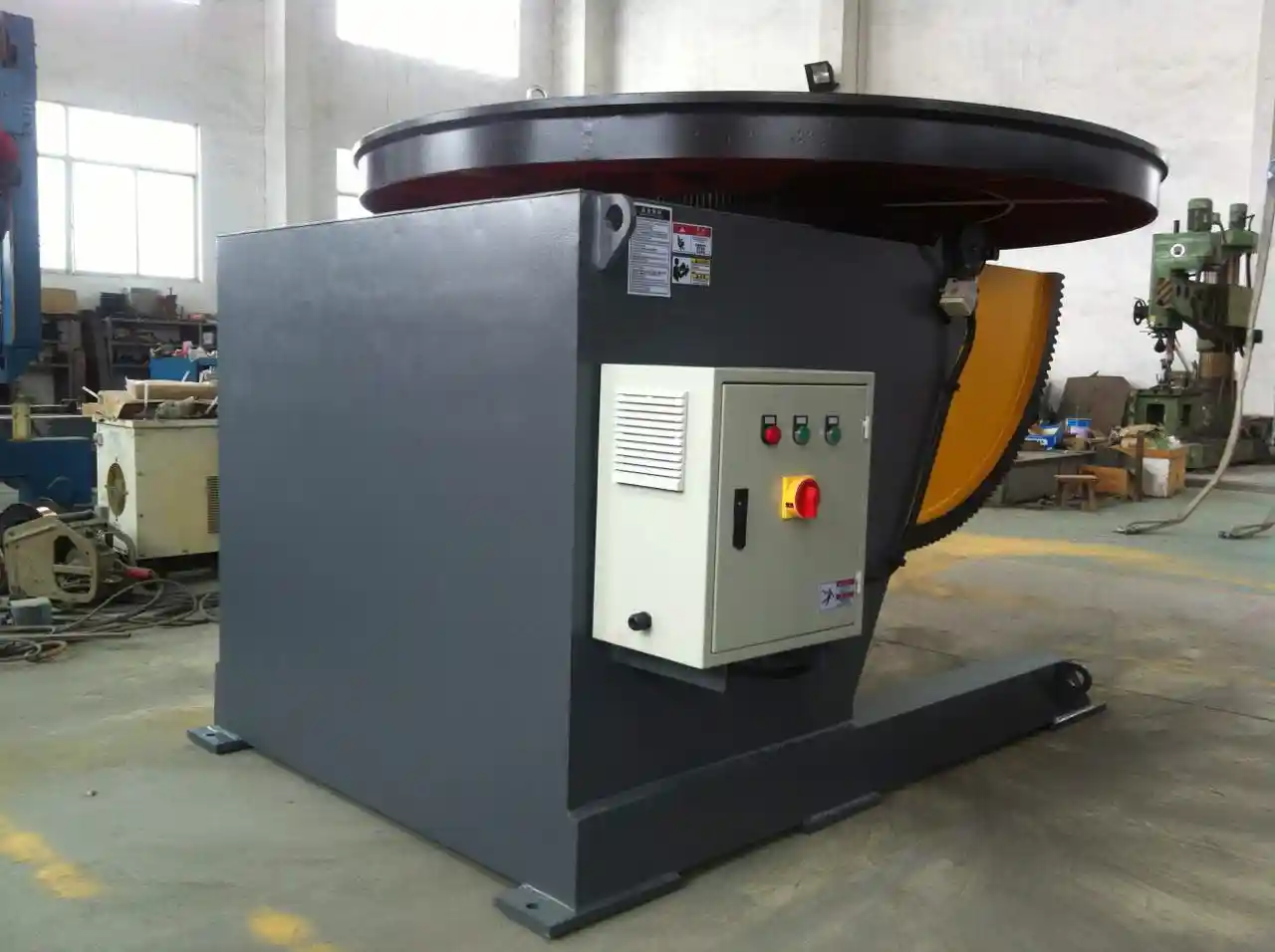
Once the tube is bent and trimmed, the next issue is support. A long boiler panel is not rigid enough to hold its own alignment, and a simple floor roller may not control the tube-to-tube gap. A positioner or fit-up rotator supports the tube, keeps the joint centered, and allows the welder to rotate the assembly without moving out of the flat or horizontal position range.
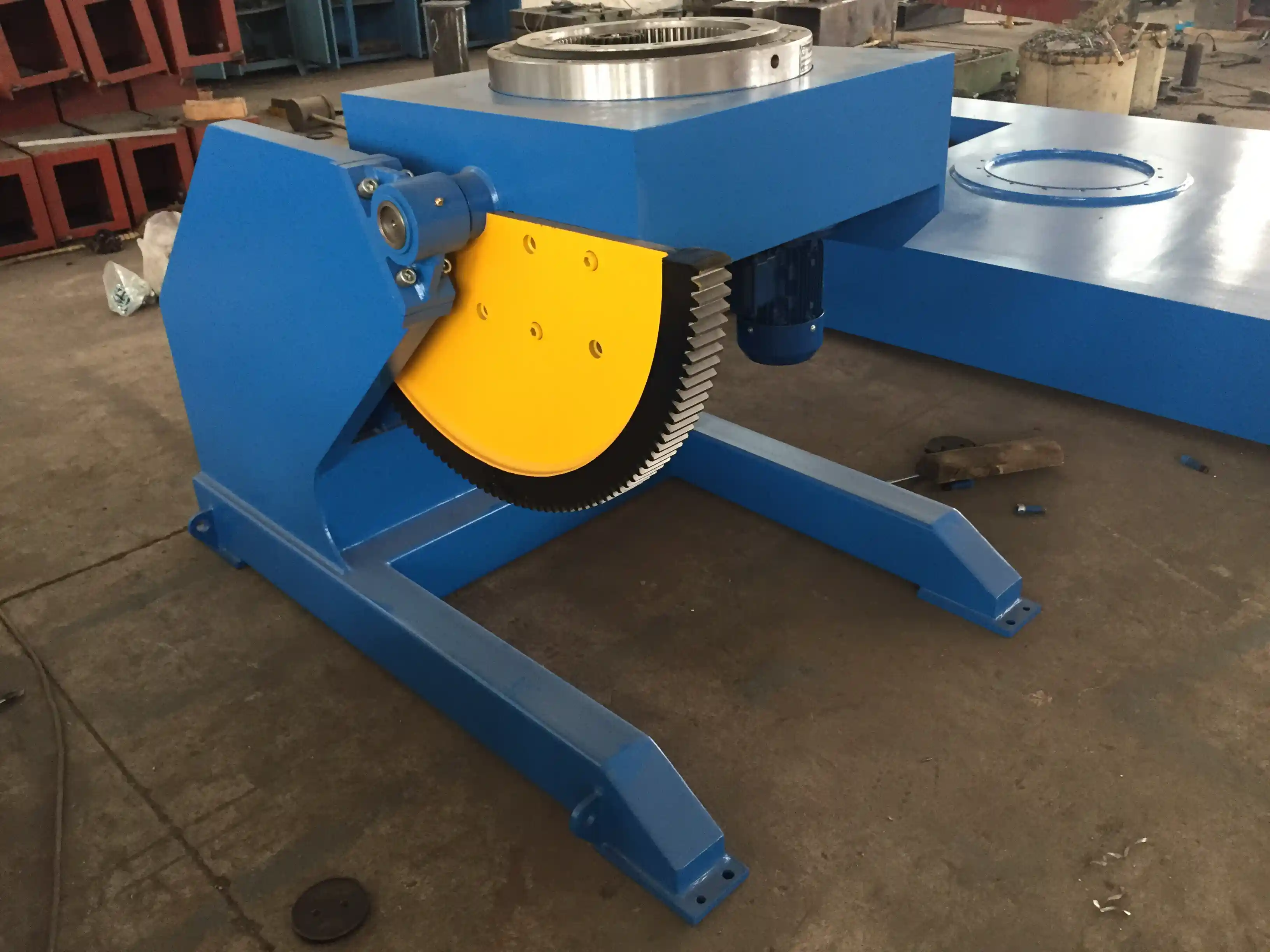
For smaller tube bundles and pipe headers, a 3-axis positioner gives useful control over turn, rotation, and tilt. For larger panel sections, head-tail positioners and adjustable-height rotators support the assembly at both ends and reduce sag. The rated load alone is not enough. Buyers need to check the eccentric distance and center-of-gravity limit, because a long tube assembly whose mass is outside the table center can overload a positioner even when the total weight is below the nominal capacity.
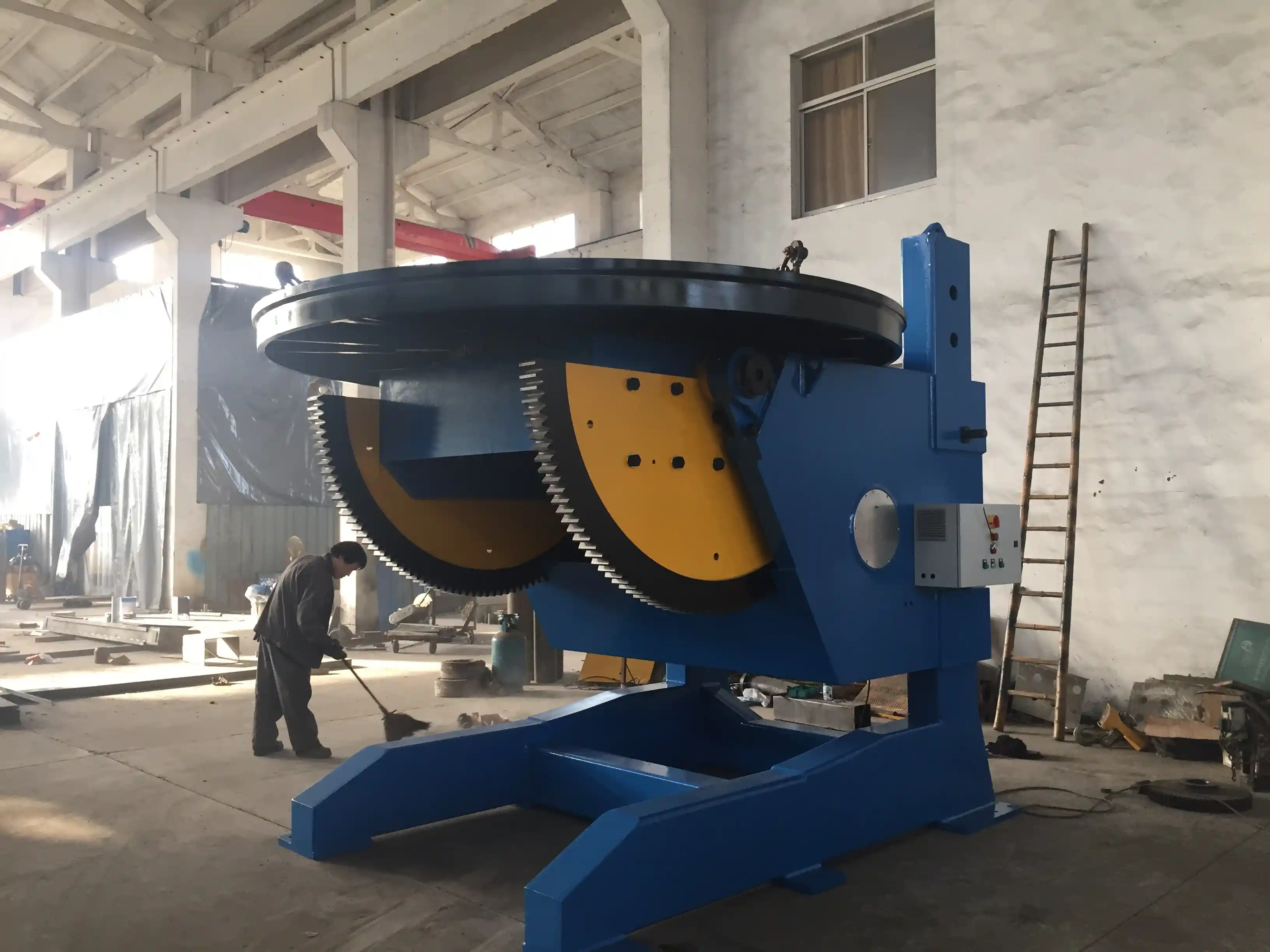
Product specifications from WUXI ABK illustrate the difference between positioner types: 1 ton and 2 ton 3-axis positioners are rated for ±0.05 mm positioning accuracy and 0.02 mm repeatability, while adjustable-height rotators are better suited to supporting long cylindrical sections through their diameter range. The two are not interchangeable. One controls a compact weld joint, the other carries a long panel. The correct choice is set by panel length, distance between supports, and required rotation position, not by the heaviest single component.
Tube-to-tube welding cells only hold tolerance when the rotating equipment keeps the joint in front of the torch without axial drift. <Welding Rotator Precision Automation for Industrial Fabrication: Expert FAQ Guide> covers rotator automation choices for industrial fabrication and how they affect weld repeatability.
Specify Equipment Through a First Article and Acceptance Check
A useful purchase specification starts with the data that affects fit-up, not a generic capacity list. The table below shows the fields that a boiler panel equipment buyer should send or compare before committing to a bending and welding line.
| Data field | What it controls | Why it matters |
|---|---|---|
| Tube OD and wall thickness | Bending tooling, clamp pressure, weld parameters | Wrong wall input changes ovality and heat input limits |
| Material and heat lot | Springback, weld filler, preheat or postweld need | A trial on one heat does not guarantee another lot |
| Bend radius and angle | Mandrel and wiper die design, booster setting | Too-small radius increases wrinkling and wall thinning |
| Panel width and tube spacing | Assembly fixture, membrane bar fit-up, straightness | Tube spacing drift creates gap and distortion problems |
| Welding process | Joint prep, positioner speed, torch access | Process mismatch increases rework and inspection time |
| Ovality and straightness tolerance | Acceptance criteria for bender and positioner | Vague limits allow borderline output through inspection |
A first article test is useful, but its result is limited. A trial proves that a specific tube material, tooling set, operator setting, and joint condition produced an acceptable bend and weld on that day. It does not automatically prove the result for every heat, every operator, or every batch of tube. For that reason, the acceptance check should record all of those conditions and state what will be checked in production. If the material or bend radius changes, a new first article is required.
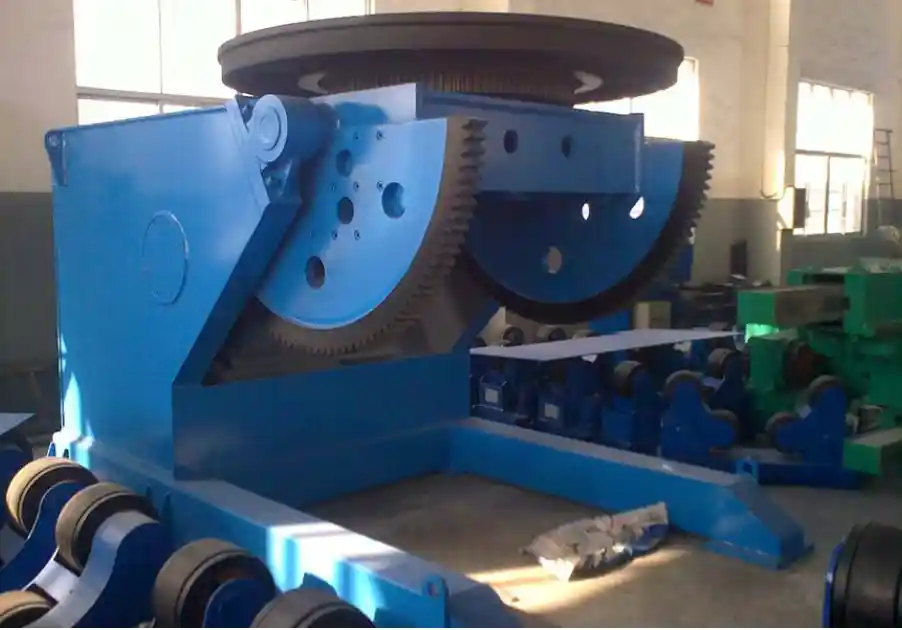
In boiler tube panels, misalignment often shows up first as a root gap that changes after tacking, not as a visibly obvious defect. <Desalinhamento excessivo na soldadura de condutas: Solução de posicionamento de precisão com plataforma giratória da Wuxi ABK Welding> covers precision positioning for pipeline welding where alignment errors drive rework.
Long Panel Handling and Layout Matter as Much as the Welding Head
For boiler panel production, the line layout is part of the tolerance system. If a tube bundle sits on uneven supports between stations, the panel can pick up sag or twist before welding. Conveyor, roller stand, and crane positions should be selected so the panel is not lifted by one narrow contact point. The same rule applies to large drums and headers: a heavy assembly that shifts on the rotator will change the weld path and the arc length.
The layout should also reserve space for inspection, root pass cleanup, and repair access. A tightly packed line may look productive, but it becomes slow if operators cannot reach the back side of the panel or remove a defective tube without disturbing the remaining joints.
Long boiler panels and heavy cylindrical sections both need support points that do not distort the workpiece before welding. <Dominar a produção pesada: Como os suportes de rolos trepantes se tornam a pedra angular de uma soldadura eficiente> covers roller stand selection where support placement affects welding access and straightness.
Specify the Tube Data Before Finalizing the Line
For a production line review, send tube OD, wall thickness, material, bend radius, panel width, tube spacing, welding process, and your required ovality and straightness tolerances. Include a recent fit-up or distortion problem if one is available. Email jay@weldc.com or call +86-13815101750 to check which bending and welding positioner combination fits your layout and acceptance criteria.
FAQ
Which should be specified first, the bending machine or the welding machine?
Start with the bend and fit-up tolerance because the bender sets the shape that the welding cell receives. If the tube has low ovality and repeatable springback, the welding equipment can be specified around a stable root gap. If the bend is unstable, adding a more accurate positioner does not remove the geometric variation.
How much ovality is acceptable for a boiler tube bend?
Acceptance is set by the applicable customer specification, code requirement, or engineering calculation for the tube size and pressure condition. Instead of applying one universal percentage, record the specified limit and measure ovality at the bend apex with the same tube support used in production. If the customer does not provide a limit, request one before cutting production lots.
Can one welding positioner handle tube-to-tube joints and heavy panels?
Sometimes, but only within its load, eccentricity, and center-of-gravity ratings. A small 3-axis positioner handles compact tube joints well. A long membrane panel or header usually needs head-tail supports, adjustable-height rotators, or fit-up carriages to control sag. Check the stated eccentric distance rather than using total weight alone.
Does a successful trial bend mean the full production line will work?
No. A trial validates the tested tube material, heat lot, tooling, operator setting, and joint condition. It does not prove every future lot or a changed radius. Keep the trial record as the baseline, and repeat the first article check when material, die set, or part geometry changes.
Se estiver interessado, consulte estes artigos relacionados:
Aplicações inovadoras de rotores de soldadura CNC de 10 toneladas no fabrico de recipientes sob pressão
Solução revolucionária para a soldadura de vasos de pressão: Análise técnica de posicionadores de soldadura rotativos de 360 graus
 English
 Español
 Français
 Deutsch
 Português
 Русский