
Most H-beam welding line price discussions start from a single number, but that number means nothing until the beam section range, weld length, and automation level are fixed. In 2026 I expect buyers to pay more attention to fit-up accuracy and material handling than to welding power alone. A budget built only on a line item misses the real cost drivers. This guide breaks down the pricing logic I use when specifying H-beam production equipment, so procurement teams can compare quotes on the same technical basis and avoid paying for capacity they will never use.
What Actually Shapes H-Beam Welding Line Prices in 2026?
An H-beam production line is not a single machine. It combines plate storage, cutting or marking stations, web and flange assembly, tack welding, main submerged arc welding, straightening, turnover, and outfeed handling. Each module carries its own engineering and motion control cost. The final quote changes when any of these subsystems is removed, upgraded, or replaced by manual labor.
Beam dimensions set the first price boundary. A line sized for 400 mm to 800 mm web heights costs much less than one built for 1,500 mm webs and 40 mm flanges. Wider flange handling increases roller stand length, clamping force, and straightening tonnage. Heavier plate drives higher-power drives and larger weld power supplies. I usually fix the section range before comparing any numbers, because a 10 mm plate line and a 40 mm plate line are different machines even when both are called H-beam lines.
Welding method is the second driver. Single-wire SAW is the least expensive arrangement. Tandem and twin-arc configurations raise deposition rate and shorten cycle time, but they add power sources, taller gantries, and more complex controls. Buyers who need 2026 throughput targets should cost the entire line against monthly output, not just the welding station.
How Much Should You Budget for an H-Beam Welding Line?
The ranges below are planning figures I use for standard configurations. They are not fixed quotes. Local electrical standards, CE or UL documentation, export packaging, and site conditions move the final number. They also exclude foundation and operator training unless the supplier states otherwise.
| Line class | Typical beam section | Automation level | Preliminary budget (USD) |
|---|---|---|---|
| Basic | Web 400-800 mm, flange 150-300 mm, plate 8-20 mm | Manual fit-up, single-wire SAW, fixed outfeed | 180,000-350,000 |
| Mid-range | Web 600-1,200 mm, flange 200-400 mm, plate 10-32 mm | Semi-automatic fit-up, tandem SAW, roller conveying | 400,000-900,000 |
| Heavy | Web 800-2,000 mm, flange 250-500 mm, plate 16-50 mm | Automated assembly, tandem SAW, straightening, turnover | 1,200,000-2,800,000 |
| Specialized | Web above 1,500 mm, plate above 40 mm, continuous operation | Multi-torch, integrated straightening, lifting and conveyor | 2,500,000 and above |
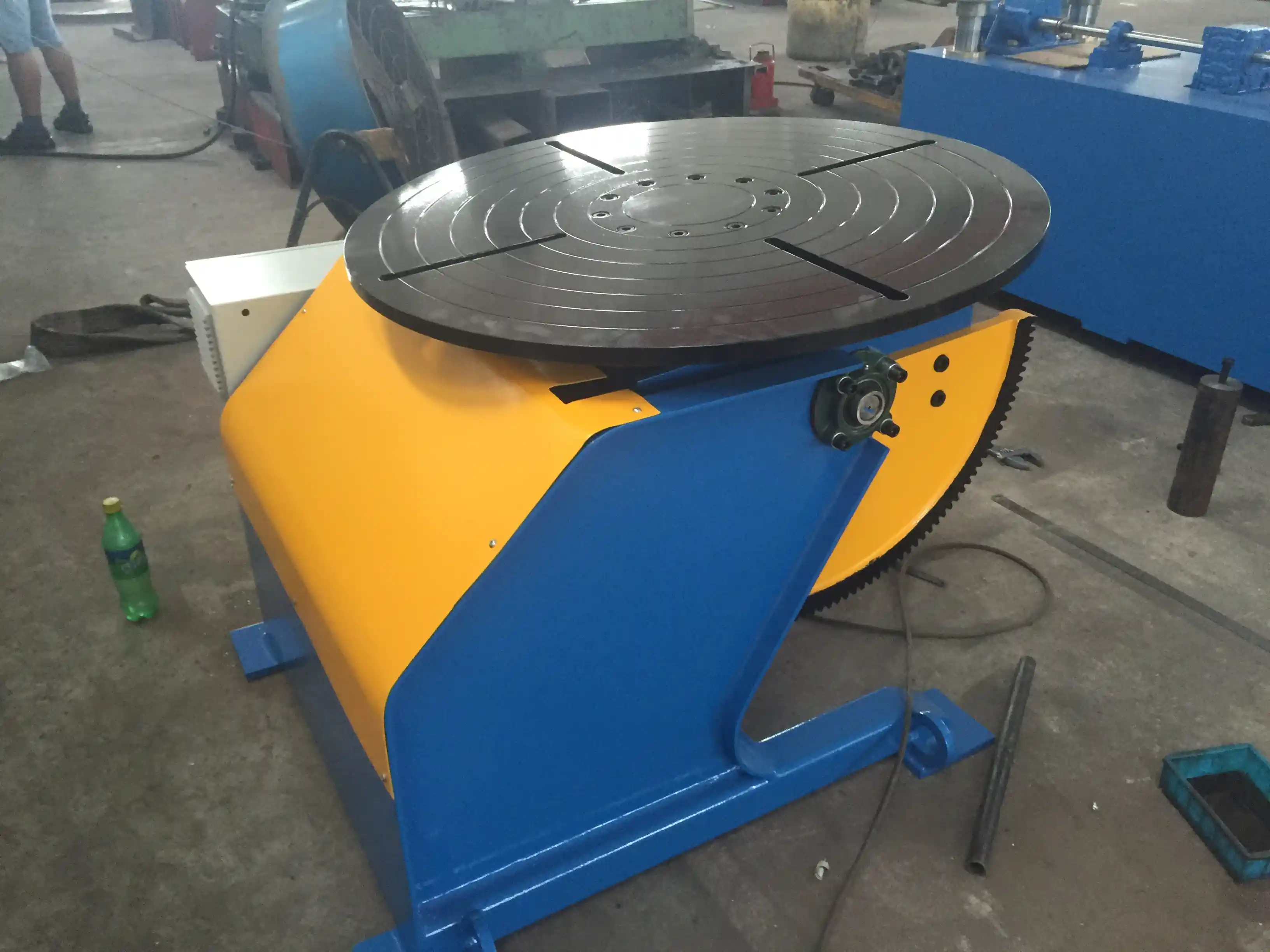
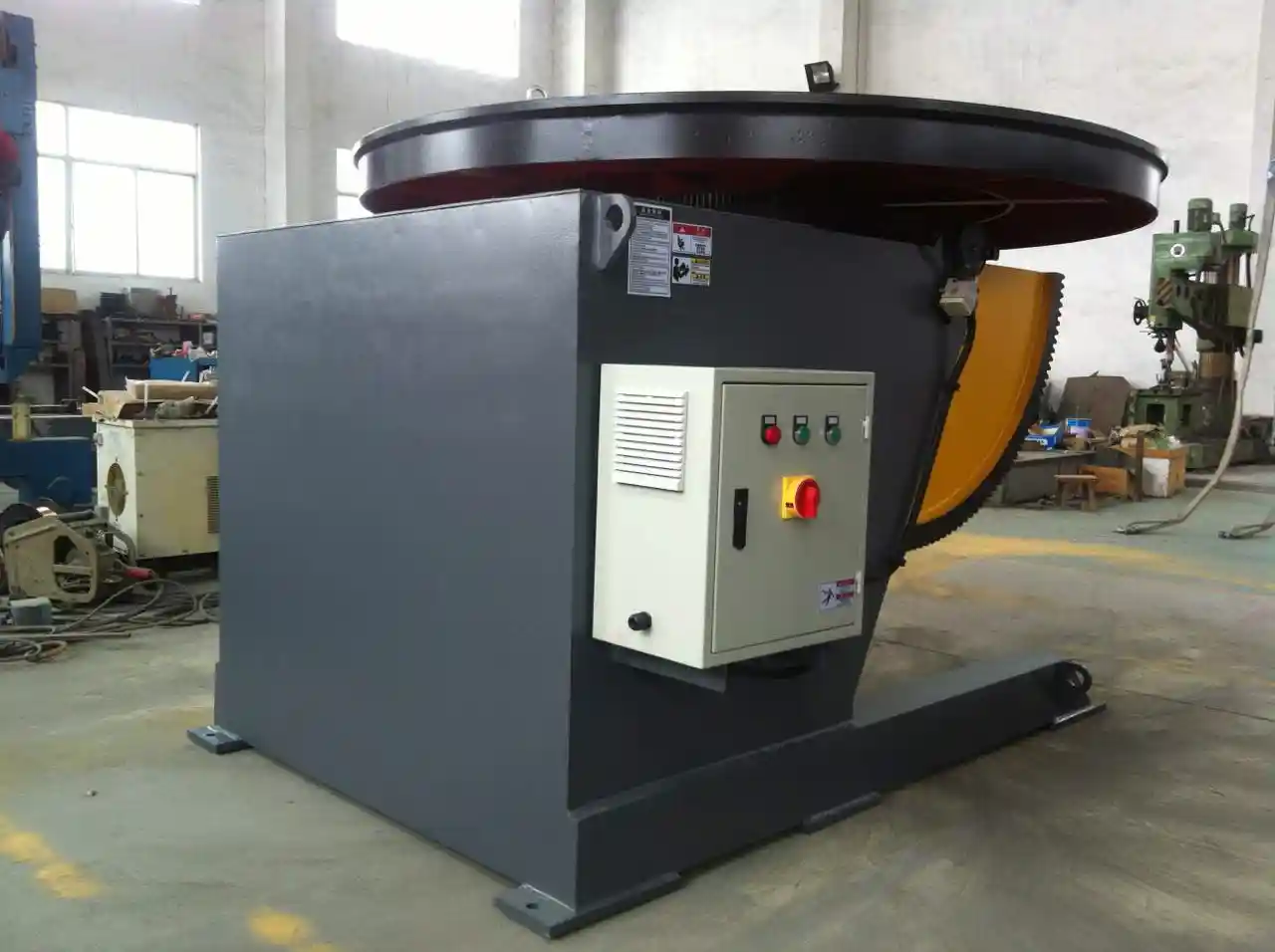
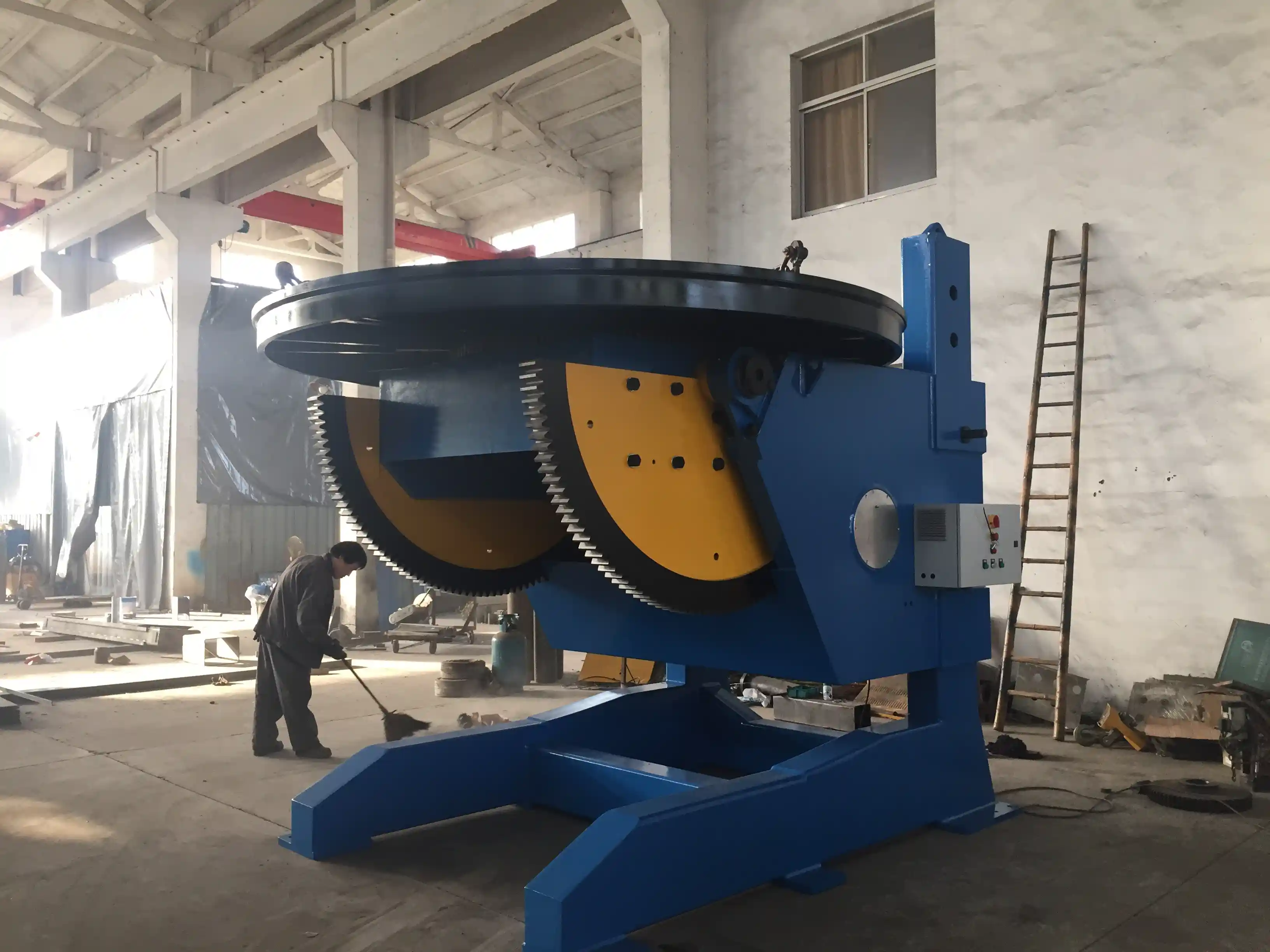
These ranges usually surprise buyers who start from a manipulador de soldadura or a single rotator price. The line cost is mostly structural steel, alignment systems, and drives, not the welding torches. The best way to avoid budget drift is to ask the supplier to state what is included in the mechanical scope and what is owner-furnished.
Why Do Two H-Beam Welding Line Quotes Rarely Compare Cleanly?
One supplier quotes mechanical equipment only. Another includes PLC control, safety fencing, foundations, installation supervision, commissioning, and operator training. A third removes straightening and asks the buyer to handle that offline. All three look acceptable on a summary sheet, but the difference is not price competition; it is scope.
The same issue shows up in drive systems. An AC frequency drive on a roller line may meet basic production, while a servo-controlled positioning system improves repeatability for automated welding. If one quote lists servo axes and another does not, the cheaper line is not automatically the better value. We evaluate whether the extra control reduces rework or simply adds unused precision.
Quote comparison gets harder when material handling scope changes. <O pilar central da produção pesada: O excelente desempenho dos suportes de rolos nos principais processos> explains why roller stand alignment and load equalization directly affect weld pass consistency in heavy fabrication lines.
If your program includes web heights above 1,200 mm or plate thickness beyond 40 mm, confirm roller stand load distribution and straightening force before you lock the bill of materials. That detail often changes the budget more than the welding power source. Send your section size and annual tonnage to jay@weldc.com for a line scope review.
Which H-Beam Welding Line Specifications Change the Final Price Most?
Four specifications drive cost faster than brand choice. Web height range usually ranks first, because it determines the gantry height, clamping stroke, and roller stand length. Flange width and plate thickness set straightening tonnage and welding power. Fit-up tolerance moves the next big cost, because a tight web-to-flange gap requires better mechanical constraint and more reliable clamping. Travel length and cycle time then determine how many welding stations and transfer positions are needed.
Straightening is the module buyers most often under-specify. A beam can leave the welding station within dimensional tolerance and still move after cooling. If the line has no post-weld straightening or the straightener is too light, the plant spends labor correcting beams manually. I have seen modest welding lines lose their expected cycle gain because the straightening bottleneck was not captured in the original quote.
Automation depth is the final cost lever. Flux recovery, seam tracking, online measurement, and automatic parameter control add engineering and integration time. They are not accessories; each one changes the electrical cabinet, sensor layout, and commissioning schedule. Buyers should decide before tender whether these functions are mandatory or negotiable.
Space constraints can force a redesign that changes the budget more than the welding equipment itself. <O espaço da oficina é demasiado pequeno? Como as lanças de coluna poupam espaço no chão da 50%, ao mesmo tempo que aumentam a segurança e a eficiência> covers how column boom positioning reduces floor area demand and keeps operators away from moving beams.
Where Should Buyers Start With an H-Beam Welding Line Budget?
Pricing confusion usually comes from incomplete input data, not from supplier secrecy. When the section range, plate thickness, annual tonnage, and automation target are not fixed, every quote carries assumptions the buyer cannot see. At Wuxi ABK we begin a line review by defining those four inputs before discussing drives, torches, or controls.
If you are planning a 2026 H-beam line, send your maximum web height, flange width and thickness, plate material and thickness range, and the required output per shift to jay@weldc.com. You can also call +86-13815101750 or +86-510-83555592. I will use the same specification breakdown in this guide to return a scope-matched budget instead of a single number with no engineering behind it.
What Questions Should Buyers Ask Before Finalizing H-Beam Welding Line Pricing?
Does a higher equipment price mean lower operating cost?
Not always. A higher price often reflects heavier mechanical structure, servo control, or integrated straightening, which can reduce rework and labor over time. If the added cost is only for a larger welding power supply that the section range does not need, it may simply raise capital without changing output. I compare the line cost against expected weld metal deposition, straightening capacity, and available labor. A line that reduces manual fit-up by 30 minutes per beam pays back faster than one with extra unused power.
Should buyers include installation and commissioning in the first quote?
Many buyers assume installation is a small add-on, but it is usually a separate scope item with real cost. For H-beam lines, foundation bolts, rail alignment, electrical connection, and commissioning can account for a meaningful share of the delivered price. I ask suppliers to split mechanical supply, freight, installation supervision, and commissioning in the quotation. That separation makes it clear whether the lower price is a lower scope or a lower margin. If installation is not included, the buyer must budget local cranes, electrical work, and startup labor separately.
What is the most common overspecification in H-beam line budgets?
It depends on the beam range, but I often see buyers ask for more automation than their product mix can absorb. A heavy tandem SAW line is justified when the plant runs similar sections across two or three shifts. If the factory produces mixed beam sizes in small batches, a simpler line with fast changeover may reach lower total cost per ton. The right approach is to spec the line for the largest regular production run, not the largest beam the company occasionally accepts. That single decision keeps gantry height, roller length, and straightening tonnage within a reasonable budget.
How can a buyer validate the price before signing?
In the line reviews I have worked on, the most useful validation is a technical scope comparison against two reference projects, not a request for a generic discount. Ask the supplier to identify the gantry height, straightening force, welding method, and drive type behind each line item. Then check whether the quoted equipment can hold the web-to-flange gap and post-weld straightness at full section size. If you send your beam drawings, annual tonnage, and target shift pattern to jay@weldc.com, I will confirm the scope against your production assumptions before you commit to a purchase.
Se estiver interessado, consulte estes artigos relacionados:
Baixa eficiência na soldadura em grupo de tubagens: como os suportes de rolos inteligentes aumentam a produtividade em 50%
Melhorar a Qualidade e a Eficiência no Fabrico de Reservatórios e Recipientes sob Pressão: O principal valor de aplicação dos posicionadores
Principais pontos problemáticos e soluções de alta precisão dos posicionadores de soldadura nas indústrias da energia eólica e da construção naval: Análise técnica exaustiva
Desafios da soldadura em torres eólicas: como os sistemas hidráulicos de elevação avançados aumentam a produção em 40%
 English
  Español
  Français
  Deutsch
  Português
  Русский