Welding rotator wobble is one of those problems that announces itself loudly — through inconsistent weld beads, strange vibrations, or that unsettling feeling when a heavy workpiece starts moving in ways it shouldn’t. Anyone who has spent time around pipe fabrication knows the frustration of chasing down the source. The causes range from worn rollers to foundation issues, and the fixes vary just as widely. What follows is a practical breakdown of why wobble happens, how to diagnose it, and what actually works to correct it.
Why Welding Rotators Develop Wobble in the First Place
Welding rotator wobble rarely has a single cause. It usually emerges from a combination of mechanical wear, alignment drift, and operational factors that accumulate over time. Understanding these root causes makes troubleshooting far more efficient than guessing or replacing parts at random.
Roller and Drive System Wear Creates the Foundation for Instability
The roller and drive system form the mechanical heart of any welding rotator. When these components degrade, wobble follows. Rollers develop uneven wear patterns from repeated contact with workpieces, creating surfaces that no longer provide consistent support. Drive system misalignment introduces torsional stresses that manifest as vibration during rotation. Bearing failure — recognizable by increased friction, play, or grinding sounds — allows excessive movement within the roller assembly itself.
These issues compound each other. A slightly worn roller creates uneven loading, which accelerates bearing wear, which increases misalignment. High-grade components slow this progression significantly. ZG45 cast steel rollers with HRC 55-60 hardness, for example, maintain their surface geometry far longer than softer alternatives, extending the interval between calibration events.
External Factors That Amplify Rotational Instability
Mechanical condition tells only part of the story. Operational factors often contribute equally to welding rotator stability problems. Uneven workpiece loading shifts the center of gravity away from the rotational axis, forcing the rotator to compensate for an imbalanced mass. Exceeding rated capacity stresses every component simultaneously, accelerating wear across the entire system.
Foundation stability matters more than many operators realize. An unstable mounting surface transmits ground vibrations directly into the rotator frame, amplifying any existing mechanical issues. Proper workpiece centering before rotation begins eliminates one of the most common — and most preventable — sources of wobble.
Systematic Diagnosis Before Corrective Action
Accurate diagnosis separates efficient repairs from expensive guesswork. A systematic approach identifies the actual root cause rather than treating symptoms.
Visual inspection catches obvious problems: uneven workpiece rotation, visible component damage, loose fasteners, or signs of bearing failure like grease discoloration. Vibration analysis quantifies what visual inspection cannot — the frequency and amplitude of oscillations that indicate specific mechanical problems. Dial indicators provide precise measurements of roller alignment and runout, revealing misalignment that would otherwise go undetected.
This diagnostic sequence matters. Starting with measurement tools before completing visual inspection wastes time. Starting with visual inspection and progressing to quantitative measurement ensures nothing gets overlooked.
Corrective Strategies That Actually Eliminate Wobble
Effective corrections target the diagnosed root cause directly. Generic maintenance helps, but precision corrections restore welding rotator stability far more reliably.
Mechanical Adjustments and Component Replacement
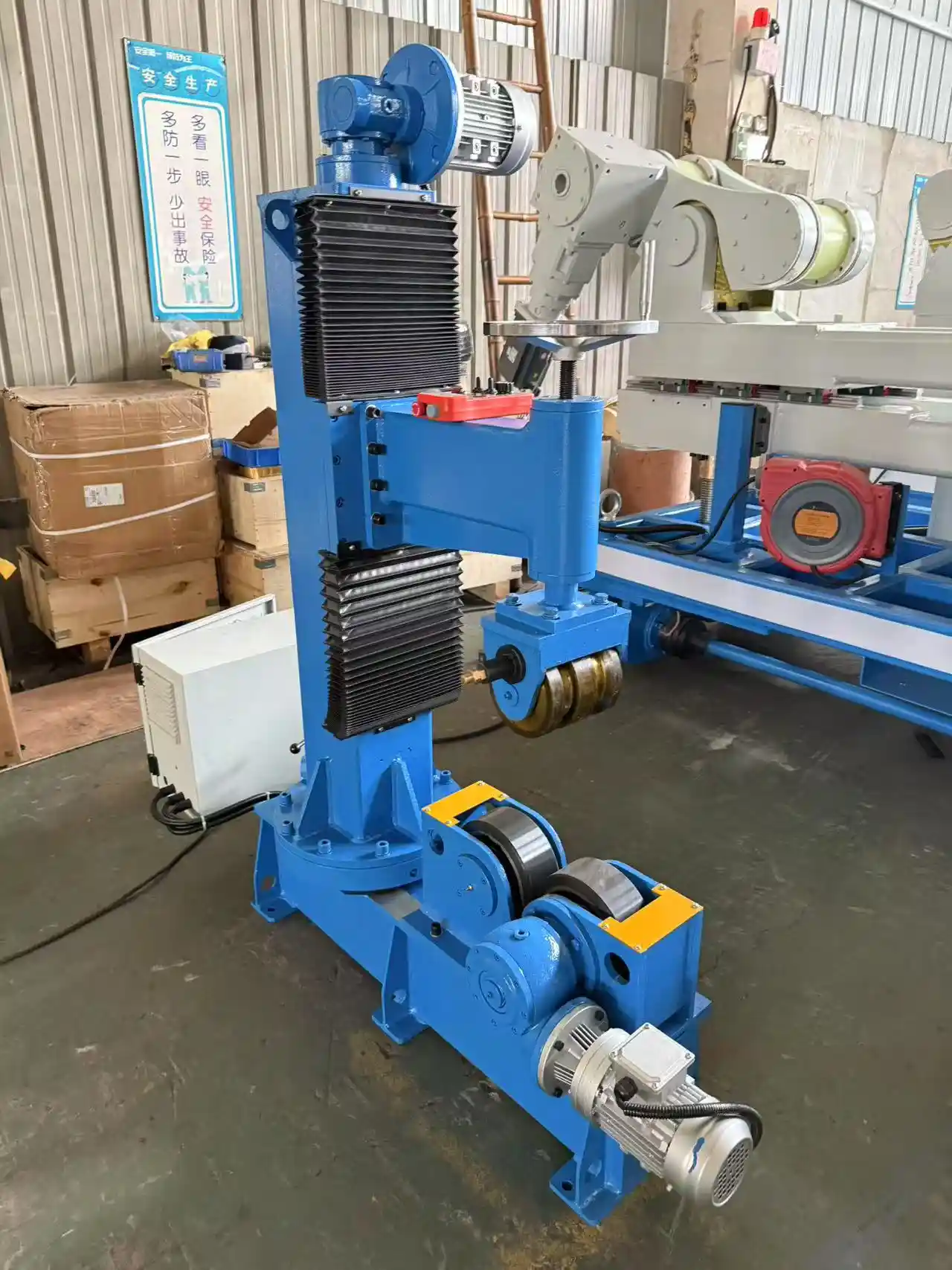
Roller adjustment ensures even contact pressure across the workpiece surface. This often requires shimming or repositioning roller assemblies to achieve parallel alignment with the rotational axis. Shaft alignment correction reduces stress on bearings and gears that would otherwise accelerate wear.
Component replacement becomes necessary when wear exceeds adjustment range. Bearings, seals, and gearbox internals have finite service lives. Replacing worn slewing bearings with high-strength alloy steel components restores rotation accuracy to ±0.05° — a level of precision that worn components simply cannot maintain. Drive belt or chain tensioning completes the mechanical restoration, ensuring power transmission occurs without slippage or vibration.
Operational Practices That Prevent Recurrence
Mechanical corrections address existing damage. Operational practices prevent future problems. Proper loading and workpiece centering distribute weight evenly across all contact points. Strict adherence to rated capacity limits prevents the overload conditions that accelerate wear.
Scheduled inspections identify developing issues before they cause production problems. Consistent lubrication reduces friction and heat buildup in bearings and gears. These practices require minimal time investment but deliver substantial returns in equipment longevity and sustained performance.
Maintenance consistency matters as much as maintenance frequency. Sporadic attention creates gaps where problems develop undetected. If you are looking for ways to improve the efficiency of your welding operations, consider reading about 《Baixa eficiência na soldadura em grupo de tubagens: como os suportes de rolos inteligentes aumentam a produtividade em 50%》.
The Real Cost of Ignoring Rotator Wobble
Unaddressed welding rotator wobble creates cascading problems across production operations. Weld quality suffers first — uneven penetration, porosity, and inconsistent bead geometry become increasingly common as wobble worsens. These defects require rework, consuming time and materials while delaying downstream processes.
Safety risks escalate alongside quality problems. An unstable workpiece during rotation poses genuine hazards to operators and surrounding equipment. Material dislodgement from a rotating assembly can cause serious injury or damage.
The financial impact combines direct costs (rework, scrap, repairs) with indirect costs (downtime, delayed deliveries, customer complaints). Equipment designed with laser calibration systems achieving ±0.1mm/m accuracy dramatically reduces wobble-related defects, but even the best equipment requires proper maintenance to sustain that precision.
Long-Term Strategies for Sustained Rotator Performance
Proactive maintenance extends equipment life and maintains precision far more cost-effectively than reactive repairs. Comprehensive maintenance programs should include regular calibration verification, structural integrity checks, and dynamic balancing of workpieces before rotation.
Advanced monitoring techniques enable predictive maintenance — identifying developing problems before they cause failures. Sensor calibration ensures monitoring systems provide accurate data. Trend analysis reveals gradual degradation that might otherwise go unnoticed until it causes production problems.
Maintenance Schedule for Welding Rotator Stability
| Frequência | Task | Detail |
|---|---|---|
| Diário | Inspeção visual | Check for loose bolts, visible wear, and unusual noises. |
| Weekly | Lubrificação | Apply grease to bearings and gearboxes as specified. |
| Mensal | Torque Check | Verify tightness of all mounting bolts and fasteners. |
| Trimestral | Drive System Inspection | Examine belts, chains, and gears for wear or misalignment. |
| Anualmente | Component Replacement | Replace worn bearings, seals, and recalibrate sensors. |
Bringing It Together
Welding rotator wobble stems from identifiable mechanical and operational causes. Systematic diagnosis pinpoints the actual root cause. Targeted corrections — whether mechanical adjustments, component replacement, or operational practice changes — restore stability. Consistent preventative maintenance prevents recurrence.
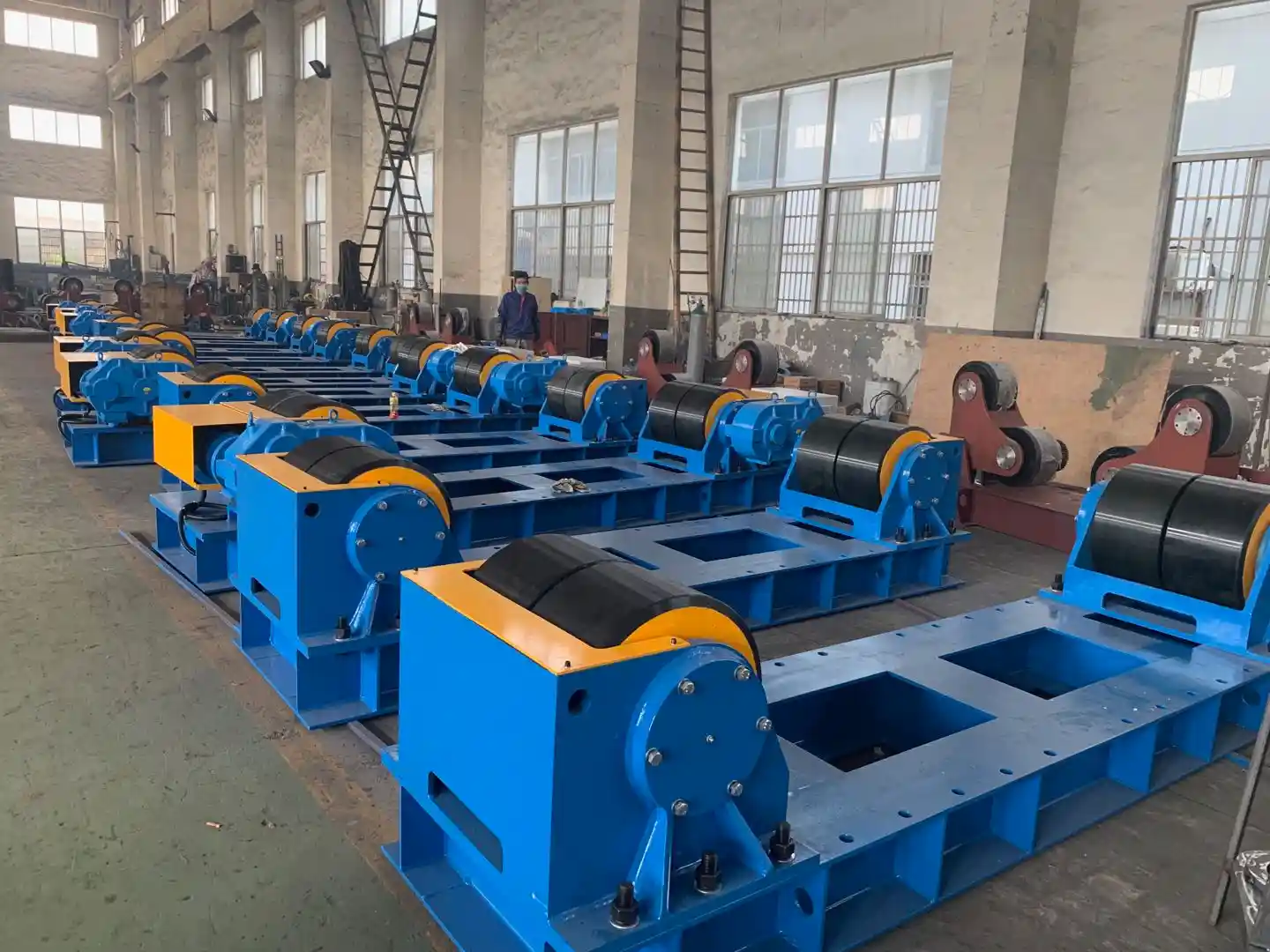
The equipment matters, but so does the approach. Precision-engineered welding rotator solutions provide the foundation, while proper maintenance and operation sustain performance over the long term. Equipment:Adjustable Welding Positioner models engineered for durability and ease of maintenance support continuous high-precision operations when combined with the diagnostic and maintenance practices outlined here.
Ensure Precision in Your Welding Operations
Ensure your welding operations run smoothly and efficiently with WUXI ABK MACHINERY CO., LTD.’s robust and reliable welding rotators and equipment. Contact us today at +86-13815101750 or jay@weldc.com for expert consultation, high-quality machinery, or genuine spare parts to maintain peak performance and precision in your projects.
Frequently Asked Questions About Welding Rotator Wobble
What are the common signs of a welding rotator wobble?
Visible erratic movement of the workpiece during rotation is the most obvious indicator. Inconsistent weld bead appearance — varying width, penetration depth, or surface quality — often signals wobble even when the movement itself is subtle. Unusual noises or vibrations from the rotator mechanism, particularly grinding or rhythmic thumping, indicate bearing or alignment problems. Difficulty maintaining a stable welding arc despite proper parameter settings frequently traces back to workpiece instability. Operators who routinely check for these indicators catch problems early, before they escalate into production-stopping failures.
How does rotator wobble affect weld quality and safety?
Wobble compromises weld quality through multiple mechanisms. Uneven penetration occurs when the torch-to-work distance varies during rotation. Porosity increases when arc instability disrupts shielding gas coverage. Undercuts and inconsistent bead geometry result from the welding pool responding to changing conditions rather than maintaining steady state. From a safety perspective, an unstable workpiece creates genuine hazards. Material dislodgement during rotation can injure operators or damage surrounding equipment. The combination of quality and safety impacts makes wobble correction a priority rather than a convenience.
Can I repair a wobbling welding rotator myself, or do I need a professional?
The answer depends on the root cause. Loose bolts, simple alignment adjustments, and routine lubrication fall within the capability of experienced in-house technicians with appropriate tools and documentation. Worn bearings, gearbox failures, or major structural damage require specialized expertise and often proprietary parts. Attempting complex repairs without proper knowledge risks making the problem worse or creating new safety hazards. When in doubt, consulting the original manufacturer or a qualified welding equipment service provider ensures proper diagnosis and repair using genuine components.
 English
  Español
  Français
  Deutsch
  Português
  Русский