Large diameter pipe manufacturing has always been a balancing act between speed and precision. Getting both right means building systems where every piece of equipment talks to the next without hesitation. The welding lines that actually work in this space are the ones designed around real production constraints, not theoretical ideals. What follows breaks down how integrated solutions handle the practical demands of making pipes that hold up under pressure.
Why Large Diameter Pipe Manufacturing Demands Better Integration
Oil and gas projects keep expanding. Infrastructure budgets keep growing. Power generation facilities need bigger penstocks. All of this pushes manufacturers toward pipes with larger diameters and tighter tolerances. The problem is that scaling up introduces complications that smaller operations never face.
Integrated welding line solutions pull together machinery and automation into a single production flow. Raw steel goes in one end, finished pipes come out the other. When the integration works, you see it in the numbers: faster throughput, fewer rejected welds, and pipes that actually meet structural requirements without rework cycles eating into margins.
Core Components of an Integrated Pipe Welding Line
Building a welding line for large diameter pipes means selecting equipment that can handle the weight, the heat, and the precision requirements simultaneously. Each machine has a specific job, but the real value comes from how they coordinate.
Welding manipulators position torches with sub-millimeter accuracy. Fit-up rotators align pipe sections before the first arc strikes. Seam tracking systems keep everything on target as the weld progresses. None of these components work in isolation. Their value multiplies when they operate as a unified system.
What Are the Key Components of a Complete Welding Line for Large Diameter Pipes
Plate edge milling machines start the process by preparing steel plates for accurate fit-up. Pre-welding machines tack weld pipe sections to lock alignment in place. Internal and external submerged arc welding machines handle the primary welds, delivering the deep penetration that thick-walled pipes require.
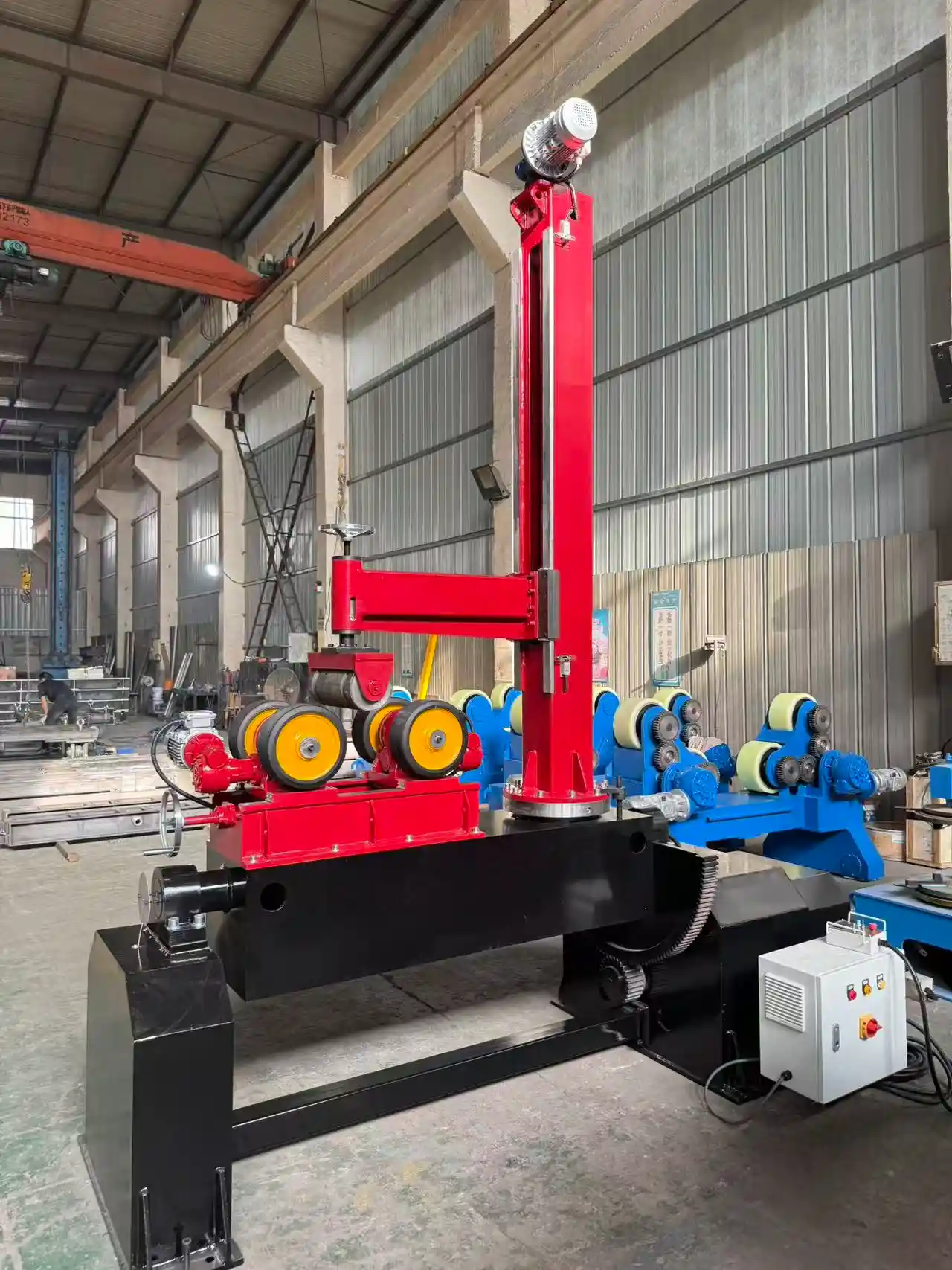
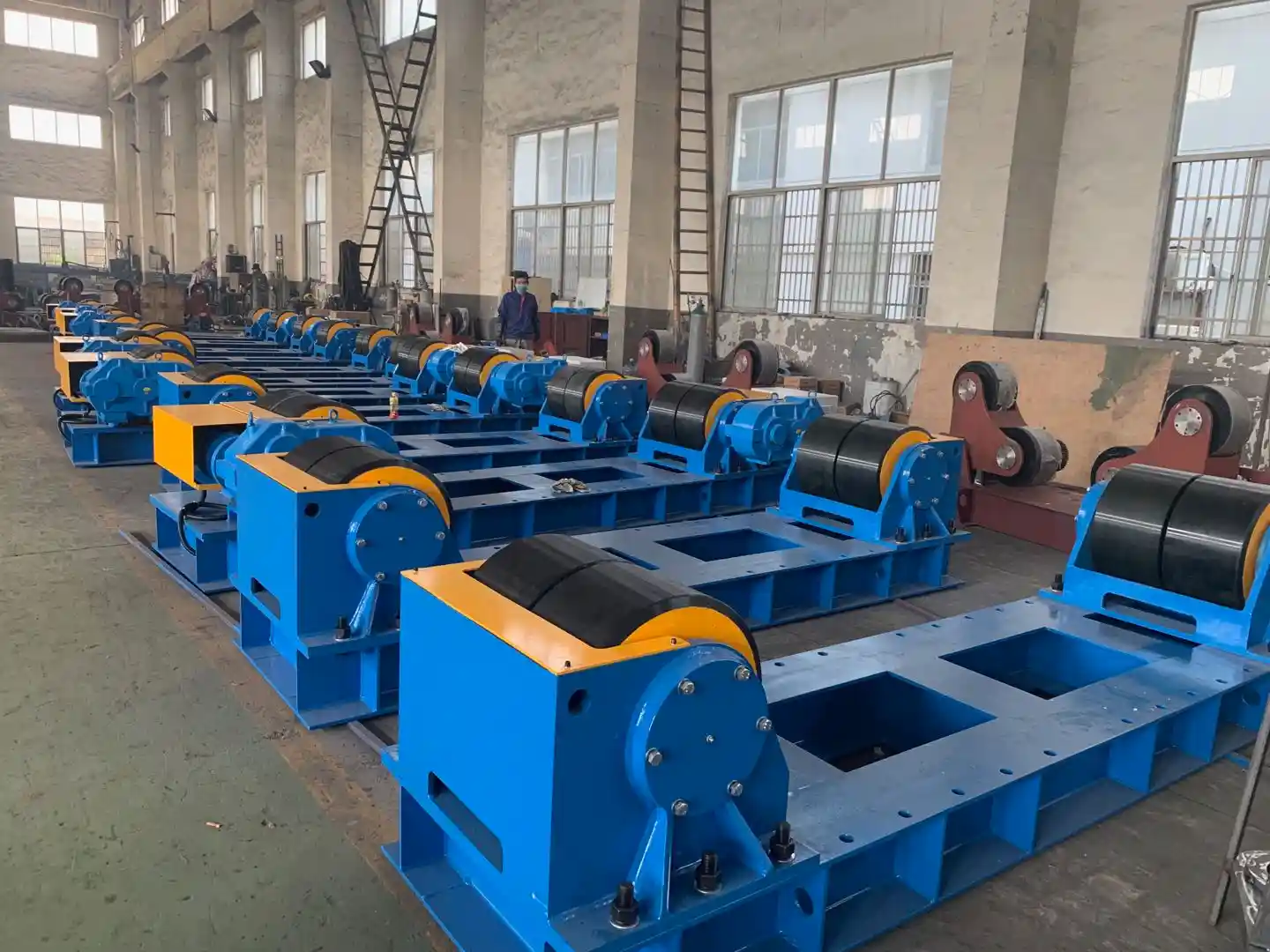
Welding manipulators like the LH8080 or LH4580 models position the welding torch with ±0.1 mm/m accuracy. Fit-up rotators, including the 10 Ton Heavy Duty Fit-Up Rotator, align pipe sections within ±0.5mm before welding begins. These specifications matter because small misalignments compound into major defects when you’re working with pipes measured in meters rather than inches.
Advanced Welding Technologies for Superior Pipe Quality
Submerged Arc Welding remains the workhorse for large diameter fabrication. High deposition rates and deep penetration make it the natural choice for thick-walled applications. Gas Metal Arc Welding fills in where SAW can’t reach or where the application demands more flexibility.
High-deposition processes push more weld metal per hour, which sounds simple until you realize how much that affects cycle times across thousands of welds. The technology matters, but so does the control. Precise parameter management keeps defects low and weld consistency high.
Recomendação de artigo: Se estiver interessado, consulte 《Obtenção de soldaduras perfeitas em tubos de grande diâmetro com equipamento de laminagem profissional》.
Optimizing Production Through Automation and Control
Manual welding on large diameter pipes creates variability that shows up in inspection reports. Automation removes that variability by executing the same parameters every time, regardless of shift changes or operator fatigue.
Robotic welding systems handle repetitive tasks with consistency that human welders can’t match over extended production runs. Data acquisition systems track performance in real time, flagging deviations before they become scrapped product. The combination of execution precision and monitoring capability changes what’s possible in terms of both volume and quality.
How Automation Improves Efficiency and Quality in Large Diameter Pipe Production
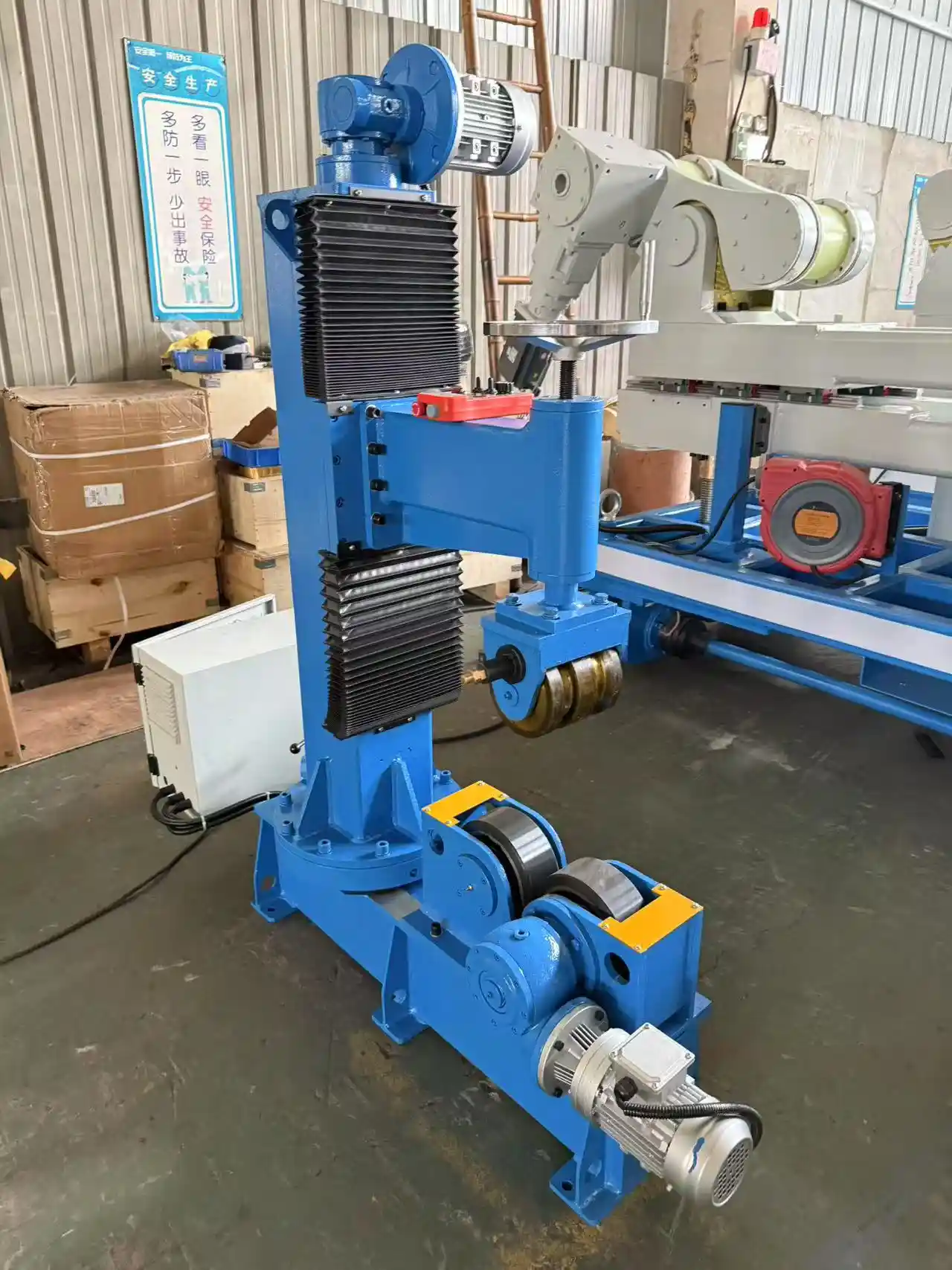
Automated systems using Manipulador de soldadura e Posicionador de 3 eixos equipment maintain consistent weld parameters across every joint. The LH8080 manipulator’s ±0.1 mm/m positioning accuracy translates directly into seam tracking that stays on target.
Fewer manual touches mean fewer opportunities for error. Consistent parameters mean predictable outcomes. Real-time monitoring catches problems early enough to fix them without scrapping material.
| Automation Benefit | Impact on Efficiency | Impact on Quality |
|---|---|---|
| Reduced Labor | Lower operational costs | Consistent weld parameters |
| Increased Speed | Higher production throughput | Minimized human error |
| Consistent Parameters | Predictable cycle times | Superior weld integrity |
| Real-time Monitoring | Proactive issue resolution | Early defect detection |
| Minimized Downtime | Enhanced operational continuity | Reduced rework rates |
Addressing Challenges in Large Diameter Pipe Fabrication
The physics of large diameter pipes create problems that don’t exist at smaller scales. Thermal distortion behaves differently when you’re heating sections that weigh tons. Fit-up tolerances that seem generous on paper become difficult to hold when the pipe itself wants to move.
Material handling alone becomes a specialized discipline. Moving heavy sections safely while maintaining alignment requires equipment designed specifically for the task.
What Are the Common Challenges in Welding Large Diameter Pipes and How Are They Overcome
Precise fit-up becomes harder as diameters increase. Thermal distortion wants to pull joints out of alignment during welding. Consistent penetration across thick walls requires careful parameter control. Heavy sections need handling systems that won’t damage the material or endanger workers.
Rotador de encaixe para serviço pesado systems deliver ±0.5mm alignment precision on pipes up to 6 meters in diameter. Welding manipulators with seam tracking maintain torch positioning throughout the weld cycle. Pre-heating and post-heating processes manage shrinkage and residual stress. Robust handling systems move sections safely without compromising accuracy.
Article Recommendation: For more insights, read 《Desalinhamento excessivo na soldadura de condutas: Solução de posicionamento de precisão com plataforma giratória da Wuxi ABK Welding》.
Integrating Auxiliary Systems for Comprehensive Solutions
Welding is the core process, but it’s not the whole story. Hydrostatic testing verifies that welds will hold under pressure. Beveling machines prepare pipe ends for optimal joint geometry. Coating preparation ensures surfaces are ready for corrosion protection.
Each auxiliary system supports a specific production need. Together, they create a complete manufacturing flow that handles pipes from raw material through finished product.
| Auxiliary System | Primary Function | Key Benefit |
|---|---|---|
| Hydrostatic Testing | Verifies weld integrity | Ensures structural safety |
| Pipe Handling Systems | Moves heavy pipe sections | Improves operational safety & efficiency |
| Beveling Machines | Prepares pipe ends for welding | Optimizes weld quality |
| Coating Preparation | Cleans/treats surfaces | Enhances corrosion resistance |
| Shot Blasting Equipment | Surface cleaning | Improves coating adhesion |
Future Trends in Large Diameter Pipe Welding Technology
Industry 4.0 principles are finding their way into pipe fabrication. Machine learning algorithms analyze weld data to predict maintenance needs before equipment fails. Real-time quality control systems catch defects that human inspectors might miss.
Energy efficiency is becoming a design priority rather than an afterthought. Additive manufacturing shows promise for specialized components where traditional fabrication methods struggle. The direction is clear: smarter systems, tighter integration, and better resource utilization.
Partner with WUXI ABK for Advanced Pipe Welding Solutions
WUXI ABK MACHINERY CO., LTD has been building welding equipment since 1999. Our engineering team designs complete welding lines around specific production requirements, matching equipment capabilities to actual manufacturing needs.
Contact us to discuss your project. Email jay@weldc.com or call +86-13815101750.
Frequently Asked Questions About Large Diameter Pipe Welding Lines
What are the key components of a complete welding line for large diameter pipes?
A complete line includes plate edge milling machines, pre-welding machines, internal and external submerged arc welding machines, Manipulador de soldadura, Fornecedores de rotadores Fit-Up, and auxiliary equipment like hydrostatic testing units and pipe handling systems. These components work together from plate preparation through final weld verification.
How does automation improve efficiency and quality in large diameter pipe production?
Automation reduces manual labor, increases welding speed, and minimizes downtime through precise control. Automated systems maintain consistent weld parameters, reduce human error, and enable real-time monitoring. The result is repeatable weld integrity with higher throughput and fewer defects.
What are the common challenges in welding large diameter pipes and how are they overcome?
Challenges include precise fit-up, thermal distortion management, consistent penetration on thick walls, and heavy section handling. Solutions involve advanced Fornecedores de rotadores Fit-Up, welding manipulators with seam tracking, pre-heating and post-heating processes, and robust material handling systems integrated into the complete welding line.
What types of industries benefit most from a complete large diameter pipe welding line?
Oil and gas pipeline construction, infrastructure projects for water and sewage, power generation facilities, and heavy fabrication operations all benefit. Any application requiring efficient, high-quality production of large diameter pipes for critical service will find integrated welding lines valuable.
Can WUXI ABK customize a welding line for specific pipe dimensions and materials?
Yes. Our engineering team designs welding lines to match specific pipe diameters, wall thicknesses, material types including carbon steel and stainless steel, and production capacity requirements. Custom configurations ensure the equipment fits the actual manufacturing need.
 English
  Español
  Français
  Deutsch
  Português
  Русский