Tank welding equipment specifications start with two numbers that are easy to state but hard to apply: maximum shell diameter and maximum seam length. Buyers often compare those values across suppliers without checking whether the rotator can keep roller contact stable at the low end of the diameter range, or whether the welding manipulator can reach every seam on the longest shell in the program. In tank fabrication line work, the errors I see most come from a vessel inside the published diameter range but outside the practical load distribution window. This article explains how to read diameter and length capacity together with shell weight, roller geometry, and manipulator reach so the line you specify matches the tanks you build.
Tank Welding Equipment Specifications for Diameter and Shell Weight
A diameter rating by itself tells you almost nothing about whether a rotator will hold a shell. The load that matters is the combination of shell diameter, plate thickness, total length, and any internals already fitted. For a given rotator capacity, the maximum vessel diameter is usually quoted with the shell carried on two roller beds at a defined position. A shorter shell of the same diameter can concentrate more weight on each roller, while a longer shell may need a second idler set to keep deflection and edge load under control.
Before we quote a tank welding line, we ask for the largest shell weight at fit-up and after internals, not just the empty shell. That distinction changes the required rotator capacity more than the diameter figure does. A vessel that weighs one figure empty can rise well above that number when nozzles, saddles, and internal trays are fitted. If the rotator is sized to the empty weight, the drive and rollers may be undersized when the shell is at full mass.
Welding Rotator Capacity Ranges for Tank Diameters
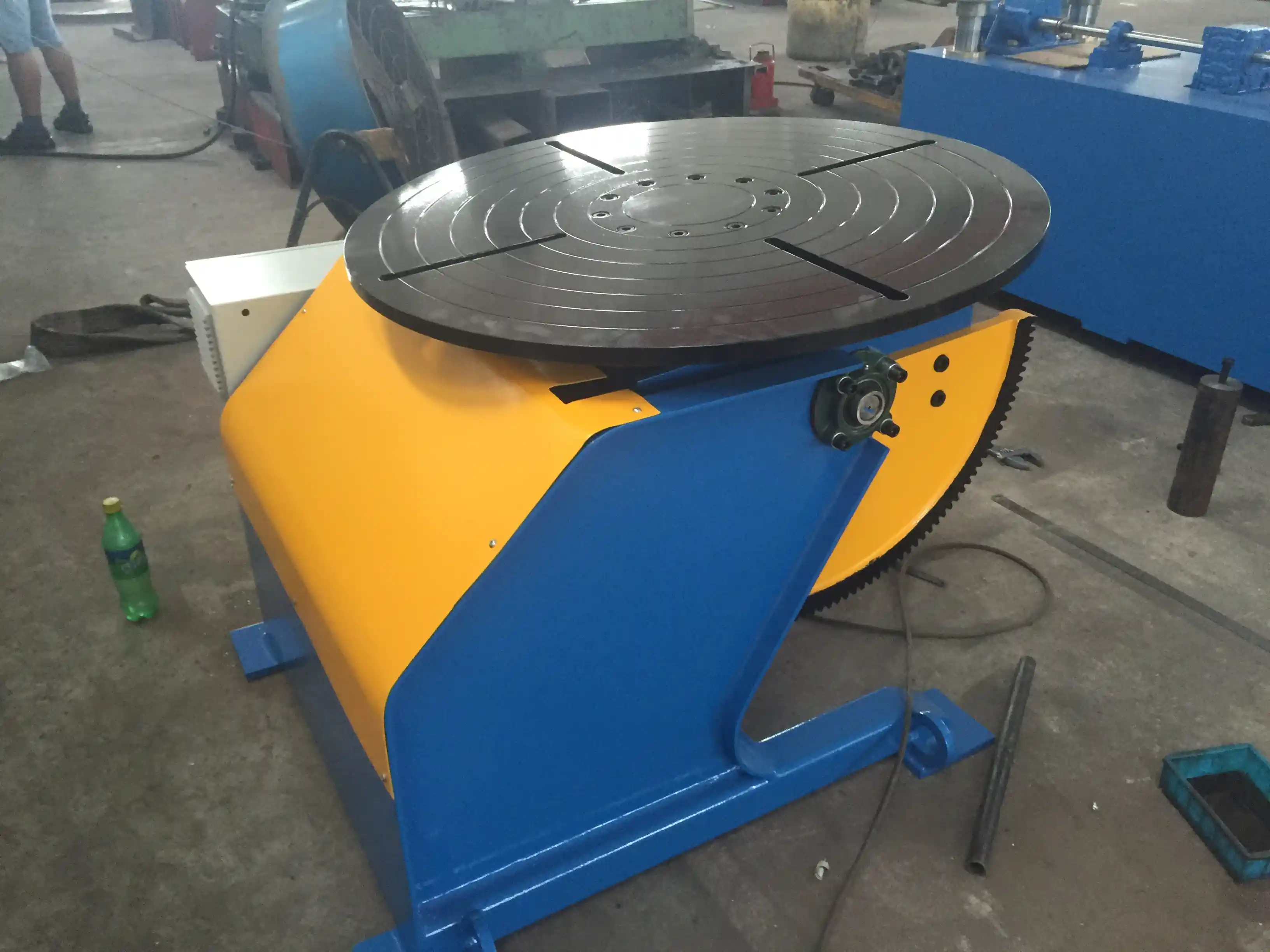
The WUXI ABK standard and adjustable rotator series shows why diameter range and load capacity have to be evaluated together. A 10-ton HGZ-10 covers 320 to 2800 mm vessel diameters. A 60-ton HGK-60 covers 500 to 5000 mm. A 300-ton HGK-300 extends to 6000 mm. The higher load rating does not automatically mean the rotator handles every small shell; the minimum roller spacing and wheel width set the lower practical limit.
| Rotator Model | Load Capacity | Vessel Diameter Range | Typical Tank Application |
|---|---|---|---|
| HGZ-10 | 10 t | 320 to 2800 mm | Small tanks, shop-built vessels, pipe spools |
| HGZ-30 | 30 t | 530 to 3700 mm | Mid-size storage and process tanks |
| HGK-60 | 60 t | 500 to 5000 mm | Large storage tanks and heavy cylinders |
| HGK-300 | 300 t | 1000 to 6000 mm | LNG, pressure vessel, and offshore tank shells |
These ranges come from the product library figures. They are starting points, not an automatic fit. The roller width and center distance have to be checked when the vessel diameter falls near either end of the range.
Vessel size and rotator capacity solve only part of the positioning problem. <Achieving Perfect Welds on Large-Diameter Pipes with Professional Rolling Equipment> covers why roller contact pressure and circumferential speed control matter more than the quoted diameter rating once a shell is under load.
Welding Manipulator Reach and Seam Travel for Long Tank Shells
A tank shell length is handled by the welding manipulator and the way it travels along the vessel. The horizontal reach of the boom, not the vertical lift alone, limits the seam length it can cover from one position. WUXI ABK LH3040 has 3000 mm horizontal travel and 4000 mm vertical travel. LH8080 has 8000 mm of both. LH1235 is the compact option at 1200 mm horizontal travel and 3500 mm vertical travel. For a tank that is 6 m long, LH8080 can cover the shell only if the column is placed close enough to the seam and the rotator can rotate the shell steadily.
Vertical travel matters when the vessel is large and the operator needs to weld above the centerline. A manipulator with 8000 mm vertical travel handles girth seams on tall vessels better than one sized only for the upper pass. For long shells, we add rail travel or use a gantry arrangement so the manipulator does not need to be repositioned by crane. The specification to confirm is not only boom reach but column stroke, rail length, and working height from the vessel centerline.
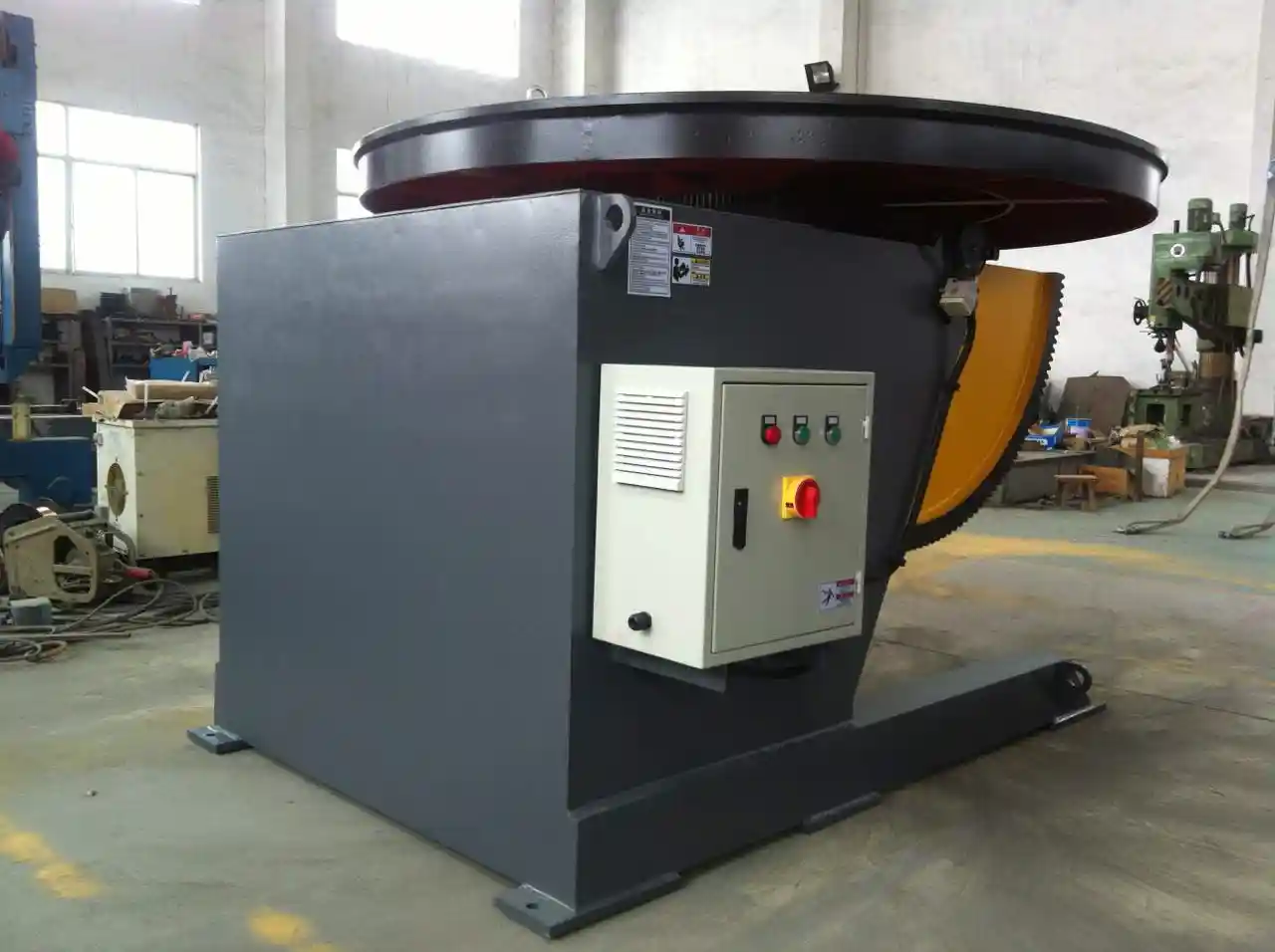
Tank work rarely stops at the rotator. <Improving Quality and Efficiency in Tank and Pressure Vessel Manufacturing: The Core Application Value of Positioners> explains how positioner selection interacts with fit-up access and weld pass consistency, both of which change when the shell diameter crosses a certain threshold.
If your program includes a shell longer than 8 m or a vessel diameter under 1200 mm, it is worth confirming roller spacing and boom reach before you finalize the bill of materials. Send your maximum shell length and vessel range to jay@weldc.com and we can check the configuration against the rotator and manipulator you are considering.
Tank Welding Equipment Capacity Table by Vessel Size
After we combine rotator capacity, manipulator reach, and shell length, the specification challenge becomes one of matching the entire line to the vessel range. The following is a conservative starting matrix used for tank shop planning.
| Vessel Diameter Range | Rotator Capacity | Manipulator Reach | Shell Length Coverage |
|---|---|---|---|
| 250 to 1000 mm | 5 to 10 t | LH1235 or LH3040 | Up to 3 m |
| 1000 to 2500 mm | 20 to 30 t | LH3040 or LH5060 | Up to 5 m |
| 2500 to 4000 mm | 60 to 100 t | LH5060 or LH8080 | Up to 8 m |
| 4000 to 6000 mm | 100 to 300 t | LH8080 with rail travel | Over 8 m with extra idlers |
This matrix is a planning reference, not a final design. Each line still requires a load distribution check because tank shells with the same diameter and length can vary widely in plate thickness and internal structure.
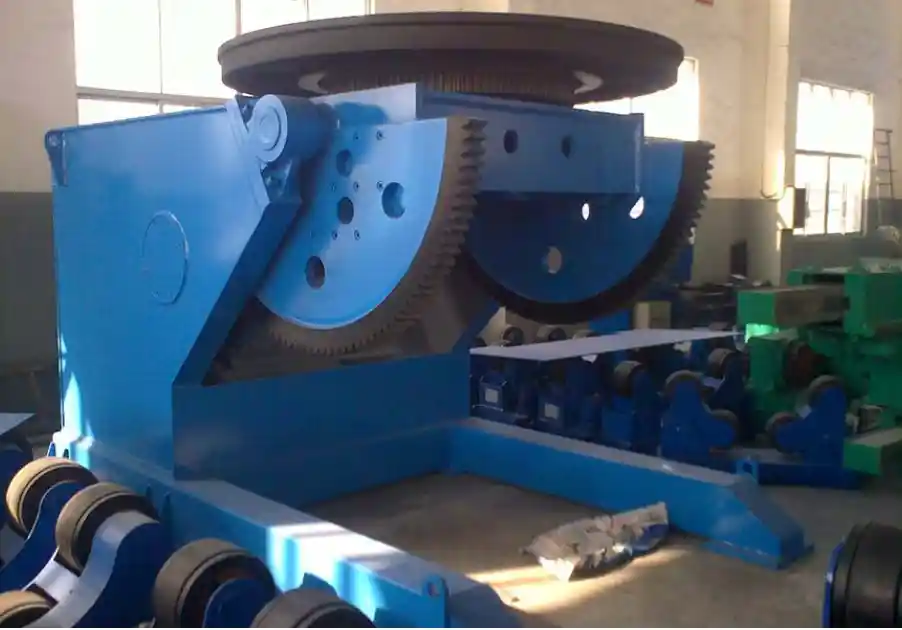
For longer production runs, the issue is not just capacity but how the line stays stable across shifts. <Pipe Rotators and Turning Rolls: Essential Equipment for Modern Pipeline Fabrication> covers idler spacing and creep control, both of which become more important when a tank shell moves above 4 m in diameter.
Confirming Diameter and Length Ratings Before You Finalize the Line
Most capacity specification errors do not appear during the first weld. They show up when the vessel is near the minimum diameter, the shell is fully fitted out, or the manipulator has to be moved more often than the production plan assumed. That is why we treat diameter and length capacity as a system check rather than two separate catalog values.
If your tank range crosses a rotator size boundary, or the longest shell falls just beyond a standard boom reach, the safer step is to verify the complete configuration against the actual vessel schedule. Share your maximum shell diameter, maximum seam length, shell weight before and after internals, and the welding process you intend to run. We will check the rotator, idler layout, manipulator reach, and drive size against those inputs and return a recommended equipment pairing.
Send the vessel data to jay@weldc.com or call +86-13815101750. That one step is faster than accepting a catalog rating that works on paper but not on the shop floor.
Common Questions About Tank Welding Equipment Specifications
Can one welding rotator handle both an 800 mm tank and a 5 m vessel?
It depends on the roller bed configuration and the load at the small end. A rotator rated for 5000 mm maximum diameter may not sit cleanly under an 800 mm shell because the rollers are spaced too far apart, so the shell loses stable contact and can climb or slide during rotation. If the shop runs a wide mix, the better setup is usually two rotators or a variable-center model with a documented minimum diameter that matches the smallest vessel. Check the minimum diameter and wheel spacing before accepting the maximum rating as the full working range.
Does a larger tank diameter always require a higher rotator capacity?
Not always. A 4 m diameter vessel made from 6 mm plate may weigh less than a shorter 2 m vessel made from 25 mm plate with heavy internals. Capacity selection has to follow weight and center of gravity more than diameter alone. Diameter matters for roller geometry and rotation speed, but the drive and frame rating are set by total load. We often size one capacity up when the vessel will be rotated with all attachments fitted, because that operating condition is heavier than the empty shell the catalog rating usually assumes.
What length capacity should I specify for a welding manipulator?
Specify the longest continuous seam you need to weld from one column position, then add the distance the column must travel and the working height. The boom horizontal travel is the most useful number, more than the nominal machine length. For shells that call for girth seams at several positions, the column stroke or rail length has to cover the distance between the end seams without a crane move. If the manipulator has 8000 mm horizontal travel and the rail travel matches the vessel length, the combination covers a long tank efficiently.
What specification mistake appears most often in tank welding lines?
In project work I have reviewed, the most common error is selecting the rotator by empty shell weight and the manipulator by shell length alone. That leaves no margin for internals, weld metal, or the occasional oversized nozzle reinforcement. The result is a line that performs during the first trial and then stalls on the heavy production shell. We ask for maximum loaded shell weight, the smallest and largest diameter, and the longest seam before quoting. Share your vessel schedule and welding process at jay@weldc.com and we will confirm the appropriate diameter and length configuration.
If you’re interested, check out these related articles:
Wind Tower Welding Problems Again: How Intelligent Growing Line Rotators Boost Productivity by 50%
Revolution in Ship Welding: How Welding Positioners Improve Quality and Efficiency
 English
  Español
  Français
  Deutsch
  Português
  Русский