Walking through a factory in Jiangsu or reviewing a line-up of German positioners, the question a buyer faces is rarely as simple as the headlines suggest. Chinese vs European welding equipment is no longer a story of “cheap and low quality” versus “expensive and flawless.” In the two decades I’ve spent designing and delivering automated welding systems, the difference has become more subtle and project-dependent. Chinese manufacturers now ship CE-certified manipulators, rotators, and welding positioners that hold tolerances within ±0.5° and incorporate Siemens PLC controls. European brands still lead in certain ultra-high-precision applications and long-term service infrastructure, but the price gap can be huge — and in many heavy fabrication projects, the Chinese equipment delivers comparable output at half the capital cost. This article compares welding equipment from both regions on quality, pricing, standards, and operational factors, drawing on real-world project data and engineering judgment.
How Welding Equipment Quality Compares Between the Two Regions
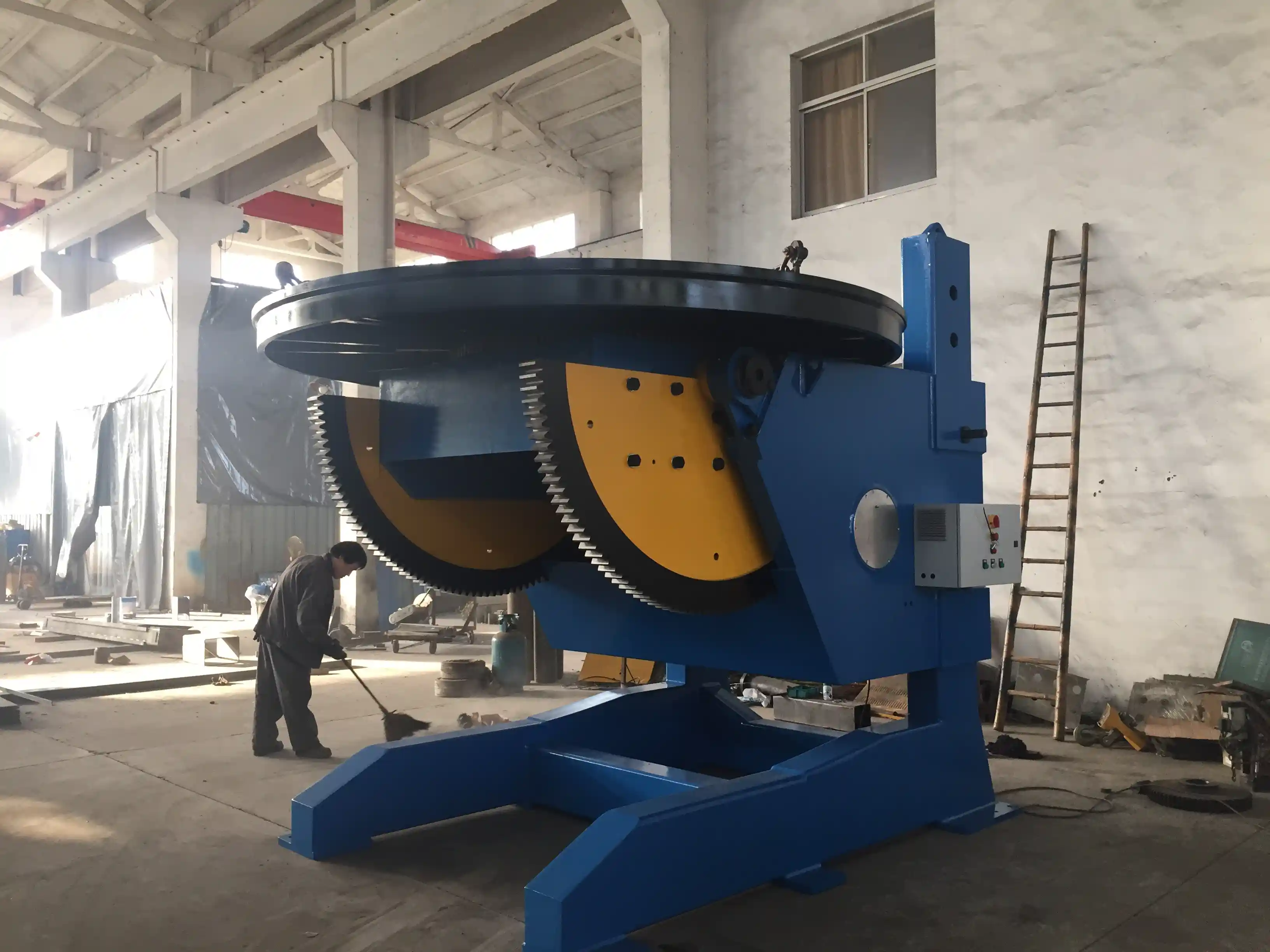
Fifteen years ago, the quality gap was wide and easy to spot. Chinese welding manipulators often used basic steel frames that warped under load, and motor controls were unreliable. Today, manufacturers including ourselves use stress-relieved Q235-A box structures, THK linear guides, and SEW reducers. A typical 5-ton positioner built in China now carries a ±0.5° rotation accuracy and IP54 protection, same numbers you find on many mid-range European models.
The difference is not in nominal specifications but in how those specs hold up over 10,000 hours of continuous use. European builders have longer histories with fatigue data, and their gearboxes often show less backlash after five years of single-shift operation. That said, in applications like wind tower flange welding or pressure vessel girth welding — where loads are predictable and the environment is controlled — Chinese positioners and rotators perform without measurable output loss compared to European equivalents. I’ve watched 30-ton ABK rotators handle tower sections with under 0.5 mm runout in a production shop running two shifts, six days a week.
The performance of positioners and rotators in heavy fabrication directly impacts weld quality. <Improving Quality and Efficiency in Tank and Pressure Vessel Manufacturing: The Core Application Value of Positioners> covers how properly specified positioning equipment reduces rework rates and improves first-pass yield, which is the metric that matters for any equipment purchase.
A Real Price Breakdown for Welding Equipment
The price difference is where the conversation gets practical. For a standard 5-ton rotator set, European pricing can range from USD 25,000 to USD 40,000 depending on options. Equivalent Chinese equipment from established manufacturers typically runs between USD 8,000 and USD 15,000. The table below shows approximate figures for common categories, based on recent project budgets I’ve been involved with.
| Equipment type | Chinese price (USD) | European price (USD) | Typical configuration |
|---|---|---|---|
| 5-ton standard rotator set | 8,000–15,000 | 25,000–40,000 | Two sets, manual adjustment |
| 20-ton adjustable rotator | 18,000–28,000 | 50,000–75,000 | Hydraulic lift, PLC control |
| 1-ton 3-axis positioner | 12,000–22,000 | 35,000–60,000 | Servo drives, robot interface |
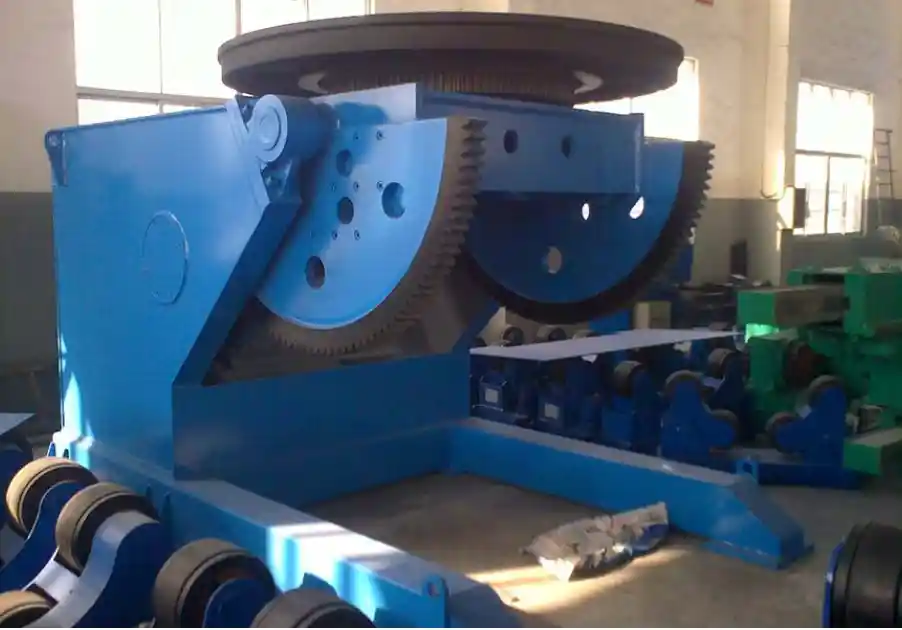
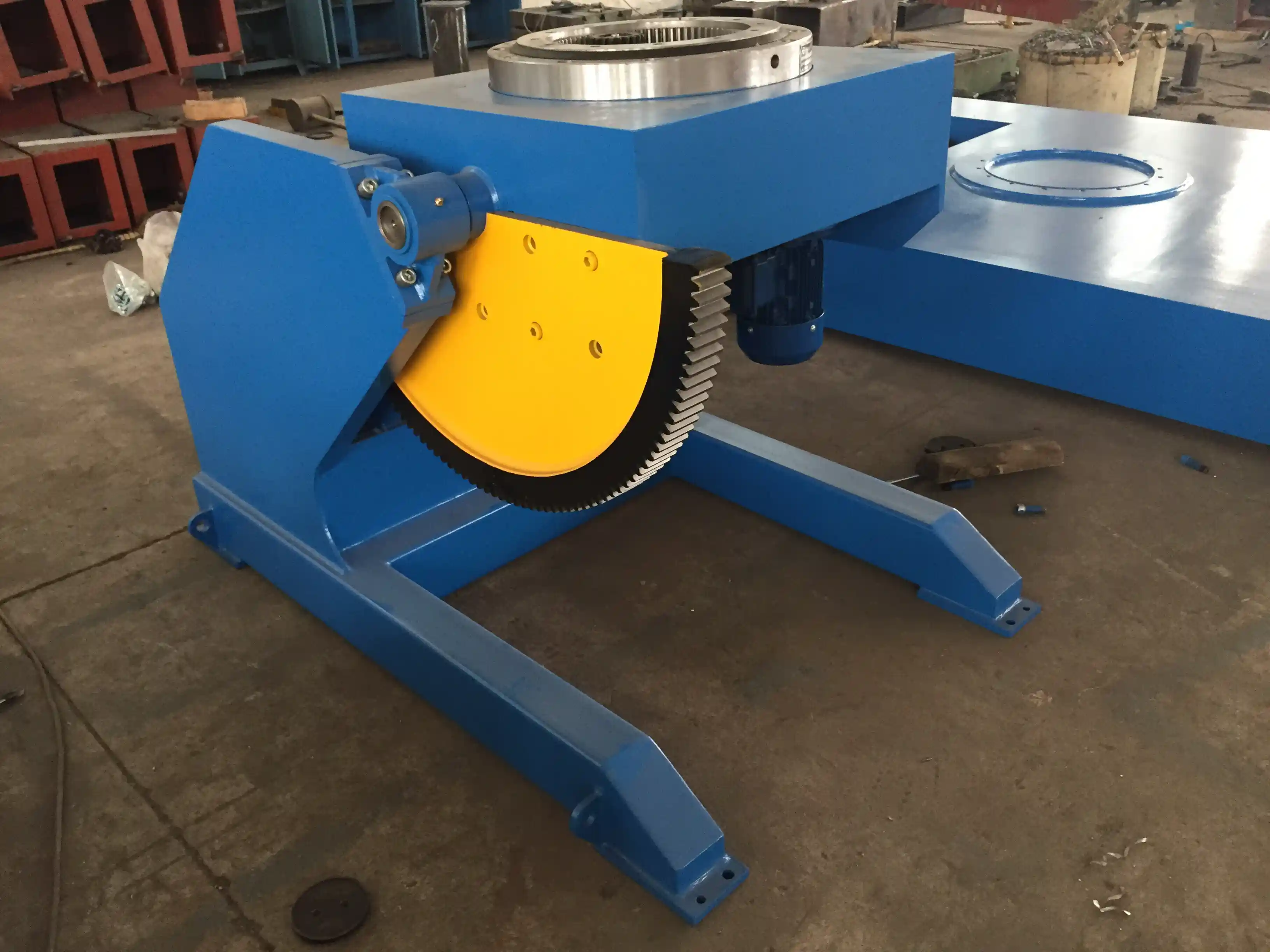
| 5-ton L-type positioner | 20,000–35,000 | 55,000–85,000 | Full tilt/rotate, Siemens PLC |
| 100-ton welding rotator | 60,000–90,000 | 150,000–250,000 | Heavy-duty steel, dual motors |
These numbers are not speculative — they reflect what procurement managers in Southeast Asia, Middle East, and Eastern Europe are paying. The multiplier is not always 3x, but for medium-to-heavy equipment it consistently lands between 2.5 and 3.5 times. European pricing includes costs for labor, certification overhead, and distribution networks. Chinese pricing benefits from a vertically integrated supply chain and high-volume steel purchasing, which lowers the base cost without cutting corners on core components like ZG45 cast steel rollers and Siemens controls we source from the same suppliers.
What CE, ISO, and Other Certifications Actually Guarantee
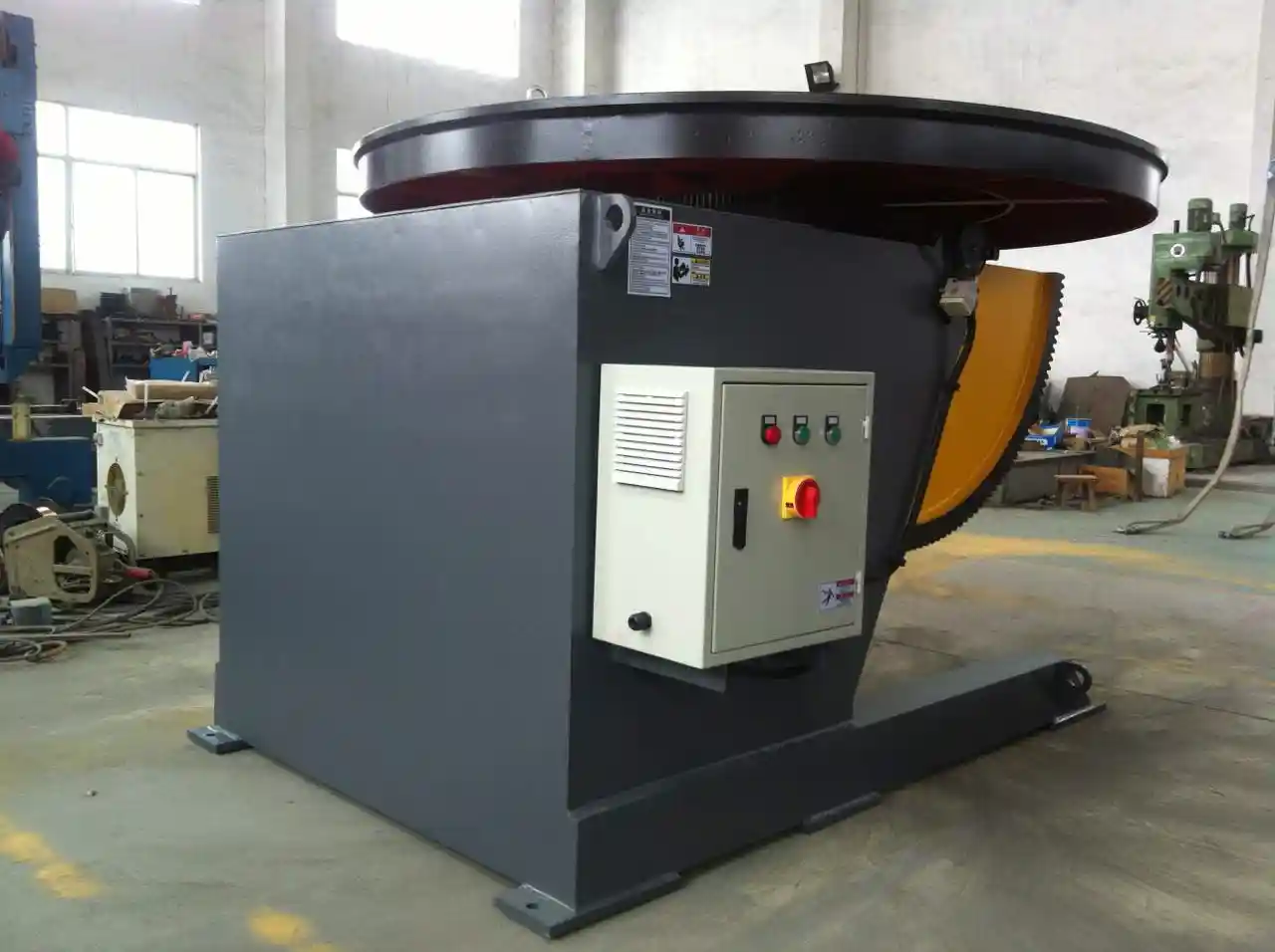
A common assumption is that a CE mark on a European positioner means safer, higher-quality equipment. CE is a self-declaration for many machinery categories, and it focuses on user safety, not performance longevity. Many Chinese welding equipment manufacturers now hold CE and ISO 9001 certifications and have their products audited by third-party bodies like TÜV Rheinland or SGS. The 1-ton fixed height positioner our factory ships carries CE Machinery Directive 2006/42/EC certification.
The more important standard for a buyer to check is ISO 3834 — the welding quality management standard — and whether the equipment supports compliance with codes like AWS D1.1 or ASME Section IX. European equipment is often supplied with full documentation packages that demonstrate code compliance out of the box. Chinese manufacturers can provide the same, but the buyer must specify the requirement in the purchase order because many factories still default to supplying the machine alone. I’ve seen projects where a European manipulator sailed through qualification while a Chinese equivalent required two additional weeks of documentation translation and factory audit support. The equipment itself met the technical requirements in both cases. That gap is shrinking as more Chinese exporters build compliance into their standard offering, but it still exists and should be part of the evaluation.
In wind tower production, the precision demands on positioners and roller stands can expose weaknesses in certification depth. <Core Pain Points and High-Precision Solutions of Welding Positioners in the Wind Power and Shipbuilding Industries: Comprehensive Technical Analysis> covers what to verify in a supplier’s quality documentation before accepting delivery, which avoids expensive requalification delays.
Lead Times, Customization, and What Happens After the Sale
Chinese manufacturers generally deliver faster. A standard 10-ton rotator set can ship in 4–6 weeks from a Chinese factory that stocks components. European lead times for the same category often run 10–14 weeks, and longer if customization is involved. For many procurement timelines, that difference alone closes the decision.
Customization is another factor that favors Chinese suppliers for many projects. We routinely adjust rotation speed ranges, table diameters, and control voltage to match existing shop infrastructure. European manufacturers offer customization too, but the cost adder and lead-time penalty are steeper because their production planning is more rigid. That said, if your project demands explosion-proof ATEX Zone 1 certification, dynamic load monitoring, or integration with a specific robotic welding cell from ABB or KUKA, European builders have deeper integration libraries and more tested safety architectures.
After-sales service is where European brands still hold an edge. If a manipulator fails in a remote location, a German or Italian supplier may have a local service partner within 300 km who can respond in 48 hours. Chinese factories typically provide remote support via video call and ship replacement parts by air freight — effective, but requiring on-site technical staff capable of guided repairs. I’ve handled after-sales issues for South American customers by walking their maintenance teams through bearing replacements over WeChat at 10 p.m. China time, and it works, but it is not the same as having a technician on site the next morning. For projects in locations with limited on-site technical resources, the European service network can justify a portion of the price premium.
Choosing Equipment by Project, Not by Region
The right comparison is not Chinese versus European — it is the specific equipment against the project’s requirements. Start with three questions. What is the tolerance that actually matters for your weld procedure? If you need ±0.05 mm positioning accuracy for robotic TIG on aerospace parts, European high-precision positioners have the track record. If your shop is welding carbon steel pressure vessels with SAW and needs ±0.5° accuracy, Chinese equipment from tested manufacturers meets that at a much lower cost.
Second question: what is your certification envelope? If the end customer accepts CE and ISO 9001 from a third-party-audited factory, specifying those certifications in the purchase order with a documentation requirement often resolves the compliance concern. Third: what is your service expectation? If you have a maintenance team that can handle basic troubleshooting and can accept 48-hour remote response, the price advantage of Chinese equipment is real. If you need guaranteed on-site service in under 24 hours, factor the European premium into your risk calculation.
In many recent projects spanning wind tower production, tank fabrication, and steel structure manufacturing across Asia and the Middle East, we’ve seen Chinese welding positioners and rotators performing alongside European manipulators in the same shop. The output differences, when measured by welds per shift and rework rate, are often negligible. The capital cost difference, however, is not.
Real-World Queries from Procurement Teams
Is Chinese welding equipment safe compared to European brands?
Safety-critical components — emergency stop circuits, overload protection, brake motors — are now standard on Chinese equipment from established manufacturers. We use IP54-rated control cabinets, anti-fall safety pins on manipulator booms, and conductive slip rings that prevent cable entanglement, all of which meet EU machine safety requirements. The difference is more about auditing. A European brand typically bundles third-party inspection reports, while with Chinese equipment the buyer often needs to request them explicitly. I’d recommend adding a factory witness test or third-party inspection clause to the purchase contract regardless of region.
How much cheaper is Chinese welding equipment really, after shipping and import duties?
For a 20-ton rotator set, even after container shipping (typically USD 1,500–3,000 depending on destination) and import duties averaging 5–10% for HS code 8468.80, the landed cost is still 40–55% below equivalent European equipment. Many buyers use Incoterms CIF to simplify comparison. The calculation changes for very small equipment where shipping forms a larger percentage, but for anything over one ton, the capital difference remains significant. I’ve run side-by-side landed cost calculations for multiple Middle East and Southeast Asia projects, and the pattern holds.
Which region offers better long-term support for welding automation equipment?
European brands win on local service presence, Chinese brands win on parts cost and remote response. A replacement gearbox for a European positioner can cost 3–5 times the Chinese equivalent and take weeks if not stocked locally. Our factory keeps common spare parts — rollers, bearings, VFDs — in inventory and ships via DHL within 48 hours globally. The real question is whether your maintenance team has the skill to install them, or if you need the field service that European distributors provide.
Do Chinese welding positioners integrate easily with European-made robots?
Yes, if specified at the order stage. We regularly ship positioners with interface protocols for ABB, KUKA, Fanuc, and Yaskawa controllers. The key is defining the communication standard (often EtherCAT or ProfiNET) and having the positioner’s PLC exchange I/O signals with the robot controller. The integration effort is comparable regardless of whether the positioner was made in Shanghai or Stuttgart — both require a commissioning engineer to map signals and tune the coordinated motion. If your robot integrator has never worked with Chinese positioners, budget an extra two days for unfamiliarity, but that is a one-time learning curve, not an ongoing compatibility problem.
When planning a production line, the layout and equipment integration often matters more than the origin of individual machines. <Welding Manipulators for Wind Tower Fabrication: Revolutionizing Production Efficiency> covers how mixing different equipment brands in a tower line can still achieve high throughput when the material flow is designed correctly.
What payment terms do Chinese welding equipment suppliers typically accept?
Most established Chinese manufacturers work with 30% deposit and 70% before shipment (T/T), and many now accept letter of credit at sight. Compared to European terms which are often net 30 or net 60 days after delivery, the Chinese payment structure shifts more cash upfront. That can affect project cash flow, but it also gives leverage to negotiate pricing. I’d advise any buyer to verify the supplier’s export history and bank reference before committing to a deposit, and to include a factory acceptance test milestone that triggers the final payment only after a successful trial run witnessed by your engineer or a hired inspector.
What Matters More Than Region
When you break down the component choices inside a welding positioner or a pipe rotator, the origin label matters less than the supply chain behind it. A Chinese positioner with a Siemens PLC, German linear guides, and an SEW gearbox is not a “Chinese” machine in any meaningful technical sense — it is a globally sourced assembly priced and supported from China. The same machine built and certified in Europe costs more because of labor rates, compliance overhead, and distribution margin, not because the welding is fundamentally better.
If your current project requires a standard manipulator or rotator set with known production loads and your end-user accepts internationally certified documentation, Chinese equipment offers a genuine capital advantage that can make a project viable on a tighter budget. For mission-critical applications in regulated sectors where failure carries safety or contractual penalties, the European premium buys a broader service net and deeper compliance paper trail that can be the safer choice. Either way, requiring a witnessed factory test, a clear documentation package, and a warranty that covers parts and remote support will protect the investment far more than relying on a flag.
WUXI ABK MACHINERY CO., LTD supplies welding manipulators, positioners, rotators, and CNC cutting machines to fabrication shops and EPC contractors in over 30 countries. If you are currently comparing equipment for a specific project and need a costed proposal that matches your weld procedure and technical requirements, send your part number, material specifications, and workspace constraints to jay@weldmc.com or call +86-13815101750. We will confirm configuration, pricing, and documentation availability before you commit to a purchase decision.
If you’re interested, check out these related articles:
Welding Manipulators for Wind Tower Fabrication: Revolutionizing Production Efficiency
How to Improve the Quality of Pipe Welding Through a High-Precision Welding Positioner
Pipe Welding Misalignment Issues: How Intelligent Welding Pipe Rotators Boost Oil Pipeline Pass Rates
Pipe Rotators and Turning Rolls: Essential Equipment for Modern Pipeline Fabrication
Wuxi ABK Professional Welding Rotary Equipment: Precision Welding Solution for Pressure Vessel Manufacturing
 English
  Español
  Français
  Deutsch
  Português
  Русский