Boiler manufacturing sits at the intersection of heavy fabrication and precision engineering. Getting it right means balancing throughput with quality, and that balance shifts constantly depending on what you’re building and how much of it. The equipment and workflow decisions made early in a project ripple through every stage afterward. What follows covers the practical considerations for integrating production systems that actually work on the shop floor.
How Integration Changes Production Dynamics
When equipment and workflow solutions come together properly, the effect on boiler manufacturing goes beyond simple efficiency gains. Production lines that minimize hand-offs between stations reduce the opportunities for error and delay. Automated material handling paired with robotic welding creates a rhythm that manual operations struggle to match.
The real value shows up in the details. Fewer bottlenecks mean predictable scheduling. Consistent cycle times make capacity planning less of a guessing game. Lean manufacturing principles work better when the underlying systems support them rather than fight against them. Workflow automation keeps quality from drifting as shifts change and fatigue sets in.
Welding Technologies That Shape Fabrication Quality
Welding quality determines boiler integrity. The equipment choices here carry consequences that show up years later in service life and maintenance costs.
Welding manipulators like the LH8080 model deliver 8000mm of horizontal and vertical travel with ±0.1 mm/m positioning accuracy. That level of precision matters when you’re dealing with pressure-bearing joints where small deviations compound into real problems. H beam welding lines handle structural components with the kind of repeatability that manual welders can approach on good days but can’t sustain across a full production run.
| Feature | Manual Welding | Automated Welding |
|---|---|---|
| Precision | Variable | High (±0.05 mm) |
| Speed | Slower | Faster |
| Consistency | Low | High |
| Defect Rate | Higher | Lower |
| Labor Cost | High | Lower |
| Material Usage | Variable | Optimized |
The 3-axis positioners in the 1-ton class achieve ±0.05 mm positioning accuracy with 0.02 mm repeatability. For complex geometries and critical weld joints, those numbers translate directly into fewer repairs and less rework. The equipment meets industry standards, but more importantly, it produces components that hold up under operating conditions.
If you are interested in how advanced welding manipulators can transform your production, read our article: 《Welding Manipulators for Wind Tower Fabrication: Revolutionizing Production Efficiency》.
Assembly Systems That Reduce Friction
Boiler assembly involves bringing together components that must align precisely and stay that way through fastening and welding operations. Automated systems handle this with a consistency that manual methods can’t replicate at scale.
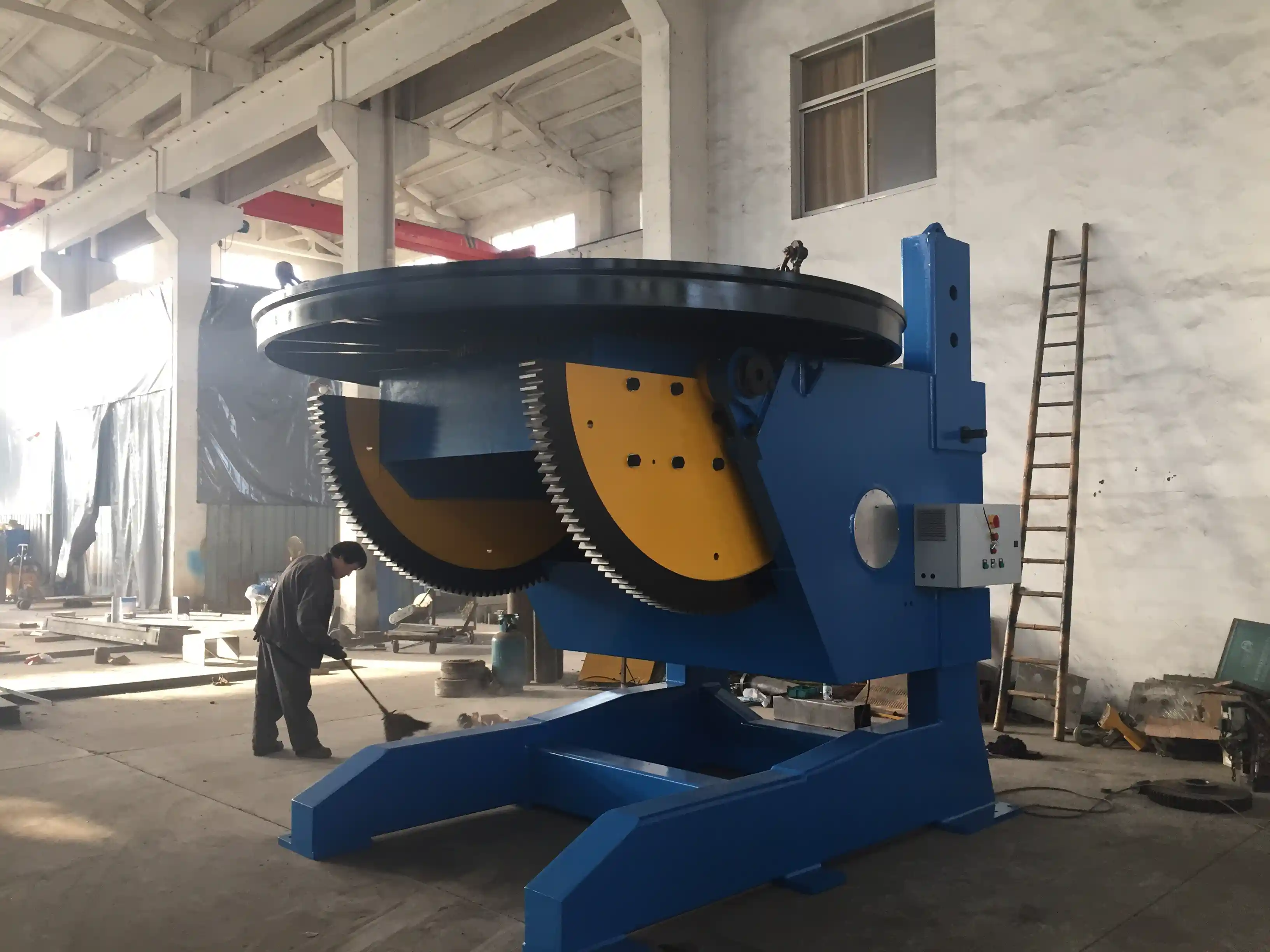
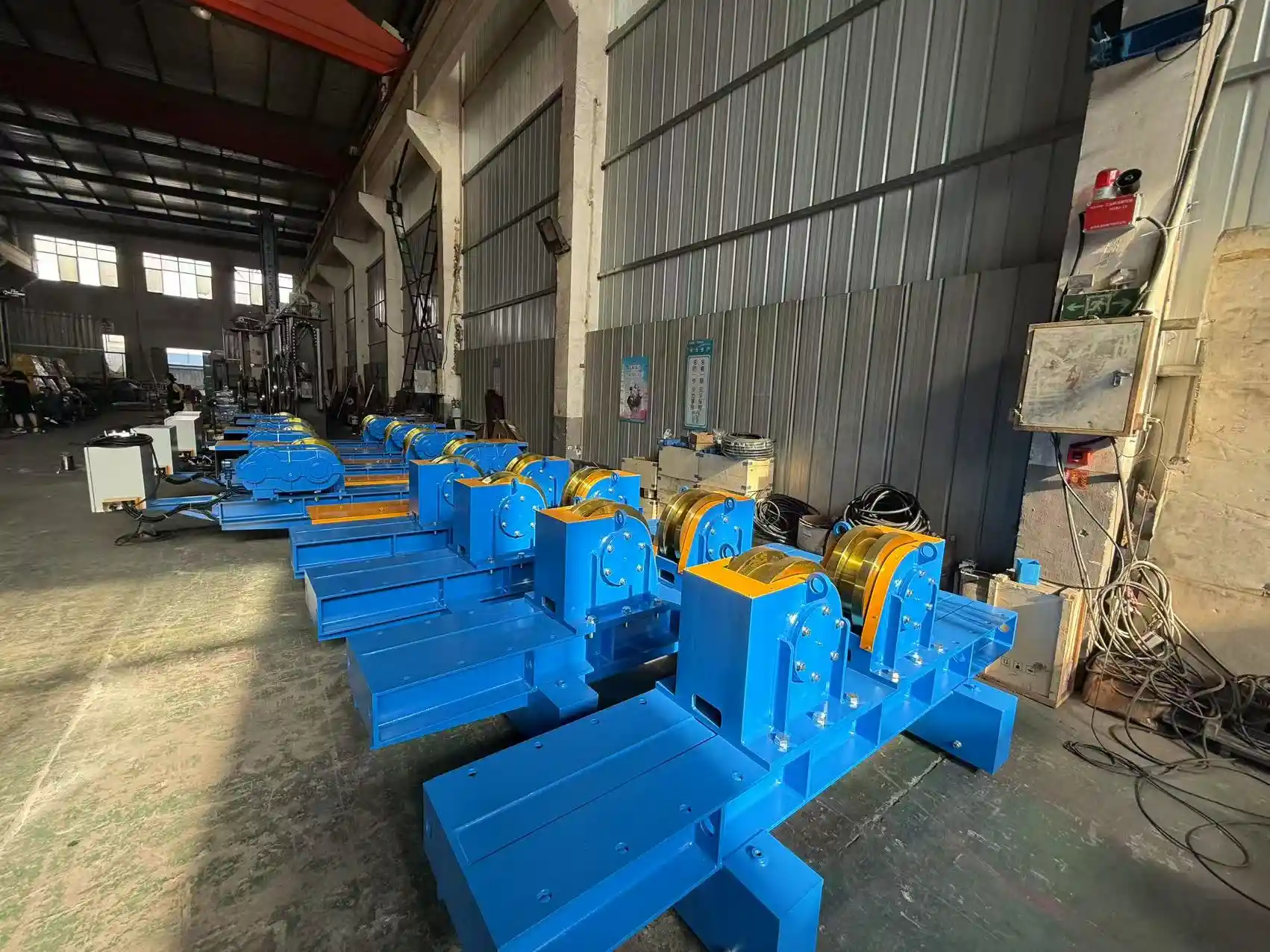
Robotic assembly cells execute the same motions thousands of times without the variation that comes from human fatigue or distraction. Welding positioners place components exactly where they need to be for subsequent operations. The result is higher throughput and shorter production times, but also fewer quality escapes that create problems downstream.
What Makes a Boiler Production Line Work Well
The components of an efficient line include automated cutting machines, precision welding stations, and material handling systems that keep work flowing. Fabrication stages cover forming, rolling, and bending operations before assembly stations bring components together. Quality control checkpoints throughout the line catch issues before they become expensive. Each element supports the others, and weakness in any one area affects the whole.
Quality Control and Regulatory Compliance
Boiler manufacturing operates under regulatory frameworks that don’t leave much room for interpretation. The equipment must support compliance, not just production speed.
| Quality Checkpoint | Method | Frequency |
|---|---|---|
| Material Inspection | PMI | Incoming |
| Weld Seam Integrity | UT/RT | Post-weld |
| Dimensional Accuracy | Laser | Pre-assembly |
| Pressure Testing | Hydro | Final |
| Visual Inspection | Manual | All stages |
Non-destructive testing integration verifies weld integrity and material soundness at points where problems would otherwise stay hidden until service. Systems with precise control and data logging capabilities create the audit trails that certification requires. Meeting global safety and performance standards isn’t optional, and the equipment either supports that or it doesn’t.
How Automation Affects Quality and Speed
Automated welding systems execute welds with consistent parameters. That consistency shows up as uniform quality across production runs. The precision minimizes defects and rework, which affects both quality metrics and production economics. Faster cycle times and continuous operation increase throughput. Error proofing mechanisms prevent mistakes that would otherwise require correction later.
We further explore how precision welding solutions enhance quality and speed in our article: 《Revolutionary Solution for Pressure Vessel Welding: Technical Analysis of 360-Degree Rotating Welding Positioners》.
Adapting Equipment to Specific Production Requirements
Different boiler types and production volumes require different equipment configurations. Standard solutions work for standard problems, but boiler manufacturing often involves neither.
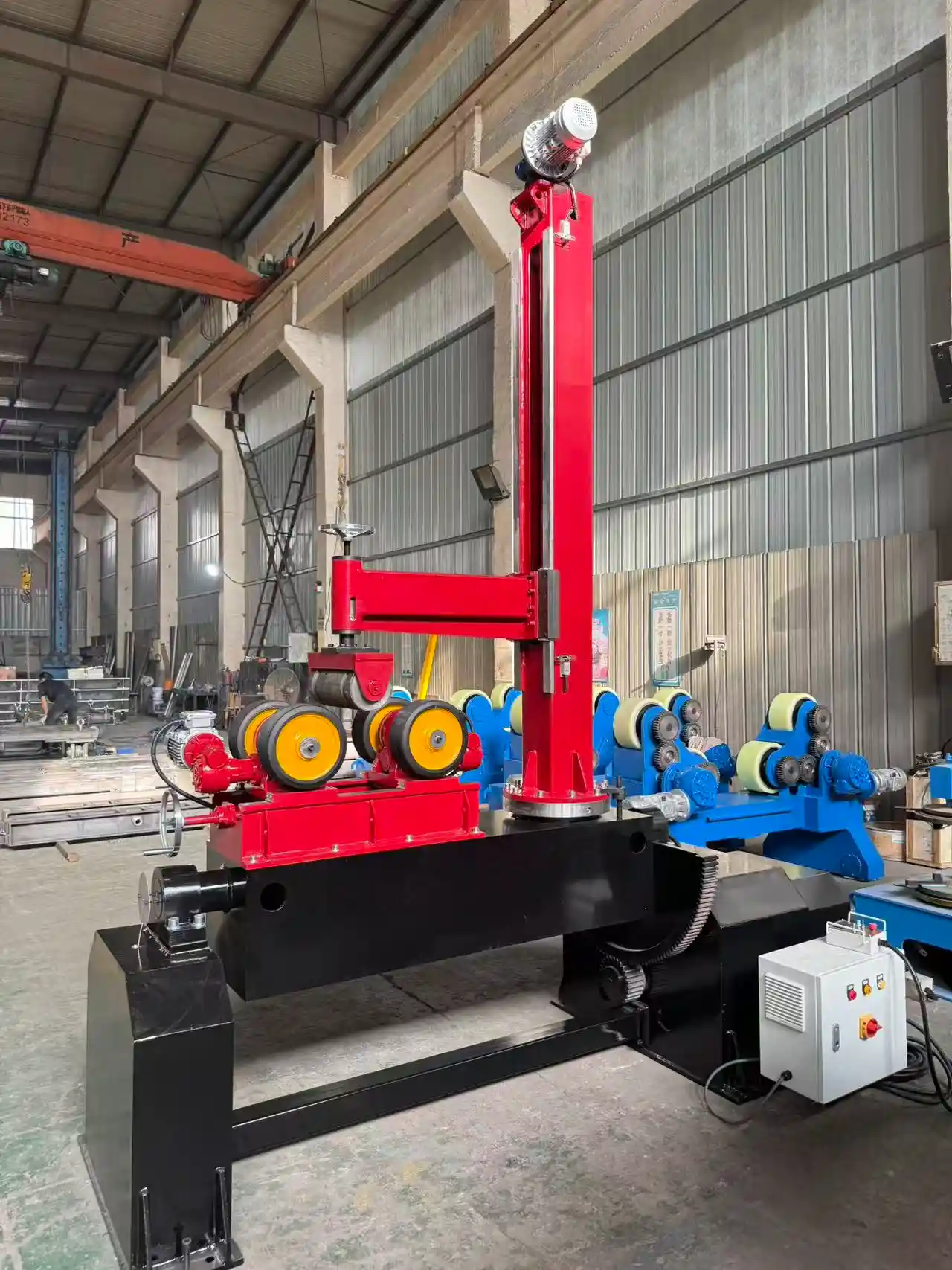
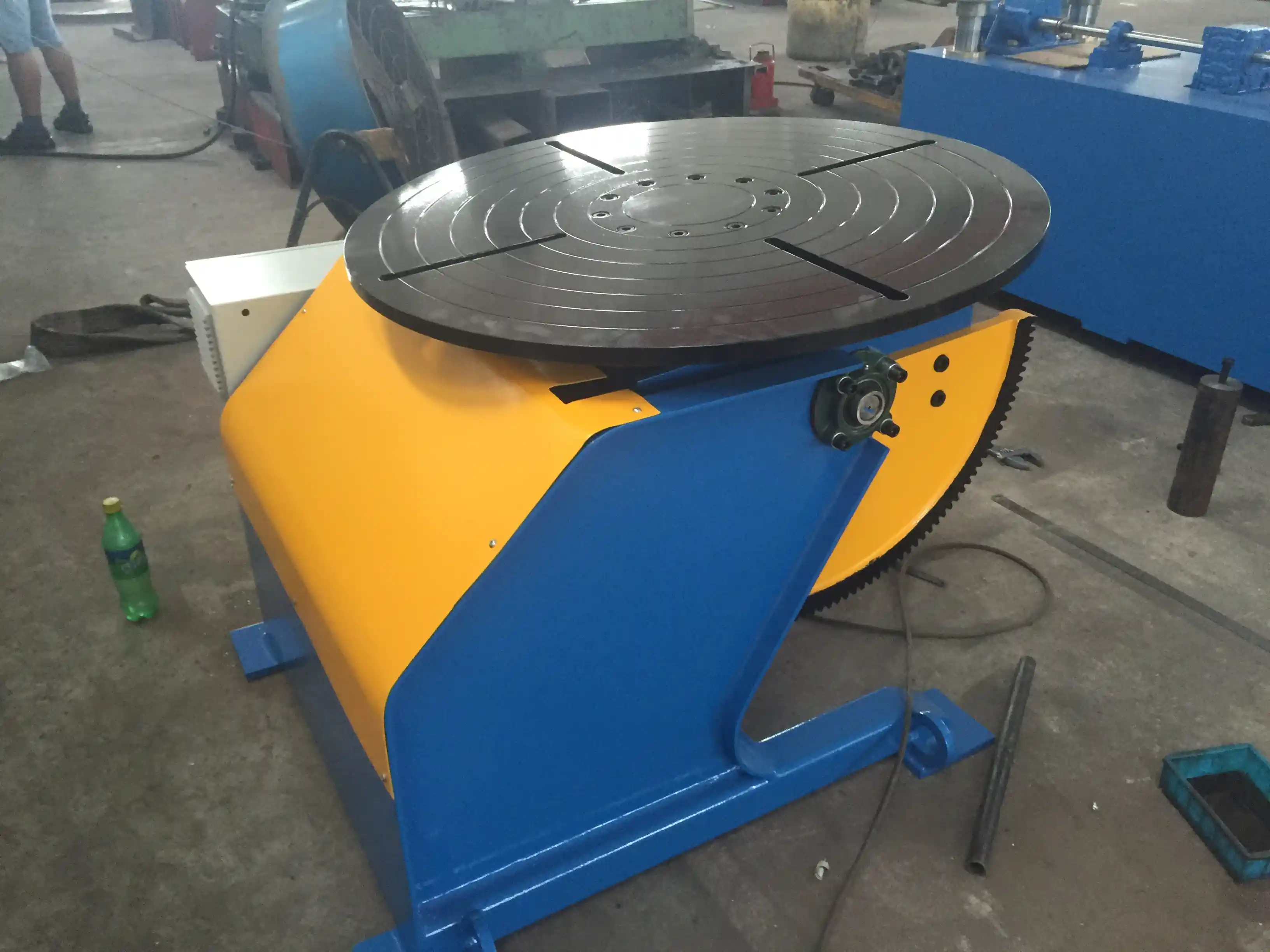
Welding manipulator models with various travel ranges and rotation capabilities accommodate different boiler sizes and designs. The 30 Tons Adjustable Height Positioner offers hydraulic lifting and AC frequency stepless speed control for applications that don’t fit standard configurations. Large pressure vessels and complex heat exchangers present challenges that require equipment adapted to their specific demands.
The collaboration between equipment supplier and manufacturer matters here. Understanding the actual production challenges leads to solutions that address real problems rather than theoretical ones.
Safety Standards in Modern Fabrication
ASME Boiler and Pressure Vessel Code and local regulatory requirements set the baseline. Industrial safety protocols cover ventilation, personal protective equipment, and machine guarding. Emergency stops, interlocks, and other workplace safety equipment must be integrated into machinery from the design stage. Regular safety audits and training programs maintain the working environment that regulations require and workers deserve.
Where Production Technology Is Heading
Industry 4.0 and smart manufacturing principles are changing what’s possible in boiler production. Predictive maintenance using IoT sensors and data analytics identifies potential equipment issues before they cause unplanned downtime. Real-time machine health monitoring supports maintenance scheduling that optimizes equipment availability.
Sustainable production practices focus on energy efficiency and waste reduction. Advanced robotics and AI-driven quality control systems represent the next generation of manufacturing capability. The technology continues to evolve, and staying current requires ongoing attention to developments that affect production economics and quality outcomes.
Working with WUXI ABK
WUXI ABK MACHINERY CO., LTD. provides integrated equipment and workflow solutions built for efficiency, precision, and reliability. The company has operated since 1999, developing expertise in welding and CNC cutting machines that applies directly to boiler production challenges. Contact information: Email: jay@weldc.com, Phone: +86-13815101750.
What Equipment Does WUXI ABK Provide for Boiler Production
WUXI ABK offers Welding Manipulators, precision welding positioners, H beam welding lines, and pipe welders. The equipment integrates into manufacturing workflows to support boiler fabrication across various production stages.
How Do These Solutions Affect Manufacturing Efficiency
Integrated workflow solutions and automated welding equipment reduce manual labor, increase welding speed and accuracy, and minimize material waste. Consistent quality across production stages leads to higher throughput and reduced operational costs.
Can WUXI ABK Handle Unique Production Requirements
Custom equipment and workflow solutions address specific boiler production challenges. The collaborative approach to understanding client requirements leads to setups optimized for specialized fabrication processes.
 English
  Español
  Français
  Deutsch
  Português
  Русский