
Welding H-beams sounds straightforward until you pull one off the jig and find a crack running through what should have been a clean pass. That moment—staring at a defect you didn’t catch in time—sticks with you. It changes how you approach every joint afterward. The reality is that H-beam welding defects show up in predictable patterns once you know what to look for, and most of them trace back to a handful of controllable factors. Getting ahead of these problems means understanding not just what goes wrong, but why it happens and how to build prevention into your process from the start.
How H-Beam Welding Defects Undermine Structural Performance
H-beam welding defects do more than create visual blemishes. They compromise load-bearing capacity, accelerate fatigue failure, and drive up fabrication costs through rework and rejected assemblies. Some estimates put defect-related rework at a substantial percentage of total fabrication expenses—enough to justify serious investment in prevention.
The challenge is that many defects hide beneath the surface or develop after the weld cools. Catching them early requires knowing what you’re dealing with and where to look.
Porosity Weakens Load-Bearing Capacity
Porosity forms when gas gets trapped in the weld pool during solidification. The result is small spherical voids or elongated wormholes scattered through the weld metal. Each void reduces the effective cross-section carrying the load, which directly impacts both static strength and fatigue resistance.
The gas usually comes from somewhere specific: inadequate shielding coverage letting atmosphere contaminate the arc, moisture absorbed into flux or wire, or surface contaminants on the base metal vaporizing under heat. Tracking down the source matters because porosity tends to repeat until you fix the underlying cause.
Undercutting and Lack of Fusion Create Stress Concentrations
Undercutting shows up as a groove melted into the base metal along the weld toe that never gets filled with filler. It happens when arc voltage runs too high or travel speed pushes past what the puddle can handle. The groove acts as a notch, concentrating stress at exactly the wrong location and reducing effective joint thickness.
Lack of fusion is harder to spot because it often hides at the root or between passes. The weld metal sits against the base metal or previous bead without actually bonding to it. Insufficient heat input, poor joint preparation, or rushing the travel speed all contribute. Both defects create weak points that fail under loads the joint should easily handle.
Cracking and Slag Inclusions Raise Brittle Fracture Risk
Cracking represents the most serious category of H-beam welding defects. Hot cracks form during solidification when the weld metal can’t accommodate shrinkage stresses. Cold cracks appear hours or even days after welding, often driven by hydrogen that migrated into the heat-affected zone and embrittled the steel.
Slag inclusions trap non-metallic material within the weld—usually from incomplete cleaning between passes or flux that didn’t float to the surface properly. Like cracks, inclusions act as stress risers that can initiate fracture under cyclic loading.
| Defect Type | Common Causes | Visual Characteristics | Impact on Quality |
|---|---|---|---|
| Porosity | Inadequate gas shielding, moisture | Small holes, surface bubbles | Reduced strength, fatigue life |
| Undercut | High arc voltage, fast travel | Groove at weld toe | Stress concentration, reduced thickness |
| Lack of Fusion | Low heat input, poor preparation | Unbonded areas, incomplete penetration | Weak joint, potential for failure |
| Cracking | High stress, hydrogen, rapid cooling | Fine lines, surface or internal | Brittle fracture risk |
| Slag Inclusion | Incomplete slag removal, improper flux | Irregular non-metallic particles | Stress points, reduced ductility |
Why H-Beam Welding Defects Keep Showing Up
Preventing H-beam welding defects starts with understanding where they come from. Most trace back to three interconnected areas: material condition, process parameters, and human or environmental factors. Statistical breakdowns consistently show that parameter deviations account for a large share of defect occurrences.
Material Condition Sets the Baseline
The steel itself matters more than many fabricators realize. Variations in composition between heats, surface contamination from mill scale or cutting oils, and joint geometry that doesn’t match the procedure all create conditions where defects become more likely.
Proper material preparation—cleaning surfaces thoroughly, cutting bevels to specification, verifying fit-up before striking an arc—eliminates many defect sources before welding even begins. Skipping these steps to save time usually costs more in rework than the time saved.
Process Parameters Control Weld Formation
Arc voltage, wire feed speed, travel rate, and shielding gas flow all interact to determine how the weld pool behaves. Running too hot causes undercutting and excessive penetration. Running too cold leaves lack of fusion and incomplete fill. Inconsistent travel speed creates irregular bead profiles and varying penetration depth.
The relationships aren’t always intuitive. Higher voltage increases arc length and heat input but also widens the arc cone, which can reduce penetration density. Finding the right balance for a specific joint configuration requires either careful procedure development or experience with similar applications.
Human Factors and Environment Add Variability
Even with perfect parameters dialed in, execution matters. Welder fatigue, inconsistent technique, or deviation from procedures introduces variability that shows up as defects. Environmental conditions compound the problem—drafts disrupting shielding gas coverage, humidity introducing moisture, or cold ambient temperatures increasing cooling rates and crack susceptibility.
Welder certification programs help establish baseline competency, but ongoing attention to working conditions and procedure compliance determines whether that competency translates to consistent results.
Strategies That Actually Prevent H-Beam Weld Defects
Moving from reactive defect detection to proactive prevention requires systematic changes to how welding operations run. The most effective approaches combine documented procedures, automation where it makes sense, and disciplined pre- and post-weld practices.
Welding Procedure Specifications Establish Consistency
A properly developed Welding Procedure Specification captures everything needed to reproduce a qualified weld: material grades, joint design, filler selection, preheat requirements, interpass temperatures, and post-weld heat treatment when applicable. The supporting Procedure Qualification Record proves the combination works.
Strict adherence to a qualified WPS removes guesswork and reduces the variation that leads to defects. When problems do occur, the documented procedure provides a baseline for troubleshooting—you can identify what changed rather than starting from scratch.
Automated Systems Reduce Human Variability
Automated and mechanized welding systems deliver consistency that manual welding can’t match over extended production runs. Travel speed stays constant. Arc parameters hold steady. Filler deposition follows the programmed pattern without drift.
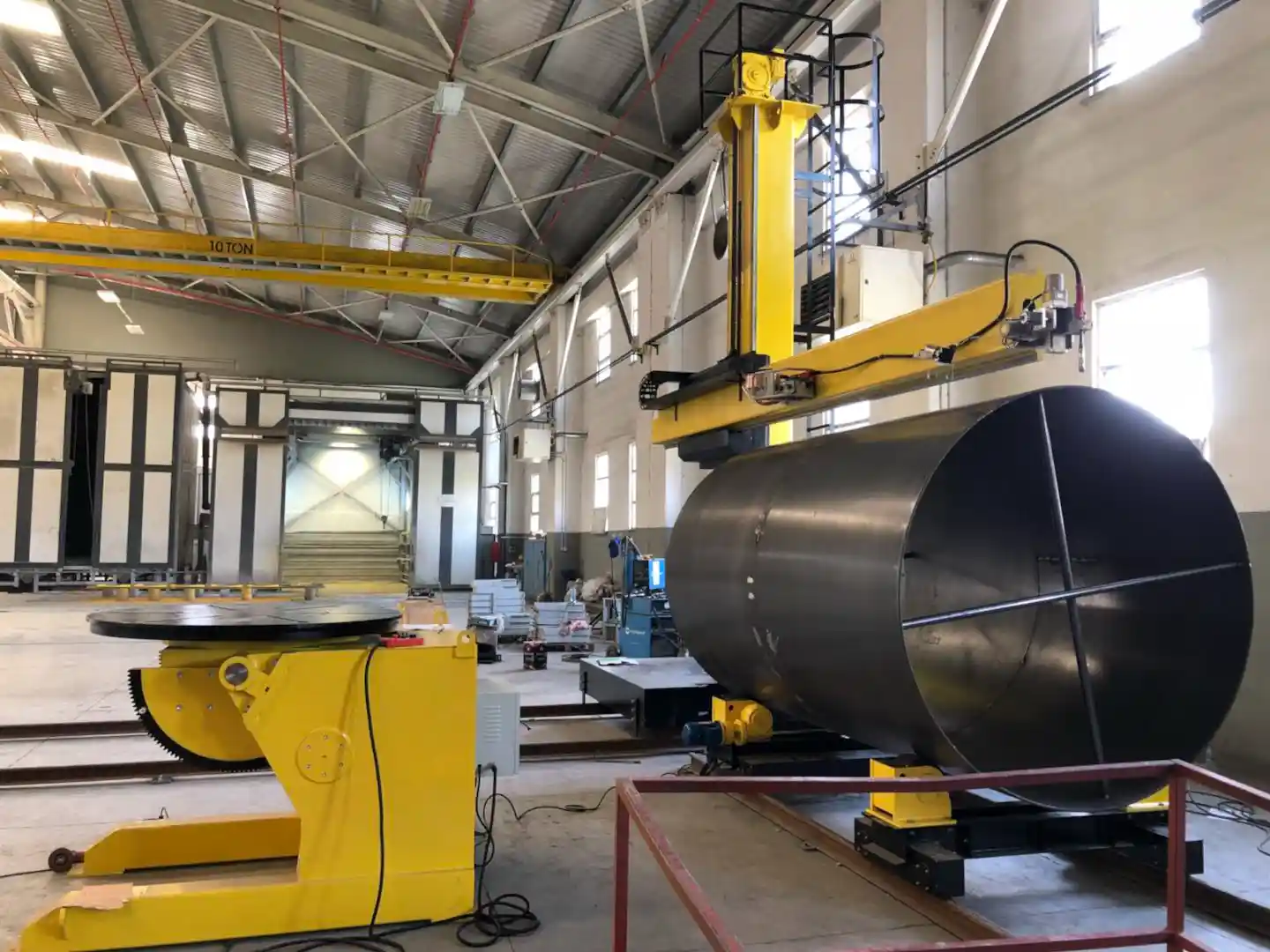
WUXI ABK’s H-beam welding line integrates these controls into a complete production system. The Welding Manipulator systems in the LH series maintain positioning accuracy of ±0.1 mm/m for longitudinal and circumferential seams—precision that directly translates to consistent penetration and bead geometry.
For applications requiring complex workpiece orientation, the 3 Axis Welding Positioner and Triple Axis Positioner options achieve ±0.05 mm positioning accuracy with 0.02 mm repeatability. The WUXI ABK 3-Ton and 5-Ton 3-Axis Welding Positioner models handle substantial workpieces while maintaining the precision needed for robotic welding cells. This level of control minimizes distortion and ensures uniform heat input across the entire joint.
Pre-Weld and Post-Weld Treatments Close Remaining Gaps
Even with good procedures and equipment, certain defects require specific countermeasures. Hydrogen cracking, for example, responds to preheat that slows cooling and gives hydrogen time to diffuse out before the steel becomes susceptible to embrittlement.
Post-weld heat treatment serves multiple purposes. Stress relief annealing reduces residual stresses that could drive distortion or cracking during service. Extended hold times at temperature allow additional hydrogen removal from thick sections. These treatments add time and cost but prevent failures that would cost far more.
Thorough joint cleaning before welding—removing mill scale, cutting oils, and any moisture—eliminates contamination sources that cause porosity and inclusions. Precise fit-up minimizes gaps that require excessive filler and create conditions for lack of fusion.
Inspection Methods That Verify H-Beam Weld Quality
Prevention strategies reduce defect occurrence, but inspection confirms they’re working. A layered approach combining visual examination with appropriate non-destructive testing catches both surface and subsurface discontinuities before they become service failures.
Visual Inspection Catches Surface Problems Early
Visual inspection remains the most practical first-line quality check. A trained inspector can identify porosity, undercutting, incomplete fill, and surface cracks quickly and without special equipment. The inspection should assess bead appearance, size, contour, and any visible discontinuities against acceptance criteria.
Early detection through visual inspection prevents further processing of defective assemblies. Catching a problem before the beam moves to the next station saves the cost of additional work on a component that will need repair anyway.
NDT Methods Reveal Hidden Discontinuities
Surface inspection can’t find defects buried within the weld or at the root. Non-destructive testing fills that gap with techniques suited to different defect types and material configurations.
Ultrasonic testing sends high-frequency sound waves into the weld and interprets the reflections to identify internal cracks, lack of fusion, and inclusions. It provides depth information and can size defects for engineering evaluation.
Radiographic testing produces an image of the weld’s internal structure using X-rays or gamma radiation. The permanent record shows voids, inclusions, and cracks, though defect orientation relative to the beam affects detectability.
Magnetic particle inspection works well for surface and near-surface cracks in ferromagnetic steel. The method is fast and relatively inexpensive, making it practical for production screening.
Dye penetrant inspection detects surface-breaking defects through capillary action. It works on any non-porous material and requires minimal equipment.
| NDT Method | Detectable Defects | Advantages | Limitations |
|---|---|---|---|
| Visual Inspection | Surface cracks, porosity, undercut | Cost-effective, immediate | Only surface defects |
| Ultrasonic Testing (UT) | Internal cracks, lack of fusion, slag | High sensitivity, depth sizing | Requires skilled operator |
| Radiographic Testing (RT) | Internal voids, inclusions, cracks | Permanent record, internal view | Radiation safety, orientation critical |
| Magnetic Particle Inspection (MPI) | Surface/near-surface cracks | Fast, relatively inexpensive | Ferromagnetic materials only |
| Dye Penetrant Inspection (DPI) | Surface-breaking defects | Simple, portable | Non-porous materials only |
Equipment Quality Determines Defect Prevention Capability
The welding equipment itself plays a direct role in defect prevention. Modern systems offer control features that maintain parameter stability, optimize arc characteristics, and enable automation that removes human variability from critical operations.
Equipment Selection and Maintenance Matter
High-performance H-beam welding lines incorporate stable power sources that maintain output despite line voltage fluctuations, accurate wire feeders that deliver consistent deposition rates, and torch designs optimized for the specific process. These features directly affect arc stability and heat input consistency.
Regular calibration and preventive maintenance keep equipment performing to specification. Parameter drift from worn components or contaminated contacts introduces the kind of subtle variation that shows up as intermittent defects—hard to troubleshoot because the cause isn’t obvious.
Automation Platforms Enable Consistent Execution
WUXI ABK’s welding automation solutions address the precision and repeatability requirements that prevent H-beam welding defects. The Welding Manipulator systems provide controlled torch positioning and travel speed for consistent bead geometry across long seams.
Welding Turntable Solutions and products from Adjustable Rotator Manufacturers position workpieces accurately for optimal welding angles, reducing the manual handling that introduces variability. For complex assemblies requiring multiple orientations, the 3 Axis Positioner systems synchronize rotation, tilting, and turning with the accuracy needed for robotic welding integration.
These systems don’t eliminate the need for skilled personnel—they multiply what skilled personnel can accomplish by handling the repetitive precision tasks that humans struggle to maintain over long production runs.
Work With WUXI ABK on Your H-Beam Welding Challenges
Achieving consistent H-beam weld quality requires the right combination of procedures, equipment, and expertise. WUXI ABK MACHINERY CO., LTD provides advanced welding equipment and automation solutions designed specifically for defect prevention and production optimization.
Contact us to discuss your H-beam fabrication requirements and explore how our welding lines and positioning systems can improve your results. Reach us at jay@weldc.com or call +86-13815101750.
Frequently Asked Questions About H-Beam Welding Defects
What causes porosity in H-beam welds and how is it avoided?
Porosity forms when gas gets trapped during solidification. The usual sources are inadequate shielding gas coverage, moisture on the workpiece or in consumables, and surface contamination that vaporizes under arc heat. Prevention focuses on maintaining proper gas flow rates, storing consumables in dry conditions, and cleaning joint surfaces thoroughly before welding. Checking gas delivery equipment for leaks and replacing worn nozzles also helps maintain consistent shielding.
How can welding distortion be minimized during H-beam fabrication?
Distortion results from uneven heating and cooling that creates residual stresses in the assembly. Minimizing it requires controlling heat input through proper parameter selection, using balanced welding sequences that distribute shrinkage symmetrically, and applying adequate fixturing to restrain movement during cooling. Pre-setting components to compensate for expected shrinkage works for predictable configurations. Automated welding systems from WUXI ABK maintain the consistent heat input and travel speed that reduce distortion compared to manual welding.
What are the critical steps for ensuring strong H-beam weld integrity?
Strong H-beam welds depend on getting several things right together: following a qualified Welding Procedure Specification, preparing materials properly with clean surfaces and accurate fit-up, controlling parameters within the qualified range, using equipment that maintains stability throughout the weld, and verifying results through appropriate inspection. Each step builds on the others—skipping any one creates opportunities for defects that the remaining steps can’t fully compensate for.
 English
  Español
  Français
  Deutsch
  Português
  Русский