
Revolutionizing Manufacturing with Modular Fabrication Cells
Manufacturing floors look different now than they did even five years ago. The shift toward modular fabrication cells has changed how production lines handle variability, and the results speak for themselves in throughput numbers and floor space efficiency. WUXI ABK builds the welding and cutting equipment that makes these flexible setups work, and we’ve watched firsthand how the right configuration transforms what’s possible in a production environment.
Core Principles of Modular Fabrication Cell Design
Modular cell design starts with one assumption: production needs will change. Building around that reality means creating systems that can be reconfigured without tearing everything down and starting over. The layout adapts. Equipment moves. Capacity shifts up or down based on actual demand rather than forecasted guesses from eighteen months ago.
The practical benefits show up in retooling time and floor utilization. When market conditions shift, a modular setup responds in days rather than weeks. That responsiveness matters when contracts change or new product variants enter the mix.
How do modular fabrication cells improve production scalability?
Scaling production traditionally meant major capital investment and extended downtime. Modular cells change that equation. Adding a welding manipulator or repositioning a positioner takes hours, not weeks. Removing capacity when demand drops doesn’t leave expensive equipment sitting idle in a corner.
This flexibility means capacity matches actual orders more closely. The gap between what you can produce and what you need to produce shrinks considerably.
Key Components of an Industrial Fabrication Cell
A working fabrication cell brings together several technologies that need to communicate and coordinate. Automated welding cells handle the joining work. Robotic systems manage material movement and positioning. CNC cutting machines prepare components with the precision that downstream processes require.
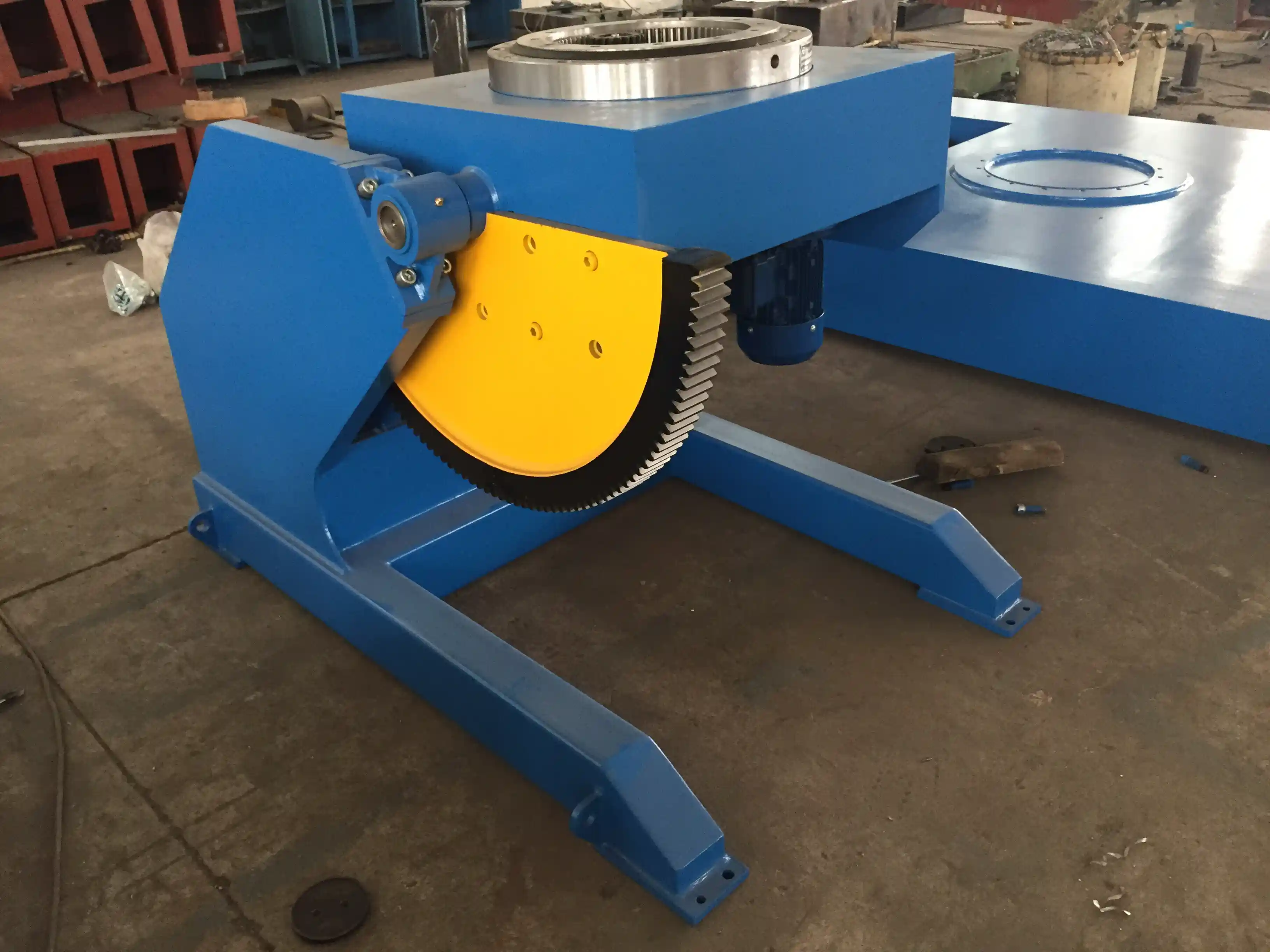
WUXI ABK supplies the core components for these setups. The LH series Welding Manipulator handles longitudinal and circumferential seam welding with the reach and stability that pressure vessel work demands. Our 3-axis positioners, including the 1-Ton 3 Axis Positioner, deliver ±0.05 mm positioning accuracy with 0.02 mm repeatability. Those numbers matter when you’re dealing with complex workpiece geometries and tight tolerances.
!Industrial Positioner Unit
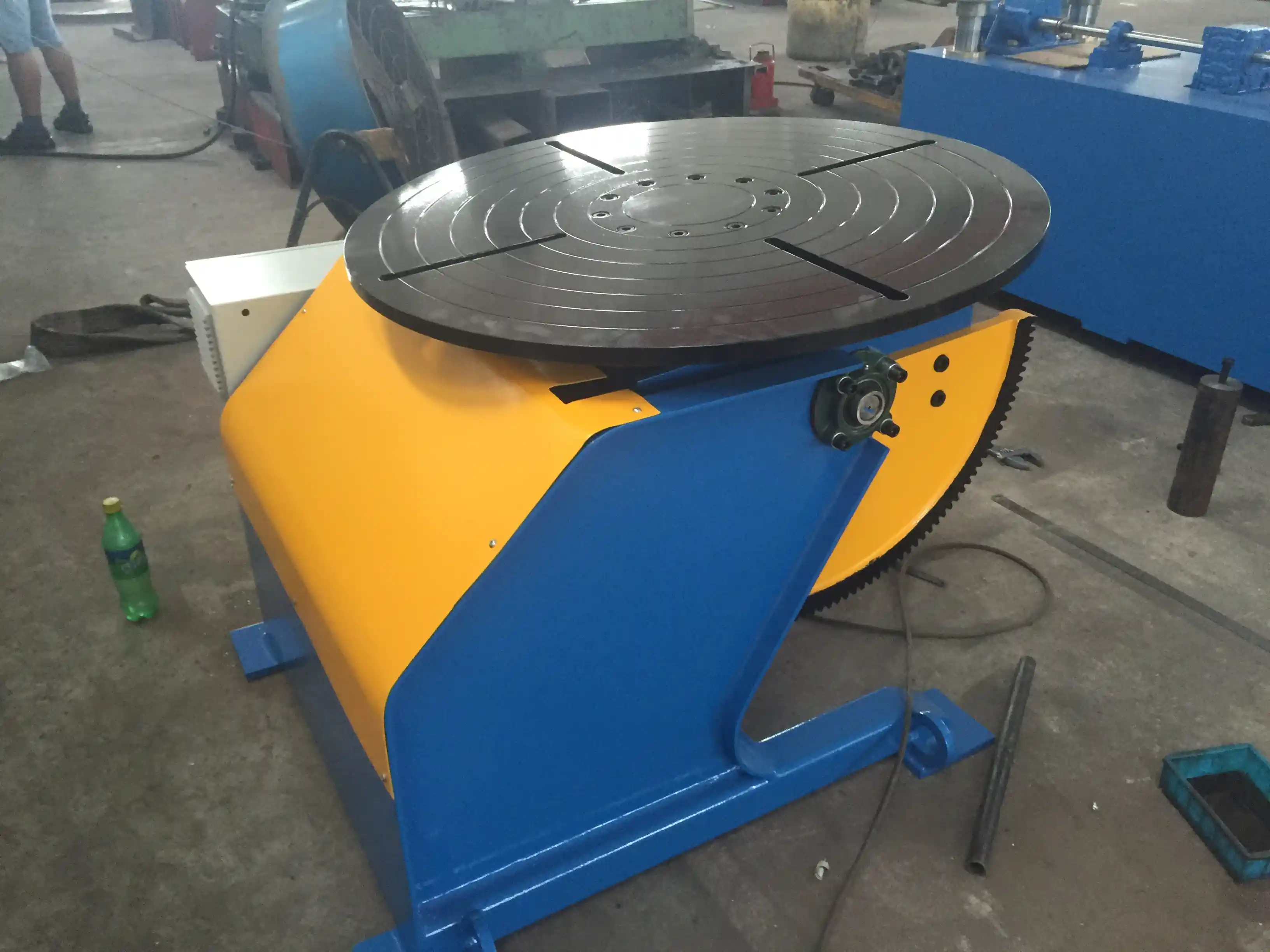 For additional perspective on positioning equipment in pressure vessel applications, see 《Revolutionary Solution for Pressure Vessel Welding: Technical Analysis of 360-Degree Rotating Welding Positioners》.
Integrating Automation for Optimized Fabrication Workflows
Automation changes the economics of fabrication work. The precision improves. Labor costs drop. Throughput increases without proportional increases in headcount. But the integration has to be done right, or the theoretical benefits never materialize in actual production numbers.
Our automation solutions focus on the practical side of integration. The equipment needs to work together, communicate status, and handle the variations that show up in real production environments.
Achieving Precision and Repeatability with Robotic Systems
Robotic systems deliver consistency that human operators simply cannot match over extended production runs. Our 3-axis welding positioners hit ±0.05 mm positioning accuracy and maintain 0.02 mm repeatability across thousands of cycles. That consistency reduces rework, minimizes scrap, and makes quality control more about verification than correction.
The inspection burden drops when the process itself maintains tight tolerances. Quality becomes built into the workflow rather than added at the end.
Manual vs. Automated Fabrication Cell Benefits
| Feature | Manual Fabrication Cell | Automated Fabrication Cell |
|---|---|---|
| Precision | Operator-dependent, variable | High, consistent (e.g., ±0.05 mm) |
| Repeatability | Low to moderate | High (e.g., 0.02 mm) |
| Throughput | Limited by human speed and endurance | High, continuous |
| Labor Costs | High, skilled labor required | Reduced, supervisory roles |
| Safety | Higher risk of human error/injury | Enhanced, reduced human exposure |
| Flexibility | Moderate, requires re-training | High, programmable |
| Material Waste | Higher due to potential errors | Lower, optimized processes |
| Operating Hours | Standard shifts | 24/7 capability |
!automated positioning system
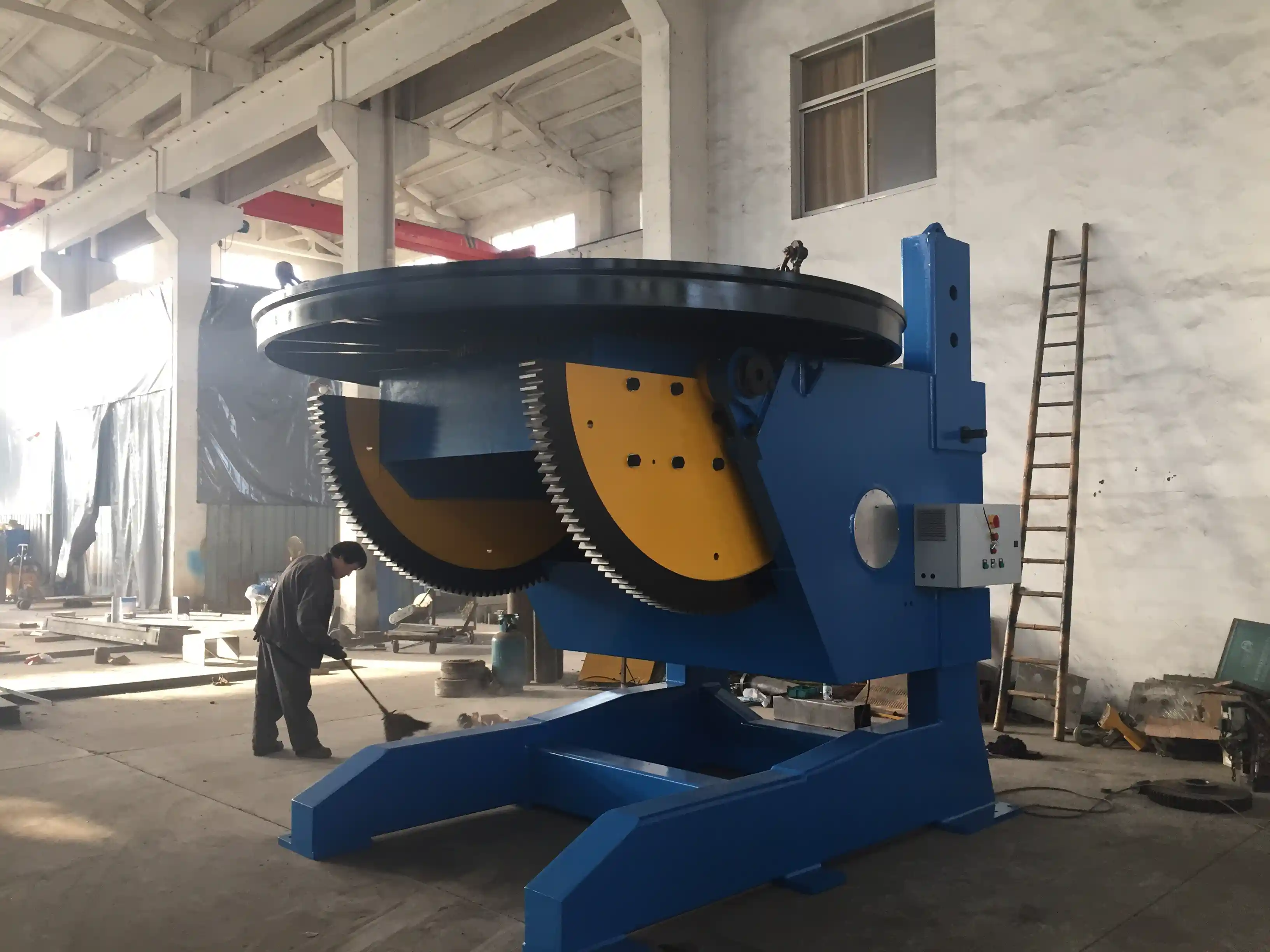 For more on how positioning systems affect production quality, read 《Improving Quality and Efficiency in Tank and Pressure Vessel Manufacturing: The Core Application Value of Positioners》.
Strategic Advantages of Customizable Equipment in Fabrication
Off-the-shelf equipment works for standard applications. But most production environments have specific requirements that standard configurations don’t address well. Custom equipment closes that gap and often pays for itself through improved cycle times and reduced workarounds.
The competitive advantage comes from having equipment that fits your specific workflow rather than forcing your workflow to fit generic equipment. That alignment shows up in throughput, quality, and operator efficiency.
Our equipment range reflects this customization focus. The Welding Manipulator series, including the LH8080 and LH4580, provides horizontal and vertical travel up to 8000 mm with precise rotation control. The Triple Axis Positioner handles loads up to 5 tons with the accuracy that complex workpiece manipulation requires. These systems serve applications from boiler fabrication to wind tower welding, each configured for the specific demands of the work.
!column and boom manipulator
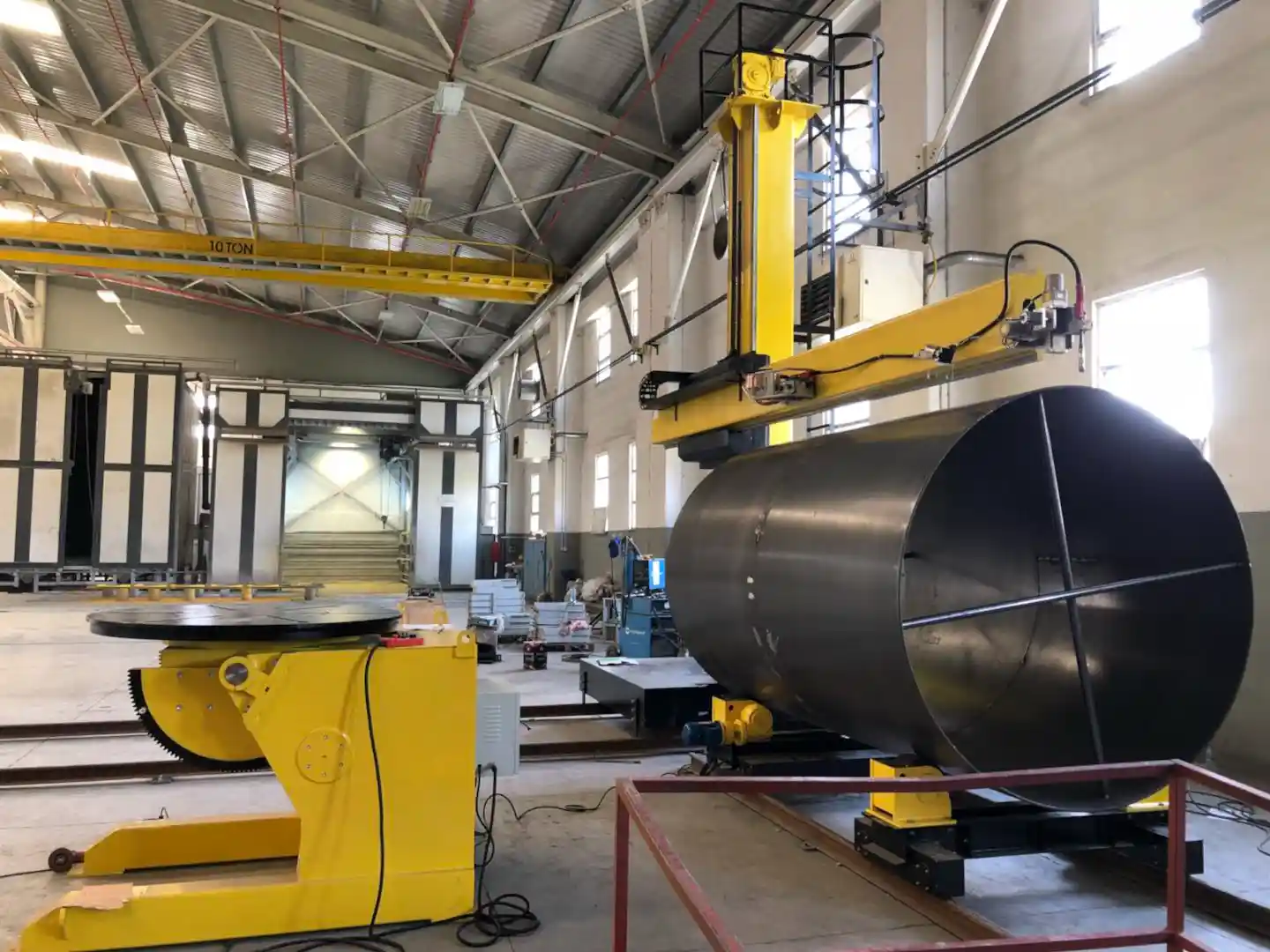 ### How can modular equipment reduce operational costs in manufacturing?
The cost reduction comes from several directions. Retooling expenses drop because component swaps happen quickly. Downtime decreases because reconfiguration doesn’t require extensive teardown and rebuild. Floor space gets used more efficiently because modular cells can be arranged compactly and rearranged as needs change.
These savings compound over time. The initial investment in modular capability pays dividends with every production change that would have required major capital expenditure under a traditional fixed-equipment approach.
For insights on space optimization, see 《Workshop Space Too Small? How Column Booms Save 50% Floor Space While Boosting Safety & Efficiency》.
Future Proofing Your Production with Modular Fabrication Cells
Production requirements will change. New products will emerge. Volumes will fluctuate. Technology will advance. Modular fabrication cells accommodate these changes without requiring complete system replacement.
The integration with Industry 4.0 standards means these systems connect to broader production management and monitoring frameworks. Data flows from the equipment to management systems, enabling the kind of visibility and control that modern manufacturing requires.
!custom welding rotator
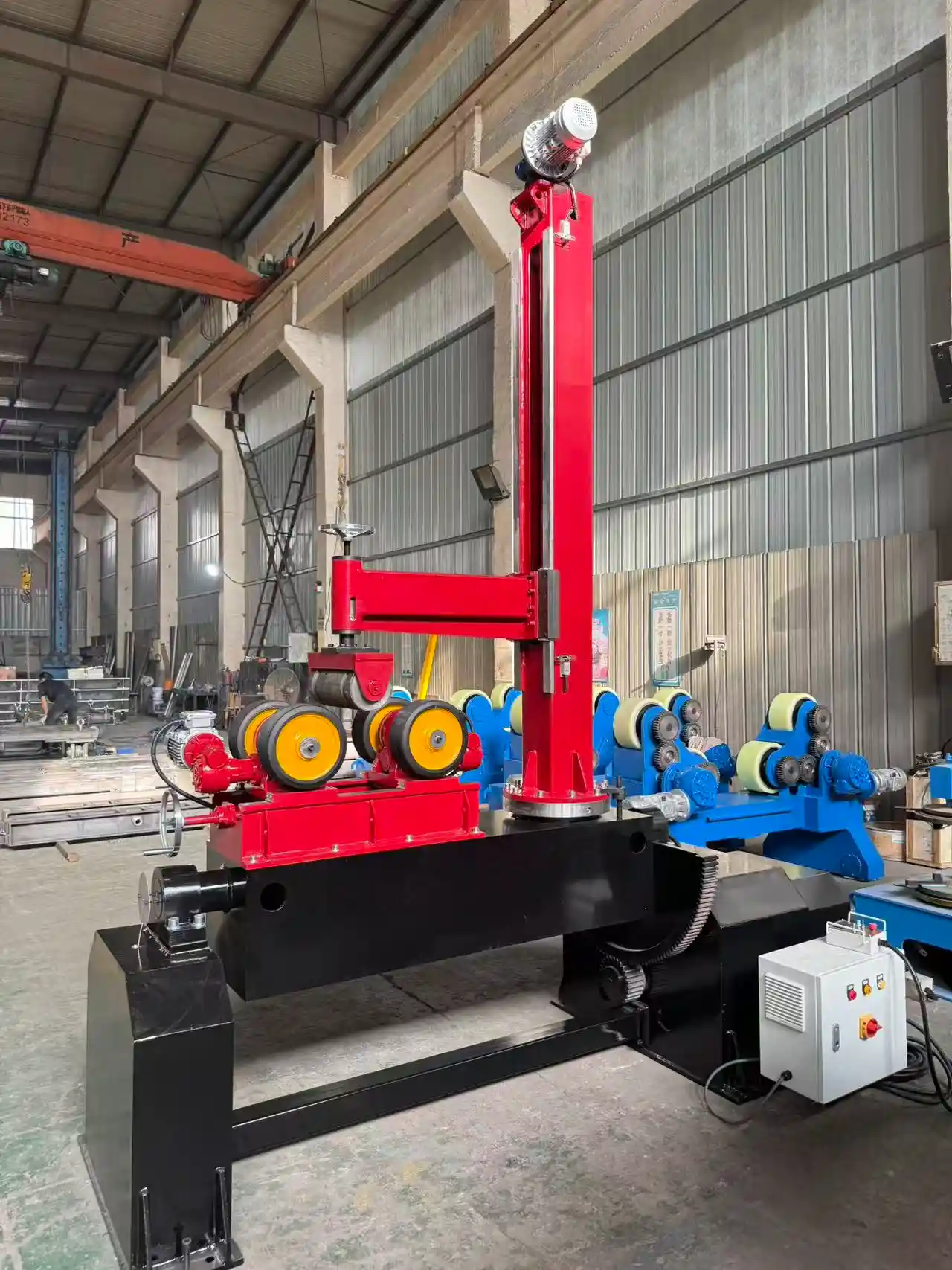 Our modular solutions grow with your operation. The 30 Tons Adjustable Height Positioner provides versatile load handling with precise control for heavy equipment fabrication and wind tower sections. The 100 Tons Adjustable Height Positioner extends that capability to large-scale projects where precision at high loads becomes the determining factor in production success.
!Wind Tower Positioner
 ## Partner with WUXI ABK for Advanced Fabrication Cell Solutions
WUXI ABK MACHINERY CO., LTD has built welding equipment and CNC cutting machines since 1999. We engineer modular fabrication cells that deliver efficiency and adaptability in demanding production environments. Contact our team to discuss a configuration that fits your specific production requirements. Reach us at +86-13815101750 or jay@weldc.com.
Frequently Asked Questions About Industrial Fabrication Cells
What is an industrial fabrication cell and why is modularity important?
An industrial fabrication cell combines equipment and automation for specific manufacturing tasks like welding or cutting. Modularity matters because it allows reconfiguration, scaling, and adaptation to different production requirements without extended downtime or major capital investment. When product specifications change or volumes shift, a modular cell responds quickly. That responsiveness keeps your fabrication cell productive and relevant as conditions evolve.
How do modular equipment solutions from WUXI ABK enhance manufacturing flexibility?
WUXI ABK equipment is built for integration and interchangeability. Welding Manipulators, positioners, and CNC cutting machines can be combined, reconfigured, and adapted to different production scenarios. This design approach lets manufacturers shift between product lines or adjust production volumes without extended downtime. The equipment adapts to the work rather than constraining what work is possible.
What return on investment can be expected from implementing an automated fabrication cell?
ROI comes from multiple sources. Labor costs decrease. Production speed and throughput increase. Product quality improves and stays consistent. Material waste drops. The modular design also extends equipment lifespan and reduces future capital requirements when production needs change. The specific numbers depend on your current operation and production mix, but the improvement areas are consistent across implementations.
Can WUXI ABK customize an industrial fabrication cell for specific industry needs?
Yes. WUXI ABK works with clients across sectors to understand specific production challenges and design equipment configurations that address them directly. Whether the application involves Wind Tower Welding lines, H beam production, or specialized pipe welding, our engineering team configures systems for optimal performance in your specific context. The equipment fits the work, not the other way around.
 English
  Español
  Français
  Deutsch
  Português
  Русский